Tag: Rohit Khattar

  • UFO Moviez to acquire 62.5% stake in CDPL’s Cinestaan.com

    UFO Moviez to acquire 62.5% stake in CDPL’s Cinestaan.com

    MUMBAI: UFO Moviez is on an acquisition spree. Afer its aborted bid to merge with Qube Cinema was called off earlier this a couple of months ago, it has now  announced its intention to acquire a controlling 62.5 per cent stake  in Cinestaan Digital Pvt Ltd (CDPL) for an investment of up to Rs 20 crore by way of convertible instruments over a period of three years.

    Promoted by Rohit Khattar, CDPL has a flagship product Cinestaan.com, an entertainment focussed destination which has a massive database of Indian cinema.

    “CDPL's initiatives are synergetic with the UFO's, in expanding product offerings in Tier II and Tier Ill towns. CDPL too shall benefit immensely from the UFO's footprint and movie related intelligence,” a press statement published on the bourses said.

    The Sanjay Gaekwad-Narendra Hete-Raaja Kanwar-promoted firm is a leader in digital distribution of cinema and has recently moved into the exhibition space as well.

    A while ago, it had announced an investment of Rs 2 billion in Scrabble Entertainment while also increasing its stake from 26 per cent to 52 per cent.

  • Amazon Prime gets streaming rights of three independent films from India

    Amazon Prime gets streaming rights of three independent films from India

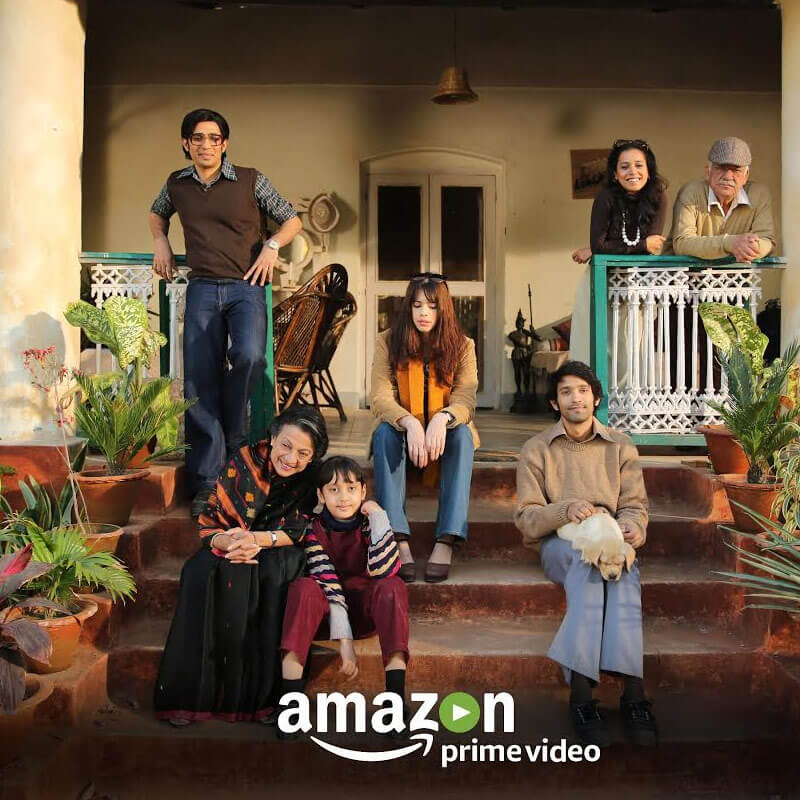
    NEW DELHI: Amazon and C International Sales, a subsidiary of Cinestaan Film Company, announced a long-term alliance that will make Amazon Prime Video India the exclusive home for two of Toronto International Film Festival’s official selection of Indian films titled Dev Bhoomi (selected for TIFF 2016, Hof International Film Festival), and A Death in the Gunj (Directed by Konkona Sen Sharma, selected for TIFF 2016 and Busan International Film Festival). 

    In addition, Amazon Prime Video will exclusively stream The Hungry, an international co-production between Cinestaan Film Company and Film London.

    Cinestaan chairman Rohit Khattar said, “In our quest to champion Independent Indian films, we have been trying to figure out various ways to effectively distribute films which face the usual conundrum of high P&A and other costs. Amazon Prime Video has presented a much needed option and we are delighted that they have seen such merit in three of the titles that C International Sales represented and we are thrilled that within 6 months, our superb team has made C International the ‘go to’ sales agency for Indian filmmakers”

    “At Amazon Prime Video India, our goal is to partner with the top content creators in India and worldwide to build the largest selection of latest and exclusive movies and TV shows for our customers,” said Amazon Prime Video India director and country head Nitesh Kripalani. “Our alliance with Cinestaan is to build our selection of features from India’s evolving independent filmmakers. This realistic style of film-making from an exciting breed of filmmakers, creates room for experimentation in content as well as form. Death in The Gunj, The Hungry and Dev Bhoomi are the first titles in our Indian offering in this exciting new genre – independent cinema.”

    Devi Bhoomi is directed by international award winning director Goran Paskaljevic and narrates the story of Rahul who returns to his old Himalayan village carrying a heavy secret. His arrival is not welcomed by the locals and again he must face the isolated world of old prejudices in which women have no right to choose their own destiny.

    Directorial debut feature, written and directed by Konkona Sen Sharma, Death in the Gunj is set in 1979 starts as an uneventful family holiday which takes a dangerous twist when the guests play with the spirits.

    Revenge thriller The Hungry is a contemporary retelling of Shakespeare’s Titus Andronicus brings together film-making talent from Cinestaan Film Company and Film London. The film stars Naseeruddin Shah, Tisca Chopra, Neeraj Kabi, Suraj Sharma and Sayani Gupta. 

    Amazon Prime already offers unlimited free one-day and two-day delivery to over 100 cities on eligible items from India’s largest selection of products, 30 minutes early access for members on top deals and more benefits for an unparalleled shopping experience.

  • Amazon Prime gets streaming rights of three independent films from India

    Amazon Prime gets streaming rights of three independent films from India

    NEW DELHI: Amazon and C International Sales, a subsidiary of Cinestaan Film Company, announced a long-term alliance that will make Amazon Prime Video India the exclusive home for two of Toronto International Film Festival’s official selection of Indian films titled Dev Bhoomi (selected for TIFF 2016, Hof International Film Festival), and A Death in the Gunj (Directed by Konkona Sen Sharma, selected for TIFF 2016 and Busan International Film Festival). 

    In addition, Amazon Prime Video will exclusively stream The Hungry, an international co-production between Cinestaan Film Company and Film London.

    Cinestaan chairman Rohit Khattar said, “In our quest to champion Independent Indian films, we have been trying to figure out various ways to effectively distribute films which face the usual conundrum of high P&A and other costs. Amazon Prime Video has presented a much needed option and we are delighted that they have seen such merit in three of the titles that C International Sales represented and we are thrilled that within 6 months, our superb team has made C International the ‘go to’ sales agency for Indian filmmakers”

    “At Amazon Prime Video India, our goal is to partner with the top content creators in India and worldwide to build the largest selection of latest and exclusive movies and TV shows for our customers,” said Amazon Prime Video India director and country head Nitesh Kripalani. “Our alliance with Cinestaan is to build our selection of features from India’s evolving independent filmmakers. This realistic style of film-making from an exciting breed of filmmakers, creates room for experimentation in content as well as form. Death in The Gunj, The Hungry and Dev Bhoomi are the first titles in our Indian offering in this exciting new genre – independent cinema.”

    Devi Bhoomi is directed by international award winning director Goran Paskaljevic and narrates the story of Rahul who returns to his old Himalayan village carrying a heavy secret. His arrival is not welcomed by the locals and again he must face the isolated world of old prejudices in which women have no right to choose their own destiny.

    Directorial debut feature, written and directed by Konkona Sen Sharma, Death in the Gunj is set in 1979 starts as an uneventful family holiday which takes a dangerous twist when the guests play with the spirits.

    Revenge thriller The Hungry is a contemporary retelling of Shakespeare’s Titus Andronicus brings together film-making talent from Cinestaan Film Company and Film London. The film stars Naseeruddin Shah, Tisca Chopra, Neeraj Kabi, Suraj Sharma and Sayani Gupta. 

    Amazon Prime already offers unlimited free one-day and two-day delivery to over 100 cities on eligible items from India’s largest selection of products, 30 minutes early access for members on top deals and more benefits for an unparalleled shopping experience.

  • Epic set to build 10 pm slot with second phase of programming

    Epic set to build 10 pm slot with second phase of programming

    MUMBAI: “Given the kind of content we are doing, we are never going to be at the level of a general entertainment channel (GEC), but a segmented one,” says Epic Television Networks managing director Mahesh Samat.


    Launched on 19 November, 2014, the channel offers content set against the backdrop of Indian history, folklore and mythology, in a contemporary format.


    Mukesh Ambani, Anand Mahindra and Rohit Khattar are the three promoters of the company.


    Mahindra & Mahindra chairman and managing director Anand Mahindra, during the launch of the channel had said, “The landscape of Hindi entertainment is undergoing a dramatic transformation and in order to appeal to an evolved audience, and to sustain their engagement, there is a need for a revolution in the broadcast space.”


    The pay channel, available in down-scaled SD version, aimed to change the way entertainment is currently categorised.


    After successfully running the first phase of programming with new-breed of producers like Bolt Media, Green Light Production and Pride Rock Television among others giving their take on the contemporary age-old stories, the channel is now set to roll out its second phase of new programming.


    Epic launched with shows like Dariba Diaries, Siyaasat, Dharmakshetra, Yam Kisi Se Kam Nahin, Ekaant and Raja Rasoi Aur Anya Kahaniyaan among others.


    A journey with highs & lows


    According to Samat, the seven months journey while has been through its ups and downs but is satisfactory. He says that when he started Epic, the objective was to set up a segmented channel in the space of history and mythology to make viewers believe that there is an alternative in television that they could include in the basket of their favourite channels.


    It can be noted that Epic garnered 1,240 GVTs in its debut week (ratings of four days) and later saw an improvement till a few weeks but then started dipping in viewership.


    However, the social media has attracted good eyeballs with close to 165,000 likes on Facebook and Twitter with close to 4,000 followers.


    “To a fair degree we have achieved that because we have a core group of users and viewers who are fans of the channel. The nice thing is if you see the social chatter, the amount of support and likes we are getting is sometimes overwhelming,” says Samat.


    The ascending social media traction has however failed to make the same impact on ratings. “It’s not yet reflected in the ratings because our awareness level is still low but we hope to correct that with this campaign and we hope the awareness level goes up.”


    At the time of the launch, the channel had set a target to reach 35 million homes and to go up to 45-50 million homes in a few months and it is pretty much on target.


    According to Samat, distribution has not been an issue. “Distribution platforms have been very supportive and they see the differentiation. They see in Epic an opportunity to grow their Average Revenue Per User (ARPUs) which is really important for them and we also recognise that,” he informs.  


    The channel aims to launch its High Definition (HD) version soon. “We feel that the quality of what we have done does full justice in HD. But we understand that there are bandwidth constraints and as soon as those constraints are over, we will be happy to show the product in HD,” reasons Samat.


    Building 10 pm slot


    Sticking to its two-hour original programming per day, the channel is set to launch close to eight new shows in the second phase and will stay with its positioning of producing history and mythology content.


    This new season of programming is more relevant and connected as it talks about topics which are culturally in the mainstream like Bollywood, cricket and old stories of Tagore.


    To start with, India has two religion- Bollywood and cricket. When these two collide, magic fills up the stage. With this in mind, the channel is set to launch Mid-Wicket Tales with Naseeruddin Shah as the host. The show will launch on 10 July and will air every Friday at 10 pm.


    This 26 episode series will focus on the yesteryears of the game- match highlights, sportsmanship within the game, stadiums, hits and misses and much more, attempting to re-visit all the wonderful memories of the nation’s first love.


    The show recounts the cricketing saga that begins in the dusty fields of colonial 19th century India and ends with India as the epicenter of cricket in the world through old footage, witnesses and newspaper archives. It even talks about the torch that was first carried by Maharaja Ranjitsinghji to present-day hero Mahendra Singh Dhoni.


    “We felt that here is an opportunity to expand our awareness, expand the understanding of Epic through these celebrities who are either anchors or producing these shows,” informs Samat.


    Secondly, veteran Bollywood scriptwriter and lyricist Javed Akhtar will be hosting the new show, Jaane Pehchaane with Javed Akhtar. It is slated to launch on 8 July and will be aired every Wednesday and Thursday at 10 pm.


    It is a show about the trajectory of characters within films and not the history of actors or other film personalities. In this, Javed Akhtar explores iconic themes of Bollywood cinema, from vamps to villains, friends to family and their relations, and more.  Akhtar known to create magic with his play of words, shares insightful opinions, anecdotes as well as his experience about the most powerful characters of Indian cinema on the show.


    Thirdly, it will launch Stories By Rabindranath Tagore directed by Anurag Basu that will launch on 6 July and will air every Monday and Tuesday at 10 pm. The series will depict the literary, somewhat imagined world of Tagore’s novels and short stories. It is set in a politically volatile period, constantly shifting social world of the early twentieth century undivided.  The novels will be approximately two-three episodes and the short stories will be of a single episode. Each story will follow the other in a seamless way, before one story ends the other will begin from the narration of the previous story itself.


    Samat reveals that it took 18 months from planning to execute of Rabindranath Tagore show. The other two series mentioned above, were developed in close to six months.


    Samat believes it is a very organic way of using celebrities. The channel during the research realised that while there is a large chunk of audience available at the 10 pm slot, they are very experimental. “The 10 pm slot is the most experimental slot, so we decided to take serious note of that. We are trying to get consumers through our actions, making them aware of programming and positioning of Epic and directing them to the 10 pm slot.”


    Moreover, it will be launching second season of three of its successful shows, Ekaant, Raja Rasoi Aur Anya Kahaniyaan and Epic Ke Dus. It is also launching Time Machine, a show where three invitees living on the wrong side of the law, find themselves being blackmailed by a mysterious genius. It starts from 8 July, airing every Wednesday at 9 pm.


    The channel has also locked a concept with dancer-actor Javed Jafrey. Christened Back to Flashback, Jafrey will be seen giving his take on the songs of 90s.


    For Samat, it was two like-minded groups meeting which ensured there were no challenges in getting the celebrities on-board. “They all were interested in the subject. In fact, Basu was wanting to do Rabindranath Tagore stories for a long time on television and Epic gave him the platform to do it,” says Samat.


    On the other hand, he strongly believes that there is an advantage in doing limited number of episodes. “This made getting great talents on-board even easier,” he adds.  


    According to Samat, television in India is a mass medium and as makers one needs to create content that caters to the entire family. But for this segmented channel, it the secondary level of filter: audience aged between 24-44 years, which is important.


    “A lot of research was done when we launched. What we found was that we are very emotionally attached to our history and mythology and that’s unique to us as Indians. This is why when we put up these stories, there is a pride which comes with it and that’s what our mission is– to deliver pride through our storytelling,” asserts Samat.


    The idea for the channel is to provide an alternative form of entertainment. According to Samat, consumers are not watching only one or two channels, but a basket of channels; some are appointment viewing, while some come when they are in the mood to watch. “For us, it is really important to be in that basket of channels,” states Samat.  


    GECs have a ‘soapification’ of mythology


    Samat feels that historical and mythological shows have always been a part of the general entertainment channels offering. Even four-five years ago, one-sixth of the shows were historical and mythological ones. So, he believes the genre is here to stay and is not going anywhere.


    He feels that the GECs’ take on the genre is quite different than that of a segmented one. “Their take is still in the realms of relationships or what one can call as ‘soapification’ of mythology. What we are trying to do is using a different kind of storytelling with limited number of episodes which by definition therefore will be narrative rhythm.”


    The reality is that people like soaps. He feels that urban India is walking away from television as a concept because they see sameness.


    Samat believes that digitisation in television is like the multiplexing of cinemas. “With digitisation, we are also going to see an expansion in the kind of television channels and content that can be shown. I feel that while soaps are liked by a large majority of Indians, the same people don’t always want to see only soaps,” opines Samat.


    Multi-dimensional campaign


    To promote the second run of the programming, the channel has used digital medium aggressively. With the #DoThe10, it generated decent responses and a lot of involvement from the users. Apart from this, promos of the shows have hit the television screens.


    As was first reported by Indiantelevision.com, the channel an app to cater to international markets. “There’s lot of discussion around it, we don’t know how things will fall out. Through the app, we are pointing out to the Indian diaspora, living abroad. Our broadband infrastructure is still limited and so the focus we will have of our app will be for outside India.”


    A lot of the channel’s content has a great library value. For example, Epic ran the repeat episodes of Raja Rasoi and Ekaant and kept repeating the episodes for the result. “Every single time, the channel aired repeats of these shows, it garnered a better viewership than previous telecast. While that helped increase our reach, we also understood that people don’t mind watching it again and again. For a lot of content we do, we keep in mind the importance of our library value. It should be like show today and not worth tomorrow, which is why, none of our content is available on YouTube,’ says Samat.  


    Overall, between the advertisers and media agencies, Samat says that while all have liked the channel, they are now waiting to see the viewership pattern with the second phase of programming. “We are currently not approaching advertisers heavily, because we want our numbers to improve so that we get better advertising rates,” he informs.


    With digitisation, he feels there will be more transparency, which is important for an independent channel like Epic. “We don’t have any analogue distribution. We are focused only on digital and as digital grows, we will grow. The channels that are on analogue won’t see much growth but only transparency, we will see both,” concludes Samat. 

  • “We know we have to work on awareness level,” says Epic’s Mahesh Samat

    “We know we have to work on awareness level,” says Epic’s Mahesh Samat

    One of the newest entrant in the Hindi general entertainment channel (GEC) space, Mahesh Samat’s Epic, which was launched on 19 November, 2014 has been gaining momentum on the rating chart ever since.

    “I would want my kid to watch Epic,” says a media planner when contacted to know how the channel has been performing.

    The news of the former Disney executive launching Epic Television Network had first broken in 2012. Labeled as India’s first genre-specific Hindi entertainment channel, it was supposed  to be launched by August 2013. However, due to the delay in getting the licence from the Ministry of Information and Broadcasting, the venture backed by Anand Mahindra, Mukesh Ambani and Rohit Khattar, focusing on Indian history, folklore and mythology, had to wait a long time to entertain the audiences.

    Nonetheless, Samat is happy with the progress and the pace in which the channel is moving. “Ratings wise we are somewhat on track. And there is market for segmented content,” he says.

    The channel, which shows finite weeklies, aims to change the way “entertainment” is categorised today. Samat believes that there are enough people in urban India who want to watch mythology and know about the historical aspects of the country. The channel, though slightly male skewed, while conventional GECs are heavily female skewed, aims to entertain the whole family.

    With an array of fiction and non-fiction shows, all enlightening the viewer of the history gone by, the channel has got on board a new breed of producers and changed the way a story is told. Face Entertainment’s Monia Pinto, who has worked on numerous lifestyle shows, is producing non-fiction shows like Sanrachna and Lost Recipes for the channel.

    Unlike the other shows she has worked on, the series on Epic intellectually stimulates her and her team, thanks to the research which goes into creating them. “We invest a lot of time in research so basically we have to study the subject thoroughly. The team at Epic also does its homework well on a subject so when we go back to them, we merge the ideas and studies to come up with a brilliant piece of work,” she says.

    Speaking on Ekaant, which takes one through abandoned roads, alleys of some of India’s historic locations, Pinto highlights that two researchers work on a project and visit the place, speak to historians to get the facts and story right. “Sometimes it takes us even a month to just study about 2 or 3 monuments,” she says while adding that things have fasten as they are more adjusted with the work as compared to when the production house started off work for the channel. The most difficult part is to get the right people to talk about on the subject as everything has to be very authentic.

    Happy with most production houses working with the channel, Samat believes the work which has been produced is better than what is already out there. Considering the shows are finite, Samat believes it is very difficult to tell a tale in limited episodes as the genre is vast. “There has to be passion for the work and the story else we won’t be able to differentiate from the rest,” he opines.

    Shot on sets as well as on locations, the channel is not worried about the cost which has gone in producing the shows. “Both fiction and non-fiction have worked for us and for us the channel is a long term project as we have invested anything from six months to two years on the programmes,” states Samat.

    Siyaasat which is based on Indu Sundaresan’s novel, ‘The Twentieth Wife,’ is the story of a pawn that charted Mehrunissa’s way to power to become Nur Jahan, the Mallikaa of Hindustan and was shot in Bikaner as well as sets in Mumbai. “Adoptions need research too; but for us the main approach lies in telling the story without being melodramatic,” says Green Light Productions Rishabh Sheth on what differentiates historical shows on Epic from the rest of the channels.

    “Unlike other dailies, we are weekly which gives us enough time to work on pre and post production of an episode,” states Sheth who believes sometimes in a historical show liberties can be taken to make a character glossy to become more liked by the audience.

    At the launch of Chakravartin Ashoka Samrat, Colors CEO Raj Nayak had said that historical and mythology as a genre has great potential. “One can tell a story from various perspectives and still not lose the essence of it if treated well,” he had said on the growth in the genre. For instance, Dharmakshetra, a courtroom drama, unearths the buried questions and allows the legendary characters of Mahabharata to justify their actions for the very first time.

    Though all the blocks are fitting well for the channel, there is still a few missing links. “The content is good, but how many know of it is the question,” points out a media planner and adds, “The channel is not for family viewing as they prefer to watch dramas. It caters to a niche audience, which is interested in the content.”

    Samat too agrees with the fact and says, “Yes, for us the fundamental issue is awareness as it is lower than what we would expect it to be.” With new shows coming up, the channel will start a massive second phase of marketing.

    “Content is conventional and has created a lot of buzz for the channel on the social media, hence, again the focus of marketing will be digital,” says Samat and adds that unconventional route will also be taken. It is planning to launch school programmes across the country soon.

    As for the inventory, the channel is still taking it slow. “The industry has given us positive response but we still want to give them a little more time. Another six months and I guess we should be able to talk on the subject,” answers Samat when asked about the response from the advertisers. The channel currently has Aquaguard, HP, Tata Motors and Foodpanda on board.

    He, just like the others, is waiting for Broadcast Audience Research Council India (BARC) to start releasing data. “Things will change once BARC comes into play,” he opines.
    Nonetheless, it will follow the two minute ad-cap. On Information and Broadcast Minister Arun Jailtey comment of not being in favour of ad cap, Samat says that which way the regulations go, the channel will follow them. However, for him, the audience will be the judge as he doesn’t want to spoil the television viewing for them.

    Monetising through digital is also on Samat’s plan of action. “Our content is for the future and whenever we are ready for it, we will opt for digital subscription model,” says Samat, who is optimistic about the growth of the medium in the country with 4G coming in soon. That’s not all; he also believes that the content will be so rich and unique that it can be sold to the world.

    With a reach of 35 million+ homes, the HD pay channel, also available in down-scaled SD version comes with a subscription rate of Rs 55 while SD is available at Rs 10.5. For planners, the cost is too much especially when audience is used to getting a number of channels at a very minimal rate. “In a country where one TV home still outdoes homes where there are more screens and popular GECs available on nominal cost, why would one pay that much?” asks a media analyst.

    The analyst isn’t convinced that the channel will be able to monetise well on the digital platform.  

    Listening to all the suggestions and working on the same, Samat believes that the channel has a long way to go and things will alter depending on the future.  The channel with the primetime slot of 8:30 pm to 11 pm, currently is focusing on the awareness of it in the Hindi speaking market (HSM).

  • Our content will cross borders, says Mahesh Samat

    Our content will cross borders, says Mahesh Samat

    MUMBAI: After a wait for almost an year, Mahesh Samat’s Epic will finally see the light of day on 19 November.

    The news of the former Disney executive launching Epic Television Network first broke in 2012 and was supposed to launch the channel by August 2013. However, due to the delay in getting the licence from the Ministry of Information and Broadcasting, the venture backed by Anand Mahindra , Mukesh Ambani and Rohit Khattar, focusing on Indian history, folklore and mythology, had to wait a long time to entertain the audiences.

    As per media reports, Mahindra and Ambani each have a 25.8 per cent stake in the company and together have financial control. Also, there is an initial commitment of Rs 100 crore from the group of ‘angel investors’. Samat has a 48.5 per cent stake in the venture, as per the company’s filing with the Registrar of Companies (RoC).

    The HD pay channel, also available in down-scaled SD version, aims to change the way entertainment is being categorised today. “We are not what people think and call ‘general entertainment’. We are a brand that stands for something which Indian television industry doesn’t have,” says Samat while adding that Indian history has numerous stories to tell and that’s what the channel will do.

    Someone who has keen interest in history, Samat believes there are enough people in urban India who want to watch mythology and know about the historical aspects of the country. The channel, though slightly male skewed, while conventional GECs are heavily female skewed, wants to entertain the whole family.

    With months of research gone into creating the fictional shows like DharamaKshetra, Dariba Diaries as well as non-fictional shows like Adrishya, Raja, Rasoi aur anya Kahaniyaan have been shot in HD and sound recording is on 5.1 Dolby. “Technology is changing the way we tell stories today,” says Samat and highlights how it has also collaborated with Mumbai University and other institutions to help with the facts.

    The channel is working with a new-breed of producers like Bolt Media, Green Light Production, Pride Rock Television among many others, who are willing to take a contemporary take on age-old stories. The research was done by the production houses with the channel’s help. “We got enough creative freedom from the channel,” says a producer of a show soon to be aired on the channel and adds, “The cost of production is higher than that of a show on other channels, but one needs to know how to utilise and make the best of the resources available.” As per industry sources, the cost of production of a show could range from anything between Rs 12 lakh to Rs 20 lakh per episode.

    The shows are finite with most of the shows comprising 20+ episodes and will also see filmmakers like Pankaj Prashar creating content for the channel. “Today a lot of filmmakers want to enter the big world of the small screen. However, most of them don’t have time for infinite shows. Here we are giving them an opportunity to tell stories in a short period of time,” says Samat.

    “And depending on the response and love we get from the audiences we will look at bringing back the show through various seasons,” he adds. Samat believes in changing the way industry works today. “We don’t want to stretch story lines. Everywhere else in the world, seasons work. It’s time we did too.”

    That’s not all; he believes that the content will be so rich and unique that it can be sold to the world. “International syndication is important to me and I want to take our stories to the world,” says Samat. The channel has already got a good response from buyers at MipCom where it showcased the content and Samat believes that before the next edition, the content will have enough takers. “We will not just focus on conventional markets but non-conventional markets as well,” he adds while highlighting that as a pioneer he and his team of 40 have to take risks and go an extra mile to stand out of the crowd. YRF TV’s former head Ravina Kohli is the development head and Aparna Pandey is the business head who also takes marketing decisions.

    The channel will go on air with 13 to 15 shows which will be weekly with the primetime being from 8:30 pm to 11 pm. The morning and afternoon slot currently will show repeats. The channel plans to acquire historic films and programmes as well, which will be aired mostly on the weekends. “As our library grows, the FPC will change too,” he pin points.

    So far, the channel has got no advertiser on board; however, talks are on. “We want to give a week or two for brands to see the content and how they can relate with our philosophy,” says a confident Samat, who feels many will come on board soon. “We are not an AFP driven channel,” he says.

    Media planners too believe that brands will want to watch the content. “No one wants to take a risk,” says a media planner. He adds, “Lifestyle brands will hop on board. However, Reliance and Mahindra brands are always there.” However, several feel that the channel will take time to create a niche of its own as viewers still want to see daily soap operas.

    With a pan-India approach, the channel will be distributed and syndicated by IndiaCast. “Talks are on with all the major DTH players as well as cable operators in DAS area,” says IndiaCast group COO Gaurav Gandhi.

    Subscription rate for the HD channel is Rs 55 while SD will be available at Rs 10.5.

    Beamed off Intelsat 20, the channel will soon start the marketing regime. General entertainment channels (GECs), news as well as other genres will be targeted along with major dailies in the metros. Major hoarding sights will be targeted as well with a lot of focus on digital. Currently, on Youtube, the channel has 1530 subscribers and the first look of the channel has got more than 1.2 million views.

    “Our content will be available online, but will come at a cost,” informs Samat.

    Madison is the media agency while Jack in the Box is the digital agency. Dynamite is the creative agency, though a lot of creatives are done in-house as well.


    The channel has entrusted revenue monetisation to Helios Media which has emabrked on seeding the channel in advertiser market. “Everything about Epic is unique. And those with futuristic view will be on board soon,” says the agency’s MD Divya Radhakrishnan.


  • Epic channel set to roll out by end 2014

    Epic channel set to roll out by end 2014

    NEW DELHI: India’s first genre specific Hindi entertainment channel, Epic is all set go on air by the end of the year  and will showcase content based on Indian history, folklore and mythology in a contemporary format. It is the first segmented channel in Indian television.


    Mukesh Ambani, Anand Mahindra and Rohit Khattar are the three promoters of the company. Mahindra & Mahindra chairman and managing director Anand Mahindra speaking on the occasion said that the landscape of Hindi entertainment is undergoing a dramatic transformation and in order to appeal to an evolved audience, and to sustain their engagement, there was a need for a revolution in the broadcast space.


    “We have all been entertained with the history and mythology of India through books and grandparents’ stories. These stories will now come to life on television in a contemporary manner,” he added


    The channel identified fragmentation of audiences as a huge opportunity for differentiated and genre specific content. By integrating India’s rich heritage with the current consumption patterns, the channel is creating original content within the Indian history, folklore and mythology genre and will be using a contemporary story telling format.


    Epic Television network founder and managing director Mahesh Samat commented, “The ‘segmented’ content will allow viewers to choose and consume genre-specific content of their liking. Our vision is to create a brand in television that will translate our vibrant past into entertainment with the objective of creating new IPs, strong characters and new heroes that strike a chord with audiences.”


    The channel will have action, drama, comedy, supernatural and narrative non-fiction content, set against Indian history and mythology. The stories will be innovative with high production quality and a distinct look that will appeal to both men and women. Most of the content will be shot at real locations with HD cameras. The programming line-up has a mix of fiction shows, narrative non-fiction shows, short form content as well as films at launch.

  • Cinestaan Film Company to produce three films

    Cinestaan Film Company to produce three films

    MUMBAI: Cinestaan Entertainment has unveiled its plans to produce films and shall soon foray into television and internet services as well. Rohit Khattar is the founder and chairman of Cinestaan, while Anand Mahindra is a major investor.


    Cinestaan’s first subsidiary, the Cinestaan Film Company has announced its foray into film production with a three film agreement with Rakeysh Omprakash Mehra’s ROMP Pictures. 


    Rohit Khattar said, “I am delighted to announce the launch of Cinestaan Entertainment in partnership with Anand Mahindra. We share a common vision and similar tastes in story telling which shall, we hope, manifest in some good films. Cinestaan is committed to preserving the rich legacy of our cinema heritage for which we are working on several initiatives including an oral histories television project that shall celebrate the memories and contributions of our screen legends.” 


    He added, “To begin our film slate with a prodigal talent like Rakeysh Mehra is an incredible high and we are excited about developing these films with him.  Cinestaan shall announce some more projects soon.”


    Cinestaan Film Company’s first film as a co-production with ROMP Pictures will be the Rakeysh Mehra directed ‘Mirziya’. The second film ‘FanneyKhan’ is an official remake of an Oscar nominated film to be directed by Nitin Kakkar, the National Award Winner for Best Film “Filmistan” in 2013. The third film (yet untitled) shall again be directed by Rakeysh Mehra.

  • Sundance Institute and Mahindra choose 4 filmmakers for global recognition

    Sundance Institute and Mahindra choose 4 filmmakers for global recognition

    MUMBAI: With every passing day, the independent filmmakers are becoming a force to reckon with. The young, emerging filmmakers just don’t satisfy their passion for filmmaking but also put across the message they believe in through their films. And if the works of these young filmmakers are recognised, the work just gets better.

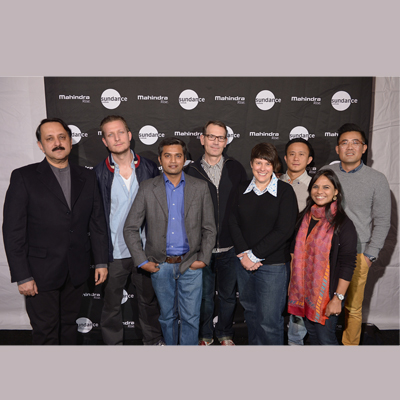
    The Sundance Institute and Mahindra did that only by announcing the winners of the 2014 Sundance Institute, Mahindra Global Filmmaking Award, in recognition and support of emerging independent filmmakers from around the world. The four winning directors and projects are: Hong Khaou for the film Monsoon from Vietnam/UK; Tobias Lindholm for A War from Denmark; Ashlee Page for Archive from Australia; and Neeraj Ghaywan for Fly Away Solo from India.

    The awards were presented at a private ceremony at the 2014 Sundance Film Festival in Park City, Utah, U.S.A. by Mumbai Mantra chairman Rohit Khattar, Feature Film Program, Sundance Institute founding director Michelle Satter, and International Sundance Institute Feature Film Program director Paul Federbush.

    Ecstatic about the honour Neeraj Ghaywan posted on Facebook, “I kept this a secret for a long time but now it’s out. I am at Sundance film festival in Utah. I just got awarded the Global Filmmaker award by Mahindra Sundance. This is for my first feature film Fly Away Solo (Ud Jaayega). This is for us Varun Grover!! Thank you Anurag Kashyap, Dipa De Motwane, Vikramaditya Motwane, Vikas Bahl, Madhu Mantena,Guneet Monga, Aparna Purohit, Avinash Arun, Utpal Pathak, Abhay Tripathi in helping me get to this point. Special thanks to a lot of the cast and crew, who I can’t mention here as of now.”

    Now in its fourth year, the Sundance Institute, Mahindra Global Filmmaking Award is part of a multifaceted collaboration that exemplifies a commitment to and support of world cinema by the Mahindra Group, one of the largest industrial conglomerates in India known throughout the world for its dedication to excellence and to social responsibility, and the nonprofit Sundance Institute, one of the world’s leading cultural organizations.

    The partnership, which also includes the establishment of the Mumbai Mantra, Sundance Institute Screenwriters Lab in India, began in 2011. The Screenwriters Lab will announce the selection for its third edition in March. The lab brings together eight Indian screenwriters from across the world to develop their works under the guidance of accomplished international screenwriters in an environment that encourages storytelling at the highest level.
    Each of the four winning filmmakers will receive a cash award of $10,000, attendance at the Sundance Film Festival for targeted industry and creative meetings, year-round mentoring from Institute staff and creative advisors, eligibility to participate in a Sundance Institute Lab, and ongoing creative and strategic support from Sundance Institute’s renowned Feature Film Program.

    “Sundance Institute shares with Mahindra Group a joint global commitment to nurturing new artists,” said Sundance Institute President and Founder Robert Redford.  “India is one of the most extraordinary cultures in the world, with the support of Anand Mahindra and his group, Sundance Institute screenwriters’ lab can support the next generation of their storytellers.”

    “At a time when there is no dearth of issues around the world that are crying out to be heard, the Global Filmmaking award recognizes independent film-makers who give expression to those voices. The Mahindra Group is proud to assist the Sundance Institute in this endeavour, which, in line with the Group’s ‘Rise’ philosophy, aims to drive a positive change in communities across the world,” said Mahindra Group chairman & managing director Anand Mahindra.


  • 8 film projects selected in inaugural Mumbai Mantra/Sundance Institute Screenwriter Lab

    8 film projects selected in inaugural Mumbai Mantra/Sundance Institute Screenwriter Lab

    MUMBAI: Mumbai Mantra, the media and entertainment division of the Mahindra Group, collaborated with Sundance Institute for the inaugural Mumbai Mantra/Sundance Institute Screenwriters Lab 2012 in which eight feature film projects were selected through a rigorous evaluation process from screenplays submitted by Indian screenwriters from around the world.

    These screenwriting fellows had the opportunity to work intensely on their feature film scripts with the support of established screenwriters and directors (creative advisors) in an environment that encouraged innovation and creative risk-taking.

    Through one-on-one story sessions with the creative advisors, the Screenwriting Fellows were engaged in an artistically demanding process that offered indispensable lessons in craft, a fresh perspective on their work and a platform which fully realised their material.

    This year’s Screenwriting Fellows who went through the immersive five day workshop (March 11-15) are: Charudutt Acharya (Sonali Cable Centre), Shonali Bose and Nilesh Maniyar (Margarita, With a Straw), Vikas Chandra (Toothache), Rajnesh Domalpalli (Avani), Prashant Nair (Umrica), Anusha Rizvi and Mahmood Farooqui (Opium), Ajitpal Singh (Manjhi) and Kartik Singh (Public School).

    Said Mumbai Mantra chairman Rohit Khattar, “We are at an exciting storytelling stage in the history of Independent Cinema in India. With the help of our exceptional partners, Sundance Institute, we are keen to recognize, nurture and hone talent in India and across the world. We welcome to the lab the 11 remarkably talented Creative Advisors. We congratulate the 10 screenwriting fellows selected for the first Mumbai Mantra | Sundance Institute Screenwriters Lab and look forward to their next films with great anticipation.”

    Mumbai Mantra received over 500 applications. For the selection of the eight projects for the Lab, the selection advisory committee comprised eminent Indian screenwriters, directors, film critics and film academics who considered over 90 screenplays. After an intense selection process in consultation with the Sundance Institute, the final eight projects were chosen.

    The Mumbai Mantra | Sundance Institute Screenwriters Lab is the first step in a three-year creative and strategic partnership that includes a robust plan to help Indian filmmakers connect to ever-increasing global audiences.