Tag: Rock-On 2

  • Conjuring 2, Fleabag & ‘Rock-On 2’ digital premiere on Amazon Prime

    MUMBAI: Are you looking for some adventure filled with comedy and drama? Then, Amazon Prime Video is your place to be! Get ready to relive the ‘magik’ of music with the digital premiere of ‘Rock on 2’. 

    Sharing his excitement on Rock On 2 premiering on Amazon Prime Video, Farhan Akhtar said, “The choice to watch exclusive content on mobiles, net or multiple other devices at any given time is hugely exciting. I am thrilled that Rock On 2 is now available on Amazon Prime Video and quite certain that the digital premiere of the movie will weave ‘Magik’. Streaming video provides customers a choice to watch new-age content and I can reach a whole new audience who have the power to choose what they want to watch when.”

    In addition to this musical drama, for some light hearted moments the viewers can come along on a journey with Fleabag, Season 1 – An Amazon Original. And, close those curtains and lock those doors, because you in for some horror with The Conjuring 2. For real movie buffs – catch some of the chartbusters – Keanu, Zoolander 2 and Anomalisa. 

    Rock On 2

    Rock On 2 is an Indian musical drama film, directed by Shujaat Saudagar, produced by Farhan Akhtar and Ritesh Sidhwani, and with music by Shankar-Ehsaan-Loy. The sequel to the 2008 film, Rock On!!, it stars Shraddha Kapoor, Farhan Akhtar, Arjun Rampal, Purab Kohli, Shashank Arora, and Prachi Desai in lead roles.  Watch it exclusively on Amazon Prime Video now!

    Fleabag (Amazon Original)

    Fleabag is a hilarious and poignant window into the mind of a dry-witted, sexual, angry, grief-riddled woman, as she hurls herself at modern living in London. Award-winning playwright Phoebe Waller-Bridge writes and stars as Fleabag, an unfiltered woman trying to heal, while rejecting anyone who tries to help her and keeping up her bravado all along.

    The Conjuring 2

    In 1977, paranormal investigators Ed and Lorraine Warren travel to London, England, where single mother Peggy Hodgson believes that something evil is in her home. When Peggy’s youngest daughter starts showing signs of demonic possession, Ed and Lorraine attempt to help the besieged girl, only to find themselves targeted by the malicious spirits.

  • Eros profits more than double in third quarter 2017

    BENGALURU: The Sunil Lulla led Eros International Media Limited (Eros) reported almost 2.5 times (2.496 times) consolidated profit after tax (PAT) for the quarter ended 31 December 2016 (Q3-16, current quarter) as compared to the corresponding year ago quarter (Q3-16). Eros PAT for the current quarter was Rs 101.88 crore (30.7 percent of Total Income from Operations or TIO, margin) as compared to Rs 40.81 crore (12.2 percent margin) in Q3-16.

    The company’s release slate was affected by demonetisation in Q3-17. Arsing from this, Eros said in its investor presentation that it has withheld the release of some films until the situation normalises. It says that the marginal decrease in consolidated revenues is on account of a narrower film slate comprising three medium budget and 5 small budget films in Q3-17 as compared to one high budget, 4 medium budget and 10 small budget films during the Q3-16 offset by comparatively stronger catalogue revenues. Hence consolidated TIO in the current quarter declined 1 percent year-over-year (y-o-y) to Rs 332.12 crore as compared to Rs 335.38 crore in the corresponding quarter of the previous year.

    Company speak

    Commenting on the performance of Q3-17, Eros, executive vice chairman & MD Sunil Lulla said, “This quarter results gave us a chance to bring out the strength of our valuable library. In spite of demonetization move by the Government which had a temporary negative impact on theatrical revenues, we demonstrated our robust business model by bringing in strong contributions from catalogue sales across television and other distribution channels. Rock On 2 although impacted directly by the demonetization benefited from strong pre‐sales in television and digital streams. Although the movies released during the quarter witnessed weak box office performances due to lack of footfalls, we firmly believe, that the demonetization step, in the longer term, will throw up a huge opportunity for us to strengthen our lead in corporatising the Indian Media and Entertainment industry.”

    “As we look ahead, we are investing smartly for the longer term in‐line with our portfolio approach across varied budgets and languages. Our strong industry‐leading production slate of over 50 movies in CY-17 (Calendar Year) has gone through a stringent green‐lighting process for many months. The upcoming line‐up includes highly promising projects such as five films from Trinity, two Indo‐China co‐productions, a Shahrukh Khan film from Color Yellow, two sequels from our own IPs like Vicky Donor‐2, Badlapur‐2, Munna Michael starring Tiger Shroff, Chanda Mama Door Ke starring Sushant Singh, amongst others.”

    Let us look at the other numbers reported by Eros

    Simple EBIDTA without other income in Q3-17 almost doubled (increased by 97.2 percent) y-o-y to Rs 131.39 crore (39.6 percent margin) from Rs 66.64 crore (19.9 percent margin).

    Consolidated Net Finance cost in the current quarter increased 48.2 per cent y-o-y to Rs 11.93 crore from Rs 8.05 crore.

    On account of the lower number of films released, Total Expenditure in Q3-17 declined 25.2 percent to Rs 203.18 crore from Rs 271.54 crore in Q3-16.  The company’s Films rights costs including amortisation costs in Q3-17 declined 24.1 percent y-o-y to Rs 151.23 crore from Rs 199.28 crore.

    Employee Benefit Expense in the current quarter increased 43 percent to Rs 20.48 crore from Rs 14.32 crore in Q3-16. Other expenses in Q3-17 declined by almost half (declined by 49.5 percent) y-o-y to Rs 28.86 crore from Rs 57.11 crore in the corresponding of the previous year.

    ErosNow

    The company says that Eros International’s OTT Platform Eros Now has over 20 lakh (2 million) subscribers worldwide, it has 5.5 crore (55 million) registered users worldwide across WAPP, APP and the web. The platform has rights to over 5,000 films, 250,000 audio tracks with 13 music labels providing music content.

  • Branded Content isn’t all about visibility: Maxus ESP’s Pooja Verma

    Branded Content isn’t all about visibility: Maxus ESP’s Pooja Verma

    MUMBAI:  Gone are the days when brands would like a piece of  popular content and sponsor it, or spend some marketing budget over product placements. It starts with finding out the brand objectives first and matching it with the relevance of the content.  It is not limited to a movie association or being a title sponsor of a prime time show; a plethora of content is available for brands to smartly associate with. Moving on from simple sponsorship deals, brands are donning the role of content creators themselves, both, short and long form, on television and the digital media. Content or, more precisely, branded content, is the new buzz word in the industry, as digital is becoming the norm. Naturally, traditional brands look at it as a risk, the same way digital was spoken of 10 years ago.

    While there are several brands jumping the content bandwagon following a few success stories, it is important to understand what content will work for them, and when. That is when specialists such as Pooja Verma come in. Verma took on the role of head of content, Entertainment and Sports Partnerships  (ESP) at Maxus  a little over a year ago and  life has been very busy since, she happily shares.

    Maxus ESP, the content solutions arm of Maxus stepped up the branded content ante by facilitating some very innovative brand and content associations — Vodafone’s ‘Be Super’ that went live on Independence Day to promote its 4G connections, Maybellene and  Manmarziyan, Tata Tiago’s association with TVF’s Tripling, and recently Vodafone’s association for Rock On 2 are some of the golden examples.

    In a candid chat with indiantelevision’s Papri Das, Verma looks back on the year, and opens up on the current trends in branded content, Indian cinema’s prospects of building franchises, and what brands look for in a piece of content.

    Excerpts:

    What is the truth behind the current buzz for branded content?

    Media agencies understand that it is not about the 30-seconder anymore, ever since social media became the norm. Thus they are investing significantly in technology, data and content of-course. Storytelling is a big part of how brands want to bring its message alive.

    While digital as a medium has gone from  a risk to the norm, content or storytelling for brands has taken up that space. Words like ‘native advertising’, ‘content marketing’ are being thrown up, because today’s consumers aren’t interested in being talked down to. They want to participate and engage, and then make a conscious decision to whether associate with a particular content, brand or product.

    Therefore, good storytelling that is organic and intuitive and captures the essence of a brand is playing a much bigger role.

    Are brands really finding it appealing and willing to spend on it?

    Marketers, brands and advertisers are increasingly looking at content from a partnership perspective. The old concept of buying an IP or putting some money on show is being redefined. Content sponsorships have taken a much larger and smarter role.

    For example, a brand spending  Rs 10 in sponsoring a TV show now thinks how that money can work for the brand as if it were Rs 20. Which is where innovative partnerships come in. Yes, the run-of-the-mill sponsorship is the route taken but the difference is in how those sponsorships bring the brand alive. Moving forward that is the route we see becoming a norm for brands. Making the investment make harder for you and more memorable as well.

    2016 has seen some interesting brands-movie associations. Yet Bollywood has a long way to catch up to international cinema when it comes to being brand-friendly. What do you think is holding Bollywood back?

    I would give the industry credit for sitting up and taking notice. Firstly, stories are becoming central to the craft. The craft of storytelling and how it has changed is more than visible today. The thing with franchises is that it’s the next level. I can tell you very safely that the franchise culture will soon hit Bollywood as well. ‘Dhoom’ has three editions already. The way characters are being created shows that content makers, storytellers are thinking long term when making it. Characters around which you can spin another tale. That is great news for brands.

    Look at all the bond movies, Aston Martin for car, and the Omega watch is a given. I can’t say how soon India will adopt the franchise culture, but it will be sooner than you are expecting. Hollywood saw the franchise boom because the studios took notice of the opportunity in allied businesses. The good thing is brands have started budgeting annually for movie partnerships.

    At which point does a brand start its association with a piece of content?

    It is around the same time a story is conceived. The thing about branded content is — whether you look at it from the film lens, or the passion point lens of sports, live gigs and others, or from a pure-play content perspective of TV, digital etc — stories are at the center of it. The whole point is ‘a brand should be spoken of in the context of the right story, which the consumers can relate to. Brands should come in at a time when it spots a great story, knows that there is future to the story, characters are memorable, and the product or the brand seems organic to it.

    When it comes to films, studios take the call when stories come to them, and it is usually when they are making up mind for cast, shoot plans etc. Since it is a relationships based business, we are always in touch with the studios and keep an out for which film they are investing in.

    How pressing are clients when it comes to RoI from branded content? How do you measure the success of branded content for your clients?

    Looking for RoI is a given and rightly so. True, though, that the measurement of a successfully done brand integration is an industry wide debate. Everyone has a different opinion, a different take on how to measure. The way we look at it is not as simple as how many times a brand’s logo popped up in the content. It is not about how many times your brand’s name appears. It is equally if not more important to ask ‘How many people are speaking of the core thought of the  brand.’

    For example, when we did the ‘Be Super’ campaign for Vodafone during Independence Day, the entire exercise brought alive how one can be super. People were talking about it. Of course, we got good views on the video, but that 20 other things can get you. A 30-sec TVC also gets great views. Acknowledging that measurement in the field of branded content is important, however the lens needs to be changed a bit.

    How do you convince a traditional brand to agree to an unconventional brand association? What parameters do you follow to decide if particular content works for a brand?

    We focus in getting the context and relevance of the content that we are recommending  fits well with the brand. Then comes the efficacy of the platform itself. Then, we discuss how we are making it ‘discoverable’. These are the questions that keep brand managers up at night as well.

    There are two ways to approach it: art and science. Art is great story, memorable characters, uniqueness of content. The science part is platform, ‘discoverability,’ finding if it’s being delivered to the right TG, is it in line with the cultural codes of the brand.

    I have had a client keen on associating with Bigg Boss, but the brand’s message was socially inclined. I couldn’t possibly recommend that. Yes, your product might be spoken about, but the brand’s positioning in the market and the psychographics it wanted to fit in will not be matched with Bigg Boss. It is not about just visibility.

    Can you think of any brand associations in recent times that were a bad fit according to you?

    Quite a few, and the examples are not just from outside, some of them were done by us. The kind of branded content we are doing now didn’t have several decades of precedence. It takes time to figure out what works for a brand and what doesn’t. But, increasingly, brands are becoming more aware of the value that good branded content can bring them. And, it is only because these bad examples exist that I can speak about the good ones.

  • Branded Content isn’t all about visibility: Maxus ESP’s Pooja Verma

    Branded Content isn’t all about visibility: Maxus ESP’s Pooja Verma

    MUMBAI:  Gone are the days when brands would like a piece of  popular content and sponsor it, or spend some marketing budget over product placements. It starts with finding out the brand objectives first and matching it with the relevance of the content.  It is not limited to a movie association or being a title sponsor of a prime time show; a plethora of content is available for brands to smartly associate with. Moving on from simple sponsorship deals, brands are donning the role of content creators themselves, both, short and long form, on television and the digital media. Content or, more precisely, branded content, is the new buzz word in the industry, as digital is becoming the norm. Naturally, traditional brands look at it as a risk, the same way digital was spoken of 10 years ago.

    While there are several brands jumping the content bandwagon following a few success stories, it is important to understand what content will work for them, and when. That is when specialists such as Pooja Verma come in. Verma took on the role of head of content, Entertainment and Sports Partnerships  (ESP) at Maxus  a little over a year ago and  life has been very busy since, she happily shares.

    Maxus ESP, the content solutions arm of Maxus stepped up the branded content ante by facilitating some very innovative brand and content associations — Vodafone’s ‘Be Super’ that went live on Independence Day to promote its 4G connections, Maybellene and  Manmarziyan, Tata Tiago’s association with TVF’s Tripling, and recently Vodafone’s association for Rock On 2 are some of the golden examples.

    In a candid chat with indiantelevision’s Papri Das, Verma looks back on the year, and opens up on the current trends in branded content, Indian cinema’s prospects of building franchises, and what brands look for in a piece of content.

    Excerpts:

    What is the truth behind the current buzz for branded content?

    Media agencies understand that it is not about the 30-seconder anymore, ever since social media became the norm. Thus they are investing significantly in technology, data and content of-course. Storytelling is a big part of how brands want to bring its message alive.

    While digital as a medium has gone from  a risk to the norm, content or storytelling for brands has taken up that space. Words like ‘native advertising’, ‘content marketing’ are being thrown up, because today’s consumers aren’t interested in being talked down to. They want to participate and engage, and then make a conscious decision to whether associate with a particular content, brand or product.

    Therefore, good storytelling that is organic and intuitive and captures the essence of a brand is playing a much bigger role.

    Are brands really finding it appealing and willing to spend on it?

    Marketers, brands and advertisers are increasingly looking at content from a partnership perspective. The old concept of buying an IP or putting some money on show is being redefined. Content sponsorships have taken a much larger and smarter role.

    For example, a brand spending  Rs 10 in sponsoring a TV show now thinks how that money can work for the brand as if it were Rs 20. Which is where innovative partnerships come in. Yes, the run-of-the-mill sponsorship is the route taken but the difference is in how those sponsorships bring the brand alive. Moving forward that is the route we see becoming a norm for brands. Making the investment make harder for you and more memorable as well.

    2016 has seen some interesting brands-movie associations. Yet Bollywood has a long way to catch up to international cinema when it comes to being brand-friendly. What do you think is holding Bollywood back?

    I would give the industry credit for sitting up and taking notice. Firstly, stories are becoming central to the craft. The craft of storytelling and how it has changed is more than visible today. The thing with franchises is that it’s the next level. I can tell you very safely that the franchise culture will soon hit Bollywood as well. ‘Dhoom’ has three editions already. The way characters are being created shows that content makers, storytellers are thinking long term when making it. Characters around which you can spin another tale. That is great news for brands.

    Look at all the bond movies, Aston Martin for car, and the Omega watch is a given. I can’t say how soon India will adopt the franchise culture, but it will be sooner than you are expecting. Hollywood saw the franchise boom because the studios took notice of the opportunity in allied businesses. The good thing is brands have started budgeting annually for movie partnerships.

    At which point does a brand start its association with a piece of content?

    It is around the same time a story is conceived. The thing about branded content is — whether you look at it from the film lens, or the passion point lens of sports, live gigs and others, or from a pure-play content perspective of TV, digital etc — stories are at the center of it. The whole point is ‘a brand should be spoken of in the context of the right story, which the consumers can relate to. Brands should come in at a time when it spots a great story, knows that there is future to the story, characters are memorable, and the product or the brand seems organic to it.

    When it comes to films, studios take the call when stories come to them, and it is usually when they are making up mind for cast, shoot plans etc. Since it is a relationships based business, we are always in touch with the studios and keep an out for which film they are investing in.

    How pressing are clients when it comes to RoI from branded content? How do you measure the success of branded content for your clients?

    Looking for RoI is a given and rightly so. True, though, that the measurement of a successfully done brand integration is an industry wide debate. Everyone has a different opinion, a different take on how to measure. The way we look at it is not as simple as how many times a brand’s logo popped up in the content. It is not about how many times your brand’s name appears. It is equally if not more important to ask ‘How many people are speaking of the core thought of the  brand.’

    For example, when we did the ‘Be Super’ campaign for Vodafone during Independence Day, the entire exercise brought alive how one can be super. People were talking about it. Of course, we got good views on the video, but that 20 other things can get you. A 30-sec TVC also gets great views. Acknowledging that measurement in the field of branded content is important, however the lens needs to be changed a bit.

    How do you convince a traditional brand to agree to an unconventional brand association? What parameters do you follow to decide if particular content works for a brand?

    We focus in getting the context and relevance of the content that we are recommending  fits well with the brand. Then comes the efficacy of the platform itself. Then, we discuss how we are making it ‘discoverable’. These are the questions that keep brand managers up at night as well.

    There are two ways to approach it: art and science. Art is great story, memorable characters, uniqueness of content. The science part is platform, ‘discoverability,’ finding if it’s being delivered to the right TG, is it in line with the cultural codes of the brand.

    I have had a client keen on associating with Bigg Boss, but the brand’s message was socially inclined. I couldn’t possibly recommend that. Yes, your product might be spoken about, but the brand’s positioning in the market and the psychographics it wanted to fit in will not be matched with Bigg Boss. It is not about just visibility.

    Can you think of any brand associations in recent times that were a bad fit according to you?

    Quite a few, and the examples are not just from outside, some of them were done by us. The kind of branded content we are doing now didn’t have several decades of precedence. It takes time to figure out what works for a brand and what doesn’t. But, increasingly, brands are becoming more aware of the value that good branded content can bring them. And, it is only because these bad examples exist that I can speak about the good ones.

  • ESP Properties ties in Vodafone U with Rock On 2

    ESP Properties ties in Vodafone U with Rock On 2

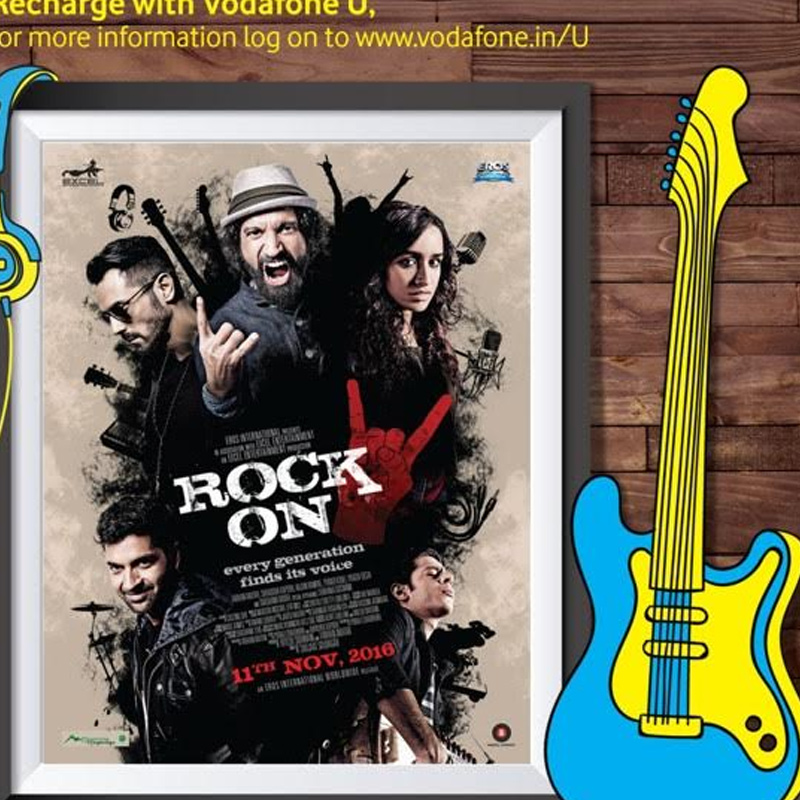
    MUMBAI: ESP Properties (Entertainment Sports Partnership), the entertainment, sports and content arm of GroupM, have facilitated the integration with Vodafone U for the newly released, Rock On 2. In a unique tie-in, Vodafone U is utilizing the association to promote its recently launched segmented youth proposition —Vodafone U and conceptualized #JoinTheBand campaign with Rock On 2. The brand used the association with Rock On 2 through live concerts and meet & greets to create a holistic association and integration.

    Talking about the association ESP Properties senior business head Aastha Jain said, “Rock On 2 is a film about friends and music, that’s exactly what resonates with the youth. Vodafone U is the brand offering targeted primarily to the youth and hence the association seemed perfect fit. The Vodafone and Rock On 2 association is unique in a manner beyond the conventional integrations which are well thought of and executed and will hit the right chords with the consumers as well as viewers.”

    Vodafone India national brand head Siddharth Banerjee added, “Music is the key passion point of Indian youth and Vodafone U is targeted at that set! With this integration, we not only attract and engage our core audiences but also communicate our brand story and proposition effectively! We are happy to work with ESP who understand, execute and ideate through the brand lens”

    Excel Entertainment marketing head Vishal Ramchandani explained, “We made sure that we aligned with Vodafone in a way that benefits and creates a win-win situation for both, the movie and the brand. Rock On 2’s association with Vodafone is rather a natural alliance. We are pleased that India’s leading telecom service provider Vodafone and Rock On 2 have come together to spread its Magik to millions of consumers and grateful to ESP for stitching this through so seamlessly.”

  • ESP Properties ties in Vodafone U with Rock On 2

    ESP Properties ties in Vodafone U with Rock On 2

    MUMBAI: ESP Properties (Entertainment Sports Partnership), the entertainment, sports and content arm of GroupM, have facilitated the integration with Vodafone U for the newly released, Rock On 2. In a unique tie-in, Vodafone U is utilizing the association to promote its recently launched segmented youth proposition —Vodafone U and conceptualized #JoinTheBand campaign with Rock On 2. The brand used the association with Rock On 2 through live concerts and meet & greets to create a holistic association and integration.

    Talking about the association ESP Properties senior business head Aastha Jain said, “Rock On 2 is a film about friends and music, that’s exactly what resonates with the youth. Vodafone U is the brand offering targeted primarily to the youth and hence the association seemed perfect fit. The Vodafone and Rock On 2 association is unique in a manner beyond the conventional integrations which are well thought of and executed and will hit the right chords with the consumers as well as viewers.”

    Vodafone India national brand head Siddharth Banerjee added, “Music is the key passion point of Indian youth and Vodafone U is targeted at that set! With this integration, we not only attract and engage our core audiences but also communicate our brand story and proposition effectively! We are happy to work with ESP who understand, execute and ideate through the brand lens”

    Excel Entertainment marketing head Vishal Ramchandani explained, “We made sure that we aligned with Vodafone in a way that benefits and creates a win-win situation for both, the movie and the brand. Rock On 2’s association with Vodafone is rather a natural alliance. We are pleased that India’s leading telecom service provider Vodafone and Rock On 2 have come together to spread its Magik to millions of consumers and grateful to ESP for stitching this through so seamlessly.”

  • Q1-17: Diversified mix boosts Eros revenue

    Q1-17: Diversified mix boosts Eros revenue

    BENGALURU: The Sunil Lulla-led Eros International Media Limited (Eros) reported 22.2 percent increase in total revenue including other income (TR) for the quarter ended 30 June 2016 (Q1-17, current quarter) as compared to the corresponding quarter of the previous year (Q1-16).

    Eros reported lower revenue of Rs 411.08 crore in the current quarter as compared to total revenue of Rs 480.59 crore in Q1-16, but considering the one-time sale of digital rights of Rs. 1,44.20 crore, its revenue for Q1-16 works out to Rs 336.39 crore. The company says that a diversified movie mix that included worldwide releases of
    Housefull 3, Ki and Ka, Nil Battey Sannata, Sardaar Gabbar Singh (Telugu), 24 (Tamil), amongst other releases helped in the double-digit increase in revenue.

    Total comprehensive income including other income after taxes in Q1-17 increased 42.9 percent year-over-year (y-o-y) to Rs 73.87 crore (18percent margin) from Rs 51.70 crore (15.4 percent margin on Rs 336.39 crore, 10.9 percent margin on TR).

    Finance cost in the current quarter increased 9.7 percent y-o-y to Rs 9.40 crore from Rs 8.57 crore. Total Expenditure in Q1-17 declined 14.4 percent to Rs 329.37 crore from Rs 384.94 crore in Q1-16. Employee Benefit Expense in the current quarter increased 52.6 percent to Rs 17.50 crore from Rs 11.54 crore in Q1-16.

    The company also had a diversified revenue mix comprising Theatrical Revenues – 52.1%, Overseas Revenues – 17.2% and Television & Others – 30.7% as a percentage of Income from Operations.

    Company speak

    Commenting on the performance of Q1-17, Eros, executive vice chairman & MD Sunil Lulla said, “Fiscal 2017 has begun on an excellent note for Eros International with notable progress on operational and strategic parameters. Our approach towards investing in high quality portfolio of film content, which is greenlit at appropriate budgets and is monetized across various revenue streams, continues to yield positive results.”.

    “This year is also marked by strong pre-sales of majority of our film slate including, Dishoom, Baar Baar Dekho, Rock On 2, Banjo as well as regional films to leading satellite channels, as a part of our de-risking strategy and ensuring revenue and cash flow visibility,” Lulla said.

    “Q2-17 has also begun well with the power packed performance of Dishoom and Happy Bhaag Jayegi and our Telugu release Janatha Garage is heading to be the biggest Telugu grosser of this year,” Lulla added.

  • Q1-17: Diversified mix boosts Eros revenue

    Q1-17: Diversified mix boosts Eros revenue

    BENGALURU: The Sunil Lulla-led Eros International Media Limited (Eros) reported 22.2 percent increase in total revenue including other income (TR) for the quarter ended 30 June 2016 (Q1-17, current quarter) as compared to the corresponding quarter of the previous year (Q1-16).

    Eros reported lower revenue of Rs 411.08 crore in the current quarter as compared to total revenue of Rs 480.59 crore in Q1-16, but considering the one-time sale of digital rights of Rs. 1,44.20 crore, its revenue for Q1-16 works out to Rs 336.39 crore. The company says that a diversified movie mix that included worldwide releases of
    Housefull 3, Ki and Ka, Nil Battey Sannata, Sardaar Gabbar Singh (Telugu), 24 (Tamil), amongst other releases helped in the double-digit increase in revenue.

    Total comprehensive income including other income after taxes in Q1-17 increased 42.9 percent year-over-year (y-o-y) to Rs 73.87 crore (18percent margin) from Rs 51.70 crore (15.4 percent margin on Rs 336.39 crore, 10.9 percent margin on TR).

    Finance cost in the current quarter increased 9.7 percent y-o-y to Rs 9.40 crore from Rs 8.57 crore. Total Expenditure in Q1-17 declined 14.4 percent to Rs 329.37 crore from Rs 384.94 crore in Q1-16. Employee Benefit Expense in the current quarter increased 52.6 percent to Rs 17.50 crore from Rs 11.54 crore in Q1-16.

    The company also had a diversified revenue mix comprising Theatrical Revenues – 52.1%, Overseas Revenues – 17.2% and Television & Others – 30.7% as a percentage of Income from Operations.

    Company speak

    Commenting on the performance of Q1-17, Eros, executive vice chairman & MD Sunil Lulla said, “Fiscal 2017 has begun on an excellent note for Eros International with notable progress on operational and strategic parameters. Our approach towards investing in high quality portfolio of film content, which is greenlit at appropriate budgets and is monetized across various revenue streams, continues to yield positive results.”.

    “This year is also marked by strong pre-sales of majority of our film slate including, Dishoom, Baar Baar Dekho, Rock On 2, Banjo as well as regional films to leading satellite channels, as a part of our de-risking strategy and ensuring revenue and cash flow visibility,” Lulla said.

    “Q2-17 has also begun well with the power packed performance of Dishoom and Happy Bhaag Jayegi and our Telugu release Janatha Garage is heading to be the biggest Telugu grosser of this year,” Lulla added.

  • Q3-2016: Eros revenue down

    Q3-2016: Eros revenue down

    BENGALURU: The Sunil Lulla led Eros International Media Limited (Eros) reported a 31.7 per cent YoY drop in consolidated Total Income from operations (TIO) at Rs 335.35 crore in the quarter ended 31 December, 2015 (Q3-2016, current quarter). The company had reported TIO of Rs 490.73 crore in the corresponding prior year quarter. Operating revenue in the current quarter declined 33.6 per cent as compared to Rs 504.91 crore in the immediate trailing quarter (quarter on quarter or QoQ).

    Note: 100,00,000 = 100 lakh = 10 million = 1 crore
    All numbers in this are consolidated unless stated otherwise.

    Profit after tax (PAT) in the current quarter declined to almost a third (down 65.5 per cent) year on year (YoY) to Rs 37.77 crore (11.3 per cent margin) as compared to Rs 109.34 crore (22.3 per cent margin) and fell 58.2 per cent as compared to to Rs 90.30 crore (17.9 per cent margin) in the immediate trailing quarter.

    The company says its revenues vary quarter on quarter based on release slate. In Q3-2016, there was only one high budget film compared to three high budget films in Q3-2015 with only partial revenues of Bajirao Mastani.

    In Q3-2016, Eros says that one high budget, four medium and 10 low budget films were released as against three high budget, one medium and eight low budget movies in Q3-2015. During the quarter, 15 movies were released consisting of seven Hindi and five Tamil/Telugu films and three Regional film as compared to 12 films during Q3-2015, which included eight Hindi and four Tamil/Telugu films.

    Eros further informs that apart from the new release slate, a significant part of its revenue is contributed by monetisation of its valuable film library, and generally has a second half skew. Since catalogues revenues have longer payment cycles associated with them the company has decided to defer sales for couple of quarters until its receivables position normalises.

    Receivables

    As on 31 December, 2015, Eros says that its total receivables stood at Rs 6,358 million as compared to Rs 6,300 million as on 30 September, 2015. Receivables not due as of 31 December, 2015 was Rs 339.3 crore as compared to Rs 389.9 crore as on 30 September, 2015. Receivables over 365 days old were Rs 38.8 crore as of 31 December, 2015.

    Between 1 January, 2016 to 7 February, 2016, the company has seen a further collection of Rs 52.5 crore of receivables of the period up to 31 December, 2015. The company says that it remains confident to bring the overall receivables down to Rs 525 crore by the end of FY-2016.

    Company speak

    Eros executive vice chairman and managing director Sunil Lulla said, “I am pleased to announce yet another profitable quarter from Eros International driven by the blockbuster success of Bajirao Mastani and a string of regional releases. Our results for the nine months ended December 2015 reflect the strong performance of our film slate with total domination of the box office charts withBajrangi Bhaijaan, Tanu Weds Manu Returns, Welcome Back, etc.; and strong television, ancillary and overseas revenues to complement the box office. We are very proud that our films have been dominating the Bollywood awards declared for CY2015. We continue to pride our green-lighting process and build on our portfolio strategy of films across varied budgets and languages backed by strong pre-sales to de-risk the business model.

    “We are upbeat about our film slate for FY-2017, which includes a string of high-octane releases such as R. Balki’s Ki & Ka, the hit franchise comedy Housefull 3, the highly anticipated rock musical franchise Rock On 2, the action drama, Shivaay and a host of regional releases amongst others,” continued Lulla.
    “We firmly believe that the company has a conservative capital structure and a well-funded balance sheet and we are proud to bring down our Net Debt/Equity ratio to just 0.11 with a free cash flow of Rs 1,320 million in the 9M FY2016. I am confident that with our clear strategic focus, differentiated revenue streams and regional strategy execution, we will continue to deliver solid results in the future and we thank all our shareholders and associates for their continued support,” added Lulla.

    Eros International Plc Group CEO Jyoti Deshpande added, “Calendar year 2015 has been nothing short of brilliant for Eros International operationally with a higher than average box office success of our entire film slate along with critical acclaim and awards to go with it. This year also marked the beginning of the monetisation of the 30 million plus registered users of Eros now our OTT platform and our foray into what could be potentially ground breaking Indo – China co-productions. We continue to support Eros International Media in every possible way with our strong balance sheet and are thrilled that Eros International Media has achieved a free cash flow (FCF) of Rs 1,320 million in the 9M-2016. We look forward to announcing Q3 results of Eros International Plc later in February with a further update on other related matters. once again we thank our shareholders, business associates, the Indian film industry and other partners who have helped us strengthen our resolve even in tough times.”

    Revenue breakup: Eros breakup of revenue for 9M-2016 (nine month period ended 31 December, 2015): Theatrical Revenue – 44.2 per cent; Overseas Revenue – 29.3 per cent; Television and others 26.5 per cent.

    Total Expenditure in the current quarter declined 21.6 per cent YoY to Rs 270.59 crore (80.7 per cent of TIO) as compared to Rs 345.34 crore (70.4 per cent of TIO) and declined 27.1 per cent QoQ as compared to Rs 370.97 crore (73.5 per cent of TIO).

    The company’s EBIT (Earnings before Interest and Taxes) declined 53.9 per cent YoY to Rs 67.65 crore (20.2 per cent margin) as compared to Rs 146.63 crore (29.9 per cent margin) and declined 51.3 per cent QoQ as compared to Rs 139.01 crore (27.5 per cent margin).

    Employee Benefits Expense (EBE) in the current quarter increased 47.2 per cent YoY to Rs 14.12 crore (4.2 per cent of TIO) as compared to Rs 9.59 crore (two per cent of TIO), but declined 1.2 per cent QoQ from Rs 14.29 crore (2.8 per cent of TIO).

  • Q3-2016: Eros revenue down

    Q3-2016: Eros revenue down

    BENGALURU: The Sunil Lulla led Eros International Media Limited (Eros) reported a 31.7 per cent YoY drop in consolidated Total Income from operations (TIO) at Rs 335.35 crore in the quarter ended 31 December, 2015 (Q3-2016, current quarter). The company had reported TIO of Rs 490.73 crore in the corresponding prior year quarter. Operating revenue in the current quarter declined 33.6 per cent as compared to Rs 504.91 crore in the immediate trailing quarter (quarter on quarter or QoQ).

    Note: 100,00,000 = 100 lakh = 10 million = 1 crore
    All numbers in this are consolidated unless stated otherwise.

    Profit after tax (PAT) in the current quarter declined to almost a third (down 65.5 per cent) year on year (YoY) to Rs 37.77 crore (11.3 per cent margin) as compared to Rs 109.34 crore (22.3 per cent margin) and fell 58.2 per cent as compared to to Rs 90.30 crore (17.9 per cent margin) in the immediate trailing quarter.

    The company says its revenues vary quarter on quarter based on release slate. In Q3-2016, there was only one high budget film compared to three high budget films in Q3-2015 with only partial revenues of Bajirao Mastani.

    In Q3-2016, Eros says that one high budget, four medium and 10 low budget films were released as against three high budget, one medium and eight low budget movies in Q3-2015. During the quarter, 15 movies were released consisting of seven Hindi and five Tamil/Telugu films and three Regional film as compared to 12 films during Q3-2015, which included eight Hindi and four Tamil/Telugu films.

    Eros further informs that apart from the new release slate, a significant part of its revenue is contributed by monetisation of its valuable film library, and generally has a second half skew. Since catalogues revenues have longer payment cycles associated with them the company has decided to defer sales for couple of quarters until its receivables position normalises.

    Receivables

    As on 31 December, 2015, Eros says that its total receivables stood at Rs 6,358 million as compared to Rs 6,300 million as on 30 September, 2015. Receivables not due as of 31 December, 2015 was Rs 339.3 crore as compared to Rs 389.9 crore as on 30 September, 2015. Receivables over 365 days old were Rs 38.8 crore as of 31 December, 2015.

    Between 1 January, 2016 to 7 February, 2016, the company has seen a further collection of Rs 52.5 crore of receivables of the period up to 31 December, 2015. The company says that it remains confident to bring the overall receivables down to Rs 525 crore by the end of FY-2016.

    Company speak

    Eros executive vice chairman and managing director Sunil Lulla said, “I am pleased to announce yet another profitable quarter from Eros International driven by the blockbuster success of Bajirao Mastani and a string of regional releases. Our results for the nine months ended December 2015 reflect the strong performance of our film slate with total domination of the box office charts withBajrangi Bhaijaan, Tanu Weds Manu Returns, Welcome Back, etc.; and strong television, ancillary and overseas revenues to complement the box office. We are very proud that our films have been dominating the Bollywood awards declared for CY2015. We continue to pride our green-lighting process and build on our portfolio strategy of films across varied budgets and languages backed by strong pre-sales to de-risk the business model.

    “We are upbeat about our film slate for FY-2017, which includes a string of high-octane releases such as R. Balki’s Ki & Ka, the hit franchise comedy Housefull 3, the highly anticipated rock musical franchise Rock On 2, the action drama, Shivaay and a host of regional releases amongst others,” continued Lulla.
    “We firmly believe that the company has a conservative capital structure and a well-funded balance sheet and we are proud to bring down our Net Debt/Equity ratio to just 0.11 with a free cash flow of Rs 1,320 million in the 9M FY2016. I am confident that with our clear strategic focus, differentiated revenue streams and regional strategy execution, we will continue to deliver solid results in the future and we thank all our shareholders and associates for their continued support,” added Lulla.

    Eros International Plc Group CEO Jyoti Deshpande added, “Calendar year 2015 has been nothing short of brilliant for Eros International operationally with a higher than average box office success of our entire film slate along with critical acclaim and awards to go with it. This year also marked the beginning of the monetisation of the 30 million plus registered users of Eros now our OTT platform and our foray into what could be potentially ground breaking Indo – China co-productions. We continue to support Eros International Media in every possible way with our strong balance sheet and are thrilled that Eros International Media has achieved a free cash flow (FCF) of Rs 1,320 million in the 9M-2016. We look forward to announcing Q3 results of Eros International Plc later in February with a further update on other related matters. once again we thank our shareholders, business associates, the Indian film industry and other partners who have helped us strengthen our resolve even in tough times.”

    Revenue breakup: Eros breakup of revenue for 9M-2016 (nine month period ended 31 December, 2015): Theatrical Revenue – 44.2 per cent; Overseas Revenue – 29.3 per cent; Television and others 26.5 per cent.

    Total Expenditure in the current quarter declined 21.6 per cent YoY to Rs 270.59 crore (80.7 per cent of TIO) as compared to Rs 345.34 crore (70.4 per cent of TIO) and declined 27.1 per cent QoQ as compared to Rs 370.97 crore (73.5 per cent of TIO).

    The company’s EBIT (Earnings before Interest and Taxes) declined 53.9 per cent YoY to Rs 67.65 crore (20.2 per cent margin) as compared to Rs 146.63 crore (29.9 per cent margin) and declined 51.3 per cent QoQ as compared to Rs 139.01 crore (27.5 per cent margin).

    Employee Benefits Expense (EBE) in the current quarter increased 47.2 per cent YoY to Rs 14.12 crore (4.2 per cent of TIO) as compared to Rs 9.59 crore (two per cent of TIO), but declined 1.2 per cent QoQ from Rs 14.29 crore (2.8 per cent of TIO).