Tag: Roadmap

  • You can be creative and edgy, without being insensitive: Dentsu Creative India CEO

    You can be creative and edgy, without being insensitive: Dentsu Creative India CEO

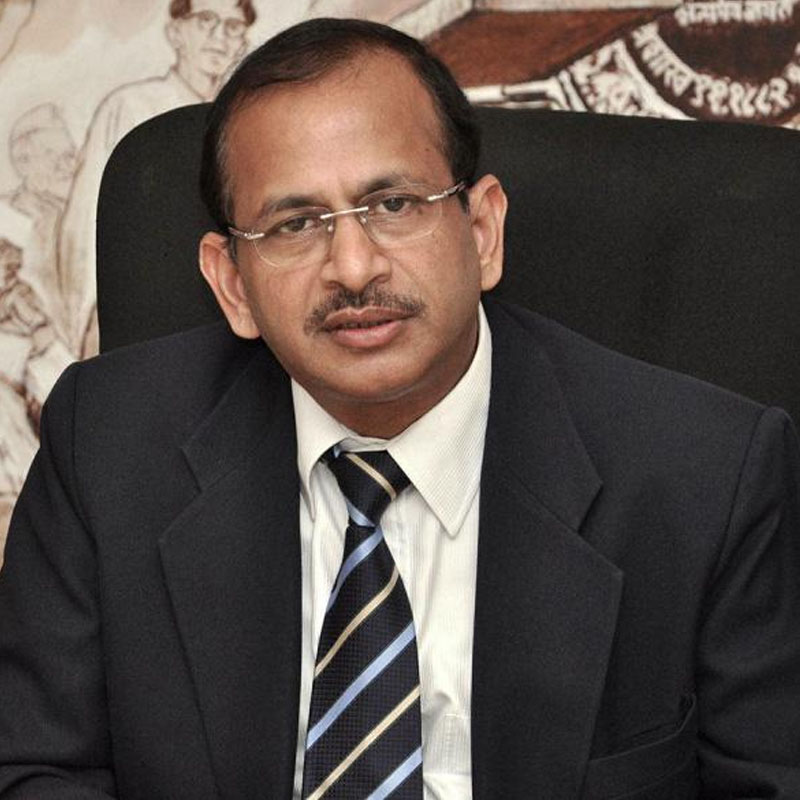
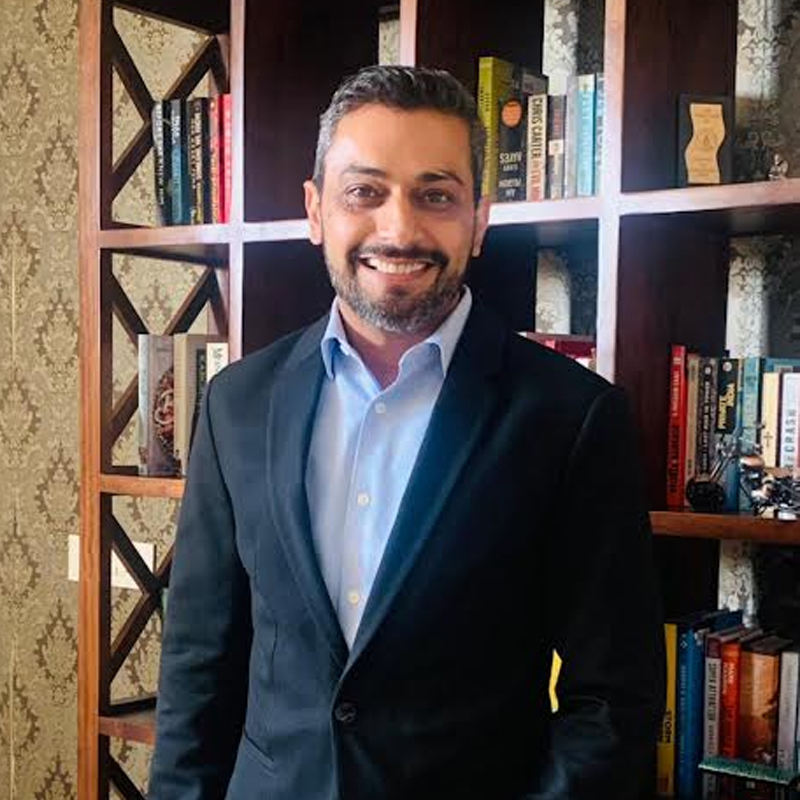
    Mumbai : Exactly a year back on 22 June 2021, erstwhile Dentsu Impact president Amit Wadhwa took on the mantle of chief executive officer (CEO) to lead the Dentsu India creative service line leadership team. The newly restructured creative service line in India, brought together brands from the house of Dentsu such as Dentsu Webchutney, Taproot Dentsu, WATConsult, Perfect Relations, Isobar, Dentsu One, Dentsu India and Dentsu Impact, along with their digital & PR capabilities- all under one umbrella of Dentsu Creative India.

    The past year also witnessed major upheavals, both, at the network which saw several high-profile exits, as well as in the advertising and media landscape with the pandemic rewriting the rules for the communication industry.

    The Dentsu Creative India CEO shares with Indiantelevision.com how the past year fared for the network as well as for him, amid the tumultuous new normal, and what his priorities were since taking over the creative agency mantle.

    Wadhwa also completed over a decade at the network last year, having joined Dentsu Creative Impact (now Dentsu Impact) in November 2011. With another five-year stint at JWT (J. Walter Thompson) in his kitty before that, he has literally seen the industry evolve over the past decade and a half.

    Despite challenges due to macro-economic uncertainties and global inflationary trends, Wadhwa remains buoyant and confident that the advertising and marketing industry will grow at a good pace “crossing double digits”.

    IndianTelevision.com’s Anupama Sajeet caught up with the advertising veteran and self-confessed ‘passionate brand builder’ for a free-wheeling conversation, where he also spoke about what has changed in adland and how the creative group is ensuring it keeps pace with the emerging new tech in the space.

    Edited excerpts:

    On his focus areas since taking on the helm of the Dentsu Creative Group

    Three things. Integration was the biggest objective. Secondly, making sure that we digitise everything and so we infused digital and technology in everything we do – whether it is creative, or PR- we have digitised it all- the entire system. And the third of course, was to make sure that the cornerstone of the entire offering is “creative”, and hence up the creative product. These were the three things I kept in mind as I took on the CEO mantle. Have I done that 100 per cent? Of course not. But I think we have moved leaps and bounds on all these fronts.

    On how the past year fared for the agency amid high profile exits and the uncertainty wrought on by the pandemic

    In terms of how we have fared, I think we are working in a far more unified manner for our clients. So, we have integrated to make sure the best experts come together and deliver as one single team for a client. There are many brands where earlier erstwhile different units of Dentsu Creative are now working together as one. For eg- we recently worked at Ikea where the Dentsu MB and Dentsu Webchutney worked as a single team. Then there was another instance where Isobar and Taproot Dentsu worked together as one unit. There are many such examples. That’s from the integration point of view.

    As far as creativity is concerned, one big yardstick is the awards and I think we have done fantastically well, led by the team at Dentsu Webchutney. Having said that, we have also invested in some great talent like Ajay (Gahlaut), Arjuna, Anu Gulati, along with the creative talent which is already there in-house such as Alaap, Anupama and loads of talent below them. So, I think we have upped the game on creativity. And it’s not just awards. Some of the campaigns that we rolled out I’m absolutely proud of. For instance, the campaigns we have done for Uber, Paytm, to name a few, have been great.

    And honestly, without being digital-first there’s no possibility of a business surviving. We have ensured that right from our PR to what we used to call our traditional agencies, every one of them is digitally savvy and understands the medium.

    So, on all these fronts, we are moving in the right direction and at the right pace.

    On whether the recently released ASCI guidelines on gender stereotypes (in the wake of the recent controversy over the Layer’r Shot deo ads) will lead to curbing creativity.

    We are in the business of creativity, we need to express ourselves. But at the same time, we are all living in a society and we need to be sensitive. Does that mean that we curtail creativity? No. But is that the only way to be creative?  Absolutely not. I don’t wish to comment on that ad, as enough has been said about it being in bad taste and stuff. But the point is you do not need to go that way to be creative. I don’t think to be creative, you need to be insensitive. You can be edgy without it.

    If you look at some of the works we have done recently, such as the ‘The Unfiltered History Tour’ or the Paytm creative we did on financial empowerment. These works are very edgy and creative at the same time. It also had a strong connection with people, without being insensitive. Having said that, do we put a gag on everything because of certain instances? I don’t see that happening either.

    On the evolving advertising & marketing (A&M) landscape in the past decade

    It’s absolutely true that the entire A&M landscape has changed in the last decade, from what it used to be to where we are today. I remember when I joined Dentsu (back in 2011), I was taking care of a small agency called Dentsu Creative Impact. We brought in a lot of exciting talent, and we did it at a small scale – whether it was in creative, planning or account management. And we picked up businesses like Ikea etc and made it into this exciting brand. But that was then. Digital was there, but it was a small part of mainstream media.

    Today, if I’ve to do a similar exercise for the Dentsu Creative Group (DCG), I cannot step up the game on creativity by having a good creative team alone. Of course, creativity is the key essential part of it. But what we are also trying to infuse is to ensure that we are way ahead when it comes to creative technology. And that’s the other aspect that we have invested in heavily. Led by Gurbaksh, who heads the innovation and tech team, it’s a critical part of our creative team. We also have editors and social media experts as a part of it. So, the complexity and composition of the team is very different from what it was, say, less than a decade ago.

    On any key trends or emerging category/s in the A&M industry that might dominate in the coming year

    If we talk about emerging or dominant new categories, Fintech, of course, is huge, so is gaming. Online gaming is breaking through the roof. But at the same time as all these new categories are popping up, the traditional categories like FMCG remain equally exciting. So, one can see a mix of it with everyone, including the traditional players, trying to do something different in their space, stepping away from the tried and tested.

    On how the agency is ensuring it keeps pace with the emerging new tech in the space

    There are two parts to it. One is that we need to be digitally first and technologically far ahead. But, is that good enough? Is that the only thing we need to do? Unless there’s a brilliant idea it all comes to nought. The expression of the idea could be on the digital platform or through an innovative technology but the idea is still absolutely important. We need to marry technology very strongly with creativity.

    That combination of creative and new-age tech is what gives me the confidence that we are poised for something very exciting. And that for me, honestly is the place where I always wanted to be.
  • TRAI sets new targets for carbon emissions by telecom sector

    TRAI sets new targets for carbon emissions by telecom sector

    NEW DELHI: With the world coming to grips with problems of climate change and greenhouse gas emissions, the Telecom Regulatory Authority of India has set 30% as the target for reduction in carbon emission by the year 2019-20 and 40 per cent by the year 2022-23 taking the base year as 2011-12.

    The regulator has revised the formula for calculation of carbon footprint by only recommending the target for overall reduction, in its recommendations following responses to its consultation paper issued early this year. TRAI has decided not to recommend any sub-targets for induction of RET.

    The directives of the Department of Telecom of 4 January 2012 have been amended in its recommendations.

    TRAI is in the process of preparing a strategy to tackle the problems created by the telecom sector concerning climate change.

    Following a request received from the DoT, TRAI had issued the Consultation Paper on Approach towards Sustainable Telecommunications on 16 January 2017. The paper had raised 14 questions on which stakeholders had to respond by 27 February 2017 but this date was extended to 28 March 2017.

    TRAI had issued a paper on similar issues in 2012 and the DoT had in fact given directions on that basis, but new issues have cropped up with emerging technologies.

    India has the second largest and fastest growing mobile telephone market in the world. Power and energy consumption for telecom network operations is by far the most important significant contributor of carbon emissions in the telecom industry.

    Hence, it is important for the telecom operators to shift to energy-efficient technologies and alternate sources of energy. Moreover, going green has also become a business necessity for telecom operators with energy costs becoming as large as 25 per cent of total network operations costs. A typical communications company spends nearly one per cent of its revenues on energy which for large operators may amount to several million rupees.

    The Telecom Sector witnessed substantial growth in the number of subscribers during the year 2015-16 and up to September 2016. As of November 2016, the subscriber base was 1123.95 million, out of which 1099.51 million were wireless subscribers.

    To develop the roadmap, a comprehensive program and viability gap funding for mobilising the renewable energy technology deployment in telecom sector, DoT constituted a Renewable Energy Technology (RET) committee that submitted its report on 1 August 2014. The recommendations of RET committee were further examined by a departmental committee which has submitted its report in May 2015.

    In light of the above mentioned reports of the Committee and deliberation thereof, DoT had sought recommendations of TRAI on the methodology of measuring Carbon Emission and calibration of Directives issued by DoT in 2012 and approach for implementation (Target on the implementation of RETs).

  • Inter-Ministerial group examining TSPs’ system issues

    NEW DELHI: Communications minister Manoj Sinha has said that an inter-ministerial group (IMG) has been formed to examine systematic issues impacting viability and repayment capacity in telecom sector.

    He said the IMG would furnish recommendations for resolution of stressed assets at the earliest and recommend policy reforms and strategic interventions for telecom sector.

    The IMG has held wide consultations with Banks and telecom service providers and is likely to submit its report shortly.

    The Minister assured that the necessary corrective steps will be taken by the Government for ensuring orderly growth in this sector in terms of services to the common-man including in rural areas.

    The Minister said this in a meeting with promoters of telecom service providers where representatives of Department of Financial Services and State Bank of India were also present.

    The industry put forward the problems of telecom sector causing financial stress on the companies and roadmap for addressing the situation.

  • Ambani unveils Jio launch, rollout and tariffs

    Ambani unveils Jio launch, rollout and tariffs

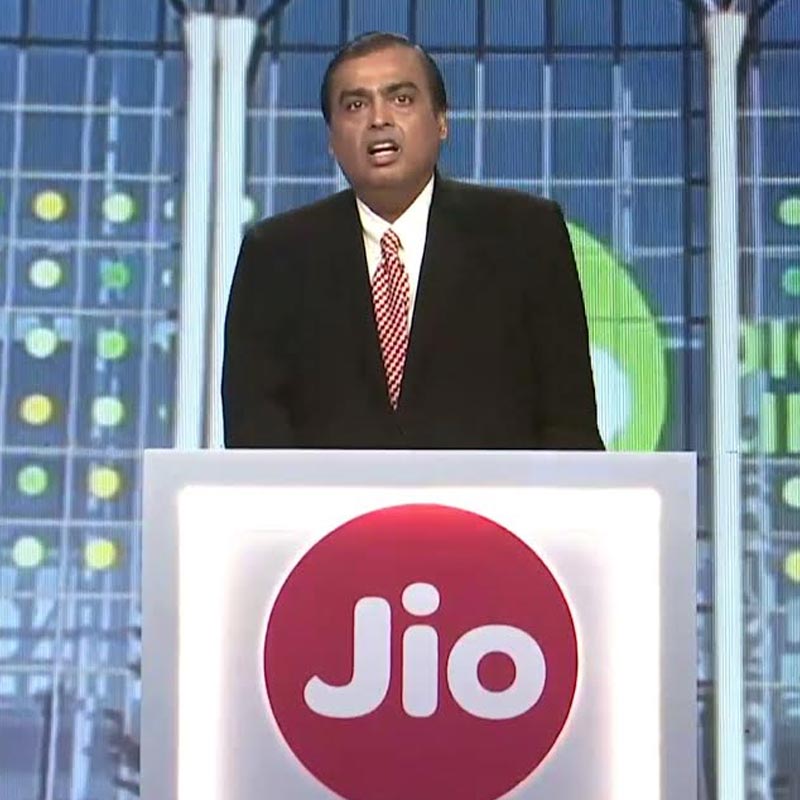
    MUMBAI: It promised a lot and it delivered. Reliance Industries Ltd’s 39th annual general meeting saw chairman Mukesh Ambani unveil the roadmap ahead for what is hoped will be the most significant change agent for India’s telecom, broadband business.

    Amongst the most significant was the announcement that it will be a voice-free-low data cost provider of 4G LTE services geared for video delivery.

    “All over the world operators charge for either data or voice. We have decided to make our voice services free and will never charge for it anytime now or in the future. Jio makes India the highest quality lowest data rates country in the world,” he said.

    While other telcos like Airtel, Vodafone, have been offering data plans at Rs 250 per GB, Ambani said Jio’s data plans will be delivered at Rs 50 per GB. “And these will go down the more data you consume,” he informed RIL’s enamoured and enthusiastic shareholders at Mumbai’s Biral Matushree Auditorium this morning. “Your apps and downloads can be happening when you sleep at night at no cost to you.”

    He also stated that data will be free on its 4G LTE network at night.

    Only 10 plans ranging from Rs 19 to 4999 offering free voice calls and 100 MB to 75 GB a month respectively are on offer. “There are more than 22,000 plans on offer across India from the various telcos. It’s very confusing for the consumer. We wanted to keep it simple – hence just 10 plans,” said Ambani.

    Reliance Jio says that it is looking at simplifying billing, sign ups to its services. “We have reengineered the sign up process to e-KYC and it will be linked to your Aadhar card. The process will take a customer 15 minutes and you will walk away with your active connection,” said Ambani.

    He also announced that subscription to Reliance Jio’s apps – valued at Rs 15,000 – was being given away to subscribers free until 31 December 2017 .

    Students would also have an offer which will provide them with 25 per cent more data at the same price. Ambani said Jio was in the process of connecting a majority of India’s schools and colleges so that students could have access to broadband wifi in their classrooms. The company was in the process of setting up a million wifi hot spots across the country.

    Ambani pointed out that Jio was being officially launched from 5 September 2016 with a welcome offer that all of Jio services will be available to Indians free until 31 December 2016. One of the reasons for this, he expressed, was that the company had been surprised by the way villagers had taken to the internet. And he wanted India’s rural heartlands to experience mobile broaband on 4G LTE for a few months.

  • Ambani unveils Jio launch, rollout and tariffs

    Ambani unveils Jio launch, rollout and tariffs

    MUMBAI: It promised a lot and it delivered. Reliance Industries Ltd’s 39th annual general meeting saw chairman Mukesh Ambani unveil the roadmap ahead for what is hoped will be the most significant change agent for India’s telecom, broadband business.

    Amongst the most significant was the announcement that it will be a voice-free-low data cost provider of 4G LTE services geared for video delivery.

    “All over the world operators charge for either data or voice. We have decided to make our voice services free and will never charge for it anytime now or in the future. Jio makes India the highest quality lowest data rates country in the world,” he said.

    While other telcos like Airtel, Vodafone, have been offering data plans at Rs 250 per GB, Ambani said Jio’s data plans will be delivered at Rs 50 per GB. “And these will go down the more data you consume,” he informed RIL’s enamoured and enthusiastic shareholders at Mumbai’s Biral Matushree Auditorium this morning. “Your apps and downloads can be happening when you sleep at night at no cost to you.”

    He also stated that data will be free on its 4G LTE network at night.

    Only 10 plans ranging from Rs 19 to 4999 offering free voice calls and 100 MB to 75 GB a month respectively are on offer. “There are more than 22,000 plans on offer across India from the various telcos. It’s very confusing for the consumer. We wanted to keep it simple – hence just 10 plans,” said Ambani.

    Reliance Jio says that it is looking at simplifying billing, sign ups to its services. “We have reengineered the sign up process to e-KYC and it will be linked to your Aadhar card. The process will take a customer 15 minutes and you will walk away with your active connection,” said Ambani.

    He also announced that subscription to Reliance Jio’s apps – valued at Rs 15,000 – was being given away to subscribers free until 31 December 2017 .

    Students would also have an offer which will provide them with 25 per cent more data at the same price. Ambani said Jio was in the process of connecting a majority of India’s schools and colleges so that students could have access to broadband wifi in their classrooms. The company was in the process of setting up a million wifi hot spots across the country.

    Ambani pointed out that Jio was being officially launched from 5 September 2016 with a welcome offer that all of Jio services will be available to Indians free until 31 December 2016. One of the reasons for this, he expressed, was that the company had been surprised by the way villagers had taken to the internet. And he wanted India’s rural heartlands to experience mobile broaband on 4G LTE for a few months.

  • Industry bodies asked to take forward campaign on IPRs

    Industry bodies asked to take forward campaign on IPRs

    NEW DELHI: Department of Industrial Policy & Promotion Secretary Ramesh Abhishek today stressed the importance of innovation in a knowledge driven economy and the need to promote Intellectual Property Rights..

    He asked Industry Associations to take forward the campaign for IPR Awareness in keeping with the first objective of the National IPR Policy: IPR Awareness, Outreach and Promotion.

    The Secretary was speaking while flagging off the awareness campaign to build on the initial momentum created by the pilot roadshows conducted by Cell for IPR Promotion and Management (CIPAM) which received heartening response from all stakeholders.

    CIPAM, a professional body under DIPP, has already conducted a pilot round of awareness roadshows across 18 states of the country over June-July 2016 in partnership with industry associations.

    Joint Secretary Rajiv Aggarwal highlighted his vision for the IPR awareness campaign.

    CIPAM gave a presentation on the National IPR Policy and the future Roadmap for the implementation of the IPR Policy.

    The industry associations have extended their full support to the campaign and gave various ideas on how to take the awareness campaign forward for all IPRs. Discussions were held on the mode of dissemination of information and promotional content at various levels – schools, college and industry.

    A nation-wide awareness campaign on IPR will be launched by the Department which will be taken forward by CIPAM in collaboration with Office of the Controller General of Patents, Designs and Trademarks (CGPDTM) and Industry Associations.

  • Industry bodies asked to take forward campaign on IPRs

    Industry bodies asked to take forward campaign on IPRs

    NEW DELHI: Department of Industrial Policy & Promotion Secretary Ramesh Abhishek today stressed the importance of innovation in a knowledge driven economy and the need to promote Intellectual Property Rights..

    He asked Industry Associations to take forward the campaign for IPR Awareness in keeping with the first objective of the National IPR Policy: IPR Awareness, Outreach and Promotion.

    The Secretary was speaking while flagging off the awareness campaign to build on the initial momentum created by the pilot roadshows conducted by Cell for IPR Promotion and Management (CIPAM) which received heartening response from all stakeholders.

    CIPAM, a professional body under DIPP, has already conducted a pilot round of awareness roadshows across 18 states of the country over June-July 2016 in partnership with industry associations.

    Joint Secretary Rajiv Aggarwal highlighted his vision for the IPR awareness campaign.

    CIPAM gave a presentation on the National IPR Policy and the future Roadmap for the implementation of the IPR Policy.

    The industry associations have extended their full support to the campaign and gave various ideas on how to take the awareness campaign forward for all IPRs. Discussions were held on the mode of dissemination of information and promotional content at various levels – schools, college and industry.

    A nation-wide awareness campaign on IPR will be launched by the Department which will be taken forward by CIPAM in collaboration with Office of the Controller General of Patents, Designs and Trademarks (CGPDTM) and Industry Associations.

  • M&A Guidelines to be finalised by EGoM later this month

    M&A Guidelines to be finalised by EGoM later this month

    NEW DELHI: The much-awaited Merger and Acquisition (M&A) Guidelines has got further delayed and now the Empowered Group of Ministers (EGoM) on Telecom is expected to discuss it on 22 November.


    The GoM will also study the roadmap for the third round of spectrum auction. “Besides auction related matters, the department of telecom will place before them the M&A guidelines as recommended by the Telecom Commission,” a Telecom Ministry official said.


    Inter-ministerial panel Telecom Commission has suggested about 25 per cent higher base price compared to the amount recommended by sectoral regulator Telecom Regulatory Authority of India (TRAI) for radio waves used for mobile phone services for the proposed auction.


    The Telecom Commission had only forwarded its view on two sets of airwaves used by GSM players like Airtel, Vodafone and Idea Cellular.


    The official said DoT has written today to TRAI to suggest a base price for CDMA spectrum used by players like Sistema Shyam Teleservices, Tata Teleservices and Reliance Communications in 15 days.

    TRAI had recommended against auction of CDMA spectrum at present and suggested studying whether a part of these airwaves can be used for extended GSM services.


    The official said DoT is working on other details for auction of all three sets of spectrum in third round which is expected to start in January.


    Telecom Commission has recommended to allow companies to acquire another operator in a manner that market share of the resultant entity does not exceed 50 per cent.


    EGoM will have to decide on spectrum related issues that entity formed as result of consolidation of companies should be allowed to keep.