Tag: Roadies

  • What does young India want from TV shows?

    What does young India want from TV shows?

    MUMBAI: Reality shows with dollops of voyeurism or reality shows showcasing talent; hard-hitting real life stories or risqué fiction; fantasy or crime; comedy or cutting edge adventure… what is it that the youth of today wants from television in terms of entertainment?

    While a few shows successfully manage to pervade all society’s echelons, a few fail to take flight. Moreover, now with the digital entertainment landscape augmenting every day offering fresh new content on the go, broadcasters have their task cut out for them to engage the young and restless minds with relevant programming.

    A question that often echoes in the conference rooms of broadcasters and production houses during brain-storming sessions is: What does the youth of today want from television in terms of entertainment?

    Roadies fame and Monozygotic co-founder Rajiv Ram rightly points out, “Today’s youth is always seeking content by consuming it across different platforms, which are available to them. The youth wants to get surprised with edgy content diverting from the mainstream content that is provided to them.”

    Not the ones to follow herd mentality whether it is about career choices or personal life decisions, the youth today wants to bring a change in society and this also reflects in the kind of content that TV shows today are are furbishing them with.

    The youth fare on television today offers a diverse range of life changing shows like Big F, Emotional Atyachaar, Love by Chance, Pyaar Tune Kya Kiya and Gumrah spreading awareness amongst the youth through hard hitting stories. At the same time, shows like Sadda Haq and Yeh Hai Aashique aims at breaking society’s prejudices and stereotypes. On the other hand are reality shows like Roadies, Splitsvilla, Bindass Naach or India’s Top Model, which provides a platform for youngsters to showcase their talent and skills. Bad Company, a talk show, lures the young audience with its concept of revealing the deepest, darkest secrets of TV actors.

    It’s no secret that viewers are the biggest decision makers when it comes to the success of a show. What is perhaps lacking in the youth entertainment landscape today is experimental content, which dares to take some risks. While last year one did see some shows like Warrior High, Roadies X2, Big F, India’s Next Top Model and Love School breaking the shackles with new concepts on MTV, the fact is that there’s a need for more such shows targeting the youth. And while MTV was experimenting with its programming, Channel V and Bindass were not far behind with the launch of shows like Swim Team, Bindass Naach, Tu Con Mein Con, Zindagi Wins and Kota Toppers.

    “A show like Swim Team would not work in India because of the content. It is indeed new, but the youth cannot relate to the concept. On the other hand, a one of its kind dance reality show Bindass Naach will attract viewers’ attention with its concept portraying a trio living for their dreams,” adds a media expert.

    With the buzz created by Big F and Love School, both shows are giving strong competition to existing shows in the category. “The add-on factor to these two shows is that they have roped in familiar industry names as the host to gain some traction,” points out a channel executive.

    The entertainment pyramid is well layered with each level catering to a diverse set of audience. While at the base of the pyramid is the audience consuming content from the internet services, the level above constitutes of people consuming information from the various over-the-top platforms (OTT), which offers content catering to the youth. At the third level is the consumption of international shows and at the tip of the pyramid is a pure experience i.e. live shows. At every level of the pyramid, the youth expects different content.

    Supporting this, erstwhile Viacom 18 EVP and MTV & MTV Indies business head Aditya Swamy, who is now with Flipkart as senior director – marketing says, “The pipe is getting bigger and better every passing day with one end through which the information is being poured to the audience and the other end through which the youth is consuming the content. The content ecosystem is vibrant constituting diverse information for a group of people, who are totally different from one another and have a divergent content preference, which cannot be clubbed together as one.”

    On the other hand, with the growing access to internet, the young generation has the option to consume anything and everything from the web sans barriers. “There is information all around us but it’s on the youth to take the call. They have to use, assimilate and make sense of the information. The only problem that I believe in India is navigation. And the need to have more relatable and real characters that the youth can connect with,” adds Bawa Broadcasting creative director Cyrus Oshidar.

    Added Sunshine Productions producer Sudhir Sharma, “Channels need to understand the need of the youth and what will grab their attention. They won’t consume information that doesn’t interest them. A show done out of a random research won’t work. The youth plays the role of a dual personality these days and you have to link your content with their lives to penetrate the show,”

    Sharma strongly believes that skin show or bold scenes won’t get views, instead more relatable content will get good following.

    “With changing trends, the youth will demand different types of content. Sadda Haq is successful today because of its theme, which goes against the rules laid down by the society. The show successfully bridges the gap between the reel and real characters. The youth will heavily consume such content,” asserts Beyond Dreams founder Yash Patnaik.

    “Roadies X2, with its new concept and jury was well received by viewers. It did well not only because of the recall element attached to it but also the concept, which kept the audience on their toes to know what’s in store for them,” observes an industry expert.

    The youngsters have been hooked to some popular international shows through the internet services available to them. Shows like F.R.I.E.N.D.S, How I Met Your Mother, Sherlock etc, are widely watched in India. However Patnaik is of the opinion that though shows from the West have enjoyed success in India, they still cater to a limited group of people. “Original content will still be consumed on a larger scale, which cannot be matched,” he says.

    India’s Next Top Model, which is an adaption of America’s Next Top Model, proved to be successful with the buzz that it created. “I don’t think that there is a need to acquire content when we have enough talent available in India to create original shows,” adds Patnaik.

    The year has seen shows like Warrior High or Zindagi Wins going off air in just a few months. While the former was an interesting campus tale with dozens of love moments between the couples, it could not help grab enough eyeballs. On the other hand, the latter being a medical drama moulded on the lines of Dill Mill Gayye, started off as a romance between two friends, but lost its spark halfway. In the absence of a convincing storyline, the show saw an influx of new characters but failed to strike a chord with the audiences and had to make an early exit.

    “Production houses need to constantly re-invent content with the changing dynamics in the society. They can’t feed one type of a content for years,” says Patnaik.

    The youth today is consuming information simultaneously from different platforms and wants shows, which can be consumed easily in one go. And now more so with the launch of Netflix in India, which uploads the entire season of shows at one go on their subscription driven platform, people have yet another legit platform to go to! Swamy rights points out that as the audience will evolve, so will the content model and hence platforms for better consumption of information will evolve. “The entire media – digital or TV – is growing at a steady pace,” he says.

    Also emphasising on the concept of branded entertainment, Sharma points out that if shows stick to brands, they ought to work in India. “The business of shows is dependent on ratings as well as on the funding from advertisers,” he says.

    “Advertisers need to understand the content that the services are providing to the viewers. They cannot provide diluted system fed information to the youth. In today’s scenario, audience segmentation is an issue and needs to be solved so as to retain the youth audience. The youth requires risky, humoristic, never seen before content with elements of surprise,” adds Ram.

    “With the change in consumer trends, channels along with the production houses have to understand the content that they are providing to the youth,” adds Swamy.

    Ram says, “Even advertisers have to understand the content on such channels in a better way and develop the bridge between real and reel life characters. Channels need to work on their programming strategies to keep the audience intrigued. Only then will the entire industry grow as a whole,” says Ram.

    The need of the hour for youth entertainment channels is no doubt to dish out some edgy relatable content, which will in turn keep them glued to traditional TV viewing even in the rapidly expanding digital world.
  • Pepsi ropes in Raghu & Rajiv for Crash the IPL TVC

    Pepsi ropes in Raghu & Rajiv for Crash the IPL TVC

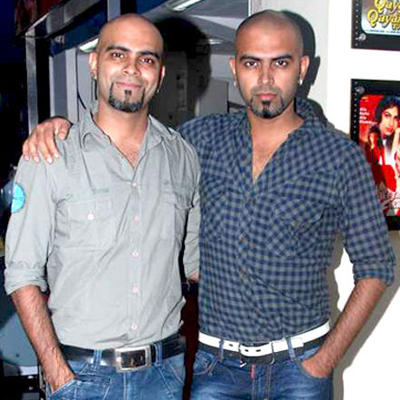
    MUMBAI: Rajiv Laxman and Raghu Ram have garnered a cult following thanks to their histrionics on MTV Roadies. Now global cola giant Pepsi has roped in the terrible twins in a bid to stoke the voting instincts of online video guzzlers in India to help it decide which consumer generated commercials (as part of its Crash the IPL campaign) make the cut and make it on broadcast television. 


    The duo has produced a commercial under the umbrella of their production house Monozygotic. The TVC is slated to go on air in the next day or two (on MAX and SIX respectively), though it has already made its debut on YouTube. 


    Both Rajiv and Raghu have gained notoriety over the past decade as the very hostile audition hosts of MTV Roadies (which they quit late last year) who bludgeon contestants with their nastiness.  


    The Pepsi TVC begins with the producer of a show tearing his hair out about the low audience ratings it is garnering. His team informs him that the ratings have fallen because the brothers have been extremely kind towards the contestants appearing for the auditions. And a flashback follows. Almost every participant sails through the brothers with them telling each one “What the Stress Yaar?” 


    In the TVC, the producer then schemes with Rannvijay to help them get their trademark hostility back. He hides their Pepsi while they very sweetly select a contestant. When they discover their Pepsi is missing, they flip their lid and their nastiness erupts again to the delight of the producer and Rannvijay. The TVC ends with the tagline “It’s beeping awesome.”


    Speaking to Indiantelevision.com, Laxman says, “When we got a call from Pepsi, we were overwhelmed and decided to be a part of the creative innovation. We decided to play around with our USP and come with something quirky and progressive and that’s how ‘What the stress’ came in.”


    Adds Raghu Ram, “We are very excited to partner with Pepsi on the Crash the Pepsi IPL since it is a first of its kind property that empowers viewers to become content creators on both the TV and digital screens.”

    The TVC, which was completely shot in Mumbai has been directed by Bollywood director E Niwas.  “It was made on an extremely shoestring budget as the major departments including the casts, cinematography, music were taken care of by friends who collaborated for free,” says Laxman. “Raghu and I have been in the creative space for more than 20 years and now we want to use our experience to provide creative solutions for brands, which will be interactive and modern and help them develop a strong youth connection. Creativity is evolving every day and as screens start to merge, brands will have to be more innovative and interactive. So I think creative innovations like Crash The IPL have  the potential to become a strong precedent,” he adds.


    Speaking about the launch of the new TVC, PepsiCo India Beverages senior director marketing – social Ruchita Jaitley says, “This ad film by Raghu and Rajiv definitely adds more spunk to the campaign and will mobilize consumers to go vote for their favourite ad. We are overwhelmed at the kind of response Crash the Pepsi IPL has seen so far. It has been amazing to see how consumers and fans have taken on the creative challenge and shown their love for the brand. This is an all-important phase for the campaign, as we now hand over the reins to the consumers. India will now decide the next winner of this campaign and we’re keen and excited to see how this will play out.”

  • Vikas Gupta bids adieu to MTV India

    Vikas Gupta bids adieu to MTV India

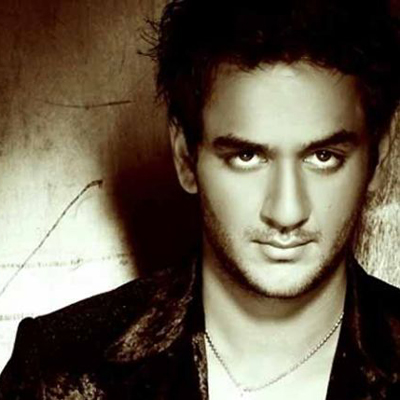
    MUMBAI: It was almost after a decade when MTV India got on-board a programming head in Vikas Gupta in January this year.  Tagged as the youngest creative director of the industry, Gupta has now decided to move on. Currently he is serving his notice period and his last day in the office will be January 2015.

    When contacted, Gupta confirmed the news to indiantelevision.com. “Yes I have put down my papers at MTV India. I had given myself a year with the channel and it turned out to be a brilliant year. The channel topped the ratings chart; we have the number one fiction and non-fiction shows so it has been an exciting achievable year. Now I am looking for newer challenges,” he said.

    “Thankfully, I am getting a lot of opportunities and will lock on something very soon,” he added.

    Though he refused to divulge further information, sources indicate that his next move will be to the big screen with Ekta Kapoor’s Balaji Telefilms.

    He started his career as a trainee with Balaji Telefilms and then moved on to DJ’s Creative Unit as an associate creative head where he worked for four months. He went back to Balaji Telefilms for a successful stint as an associate creative director and was associated with shows like Kis Desh Main Hai Meraa Dil and Kitni Mohabbat Hai.

    Interestingly, the TV fraternity also recognises him as the youngest creative director of the industry. He entered the industry at a young age of 19. After getting enough experience, he turned to production and started his own banner – A Lost Boy Productions – almost three years ago. In the last three years, the production house has come up with entertaining and critically acclaimed shows like Channel [V]’s Gumrah and The Serial (co-produced with Balaji Telefilms); and Bindass’ Yeh Hai Aashiqui.

    He has also worked with Max New York Life Insurance for almost a year.


  • I am looking at large strategic partnerships, says Jaideep Singh

    I am looking at large strategic partnerships, says Jaideep Singh

    MUMBAI: A new mobile handset brand, Vivo, is set to enter the Indian market. And helping it have a presence in the already cluttered mobile market space in the country is the two year old Viacom18 Integrated Network Solutions (INS).


    Both Vivo and INS have forged a strategic marketing and communications partnership. “Through this partnership we are giving them all the services required to launch their brand in India. This includes advising them in the first phase about the youth insight, the media market of the country and the overall brand space,” informs Viacom18 Media INS senior vice president Jaideep Singh.


    Since the audience the handset is catering to is the same as that of Viacom18, INS will also select the right broadcasts and the right digital social media platform which Vivo can choose from the Viacom18 portfolio. “We have some of the best brands and properties to target them,” adds Singh.


    So how did INS bag the partnership? Answers Singh, “Well, in a phased manner, we did an exercise with Vivo, which involved making them understand the insights about youth, then profiling all the assets we have, from broadcast to live to digital and social media and then creating a package for them, telling what it will take to launch a brand in India.”


    As for the marketing strategy of the new brand, INS has created a package, which is a mix of broadcast, live, digital, social media, PR communication, media planning services and a big brand launch event.


    This apart, all the creative ideas to be used and executed through the launch is what INS is working on. Singh informs that the deal with Vivo is a long term one and this is just the first phase. “The first phase is till June-July and we are working on it. The discussion of the phase post July is ongoing and we will come up with a plan for that,” he says.


    As part of the first phase, INS will be promoting the brand through properties like ‘Roadies’, ‘Comedy Nights With Kapil’, ‘MTV Bollyland’ etc. It is also exploring other fun ideas on the digital front. “We will also be creating the TVC for the brand,” informs Singh adding that currently it will use the global TVC of Vivo, since there is not too much time before the big launch. “But as we move forward, the TVC will also be created by Viacom18,” he says.  


    INS has got a dedicated team to service Vivo. This comprises digital experts, marketing experts, creative experts and operations experts for ground activations. “It is a sizable team, which has been taken both internally as well as externally from the partners we work with,” he adds.


    According to Singh, the deal with Vivo helps the company leverage its consultancy services and in-house strong marketing capabilities for launching a brand in India. “A deal like this also opens up a new avenue for us in terms of having long term strategic partner, rather than trying to find many small partners on regular basis,” he says.  


    “I am looking at large strategic partnerships which will be of sizable ticket size and covers the sizable assets we have on the network and create more assets,” Singh further adds.


    So what’s the marketing budget for the handset? Says Singh, “Vivo is a major brand in China with 8 per cent market share. Presently the size of the marketing activities is substantial, but as we go in the second phase, it will be equal to the scale of any major handset in the country.”  


    Singh also informs that while as a digital strategy for Viacom18’s large content library, it will be looking at being present on multiple handsets, but currently there is no such arrangement on exclusive content sharing with Vivo. “They could have access to content on the properties they are partnering with us. The content partnership can happen in the later stage. It is the core to our heart and can be explored,” he further adds.  


    Talking about the integrations, Singh says that as part of the soft play, while integration with ‘Roadies’ has already started, the TVC will break in end of December and ‘Comedy Nights With Kapil’ will begin  from January.


    INS is positive about the feedback the new entrant will get from the consumers in India. “The brand film is looking good and so is the product. From the Chinese market perspective it would be the best product to enter the market. Once the film comes out and the product is integrated and the features are shown, the brand will have an appeal,” he opines.

  • “Non-fiction is expensive, hence need to strengthen fiction”: Siddharth Anand Kumar

    “Non-fiction is expensive, hence need to strengthen fiction”: Siddharth Anand Kumar

    MUMBAI: Vidya Balan’s famous line about entertainment sells, stay true to the television business as well.


    With new channels launched and new genres explored every now and then, the production houses have a lot on their platter. One such production house, Colosceum, known for its non-fictional properties like Roadies, Splitsvilla recently got on board Siddharth Anand Kumar as scripted content head to strengthen its overall approach.


    A graduate in filmmaking, he has worked as an assistant to Mira Nair during the making of Kamasutra (1995), as DOP and editor for Bobby Bedi during the production of the TV series Rajdhani (2000), and as the executive producer for Shekhar Kapur’s company Digital Talkies during which he oversaw the production of two feature films and the country’s first International Digital Film Festival (2001).


    He has directed two films: Let’s Enjoy (2004), a film about a Delhi farmhouse party, and Semshook (2010), a coming of age story set in the Tibetan exile community. And his TV projects include Seven and Khotey Sikkey by Yash Raj Films on Sony and Mahabharat by Swastik Pictures on Star Plus.


    “We have a partnership with Colosceum. And our aim is to bring in some really interesting new content into the Indian television which is currently happening and we want to be a part of it,” says Kumar while elaborating on his role.  “In the industry there is a position of content director and director and I will be mixing both these roles. It is also something which the channels want and are eager to do because it is the director who makes the show. And sometimes we have creative director who doesn’t engage in day to day procedure of the show or while communicating with the broadcasters. We want to bridge that gap.”


    He along with the Colosceum team is currently busy conceiving and pitching ideas to broadcasters, which will then be taken forward if the broadcaster shows interest.  


    The production house is known for its seasonal shows, but with this hire it wants to strengthen its fiction side as well. Kumar goes on to explain why. “Colosceum had non-fiction bend but if you look at the trend, all the big production houses whether they are Endemol or Fremantle, you will see a small shift little away from non-fiction because non-fiction costs a lot. And the numbers that you get are pretty much the same as a hit fiction property. So, everyone understands that the return of investment is higher on fiction. Producers who have had a very strong non-fiction background like Colosceum need to partner with strong fiction heads to tell the broadcasters ‘look we have the right team in place’.”


    Furthermore, he believes channels are now moving towards fiction. Stating the example of how Bindass, which once used to air shows like Big Switch and Dadagiri, today has fiction shows. Similarly Channel V and MTV have now become youth general entertainment channels (GECs).


    Moreover, even GECs which offered their viewers two to three non-fictional properties over weekend, now only have one such property. 


    “Take Colors for instance, apart from Jhalak Dikhla Ja it doesn’t air any other non-fictional property on the weekend. I won’t take Comedy Nights with Kapil to be one as it is scripted. The trend is indicating that every channel is putting their money into one non-fiction show because they are expensive and rest on fiction,” he says and adds, “Right now we are in the phase when there is a greater demand for fiction than non-fiction. At some time, the circle might change again. So, this is a good time to generate some quality fiction content and strengthen it so we are able to serve the broadcaster in both the genres.”


    Kumar believes that as audiences mature, the content will change as well and hence, channels are moving towards younger content as well as dealing with social issues apart from the regular saas-bahu dramas. Another aspect which is also a main reason for this shift in content today is the demand from the advertisers. “The consumer categories which are very hot at the moment are smartphones, cars and e-commerce, and they need to talk to a younger-skewed audience not only in metros but also in tier I and II cities where there is high aspirational power. Youth has more spending power because as one grows older, the commitments/priorities change. So advertisers need to talk to them and hence broadcasters need to create content for this audience.”


    One needs to just turn on the TV to see who is advertising so if it’s a Karbonn mobile it doesn’t want to advertise on Saath Nibana Saathiya but need a show like Airlines or Shastri Sisters.


    In the coming years, he proposes that as more and more people start consuming content on digital, production houses might have to start making specific content for that medium and also learn how to monetise it well. As media proliferates there is going to be more fragmentation and niche programming.


    Hence, Colosceum will focus on creating tailor-made shows for broadcasters based on what that broadcaster wants in its programming lineup. Currently, the team has a lot of ideas on the platter and will soon approach broadcasters with the innovative and interesting ideas.


    In his 12 years career, Kumar says that even today “we don’t know what the audience wants.” There is still a lot of guess work even though there are various research agencies doing a lot of footwork. So when it comes to talking to the audience and seducing them with the work there is still a bit of hit and miss. “We usually have the tendency of coping what becomes a hit, but it won’t serve our purpose as we will start creating same content that will create fatigue amongst audiences.”


    “We need to provide a varied content to audience which is also dynamic. So that we can learn what the audience wants,” he concludes.


  • Raghu-Rajiv and Ravi Luthria team up for new venture ‘Monozygotic’

    Raghu-Rajiv and Ravi Luthria team up for new venture ‘Monozygotic’

    MUMBAI: Days after Rajiv Lakshman quit his as COO of Coloscem, he has announced a new venture with his twin brother Raghu Ram. The duo has come together with Ravi Luthra, a marketing veteran to start a new content and communications hub – Monozygotic. This new startup will mainly focus on content creation across various avenues of media from TV to digital to on-ground.


    Speaking about their new venture, Monozygotic co founder and managing zygote Rajiv said, “There has been a tectonic shift in the consumption of media in the past decade and it is critical for any brand manager to not only figure the right media mix but also the right communication for a specific media. This is where Monozygotic steps in with our cumulative experience in building enduring, genre defining brands like Roadies, Splitsvilla and Masterchef India”.


    “We have had the opportunity of multifunctional experience in content, both behind the scenes and facing the camera. The experience has helped us not only to understand the business of content but has also to develop a deep insight into audience psyche. I believe Monozygotic will be able to bridge the need gap, catering to audience and advertisers with equal ease. We have been contemplating this venture for a while now. I view Monozygotic as a natural progression in our respective careers”, added Monozygotic co founder and managing zygote Raghu.


    While majority of people know them as the face of the cult show Roadies, the dynamic duo Raghu Ram and Rajiv Lakshman, with experience of more than two decades have also been responsible for creating a number of other enduring, genre defining television shows such as Splitsvilla and instrumental in the launch and success of Masterchef India. They have also broken new ground in the digital content space with Roadies Battleground and Jack & Jones Hitched. Ravi Luthra, with 15 years experience, has also made a mark in the industry with companies like Marico Industries, Visa, Star TV, MTV and Sony Entertainment Television among others.


     “The twins are masters at content creation and community building. Monozygotic aims to create clutter-breaking content catering to a wide array of audiences and marketers. The duo has a keen understanding of the audience which we plan to leverage with a focus on new media, the future of content consumption.  Unfortunately, a huge gap exists in this space in the connect between brands and consumers. Herein lies a great opportunity to create innovative and customised market driven content that is both sharable and sustainable” said Monozygotic chief executive zygote Ravi Luthria.


    Monozygotic has already started working with some established brands on new, exciting projects.

  • Colosceum gets a new CEO in Lalit Sharma

    Colosceum gets a new CEO in Lalit Sharma

    MUMBAI: Colosceum, which has seen a few senior exits in the past couple of years, has reasons to cheer.


    Lalit Sharma, who was part of the founding team with Ajit Andhare and Rajiv Lakshman, has been promoted to CEO. He was earlier working at the capacity of COO with the company.


    “Yes, I have taken charge from today and already have had three meetings, so far. So it’s business as usual,” says Sharma who plans to finish the existing workload before he can look at other expansion plans.


    “We are working on a number of shows right now. And once that’s done we will be venturing into two more verticals,” elaborates Sharma without revealing much about the two verticals. “It will take a couple of years for things to take shape,” he adds.


    The production house has shows like Roadies and Master Chef India to its credit.


    Prior to Colosceum, Sharma has worked with Star India for a decade for its operations department.

  • Rajiv Lakshman quits Colosceum as CCO

    Rajiv Lakshman quits Colosceum as CCO

    MUMBAI: Colosceum’s chief creative officer Rajiv Lakshman has decided to quit. He is currently serving his notice period, with his last day in office being 31 July 2014. Lakshman has been one of the founding members and the creative core of the company. He is expected to announce his new venture soon.


    That apart, Hitesh Bhatia has joined Colosceum as VP – programming. Bhatia has been associated with Colosceum for more than four years and has been director of all seasons of MasterChef for Star Plus. Bhatia has over 14 years of rich experience working as both director and creative director. Further, Colosceum has also elevated Vikrant Bharadwaj as VP – programming.


    Speaking on the development Colosceum COO Lalit Sharma said, “Rajiv has been an invaluable asset to the company. He gave the team strong creative leadership with the freedom to experiment and he’ll be hard to replace. I wish him good luck with his future venture. I am sure soon we will be working together on our next big project. At the same time I repose full faith in Hitesh and Vikrant who have been associated with Colosceum for quite some time now. In fact we have worked with Hitesh on all our big ticket shows. The ability of both Hitesh and Vikrant to create and execute shows fits well with Colosceum’s goals.”


  • Behind the scenes of ‘Zhunj Marathmoli’

    Behind the scenes of ‘Zhunj Marathmoli’

    MUMBAI: It’s a full plate and more for the cast and crew of ETV Marathi’s new show Zhunj Marathmoli as they travel the length and breadth of Maharashtra, fulfilling cultural tasks and braving temperatures of up to 47 degree celsius in certain parts.  


    So much so, not a single day has gone off without someone falling sick or getting injured. In fact, a doctor from Mumbai has been hired to be with the unit full time to take care of casualties.


    However, this has deterred neither the 14 contestants nor celebrity host Shreyas Talpade from making season one a grand success.


    “It didn’t come as a surprise to us that we will have to shoot in such high temperatures. We knew it would be excruciatingly hot,” says Talpade, who along with the participants have taken time out from 15 April to 2 June to shoot the show.


    90 technicians, including 11 from Ramesh Deo Productions (RDP) and the rest hired crewmen, are ferried from one location to another in 11 cars and buses. “The technicians are freelancers who have worked on shows like Roadies and Khatron Ke Khiladi. Our director of production (DOP) has done 11 seasons of Roadies,” says RDP director Ketan Mangaokar about DOP Sanjay Chawda.


    Each location is given four days’ time where the first two days are taken up by the production team to try out tasks and ensure their safety for the participants while shooting happens in the remaining two days, with two tasks per day. The day starts at 6:30am for the production team and 8:00am for the contestants, going up to 10:00pm or 11:00pm at times. Participants are allowed cell phones only on the days ‘task testing’ is done to avoid any kind of distraction.


    A 20-day recce was undertaken by Mangaokar, art director Sandeep Bhamkar and a channel representative before the show started. The team scouted the interiors for regions and tasks of interest. “First, we selected the regions and then found out their specialty by talking to the locals. Each task also has a substitute task but fortunately, we haven’t had to use any of those,” says Mangaokar.


    Of the 26 episodes, the 20 second one was shot at Ganpatipule in Konkan amidst soaring mercury levels coupled with intense humidity. A visit to the Ganpatipule set revealed nothing more than a patch of land near a hen house. Eight normal HD cameras were set around the frame and six GoPro cameras – hired from ColorPlus in Mumbai – were set inside the task zone. Of the eight HD cameras, one was a master frame focused on the entire set, another a wide-angle camera shot focused on Talpade, yet another a close-up of Talpade and the rest focused on the contestants.


    A sufficient number of good quality lapel microphones were used to capture sound on the set with normal ones given to the participants and two advanced ones given to Talpade for his solo link. No part of the episode was dubbed. By the same token, no part of the show has been dubbed.


    Also, video diaries were shot in between tasks, encapsulating contestants’ emotions. Additionally, the over the fly (OTF) or byte of the participant before he/she performs the given task was taken.


    For the hen-catching task at Ganpatipule, two cameras were placed atop a car for a higher view of the task area. “It’s a practical and cost effective measure as we don’t have cranes and jibs,” says RDP head of operations Rekha Vaid.


    The coordination of cameras was done by Chawda who says, “I have been working on similar shows for years so I am aware of the kind of shots that are required.” The show’s creative director is Santosh Kolhe, executive producer Praveen Das, production controller Manohar Desai, sound engineer Mushtaq Sheikh and art director Sandeep Bhamkar. Generally, once any footage is shot, it is transferred onto a hard disk and backup is taken.


    Judges for all the tasks are not from the Zhunj Marathmoli team but experts or panch hailing from that region who are either asked to observe the tasks live or watch recorded footage and offer inputs to Talpade. This over, the entire terabytes of footage is despatched to the Mumbai office for post production.


    Talpade motivates the team in his usual boyish manner. Not only does he deliver his dialogues but also improvises them. Zhunj is his way to connect to his Maharashtrian roots which he says he missed growing up as a Mumbai kid. He is in awe of the efforts the channel has taken for Zhunj Marathmoli. “You need guts to execute such a show. Constant travelling, setting up new locations, arranging for food and stay of so many people. The channel and production house are going to additional lengths to make the show different and innovative,” he says.


    According to sources, nearly Rs 6 to Rs 8 crore is being spent on the show which may not be too much but is definitely on the higher side, where the economics of Marathi television is considered.


    Khatron Ke Khiladi and Roadies have higher budgets but with Zhunj Marathmoli, ETV is trying to give viewers maximum quality with a minimum budget.

  • Chrome Data: AAP helps English News genre to claim the top slot in week 4

    Chrome Data: AAP helps English News genre to claim the top slot in week 4

    MUMBAI: After a lull period in week three, the viewers are back in form as the viewership of the idiot box has gone up considerably.


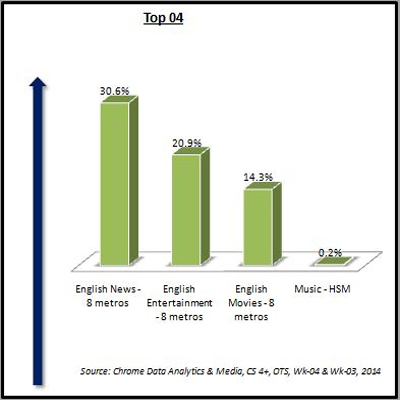
    It seems the AAP tactics worked well for the news channels as the English news genre garnered 30.6 per cent opportunity to see (OTS) collated by Chrome Data Analytics & Media for week four of the year.


    As expected, Times Now in the eight metros once again ruled the genre with 87.8 per cent OTS.


    English entertainment channels also got a grip over its loyal viewers and bounced back with 20.9 per cent to be at the second position in the eight metros. Star World took over AXN to be at the top in the genre with 71.9 per cent OTS.


    English movie channels also got back on track with the telecast of new and interesting movies that got the viewers hooked on to the genre. It gained 14.3 per cent in the eight metros. Pix continued to rule the genre in the eight metros with 78.5 per cent OTS.


    Music genre was at the fourth position with a marginal jump of 0.2 per cent. MTV, thanks to its popular property – Roadies that came back with its eleventh season, over took Sony Mix to be on the top of the chart with 88.6 per cent OTS.


    As for the bottom four, the kids genre saw the highest dip with 18.3 per cent in the all India segment. Cartoon Network remained the most popular among the kids with 85.9 per cent OTS.


    Infotainment channels too witnessed a dip of 13.7 per cent across India. However, Discovery got the highest  OTS among the genre. The channel scored 90.8 per cent.


    Hindi news and religious channels saw a dip of 9.4 per cent and 6.4 per cent in the Hindi speaking market (HSM). In the Hindi news genre, ABP News gained 93.1 per cent, while Aastha channel continued to show viewers their philosophical side and garnered 98.5 OTS.