Tag: RK Singh

  • Raj Kamal Singh, sports television’s reluctant pioneer passes on

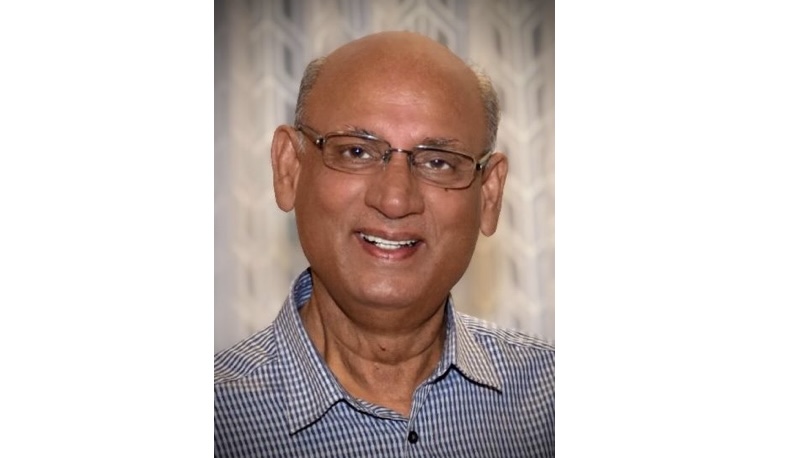
    Raj Kamal Singh, sports television’s reluctant pioneer passes on

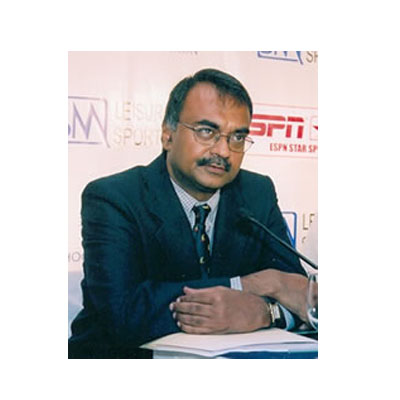
    Raj Kamal Singh, known simply as RK to friends and protégés, never quite fit the mould he was born into. A Haryana-cadre bureaucrat with the air of a genial civil servant, he somehow found himself reshaping Indian broadcasting in the 1990s. First came DD Metro, conjured up with Rathikant Basu and Urmilla Gupta to inject a dash of freshness into the government-owned Doordarshan’s lumbering edifice Then came ESPN India, and later ESPN Star Sports — ventures that took him from government files to live sport, a journey no “babu” had probably attempted before.

    At ESPN’s makeshift south Delhi office in the early days — a converted garment-export bungalow with half a floor to itself — Singh presided over what would become a generation-defining team. “He was the reason I found my calling in television,” recalls Anurag Dahiya, now the ICC’s chief commercial officer, who was one of the early recruits. RK, he said, was the avuncular figure in a scrappy start-up atmosphere, a mentor who mixed bureaucratic calm with private-sector mischief. He helped build up a pay television business for ESPN in cable television’s infant days. 

    “For us, he was an approachable CEO. (We could) walk into his cabin – just like a friend. (He was fond of) taking us for bowling…Opening his house for parties along with his loving wife and kids. (We went for) river rafting trips, His famous lassi During lunch that was open to all – endless memories that we all forever cherish with him – shining our careers,” adds NDTV special projects associate vice-president Rachna Oberoi. 

    Later came Zee Telefilms, where Singh sparred with cable operators, shrugged off boardroom spats and, with a trademark guffaw, told anyone who fretted: “It’s all part of business. You can’t take it very seriously. It will get sorted out.” It usually did.

    Colleagues remember a man who taught by example rather than sermon. Many he hired went on to lead, or to found, sports businesses across the globe. His greatest legacy was not the channels he ran, but the people he groomed.

    Eventually he walked away from the industry altogether, setting up a lodge in the forest  (if we have got it right) — a suitably idiosyncratic ending for a man who had long made light of television’s supposed seriousness. On 15 August he died of a heart attack, aged 75.

    The sports-broadcasting world owes him more than it realises. RK would probably chuckle at the thought, suited and booted as he was vaunt to be, dismiss the fuss, and pour another drink.

  • Zee TV at 28: A walk down memory lane

    Zee TV at 28: A walk down memory lane

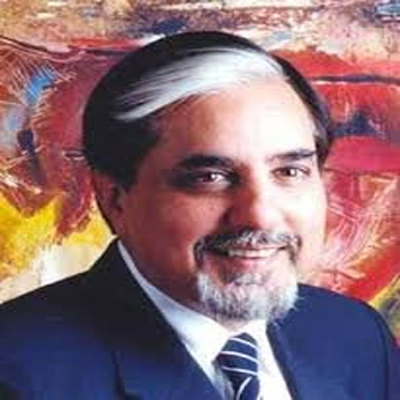
    MUMBAI: 28 years sounds like a long, long time. But it seems to have gone by in a flash – for Zee TV’s founders, for TV viewers, for media observers and for investors. It was certainly an audacious move when a goateed gentleman by the name of Subhash Chandra Goyal decided to set up an entertainment channel in 1992. The only TV entertainment we were familiar with was that of public broadcaster Doordarshan for close to twenty years. The last nine or 10 of those were in colour, while the first 10 were in black and white.

    Small cable TV operators with single master antenna television services (SMATV) used to serve us with those original Hiba (Nari Hira) movies, stolen copies of popular Hindi films, pirated versions of Mind Your Language, and Top of The Pops, as well as pornos late in the night during the late eighties and early nineties. Then they began to air Satellite TV Asian Region (Star TV) channels and shows including The Bold and the Beautiful, and Chinese subtitled movies and a mix of international and Chinese songs and finally CNN and BBC, when Li Ka Shing and Richard Li flagged off the ambitious service. Successful at tapping into the minds of India’s metro dwellers, the shows gave women in the first class compartments of trains enough to chat about – such as the exploits of Eric Forrester and Brooke Logan. VJ Nonie on MTV, which was part of the STAR bouquet..

    Into that uncharted territory stepped a bunch of maverick entrepreneurs. Among them: Subhash Chandra, better known for making lamitubes for toothpaste under Essel Packaging, and a cable TV operator named Siddharth Srivastava from the southern part of Mumbai. Srivastava beat everyone to the punch, launching ATN with the promise of many more channels offering songs, movies and sports to come. ATN was interesting but was on an ageing Russian satellite which wobbled. When it did, cable TV operators had to reorient their dishes, which was pretty frequent. Hence, when Zee TV was beamed off Asiasat-2 with its bright pictures and differentiated entertainment shows, Indians became glued to it. Not just in the metros, but in smaller towns and cities, and in some prosperous villages as well.

    And it seemed like Zee TV could do no wrong, even as others attempted to get into the same entertainment channel space. Business India TV and the Times of India unveiled flashy plans while the Hindustan Times and Dr JK Jain launched channels as well. But in time they dropped out of the race, a clear indication that experience in print or out of home media need not guarantee success in television. The highly successful Business India founder, Ashok Advani, borrowed big for his BiTV and cable TV forays, but floundered so badly that his publishing empire almost went belly up.

    Meanwhile, the business savvy Chandra attracted the shrewd Rupert Murdoch to partner with him, locking him in a deal which helped Zee TV grow, and kept the Star TV network in check. The duo finally parted ways with Chandra paying off the Ozzie media baron. 

    Chandra and team seemed to have his finger on the pulse of what viewers wanted to watch: both in non-fiction and fiction. He pioneered singing talent hunts, long before the Idol franchise was created globally, tried almost every genre of fiction programming, right from drama to crime to thriller to horror to adventure to kids. He also had the foresight to acquire rights to movies, paying what seemed like top dollar in those days to acquire them for perpetuity. .

    He succeeded beyond anyone’s wildest imagination: an increasing number of channels followed. Some succeeded, some he effortlessly folded up when he discovered that audiences did not approve. He forayed into cable TV with Siti Networks, DTH with Dish TV, news with Zee Media  – all of which are assets which have served the group well. Yes,  the group could definitely monetise them better, but for that regulations have to be conducive.

    Along the way, he brought in a string of executives who promised to grow his empire. CEOs like Digvijay Singh, Vijay Jindal, RK Singh, Sandeep Goyal, Pradeep Guha came and left. Yes, the TV network did grow, but it did, at times, randomly based on Chandra’s growth urge.

    It required his elder son Punit Goenka to come in and bring some sense of order into the company by hiring professionals from mainline FMCG companies. Of course, it’s to Chandra’s credit that he supported or maybe fronted those decisions. The group forayed into print with DNA – a segment which was challenged then and is  under even more pressure today with the spread of digital. Thankfully, better sense prevailed and the legacy business was shut down.

    Chandra tried to diversify the group into other ventures like infrastructure, which required a lot of capital. To fund those projects he pledged the family’s ownership of Zee. Unfortunately, the infrastructure venture did not go according to plan and the lenders came calling. They gave the group time to pay back. And Goenka promised he and his team would deliver.

    In the meantime, many in the industry and media wrote off Chandra and sons, saying they are sitting targets for an investor-led coup, or that they would be ousted by India’s richest industrialist. They questioned the business practice transparency levels of the Zee group. Others ridiculed and dismissed indiantelevision.com’s belief in Zee’s abilities to turn the situation around.

    The forebodings of naysayers and detractors never came to pass. Today, the family owns a minority stake in the business. But it has the trust of investors who helped the promoters pay back their debts against pledged shares to banks and financial institutions. Goenka heads the organisation, his younger brother Amit leads the international and digital businesses, while Chandra is chairman emeritus. Of course, old friends such as ad man and investor Ashok Kurien continue to support the family and are on-board. Goenka has put in place measures on transparency which have more than satisfied the investor community.

    Like many other companies in the media and entertainment space, revenues have plummeted this year due to Covid2019, lockdowns and precautionary measures put in place by the government. But team Zee has been slogging it out to pull a larger share of those earnings in. Some of those initiatives are working. Goenka is sanguine that Q3 and Q4 are going to show signs of turnaround. And next year is going to be stellar. The group is banking on its widespread network of channels serving several languages in India and its OTT streaming platform Zee5 to provide entertainment and information to its viewers in the country and globally. And bring in the revenues. Zee5 is showing every sign of scaling up even further – both on the SVoD and AVoD spaces. It has signed a slew of partnerships for content and distribution and is gaining viewers, without any sport as part of its programming.

    To Chandra’s, Amit’s  and Punit’s credit, Zee has a productive studio business which churns out films and TV shows, a music label and publishing initiative and even a live venture, – all of which were halted in their planned expansions and growth courtesy the pandemic. But they have a lot of potential, undoubtedly.


    Over the last several months, Zee has taken steps to aid different state governments in their battle against Covid2019, whether it be by  gifting ambulances, or providing funds for PPEs and medicines. In their twenty eight year run, even while grappling with their own financial pressures, Chandra and sons have been thinking about the public good.  Just the same as when he launched Zee TV to entertain Indian audiences.

  • ShopClues partners NSFDC to promote rural craft & artisans

    ShopClues partners NSFDC to promote rural craft & artisans

    MUMBAI: ShopClues.com, a multi-category online marketplace, has joined hands with National Scheduled Castes Finance & Development Corporation (NSFDC) to support hundreds of smaller sellers and artisans from backward classes to find a wider market for their goods.


    The company has entered into an MoU with NSFDC, which is a Government of India undertaking under the aegis of Ministry of Social Justice and Empowerment. The vision behind this partnership is to provide a robust online marketing platform to the products made by NSFDC beneficiaries. This way, they expand their reach tremendously and the customers of ShopClues get ready access to their stellar productions. 


    ShopClues will also provide training, infrastructural support in marketing, data analytics and customer acquisition to the NSFDC beneficiaries. Their catalogues will become a part of the ShopClues’ National Retail Heritage (NRH), which has previously pushed sales for numerous local manufacturers and artisans. NRH is an effort by ShopClues to bring online, the most popular markets of India that are famous for their unique product offering.


    ShopClues.com CEO & co-founder Sanjay Sethi said, “We saw an immense potential for the NSFDC beneficiaries in the e-commerce revolution that is happening in the country. They not only get to leverage our platform, but also gain confidence in their work thanks to the enhanced sales, professional training and exposure that they will get via ShopClues. We look forward to expanding the scope of our CSR initiatives in a similar manner that leads to a win-win situation for the retailers, for us and for our customers.”


    NSFDC CMD RK Singh added, “The purpose of our association with ShopClues.com is to economically empower the scheduled caste artisans by providing them an online e-retailing platform and mentoring to organize them in cluster mode,  upgrade their product quality and upscale their production to meet the marketing demand. This would enable them to earn sustainable incomes in the long run and become successful entrepreneurs. Online marketplaces like ShopClues has democratized brand-creation – so, we’re hoping that the merchandise produced by our community finds mass-appeal and these artisans get recognition in India and abroad.”


    ShopClues will help the ministry to prepare catalogue of products for the beneficiaries with attractive pictures, accurate prices, descriptions etc. and display it on its website. It will also update this catalogue periodically to drive sales. The team at ShopClues will intimate the local sellers through e-mail, SMS or telephone about orders from buyers. Payments will be made to the vendor/seller through RTGS/NEFT after the delivery of goods. Also on the anvil is a classroom and on-the-job training for sellers on e-marketing-related subjects such as merchandising, quality management, packing and shipping of products.