Tag: RJ

  • Delhi’s popular RJ Sarthak gets asked “If he is original?”

    Delhi’s popular RJ Sarthak gets asked “If he is original?”

    Mumbai: People who don’t appreciate English music are subhumans. They shouldn’t be allowed to wear clothes. They should be made to sing ullullu like the aboriginal tribes,” said RJ Sarthak, trying to drive home his point about the appeal of music. Sarthak, Delhi’s loved and listened-to radio jockey went ballistic about Vidya Balan’s portrayal of an RJ in Munna Bhai MBBS and Karthik Aryan in Dhamaka as unrealistic portrayals of RJs. He was baring his soul to Sumedha on her popular podcast “Bluntly Streaming” where she grilled the RJ on various counts.

    In a two-part series, the volatile guest even ends up demanding that Sumedha NOT call him an RJ, but a radio host or radio presenter. “Radio jockey” is the wrong phrase. It should be Radio Disc jockey,” he snorts. Sumedha Bluntly Streaming dives deep into the vibrant life of RJ Sarthak, a personality with a beard as colourful as his journey. The RJ is known to be one of the most loved ones on radio waves. Also considered original for his content. He quotes a famous saying that states that “There are only three original ideas in the world and the rest are interpretations,” to which Sumedha, with a straight face, asks him, “Are you original?” Offended by her blunt question (what else do you expect from Bluntly Streaming?), he mocks her for her question, but not before attacking her with, “What do you think is being original” Are you an original?” The conversation takes amusing turns as both end up making peace with each other about whether or not radio jockeys are loyal to the Jockey, a popular lingerie and innerwear brand.

    “Everything begins with my hunger for attention,” Sarthak confesses to Sumedha. What about your hunger for auditions, asks Sumedha who called the chair he was sitting on a “casting couch”. The conversation veered towards other topics such as his relief package for later risers who missed out on his early morning show, the beauty of sunrises and sunsets, his tryst with MK’s Gandhi’s book, “My Experiments with Truth” and more.

    The RJ also gets grilled on why he chose French or Sanskrit, his stint on TV with Headlines Today and about his most memorable callers on the show. The RJ who is into his 25 year on the radio waves shared a heart-touching anecdote about a caller who would be the first one to call his show every fortnight. “We even had special music for the first caller. Later, I got to know, after about a year of radio interactions, that he, his wife and disabled child committed suicide after he faced losses in his business and could not recover from it financially.

    Sumedha also explores the intriguing world of RJ Sarthak’s nepotism and under-the-table dealings. “If you want to win me over, get me food,” he states. The conversation then touches on some uncomfortable chords. Sarthak then blows off the lid on sex, drugs and rock n roll by decoding the concept of choreographed music. “These days, music is not straight from the heart. Rather is researched and designed to give a music spike every 30 seconds. No wonder that the old-timers like Metallica could still beat the Taylor Swifts of this era,” he states. The Rolling Stones and U2 are still on the top and headlining shows in venues like Sphere in Las Vegas because they are not into the nonsense called template music.  

    He then reveals his fondness for underground music, citing bands like Gogo Penguin, Coco Roco, and Fyah, whose audience may be limited to around 25 people. He appreciates music that emanates from the heart, emphasizing the connection it creates.

    As the conversation shifts to streaming, CDs, and vintage vinyl records, Sarthak highlights the significant effort required not only to create music but also to delve into its nuances. He expresses frustration that, in the present era, there seems to be no premium placed on knowledge. Recalling his past, he vividly remembers taking a bus to the British Library, borrowing books, and immersing himself in reading about Eric Clapton. He laments the contrast with today’s easy access to information, stating that the effort he invested in acquiring knowledge in the 90s is now condensed into the first line of Clapton’s Wikipedia page. He concludes his episode of Bluntly Streaming with a stern reminder, “Don’t mistake information for knowledge,” before Sumedha concludes the conversation. 

  • coto’s Publisher Partner Program enables users to create, distribute & monetize content

    coto’s Publisher Partner Program enables users to create, distribute & monetize content

    Mumbai: coto, a social community platform for women built on the web3 principles of trust, transparency, and participative ownership, has announced its Publisher Partner Programme. It brings together publishers, experts, and creators across genres and platforms to create and monetise their communities.

    coto explains that its Publisher Partner Programme aims to reshape the traditional content ecosystem of creation, distribution, and monetisation for publishers. Through the program, publishers can finally turn their current challenges of discovery, monetisation, and value-added services into the advantages of preferred partnerships, community engagement, and multi-monetisation models.

    It added that the internet has created a wealth of opportunities for publishers to extend their market reach and cater to a more focused audience. Competing in an era of free content, most publishers walk a tightrope in expanding their network, enhancing revenue generation models, attracting the attention of the right audience, and at the same time, owning the brand-audience relationship. As the world transitions to web3, there remains a need for a multi-network online platform that can provide creators and brands with a wider content ecosystem that offers universal content access and incremental revenue opportunities. This is the gap that coto is looking to fill.

    It will help collect the right mix of content, genres, and users on the platform that resonate with the brand’s ethos.

    coto co-founder Aparna Acharekar said, “coto’s Publisher Partner Program endeavours to create a responsible social platform where authentic, verified information is available from credible experts. As we transition to the new era of the internet, there is a clear need and potential to create an ecosystem that helps the audience navigate through the vast amount of content online and, at the same time, captures growth opportunities that disrupt the sector. By adopting a community-driven approach, the programme incentivizes engagement, thus creating an ever-evolving diverse model of monetization. It will offer members, brands, publishers, and creators a truly universal experience of accessing content.”

    Big FM COO Sunil Kumaran said, “Big FM stays committed to engaging its diverse audience with purpose-driven campaigns that entertain and inform with exceptional content, delivered in an impactful manner. Our thoughts align with coto, a women-only social community platform serving as a channel of change with content by women, for women. We are glad to associate with coto and are coming up with an exhaustive content line-up by our RJs covering multiple topics and industries. This convergence will create a new horizon of infotainment, exclusively on this trailblazing platform—coto.”

    Spooler founder & CEO Binoy Joseph shared, “The internet has become the primary source of content and, therefore, has created a need for different revenue generation models for creators and publishers. coto’s publisher partner programme is built on the principles of participation, ownership, and micropreneurship for all women. Its monetisation opportunities such as social, live, and service commerce, advertising revenue, and merchandising give creators and publishers a perfect platform to begin the monetization journey. We look forward to growing our audience with a very distinct and discerning women audience base.”

  • Dabur Honitus Big Junior RJ announces the winner of its second season

    Dabur Honitus Big Junior RJ announces the winner of its second season

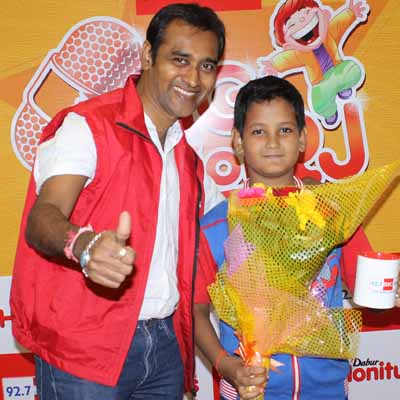
    MUMBAI: Dabur Honitus along with India’s No. 1 FM Network – 92.7 BIG FM have come together to culminate the exciting, all new second successful season of Dabur Honitus BIG Junior RJ – Radio’s only talent hunt show that recognises talent among children and helps them hone their skills. With over thousands of participants from across the country competing to reach the finale, the grand finale of the massive talent hunt initiative for kids comes down to one finalist from each of the 45 cities battling it out to win the ambitious title of Dabur Honitus BIG Junior RJ.


    The month-long talent hunt campaign not only gave kids a platform to discover their hidden talent and showcase their skills but also gave parents the unique opportunity to actively participate in grooming them and encourage them in their endeavour to win the coveted title.  While winners from across 45 cities earned the opportunity to co-host the evening show in their respective cities, 92.7 BIG FM also announced the name of the grand-finale winner of Dabur Honitus BIG Junior RJ Season 2 who will get yet another exciting opportunity to showcase his/her skills on a platform other than radio.


    Judged by popular celebrity and comic genius, Kiku Sharda aka Palak aka Akbar, 92.7 BIG FM and Dabur Honitus announced Vaibhav Kanaad from Mumbai as the grand finale winner, the Dabur Honitus BIG Junior RJ of India.


    Speaking of his win, an excited Vaibhav said, “I am really happy to get the chance to be an RJ as well as win my debut on television. The entire journey has been fun and I consider myself lucky to have received this chance to participate. I would like to thank 92.7 BIG FM to give me this opportunity and believe in me.”


    Only 11 years old, Vaibhav exhibited extra-ordinary vocal skills perfectly combined with spontaneity, wit and a sense of humour that was beyond compare that enabled him to bag the much sought-after title of Dabur Honitus BIG Junior RJ.


    Speaking of the nation-wide talent hunt initiative by 92.7 BIG FM and Dabur Honitus, Celebrity Judge, Kiku Sharda commented, “I’m astounded to see the talent pool that exists among kids today. It was particularly difficult to judge the kids at the finale stage because they were all so brilliant, spontaneous, funny and quick-witted that I honestly had a tough time doing what I was there to do. Seeing the kind of talent that these kids possess has opened me to up to an all-new world and I’m extremely delighted to see 92.7 BIG FM and Dabur Honitus collaborate to give support to such a unique cause.”


     As the BIG Junior RJ, Vaibhav did not only win the opportunity to co-host Mumbai’s No. 1 evening drive-time show with RJ Dilip but has also won the golden chance to debut on national television with BIG Magic’s historical comedy show, Akbar Birbal, starring actors – Kiku Sharda and Vishal Kotiyan. The series that presents the popular folklore of Akbar Birbal tales which represent a combination of wit and wisdom are a perfect fit for the Dabur Honitus BIG Junior RJ who through the representation of his own wit and wisdom beat over 1000 participants to win the grand finale title of the Dabur Honitus BIG Junior RJ.

  • ‘In-house researches are very questionable’ : Abraham Thomas – Red FM COO

    ‘In-house researches are very questionable’ : Abraham Thomas – Red FM COO

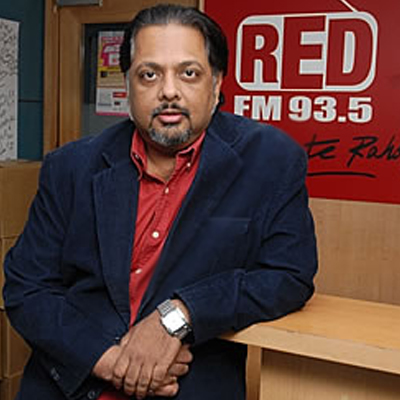
    Sitting in a make shift office with everything from ‘superhit music’ to the constant chatter of the Red FM staff around thrown in, I sit down to interview Red FM COO Abraham Thomas who mentions that the brand new FM station office will be up and ready in a few weeks. The station has every reason to celebrate – the recently declared ILT results show Red FM at number 2 in Delhi and number 3 in Mumbai.

    Indiantelevision.com’s Sujatha Sreedharan catches up with Abraham Thomas to understand the story behind those numbers and what is up the Red sleeve for the year ahead.

    Excerpts:

    The ILT 2007 Round 1 numbers threw up a surprise. Despite all the hype and hoopla around radio players, the listenership has actually seen a decline. What do you think are the reasons for this?
    Although the ILT numbers are more or less in line with our in house research, I am clearly surprised as well that despite all the high profile launches in Phase II, programming innovations and advertising concepts, listenership has dropped by 6 to 7 points in Mumbai and Delhi. I don’t know whether it’s the anomaly in sampling or data, but I would have expected it to at best stay flat. There has been a lot of effort to increase listenership, so these numbers have definitely come as a surprise.

    With radio, the basic question that arises is about ILT and its methodology. I know that people are suddenly distancing themselves from the results or abandoning the data. But my point is that we shouldn’t throw the baby out with the bath water. There are shortcomings in the ILT – the MRUC has not really been proactive and has not been looking at the broadcasters’ concerns as they should.

    More than a year ago, I had raised the issue of cross checks. A couple of suggestions I had passed on included – a simple cross check whereby after the sampler is asked ‘what radio station are you tuned in to’, also ask him to give the name of a radio jockey from that station or a radio show on the station he listens too. Even if one of these questions is answered correctly, one can actually validate that data. MRUC agreed and said that these suggestions would be implemented but again they have gone back to their old ways.

    The other suggestion we had made is that the IRS use mastheads in its survey. Radio surveys can also include audio mastheads or get the users to identify a stations’ brand jingle or ask them to identify a station’s logo id. It’s not very difficult to do such a survey. So I am extremely disappointed with the lack of any user interactive activity.

    So yes, there are shortcomings but I maintain that these are early days still. I’ve always believed that the trend across the different waves tell a story. And it is these trends that we should look at.

    Are there other methodologies that we could look at? What works internationally?
    We could look at some of the international methodology. Some of the players are now advocating what is called ‘diary method’. In this method the smaller player might be at a slight advantage as the sampler who is impaneled is is forced to maintain the dairy and is therefore more conscious of the radio listened to. However, the shortfall here is that you are not capturing the information when you are listening to it. You’re filling in the data when someone comes to collect it. So it still goes back to ‘the top of the mind’ function.

    But I still believe it works because you are conscious of what you are listening to. You can also tackle the shortcoming by collecting the diaries twice a week. It will be that much closer to the point of listening and therefore the errors could get eliminated. Like I mentioned, the small players might get some benefit since they will be listed. All in all, I am saying that we have to have a more robust method.

    You spoke about players who have disowned ILT and rely on their own listenership tracks. Isn’t that an unhealthy trend?
    I am not against in house research. We do a lot of our own in house research for our programmes and to understand our market. The fact is that when radio players disown a currency like ILT, it is a short sighted approach and we are doing a lot of harm to the medium. If you want advertisers to put in more money, you have to allow them to justify this ‘more money’. For this you need a common currency. Overall in house researches and listenership tracks are very questionable. You might call it Maruti or Indica or whatever it is you call it, but bear in mind that you are doing more harm to the medium than good.

    Because of this emerging scenario, people tend to rubbish all the research. We have to collectively arrive at one common industry currency and that is the only way to grow the ad pie. In fact that is the only way all of us can survive.

    So for a two-month-old player to disown a listenership track is very shortsighted. I don’t think they are doing justice to their own medium.

    The branding story for Red FM with its ‘baajate raho’ attitude has worked for it. Is aggressive branding a need for radio players to stand out from the cluttered space?
    Has the ‘bajaate raho’ branding worked for us? Yes, of course it has. But it’s a combination of different things. I think one of our hallmarks is that we are a ‘mass player’ doing the same things as other stations but trying to do it differently.

    We’ve been consistent with our music. We’ve been consistent with our attitude – both on air and off air. Whether its our RJs or the aggressive on ground activity we get into, they are all in sync with our branding. In fact on ground activation has played a big role for us. We’ve been visible in local trains, buses, cabs, at shopping malls or traffic signals- every time you’ve seen us there is that single consistent thought on ‘local issues’ that has made us stand out. Our music is consistently super hit. We don’t play different music at different day parts. This absolute consistency with the Bajaate Raho attitude – RJs, music, advertising- on air and off air- has really been a driving point for us helping us stand out from the clutter.

    Mumbai plus Delhi – which are what the advertisers really look at at least for now- we have managed to stay at a number two (Delhi) and close to the competition at number three (Mumbai). In Delhi especially we lead the competition by at least 2 lakh (200,000) listeners. We expect to increase that lead in the next wave.

    ‘Packaging by definition means discounting’

    The branding effort by radio players is evident; but when it comes to the differentiation factor it becomes elusive? Adult Contemporary Hits (AC), Contemporary Hits Radio (CHR), super hit only ….radio players may throw this in as differentiators. But is this the only differentiation point we have?
    Firstly and strategically as a brand we look at consumer benefit on two levels. At one level we are offering them a very functional benefit – Entertainment. Music, cricket, Bollywood, music and even the local programming all of these form part of mass entertainment that we look at. In this stage we have decided to be a mass market player and therefore we have decided to stick with content which is not very different from what others are playing.

    Within music, like I mentioned, 24 hours a day we play the same music. It’s like a hot water strategy, you open the hot water tap and that’s what you get all the time. There’s no retro at night and house wife in the afternoon kind of music. We also promise that every song we play is not just a hit, it is a super hit and we arrive at that through our research.

    This is very different from our competition which no doubt plays a variety of music but it may be a hit song, or an unheard of before song or even a tomorrow’s hit. We are very clear that we play the super hits of today.

    We also believe that there is an aggressive differentiation on the emotional level- through content and packaging. That is the differentiation best exemplified by our ‘baajate raho’ line. If there is a topic that touches or concerns a common man in that city, we will play it, we will bajaao it. Clearly over the last year and a half, bajaate raho has become a local parlance. We have Bollywood coming on air and saying ‘please don’t bajaao us’, we have cricketers saying ‘you bajaaoed us today’. We have on air properties like Angry Ganesan, Kamla ka Hamla and Sharmajis ‘bajaaoing’ different issues. We have created a personality around Red FM.

    This functional and emotional benefit combined together is what sets us apart from competition. We also believe that this is a rule of three. The top three players will make most of the money. If you want to be in the top two or top three then you have to be mass market.

    If you are willing to be a niche, then you concentrate on different genres of music and programming formats. So you have to decide whether you want to position yourself as a mass player or a niche player. We clearly decided to be a mass player and we are gunning for leadership. Niches can be profitable too, provided you find your niche and market it aggressively.

    In a three to four player market, radio stations staying ‘mass’ may have seemed plausible. But in a multiple player city like Mumbai and Delhi, will it help to stay ‘mass’.
    In our case, we’ve consciously tried to build personalities within the radio with RJs like Malishka and Nitin who are likely to bajaao you if you meet them on the streets or within the studio. So our RJs, music, cricket will help us stay mass and we will try and build a personality for our station to stand out.

    There are format radios coming up that claim more music less talk or on the other hand talk radio. What’s in store for these stations?
    There are radio stations that are looking to play Hindi plus English music and for sure they will get their audience. You can go entirely English or play regional music – Punjabi, Gujarati, Marathi – you can differentiate on the context of language. You can also create a differentiation in terms of the content – for example talk radio.

    It is possible that these players might struggle in the beginning to monetize their content. While the top three will run away with all the money, the rest will find it better to define their target and then it depends on how well you service your segment.

    You can be a comfortable niche and make money. I believe that within a year or two radio stations and their audiences will get more defined. People will know where to go for what kind of music. One thing is very clear. You cannot be all things to all people. The leader who came into the market first, positioned himself very consciously.

    The radio entrants now will be forced to sharply focus their audience. The flip side of focus is that you have to give away one part. You decide your turf and then you focus.
    Within the mass space – 70 to 80 percent of the ad pie will be taken away by the top three.

    With the sheer number of players entering the markets, is there a fear that the space is getting cluttered or there are chances of a consolidation happening anytime soon?
    That is not what international trends show us. There are other cities in the world which have a number of stations catering to different tastes. There is a space for more stations to come up. But one of the reasons why we are still not getting a sense of differentiation is also because it is not possible to have more than one brand in the same city. When stations are allowed that there will be greater branding as well more genres of radio operating in the space. For now, since you are allowed only one station you want to be the biggest and the best.

    Given these constraints, where do you go from here?
    We have decided to be an entertainment station and if we have decided to be in the entertainment space then we have to work around these parameters. If we want to get into news and current affairs, then those are additional avenues. If cricket commentary was to be allowed tomorrow and I want to carry it on my existing station, I would have to do that at the cost of my music. There will be incremental new players who will come in and take those slots.

    But currently we look at a void in Bollywood entertainment and we are filling up that space. But the regulatory policies are fairly good and we are happy the way we are progressing for now.

    Almost every radio player says that – very happy with the way things are…
    If you were part of the Phase I, paying those exorbitant fees, you would be very happy with the playing field today as well.

    Non traditional advertising or activation units may be the new mantra but radio players have identified its benefits pretty early on. But where does it go from here?
    If you look at the three media- print, television and radio – there is a very distinct line dividing content and advertising. In television, you might blur these lines with programme placement and contests but in radio it is a seamless medium.

    Advertisers have been asking to be included into radio content a lot more, without being too obtrusive. Advertisers then started asking us to help them with 360 degree solutions for some of their products. We had a Ford Fiesta come to us and say that we have a car parked at a mall, can you have an RJ come down and do some gig around it.

    More and more people are asking that extra bang for the buck. This is the genesis of activation. It has also helped that advertisers have complained that there is a lack of a single, credible agency to carry out its promotions nationally. This is where we step in.

    Red Activ works on two premises- we build properties on which multiple brands can be built. The 93.5 Car rally worked that way. We also do single brand activation, where we look at solutions for clients. It is a natural extension for us and our medium is used to drive footfall for the client.

    In this advertiser driven scenario, do you think having a station presence across the country would help. Would you look at scaling up?
    The activation is an idea business. It is about an idea which the brand can then ride. Radio is a medium between the idea and the operation. It is driven from the fact that I have an idea, not that I have a radio station and therefore I look at activation.

    Sure it’s an advantage if you have a station in that city so that you can leverage the local market as well.

    On the same note, some radio players believe that the success of a radio station is in leading a particular city not in its scale.
    Fact is if you want to reach your audience and advertiser in a particular city, you have to be relevant in that city; you should connect in that city. This is the basic premise on which the advertisers work. I don’t want to be a number 6 player in Pune; I want to be a number one or two in any market.

    That is the first factor. Then is the issue of packaging. If I am in twenty cities then it is easier for me to package it in all these cities collectively. I believe I am number six in 45 cities; therefore I give you a discount of 10 rupees. But what is your relevance in priority markets? It is the priority markets like Mumbai and Delhi that sets the trend.

    Packaging by definition means discounting. In our media industry, people don’t package their media collectively. They will sell television separately, radio separately and print separately.

    We believe that we have to sell premium. You can’t just fall back on sheer scale; you have to be relevant in each city.

    But please bear in mind, that at the end of the day, packaging means discounting.

    Considering that the Phase II cities are mostly non metros, are advertisers even excited about this kind of packaging?
    The non metros opening up are relevant to sectors like FMCG or telecos but the bulk of the advertising is still restricted to the top 8 metros. What happens is in the smaller markets it is the local advertising that will have a dominant role.

    So while in the larger cities, 70 percent is corporate advertising and 30 percent is local, in non metros the story will be reverse. Besides the smaller markets are markets of tomorrow, while these are markets of today. So yes, you will have to invest in the markets of tomorrow as well.

    They will create new advertisers and pull advertising away from local media.

    You’ve been called a reminder medium, a secondary medium, an incremental medium. But are you still playing second fiddle to mainstream mediums?
    Right now we get three percent of the advertising pie, while internationally that number is closer to a 6 to 8 percent. In Sri Lanka, the radio advertising amounts to almost 20 percent. Unless the share becomes about 8 to 10 percent, it is not viable for the advertiser and we understand that.

    Secondly in other countries, radio evolved and developed before television came in. In India, it is the reverse. There is a lot of television hangover that is happening. Until recently, the creative agency, the client and the planner were more worried about meeting their objectives in the primary market – television and print. In radio, they invariably did not have the time to create ads for the medium and would pass off television jingles to play on the radio station as well.

    Lastly and more critically, there is not enough information to justify the advertiser’s faith in the medium. We’ve spoken about the methodology, it encourages confusion. Unless you get a currency where advertisers can confidently say ‘yes I can put my money over here and this is the reason I want to do so’ the ad pie will not grow.

    But it is changing. Brands are being launched on radio. We’ve created a creative solutions team within our station that works for various clients – we say that don’t give us those television commercials, give us a brief and we will create an ad that is more relevant to the medium.

    But data that justifies the spend is a big concern. Most radio players however look at this as an advantage to pick and fight over each other instead of viewing it as an industry issue. They look at it and say … ‘good!let the small players bleed; we will look at how to milk this best’. There is a bit of a short term consideration. It will be a while before this matures into a more robust industry body.

    What would the road map for Red FM look like in the coming year??
    Radio is projected to grow rapidly. The growth however is more geographic at this stage. Within the city, the growth is encouraging but at a slow pace.

    In our case, we realized that a lot of our listeners are connected to our personalities, our RJs, our properties like Angry Ganesan or Kamla and therefore we have made them available to download on the mobile phone. We launched an initiative called the Red Mobile. We work with mobile2win and you can download all these properties for a price. That’s a logical extension. We are also looking at our net presence. In fact our site should be up this month. It will be interactive – celeb chats, blogs, trivia – you will find them all.

    Right now of course we are looking at cricket. We have contests, tie ups and loads of prizes. As part of this initiative we have a tie up with Sports Bar at Phoenix Mills in Mumbai. We plan to extend this to other cities as well.

    Radio is no longer a passive medium. It is now well and truly an active medium both for the listener and the advertiser. By the end of this year we will look at local advertisers and how to target them as well.

    But bottom-line – We are gunning for leadership.

  • ‘Radio will certainly see consolidation next year’ : Apurva Purohit – Radio City CEO

    ‘Radio will certainly see consolidation next year’ : Apurva Purohit – Radio City CEO

    The radio industry is poised to make its next big leap as radio stations gear up to implement the Phase 2 licenses. The metros have been covered and it is now the turn of the smaller cities to experience FM magic. Radio City has been a pioneer in the FM boom with the first ever FM station in India- Radio City, Bangalore set up in 2001.

    Five years on Radio City CEO Apurva Purohit details the changes in this dynamic industry and all the challenges it’s yet to face in an interview with Sujatha Shreedharan from Indiantelevision.com

    Excerpts:

    The Phase 2 bidding has seen the major networks, including Radio City, expanding their footprints to cover mini metros. What are the unique challenges one would face when it comes to setting base in a small local setting?
    Clearly, when we had decided to go in for the second phase of bidding we had decided to restrict ourselves to metros and mini metros only. Essentially what we were saying is that we will go for the top 15 cities where we have over 70 per cent of the advertising revenue and they are in certain tone and manner and feel similar to the large towns we have been operating in.The only exception is the whole Maharashtra belt which includes Ahmednagar and the smaller stations. And this is a call that we took because networking is allowed only in these cities which means you set up your network in Ahmednagar and run Sangli and Nanded from that station. We took that call because we wanted a network station in our portfolio. Also Maharashtra is a rich state and works from the advertisers perspective. We also believe that our SEC A and B market are not dramatically different in these regions whether it is in terms of sophistication, exposure to media or even exposure to FM. They may be at different life stages but in terms of consumer, percentage of SEC AB population, income level or education or even ethos they are broadly similar. Also you must remember that we have been running the Lucknow FM station for five years. We have the experience of running a FM station in a mini metro and we hope to translate this experience into other smaller cities.

    What about the language and flavor of these upcoming FM stations?
    Radio City does believe in typically adapting itself to the local flavor. At the same time you must remember that we are positioned as a premium, up market SEC AB kind of stations. Therefore our language mix does tend to be different from the typical mix than a mass station is concerned. For instance in Bangalore we do run a lot of English, Hindi and Kannada whereas the other stations are typically Kanada stations. In Chennai, we are very much English and Tamil. In that sense, the kind of RJ talk will be focused on the premium market.

    What about a city like Pune?
    You know Pune is culturally very similar to Mumbai, so that is the kind of mix one is likely to find. Of course it will be adapted to the local culture of Pune which is rich in theatre or Marathi music.

    With the setting up of stations in mini metros, Radio City will now look at dual competition – from existing network players who are also setting up their stations as well as from single city players. How will you tackle that?
    Certainly the local players have taken a single city or selected a particular city because of various reasons like their already established status in say print or publishing. So they are very focused and are able to get into a mass position because they are local. Besides radio while it may have a national brand, does tend to also try to be local. So there is competition. Big, small, single city networks – they are equal competition. The other thing is that I think the position we have taken which has evolved over the last five years is differentiated not only from single city players who are local or mass but also the network player. What I am trying to say is that single city players tend to take the bottom end of the pyramid – local, regional, SEC ABC, while network players have taken the SEC AB kind of position which is mass but on a network level. Direct competition is therefore the network players, while local stations tend to be competition to players like RED FM.

    What about advertising revenue accruing from mini metro stations?
    In fact content is where you could say that differentiation gets greyer. As far as revenue is concerned, that’s a no-brainer since we are trying to get ads from the corporate clients and large national players. In that sense the local players are no competition. The question to ask is – Is the advertiser trying to buy radio because you also have print or is the advertiser trying to buy a good network which is either number one or two. We are very clear that we as a network focus on the right kind of network in 15 of the top cities. In revenues there is no competition. As far as content goes, there will be competion with local players.

    A few years ago, differentiators were perhaps easy to identify within the few radio players. With the numbers growing how does one still hold on to or reinvent that differentiator?
    I think the whole industry is in a state of flux. My opinion is that now, when the newer players come in they will have to recognize that if they want to grow the listenership pie they better come in with different options. The newer guys have to come in with different languages or different formats and personally if you ask me that is not happening right now. All the newer guys have really not lived up to our expectations of trying to build a differentiator and as you are rightly saying therefore today there is a mass of similar feel players. You could also say that there are certain brands which have been there for five years and therefore they have equity and there are others which are just entering the market and they are broadly similar. You must also remember that the investments in brand building have happened only recently. Before this the whole industry was struggling to find its own feet. In that sense the industry is still very nascent in terms of trying to build an image for itself. Given those kind of issues and challenges, we have been trying to portray Radio City as a brand, say, which is different from a Radio Mirchi perceived as a more aggressive and in your face – teeny bop kind of station to our more softer, slightly older 25- 30 years, premium listenership. And that has developed over a period of time and is becoming clearer only over the past year or so. Sure, the differentiation worked in a non competing market. Today, however, you have to take it to the next level and we at Radio City are doing exactly that- pushing this whole process of identifiable branding to the next level.

    Could you explain how you plan to do so?
    It is a little premature to say that, except that the intent is very much there. But if you had to look at international examples certainly there are differentiations that could be built in at the psychographic and demographic segment. Even demographically, what an 18-year-old youngster wants is different from what a 25- year-old youth wants although they may fall under the similar youth category. So if there is a difference in the kind of music they aspire to hear, they must be given that. And the radio that pushes this difference will be the radio station that stands out in the long run. I think where people have failed is that they have tinkered with the branding or marketing story but have done nothing different with the product. At Radio City we are very clear that we will only talk about the differentiation when we can actually demonstrate it in the product. No one has made that differentiation although we have tried various innovations. With Mughal-e- Azam or Babbar Sher or more chat shows. But we believe that we can really fine tune the product far far better.

    Is there a sense that this overdependence on Bollywood by all FM stations is the real cause of similarity in programming?
    I think that there is Bollywood and then there is an equally vibrant music industry although we tend to put them all in the same basket. But if you remove the animal out of the Bollywood cage, then you will realize that there is almost a 100 years worth of beautiful music. It’s just that a lot of it happens to be mostly from Hindi cinema. Ultimately it’s the music of the nation. All of us are using popular music and that is a fact of life. We are ultimately mass stations aren’t we? If we were niche stations we would have jazz. But it’s not fair to say that Indian radio stations are equal to Bollywood and therefore ‘Che!’ They are not different. Internationally also all mass stations do look at popular music. Almost 80 per cent of international stations play popular music except that they are able to differentiate themselves in terms of appealing to a particular target group or by playing only a particular ‘sound’. Unfortunately in India, we are yet to go to that second level. This can be due to various reasons- nascent industry, unsound policies. Besides how old is this industry? About five years old. Out of which four years we spent struggling to stay afloat. It’s very easy to beat up this industry with the ‘Bollywood tag’. But we’ve barely stabilized over the past two years. So there’s no doubt that the differentiation has to come and will come. And it will be led by pioneers like Radio City. If you ask me, even within the context of popular music you can differentiate.

    How long do you think this process of evolution will take place?
    According to me FM started evolving last year when the government announced regulatory corrections and a fresh package. Look at the growth since then. We have grown in stations. The number of players in each city has also increased and even in terms of content – you have an Indigo which plays English music or a Fever FM which experiments with format radio. So one phase of evolution has already happened. The second phase of evolution will start now where players like us really chart out our different positions which will happen in the coming six months. Then there will be an era where there will be more consolidation and regrouping. Some players will fall by the wayside, some players will push ahead. In the next year there will certainly be a lot of consolidation. Then there is the station setup, scaling up. A year ago radio city had about 100 people. We are now looking at having about 300-500 people in the next few months. Isn’t that a spurt? The natural evolution in any other industry would have been ten years; we have done that in three years.

    ‘The natural evolution in any other industry would have been ten years; we have done that in three years’

    Do you believe that there is bound to be a clutter with the number of radio stations coming in?
    I don’t think there will be a clutter, but in the frenzy to launch radio stations I believe that learning will not happen as it should. Learning and qualitative inputs. There is no luxury to actually test market a product or try a pilot launch. Now you say, lets launch first and we’ll figure out in the market if it needs to be changed.

    There is a huge debate over the tools used to measure listenership and advertising on radio. What does Radio City turn to?
    Of course the first thing that this industry needs to do is set up a robust currency to determine advertising and listenership. There is a strong movement towards it and sooner rather than later it will have to evolve. We prefer to use NRS and then we have Synovate which does our brand research for the last three quarters. We are just waiting for the industry to stabilize before we declare these findings publicly. We are looking at listenership understanding, listenership pattern in different cities, psychographic and demographic pattern.

    Is the industry complaining about the FDI regulation in radio which allows for only 20 per cent foreign equity?
    Currently we are happy with whatever the government has allowed considering we spent five years working hard to convince them. We are quite ecstatic about what we got. I think the government itself needs to realize that the industry is in a state of buoyancy and it must give whatever impetus it can – news and current affairs license, networking, multiple frequencies or FDI. Quite honestly, the first three rather than FDI.

    Is Radio City looking at multiple licenses and what kind of stations would you be interested in?
    Yes we would. But for now it would be like blue sky gazing. We would look at news and current affairs, different genres of music, spirituality or even different languages.

    Is there a worry about lack of a sizeable talent pool to choose from?
    Talented and skilled people is something all radio stations are worried about. Where does one get trained people from? You have to do your own training. Fortunately we realized sometime ago and we have invested reasonably in increasing the skill set. Since we’ve been here for five years, we have had a large number of people working for us. Even then it has been a challenge for us.The other problem is of course being attractive enough as an employer for a talent pool to come to us. We try to build ourselves as a brand which is informal or a fun place to work. Very ‘un media’ is how I would describe it.

    What does the re entry of Star mean to Radio City?
    It is purely an investment decision at a shareholder level. At the operational level of the company it has zero impact. And besides we have alliances with most networks as clients or media partners – DNA, Zee, Sony and Star. So there won’t be any special content tie ups with Star. So operationally nothing, it’s purely an investment decision.

    Can you give a comparative understanding of how radio looks – 2006 versus 2007?
    In terms of the ad pie there has been no dramatic change. While there has been a 30 to 40 per cent growth, there will be no big change since the new stations have not been all set up and operational. Between 2005 and 2008 one is looking at doubling the industry. It will grow from 2.5 to a minimum 5 per cent simply due to geographical coverage area. In fact we would have more than doubled if there were far more genres on offer. It won’t go up to a 60 per cent unless people start segmenting and providing different products. If I were a new player, that’s a question I would ask.

    What about the revenue and listenership growth at Radio City in the past year?
    Revenue wise we have clocked a 40 per cent growth last year. As for listenership, if I were to give a Bangalore example it has grown from 1.5 million to about 2.5 million listeners which is almost 60 per cent growth.
    Radio City has also jumped on the bandwagon to have celebrity RJs on air?
    We are very clear that a celebrity won’t work unless it’s what the programme wants or what the brand wants. Using a celebrity just for the heck of it won’t work. Taking a TV star and putting him on radio is just gimmicky. We concentrate on RJs in terms of their music understanding power. Sonu Nigam speaks about Mohammed Rafi, Roop Kumar Rathod talks about ghazal maestros. In so far as the celebrity enhances the music experience on our audience, we’ll entertain the concept. And this is the case for all radio stations, not just Radio City.
    What about the music industry and the high rate of fees it charges radio stations?
    Somewhere we will have to understand that radio will only help drive their CD and DVD sales.The cost of purchasing music must be justified. We as a large network may deal with it but what about smaller stations.
    Radio City recently tied up with Vibgyor Brand Services for on ground activation? What kind of details have been discussed since the launch?
    We are in the process of client briefings with various advertisers. We are already offering one level of on ground activity. But our clients are asking us for more than just sales promotions. They want more exciting ways of integrating our client’s needs.
    What according to you would be the next fillip for radio?
    The next fillip is of course the launch of stations in 91 cities. After that, the sky is the limit. How we use radio with net, outdoors, events, with new age media will also come under sharp focus. Look at radio and mobile. Radio used mobile much better than television. We receive 2-3 million text messages from one city, while television sees that number nationally. As for us, currently we are in the process of setting up our stations in Gujarat – Surat and Ahmedabad – and are in the process of employing people.
  • Fever FM to launch in Mumbai on 15 January

    Fever FM to launch in Mumbai on 15 January

    MUMBAI: It’s all systems go as the newest entrant on the FM block in Mumbai, Fever 104 FM, readies itself for a 15 January launch.

    The FM station is a technical collaboration between Hindustan Times and Richard Branson’s Virgin Radio International. Virgin Radio International has also set up radio stations in Bangkok, Johannesburg, Malayasia and Paris.

    Speaking to Indiantelevision.com about the no-frills format of Fever FM, Mumbai station head Sajjad Chunawala says, “Most radio stations follow the norm of block radio in programming. So you have the morning, afternoon, late night segments all chalked out. Our positioning of Fever 104 FM is more music, less talk. With a format driven content radio channel, we have defined our target audience as ranging between 25 and 34 years and this is the audience we want to cater to.”

    The station has researched thousands of titles in the past two months to identify the kind of contemporary music which will appeal to its listeners. Said Chunawala, “The content of music will be 80 per cent Hindi and 20 per cent international music taken from the post 1980’s period. Of course, the music content will be tweaked to appeal to the local masses. So in Delhi, the music is influenced by Bhangra beats; in Mumbai it’s likely to have more of a Bollywood influence.”

    When asked if he fears losing a particular segment of his audience in the already fragmented listenership on radio space, Chunawala is very clear when he says, “We can’t satisfy everyone and we know that. Not everbody is likely to enjoy our format we understand that as well. We have identified our core listener who likes his music without the incessant jabber of an RJ and this is where we are focused.”

    No recipes, no agony aunts, no silly jokes and no astrologers – only music. That’s the line taken by the FM station. Over the next few days, the station promises a wide variety of on ground promotional activities. To kick off the activity, the station will have people with their mouths sealed stationed at various points across the city to give a sense of ‘less talk’.

    The first Fever FM station was launched in Delhi in October last year. Two more stations in Kolkata and Bangalore are slated to go on air by the end of this month although no official date has been set for them.

  • Zoom to launch shows on celebrities and entertainment

    Zoom to launch shows on celebrities and entertainment

    MUMBAI: Lets Talk a celebrity chat show produced by Miditech is scheduled for launch on 19 November at 11:30 am on lifestyle channel Zoom.

    The weekly show will be hosted by RJ and actor Tarana.

    Tarana brings viewers face to face with the Bollywood stars introducing them as personalities behind the famous faces and giving insights into their lives as regular people; not as celebrities.

    Let’s Talk offers a freewheeling chat with film personalities, which gives a peak into their personal lives.

    Miditech says that Lets Talk has been shot in select outdoor locations to create a positive environment and ambience to make the guest comfortable. The show has ingredients of fun, emotions, bonding and laughter with a general feel good factor. The forthcoming episodes of Lets Talk will feature Shreyas Talpade, Amrita Rao and Riya Sen as the celebrity guests.

    Miditech had previously produced Main Hoon for Zoom TV. The programme aired over 100 episodes in two years.

    Meanwhile, as already reported, Zoom will also launch an entertainment news show Popkorn Newz hosted by Barkha Bisht.

    The show will see apperances by stars both from the big and small screen. There will be news, interviews, entertainment trivia as well as in-depth insights on the news stories; from Bollywood to the Indian Tellywood.

  • Radio City ropes in Roop Kumar Rathod as RJ for new show ‘Shaam-E-Ghazal’

    Radio City ropes in Roop Kumar Rathod as RJ for new show ‘Shaam-E-Ghazal’

    MUMBAI: The private FM player Radio City 91 FM Mumbai unveils a fresh season of ghazals with the launch of a show solely devoted to ghazals. Starting 6 October, with the Shaam-E-Ghazal, Roop Kumar Rathod makes his radio debut as the host.

    The show holds an interesting blend of unplugged ghazals, mushairas and live on-air performance by the Roop Kumar Rathod. 

    The one hour show will aired every Friday at 9 PM, with a repeat telecast on Sunday at 9 PM Apart from broadcasting popular ghazals, the show would also look at reviving ghazal listening and giving a new dimension to it, informs an official release. 

    Roop Kumar Rathode will cite examples of shayaris and ghazals and explain the nuances, meanings of relevant words and difficult phrases through the show.

    ‘Shaam-E-Ghazal’ also presents a unique opportunity for the listeners to participate in a contest whereby getting a chance to send an interesting ghazal / shayari and win a music CD specially signed by Rathode.

    According to Radio City CEO Apurva Purohit, “Radio City has always believed in bringing to our listeners the best, through the best. We constantly push the envelope in terms of giving differentiated programming to our listeners through our music experts. With Life Ki Dhun With Sonu Niigaam, we pioneered the trend of celebrity RJs, which received tremendous response. With Shaam-E-Ghazal and more such programs in the next few months we will continue to treat our listeners to great music.”