Tag: Riya Joseph

  • TV’s desi power play: How regional storytelling is uniting a billion hearts

    TV’s desi power play: How regional storytelling is uniting a billion hearts

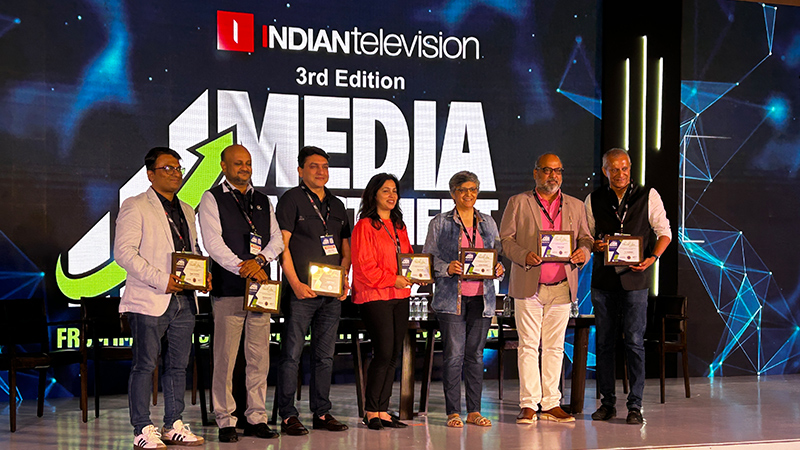
    MUMBAI: At the 2025 edition of the Media Investment Summit by Indiantelevision.com, a potent mix of data, drama and desi sensibilities took centre stage. In a session titled ‘From Regional to National: How Television Unites & Influences Billions’, top executives from insurance, FMCG, media, and broadcast peeled back the layers of India’s most underrated soft power—television.

    Chaired by Tam Media Research CEO L V Krishnan the panel drove home a core truth: in a country as complex as India, regional is not a stepping stone to national—it’s the soul of it.

    Zee Entertainment chief growth officer Ashish Sehgal opened the session with a clear stance on storytelling. “We’re looking at a command-level segmentation exercise in a vast, culturally diverse country. The same storyline can vibrate differently across states, languages and values”, he said. The key, he noted, was not translation—but transcreation. What works in Maharashtra needs rethinking for Manipur.

    Sehgal highlighted how television continues to command trust, “People spend more time watching TV in the living room than browsing online in isolation. That communal screen-time is where influence breeds”.

    Britannia GM – media Riya Joseph added flavour with paint ads and biscuits. “If we use one ad template for Rajasthan and another for Karnataka, we’ve already lost the battle. Paint colours, biscuit flavours—even the tone of a jingle—need localisation”, she said. In Joseph’s world, the biscuit is serious business. “The challenge isn’t just shelf space—it’s shelf recall in a noisy media universe”, she added.

    Britannia’s hyperlocal campaigns often start as social experiments and end up earning massive engagement with minimal media spends. “When we celebrated pronunciation quirks around ‘croissant’, it went viral. Because it came from their lives, not ours”, she quipped.

    For insurance brands, the entry barrier isn’t price—it’s comprehension. “In a culturally vibrant and diverse country like India, where every corner celebrates its own festivals and traditions across different languages and cultures, marketers have a unique opportunity to connect deeply with consumers through festive storytelling. These festivals, rich with emotion, symbolism, and values, offer a goldmine of inspiration— but to create an impact that lasts, the story must not only reflect the festive spirit but also stay true to the brand’s core message.”, said Edelweiss Life Insurance CMO Abhishek Gupta.

    Gupta pushed for story-first advertising. “Across India, every region holds real stories of loss, hope, aspiration and renewal. These aren’t fictional narratives—they’re lived realities. Marrying those with brand promise creates resonance and trust”, he said, adding that regional storytelling builds both loyalty and local advisory networks.

    Shemaroo Entertainment business head – Hindi GEC Sagar Hosamani leaned into faith-based programming as a vehicle for localisation. “Every festival must reflect the cultural nuance of its origin. Devotion isn’t one-size-fits-all”, he said.

    Hosamani highlighted that storytelling isn’t just about language but ritual, colour, iconography and emotional pace. “If we shoot a Navratri segment in Mumbai and call it pan-Indian, we miss the mark. It must feel local to be loved nationally”, he said.

    Madison Media Sigma CEO Vanita Keswani offered a sharp media planner’s take, “There’s no ‘national vs regional’ anymore. It’s both. Every brand plan today has multi-layered targeting—regional, hyperlocal, and mass”.

    Measurement, she stressed, is now possible down to the taluka level. “We can measure Sun TV’s performance in Madurai versus Chennai versus Coimbatore. From search queries to WhatsApp bot data, the tools are in place”, she added. Keswani emphasised that regional content is increasingly outperforming national content in engagement-led metrics.

    Live Times founder Dilip Singh closed the discussion with a rousing pitch for television’s credibility. “There are 400-plus channels in India, yet audiences still turn to TV for breaking news. During high-stakes events, TV rooms become war rooms”, he said, citing the post-India-Pakistan strike coverage where mobile viewership dipped but TV soared.

    Singh called for fact-first newsrooms. “It’s not about being the fastest. It’s about being the most accurate. Truth is our only product”, he said.

    All panellists agreed that India’s complexity demands cultural fluency, not marketing convenience. As Sehgal concluded: “You speak my language, my brain listens. You speak my culture, my heart responds”.

    At a time when digital fragmentation is rising, the session underscored how television—through regional storytelling—remains India’s most unifying screen.