Tag: Ritu Mittal

  • Brands navigate trust, AI and culture to thrive in today’s media landscape

    Brands navigate trust, AI and culture to thrive in today’s media landscape

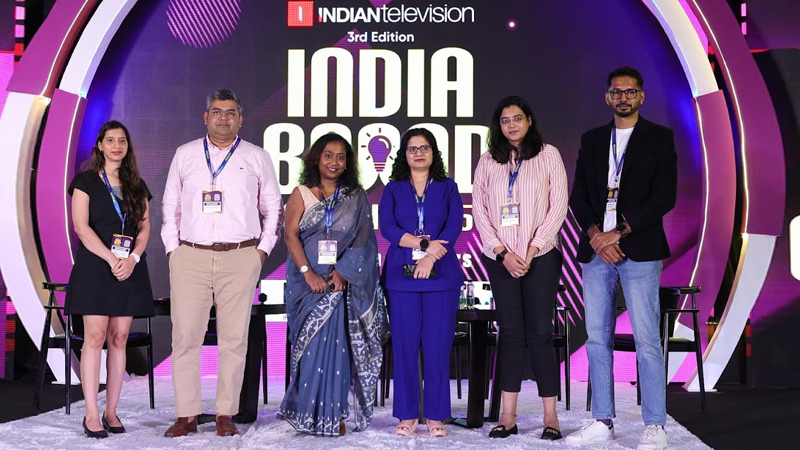
    MUMBAI: If marketing is war, then the battlefield is shifting from loud campaigns to sharper trust-building, from chasing clicks to curating culture. That was the resounding theme at the session “Driving Performance and Brand Reputation in a Dynamic Media Landscape” at the 3rd India Brand Summit 2025, where five marketing heavyweights unpacked what it takes to stay relevant when algorithms, attention spans, and authenticity collide.

    On stage were Harshita Hemnani (Bharti AXA Life Insurance), Argho Bhattacharya (Payu), Sayantani Das (Jumboking Burgers), Ritu Mittal (Bayer South Asia), and Anita Subramanian (JLL), with Abhishek Pujar of IAS steering the discussion.

    The conversation quickly zoomed in on artificial intelligence not as a futuristic buzzword but as an everyday reality. Mittal argued, “AI-generated content is a broad term not all of it is bad. If brands use AI to scale authentic storytelling and create contextual variations, it’s a powerful ally. But when AI content becomes clutter or poor quality, that’s when reputations get dented.”

    Das agreed that authenticity must rule over noise. “The brand will win not by shouting the loudest, but by being contextual and authentic,” she said, pointing out how creative variations and asymmetric segmentation now matter more than ever in cutting through digital saturation.

    Culture, too, emerged as a defining battleground. “You can’t drop a generic festive message and expect it to resonate,” said Hemnani. “Brands need to mirror the cultural mood whether it’s Diwali, Pongal or Christmas and be seen in environments reflecting joy, togetherness, and Indianness.”

    For Subramanian, real estate marketing offers lessons in nuance: “Trust is everything. Technology can scale, but human-led experiences are irreplaceable. That’s where AI works best augmenting, not replacing, authenticity.” She highlighted how launches today are often creator-led, citing international examples where communities turn content into commerce.

    Bhattacharya, from PayU, brought in the customer lens. “Consumers don’t care about brands, they care about what you can do for them. Value is the keyword, whether it’s price, quality, or convenience. Festivals amplify this tendency to spend, but the trick is to stay transparent, relevant, and valuable.”

    When the debate turned to balancing short-term performance with long-term reputation, the panel agreed there’s no either/or. “It’s not performance versus brand anymore, it’s about balance,” said Mittal. “Whether that’s 70-30 or 50-50 depends on your category and consumer priorities, but both are critical for sustainable growth.”

    Looking ahead, panellists predicted disruption from agentic AI, niche AI tools for smaller cohorts, and experience-driven marketing that fuses data with human insight. As Mittal summed up: “Responsible AI, trust, and personalisation will define the winners. In the long run, transparency and authenticity will separate brands that thrive from those that fade.”

    With over 300 delegates in attendance, the session reinforced a striking truth: in an era where algorithms increasingly decide visibility, the ultimate differentiator remains deeply human trust, culture, and value.

  • Loyalty’s no longer blind: India’s marketers say it’s earned, not bought

    Loyalty’s no longer blind: India’s marketers say it’s earned, not bought

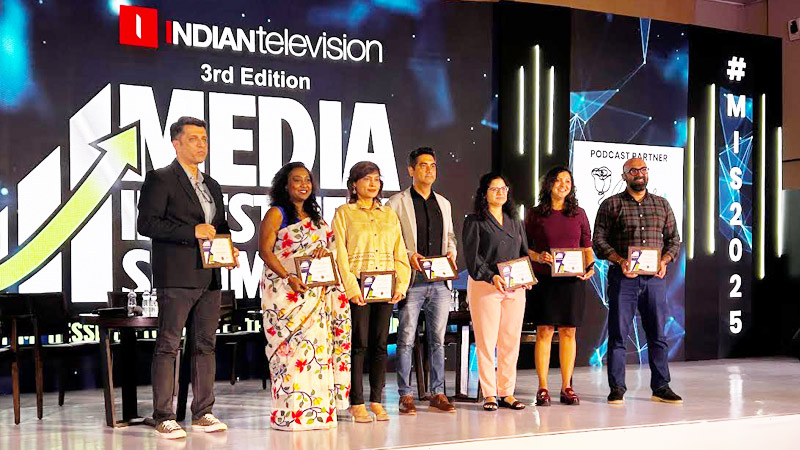
    MUMBAI: In a world of swipe-right consumption and split-second brand switches, loyalty is less about freebies and more about frictionless delivery. This was the consensus at Indiantelevision.com’s Media Investment Summit 2025 during panel six, ‘Decoding the Evolving Indian Consumer: What Drives Loyalty in 2025?’ Moderated by Omnicom Media Group India CGO Anand Chakravarthy, the session dissected how Indian consumers are thinking, buying and staying (or straying) from brands today.

    Featuring voices from pharma, beauty, wellness, QSR, BFSI, and heavy industry, the session proved that while brand allegiance may be waning, there’s a silver lining for those who can predict—and personalise—customer moments with precision.

    Mahuya Chaturvedi of Century Paper framed loyalty as a “contract between buyer and brand”, akin to dating in a pre-app era. “It used to be purer”, she quipped, “fewer choices, fewer distractions. Now the moment that contract’s terms aren’t met—customers walk”.

    She argued that brands must over-index on at least one pillar—price, performance, trust, or experience—to sustain recall. “In commoditised sectors like paper, scientific selling and product knowledge—not the product itself—drives repeat”, she noted.

    Sayantani Das of Jumboking Burgers traced loyalty’s new anatomy, “It used to be about NFM (Net Frequency and Monitored value); now it’s about emotional bandwidth and physical availability”. She shared that metro station outlets triggered repeat behaviour simply by being the default option. “Loyalty is no longer a campaign, it’s a commuter habit”, she said.

    For the healthcare crowd, loyalty isn’t convenience—it’s consequence. Pulak Sarmah of Sun Pharma stressed, “Consumers don’t obsess over brands like we do. They want reliable solutions. If Saridon says pain goes in five minutes, it better work in five”.

    Ritu Mittal of Bayer Consumer Health added, “People in pain don’t want to experiment. Trust runs through families. That’s loyalty you can’t buy—it’s earned over generations”.

    When discussing pharmacists’ roles in the ecosystem, she revealed how new launches like Saridon GO were backed by frontline chemist education. “Pharmacists aren’t just retailers—they’re trust brokers”, she said.

    Krithika Sriram of PLIX noted that loyalty no longer depends on product quality alone. “Those are hygiene factors now. If you’re not helping customers in their wider journey—through diet plans, coaching, or credible education—you’re just another supplement on a shelf”, she said.

    By offering custom meal plans alongside apple cider vinegar tablets, Plix increased stickiness without a discount in sight. “Transparency works”, she added. “We told consumers: nothing will change in seven days. Stick with us for 12 weeks—and it worked”.

    For Nishant Nayyar of Kaya, loyalty is about staying relevant—physically and emotionally. “We realised if you close a retail outlet, loyalty drops. We’ve learned to stay at a customer’s moment of truth for as long as possible”, he said.

    Kaya’s strategy involves using doctors as “influencers”, not celebrities. “Their authority on FDA-approved treatments becomes our marketing currency”, Nayyar explained. Kaya now releases digestible, science-backed video content to explain results without overwhelming jargon.

    Drawing from her past life in banking and insurance, panelist Anjali (ex-BFSI, currently at D2C firm Dana) recalled, “Customers hated that we only called them once a year—to sell a renewal”. Her team countered by building content-based engagement models to create consistent touchpoints throughout the year. “Loyalty in BFSI isn’t about points. It’s about not ghosting your customer”, she said.

    As the session closed, Chakravarthy prompted each panelist to finish the sentence: “In 2025, the future of loyalty lies with brands who…”

    Their answers said it all:

     .  “…stand for something and do more than transactional strategies” — Krithika Sriram

     .  “…solve real-life consumer problems and create moments of delight” — Nishant Nayyar

     . “…humanise science”— Ritu Mittal

     .  “…are radically transparent” — Sayantani Das

     .  “…are agile enough to evolve with each customer’s heartbeat” — Mahuya Chaturvedi

     .  “…offer extreme personalisation through AI” — Pulak Sarmah

    In short, loyalty isn’t dying—it’s diversifying. And in 2025, it seems you don’t own your customer. You earn them, repeatedly.

  • Boomlet and Saridon set Guinness record with No Pain Period campaign

    Boomlet and Saridon set Guinness record with No Pain Period campaign

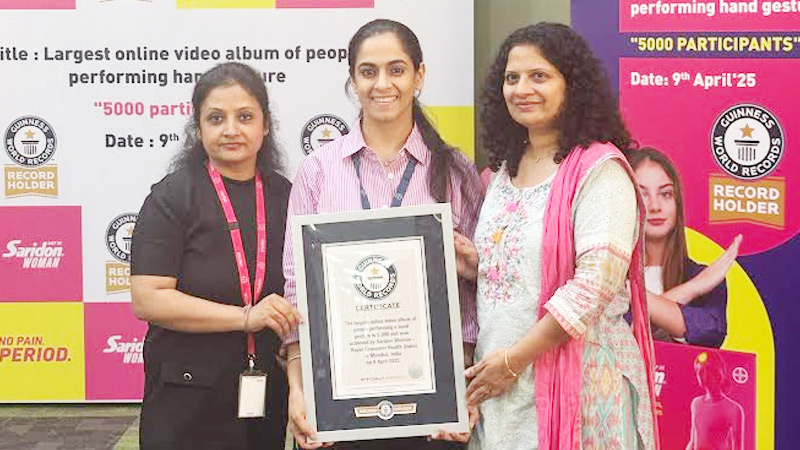
    MUMBAI: In a historic achievement for Indian marketing, Saridon and Boomlet Group have earned a Guinness World Record for their bold and socially driven campaign, ‘No Pain Period’. Recognised as the largest online video album of people expressing period pain, the campaign turned a hushed topic into a national and global conversation—powered by the voice of thousands.

    With a staggering 5,189 influencers activated over 30 days, the campaign shattered expectations. Delivering an average of 172 videos per day and seven videos per hour, it wasn’t just about scale it was about substance.

    “What made this campaign special wasn’t just the numbers, though those were phenomenal; but the mission,” said Boomlet Group co-founder & managing director Preety Singh. “Period pain is a reality for millions of women and yet remains a topic that is not openly discussed. We are honoured that the Guinness World Records has recognised this bold campaign as a moment of global marketing innovation.”

    The campaign brought together over 8,000+ longlisted creators, using a strategic blend of digital and offline execution to ensure diversity, authenticity, and gender balance. At its heart was a commitment to real stories told by real women, navigating cultural boundaries to spark meaningful change.

    “At Bayer, we remain deeply committed to empowering women by providing effective solutions for menstrual pain relief,” said Bayer Consumer Health Division marketing head Ritu Mittal. “The No Pain, Period campaign and this Guinness World Record mark a significant step forward in breaking taboos and fostering open conversations about period pain.”

    Unlike conventional campaigns focused purely on reach, No Pain Period integrated precision influencer targeting, community sensitivity, and impactful storytelling. The success is a testament to Boomlet’s expertise in managing large-scale influencer operations with finesse.

  • IBS: Rebuilding brands, building economies

    IBS: Rebuilding brands, building economies

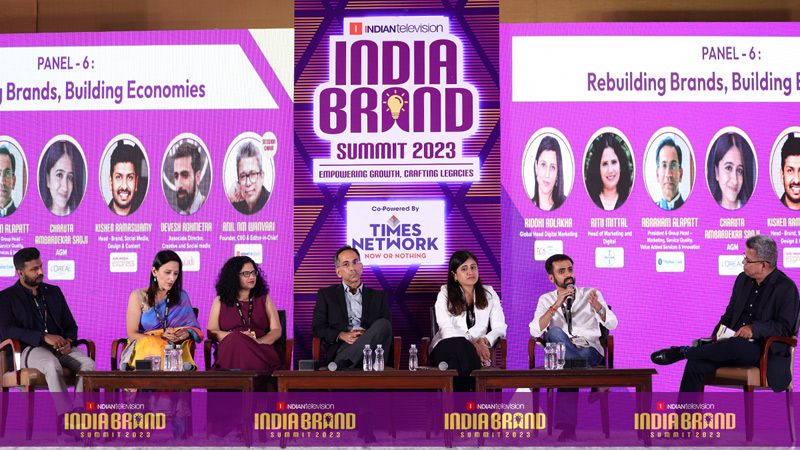
    Mumbai: The India Brand Summit held on 28 November 2023 at The Lalit Mumbai, convened leaders, marketers, entrepreneurs, and experts to explore current trends, challenges, and opportunities in the dynamic brands and marketing arena.

    The session offered a comprehensive exploration of the strategies and approaches required to revitalize brands to contribute to the growing economy. Through this session, We delve into the intricate relationship between brand revitalization and its impact on larger economic landscapes.

    The key highlights of the session were How brand revitalization efforts can contribute to stimulating economies, attracting investments, and creating jobs. Indicators to understand the brand’s current perception, customer sentiment, and market positioning. Strategies for Brand Revitalization – To explore methods to refresh brand messaging & how to adapt to evolving consumer preferences. To underscore the role of digital platforms and technology in brand rebuilding. To examine how brand extensions in brand rebuilding initiatives translate into tangible economic benefits. Recognizing the global scope of brand rebuilding & how it can collectively contribute to the development of the country

    The session was chaired by Indiantelevision.com group founder – CEO & editor in chief Anil NM Wanvari had panellists including Bayer consumer health division India head of marketing and digital Ritu Mittal, Tata consultancy services global head of digital marketing Riddhi Adlakha, Thomas Cook (India) Ltd president & group head – marketing, service quality, value-added services & innovation Abraham Alapatt

    Loreal Paris AGM Charuta Ambardekar Saoji, Air India Express head-brand, social media, design & content Kishen Ramaswamy, Shaadi.com associate director creative and social media Devesh Rohmetra

    Anil began the session by asking,  “How is each of your houses? How are each of you transforming yourself to serve this new consumer? And what’s happened to the brand that you’re associated with?”

    Devesh stated “So as you mentioned, like how and we were just talking about it that you know how the world around this is changing so much and especially not just economically, culturally and in all aspects, the institution of marriage is changing, There was an idea of arranged marriages, which has now changed to planned marriages as we spoke about. There was a time when parents found you somebody and said, this person looks like a good person. This is going to be your party. Those were arranged marriages. Now we’re in a world when parents come to you and then they look for you and they find multiple suitors for you, for you to meet, match a vibe and you know eventually then settle down with one of them. That’s something that we can do, say planned marriages. It is somewhere between love marriages and arranged marriages. So it’s chosen by you but may be found by somebody else. That’s what we at shaadi.com are also trying to do right? You spoke about the economic changes in our lives and our lifestyles. I’ll give you a great insight. Recently we were doing some research on our data from the platform. And we found out that women who are, you know, doing very well professionally and financially, independently. Are underplaying their salaries by a lot on our platform. So we found out that you know, people who are women, who are at very senior positions and very good companies, global companies have added their salaries at let’s say 12 LPA ++, Now that can be anything. So technically they are not lying, but we know this for a fact they are much higher than that. But they are doing that to kind of fit in and be more suitable or for multiple other reasons. Also found out that you remember there was a time when government job was the thing. if you’re a guy who has a government job, you are right, now entrepreneurs and MBAs are the new government jobs. They are the most suitable suitors on our platform. People are more desirable suitors on the platform, almost like, how a government job used to be. So yeah, we are also changing our brand approach. We are not trying to be the regressive, matchmakers that everybody thinks that we are.  We are trying to evolve our brand approach to fit the new narrative of our society and hopefully, it works out pretty soon.”

    Anil asked, “How are the changes that have impacted you how are you reacting to the changes and how has it impacted what you’re doing apart from localizing, colors maybe shades?”

    Charuta replied, “ Loreal Paris is a 114-year-old brand present in 150-plus countries. It’s massive from a global point of view. It has three pillars, One is women empowerment or because you’re worth it like everyone knows, the Second is science and the third part is inspiration and luxury. Now these three pillars don’t really change. They don’t need to be revitalized. So no matter which country we move to exactly like you said, the macroeconomic trends of more working women, more disposable income consumption shifting from household to individual consumers, and digitization. So that really helps a company like L’Oreal. So it’s more from a brand point of view we don’t need to drastically change our brand image from country to country however what we need to adapt in a growing economy like India. Firstly, are our products the correct products for Indian women? Many times what happens is when you launch a new brand comes into a country, there is a plug-and-play. So you have imports that come in and that’s what gets sold. But over a period of time, a scale builds. The products have to be made for the country. They have to be tested on Indian skin, on Indian hair and that’s the first step. And that’s how you will get skin. The more you make such products, the more you produce in the country, the costs become lower, the volume increases and this is a virtual cycle that everyone in FMCG slash beauty wants to get into. So that’s the first thing for us to do, which we did. I think the second thing is that this consumer is also very demanding. So it’s no longer to say for example, just about Shampoos to quote hair care there is a routine. So shampoo, everyone uses shampoo conditioner, half the consumers use conditional, then you have serums, then you have some hair masks and so many other products just in one category. And it is our responsibility as a company who’s known for this and who has been at this. We are the number one beauty brand in the world to really bring to the market newer and newer gestures like this. And this is what we do, So we play everything. So we play in terms of formats, smaller packs, etc. For the mass market. At the same time, we play high and low. So we play high for the evolved consumer who’s online. So in fact L’Oreal is a pioneer when it comes to e-commerce. When it comes to digitization, we have invested ahead of the curve. We foresaw that this is happening and in fact from 2018-2019 onwards we are over-indexed on our investments and that’s really helped us because that’s where the consumer is. Currently, there are 660 million smartphones in the country. So that’s massive and some around half of that household, so 330 million households, so around 2 smartphones. So the way we look at consumers has changed and that’s really helping us. So in terms of premiumization, new gestures, format change, and our brand itself being positioned being international, the consumer has come to that now and that’s what they asked for. So it really helps us create this virtual circle.”

    Abraham further spoke about his company adding, “The fastest-growing major economy in the world. So as a result of that, we’re pushing up a fair amount of people literally every year into the consumption disposal segment, which is a segment that we in the travel industry focus on. Two is that the youngest demography in the world obviously has a lot of implications in terms of media consumption, lifestyle, attitude towards saving or suspending as you refer to, and so on. And the third is the fastest-growing digital economy and the sort of rapid shift from analog to digital that India has witnessed leapfrogging various other economies. So if you look at our category, I think brand for those who don’t know, Thomas Co we are 143-year-old pioneer in modern travel as we know it. Everything from the first traveller’s check to the first hotel coupon was invented by Thomas Co. So Thomas Co India itself in its own right as I was explaining to you as a multinational, we are in 25 countries and five continents ourselves. We bought the British brand when it was liquidated in 2019. So we are the original Thomas Co now. So our whole attitude on the backdrop of these three trends is really looking at how we need to shift from a sustainability standpoint. One is this whole positioning, So I think where we are most focused on is what we call premium mass, which is the segment that’s big enough to want high-quality experiences when they travel and go on holiday especially. But at the same time, not too much customization because we recognize that’s not really a space that we are good at in terms of scale. So clearly positioning-wise, we are in the premium mass phase. Two is because of the young demography thing. The big shift is the shift from travel to places to travel for experiences. So you have a segment that’s coming to us over the last 10 years that’s coming from I want to do this and this. So why should I be going rather than I want to go here? What can I do? So that’s a big shift and that really signifies, not just young in terms of age, but young in terms of attitude, experience late travelers. And the third piece is, of course, the digital-first economy that India has already become. And that really means from a discovery point of view, from a transactional consumption point of view. We’ve shifted from being pure traditional, which is where we were born and while a lot of our competitors appear online, we have what we call Omni channel. So we allow customers to interface with us purely offline or analogue if that’s the mode they prefer and a lot of us stand that way and your digital which is the evolved customers may be customers like you and I, but most of India actually is a hybrid. So you have a lot of digital discovery and digital part analog consumption. This has got to do with ticket size. This has to do with the involvement of the family, This has got to do with complexity. This has to do with these applications and foreign exchange, a lot of HR physical processes still. So I think these are three big trends and three shifts that we’re making. So I’m happy to say that from pre-pandemic to post a lot of focus is on going after younger customers because we realize we appeal more to older customers. We’ve actually managed to recreate products and experiences and reach young customers in a funky, quirky way. We’ve actually managed to bring down the average age of our customers by 10 years over the last three-year period. Which I think makes us squat in the middle of the Indian demography average age.

    Anil moved on to the next question, “What’s been going on at bio-consumer health products?”

    Ritu commented, “Bayer globally has three divisions: Crop Science, Pharmaceuticals, and Consumer Health, operating in over 80 countries. The Consumer Health Business was launched in India in 2021 amidst the pandemic, presenting unique challenges. Our mission, upon launch, became centered on enhancing and democratizing access to self-care in India. This involves not only improving product availability but also providing easier access to information. Now, let’s explore why this mission is critical. In a rapidly growing economy like India, where individuals harbor significant dreams and aspirations, the need for better self-care is paramount. Data reveals that the average peak productivity period for an Indian lasts only seven years, nearly half that of a Chinese individual. India ranks 158 out of 195 countries in productivity surveys, signaling a substantial scope for improvement. Improving self-care is crucial for both individuals and the economy. The healthcare system in India is strained, with a ratio of one doctor per 2000 people, contrasting with the WHO’s recommended ratio of one doctor per 1000 people. This imbalance worsens in rural areas. Therefore, effective self-care can alleviate the burden on the healthcare system.

    Next, how do we drive this mission further? Despite being present in India for over 50 years, our flagship brand Saridon has seen minimal innovation. We are currently working on new developments, and although details are limited due to ongoing projects, we are excited about the potential. The introduction of formats can stimulate self-care adoption, as observed in developed markets for vitamins and supplements. While this trend is emerging in India, its scale remains relatively small. Leveraging our expertise, we aim to make these products more accessible to a broader audience.

    Creativity can play a pivotal role in simplifying complex scientific concepts for consumers. Besides leveraging science and expertise, translating it into relevant, easy-to-understand, and memorable ideas is a key area of intervention needed. In terms of technology, we have explored the potential of AI to launch a voice-AI-based program, leveraging the penetration of mobiles in India. In a pilot program initiated in Uttar Pradesh last year, a voice chatbot provides consumers with information on managing headaches, offering solutions both with and without pills. Under the “without pills” pillar, modules were designed to address common stressors, such as financial and relationship issues, contributing to better stress management and, consequently, reduced absenteeism and enhanced productivity.

    McKinsey’s self-care report from 2018 suggests that good health through self-care can contribute up to half a point to a country’s GDP. Recognizing this potential, we continue to focus on enhancing self-care practices in India, combining innovation, creativity, and technology for a healthier and more productive future.”

    Riddhi further commented about his company,  “So the way I would look at this opportunity is to talk today about how people think. TCS is an enterprise that basically deals with the B2B world. Everybody knows about TCS, but surprisingly, a lot of people still don’t know about TCS.

    We are in enterprise we have gone service products, platforms, consulting, all of it under one umbrella. We definitely take a lot of pride in working with almost everybody who was on the stage. So we take a lot of pride right from Air India to some called Bayer or Loreal, not with shadi.com. So we believe in getting married in-house.

    The way I would look at it is we’re trying to serve three different segments. The segment that I would say is there are a lot of people who know and who want to join us in India because we’re TCS we’re a tech giant Little did you know that we’re actually touching every person’s daily walk of life. Sure, right without actually talking about technology to rather enabling a person on your terms of your postal services to get a passport today is TCS even your postal services. So there are various such not just like I said, these are products and platforms, you go to any one of your retail stores like a chroma everything that comes on your bill is to TCS, what you’re seeing through AI is through TCS, if you’re seeing something on Air India the technology backbone is TCS. So that’s one segment that we deal into the second segment that we’re definitely Catering is to our customer’s customer and I think that’s what we spoke briefly inside. Our job is not to go back and create brand awareness for ourselves, but literally have our customers know more about themselves. what do I mean by this? So today, if I want to help them innovate, and growth transform, I need to become the strategic partner. I don’t need to be considered a technology giant alone. Tech definitely is an enabler for a lot of things that we do today. But do I also have to go back and become a transformative partner to you, I need to sit down with you and be hand in glove with your problems, your challenges your needs. And that’s the role that teachers are playing today. And here is the way marketing plays and also my brand image in India would be very different. And people would love to know me, versus somebody sitting in North America, or Latin America, or as a matter of fact, within Canada or Europe, Little do people know that we do not advertise in French, or in Spanish, or we are talking to German, and we talk to them in their language. But we will always consider ourselves as tech people, which is when the transformation journey is going to change the way we talk to these customers. And the way we are bringing ourselves out is the different side of TCS that we talked about today. So that’s the segment number two. Segment number three is bringing the two ecosystems together. We can’t do this separately because, at the end of the day, we may be the president of each and every company, we may be the CEOs of every company, but we’re individuals who have daily needs. How are we connecting the two to dry this entire ecosystem from this white animal? is what we’re trying to achieve.

    Kishen further about his company added, “Air India Express has been a legacy brand. It’s been there for about 18 years now. And if you look at Air India as a group, it’s been there for nineteen years., I think our brand has seen a transformation in the last five years I was part of AirAsia India, and now it’s part of Air India Express, It has taken us over two years of work that we have put into Air India Express itself, although a legacy brand, it had its own positioning in the Middle East Market, etc. But we wanted to take that ahead in terms of what it means like if we have to completely revitalize a brand such as Air India Express, which has a legacy of Air India as well as the Tata has now how do we bring that across to the new consumers, right, that is what we wanted to take. At the core of any airline, it is the three pillars that we look at which is connecting people, places, and cultures, right? We wanted to take that one step ahead, we wanted to say that you know, we would stand for an airline that will make meaningful connections, we will bring you the most unique of experiences and we will give you the best in value. But also tying it back to being rooted to the culture that we are coming from like being an Indian airline, we need to have that Indian warmth as well. We call it the unique Indian warmth. There is a reason for us to position it as a unique Indian walk because there is a classification in India or anybody anywhere else where the media is classified as a full-service airline and a low-cost carrier, We don’t classify ourselves as a low-cost carrier. The only reason for that is when you look at the differentiation between the first full-service airline and low-cost airline. There is not much of a difference we rather give you more value, we feel that we give you more value than a full-service airline where you get to choose how you want to fly. We have as a low-cost carrier, as they say, we give you options for you to choose from in terms of if you want to eat something like a wage meal or a non-veg. That is what you get from a full-service airline you will you will be asked whether Veg or non-veg and we will give you a full menu, we have four major options. If you don’t want to carry baggage, why would you want to pay for it? Those are value additions that are there. But you don’t get to choose a full-service airline. But you can do so with a low-cost carrier, which comes across as a value-based service. So we call ourselves a class of its own. And we position ourselves as fly as you are, right? You decide how you want to fly with us. You decide what you want to take with you, you decide how much you want to pay for it. We have everything that you want, you just have to choose and decide what is the experience you want. That is what we stand for. Now as a brand, that has been there for about 18 years now, how do we revitalize it we had to look at it from the ground down It’s not just about putting a great ad on TV. It’s about changing everything from our systems to our website. As Riddhi said, it’s been powered by TCS right now, we have a brand new website, which we launched last few months back even there, we had so much interest from the consumers and we saw a 130 per cent increase in terms of people visiting our website. India is Ota driven market for us to achieve that is great, people took an interest in terms what we are doing, we launched our brand in October and since then, our brand value has increased by over 3x people are looking for us and seeing that what is that new brand stands for we have a known livery that we have achieved, we are looking at completely revitalizing our service standards, we are looking at everything that has been there on Air India Express and looking at how can we improve our services from ground up? How do we talk to the customers, what do we serve them everything. So, that is what we are doing as a brand that you will see I think in India, as an Air India group, we have about 470 orders and then that that means that we will be getting about 190 aircraft in the next five years. And in the next 15 months, we will be adding about 50 aircraft which shows how much the economy is going to grow.” 

  • The rise of modern marketing and its impact on brand engagement

    The rise of modern marketing and its impact on brand engagement

    Mumbai: Our esteemed panel of Smarties Jury members will delve into the intriguing subject of how modern marketing strategies are shaping brand engagement. In a rapidly evolving digital landscape, understanding the dynamics of marketing and its influence on brand perception and customer engagement is paramount for every industry player and SMARTIES is the world’s first marketing award recognising innovation in local, regional and global programs. It awards the best in modern marketing and recognises the best practices that drive brand engagement and business results.

    The session was moderated by Indiantelevision.com associate editor Kalpana Ravi.

    Speakers:

    MMA India Board Member; HP Inc Senior Director Marketing Prashant Jain.

    Bayer India head, marketing and digital Ritu Mittal

    Aditya Birla Fashion & Retail Ltd head corporate marketing Apeksha Gupta.