Tag: Rithish Kumar

  • First cry no more as Pee Safe tackles first periods with zero fear

    First cry no more as Pee Safe tackles first periods with zero fear

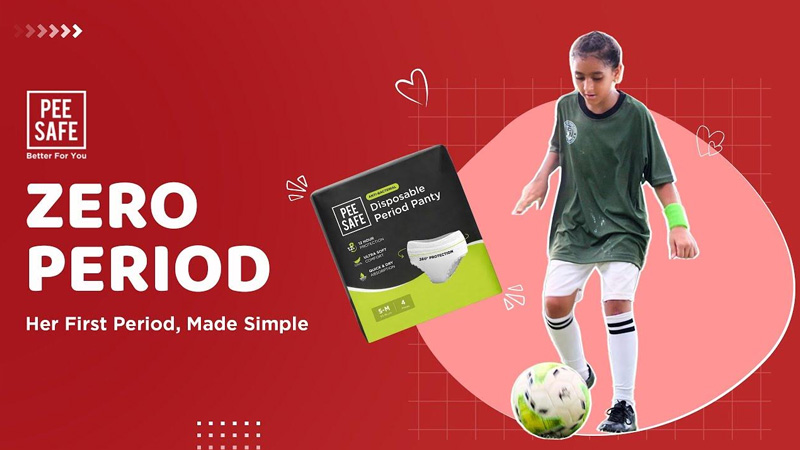
    MUMBAI: What do an 8-year-old footballer, a referee, and a nutrition coach have in common? They’re all part of Pee Safe’s mission to make periods less panic, more power. Marking Menstrual Hygiene Day with both emotion and impact, Pee Safe launched its new campaign #ZeroPeriod, a heartfelt initiative to tackle the fear and silence surrounding first periods. The digital video commercial (DVC) at the centre of the campaign portrays the experience of a young footballer who starts her first period mid-game capturing confusion, stigma, and eventually, empowerment.

    At the core of Zero Period is Pee Safe’s Disposable Period Panty, designed specifically for first-time menstruators. Think: leak-proof, ultra-absorbent, breathable underwear that feels like everyday wear, not an awkward afterthought. It’s a simple innovation aiming to give girls one less reason to leave the game whether it’s sport, school, or simply being themselves.

    According to Pee Safe founder Vikas Bagaria said, “Zero Period is about making space for honest conversations around menstruation, especially the first one. For many young girls, that experience can be confusing and isolating. Our intent with this campaign is to challenge the idea that periods are a disruption or something to be hidden. We want girls to feel equipped, reassured, and uninterrupted in whatever they choose to do.”

    According to Pee Safe co-founder Rithish Kumar said, “We notice young girls stepping away from activities they love because of the fear or stigma attached to menstruation. With Zero Period, we want to change that by fostering understanding and support, particularly in environments like schools and sports. Our goal is simple: to help make periods easier, not just physically, but emotionally and socially too.”

    The campaign goes beyond storytelling, it includes real-life advocates such as Divya Kumari, a national-level kabaddi referee, and Dr Ankita Pathak, a former kho-kho player and nutrition coach for the National Games 2025. Together, they’re proof that periods shouldn’t bench ambition.

    In collaboration with the SRF Foundation and Akhandjyoti Foundation, Pee Safe is taking this movement offline as well. The brand is conducting on-ground menstrual hygiene awareness sessions in underserved communities and across top schools like KR Mangalam, GD Goenka, Bal Bharati, and Delhi Public School.

    These sessions designed to offer accurate information, emotional reassurance, and free access to hygiene products aim to give young girls the confidence to manage their periods with dignity, minus the fear.

    With over 500 students already reached and more sessions underway, Pee Safe is scoring high on both empathy and impact. First periods may always come with nerves, but thanks to Zero Period, they may now come with fewer exits and more goals.

  • Social media vs traditional advertising:   How online content is shaping the future of menstrual products

    Social media vs traditional advertising: How online content is shaping the future of menstrual products

    Mumbai: In recent years, the way consumers engage with brands has transformed dramatically, with social media emerging as a powerful tool for reaching and influencing audiences. For brands specializing in menstrual products, such as period panties and period pads, this shift has created a fascinating dynamic between traditional advertising methods and the more contemporary, interactive approaches offered by social media. This article delves into how social media marketing for period panties is reshaping the industry compared to traditional advertising for period pads, highlighting the evolving consumer behavior and preferences.

    The Rise of Social Media Marketing

    Social media platforms like Instagram, Youtube and Facebook have become central to modern marketing strategies. They offer an unparalleled level of engagement and personalization, allowing brands to connect with their audience in a more intimate and dynamic manner. For period panties—a relatively newer and innovative product in the menstrual product market—social media provides an ideal platform to build brand awareness and educate consumers.

    One of the main advantages of social media marketing is its ability to foster community and conversation. Brands can leverage user-generated content, influencer partnerships, and interactive campaigns to create a sense of belonging among their target audience. For instance, a period panties brand might collaborate with influencers who share their personal experiences, thereby creating authentic connections with potential customers. Additionally, social media allows for real-time feedback and interactions, enabling brands to quickly address concerns and adapt their strategies.

    Traditional Advertising: The Legacy Approach

    In contrast, traditional advertising methods—such as TV commercials, print ads, and billboards—have been the cornerstone of marketing for period pads. These methods have long been used to establish brand recognition and trust. Traditional advertising is highly effective in reaching a broad audience and reinforcing brand messages through repeated exposure. However, it often lacks the interactive and personalized aspects that social media offers.

    For period pads, traditional advertising has relied on conventional messaging that emphasizes product functionality and reliability. While these ads have been successful in conveying basic information and maintaining a steady market presence, they typically do not engage consumers on a personal level. The one-way communication model of traditional advertising does not allow for the same degree of interaction or community-building as social media.

    Shifting Consumer Behavior

    The shift in consumer behavior is a key factor driving the effectiveness of social media marketing for period panties compared to traditional advertising for period pads. Today’s consumers, especially younger generations, value authenticity, transparency, and relatability in the brands they support. They are increasingly turning to social media not just for product recommendations but for community and content that resonates with their personal values and experiences.

    Period panties brands have capitalized on this shift by using social media to address topics that have traditionally been considered taboo or sensitive. They often engage in open conversations about menstrual health, body positivity, and sustainability, topics that resonate strongly with today’s socially conscious consumers. This approach helps demystify the product and builds a loyal customer base that feels seen and heard.

    On the other hand, traditional advertising for period pads often focuses on its messaging and standardized communication style. While this approach continues to be effective for certain demographics, it may not capture the attention or loyalty of newer generations who seek more interactive and personalized brand experiences.

    Cost-Effectiveness and Reach

    Another significant factor is the cost-effectiveness of social media marketing compared to traditional advertising. Creating and managing social media content can be considerably less expensive than producing high-quality TV commercials or print ads. Additionally, social media allows for precise targeting and tracking of campaign performance, providing brands with valuable insights into their return on investment.

    Period panties brands can run targeted ads, engage in influencer partnerships, and create viral content at a fraction of the cost of traditional media campaigns. This not only makes social media an attractive option for emerging brands but also allows for more agile and responsive marketing strategies.

    Conclusion

    The comparison between social media marketing for period panties and traditional advertising for period pads highlights a broader shift in consumer behavior and marketing effectiveness. As consumers increasingly gravitate towards interactive, authentic, and personalized brand experiences, social media has emerged as a powerful tool for engaging with today’s audience. While traditional advertising continues to play a role in maintaining brand presence and credibility, the dynamic and community-driven nature of social media is shaping the future of menstrual products in unprecedented ways. For brands looking to stay relevant and connected with their audience, embracing social media marketing is not just an option—it’s becoming essential.


  • Hygiene brand Pee Safe hires Arijit Sen as vice president to drive sales strategy

    Hygiene brand Pee Safe hires Arijit Sen as vice president to drive sales strategy

    Mumbai: To increase distribution and enhance its retail strategy, hygiene brand Pee Safe has hired Arijit Sen as the new vice president-sales.

    Industry veteran Arijit Sen has joined Pee Safe after serving as a general manager at Healthkart. During his tenure at Healthkart, he was instrumental in establishing the business and scaling distribution to 40,000 premium outlets across India. He has helped Healthkart achieve significant milestones, such as securing category captaincy for the brand Muscle Blaze across major modern trade chains like Reliance, Max, Wellness Forever, etc.

    Having had experience over two decades in verticals such as sales, key accounts management, trade marketing, and overall business strategy, Pee Safe anticipates exceptional achievements and innovative growth under his leadership. It looks forward to reaching new heights with him on board.

    “Pee Safe feels like a homecoming. I have always believed in the potential of innovative personal hygiene products. Interestingly, I had also attempted to launch a product similar to Toilet Seat Sanitizer Spray, but I didn’t succeed. Being on board with Pee Safe now feels like fulfilling that desire that didn’t pan out all those years ago. I see joining Pee Safe as an opportunity to leverage my professional experience and drive sustainable and profitable growth in this category,” said Sen.

    He also has rich experience in the start-up space and has worked with renowned consumer brands like Nivea in personal care, Pepsi, and Tang in food and beverages. He also excels in GTM(go to market) strategy, distribution growth, market share, developing share of wallet with retailers, trade marketing, and brand activations.

    Pee Safe co-founder Rithish Kumar said, “We are thrilled to have Arijit join the Pee Safe family. His extensive experience and proven track record in scaling businesses offline and driving category leadership make him the perfect fit for our team. We are confident that under his leadership, Pee Safe will continue to expand its retail footprint, innovate across different retail formats, and increase penetration across categories in key markets.”

    The intimate hygiene market in India is currently pegged at Rs 8000 crore. It is growing at a 16 per cent CAGR to more than double its size at Rs 15,000 crore over the next five years due to rising awareness about personal care and intimate products amongst consumers in urban and rural areas. Over the last few years, the market has witnessed significant innovation in the women’s sanitary pad and sexual wellness sub-segment with innovative products like menstrual cups, reusable and sustainable period panties, and female condoms marketed by players like Pee Safe. However, the market is still underpenetrated at less than 30% and has enough room to grow.

    “We have so far served over 10 million women since our inception, and the aim is to serve an additional 10 million in the next couple of years through our strong network of retail stores across India. Our strategic focus will be on heightened visibility through point-of-sale marketing, promoter activation, and direct customer engagement,” Sen added.

    Besides the innovative products, Pee Safe also aims to garner a significant share in India’s Rs 7,000 crore sanitary market with its Ultra-Thin Sanitary Pads and Disposable Period Panties, which are projected to be consumed more in the coming months.

    Besides, the company, which has become a category creator with toilet seat sanitisers, will continue introducing more personal hygiene products. Last year, it introduced a portable bidet for travellers.

  • Pee Safe revolutionizes personal care shopping with PeePal

    Pee Safe revolutionizes personal care shopping with PeePal

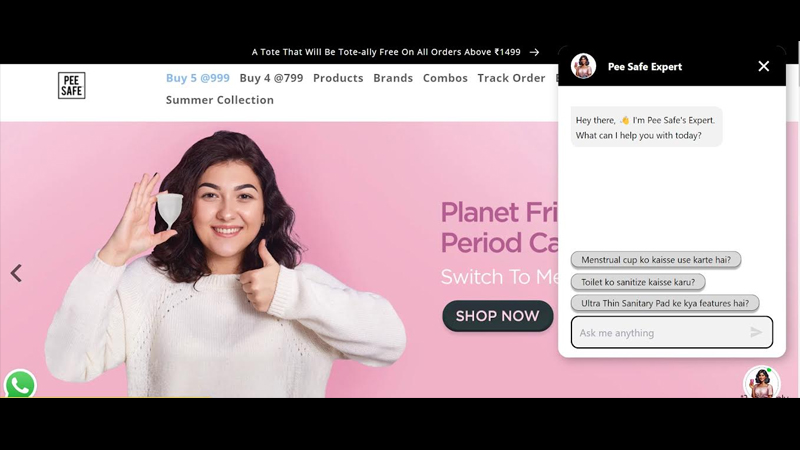
    Mumbai: Pee Safe, a leading personal hygiene and wellness brand, has announced the launch of PeePal, an AI-driven chatbot. PeePal not only transforms personal hygiene shopping but also educates consumers on optimal hygiene and self-care practices. By seamlessly integrating artificial intelligence (AI) and machine learning (ML), PeePal offers a transformative user experience.

    According to McKinsey, AI technologies could add up to $1 trillion in value annually, with revamped customer service playing a crucial role. With the global conversational AI market growing at a CAGR of 22 per cent, reaching nearly $14 billion by 2025, chatbots like PeePal are at the forefront of enterprise AI adoption.

    Pee Safe co-founder Rithish Kumar expressed his enthusiasm, saying, “PeePal is not just a shopping assistant; it’s your personalised guide through our Pee Safe ecosystem. It’s about making your personal care journey uniquely yours and empowering you with knowledge.”

    Pee Safe growth manager Gopal Dutt Vashisht highlighted PeePal’s personalised journey, stating, “PeePal is not just about accurate decision-making; it’s a reliability revolution. While others talk about innovation, we’re living it, setting a new standard in the ecosystem—transforming personal care and educating our users along the way.”

    PeePal chatbot provides instant responses, streamlining transactions for a seamless shopping experience. It increases website traffic as satisfied customers share positive interactions, ensuring a dynamic, customer-centric approach. Pee Safe invests in software, hardware, data infrastructure, talent, and training for effective AI use, resulting in increased satisfaction and loyalty, higher sales, reduced costs, and a competitive edge.

    In-store, smart shelves manage inventory and offer recommendations, while digital signage and self-checkout kiosks enhance the experience. Predictive analytics optimise stock, predict trends, and personalise marketing. Sentiment analysis monitors feedback for continuous improvement.