Tag: RIO

  • NGC sees 19 per cent jump in ad revenue

    NGC sees 19 per cent jump in ad revenue

    MUMBAI: The number of channels might be increasing, but niche segmentation is on a rise too. In the past few years, one has witnessed that there has been a shift in the TV viewing habits of the Indian audiences with preferences for specific kinds of content giving a boost to niche channels.


    One of the channels that is steadily growing in the infotainment genre is National Geographic channel.


    “There has been a significant growth in the genre thanks to knowledge-driven shows which is what the audience wants to see,” says NGC and Fox International channel MD Keertan Adyanthaya while adding that during the analogue time, it was the GECs and movie channels that were growing while infotainment channels were edged out.

     
    One of the reasons which have driven the viewership numbers for the channel is localisation. He says, “We pushed for localisation through two ways. One, by customising the language feed beyond English like Hindi, Bengali, Tamil etc. This helped audiences to understand superlative terms that was otherwise difficult to comprehend. Secondly, we started commissioning shows in India like Mission Udan, Mission Army, Mission Everest and various documentaries like the recent one on the Kedernath tragedy.”


    The channel, which adds 400 hours of fresh content every year, in India, has been working with production houses like Big Synergy and a number of independent documentary filmmakers. However, 90 per cent of the content is still produced internationally.


    But what ails the domestic production houses to produce shows for the niche channels? “Our imagination is lacking to none, but we lack in-depth research and the way we operate. Our planning is sometimes short sighted,” he says.

    In line with the preference for special interest programming, the target audience, this from an earlier age group of 18 to 28 years has now become 12 to 40 years of age. “Our earlier shows like Taboo and Banged Up Abroad were for older audiences which is what made viewers either watch them alone or late at night, but not anymore,” says the executive.

     
    The channel’s Entertain Your Brain (EYB) programming has been designed keeping in line with the resurgence of Smart TV as a genre and is packed with engaging content. Its new line of shows like Brain Games, The Number Game, Do or Die and more recently Science of Stupid, combine interactive and relatable content which is not only entertaining but also informing.

     
    In addition to this, it has changed the tonality of its shows to suit the Indian taste. John Abraham has been brought on board as the brand ambassador of the channel. Celebrities like Lisa Haydon for Supercars, Arshad Warsi for Brain Games and Manish Paul for Science of Stupid have also been roped in.


    The channel’s core audience lies in 5 million plus households while the other viewership comes in from 1.2 million household cities. Adhyanthaya says that the channel currently commands a market share of 26 to 28 per cent in the genre and has seen a growth of 35 to 36 per cent in the last one year.


    Keeping pace with the increase in viewership, the channel has also increased its ad revenue by 18 to 19 per cent. While the channel sees various brand categories advertising on it, AFPs like My Endevour With Ford have also been created. The IP in such shows is either shared by the channel or completely owned by it.


    As for the lowlight, distribution of the network’s six channels has become a major challenge Adhyanthaya points out that digitisation getting postponed has surely crept a few hurdles on their ways. “Broadcasters have been champions for the cause right from the start by asking audiences to install Set Top boxes. But now why push the deadline?” he questions.


    On the ongoing Star-MSO RIO case he says, “Our pricing is not high. The RIO price for NGC is Rs 3 per month and FOX Life is Rs 2 .90 a month. It is  a lie clearly that we are highly priced as the bouquet offered by Star is  less than Rs 30 and is a fair offering, he says while comparing the price to a movie ticket of RS 300.


    “Our ratings have not suffered as we have pretty strong audience driven programmes. But we have seen short term downswings, which we can work upon. Soon, operators will realise that it is not easy to drop the channels as the audiences can’t wait for long without  smartainment progamming offered by us” he concludes.
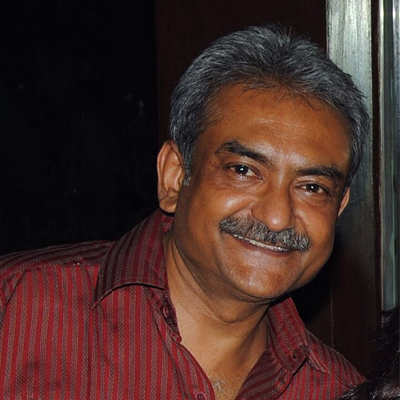
     

  • So who does DAS benefit and what does RIO have to do with it?

    So who does DAS benefit and what does RIO have to do with it?

    When the BJP government was last in power with Ms Swaraj at the helm of the MIB, the digitisation process was first mooted in its original form of CAS. The populist notion was to bring down cable prices with the false concept of pay for what you want, so pay less. But little did the government realise that the customer’s cable bill was so significantly subsidised because of ‘under declaration’ that the ‘spoilt’ consumer in the cheapest cable market in the world would either have to reduce his current offering by half or more or if he wanted the same channel line up, would actually have to pay twice as much!

    At that time, the broadcasters were resentful as reduced reach was imminent in an advertising driven market and for DPOs it was definitely not favourable as they would need to reduce the number of analogue channels to piggyback digital cable on some of the frequencies which was otherwise used for analogue channels. (This was because both digital and analogue had to be offered on the same network). And this reduction of analogue channels impacted their carriage potential and hence revenues.

    So who won? None of the key stake holders- broadcaster, DPO or consumer.

    So who does DAS in its new avatar benefit?

    Certainly not the consumer from his cable bill point which was the original populist premise. Sure, the DPOs and broadcasters, once the dust settles down. With the transparency of set top boxes and doing away with ‘under declaration’, the MSO can now collect from the ground higher revenues and hence a bigger chunk eventually to the broadcaster. (Cable revenues were significantly lower than DTH revenues even though cable homes far exceeded DTH homes.) Who else benefits? The government, for sure, by way of higher taxes.

    And the losers of course in the value chain would be no doubt the consumer now shelling out higher ARPUs. And of course the LCO who till now reigned king keeping the bigger chunk of collections.
    So what’s wrong with DAS?

    Fundamentally, the current consumer pricing structure, the RIO rates and the business model. If DAS was to benefit the consumer why is there no B to C model, why are there no retail prices with direct offers from broadcasters to consumers with pipeline commissions to DPOs. Why are RIO rates unrealistic? Why are DPOs free to do retail pricing? The problem is RIO is a regulatory created framework and broadcasters have maxed out after years of price freeze not knowing what to expect.  

    If DAS has to succeed then this whole pricing scenario has to be re-looked. How can the broadcaster market his product if the DPO controls retail pricing? Or given the RIO pricing (which will now be used as a basis for negotiation) will the broadcaster really allow the DPO to play the role of a wholesaler and buy in bulk and retail at attractive customer offerings significantly lower than RIO.

    When regulation hinders market dynamics, it creates more absurdities. Any consumer product needs an MRP. Packages or stand alone. RIO is definitely not helping this process. It’s best the two beneficiaries – the DPOs and the broadcasters finally come together, see eye to eye and work out what is the magical pricing so that packaging and pricing is offered by both and directly to the consumer. If the DPO truly acts as a wholesaler he can surely better any packages the broadcaster directly offers unless of course the broadcaster/channel can go it alone which no doubt will be the true test of content and certainly a success yardstick to measure addressability.

    So can the government bury RIO and keep the consumer in mind!  TV entertainment is mass and needs to be looked at (retailed) as a service similar to that of consumer products! Let’s have an MRP, let’s also have a distributor pricing better than MRP. There is scope for both models to co-exist- DPOs mixing it up and offering multi-broadcaster packages and broadcasters also retailing with negotiated discounts to DPOs for pipeline usage and payment gateway.

    A 100 million plus pay TV homes is a very robust subscription market!

    Lastly, with the BJP now back surely we hope they will complete what they chaotically started. With the honourable I&B Minister Arun Jaitley and MoS Rajyavardhan Singh Rathore now at the helm it certainly looks like MIB is priority and our industry will definitely be both in competent hands and in their cross hairs!


    (These are purely personal views of consultant Sanjev Hiremath and indiantelevision.com does not necessarily subscribe to these views.)

  • MSOs to put Star’s popular channels in base pack, regional in a-la-carte

    MSOs to put Star’s popular channels in base pack, regional in a-la-carte

    MUMBAI: As the deadline for signing deals with Star India for its channels on reference interconnect offer (RIO) ended on 10 November, MSOs are preparing various options to deal with the altered business plans.


    While the network is providing all its channels only on RIO, MSOs are finding out different ways to package the channels. India’s leading MSO Hathway is currently creating new packages that it will roll out soon. Says a source, “We will be redefining our packs and giving revised rates soon. Marketing on the same will commence as well. It will be something new for the trade.”


    While the base pack could include the popular channels from its bouquet, the regional channels will only be on a-la-carte. English, sports and others will be categorised in different packs. The channel had initially disconnected signals in October, but now the channels are switched on again.


    IMCL’s InCable on the other hand has also followed a similar pattern. The base pack will consist of Star Plus, Life OK and Star Pravah, the latter due to its large presence in the state of Maharashtra. The regional channels such as Star Jalsha, Star Vijay, Asianet, Suvarna etc will be on a-la-carte.


    “We have decided to put the popular channels on the base pack for three months to avoid unnecessary system overload due to people calling for it. Slowly, they will also be moved out into a-la-carte once we educate consumers. Soon we will also have proper EPRS, CAS and also net billing,” says IMCL group MD and CEO Tony D’silva. The MSO has taken Star’s incentives for channel penetration by putting three in its base pack.


    According to an official from Den Networks, the MSO has not yet signed the deal and is yet negotiating. Advance Multisystem Broadband Communciation (AMBC) in Kolkata will ensure all 26 channels will be given to consumers while another Kolkata based MSO said that the agreement with Star has been signed but it is evaluating the incentive schemes.

  • “India is not yet mature for RIO deals”: Sanjev Hiremath

    “India is not yet mature for RIO deals”: Sanjev Hiremath

    The current scenario in India is not very viable to allow for reference interconnect offer (RIO) to take off. No broadcaster would want to be on a RIO agreement because the moment you are on RIO, your distribution is affected. Broadcasters want their channels to be carried by all operators and also in good packs for maximum reach.


    Subscription too would be lower at least initially. The RIO rate X subscribers on CPS basis will mostly likely be lower than the existing negotiated price for that channel.


    India is not yet an addressable pay TV subscription market and RIO deals will not work anytime soon; neither for the broadcaster nor for the DPO. The addressable billing system, consumer communication and B to C marketing needs to kick-in. 


    Currently, broadcasters want reach and DPO wants carriage or at the least it does not want to pay for the channel and keep its content cost down. There is competition among DPOs too and cost of content is critical to all. RIO is a regulatory mandate in the absence of a deal and a good basis for negotiations. Money saved on carriage on RIO (as there is no carriage) can be used for discounts to structure deals. 


    In the immediate future, some channels will get impacted due to poor uptake or because of it being a niche or premium channel. Some of these channels will likely go on RIO especially stand alone ones. As and when billing for content gets established we move to a more mature market where broadcasters will get decent subscription revenues, niche channels will be able to survive and premium channels will make more money being a-la-carte on a CPS deal.


    We are in a transition phase of moving to the real objective of DAS, pay as per channels viewed/subscribed – in short, ADDRESSABILITY!


    (These are purely personal views of consultant Sanjev Hiremath and indiantelevision.com does not necessarily subscribe to these views.)

  • We are introducing the concept of packaging: Star India

    We are introducing the concept of packaging: Star India

    KOLKATA: Commending the decision of the Telecom Disputes Settlement Appellate Tribunal’s (TDSAT) to put Star India channels on a la carte, the network said with this it is likely to introduce the concept of packaging.


    Star India legal & regulatory senior vice president Pulak Bagchi and distribution strategy & marketing senior vice president Vivek Takalkar were in the city to explain the benefits of packaging.


    The officials from the network highlighted that even though a number of cable TV homes in phase I and II are digitised, the addressability of digitisation has not yet been completed.


    They further said that since the main aim of digitisation was to offer choice to the customers in terms of channels they want to subscribe, Star India would offer the bouquet of channels via different packs and thus, offer true benefits of digitisation.


    “Customers would get the real choice,” the star official said.


    Multi system operators (MSOs) have already met Star India representatives two or three times and are waiting for an “amicable solution”, and if they don’t hear from the Star in next 24 hours, the MSO are most likely to move to the RIO rates options, said Siticable Kolkata director Suresh Sethiya.


    “We met with Star India people to find a way out for the RIO rates. The rates should be fashioned in such a way that the broadcaster does not lose revenue and at the same time, consumers do not have to shell out huge amount to watch cable TV,” Sethiya said.


    When asked to comment on the TDSAT order which directs the MSOs to put Star channels on RIO from 10 November, Sethiya said the MSOs will have to sign the contract with Star. “MSO would do it in next couple of days and we will run campaign in every media and our channels so that the consumers are well informed,” he concluded.

  • Videocon d2h taps into the Star-MSO feud

    Videocon d2h taps into the Star-MSO feud

    MUMBAI: Star India’s incentives on its various channels on RIO has not gone down well with several MSOs in the country, who feel that this will actually raise consumer bills rather than make it easier, despite being on a-la-carte. However, the DTH industry sees a prized opportunity in the whole matter.


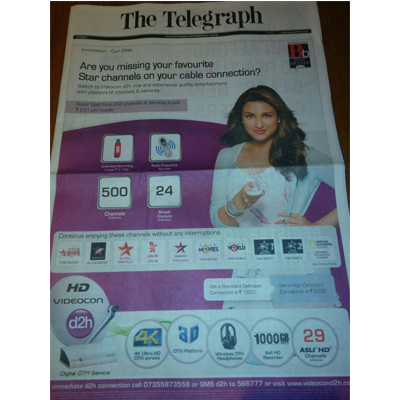
    Videocon d2h has taken out ads in several markets, concentrating in the east of the country, asking consumers to shift from cable to DTH. The ad asks consumers if they are ‘missing their favourite Star channels on your cable connection’ and if so then they should switch to Videocon d2h. The ad also lists the channels that the viewers can watch uninterrupted – Star Jalsha, Jalsha Movies, Star Plus, Life Ok, Star Sports, Star Gold, NGC, Star Movies, Star World etc.


    The ad also points out that viewers can avail 24 Bengali channels on the platform.


    Last week, Star India had come up with a new RIO agreement that it will be enforcing with MSOs across the country. According to Telecom Disputes Settlement Appellate Tribunal (TDSAT), the last date for undertaking the RIO will be 10 November after which the broadcaster can disconnect signals to MSOs.


    The network claims that up to now, nearly 33 per cent of independent MSOs have come forward to sign the RIO.


  • AIDCF to hold a meeting to discuss Star’s RIO deal implementation

    AIDCF to hold a meeting to discuss Star’s RIO deal implementation

    MUMBAI: Just 10 days after its formation, the All India Digital Cable Federation (AIDCF) under the presidentship of Siti Cable CEO VD Wadhwa is all set meet for the second time on 31 October in New Delhi. The meeting will be attended by the leading multi system operators (MSOs) and has a set agenda for the day.


    The meeting which is being held just a day after the Telecom Disputes Settlement Appellate Tribunal (TDSAT) accepted Star India’s 10 November deadline for implementation of the RIO deal by MSOs is not co-incidental.


    “The platform operators are meeting in Delhi in order to decide on the modus operandi for implementation of the RIO deal, the deadline for which is 10 November,” says a MSO, who is likely to be a participant of the meeting.


    The TDSAT in its order has asked the MSOs to sign the RIO deals with Star before 10 November, failing which the broadcaster can disconnect its signals.


    The meeting is likely to be attended by Manthan, Siti Cable, GTPL, Hathway among others.


  • TDSAT gives a nod to Star’s 10 Nov deadline to MSOs for signing RIO deals

    TDSAT gives a nod to Star’s 10 Nov deadline to MSOs for signing RIO deals

    MUMBAI: In the Hathway Cable & Datacom versus Star India case, the Telecom Disputes Settlement and Appellate Tribunal (TDSAT) has asked all the multi system operators (MSOs) in the DAS I and II areas to sign the Reference Interconnect Offer (RIO) by 10 November 2014.


    Failing to comply with the deadline, Star India will disconnect its services from MSOs who do not sign the RIO deal. 


    Hathway, which was directed to implement the RIO by the Tribunal had filed a case stating that other MSOs were not following the RIO deal. Subsequently, TDSAT had asked MSOs Den Networks and Siti Cable to implead into the case. The case then came up for hearing on 30 October and has been disposed off without the need for any impleading. 

  • Kolkata MSOs to meet Star officials on 30 Oct, again

    Kolkata MSOs to meet Star officials on 30 Oct, again

    KOLKATA: The cable TV industry is on its way to some major changes. While the industry got a shock, after Star India decided to provide its channels to multi system operators (MSOs) only on the basis of Reference Interconnect Offer (RIO), the immediate reaction that came was of increased prices of cable TV services.


    The decision of Star to provide channels on RIO, led to MSOs in Kolkata requesting for a meeting with the broadcaster in order to re-consider the decision as well as for increasing the time frame for implementation of RIO deals.


    The meeting which took place on 28 October saw Star India officials proposing their incentive scheme, which the broadcaster had announced on 27 October, to the platform operators in the state. The incentives, as earlier reported by indiantelevision.com will be based on three criteria: the number of channels the MSO takes, the number of subscribers it distributes the channel to and the ease of access that it provides to the consumers for the Star channels.


     “We will decide on Star’s incentive scheme in the next two-three days. We will do all the permutation and combination and then take a call on whether we should go with the incentive scheme or opt for normal RIO,” said Siti Cable Kolkata director Suresh Sethiya.


    The city based MSOs, who do not want to lose their subscriber base, are currently working on the various modules of the proposed incentive and will meet the Star officials again on 30 October, after thoroughly reading the new scheme internally.  


    Sethiya further said, “Star has a bouquet of channels and if a cable TV home in Kolkata, does not wish to watch Marathi channels, he may not pay for it. We are working on the price.”


    Another city-based MSO on condition of anonymity said that Star has offered an incentive of around 60 per cent for its Hindi GEC Life OK, 9 per cent for Star Plus and 15 per cent for Star Jhalsa.


    Star Network comprising Star Plus, Life OK, Star Jhalsa, Star Movies, Star Sports, National Geographic among others, could lose its viewers in Kolkata, if the MSOs fail to offer the channels at an attractive price. “The ground is not prepared for RIO rates. We will negotiate with Star on 30 October again,” said the MSO.


    A local cable operator said that the customers are worried as they will have to pay a hefty price for cable TV services again in a short span of 10 months.


    If the MSOs do not agree to the incentives being given by Star, based on the three conditions, the consumer could have to shell anywhere between Rs 35-40 for two Star channels, a source said adding that if the consumer wants more of the broadcasters’ channels they will definitely have to pay more.


    With most MSOs removing the Star channels from the different packages and providing the same on a-la-carte, the prices of the package will go down by Rs 9, Rs 12 and Rs18 respectively for their different packages.

  • Kolkata MSOs to meet Star to resolve RIO rates issue on 28 October

    Kolkata MSOs to meet Star to resolve RIO rates issue on 28 October

    KOLKATA: Multi system operators (MSOs) in Kolkata are likely to meet Star India representatives on 28 October to discuss the issue of RIO rates as per the outcome of the Telecom Disputes Settlement Appellate Tribunal’s (TDSAT) order of putting Star India channels on a la carte.


    On one hand, the package prices will go down by Rs 9, Rs 12 and Rs 16 respectively for different packages but cable TV consumers will have to spend an additional amount for watching their favourite Star channels if the MSOs put Star India channels on a la carte.


    Siti Cable Kolkata director Suresh Sethiya says, “We are meeting Star India officials on 28 October to find a solution. The rates should be fashioned in such a way that the broadcaster does not lose revenue and at the same time, consumers do not have to shell out huge amounts to watch cable TV.”


    Star Network comprising Star Plus, Star Jalsha, Star Movies, Star Sports, National Geographic and other channels, are likely to lose viewers if the MSOs remove the bouquet of Star channels from the packages and offer to subscribers on a-la-carte basis only, cable TV analysts claim.


    Initially, almost all the MSOs in Kolkata had agreed to remove the channels on the Star Network from basic, smart and premium packages and had issued advertisements across major newspapers notifying consumers about the same. “The ground is not prepared for RIO rates. If Star India comes on a negotiation, it is good for the industry,” says Advance Multisystem Broadband Communication (AMBC) managing director Sujit Das.


    While Manthan Broadband director Sudip Ghosh hopes that the negotiations between MSOs and Star Network would bear fruit.


    Though Star India had mailed the change to MSOs on 30 September, MSOs have cited the festive season for delay in implementing it.


    A source says, “Star Jalsha that currently reaches 100 per cent households here may lose around 40 per cent subscribers in a la carte as more than 50 per cent non-Bengali population in Kolkata would opt out.”