Tag: Rio Olympics

  • At 1824 mn seconds, 2021 ad volumes spike 22% over 2020: Barc Think Report

    At 1824 mn seconds, 2021 ad volumes spike 22% over 2020: Barc Think Report

    Mumbai: 2021 has bounced back with a substantial double-digit spike, delivering an all-time high of 1824 million seconds of ad volumes during the year. This translated into a 22 per cent and 18 per cent growth over 2020 and 2019, respectively. The Top 10 advertisers accounted for 780 million seconds of ad volumes, and the next 40 accounted for 340 million seconds. The data was shared by Barc India, which recently launched its Think Report, 2021 – A Voluminous Year (Yearly Ad Volume Report 2021) analysing television advertising volumes for the past year.

    According to the report, FMCG brands continued to lead in share across categories and Hindi channels continued to dominate across languages. New advertisers and brands consistently jumped in throughout the year, thus playing an important role in the advertising volume growth witnessed throughout 2021. 2020 was a subdued year for television advertising, leading to a decline in total ad volumes across the year despite the record stay-at-home rise in viewership.

    “2021 certainly brought in much needed cheer to the broadcast industry. The year started off on a positive note and also ended on a high with the festive quarter,” remarked Barc India head – client partnership and revenue function Aaditya Pathak. “Year on year, despite pandemic impediments, television has repeatedly proved effective for every penny spent for advertisers and brands. 2021 saw over 9000 advertisers turn to television with a significant number of new entrants. Overall, 2021 was a positive year for the industry as a whole that witnessed growing value for both advertisers and broadcasters.”

    Advertisers & Brands Count

    TV had a total of 9239 advertisers and 14616 brands advertising on the medium in 2021, of which, 49 per cent i.e, 4483 were either new advertisers or returning ones. Similarly, for brands, 51 per cent i.e, 7470 were new or returning brands.

    Categories

    The FMCG category continued to lead with an enormous share of 1117 million seconds of ad volumes in 2021, followed by e-commerce with 185 million seconds and building, industrial, & land materials/equipment with 60 million seconds. Television also understandably continued to be an important medium for the corporate brand image category which registered two times growth over 2019, with 24 million seconds.

    The e-commerce category had a total of 587 advertisers in 2021 of which 65 per cent were new entrants or earlier advertisers returning to TV in 2021, registering a growth of 51 per cent over 2020 and 26 per cent over 2019. Media/entertainment/social media, education, online shopping, matrimonials and financial services were the top five sub-categories within e-commerce. Ad volumes for education grew by 461 per cent and financial services by 153 per cent over 2020.

    Languages

    While Hindi continues to play a dominant part of the language mix, regional language channels recorded strong growth as well across 2021. Ad volumes for Bhojpuri language channels doubled over 2019 and Punjabi, Marathi, Gujarati and Assamese language channels posted over 40 per cent growth over 2019. South language channels (Tamil, Telugu, Malayalam, and Kannada) grew by 26 per cent over 2020.

    2021 – Quarterly Analysis

    Q1 2021 kickstarted on a positive note having registered 24 per cent growth over 2020 and 21 per cent growth over 2019. Despite the sporadic and partial lockdowns on account of the second wave of Covid-19, ad volumes for Q2’ 21 were relatively higher at 417 million seconds as compared to Q2’19 which recorded 399 million seconds. Q4’21 brought in cheer for broadcasters with a bumper festive season that recorded 489 million seconds of ad volumes, the highest quarter ever. New advertisers continued to flock to television for effective communication with Q4’21 welcoming 2156 new advertisers or earlier ones returning to the medium, the highest for the year.

    After a marginal decline in Q2 2021 on account of the lockdowns, regional language channels experienced steady growth in Q3 and Q4.

    SD and HD Channels

    Ad volumes for HD channels in 2021 grew by 11 per cent over the previous year and SD channels grew by 22 per cent in 2021 over 2020 and by 20 per cent over 2019.

    TV Commercials

    TV commercials with an average commercial duration of under 30 seconds, were most favoured by advertisers while spots more than 60 seconds were least preferred. The average commercial duration has been reducing Y-O-Y. The prime-time band, i.e, 20:00 hours to 24:00 hours enjoyed the maximum share of ad volumes at 27 per cent. The share of ad volumes for the four time bands, viz 08:00 – 12:00 hrs, 12:00-16:00 hrs, 16:00-20:00 hrs and 20:00-24:00 hrs, continued to stay the same since 2019. TV commercials in local languages on regional channels are consistently increasing since 2019.

    IPL 2021

    IPL 2021 registered a total of 1680 thousand seconds of ad volumes with 119 advertisers and 228 brands in all. There were 59 new advertisers and 158 new brands for the season. The top 10 advertisers for the season contributed 35 per cent of the ad volumes.

    Tokyo Olympics

    With 466 thousand seconds, ad volumes for the Tokyo Olympics were almost at par with the Rio Olympics that was held in 2016. There were 34 advertisers and 61 brands that advertised during the Tokyo Olympics. Significantly, 31 per cent of the ad volumes during the Tokyo Olympics featured olympians.

  • Sports lead Google searches in India; Sindhu most searched

    Sports lead Google searches in India; Sindhu most searched

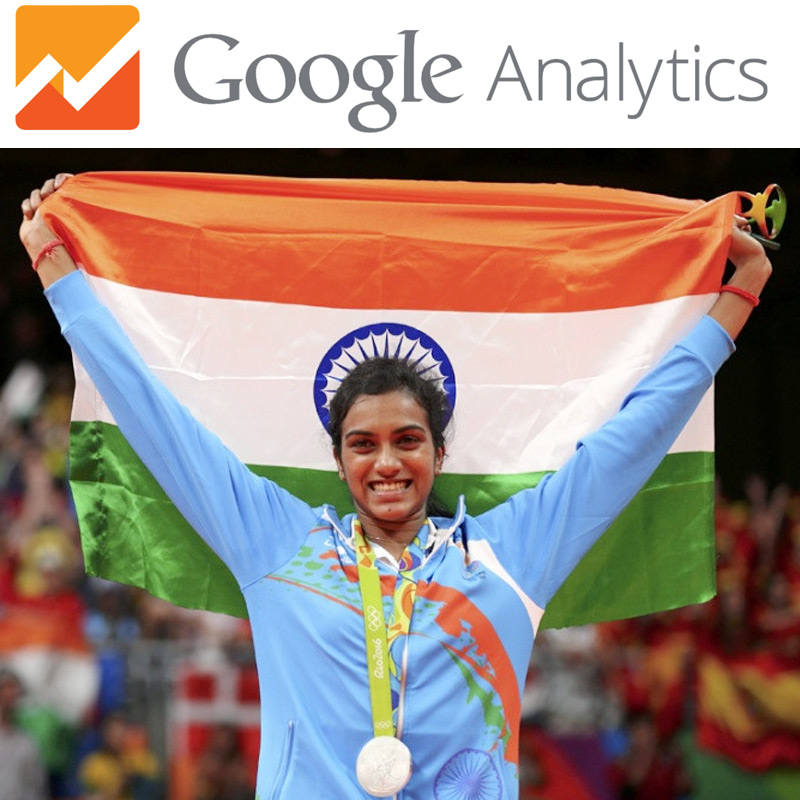
    MUMBAI: Sports stood at the podium in terms of searches in India, according to a survey released by the US based-search engine. While PV Sindhu made a lot of inroads into people’s hearts with her heroics at Rio Olympics, Sultan and MS Dhoni – The Untold Story were both the among the highest grossing movies in 2016.

    Based on different forms of sports, MS Dhoni made Sushant Singh Rajput and Disha Patani household names in the second half of the year while Sultan ruled the roost in terms of earnings.

    According to a report released by Google Analytics, Sports was the leading property in terms of searches in India in 2016. Rio Olympics was the most trending item in India, with Pokemon Go standing second. The Olympics was also No. 1 on the list of most-searched news events.

    Amongst personalities, Indian Olympic silver medallist PV Sindhu has been the second most searched personality in India, also being the most-searched Indian personality. The badminton ace was beaten by controversial US President Donald Trump, who led the personalities chart. Athlete Dipa Karmakar, MS Dhoni actress Disha Patani and Wrestler Sakshi Malik also feature in the top 10, giving sports the bragging rights over other genres.

    Looking at the most searched Bollywood male celebrities, MS Dhoni actor Sushant Singh Rajput was the top trending star of 2016. Disha Patani heads that list in the female category, featuring in the same movie. In the movies category, Sultan, a film based on wrestling, was searched the most number of times in India. US Elections was the most searched news event after Rio Olympics, garnering great attention.

    Indian Premier League 2016 and Euro 2016 also feature on the list of the most trending searches, with the football tournament standing at the third spot and IPL getting the sixth spot on the list. It is quite clear that for Indian audiences, Sports has been the most searched beat against other genres and the industry can always capitalise on that front.

  • Sports lead Google searches in India; Sindhu most searched

    Sports lead Google searches in India; Sindhu most searched

    MUMBAI: Sports stood at the podium in terms of searches in India, according to a survey released by the US based-search engine. While PV Sindhu made a lot of inroads into people’s hearts with her heroics at Rio Olympics, Sultan and MS Dhoni – The Untold Story were both the among the highest grossing movies in 2016.

    Based on different forms of sports, MS Dhoni made Sushant Singh Rajput and Disha Patani household names in the second half of the year while Sultan ruled the roost in terms of earnings.

    According to a report released by Google Analytics, Sports was the leading property in terms of searches in India in 2016. Rio Olympics was the most trending item in India, with Pokemon Go standing second. The Olympics was also No. 1 on the list of most-searched news events.

    Amongst personalities, Indian Olympic silver medallist PV Sindhu has been the second most searched personality in India, also being the most-searched Indian personality. The badminton ace was beaten by controversial US President Donald Trump, who led the personalities chart. Athlete Dipa Karmakar, MS Dhoni actress Disha Patani and Wrestler Sakshi Malik also feature in the top 10, giving sports the bragging rights over other genres.

    Looking at the most searched Bollywood male celebrities, MS Dhoni actor Sushant Singh Rajput was the top trending star of 2016. Disha Patani heads that list in the female category, featuring in the same movie. In the movies category, Sultan, a film based on wrestling, was searched the most number of times in India. US Elections was the most searched news event after Rio Olympics, garnering great attention.

    Indian Premier League 2016 and Euro 2016 also feature on the list of the most trending searches, with the football tournament standing at the third spot and IPL getting the sixth spot on the list. It is quite clear that for Indian audiences, Sports has been the most searched beat against other genres and the industry can always capitalise on that front.

  • Sports recognised as infrastructure sector, eligible for private investment

    Sports recognised as infrastructure sector, eligible for private investment

    NEW DELHI: Alarmed by India’s performance in the recent Rio Olympics, the Government appears to have pressed the panic button: which may help sports persons on the long run.

    After appointing two committees – one for pointing out why India failed, and the other to prepare for the next two Olympics, the Government included Sports in the harmonized master list of infrastructure sub-sectors.

    The proposal was mooted by the Sports Ministry so that the sports sector becomes eligible for obtaining long term financial support from banks and other financial institutions on the same principle as is available to other infrastructure projects.

    The Finance Ministry after a series of meetings and discussions with different agencies including Reserve Bank of India has decided that sports infrastructure will be included under the Harmonized Master List of Infrastructure Sub sectors and it “includes the provision of Sports Stadia and Infrastructure for Academies for Training / Research in Sports and Sports-related activities”

    In this connection Ministry of Finance, Department of Economic Affairs, had issued a Gazette Notification dated 9 September 2016.

    This inclusion would encourage private investment in a public good which has socio-economic externalities in a country with young population. It will also bolster investment in sports infrastructure sector which will contribute to the economy and help in promotion of health and fitness of the people of this country as also provide opportunities for employment in the new and exciting sectors. It goes without saying that investment of the private sector will widen the platform from where the country can become a sporting power in future.

  • Sports recognised as infrastructure sector, eligible for private investment

    Sports recognised as infrastructure sector, eligible for private investment

    NEW DELHI: Alarmed by India’s performance in the recent Rio Olympics, the Government appears to have pressed the panic button: which may help sports persons on the long run.

    After appointing two committees – one for pointing out why India failed, and the other to prepare for the next two Olympics, the Government included Sports in the harmonized master list of infrastructure sub-sectors.

    The proposal was mooted by the Sports Ministry so that the sports sector becomes eligible for obtaining long term financial support from banks and other financial institutions on the same principle as is available to other infrastructure projects.

    The Finance Ministry after a series of meetings and discussions with different agencies including Reserve Bank of India has decided that sports infrastructure will be included under the Harmonized Master List of Infrastructure Sub sectors and it “includes the provision of Sports Stadia and Infrastructure for Academies for Training / Research in Sports and Sports-related activities”

    In this connection Ministry of Finance, Department of Economic Affairs, had issued a Gazette Notification dated 9 September 2016.

    This inclusion would encourage private investment in a public good which has socio-economic externalities in a country with young population. It will also bolster investment in sports infrastructure sector which will contribute to the economy and help in promotion of health and fitness of the people of this country as also provide opportunities for employment in the new and exciting sectors. It goes without saying that investment of the private sector will widen the platform from where the country can become a sporting power in future.

  • Saying traditional TV is dying in India is premature

    Saying traditional TV is dying in India is premature

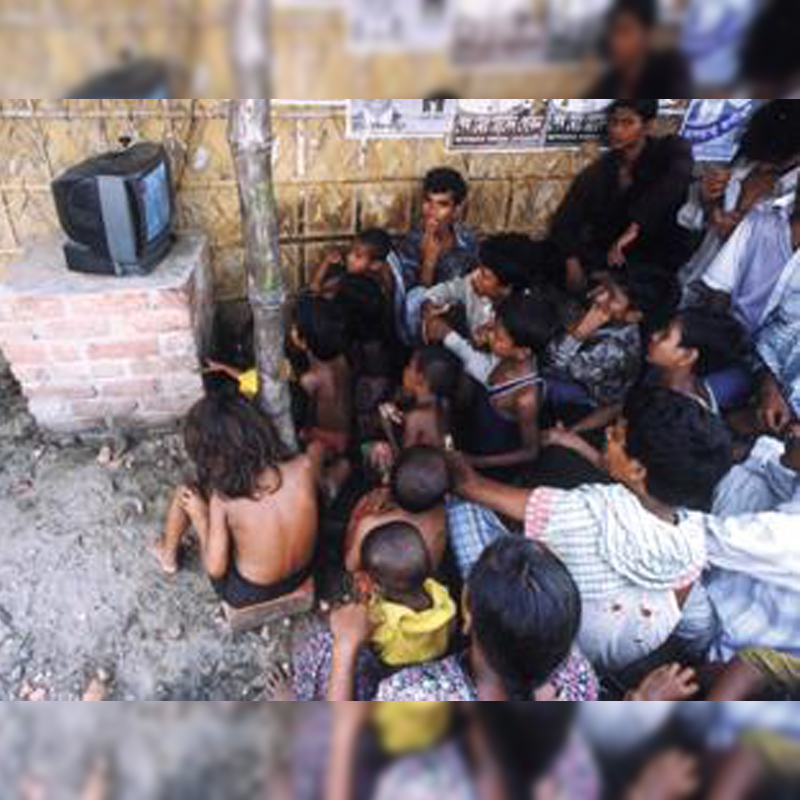
    On a recent road trip to Ladakh with friends we stopped at a nondescript roadside ‘dhaba’ (makeshift eatery) near the Himachal Pradesh and J&K border for tea and to stretch sore limbs. As tea was being boiled, stifled giggling from inside the hutment attracted me. While trying to see if my smart-phone was working so I could check-in on FB, I peeped inside. A group of local kids were enjoying a soap opera on television; courtesy DD FreeDish, a free-to-air DTH platform. My mobile phone, in the meanwhile, showed no signs of life with a No-Network message flashing.

    This, and many other such examples in India’s hinterland, highlight a fact loud and clear: India may be going digital, but Bharat (as non-urban hinterlands of India is referred to by some sociologists and marketers) still roots for the traditional. Such instances also tell us that in a country as diversified, complex and challenging as India, traditional habits, like TV watching, are there to stay despite technological disruptions like streaming video and smart-phones.

    Globally, death of traditional TV viewing has been predicted for past few years. But data and analytics from more mature and developed markets and even some East Asian nations – where digital is a big draw – show that TV as we know it is not going away anytime soon.

    A US Department of Labour Survey, released early 2016, states that watching TV was the leisure activity that “occupied the most time (2.8 hours per day), for those aged 15 and over.”

    BARB (UK equivalent of BARC India) data shows that average daily video viewing by all individuals is 4hrs 35mins and that TV accounts for 94 per cent of all video advertising time. Over the last decade, despite several “disruptive” technological developments, time spent watching TV has hardly dipped, as was being forecast. More importantly, TV continues to have largest reach of all media: it reaches 71per cent of population in a day, 93per cent in a week, and 98 per cent in a month.
    And, these are markets with near total saturation of TV homes, and a highly developed and widespread digital eco-system.

    What about India?

    Appetite for more TV content is only bound to grow given that only 153 million homes in India have TV out of a total of about 250 million (a penetration of about 60 per cent). Rise in disposable incomes, increasing fragmentation of families and continued challenges of Indian infrastructure are bound to push TV viewing higher.

    All-India BARC data for 47 weeks appear to validate that. Average daily TV viewing stands at 3 hours 16 minutes, showing headroom for growth, compared to more mature TV markets that have higher TV penetration rate of 97+ per cent.

    India has close to 900 licensed channels and while Ministry of Information and Broadcasting (MIB) agrees some of these licensees may not be on air, but scores of applicants are in queue too — another indicator of growth in appetite for TV.

    But, what about the perception that traditional TV viewership is losing out due to growth of digital platforms?

    Let’s look at BARC India data for a recent TV event, the Rio Olympics. TV viewership for Rio 2016 grew 2.65 times as compared to London 2012. While 16 million unique viewers watched the broadcast of London Games in India, the corresponding figure for Rio Games is 43 million (using the same viewership base – 1million+ towns). If one looks at the all-India (Urban+Rural) base, Rio 2016 set another high of 203.8 million unique viewers.

    This brings us to cricket, India’s fav sports (apart from politics). BARC data shows that a new viewership high was achieved during an India-Pakistan ICC T20 World Cup match in 2016, which generated a whopping 80.5 million impressions across Star Sports Network and DD National. And these numbers came on the back of not just a larger number of people watching TV, but also considerable higher time spent on TV.

    When asked about linear TV’s impending death in India owing to digital’s growth, Colors CEO and President of the Advertising Club (of India) Raj Nayak waved away the analysis asserting, “I am ready to stick out my neck on this. People who say that traditional television is dying don’t know what they are talking about. TV has been growing and there is still big headroom for its growth in India.”

    India may be adopting mobile phones faster than the US or other western countries, and a major percentage of them are smart-phones. Still, challenges for digital players are big and many ranging from costly data, indifferent bandwidth speed and getting the right content mix for a country that has 22 official languages and over 700 dialects.

    At Vidnet2016, an OTT conference organised by indiantelevision.com recently, Hotstar chief Ajit Mohan admitted that high cost of data is a major hurdle for expansion of streaming services like Hotstar and others like Voot, dittoTV, BoxTv, Arre, Savvn, Hooq, Viu, SonyLiv, etc.

    Data pointing to greater consumption of TV is one side of the picture. Globally, studies and data also indicate that TV remains a highly effective form of advertising.

    A study by the Institute of Practitioners of Advertising (UK’s equivalent of India’s AAAI) shows that TV continues to guarantee best commercial outcomes of campaigns for things such as sales, profit, market share, etc. Echoing similar sentiments, Colors’ Nayak added, “Digital advertising does not have the same impact that TV (advertising) has… Even Amazon, Google and other e-commerce companies have to use TV to make an impact.”

    US-based eMarketer (started in 1996 to study digital trends and considered one of the most widely cited research providers in the media) admits that despite a drop in TV watching time, in general, it hasn’t stopped marketers from pouring significant amounts of money into television advertising.

    Without discounting the strides being made by digital players in India (and they seem to be mushrooming all over like dotcoms during the dotcom boom of the late 1990s), traditional TV’s importance and reach still outstrips that of digital.

    Pointing out that digital does offer consumers choices of watching TV (government lingo for video consumption) at different time and in different formats, a senior government official, having worked at MIB, on condition of anonymity admitted that TV is not going away from India. Rather, the size of India will help it retain its pre-eminence as opposed to other media.

    GroupM too testifies to TV’s strong presence in India compared to other segments of media like print, OOH and digital. In projections made in January 2016, which are re-visited mid-year to do any course corrections if necessary, the company said television was estimated to grow by 17.6 per cent to touch Rs 27,074 crore (Rs. 2,7,0740 million) this year against Rs 23,022 crore (Rs. 23,02,20 million) last year as far as advertising spends go.

    Colors’ Nayak aptly sums up the issue: “There is no doubts that digital will see growth at a phenomenal pace especially with Reliance Jio addressing the bandwidth and speed issues, but digital must be seen as another platform for delivering content and that’s it. There will be lot of content consumption on digital platforms, but it will not be at the cost of (traditional) TV viewing.”

    Like Nayak, I too am ready to bet my bucks on linear or traditional TV in India. Digital has to travel many more miles in India before it can be a replacement for TV, which is still far off from near-saturation point or even plateauing off.

    (Author is Consulting Editor to indiantelevision.com)

  • Saying traditional TV is dying in India is premature

    Saying traditional TV is dying in India is premature

    On a recent road trip to Ladakh with friends we stopped at a nondescript roadside ‘dhaba’ (makeshift eatery) near the Himachal Pradesh and J&K border for tea and to stretch sore limbs. As tea was being boiled, stifled giggling from inside the hutment attracted me. While trying to see if my smart-phone was working so I could check-in on FB, I peeped inside. A group of local kids were enjoying a soap opera on television; courtesy DD FreeDish, a free-to-air DTH platform. My mobile phone, in the meanwhile, showed no signs of life with a No-Network message flashing.

    This, and many other such examples in India’s hinterland, highlight a fact loud and clear: India may be going digital, but Bharat (as non-urban hinterlands of India is referred to by some sociologists and marketers) still roots for the traditional. Such instances also tell us that in a country as diversified, complex and challenging as India, traditional habits, like TV watching, are there to stay despite technological disruptions like streaming video and smart-phones.

    Globally, death of traditional TV viewing has been predicted for past few years. But data and analytics from more mature and developed markets and even some East Asian nations – where digital is a big draw – show that TV as we know it is not going away anytime soon.

    A US Department of Labour Survey, released early 2016, states that watching TV was the leisure activity that “occupied the most time (2.8 hours per day), for those aged 15 and over.”

    BARB (UK equivalent of BARC India) data shows that average daily video viewing by all individuals is 4hrs 35mins and that TV accounts for 94 per cent of all video advertising time. Over the last decade, despite several “disruptive” technological developments, time spent watching TV has hardly dipped, as was being forecast. More importantly, TV continues to have largest reach of all media: it reaches 71per cent of population in a day, 93per cent in a week, and 98 per cent in a month.
    And, these are markets with near total saturation of TV homes, and a highly developed and widespread digital eco-system.

    What about India?

    Appetite for more TV content is only bound to grow given that only 153 million homes in India have TV out of a total of about 250 million (a penetration of about 60 per cent). Rise in disposable incomes, increasing fragmentation of families and continued challenges of Indian infrastructure are bound to push TV viewing higher.

    All-India BARC data for 47 weeks appear to validate that. Average daily TV viewing stands at 3 hours 16 minutes, showing headroom for growth, compared to more mature TV markets that have higher TV penetration rate of 97+ per cent.

    India has close to 900 licensed channels and while Ministry of Information and Broadcasting (MIB) agrees some of these licensees may not be on air, but scores of applicants are in queue too — another indicator of growth in appetite for TV.

    But, what about the perception that traditional TV viewership is losing out due to growth of digital platforms?

    Let’s look at BARC India data for a recent TV event, the Rio Olympics. TV viewership for Rio 2016 grew 2.65 times as compared to London 2012. While 16 million unique viewers watched the broadcast of London Games in India, the corresponding figure for Rio Games is 43 million (using the same viewership base – 1million+ towns). If one looks at the all-India (Urban+Rural) base, Rio 2016 set another high of 203.8 million unique viewers.

    This brings us to cricket, India’s fav sports (apart from politics). BARC data shows that a new viewership high was achieved during an India-Pakistan ICC T20 World Cup match in 2016, which generated a whopping 80.5 million impressions across Star Sports Network and DD National. And these numbers came on the back of not just a larger number of people watching TV, but also considerable higher time spent on TV.

    When asked about linear TV’s impending death in India owing to digital’s growth, Colors CEO and President of the Advertising Club (of India) Raj Nayak waved away the analysis asserting, “I am ready to stick out my neck on this. People who say that traditional television is dying don’t know what they are talking about. TV has been growing and there is still big headroom for its growth in India.”

    India may be adopting mobile phones faster than the US or other western countries, and a major percentage of them are smart-phones. Still, challenges for digital players are big and many ranging from costly data, indifferent bandwidth speed and getting the right content mix for a country that has 22 official languages and over 700 dialects.

    At Vidnet2016, an OTT conference organised by indiantelevision.com recently, Hotstar chief Ajit Mohan admitted that high cost of data is a major hurdle for expansion of streaming services like Hotstar and others like Voot, dittoTV, BoxTv, Arre, Savvn, Hooq, Viu, SonyLiv, etc.

    Data pointing to greater consumption of TV is one side of the picture. Globally, studies and data also indicate that TV remains a highly effective form of advertising.

    A study by the Institute of Practitioners of Advertising (UK’s equivalent of India’s AAAI) shows that TV continues to guarantee best commercial outcomes of campaigns for things such as sales, profit, market share, etc. Echoing similar sentiments, Colors’ Nayak added, “Digital advertising does not have the same impact that TV (advertising) has… Even Amazon, Google and other e-commerce companies have to use TV to make an impact.”

    US-based eMarketer (started in 1996 to study digital trends and considered one of the most widely cited research providers in the media) admits that despite a drop in TV watching time, in general, it hasn’t stopped marketers from pouring significant amounts of money into television advertising.

    Without discounting the strides being made by digital players in India (and they seem to be mushrooming all over like dotcoms during the dotcom boom of the late 1990s), traditional TV’s importance and reach still outstrips that of digital.

    Pointing out that digital does offer consumers choices of watching TV (government lingo for video consumption) at different time and in different formats, a senior government official, having worked at MIB, on condition of anonymity admitted that TV is not going away from India. Rather, the size of India will help it retain its pre-eminence as opposed to other media.

    GroupM too testifies to TV’s strong presence in India compared to other segments of media like print, OOH and digital. In projections made in January 2016, which are re-visited mid-year to do any course corrections if necessary, the company said television was estimated to grow by 17.6 per cent to touch Rs 27,074 crore (Rs. 2,7,0740 million) this year against Rs 23,022 crore (Rs. 23,02,20 million) last year as far as advertising spends go.

    Colors’ Nayak aptly sums up the issue: “There is no doubts that digital will see growth at a phenomenal pace especially with Reliance Jio addressing the bandwidth and speed issues, but digital must be seen as another platform for delivering content and that’s it. There will be lot of content consumption on digital platforms, but it will not be at the cost of (traditional) TV viewing.”

    Like Nayak, I too am ready to bet my bucks on linear or traditional TV in India. Digital has to travel many more miles in India before it can be a replacement for TV, which is still far off from near-saturation point or even plateauing off.

    (Author is Consulting Editor to indiantelevision.com)

  • Ministry begins Rio performance review with an eye on 2020

    Ministry begins Rio performance review with an eye on 2020

    NEW DELHI: A thorough review of India’s performance in Rio Olympics 2016 by the sports ministry has begun in the backdrop of the prime minister Narendra Modi announcement of establishing a task force to prepare for future Olympics.

    Sports Minister Vijay Goel has written to each of the athletes who participated at Rio, seeking their suggestions. He has stated that they should feel free to give their feedback. In his letter, Goel has stressed the need for more inputs from performers like them so that the pool of world-class athletes can be enhanced and sports infrastructure strengthened.

    The ministry has also written to the Indian Olympic Association (IOA) to submit their feedback on India’s performance in Rio and steps needed for improvement. Such feedback will also be sought from the National Sports Federations (NSFs).

    Goel will have detailed meetings with the IOA and the NSFs shortly in this regard. The objective of this exercise is to analyse performance.

    Modi had announced setting up a task force to prepare a comprehensive action plan for effective participation of Indian sportspersons in the next three Olympic games 2020, 2024 and 2028.

    The ministry will also take a look at the duties and responsibilities of various members of the Indian contingent for the Rio Olympics with the purpose of making a fair assessment of their role and taking steps for improvement.

    Goel will visit some prominent academies and Sports Authority of India Centres to have first-hand knowledge of the facilities available for training and improvement required. On 17 September, he will visit the Gopi Chand Badminton Academy in Hyderabad where he will meet players, coaches and other support persons. He will also visit the SAI Centre at Hyderabad.

  • Ministry begins Rio performance review with an eye on 2020

    Ministry begins Rio performance review with an eye on 2020

    NEW DELHI: A thorough review of India’s performance in Rio Olympics 2016 by the sports ministry has begun in the backdrop of the prime minister Narendra Modi announcement of establishing a task force to prepare for future Olympics.

    Sports Minister Vijay Goel has written to each of the athletes who participated at Rio, seeking their suggestions. He has stated that they should feel free to give their feedback. In his letter, Goel has stressed the need for more inputs from performers like them so that the pool of world-class athletes can be enhanced and sports infrastructure strengthened.

    The ministry has also written to the Indian Olympic Association (IOA) to submit their feedback on India’s performance in Rio and steps needed for improvement. Such feedback will also be sought from the National Sports Federations (NSFs).

    Goel will have detailed meetings with the IOA and the NSFs shortly in this regard. The objective of this exercise is to analyse performance.

    Modi had announced setting up a task force to prepare a comprehensive action plan for effective participation of Indian sportspersons in the next three Olympic games 2020, 2024 and 2028.

    The ministry will also take a look at the duties and responsibilities of various members of the Indian contingent for the Rio Olympics with the purpose of making a fair assessment of their role and taking steps for improvement.

    Goel will visit some prominent academies and Sports Authority of India Centres to have first-hand knowledge of the facilities available for training and improvement required. On 17 September, he will visit the Gopi Chand Badminton Academy in Hyderabad where he will meet players, coaches and other support persons. He will also visit the SAI Centre at Hyderabad.

  • SonyLIV encourages the Rio Indian contingent with #WohHaareNahin

    SonyLIV encourages the Rio Indian contingent with #WohHaareNahin

    NEW DELHI: Success is a sheer refusal to accept failure, a dogged determination to break free from the shackles of one’s circumstances and a willingness to rise above oneself in pursuit of one’s dreams.

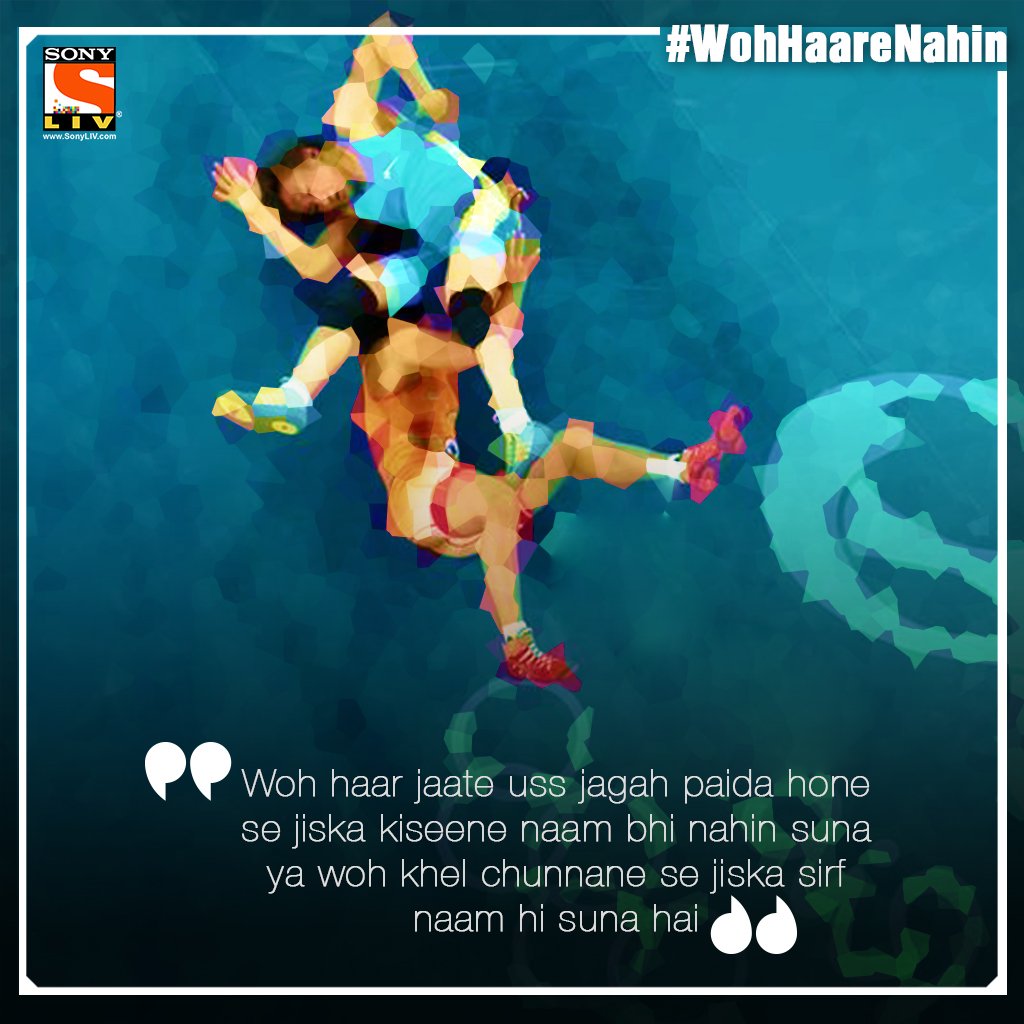
    SonyLIV, the complete digital entertainment platform with content for audiences across genres, has highlighted through a video showng how Indian athletes had to overcome several odds in order to win a place at the Games, and is a fitting tribute to the effort of the country’s Rio Olympics contingent.

    Titled #WohHaareNahin, the short 90-second AV opens with a clock showing 05:30 AM. Glimpses of tickets, a passport and an Olympics pass are shown in subsequent shots.

    An athlete, presumably recently-returned from the Olympics, can be seen getting dressed in her India practice kit. A contemplative musical arrangement can be heard in the background, as the narrator explains why winning a medal should not be assumed to be the only criterion for victory. The video goes on to subtly explain how Indian athletes had to overcome hardships such as injuries, criticism, apathy towards their chosen sport, a distinct lack of training facilities, and a dearth of sponsors and adequate monetary recompense to earn the privilege of representing their country at the grandest sporting arena, the Olympic Games. It ends with a shot of the athlete jogging away into the distance, refusing to give into disappointment and continuing her daily warm-up.

    Currently live on SonyLIV’s web and a mobile platforms, the AV encourages viewers to tweet their support to the athletes with the hashtag #WohHaareNahin, appreciating their efforts and their representation of India at the Games.

    Link: http://www.sonyliv.com/details /promos/5095102376001/Woh-Haar e-Nahin—Tribute-to-Indian-Co ntingent-at-Rio