Tag: RIO

  • JioStar, Zee and Sony release new channel and bouquet pricing

    JioStar, Zee and Sony release new channel and bouquet pricing

    MUMBAI: It’s that time of the year when broadcasters disclose how much the distribution platform operators will have to pay for the channels they pipe into Indian TV homes. The three major networks JioStar, Zee and Sony Pictures Networks India have rolled out their reference interconnect orders  (Rios) regarding the broadcast tariffs that cable ops, DTH ops and IPTV players have to cough up for 2025. At first glance, it appears s if broadcasters have been reasonable in their rate increases by hiking channel prices between five and 15 per cent on the higher side. And quite a few channel prices have been maintained as well. The rates become effective 1 February 2025.

    Let’s begin with JioStar.Its 134 channel offering after the merger of Star and Jio definitely looks impressive. As do the number of packs its distribution team has come up with: 83 in all packs, which includes 85 standard definition channels, 44 HD channels, five FTA channels. The bouquets also include 19 news channels from Network 18, infotainment channels from both National Geographic and AETN18, general entertainment channels in various languages from both Star and Colors, kids channels (including Disney), music channels (MTV and Maa Music), regional language channels and of course above all sports channels in various languages.

    On an a la carte basis, JioStar’s channels in various languages in standard definition have been priced at between Rs 25 (for Maa TV and Colors Kannada respectively)  and 10 paise (all its news channels).

    Its HD channels are priced between Rs 25 a(Maa HD, Star Plus HD, Vijay HD, Colors Kannada and Asianet) and 10 paise(VH1 HD, MTV Beats HD and MTV HD). .

    On the bundle side, its cheapest pack, apart from the free to air channels, is at     Rs 17 for the Disney Kids SD pack with the most expensive one being the Star Premium Pack Marathi Lite Hindi HD at Rs 240.

    The  Star Value Pack  SD Hindi pack,  priced at Rs 110 has 30 channels including both Star Plus and Colors, a chunk of news channels, movie channels, infotainment channels, kids channels – but no Disney – the sports channels Star Sports 1 Hindi, Sports 18, and Star Sports 3. The Star Premium Pack Lite Hindi HD which is priced at Rs 210 has 43 channels, including seven sports channels, Colors HD but no Star Plus.

    The broadcaster has built clever packs which are a mix of regional language channels only and it has also mixed regional languages to create special packs and regional language channels with its  Hindi channels to create even more niche packs to meet the requirement of nomadic domestic Indians.

    Network Status Action
     JioStar if you already have an agreement  click here  
      if you are new to Jiostar and want one click here
    Zee TV To get the Zee updated RIO form  click here
    Sony Pictures Networks India to get the a la carte pricing  click here
      to get the Happy India bouquet pricing  click here
    Source: networks and Indiantelevision.com 

    Let’s now take a look at Zee. Zee has kept the number of packs limited to 30 and it’s a la carte rates are also pretty much simpler. It’s mainline general entertainment channels in every language apart from Malayalam have been kept at a price of Rs 19 (Zee TV Hindi, Zee TV Marathi, Zee Bangla, Zee Sarthak, Zee Telugu and Zee Kannada). Zee Keralam, however, has been priced at Rs 10 on a la carte basis. Its movie channels have been kept between a band of Rs 19 (Zee Cinema) and 10 paise (Zee Classic). It has priced most of its HD channels at Rs 19 with the lowest one priced at Rs 3 (& prive HD).

    Zee TV has bundled its regional language channel packs at a higher price than its Hindi ones. For instance, the Zee all-in-one pack Hindi HD has a sticker price of Rs 89 while its all-in-one Telugu and Tamil packs are priced at Rs 120.It has also thrown in penetration incentives if the distribution platform operators place the channels in the preferred LCN number that are agreed upon between Zee and the DPO.

    Now on to Sony Pictures Networks India (SPNI). SPNI has increased the a la carte pricing for some of its  channels, while keeping them steady for others. For example, Sony Wah  which was priced at Rs 0.1, is now priced at Rs 1. Similarly, Sony Max 2 has increased to Rs 2 from Rs 1, and Sony Sports Ten 4 is now priced at Rs 19, up from Rs 17. Additionally, the pricing for bouquets has been revised which has gone up  between four per cent and 12 per cent. The Happy India Smart – Hindi pack is now priced at Rs 54 (previously Rs 48), while the Happy India Smart – Marathi pack is now priced at Rs 56 (previously Rs 51). The Happy Smart Bangla too has risen from 51 to Rs 56 but with the channel Max 1 being added to it.

    Hopefully, these marginal price revisions don’t start a battle between the  cable TV and DTH fraternity and broadcasters like they did the last time in 2023 when broadcasters had to resort to switch offs because cable TV operators resisted. The DPOs must remember the price of almost everything has gone up: the rupee is at Rs 85, potatoes are at Rs 60 and even petrol is at a high.

    Already, consumers are turning away from cable TV and DTH as is evident in the drop in the number of subscribers in the past six months. For the sake of the entire cable and satellite TV industry, the entire trade must work together and not battle against each other. Otherwise, the number of cord cutters and cord-nevers will only increase. And along with it, the tribe of streamers. 

  • Broadcasters to withdraw petitions challenging Trai on NTO 2.0 in SC

    Broadcasters to withdraw petitions challenging Trai on NTO 2.0 in SC

    Mumbai: The Indian Broadcasting and Digital Foundation (IBDF) and its members are likely to withdraw their petitions challenging the New Tariff Order (NTO) 2.0 in the Supreme Court, sources told indiantelevision.com. The apex court took up broadcasters’ applications for withdrawal of the petition while hearing the matter on Tuesday.

    Earlier this month, The Telecom Regulatory Authority of India (Trai) had extended the deadline for implementation of the new tariff order (NTO) 2.0 to 1 June. The previous deadline was 1 April.

    Trai had then also allowed broadcasters to revise their reference interconnect offers (RIO) by 28 February and publish the same on their websites. Distribution platform operators (DPOs) were directed to report the distributor retail price and composition of the bouquet of pay channels in compliance with the new regulatory framework by 31 March. Those who have already submitted can revise their RIOs by 31 March.

    In response to the earlier deadlines, broadcasters had come out with their new RIOs in October-November last year, preferring to pull their popular channels out of the bouquets instead of reducing the price to or below Rs 12. Though still above the cap, many of these prices were revised down later.

    Pertinent in this regard is Trai’s intention to form a committee with representation from leading pay-TV industry associations to ensure smooth implementation of the New Regulatory Framework 2020. In a letter dated 22 December 2021, the regulator has asked the IBDF, All India Digital Cable Federation (AIDCF), and the DTH association to nominate a maximum of two representatives to be part of the implementation committee.

    Prior to this, Trai had in November 2021, notified stakeholders that NTO 2.0 implementation would be delayed until 1 April. Speculations regarding backroom parleys between the telecom regulator and broadcasters to end the impasse have also been in the news lately. 

    This copy will be updated.

  • NTO 2.0: Indiacast publishes new RIO effective from 1 April

    NTO 2.0: Indiacast publishes new RIO effective from 1 April

    Mumbai: Indiacast, the distribution company jointly owned by TV18 and Viacom18, has published its new reference interconnect offer (RIO) in compliance with the Telecom Regulatory Authority of India’s (Trai) new tariff order (NTO) 2.0 effective from 1 April.

    The revised RIO contains the a-la-carte and bouquet prices of 59 channels owned and operated by Network18, TV18, and Viacom18. The RIO contains the MRP of the new sports channels launched by Viacom18 tentatively named Sports18 and Sports18 HD and priced at Rs 12.

    As per clause 23 (a) of the RIO, “The availability of Sports18 and Sports18 HD channels (Sports18 channels), as well as bouquets comprising of Sports18 channels, are dependent on introduction of Sports18 channels.”

    “In case TV18 decides not to introduce and/or there are any changes in the introduction date of Sports18 channels, then intimation of the same will be sent by TV18 to affiliate in writing,” it added.

    “In case of any change in introduction date of Sports18 channels, then the availability of Sports18 channels as well as bouquets comprising of Sports18 channels shall be effective the last intimated date of introduction of Sports18 channels.”

    “Further, until the introduction of Sports18 channels, the validity of the remainder provisions of this agreement shall not be affected and any stipulations so far as they are related to Sports18 channels will come into force only from the date of introduction of the Sports18 channels.”  

    Viacom18 channels, including their flagship GECs – Colors (Rs 21), Colors HD (Rs 23); their regional language channels – Colors Kannada (Rs 21), Colors Kannada HD (Rs 23), and Colors Marathi HD (Rs 17) will not be included in any bouquet. As per NTO 2.0, Trai mandated that a channels’ MRP must not exceed Rs 12 for it to be included in any bouquet. The broadcaster has also intimated affiliates its free-to-air channel Colors Cineplex Bollywood will be converted into a pay channel effective from 1 April and will be priced at Rs 0.10.

  • NTO 2.0: Discovery Communications India publishes new RIO

    NTO 2.0: Discovery Communications India publishes new RIO

    Mumbai: Discovery Communications India has published its reference interconnection offer (RIO) issued under telecommunications (broadcasting and cable) services interconnection (addressable systems) regulations, 2017 for all distribution platforms. The new RIO will be effective from 1 December onwards. 

    The tariffs for TV channels mentioned in the RIO adhere to the Telecom Regulatory Authority of India (Trai) new tariff order (NTO) 2.0.

    The channel operates nine standard definition pay-TV channels and five high definition pay-TV channels. It is also offering eight bouquets to TV subscribers.

    The implementation of the new tariff order 2.0 is on hold as broadcasters under the aegis of the Indian Broadcasting Foundation (IBF) have challenged the Trai order in the Supreme Court. The final hearing on the matter is scheduled for 30 November

  • NTO 2.0: ETV publishes new RIO effective 1 December

    NTO 2.0: ETV publishes new RIO effective 1 December

    Mumbai: Eenadu TV (ETV) has published its reference interconnection offer (RIO) issued under telecommunications (broadcasting and cable) services interconnection (addressable systems) regulations, 2017 for all distribution platforms. The new RIO will be effective from 1 December onwards. 

    The tariffs for TV channels mentioned in the RIO adhere to the Telecom Regulatory Authority of India (Trai) new tariff order (NTO) 2.0.

    The channel operates 24 channels and is offering three bouquets to viewers. Its Telugu general entertainment channel ETV Telugu and ETV HD are priced greater than Rs 12. As per new tariff regime 2.0 order, Trai has mandated that a channel’s MRP must not exceed Rs 12 for it to be included in any bouquet.

    The implementation of the new tariff order 2.0 is on hold as broadcasters under the aegis of the Indian Broadcasting Foundation (IBF) have challenged the Trai order in the Supreme Court. The final hearing on the matter is scheduled for 30 November.

  • NTO 2.0: Times Network publishes new RIO

    NTO 2.0: Times Network publishes new RIO

    Mumbai: Times Network has published its reference interconnection offer (RIO) issued under telecommunications (broadcasting and cable) services interconnection (addressable systems) regulations, 2017 for all distribution platforms. The new RIO will be effective from 1 December onwards. 

    The tariffs for TV channels mentioned in the RIO adhere to the Telecom Regulatory Authority of India (Trai) new tariff order (NTO) 2.0.

    Times Network owns and operates 13 channels including its flagship news channels Times Now, ET Now, Mirror Now, Times Now World HD, Times Now Navbharat HD, and ET Now Swadesh. Its entertainment offering includes music channel Zoom, English film channels Movies Now, Movies Now HD, Romedy Now, MN+ HD, MNX, and MNX HD. The broadcaster is offering eight bouquets under the new RIO.

    The implementation of the new tariff order 2.0 is on hold as broadcasters under the aegis of the Indian Broadcasting Foundation (IBF) have challenged the Trai order in the Supreme Court. The final hearing on the matter is scheduled for 30 November.

  • Disney Star India likely to exit English GEC space

    Disney Star India likely to exit English GEC space

    Mumbai: Disney Star India is likely to phase out its English general entertainment channels Star World, Star World HD, and Star World Premiere HD, as per details in its reference interconnection offer (RIO) published on 15 October.

    The broadcaster published the tariffs of 78 channels out of which the English GECs were absent. According to Broadcast Audience Research Council (Barc) India, the English GECs account for less than one per cent of total TV advertising spends. The fall of English GECs was first sounded when the Telecom Regulatory Authority of India (Trai) implemented the new tariff regime that required subscribers to select only the TV channels that they actually watched.

    The migration of English viewers to OTT platforms and the pandemic that began last year has made the English GEC genre extremely unviable for Indian broadcasters from a business perspective.

    A response from the Star network is awaited and we will update this piece if we receive any.

  • SPNI publishes new RIO effective from 1 December

    SPNI publishes new RIO effective from 1 December

    Mumbai: Sony Pictures Networks India (SPNI) has published its new reference interconnection offer (RIO) issued under telecommunications (broadcasting and cable) services interconnection (addressable systems) regulations, 2017 for all distribution platforms.

    The RIO is subject to the final outcome of the special leave petition filed by the company before the Supreme Court. The new channel rate card will be effective from 1 December.

    According to the rate card, SPNI channels including Hindi GECs Sony Sab, SET, English sports channels Sony Ten 1, Sony Ten 2, and HD channels SET HD, Hindi movie channel Max HD, Sab HD, sports channels Ten 1 HD, Ten 2 HD, Ten 3 HD, Six HD, and Telugu and Tamil sports channel Ten 4 HD have an MRP greater than Rs 12.

    As per the new tariff regime 2.0 order, the Telecom Regulatory Authority of India (Trai) has mandated that a channel’s MRP must not exceed Rs 12 for it to be included in any bouquet. The aforementioned channels will not be part of any of the 12 bouquets offered by SPNI.

    The implementation of the new tariff order 2.0 has been halted as broadcasters under the aegis of the Indian Broadcasting Foundation (IBF) have challenged the Trai order in the Supreme Court. The final hearing on the matter is scheduled for 30 November.

  • Whisper’s new ad keeps it ‘bloody’ real, soothes period ‘blues’ away

    Whisper’s new ad keeps it ‘bloody’ real, soothes period ‘blues’ away

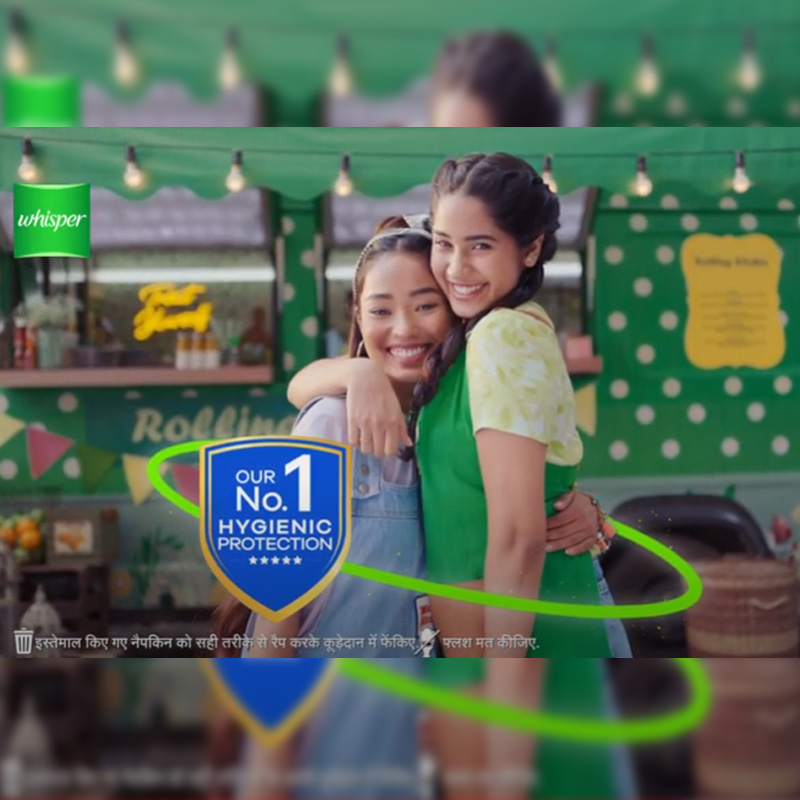
    Mumbai: Whisper is finally keeping it real. India’s leading sanitary napkin and personal hygiene brand has debuted its new commercial using realistic red fluid- not blue- depicting period blood for what it is. Bloody red, of course.

    About time too. It’s 2021 for period’s sake. The ubiquitous blue-coloured liquid has been used in ads promoting feminine hygiene products for far too long.

    The new ad for Whisper Ultra, which claims to be endowed with herbal oil that not only locks wetness but odour too, is otherwise unremarkable, showcasing the usual tropes of a sanitary pad ad- a happy looking girl going about her job with extra enthusiasm.

    Where it breaks new ground is when it shows the pad absorbency, using an authentic-looking red fluid in place of the usual sanitised ink-blue liquid. The brand had used red before too, in an animated video ad launched in November 2020, but it had less of an impact being an animation.

    The Feminine Hygiene Products Market in India is valued at Rs. 25.02 billion in 2018 and is expected to reach INR 58.62 billion by 2024, expanding at a compound annual growth rate (CAGR) of ~14.92 per cent, during the 2019-2024 period, as per a ResearchAndMarkets report.

    The report also revealed that Whisper by P&G Hygiene & Health Care held the largest market share at a cool 51.42 per cent, followed by Stayfree and Kotex in 2018.

    For the country’s biggest brand to take this maiden step of normalising periods and menstruation is nothing short of a giant leap for the Indian consumer market. Growing awareness about intimate hygiene and increase in preference for sanitary products like tampons and panty liners have garnered a huge demand for feminine hygiene products in the country. The entry of new players and start-ups is also expanding the feminine hygiene products market in India.

    In fact, the credit for breaking this age-old misleading practice of using blue liquid in commercials goes to a much lesser-known homegrown brand. Nobel Hygiene’s RIO, which was the first sanitary pad brand that woke up to the challenge in India and realistically portrayed ‘period blood’ in red, instead of blue on TV.

    The viral ad featuring actor Radhika Apte launched in July last year was path-breaking in many ways, tackling most of the uncomfortable truths associated with menstruation but which are usually brushed under the carpet by most commercials keen to show a happier-than-thou picture perfect version. For someone who has no knowledge of periods, it wouldn’t be surprising if these ads made them believe that women indeed bleed blue and that periods are effortless!

    However, conversations around the subject are still hush-hush in public and even in families sometimes, despite it being a normal biological function affecting half of human-kind. Sanitary napkins continue to be wrapped up in sanitised brown paper, lest its offensive contents be visible to the public eye.

    In March this year, The Body Shop India had launched a campaign ‘Periods are #BloodyNatural’ calling out to end period shame and break taboos and stereotypes around it.

    The campaign, featuring actor Shraddha Kapoor talked about how it’s been normal for society to shame periods, giving out the much-needed message: “But periods are #BloodyNatural. It is society that’s strange. We at The Body Shop India believe that a conversation can change the world. It’s time to talk about periods as the natural phenomena that they are. #DropThePWord into your conversation to end period stigma.”

    Recently, a Thai-origin brand called SANITA also came up with an Indian ad that promotes awareness and openness about the product. It gave out a pertinent message, while also taking a potshot at the giant in the category- the tagline for the brand went “There’s nothing to Whisper about it”! We agree!

    It goes without saying that brands hold the power to drive change in society and start that much-needed conversation. Here’s hoping that more companies join P&G’s Whisper, wake up and realise that blood has always been red. Let’s normalise talking about something that’s a very basic biological function. Period!

  • RIO launches new campaign on Menstrual Hygiene day

    RIO launches new campaign on Menstrual Hygiene day

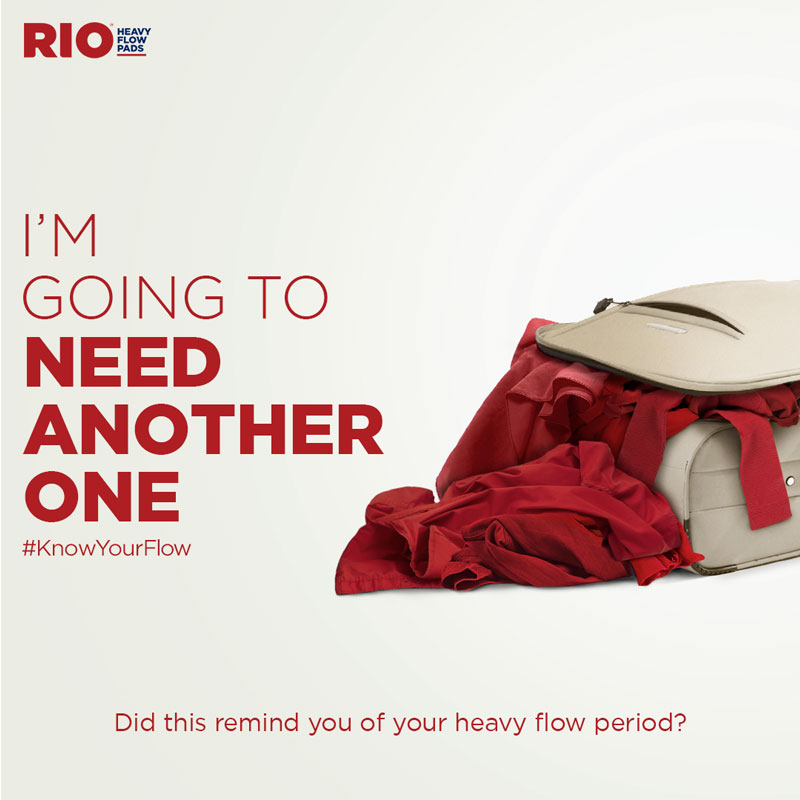
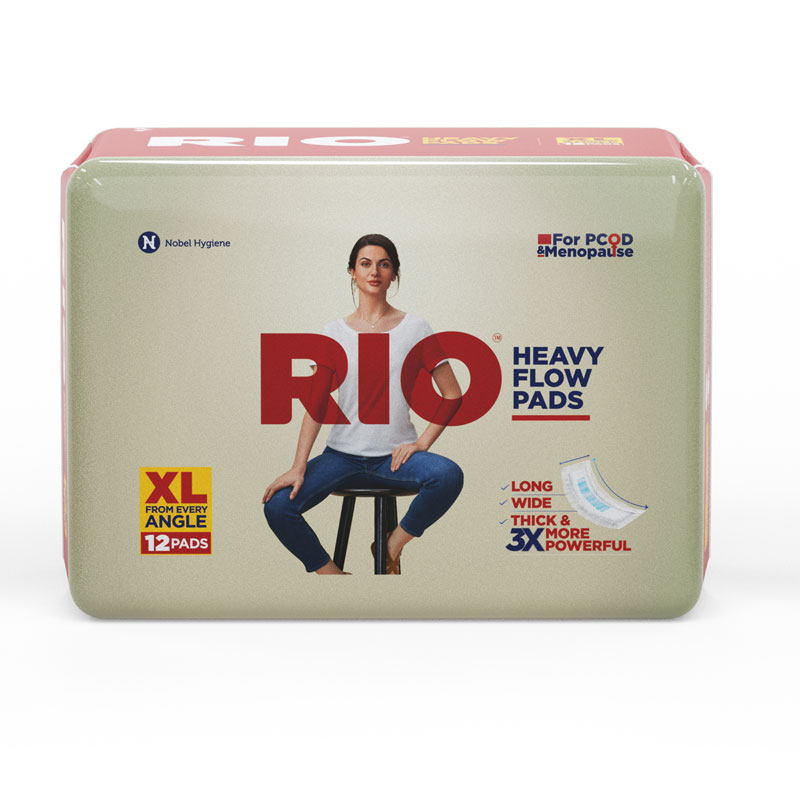
    RIO-Heavy Flow Pads, the only sanitary pad you will ever need to manage heavy flow, from the Nobel Hygiene family, launched a new campaign today to coincide with the upcoming Menstrual Hygiene Day to raise awareness about the challenges that women face due to heavy flow. 

    In our society, women have normalized the extremeness of their period due to lack of awareness about heavy flow and therefore do not realize that their condition might require them to use different products than the norm. This often results in leakage, staining, the napkin overflowing, a higher rate of infections because of leaving on a full pad for longer than it should in addition to rashes and discomfort because of having to compensate by using multiple pads at once. All of these are signs of poor menstrual hygiene practices.

    This Menstrual Hygiene Day i.e, 28 May 2020, RIO addresses this issue via a campaign with a series of analogies to showcase how women feel when they use a regular napkin during heavy flow and calls out the oxymoronic habit that we have become accustomed with. This is questioned through instances that elaborate on the need for the usage of the right product that can handle heavy flow, which is essential for good menstrual hygiene.

    Sharing his views on the campaign, Kartik Johari, Vice-President, Nobel Hygiene said “An overwhelming majority of women in India who suffer from heavy flow are undiagnosed and ill-informed about their condition. We understand that the journey from using a cloth to sanitary napkins has been a long and arduous one. However, this needs to be refined further as a few sizes do not fit all. There are a lot of missed sizes in between that lead to hygiene issues that need to be addressed. And a huge chunk of it deals with heavy flow which has so far been ignored.

    With this campaign, we want to reach out to women and help raise awareness about the repercussions that ignoring and not recognizing heavy flow as a unique condition might have on their bodies. It also raises awareness about how the usage of the right products can help maintain good menstrual hygiene to a large extent. The normalization of this condition cannot continue in the interest of their wellbeing. The campaign will show solidarity with women facing this challenge and let them know they are not alone along with busting age-old myths surrounding this condition.”

    The campaign will also create awareness and education on the brand’s blog articles about good menstrual hygiene practice, busting myths and about sanitary pads including the purpose of wings and length of pads.

    The campaign will be showcased on their Instagram page @theriopads and Facebook page @theRIOpads. The concept has been put together by Schbang. Brand Pages:

    RIO Instagram: https://www.instagram.com/theriopads/?hl=en
    RIO Facebook: https://www.facebook.com/The-RIO-Pads-111702830401404/
    RIO Website: https://www.riopads.in/s

    Follow Tellychakkar for the consumer facing news & entertainment