Tag: RIL

  • RIL subsidiary gets Competition Commission nod for Den, Hathway acquisition

    RIL subsidiary gets Competition Commission nod for Den, Hathway acquisition

    BENGALURU: The Mukesh Dhirubhai Ambani led Reliance Industries Limited has informed the bourses that permission from the Competition Commission of India for acquisition of shares and control of Den Networks and Hathway Cable & Datacom  (Hathway) by six SPV 100 percent owned and controlled by Digital Media Distribution Trust of which Reliance Content Distribution Limited, a wholly owned subsidiary of Reliance Industries Limited, is the sole beneficiary, has been received on 21 January 2019.

    The approval will enable subscription to the preferential issue of equity shares by Den and Hathway and purchase of equity shares of Den from the existing promoters, as specified in the disclosure dated October 18, 2018.

    RIL is now waiting for Securities and Exchange Board of India (SEBI) comments on the draft letter for mandatory open offer to shareholders of (a) Den; (b) GTPL Hathway Limited; and (c) Hathway Bhawani Cabletel and Datacom Limited,

    Yesterday, Den Networks had informed the Stock Exchanges that (i) Jio Futuristic Digital Holdings Private Limited, (ii) Jio Digital Distribution Holdings Private Limited and (iii) Jio Television Distribution Holdings Private Limited (collectively referred as “investors“) have received the above referred approval.

    Also, yesterday, Hathway had informed the Stock Exchanges – “Further to our intimations dated 17th October, 2018 and 14th November, 2018 with respect to Boards' and Shareholders' approval for raising of funds up to Rs. 2940,00,03,500 (Rupees Two Thousand Nine Hundred and Forty Crores Three Thousand and Five Hundred only) through preferential allotment to Jio Content Distribution Holdings Private Limited, Jio Internet Distribution Holdings Private Limited and Jio Cable and Broadband Holdings Private Limited (the "Proposed Investors"), please be informed that the Proposed Investors have received the approval from the Competition Commission of India on January 21, 2019.”

    Hathway had also submitted a copy of the Letter of Offer dated 21 January 2019 to Stock exchanges.

  • Reliance Jio adds 27.9 mn subs in Q3; GigaFiber marks entry in 1400 cities

    Reliance Jio adds 27.9 mn subs in Q3; GigaFiber marks entry in 1400 cities

    BENGALURU: Mukesh Dhirubhai Ambani’s juggernaut Reliance Industries Ltd (RIL) reported 50.7 percent growth in gross revenue for the quarter ended 31 December 2018 (Q3 2019, quarter or period under review) as compared to the corresponding year ago quarter. The company’s operating result was 25.4 percent higher during the quarter under review as compared to the year ago quarter. Organised retail under Reliance Retail Ltd and Digital Services segment under Jio have been adding a larger and larger share to the company’s topline and operating results over time. 

    Q3-2019 was no different. Revenue for RIL’s Reliance Retail almost doubled (grew 89.3 percent) y-o-y in Q3 2019 to Rs 35,577 crore (16.7 percent of gross revenue) as compared to Rs 18,798 crore (13.3 percent of gross revenue) in Q3 2018. The segment’s operating result grew 210.5 percent y-o-y to Rs 1,512 crore (0.71 percent of gross revenue) during the period under review from Rs 487 crore (0.34 percent of gross revenue). The segment’s contribution to operating results grew to 8.7 percent in Q3 2019 from 3.5 percent in Q3 2018.

    RIL’s digital segment revenue in Q3 2019 grew 51.2 percent y-o-y to Rs 12,302 crore (5.8 percent of gross revenue) from Rs 8,136 crore (5.8 percent of gross revenue). Operating results for the digital segment grew 64 percent y-o-y to Rs 2,362 crore (1.1 percent of gross revenue) in Q3 2019 from Rs 1,440 crore. (1 percent of gross revenue). The segment’s contribution to operating results grew to 13.6 percent in Q3 2019 from 10.4 percent in Q3 2018.

    RIL reported gross revenue of Rs 2,12,752 crore for Q3 2019 as compared to Rs 1,41,182 crore for the corresponding year ago quarter. Operating result for the period under review was Rs 17,341 crore as compared to Rs 13,830 crore for Q3 2018. The company reported profit for the period as Rs 10,376 crore which was 10 percent higher as compared to Rs 9,437 crore in Q3 2018. Total Comprehensive income for Q3 2019 was 28.8 percent higher y-o-y at Rs 11,052 crore as compared to Rs 8,582 crore.

    FTTH JioGigaFiber services, Den Networks and Hathway Cable & Datacom Investments

    In its earnings release, RIL said that JioGigaFiber services for home broadband, entertainment, smart home solutions, wireline and enterprise has witnessed overwhelming customer interest across 1,400 cities. Trial services are being rolled out across several cities to optimise service offerings.

    The company said that Jio’s customer engagement stayed healthy with average data consumption per user per month of 10.8 GB and average voice consumption of 794 minutes per user per month. Video consumption drove most of the usage, increasing to 460 crore hours per month.

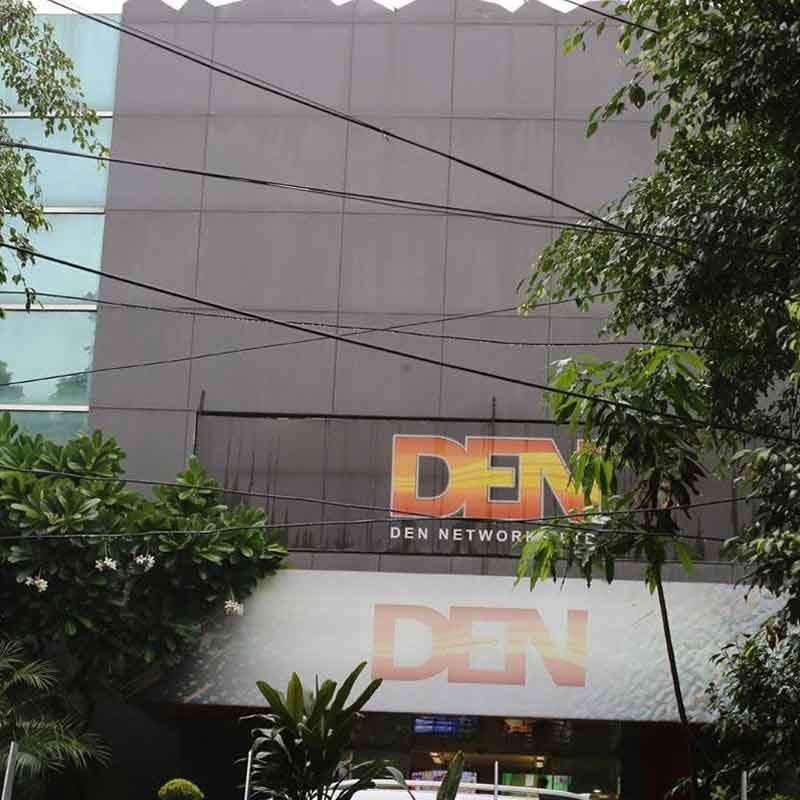
    RIL said further that it awaits regulatory approvals to complete the recently announced investment in Den Networks Ltd and Hathway Cable and Datacom Ltd. Post completion of the transaction, Reliance and Jio will be strengthening the business model of 27,000 LCOs that are aligned with DEN and Hathway across 750 cities, by creating multiple future opportunities with new services and platforms.

    RIL says that Jio added 2.79 crore subscribers in Q3 2019 and its net subscriber base grew to 28 crore. The company says that Jio has had the lowest monthly churn in the industry of 0.61 percent during the quarter. Jio’s ARPU for Q3 2019 was Rs 130 as compared to Rs 131.70 in the immediate trailing quarter.

    Company speak

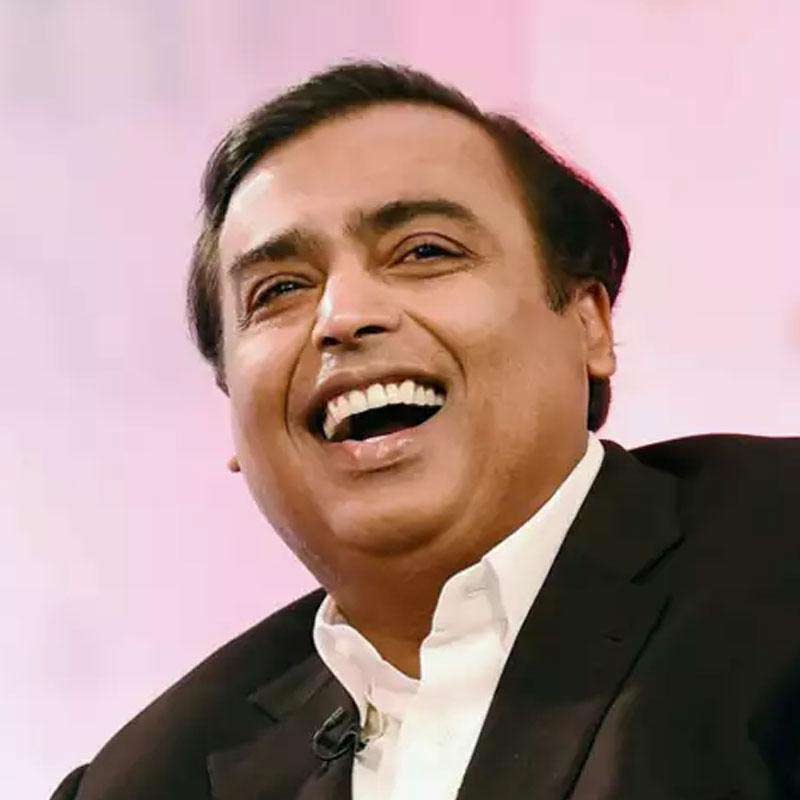
    RIL chairman and managing director Ambani said, “In our endeavour to consistently create more value for our country and stakeholders, our company has become the first Indian private sector corporate to cross Rs 10,000

    crore quarterly profits milestone. I am proud to be part of the committed and talented team at Reliance that has helped achieve many milestones in our continuing growth journey.

    “In an oil price environment that witnessed heightened volatility through the quarter, RIL has delivered strong quarterly results on a consolidated basis. Competitive cost positions and integration benefits is core to our oil to chemicals (refining and petrochemicals) business, driving sustained performance even in challenging global business environment. In our new-age consumer businesses, we maintained robust growth momentum across Retail and Jio platforms and the share of consumer businesses is steadily increasing its contribution to the overall profitability of the Company. In our wireless business, our customer-centric offerings and strong ubiquitous network are helping to digitalise India at an unprecedented rate. As we execute on our strategies to deliver superior products and services to Indian consumers, I am confident, Reliance is well-positioned for the future and for the next cycle of growth,” concluded Ambani.

  • Den reports lower numbers for third quarter

    Den reports lower numbers for third quarter

    BENGALURU: Indian cable distribution network and broadband internet services (broadband) provider Den Networks Ltd reported 6 per cent drop in consolidated operating revenue numbers for the quarter ended 31 December 2018 (Q3 2019, quarter or period under review) as compared to the corresponding year ago quarter (y-o-y, Q3 2018).

    Den Network’s operating profit (EBITDA) declined 39 per cent y-o-y during the period under review to Rs 48.10 crore (15.6 percent of operating revenue) from Rs 78.83 crore (24 per cent of operating revenue) in Q3 2018.

    Den reported a net loss of Rs 31.21 crore in Q3 2019 as compared to a profit after tax of Rs 1.73 crore in Q3 2018.The company reported total comprehensive loss (TCL) of Rs 31.06 crore as compared to total comprehensive income of Rs 1.31 crore in Q3 2018.

    Segment numbers

    Den has two segments – cable distribution networks (Cable) and broadband. Both segments reported lower y-o-y revenues and operating loss for the quarter under review.

    Cable segment revenue reduced 6.1 per cent y-o-y in Q3 2019 to Rs 291.59 crore from Rs 310.50 crore in Q3 2018. Den reported that the segment had an operating loss of Rs 8.95 crore as compared to an operating profit of Rs 25.20 crore in Q3 2018.

    Den Networks reported 5.1 per cent y-o-y decline in operating revenue for its broadband segment in Q3 2019 at Rs 16.82 crore as compared to Rs 17.72 crore in Q2 2018. The segment’s operating loss reduced to Rs 6.60 crore in Q3 2019 from an operating loss of Rs 7.29 crore.

    Let us look at the numbers reported by Den Networks for Q1 2019

    Den Networks consolidated revenue from operations in Q3 2019 was Rs 308.41 crore, 6 per cent lower than the Rs 328.22 crore in Q3 2018. Consolidated total revenue including consolidated other income declined 6.4 per cent y-o-y in Q3 2019 to Rs 313.32 crore from Rs 334.92 crore in Q3 2018.

    Consolidated total expenditure for the quarter under review increased 3.9 per cent y-o-y in Q3 2019 to Rs 337.84 crore (109.5 percent of operating revenue) from Rs 325.20 crore (99.1 per cent of operating revenue) in the corresponding quarter of the previous year.

    Consolidated content cost increased 10.5 per cent y-o-y in Q3 2019 to Rs 148.65 crore (48.2 per cent of operating revenue) as compared to Rs 134.56 crore (41 per cent of operating revenue) in Q3 2018. Consolidated placement fees reduced 9.3 per cent y-o-y in Q3 2019 to Rs 9.99 crore (3.2 per cent of operating revenue) from Rs 12.48 crore (3.4 per cent of operating revenue) in Q3 2018.

    Den Networks consolidated employee benefits expense during the period under review declined 7.5 per cent y-o-y to Rs 23.80 crore (7.7 per cent of operating revenue) from Rs 25.73 crore (7.8 per cent of operating revenue) in Q3 2018. Consolidated other expenses in Q3 2019 increased 1.6 per cent y-o-y to Rs 77.87 crore (25.2 per cent of operating revenue) in Q3 2019 from Rs 76.62 crore (23.3 per cent of operating revenue) in the corresponding quarter of the previous year.

    Company speak

    Den CEO SN Sharma said, “Cable subscription ARPU is consistent with respect to the previous quarter which stood at Rs 96 per box (including tax).

    "TRAI tariff order implementation, a potential gamechanger in the cable industry, is underway wherein we have taken host of initiatives and strengthened our internal processes including IT systems. In order to migrate to the new tariff order, consumer has various options to exercise his choice of channels through our consumer / LCO mobile applications and web portal.

    "Extensive LCO/distributor awareness programme are under progress wherein the partners are explained in clear terms the benefits they would get in the overall value chain. Prepaid system for cable subscription partners, the most preferred billingoption under the new tariff order, has been successfully rolled out during the quarter in select markets.”  

    Strategic investments in Den by Reliance Industries

    On 17 October 2018, the Mukesh Ambani led Reliance Industries Ltd reported to the bourses that it has decided to make strategic investments thought a primary investment of Rs 2,045 crore through a preferential issue under SEBI regulations and secondary purchase of Rs 245 crore from the existing promoters for a 66 percent stake in Den. Reliance also said that it would make a primary investment of Rs 2,940 crore through a preferential issue under SEBI regulations for a 51.3 per cent stake in Hathway Cable and Datacom Ltd (Hathway) of the Rajan Raheja group.

  • The year M&A changed the face of the media and entertainment industry

    The year M&A changed the face of the media and entertainment industry

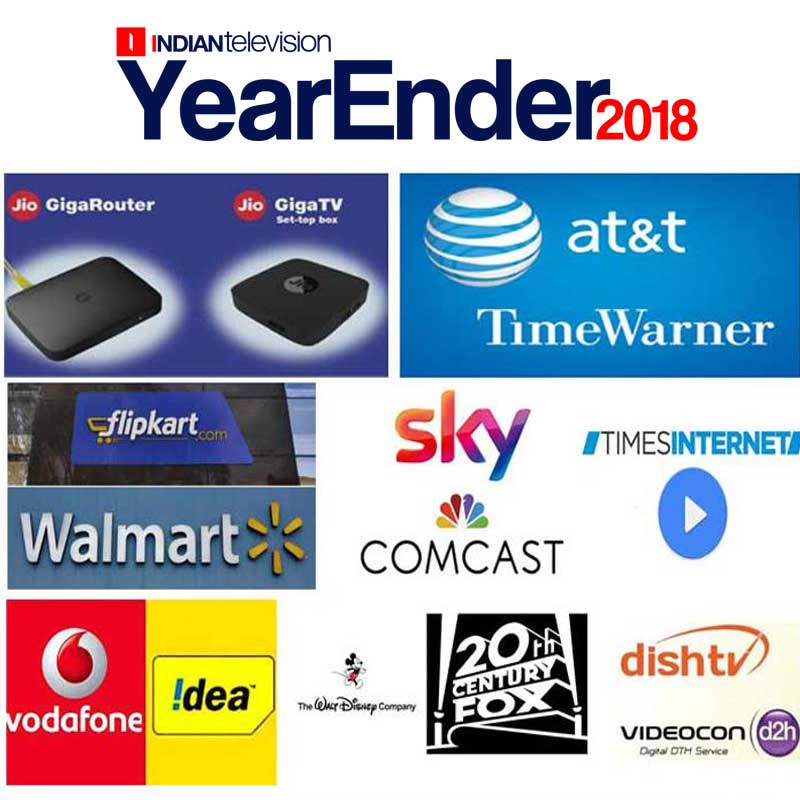
    MUMBAI: The emergence of numerous streaming platforms and convergence between technology, media, and telecom companies shook the core of the media and entertainment business globally. Giant tech and telco players, on the back of their direct customer reach, started taking content creation and distribution a lot more seriously. Rapid change in content consumption pressurised traditional players to invest more in technology and focus more on the B2C model. The ongoing flux brought the industry on the brink of instability, leading to consolidation in the form of mergers and acquisitions.

    In the last couple of years, the nature of competition in the global ecosystem has witnessed a gradual swing. Organisations like Netflix, Amazon Prime and Google have brought a structural shift forcing traditional players to rethink their approach to content and distribution. Legacy brands upped the ante to attract and retain more consumers even through cross-border deals. PwC India partner Raman Kalra points that everybody in this world of media disruption is trying to be relevant in reach and scale, the two critical factors that are driving deals. To corroborate his thesis, he highlights the AT&T-Time Warner deal where the former, with a huge reach, wanted to scale up its content play with the collaboration.

    Closer to home, billionaire Mukesh Ambani’s RIL rode the TMT convergence wave better than most. India’s richest man started the year with a bang, intensifying TV18’s stake to 51 per cent by acquiring 1 per cent of Viacom18’s equity from Viacom Inc. for a cash consideration of $20 million. The RIL-owned Jio Infocomm also acquired a controlling stake in two large MSOs – DEN and Hathway – building ammunition for its FTTH’s foray. That’s not all, RIL also pocketed a small but significant five per cent stake in Eros International.

    E&Y media and entertainment advisory services partner Ashish Pherwani expects more deals to materialise in 2019.

    “Especially technology-driven deals because so many changes are happening in that space, and consolidation, led by inbound investments. There are three types of deal. One type of deal is happening in order to build efficiency and scale in the business, led by cost pressures. Another type of deal is around relevance and market share – to get a bigger slice of the market to monetise a larger base of consumers.  The third type of deal which is happening is basically technology driven – for access to technology that could drive competitive advantage in the digital future. Hence, the three reasons market share, efficiency, technology are driving the deals,” he adds.

    There were other interesting deals struck through the year that are likely to reshape the media and entertainment business going forward.

    Birth of the world’s second largest DTH company

    The Indian market wasn’t exempted from the global merger frenzy. The coming together of two large DTH operators – Dish TV India and Videocon d2h – was finally concluded this year, creating the largest DTH service provider in the country with a subscriber base of about 29 million. Apart from leveraging their individual strengths, it was expected that the combined entity would benefit from economies of scale. One of the biggest attractions for Dish TV as the acquirer was Videocon’s significantly higher average revenue per user (ARPU). Significantly, the combined entity’s ARPU was Rs 207 in the second quarter as opposed to Dish TV’s standalone ARPU of Rs 144 pre-merger. The deal also helped Dish TV position itself better when it came to negotiating with broadcasters.

    Decks cleared for FTTH warfare

    From formally launching FTTH service Jio GigaFiber to acquiring majority stakes in two large MSOs to speed up the rollout, the Mukesh Ambani-led Reliance Jio was definitely the centre of attention in 2018. Reliance Industries Ltd (RIL) made an investment of Rs 2,290 crore for 66 per cent stake in Den and Rs 2,940 crore for 51.3 per cent stake in Hathway. It will save RIL the cost of reaching out to customers as well as making the last mile connectivity easier in its ambitious bid of seizing control over India’s wired broadband business. With the launch of its telecom service, RIL gave rise to what many call ‘digital democratisation’. As the Jio juggernaut marked its entry into India’s multi-billion-dollar cable TV and DTH businesses, traditional players eyed the development with a healthy mix of scepticism and optimism.

    Rivals joined hands

    The Indian telecom sector this year saw the marriage of two giant companies, creating the country’s largest telecom company. In the month of August, Vodafone India and Idea Cellular completed the merger after getting approval from National Company Law Tribunal (NCLT). The consolidation of India’s telecom sector was a direct result of Jio’s relentless pricing war. Post the Idea-Vodafone deal, India’s telco business now comprises of just three players. Analysts expect the combined entity to yield better coverage than before as it would have access to a more robust ecosystem of cellular towers. COAI also believes that as competitive pressures drive consolidation, customers and the industry stand to benefit from the greater stability and better networks which will emerge. Surprisingly, a few years ago, the Indian telco sector had 13 operators.

    Bansals became billionaires

    Walmart gained a strong foothold in India’s this year as it completed its much-talked-about $16 billion acquisition of the country’s largest e-commerce company Flipkart. Poster boys of India’s start-up community Sachin and Binny Bansal became billionaires in a big win for Indian talent and home-grown businesses. Despite protests from traders across the country, as the deal could potentially harm their business, the Competition Commission of India (CCI)’s green signal came earlier this year. The biggest e-commerce deal globally bolstered Walmart’s repertoire in its war with Amazon internationally. With India being one of the most attractive retail markets in the world, a strong play here is bound to further boost the American behemoth in a rapidly changing environment.

    Times Group joined the streaming sweepstakes

    With almost major broadcasters and media companies trying to grab a slice of the hottest piece of the M&E business – OTT, the Times Group too jumped on the bandwagon. To get a stronger foothold in the space, Times Internet invested over Rs 1,000 crore to acquire a majority stake in video playback app MX Player. According to media reports, the company will introduce a streaming service within the app. The large cross-border deal which surprised the industry will definitely help Times Internet in the OTT race thanks to the huge base and popularity of MX Player in south Asian countries. With over 30 OTT players vying for consumers’ attention in India, the game has just begun with enough opportunities for new platforms. Earlier in the year, MX Player content head Gautam Talwar had told Indiantelevision.com that like many other OTT platforms, MX Player too wants to tap into the millennial audience. It wants to cater to users with 50,000 to 100,000 hours of premium curated licensed content along with a high focus on originals, he further added. 

    The telco takeover

    Giant wireless carrier and telco AT&T’s acquisition of content powerhouse Time Warner is just one example of how the lines between distribution companies and content creators are blurring. With the $85 billion deal, the telco gained ready access to the content pool of CNN, HBO, and Warner Bros.

    “Under the terms of the merger, Time Warner Inc shareholders received 1.437 shares of AT&T common stock, in addition to $53.75 in cash, per share of Time Warner Inc.1 As a result, AT&T issued 1,185M shares of common stock and paid $42.5B in cash,” said AT&T providing the financial details of the deal.

    Though the deal was first announced in 2016, it had to negotiate past several subsequent legal hurdles. The Donald Trump-led US Department of Justice (DOJ) even filed a lawsuit against AT&T and Time Warner to block the proposed merger. Following a six week trial, a US district court approved the deal without any conditions on 12 June and also urged the government to not seek any stay. The main argument of the US administration was that the merger would hand over too much power to AT&T, making the market less competitive.

    A once-in-a-lifetime deal

    Another blockbuster deal that came through this year was the $71 billion acquisition of 21st Century Fox assets by Disney. After a long and sustained bidding war with Comcast, the Mouse House got its hands on much of the Murdoch empire. “Combining the 21CF businesses with Disney and establishing new ‘Fox’ will unlock significant value for our shareholders,” 21st Century Fox executive chairman Rupert Murdoch said. The shareholders of both the companies approved the deal immediately, with foreign approvals and regulatory reviews now the final procedural hurdle.

    Disney is now in pole position to take on streaming giants like Amazon and Netflix with its OTT Disney+. The company has also already indicated its desire to stop licensing content to Netflix by ending the deal in favour of its own B2C service. Moreover, Disney now has majority control of Hulu, Endemol Shine Group and Star India, making it the most powerful content owner in the world. The reaction to the growth of OTT services has clearly shown that joining forces with rivals and competitors is not unacceptable anymore to survive in the market.

    Second time lucky

    After a failed attempt to buy 21st Century Fox, US cable giant Comcast won the bid for European entertainment biggie Sky. The former sealed the deal for a controlling stake in the British broadcaster with a winning bid of $40 billion. Analysts said that Comcast and Sky would become the biggest private sector provider of pay TV in the world with 52 million customers. Given the vast reach and growing customer base of Sky in Europe, Comcast took the step to expand its international business with it losing ground in the domestic market. This deal was a direct effect of cord-cutting as Netflix’s growth in the US has posed a major threat to the likes of Comcast. According to an analysis from Ampere, post the media mega-mergers of Comcast/Sky and Disney/Fox, two in every 10 dollars spent on content worldwide will now be spent by these two entities.

    The merger madness from 2018 is likely to continue in 2019, as corroborated by experts we spoke to. Not only would it be interesting to track which companies opt for consolidation, but 2019 will also give us a sense of how the deals from 2018 take shape and play out.
  • JioMusic and Saavn integrate to create South Asia’s largest platform for music, media and artists – JioSaavn

    JioMusic and Saavn integrate to create South Asia’s largest platform for music, media and artists – JioSaavn

    MUMBAI: Saavn Media Private Limited, a subsidiary of Reliance Industries Limited (“RIL”), today launched JioSaavn, South Asia’s largest streaming, entertainment and artist platform. JioSaavn represents the official integration of JioMusic, India’s most popular music app, and Saavn, India’s leading global over-the-top platform. The new integrated JioSaavn app will be available across all App Stores including the Jio app store, on JioPhone, as well as, at www.jio.com/jiosaavn.

    As announced in March 2018 at the time of acquisition of Saavn by Reliance Industries Ltd, the implied valuation of the combined entity at over US$1 billion makes it the most valuable music streaming platform in South Asia, and among the most popular in the world.

    JioSaavn combines the streaming media expertise of Saavn with Jio’s digital services ecosystem. Jio is India’s largest digital services network with over 252 million subscribers. The integrated app has a massive addressable market opportunity both in India as well as for the Indian diaspora.

    With the integrated JioSaavn app, users can expect a suite of new in-app products and music experiences, including an interactive lyrics feature, localized vernacular display, custom integrations with concerts and live events, as well as exclusive video content to roll out over the next few months.

    The service will be offered on a freemium model in India with all users having access to the ad-supported product. Jio subscribers would enjoy seamless access to the integrated app. Additionally, as part of this launch, Jio users will also get a 90-day extended free trial of JioSaavn Pro, the streaming service’s premium product.

    Speaking on the launch of JioSaavn, Akash Ambani, Director, Reliance Jio, said, “JioSaavn represents a turning point for the music streaming industry in India, as the country continues to experience accelerated tech innovation, rapid adoption of digital services, and a digital music industry at par with global leaders. Powered by Jio’s advanced digital services infrastructure and complemented by its widespread user base, JioSaavn will be the largest streaming platform in India.”

    Supported by the resources and connectivity of India’s most powerful digital services network, JioSaavn will continue to build on Saavn’s groundbreaking Original Programming and artist development platform, Artist Originals (AO). Saavn’s Original Programming, which has redefined the development, marketing and distribution of original audio entertainment, produces and exclusively distributes some of India’s most popular audio podcasts, like ‘#NoFilterNeha‘, ‘Thank You For Sharing’, ‘Take 2 with Anupama and Rajeev’, ‘Talking Music’ and ‘Kahaani Express with Neelesh Misra’.

    The Saavn co-founders – Rishi Malhotra, Paramdeep Singh and Vinodh Bhat – continue in their leadership roles to drive the growth of the company. JioSaavn’s team of more than 200 employees also continues to operate out of its five global offices at Mountain View and New York in the United States and Bengaluru, Gurugram, and Mumbai in India.

    Rishi Malhotra, Co-Founder and CEO, JioSaavn, stated, “Since announcing our merger in March 2018, the Jio and Saavn teams have been working to integrate and reimagine a combined platform in JioSaavn. Today, we have one of the most personalized and capable media platforms in the world, an unmatched content catalog, regionalized editorial and original programming and music that’s redefining how artists and creators connect directly with audiences worldwide.”

    Paramdeep Singh, Co-Founder and Executive Vice Chairman, JioSaavn added, “The launch of JioSaavn marks a new era for music streaming in India and, the global music industry at large. Combining the scale and quality of the Jio network with our highly engaged product experience, JioSaavn is positioned for a steep growth trajectory that will benefit the entire ecosystem of label partners, brand advertisers, and independent artists to bring content, commerce and culture together.”

  • Den reports improved numbers for Q2 over Q1

    Den reports improved numbers for Q2 over Q1

    BENGALURU: The Sameer Manchanda-led Indian cable distribution network and broadband internet services (broadband) provider Den Networks Ltd reported 5.3 percent drop in consolidated operating revenue numbers for the quarter ended 30 September 2018 (Q2 2019, quarter or period under review) as compared to the corresponding year ago quarter (y-o-y, Q2 2018). Though revenue based on a quarter on quarter (q-o-q) basis and some other numbers were lower, the company’s operating profit or EBITDA in Q2 2019 was better than Q1 2019. The company said in Q1 2019 that it had tried to cut down costs, and it has managed to do that, but its consolidated content costs during the quarter under review increased by almost Rs 16 crore y-o-y, at but the same time have declined by almost Rs 2 crore q-o-q.
    Den Network’s operating profit (EBITDA) declined 37.9 percent y-o-y during the period under review to Rs 50.63 crore (16.1 percent of operating revenue) from Rs 81.55 crore (26 percent of operating revenue) but increased 9.9 percent q-o-q from Rs 57.84 crore (18 percent of operating revenue) as mentioned above.

    The company’s losses – after taxes (net loss) as well as total comprehensive loss (TCL) have increased y-o-y as well as q-o-q in the period under review. The company reported a net loss of Rs 28.54 crore during Q2 2019 and a loss of Rs 27.98 crore for Q1 2019 as compared to a net profit (PAT) of Rs 1.11 crore in Q2 2018. Den reported TCL of Rs 28.34 crore for Q2 2019, TCL of Rs 27.75 crore in Q1 2019 as compared to total comprehensive income of Rs 1.31 crore in Q2 2018.

    Segment numbers

    Den has two segments – cable distribution networks (Cable) and broadband. Both segments reported lower y-o-y revenues, but in the case of broadband, Den reported a slight q-o-q increase in revenue for Q2 2019.

    Cable segment revenue reduced 4.6 percent y-o-y in Q2 2019 to Rs 293.86 crore from Rs 307.99 crore in Q2 2018 and reduced 1.6 percent q-o-q from Rs 298.59 crore in Q1 2019. Den reported that the segment had an operating loss of Rs 5.82 crore as compared to an operating profit of Rs 27.75 crore in Q2 2018 but the loss in the quarter under review was lower than the operating loss Rs 8.26 crore in Q1 2019.

    Den Networks reported 16.6 percent y-o-y decline in operating revenue for its broadband segment in Q2 2019 at Rs 16.51 crore as compared to Rs 19.80 crore in Q2 2018 but 5.9 percent more than the operating revenue of Rs 15.59 crore in Q1 2019. The segment’s operating loss reduced slightly to Rs 6.16 crore in Q2 2019 from an operating loss of Rs 8 crore in Q1 2019 and an operating loss of Rs 8.93 crore in Q2 2018.

    Let us look at the numbers reported by Den Networks for Q1 2019

    Den Networks' consolidated revenue from operations in Q2 2019 was Rs 310.37 crore, Rs 314.18 crore in Q1 2019 and Rs 327.79 crore in Q2 2018. Consolidated total revenue including consolidated other income declined 5.9 percent y-o-y and 2.5 percent q-o-q in Q2 2019 at Rs 315.05 crore from Rs 334.90 crore in Q2 2018 and from Rs 322.98 crore in Q1 2019.

    Consolidated total expenditure for the quarter under review increased 11.9 percent y-o-y in Q2 2019 to Rs 336.78 crore (107.3 percent of operating revenue) from Rs 326.12 crore (103.8 percent of operating revenue) in the corresponding quarter of the previous year but declined 1.3 percent q-o-q from Rs 347.07 crore (110.59 percent of operating revenue).

    As mentioned above, the company has seen a y-o-y rise in content cost in actual value as well as in terms of percentage of operating revenue. Consolidated content cost increased 11.9 percent y-o-y in Q2 2019 to Rs 148.23 crore (47.2 percent of operating revenue) as compared to Rs 132.47 crore (42.2 percent of operating revenue) in Q2 2018 but declined 1.3 percent q-o-q from Rs 150.12 crore (47.8 percent of operating revenue). Consolidated placement fees increased 3 percent y-o-y in Q2 2019 to Rs 11.02 crore (3.5 percent of operating revenue) from Rs 10.70 crore (3.4 percent of operating revenue) and increased 9.7 percent q-o-q from Rs 10.05 crore (3.2 percent of operating revenue).

    Den Networks' consolidated employee benefits expense during the period under review declined 13.7 percent y-o-y to Rs 23.64 crore (7.5 percent of operating revenue) from Rs 27.38 crore (8.7 percent of operating revenue) in Q2 2018 but increased 0.8 percent q-o-q from Rs 23.45 crore (7.5 percent of operating revenue). Consolidated other expenses in Q2 2019 increased 1.3 percent y-o-y to Rs 76.65 crore (24.4 percent of operating revenue) in Q1 2019 from Rs 75.69 crore (24.1 percent of operating revenue) in the corresponding quarter of the previous year but reduced 8.9 percent q-o-q from Rs 84.16 crore (26.8 percent of operating revenue).

    Strategic investments in Den by Reliance Industries Ltd

    On 17 October 2018, the Mukesh Ambani-led Reliance Industries reported to the bourses that it has decided to make strategic investments thought a primary investment of Rs 2,045 crore through a preferential issue under SEBI regulations and secondary purchase of Rs 245 crore from the existing promoters for a 66 percent stake in Den. Reliance also said that it would make a primary investment of Rs 2,940 crore through a preferential issue under SEBI regulations for a 51.3 percent stake in Hathway Cable and Datacom Ltd (Hathway) of the Rajan Raheja group.

  • Mukesh Ambani’s RIL announces acquisition of majority stake in Hathway & DEN Networks

    Mukesh Ambani’s RIL announces acquisition of majority stake in Hathway & DEN Networks

    MUMBAI: Reliance Industries today announced strategic investments of Rs. 2,045 crore through a preferential issue under SEBI regulations and secondary purchase of Rs. 245 crore from the existing promoters for a 66 per cent stake in Den Networks Limited (DEN) and Rs 2,940 crore for a 51.3 per cent stake in Hathway Cable and Datacom Limited.

    RIL is also planning to make open offers in DEN and Hathway as well as GTPL Hathway a company jointly controlled by Hathway with 37.3 per cent stake and Hathway Bhawani Cabletel and Datacomm Limited, a subsidiary of Hathway under SEBI Takeover Regulations.

    Through this transaction, Reliance and Jio will be strengthening the 27,000 LCOs that are aligned with DEN and Hathway to enable them to participate in the digital transformation of India  through  (a) access  to  superior  back-end  infrastructure;  (b) tie-ups  with  content producers; (c) access to latest business platforms to improve business efficiencies and deliver customer experience; and (d) investment in digital infrastructure for connecting customers. And the LCOs will continue to do what they do best – provide localized, intimate, people-friendly and ultra-fast customer services. This will create multiple future opportunities for LCOs as Jio rolls out new services and platforms.

    These investments and the creation of the digital eco-system will open up new channels for content monetization. This will lead to exponential growth for the content producers and broadcasters.

    These investments will help in accelerating the march towards Digital India. Reliance will ensure compliance with all the regulatory and statutory requirements at all times and works towards systematic growth of the sector.

    Jio has already started work on connecting 50 million homes across 1,100 cities. It will work together with Hathway and DEN and all the LCOs to offer a quick and affordable upgrade to a world-class lineup of JioGigaFiber and Jio Smart-Home Solutions to the 24 million existing cable connected homes of these companies across 750 cities. This will accelerate Jio’s commitment to connect 50 million homes with JioGigaFiber in the shortest possible time.

    RIL chairman and MD Mukesh D. Ambani said, “We are glad to join hands with Shri Rajan Raheja and Shri Sameer Manchanda, two of the pioneers in the MSO industry. Our investments in DEN and Hathway create a win-win-win outcome for the LCOs, customers, content producers and the eco-system.

    With Local Cable Operators now as part of the Jio ecosystem, we look forward to bringing Jio’s advanced JioGigaFiber and Smart Home Solutions to more Indian homes, even quicker. We look forward to welcoming other MSOs and LCOs to be part of this partnership. This will result in growing wireline data connectivity in India and making state-of-the-art high- speed affordable internet and digital services accessible to the widest population in the shortest possible time.”

  • RIL completes 5% acquisition in Eros International

    RIL completes 5% acquisition in Eros International

    MUMBAI: Reliance Industrial Limited (RIL) continues expanding its footprint in media and entertainment industry as the acquisition of a 5% stake in Eros International Plc (Eros) has been completed following customary approval processes. The Mukesh Ambani led Reliance and Eros International announced the multifaceted agreement on 20 February. 

    “Reliance has acquired 3,111,088 newly issued A ordinary shares from Eros which represents 5.0 per cent of Eros’ current issued and outstanding ordinary share capital on a pro forma basis. The purchase price was $15.00 per share, which represents a total cash consideration of $46.6 million,” Eros International said in a release.

    Goldman Sachs & Co. LLC was the exclusive financial advisor to Eros International in this transaction.

    According to earlier statements the purchase price was USD 15 per share while the transaction was subject to regulatory and other approvals. Following the announcement, former Eros CEO and MD Jyoti Deshpandbecame the president of the chairman’s office for the media and entertainment business at RIL. 

    After the accomplished deal Reliance will become more powerful in media industry on the back of Eros’s Hindi and regional movie slate as well as Eros Now can emerge as a new threat to international OTT players like Netflix, Amazon in the ongoing content battle. 

  • Reliance Jio, SBI partner to boost digital transactions

    Reliance Jio, SBI partner to boost digital transactions

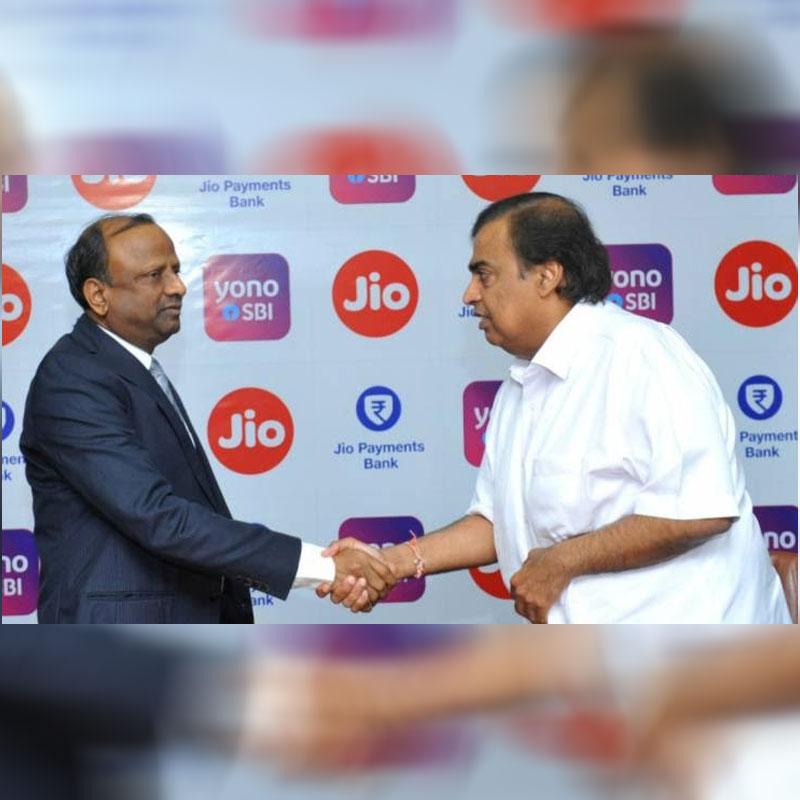
    MUMBAI: SBI and Reliance Jio have entered into a collaboration to increase SBI’s digital customer base multi-fold. SBI’s Yono app will integrate with MyJio platform. Yono’s digital banking features and solutions will be enabled through the MyJio platform.

    Jio Prime will offer exclusive deals from Reliance retail, Jio, partner brands and merchants. SBI customers will be offered additional loyalty reward earning opportunities as well as broader redemption within Reliance, Jio and other online and physical partner ecosystems.

    “As India’s largest Bank with leadership in digital banking, we are delighted to partner with Jio the world’s largest network. All the areas of co-operation are mutually beneficial enhancing the digital foot-print for SBI customers with superior and rewarding customer experiences,” SBI chairman Rajnish Kumar commented on the partnership.

    SBI will engage Jio as one of its preferred partners for designing and providing network and connectivity solutions. Moreover, the public sector bank will launch customer-centric services such as video banking and other on-demand services.

    “The scale of the SBI customer base is unmatched globally. Jio is committed to using its superior network and platforms combined with the retail ecosystem to accelerate digital adoption serving all the needs for SBI’s and Jio’s customers,” RIL chairman Mukesh Ambani said.

  • Jio numbers up on larger subscriber base and higher usage of services

    Jio numbers up on larger subscriber base and higher usage of services

    BENGALURU: When Mukesh Dhirubhai Ambani’s biggest startup in the world Reliance Jio Infocomm Ltd (Jio) started operations it had startled the Indian telecom industry ecosystem in the country. Jio had reported a net profit of Rs 723 crore against operating revenue of Rs 20,154 crore and value of services of Rs 23,714 crore for fiscal 2018 (year ended 31 March 2018, FY 2018).

    For the first quarter ended 30 June 2018 (Q1 2018, quarter or period under review), the company’s operating revenue increased 14.6 per cent quarter-on-quarter (q-o-q) to Rs 9,653 crore from Rs 8,421 crore in the immediate trailing quarter Q4 2018. Net standalone profit for the quarter under review was Rs 612 crore.

    Jio’s EBIT increased 14.7 per cent q-o-q n Q1 2019 to Rs 1,715 crore as compared to Rs 1,495 crore in Q4 2018. EBITDA increased 16.8 per cent q-o-q during the period under review to Rs 3,147 crore.

    Jio says in its earnings media release that customer activity grew substantially in the quarter under review with average data consumption per user per month of 10.6 GB and average voice consumption of 744 minutes per user per month.  Also, video consumption drove most of the usage, increasing to 340 crore hours per month on the network; average video consumption of 15.4 hours per subscriber per month. For Q4 2018, the company had reported average data consumption per user per month of 9.7 GB and average voice consumption of 716 minutes per user per month. Also video consumption was at over 240 crore hours per month in the immediate trailing quarter.

    Jio added 28.7 subscribers Q1 2019 and hence its subscriber base increased to 215.3 million in Q1 2019 from 186.6 million in Q4 2018. Average revenue per user (ARPU) declined slightly q-o-q to Rs 135.50 per month in Q1 2019 from Rs 137.1 per month in Q4 2018. The company reported subscriber churn of 0.3 per cent per month in Q1 2019 as compared to a slightly lower 0.25 per cent per month in Q4 2018.

    Reliance Industries numbers for Q1 2019

    Reliance Industries Ltd (RIL) is the parent company of Jio. RIL consolidated revenue increased by 56.5 per cent to Rs 141,699 crore ($ 20.7 billion) in Q1 2019. Consolidated PBDIT increased by 52.8 per cent to Rs 22,449 crore ($ 3.3 billion). Consolidated Profit Before Tax increased by 30.3 per cent to Rs 13,726 crore ($ 2.0 billion).Consolidated Cash Profit increased by 41.2 per cent to Rs 15,892 crore ($ 2.3 billion). Consolidated Net Profit increased by 17.9 per cent to Rs 9,459 crore ($ 1.4 billion).

    Company speak

    Commenting on the results, Reliance Industries Ltd, the parent company of Jio, chairman and managing director Mukesh Ambani said: “We continue to focus on strong delivery through operational excellence in our portfolio of businesses. Financial results of Q1 2019 underscore the strength of the petrochemicals we have reinforced over the last investment cycle. Our petrochemicals business generated record EBITDA with strong volumes and an upswing in polyester chain margins. Refining business performance remained steady despite the seasonal weakness in cracks. Continuing strength in global demand for oil products and implementation of more stringent environmental norms for marine fuels augurs well for our refining business. Our consumer businesses continue to scale new highs and now account for nearly 21 per cent of consolidated segment EBITDA. Retail business revenues have more than doubled and EBITDA has trebled on a y-o-y basis. Jio added a record number of subscribers, highlighting the compelling technology and value proposition that Jio offers vis-à-vis other networks. The scalability of our consumer business platforms is driving unprecedented value generation for our customers, our country and our shareholders.”