Tag: Riddhi Sen

  • hoichoi unveils trailer for ‘Sundarbaner Vidyasagar’

    hoichoi unveils trailer for ‘Sundarbaner Vidyasagar’

    Mumbai: Bengali OTT entertainment platform hoichoi has released the trailer of its upcoming original “Sundarbaner Vidyasagar.” The series is slated for release on 11 March.

    The social drama brings national award-winning actor Riddhi Sen and Tollywood starlet Ushasi Ray together for the first time to narrate the tale of the land of Kumirkhali – an eccentric village of widows. It is set in the mangrove islands of Bengal is wrapped with the tinge of humour that comes across with the fateful entry of a boy thought to be Vidyasagar.

    The trailer of the show prominently displays the diverse moods and cast of the show including Sankar Debnath, Rupanjana Mitra, Pratik Dutta, Doyel Nandy, Kaushik Kar, Sajal Mondal, and Sudeep Dhara.

    “Sundarbaner Vidyasagar” is directed by Korok Murmu and written by Arkadeep Nath.  

  • Parched…Dry run at box office

    Parched…Dry run at box office

    MUMBAI: Leena Yadav’s Parched debuted at the Toronto International Film Festival in 2015. Ever since, it has been on the festival circuit extensively till its theatrical release this week.

    Parched is about the state of women in the hinterland. The injustice meted out to women is a part of all societies; while the urban tales do not usually come out, rural stories abound but taken as a way of life till, a film or a story is made on it.

    Parched is about three women in arid Rajasthan, each having her own woes, mainly men-inflicted.These women find solace on the shoulders of each other. The women eventually gather courage to chart their own lives instead of submission.

    Tannishtha Chatterjee is playing a widow with a son of marriageable age. However, the lad is unwilling. Radhika Apte, Tannishtha’s confidante, is not better off either as she is labelled a ‘baanjh’ by her alcoholic husband and subjected to a regular dose of beating. Sharing her pain with Tannishtha is the only solace in her life.

    Surveen Chawla is playing a prostitute. Seemingly liberated, she too has her own problems as she is losing out on business to her younger rivals while also bearing the brunt of the anger of her pimp and others. Surveen has this idea that why all the foul words in Hindi are addressed to women and why can’t they be reversed and used for men?

    Nobody is aware of the desires of women; they seek care, love and, also, sex. Tannishtha has but some solace in a secret admirer who keeps calling her on phone. And, there is this sage like figure, Adil Hussain, who helps Radhika experience a fulfilling life while also assisting her get rid of the social stigma of ‘baanjh’.

    Parched has worthy contribution from all actors. Leena Yadav has rightly chosen a subject that needs a bold approach and executed it well. Her handling of the subject is deft. The cinematography by the American, Russel Carpenter, captures the surroundings well while also justifying the essence of the film. Editing, also entrusted to a foreign technician, Kevin Tent, keeps the process taut.

    This women-centric film is for performers. Tannishtha, Radhika and Surveen do full justice to their roles, while Surveen excels.

    Parched, having already made it to about a dozen film festivals, is one for the laurels while commercially it would appeal to a few at the high-end multiplexes.

    Producers: Ajay Devgn, AssemBajaaj.

    Director: LeenaYadav.

    Cast: RadhikaApte, Tannishtha Chatterjee, Surveen Chawla, Laher Khan, Adil Hussain, Riddhi Sen.

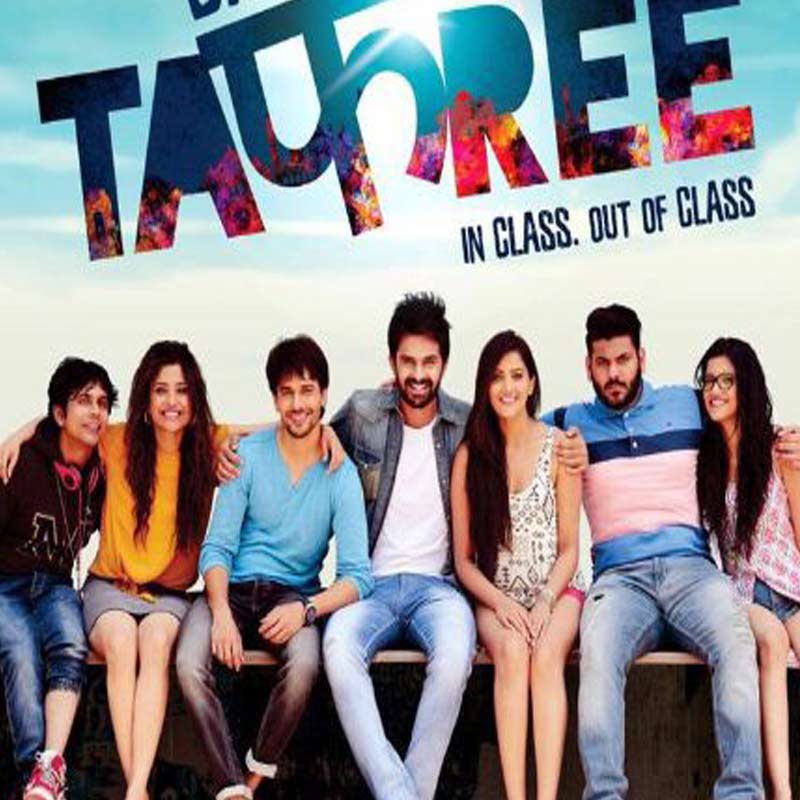
    Days Of Tafree: In Class; Out Of Class….Lacks class!

    Days Of Tafree: In Class-Out Of Class is a youth oriented film with a college background. It is a remake of the Gujarati film, Chhello Divas: A New Beginning (2015).

    Though many Hindi films have been adapted from Gujarati stage plays, the recent ones being OMG: Oh! My God (2012: Kanji Virudh Kanji), Waqt: Race Against Time (2005: Aavjo Vahla Fari Malishu), Super Nani  (2014: Baa ae Mari Boundary) and Aankhen (2002: Andhalo Pato), instances of Gujarati film remake in Hindi are rare if not non-existent.

    The film is about a group of college friends whose behavior in class and on the campus is unlike that of other college boys you would see in real life or in films. They hoot behind the teacher’s back, they talk filthy language as if it was the new in-thing. They are loud and always chasing girls and lady instructors. And, the bunch also has one Big Moose kind of brainless hulk which also makes the boys feel invincible.

    The pranks of these boys are supposed to arouse laughter. What really happens through the film is that only those on screen keep laughing failing to take the audience along. The film also makes jokes on physical deformities which is rather rude.

    The film is a flashback into the college life of one of the boys. There is no drama or conclusion as there is no story in the film. The music is loud in keeping with the tone of the film but non-appealing. Direction is amateurish and the editing is poor. The performances are over the top.

    Days OfTafree: In Class Out Of Class is poor in all respects.

    Producers: Anand Pandit and Rashmi Sharma

    Director: Krishnadev Yagnik

    Cast: Nimisha MehtaAnsh BagriSanchay GoswamiSarabjeet Bindra, Anuradha Mukharjee

  • Parched…Dry run at box office

    Parched…Dry run at box office

    MUMBAI: Leena Yadav’s Parched debuted at the Toronto International Film Festival in 2015. Ever since, it has been on the festival circuit extensively till its theatrical release this week.

    Parched is about the state of women in the hinterland. The injustice meted out to women is a part of all societies; while the urban tales do not usually come out, rural stories abound but taken as a way of life till, a film or a story is made on it.

    Parched is about three women in arid Rajasthan, each having her own woes, mainly men-inflicted.These women find solace on the shoulders of each other. The women eventually gather courage to chart their own lives instead of submission.

    Tannishtha Chatterjee is playing a widow with a son of marriageable age. However, the lad is unwilling. Radhika Apte, Tannishtha’s confidante, is not better off either as she is labelled a ‘baanjh’ by her alcoholic husband and subjected to a regular dose of beating. Sharing her pain with Tannishtha is the only solace in her life.

    Surveen Chawla is playing a prostitute. Seemingly liberated, she too has her own problems as she is losing out on business to her younger rivals while also bearing the brunt of the anger of her pimp and others. Surveen has this idea that why all the foul words in Hindi are addressed to women and why can’t they be reversed and used for men?

    Nobody is aware of the desires of women; they seek care, love and, also, sex. Tannishtha has but some solace in a secret admirer who keeps calling her on phone. And, there is this sage like figure, Adil Hussain, who helps Radhika experience a fulfilling life while also assisting her get rid of the social stigma of ‘baanjh’.

    Parched has worthy contribution from all actors. Leena Yadav has rightly chosen a subject that needs a bold approach and executed it well. Her handling of the subject is deft. The cinematography by the American, Russel Carpenter, captures the surroundings well while also justifying the essence of the film. Editing, also entrusted to a foreign technician, Kevin Tent, keeps the process taut.

    This women-centric film is for performers. Tannishtha, Radhika and Surveen do full justice to their roles, while Surveen excels.

    Parched, having already made it to about a dozen film festivals, is one for the laurels while commercially it would appeal to a few at the high-end multiplexes.

    Producers: Ajay Devgn, AssemBajaaj.

    Director: LeenaYadav.

    Cast: RadhikaApte, Tannishtha Chatterjee, Surveen Chawla, Laher Khan, Adil Hussain, Riddhi Sen.

    Days Of Tafree: In Class; Out Of Class….Lacks class!

    Days Of Tafree: In Class-Out Of Class is a youth oriented film with a college background. It is a remake of the Gujarati film, Chhello Divas: A New Beginning (2015).

    Though many Hindi films have been adapted from Gujarati stage plays, the recent ones being OMG: Oh! My God (2012: Kanji Virudh Kanji), Waqt: Race Against Time (2005: Aavjo Vahla Fari Malishu), Super Nani  (2014: Baa ae Mari Boundary) and Aankhen (2002: Andhalo Pato), instances of Gujarati film remake in Hindi are rare if not non-existent.

    The film is about a group of college friends whose behavior in class and on the campus is unlike that of other college boys you would see in real life or in films. They hoot behind the teacher’s back, they talk filthy language as if it was the new in-thing. They are loud and always chasing girls and lady instructors. And, the bunch also has one Big Moose kind of brainless hulk which also makes the boys feel invincible.

    The pranks of these boys are supposed to arouse laughter. What really happens through the film is that only those on screen keep laughing failing to take the audience along. The film also makes jokes on physical deformities which is rather rude.

    The film is a flashback into the college life of one of the boys. There is no drama or conclusion as there is no story in the film. The music is loud in keeping with the tone of the film but non-appealing. Direction is amateurish and the editing is poor. The performances are over the top.

    Days OfTafree: In Class Out Of Class is poor in all respects.

    Producers: Anand Pandit and Rashmi Sharma

    Director: Krishnadev Yagnik

    Cast: Nimisha MehtaAnsh BagriSanchay GoswamiSarabjeet Bindra, Anuradha Mukharjee

  • ‘Wazir:’ Give me Ludo any day!

    ‘Wazir:’ Give me Ludo any day!

    Vidhu Vinod Chopra’s company has some very successful entertainers and they have been huge money-spinners for the banner. To this end, his tie-up with director Rajkumar Hirani has proved to be fruitful. But, left to his own, Chopra likes to indulge in stories of intrigue, the earlier one being Eklavya. This time Chopra is credited with the original story ofWazir. Simply put, it is a story about two persons, Amitabh Bachchan and Farhan Akhtar, affected by the same villain and the way they join forces to avenge the wrong done to them.

    But Chopra does not like to make it so simple. He weaves a web of complications around the script and the characters like the game of chess, which is at the centre of this film. What backfires on the script is that the audience knows who the culprit is while Bachchan and Farhan try to expose him.

    Farhan is out with his wife, Aditi Rao Hydari, and daughter. While Aditi goes to a shop to get some work done; Farhan, waiting for her, spots a dreaded terrorist who, the authorities think, is in Karachi. A dutiful ATS officer that he is, he starts to chase the terrorist’s car. The chase ends abruptly when, after he turns a corner, the terrorists are waiting for him and start shooting at him. Farhan takes a bullet but survives while his daughter falls to a bullet. 

    The happy family of Farhan is shattered. Aditi holds him responsible and wants nothing to do with him anymore. Soon, Farhan learns where the killer of his daughter is. He defies the ATS cadre, which is out to get the convict with instructions to take him alive since he is linked to an influential minister. Farhan’s rage is uncontrollable and he kills the terrorist. 

    As is the norm in Hindi films of suspending honest and brave officers, Farhan too is suspended from the force. Farhan is forlorn and also decides to commit suicide at his daughter’s grave when Bachchan steps in. He gives Farhan time to have a second thought and, purposefully, drops his wallet at the gate of the cemetery. Luring Farhan to come visit his home to return the wallet. 

    Bachchan runs a Bal Bhavan at his home. He is some sort of an expert on chess and teaches small children to play the game. There is another woman around who teaches them the skills of drama. Bachchan has lost his wife and both his legs for being flamboyant. Out on a ride with his wife, he exceeds the speed limit of his car and tragedy ensues. 

    As it turns out, Bachchan’s daughter has been murdered by the same villain, Manav Kaul, who is also responsible for Farhan’s tragedy. Being handicapped, Bachchan needs a brave man with the same determination to finish the wrongdoer. Bachchan starts working on Farhan and while teaching him to play chess, fills his mind with a purpose, which is to kill Kaul. 

    By now, Farhan has grown very fond of Bachchan, who creates a fictitious character called Wazir. Wazir torments Bachchan and hurts him and also promises to kill him. Why Bachchan and why not Farhan himself as the handicapped Bachchan is no threat to anyone while Farhan is the one capable of taking revenge. But, that is Bachchan’s way of emotionally blackmailing Farhan to go out and get the man who killed his daughter.

    Kaul for his part lives a dual life. He is a terrorist who has killed the entire population of his village in Kashmir but using dramatics has emerged as the victim and as a patriot. He has even won elections and is now in a position to call the shots with police. Bachchan adopts all the tricks in the trade to convince Farhan to go after Kaul. Farhan does so. Kaul is at a public rally, surrounded by an army of guards but Farhan makes it look so easy that the audience satisfaction of justice to the villain is lost. 

    The script of the film is like a game of chess for one who is not familiar with the game. The revenge angle is stretched and even it just a little over 100 minutes, the narrative sags. And the director’s fancy for creating rain and shooting in low light most of the time makes the viewing drab. It is the same complaint with cinematography: too much of low light. The film has little scope for songs but is loaded with seven numbers. Editing has no place here for that would have rendered the film to the length of a TV episode. 

    Bachchan makes his presence felt by being loud. His get-up makes him look like a caricature and is quite a put off. Farhan justifies his character to the best of his abilities. Aditi has little to do. Cameos by John Abraham and Neil Nitin Mukesh are okay. Kaul does a fair job despite his stereotypical character. 

    Wazir has nothing for the single screens, and its time at the multiplexes won’t be exciting either. 

    Producer: Vidhu Vinod Chopra

    Director: Bejoy Nambiar

    Cast: Amitabh Bachchan, Farhan Akhtar, Aditi Rao Hydari, Manav Kaul and cameos by John Abraham and Neil Nitin Mukesh

    ‘Chauranga:’ This is not cinema

    Chauranga is one more offering from the National Film Lab organised by NFDC and others, which means it is meant to exploit poverty, class differences and such problems in India and earn glory at various film festivals. This film has been doing the festival circuit since 2014 and has finally come to try to reach the Indian audience.

    Two brothers coming from a backward class family are thick in their brotherhood. While the elder, Riddhi Sen, studies in a school away from his village, the younger, Soham Moitra, whiles away his time hanging around a jamun tree, watching the village strongman’s (Sanjay Suri) daughter passing on her two-wheeler. He has fallen in love with her and is convinced she too loves him because she always spares a smile for him.

    Suri is the village headman by proxy as he takes all the decisions for a voicelessgram panchayat. While the population of the village is purely segregated between upper and lower castes, it does not come in the way of Suri from having a liaison with the mother of these two boys, Tannishtha Chatterjee. Her job is to look after the cowsheds of Suri and that is where their rendezvous takes place. In return, Suri looks after the education of her son. 

    Suri has built a hand pump to solve the village’s water problem. He decides to invite a politician to inaugurate the pump followed by a film show for the entire village. This way, while the whole village is glued to the cinema, he can have his time with Tannishtha in the cowshed.

    From the beginning of the film, there is a naagin slithering around on the screen, protecting her eggs. And during the duo’s rendezvous, she decides to leave her eggs, slithers into the cowshed and bites Tannishtha.

    Earlier, besotted Soham has convinced his educated elder brother to pen a love letter to Suri’s daughter. Doting on his brother, the elder one obliges. It is some lines from a film song, which Suri had heard from the boy on an earlier occasion. That sounds the death knell for the boy. The younger one manages to board a goods train to escape to safety. 

    Having sat through it, it is tough to understand the purpose of such a film. Its theatrical release spells disaster. 

    Producers: Onir, Sanjay Suri

    Director: Bikas Ranjan Mishra

    Cast: Sanjay Suri, Tannishtha Chatterjee, Riddhi Sen, Soham Maitra, Ena Saha

  • ‘Children of War’ releases in India and Bangladesh

    ‘Children of War’ releases in India and Bangladesh

    NEW DELHI: ‘Children of War’, a chilling tale of the freedom movement in (then) east Pakistan for creation of a free Bangladesh and its effect on the common people, will be released simultaneously in India and Bangladesh.


    However, the version released in Bangladesh is dubbed in Bengali, according to producer Soumya Joshi Devvrat.


    The only other time an Indian film had simultaneous release in these two countries was that of Goutam Ghose’ Bengali film ‘Moner Manush’ which was based on the life of Lalan Fakir and had a Bangladeshi co-producer.


    Asked why the film has one song in Bengali while the others are in Hindi, she said it was because the song tells a story of emotions of the people at the time.


    Loosely-inspired by the unfinished biography of Banga Bandhu Sheikh Mujibur Rahman who led the Mukti Bahini, the film was released in India and Bangladesh in 450 screens.


    Inspired by the biography, Devrat and her husband Mrityunjay who has directed the film researched several documents and also met some Indian Army veterans. She says that as several documents on Bangladesh were not available in India, they had to be procured from the United Kingdom.


    The movie begins in March 1971 and covers a period of nine months showcasing the atrocities and the crude inhumane methods adopted by the military of West Pakistan. With the support of the Americans and the Chinese, the Pakistani soldiers go on a rampage killing and raping hundreds of thousands of people across the region.


    She reveals that the choice to follow three separate stories during the Bangladesh War was a deliberate decision to give a wider picture of what happened before the Indian Army stepped in, as taking a linear story would not have done justice to the story about the birth of a new country.


    Thus, the narrative follows the story of a boy, his sister and his father’s word, a liberal patriotic journalist who is forced to take to arms, a war child’s search for acceptance, and the atrocity of the Pakistani army which raped over 400,000 women and killed millions of people. As the film progresses towards its climax, the three stories begin to intertwine with one another.


    The film stars Riddhi Sen, Rucha Inamdar, Victor Banerjee, Farooque Shaikh, Indraneil Sengupta, Raima Sen, Tilotama Shome, Rupa Ganguly, and Pavan Malhotra in a powerful negative role.


    The film has music by Ishaan Chhabra with songs by Sidhant Mathur. Cinematography is by Fasahat Khan with editing by Apurva Asrani.