Tag: review

  • ‘Hamari Adhuri Kahani’: What kahani?

    ‘Hamari Adhuri Kahani’: What kahani?

    MUMBAI: At times, Vishesh Films, the banner run by Bhatt Brothers, Mahesh and Mukesh, grab some media by tagging a film as based on Mahesh’s personal life. This time, they present Hamari Adhuri Kahani, reportedly based on the life of their father. The film, to avoid the travails of a period movie, is told in contemporary times. But, as a biography or inspired from someone’s personal life, it is a bizarre tale to tell!


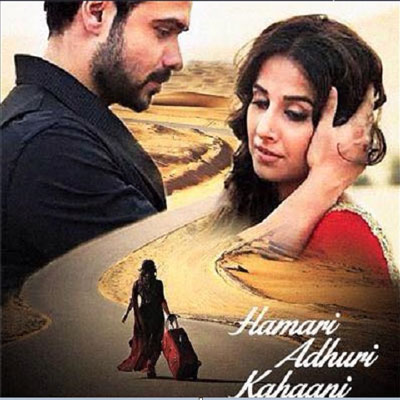
    Vidya Balan specialises in arranging flowers. It is not clear if she is a florist or works for a hotel, which Emraan Hashmi plans to buy out. He is impressed by the way she does her flower arrangements and  sees her humane side. He is not familiar with such behaviour as he is a selfish go-getter. Emraan is a hospitality business tycoon already owning 108 hotels worldwide. Before adding any new property to his repertoire, Emraan conducts a test as to how the hotel is managed and how good the staff is.


    Having checked into the presidential suite of his target hotel, he instructs Vidya to put a ‘Do Not Disturb’ sign on his door since he hadn’t slept for 18 hours, he needed rest. Don’t the guests do such chores on their own instead of treating a florist like housekeeping help? Soon there is a fire on the top floor of the hotel close to the presidential suite occupied by Emraan. The staff, all of six or seven people (for such a huge hotel) run out of the hotel including the security personnel whose priority should have been to vacate the guest rooms first.


    Vidya has followed the herd of deserters but soon realizes Mr Hotel Tycoon is still in his room catching up on his 18 hour sleep. Vidya runs back in the hotel to alert Emraan and save his life. He seems to be the only guest in the hotel. Impressed by her flowers and her demeanour already, Emraan is overwhelmed by her loyalty and sincerity to her job and responsibilities. He has already fallen in love with her and wants her to join his Dubai hotel property and later wants her for himself.


    Vidya is a traditional Indian woman, married to Rajkumar Rao, whose name is tattooed on her forearm. She may say that she would never remove her mangalsutra and it will burn with her on the pyre when she is dead. But, for convenience, she never wears her mangalsutra when on the job. So much for mangalsutra and pyres!


    Though Vidya finds Emraan to be a nice man and never rejects his romantic advances, the Indian nari gets the better of her when Emraan proposes. She reveals that she is married, has a husband who is untraceable for the last five years; and she also has a child. She thinks he has deserted her, tells her child he is abroad while the police tell her he is somewhere in Bastar and has become a terrorist. Things get more puzzling as Rajkumar had left from Kolkata for Jharkhand but was traced in Bastar in Central India pointing a gun at some foreign tourist. The police has his picture aiming a pistol at the foreigners.


    Finally, convinced that her husband has strayed, Vidya agrees to Emraan’s advances. She falls in love with him. That’s the cue: it is time for Rajkumar to stage a comeback. It does not matter that he is a terrorist and there is a police posse posted right outside his house! His house has been empty for years but he is hiding under a bed, only God and the makers know why! The timing is perfect. Vidya has decided to return to becoming Indian nari again, tells off Emraan and returns home to find Rajkumar under the bed.


    Rajkumar, after all, was not a terrorist, but was forced into it, he explains. But, it is too late for him. Vidya has found love for the first time in her life in Emraan. While Rajkumar wants his legally wedded wife back, Emraan loves her so much that he is willing to stake his 108 hotels for her sake (there is a folklore about a shipping tycoon eons back in Western India who owned 99 ships, fell in love and staked his fleet for her sake. Even today, a lot of prime Mumbai property stands in the name of his trust.)


    It is unbelievable that the story of Hamari Adhuri Kahani is written by Mahesh Bhatt. It is banal. The proceedings are directionless. Music lacks appeal. Dialogue is pedestrian. Photography is uninspired. Editing this film would be a challenge. Most of the 131 minute run time of the film is between Emraan and Vidya and their romance, which is grossly unconvincing and lacks any sort of chemistry. Rajkumar starts the proceedings but vanishes till after interval (the fact that Vidya is married should have been kept till later when Emraan proposes to her). The fact that two men, a tycoon and a driver, are pining for her love is a bit farfetched. Since there is no scope for showing talent, none of the three oblige. Amala is the only pleasant presence on screen though only for a few minutes. Then there is a Dilton Doily (Archie comics) who plays Emraan’s sidekick whose very presence makes the audience laugh.


    Hamari Adhuri Kahani is a major let down coming as it does from Mahesh Bhatt’s penmanship and the rest joining to realise his vision or total lack of it. The box office prospects are very poor.


    Producer: Mukesh Bhatt

    Director: Mohir Suri

    Cast: Emraan Hashmi, Vidya Balan, Rajkumar Rao, Amala

  • Tamil Nadu calls for review of Supreme Court judgment on government ads

    Tamil Nadu calls for review of Supreme Court judgment on government ads

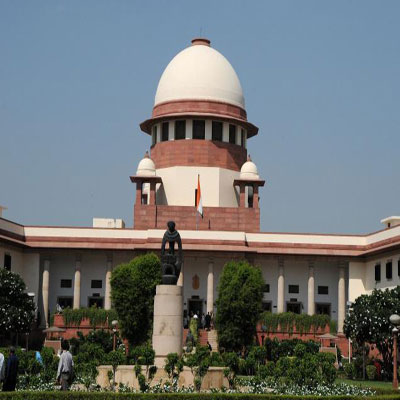
    NEW DELHI: The Tamil Nadu government has sought a review of the Supreme Court judgment restraining both Central and State government from publishing photographs of political leaders and ministers, except the President, Prime Minister and the Chief Justice of India.


    The apex Court had pronounced the judgment on 13 May on the basis of the recommendations of an expert panel set up by it last year following public interest litigations by two NGOs.


    As was reported earlier by Indiantelevision.com, DMK chief and former Tamil Nadu chief minister M Karunanidhi had lashed out at the Supreme Court’s ban on the photos of politicians in government ads.


    In its review petition, the State government said the judgment contradicts the federal structure based on grounds of “parity” between the Centre and States.


    It contends that Chief Ministers and State Governors are also constitutional authorities and by allowing publication of photographs of only the President, Prime Minister and Chief Justice of India, the apex Court has disregarded the equal share of powers enjoyed between the Centre and the States.


    The petition requests the apex court to set aside the judgment on the ground that it gives an impression that the judiciary is intruding into policy decisions of the executive.


    It said the party in power has the right to publish the Chief Minister’s photograph in a government advertisement regarding the achievements of the State government.


    The petition, filed by advocate Yogesh Kanna for the State, further contends that the Supreme Court overlooks the recommendations made by its own committee, which said that the photos of Chief Ministers and State Governors should be allowed along with the other constitutional authorities.


    The judgment had said that such photos tend to portray a government project as the achievement of a particular individual and thus pave the way for making of a “personality cult.” Such personal glorification and image-making on public expenses is a “direct antithesis of democratic functioning,” it held.


    However the court had said that the Prime Minister, the President and the Chief Justice of India have to decide themselves on whether their photographs should appear in a government advertisement or not. By this, the judgment, in a way, had made them personally accountable for the publication of their photographs.


    Drawing a distinction between “government messaging” and “politically motivated ads” in this context, the Supreme Court had said that such a curb is unnecessary on election eve provided the advertisement serves public interest and enables dissemination of information. 

  • ‘Piku’: Joyride

    ‘Piku’: Joyride

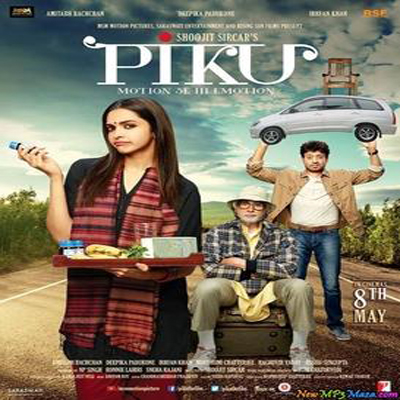
    MUMBAI: Juhi Chatruvedi came up with the idea of a sperm donor in Vicky Donor in 2012. One of the things never discussed on an open forum. The film hit the bull’s eye. This time again in Piku, she has come up with a theme, which deals with a problem millions of people suffer from but never discuss in the open: constipation.

    To Juhi’s credit, like she did in Vicky Donor, here too she makes the story an all-encompassing one. The kind of films, say, Hrishikesh Mukherjee would make. Weaving around the story of a hypochondriac, it adds the aspects of romance, family ties et al in a subtle manner while not making the film a one track toilet humour; she soon converts it into a road movie that leads to a traditional family and roots ending.

    Amitabh Bachchan, the 70 year old homebound widower, suffers from chronic constipation but, being a hypochondriac, he imagines all other illnesses possible. Albeit, his illnesses are all psychosomatic, like if his temperature moves from 98.4 to 98.8, he feigns illness. 

    Bachchan is the kind who is disappointed if his blood tests reports or BP are normal. Deepika is his only daughter too much in love with her father and tolerates all his idiocies. She complies with all his whims of being a hypochondriac though she knows there is nothing wrong with him. Taking his temperature, taking his blood pressure and preparing his medical doses from hundreds of pills he has gathered.

    Deepika hates Bachchan’s ways but also complies with them. Bachchan’s constipation updates are bizarre, and he even sends her updates about it through her office receptionist, which is read out in an important client meeting.

    Just when you think you have had enough of the toilet humour, thankfully, the film changes track and becomes a road movie.

    Irrfan, a qualified engineer, runs his dead father’s private cab service since he was sacked from his job in the Middle East. His company regularly caters to Deepika, dropping her to office every morning and getting her home again. She is as finicky as her father, Bachchan, and no driver from Irrfan’s company wants to ferry her. They do it reluctantly, though. 

    Bachchan has this lucrative offer to sell his huge house in Kolkata, which he is reluctant to sell while Deepika thinks it is time they got rid of it. Bachchan decides to travel to Kolkata to take a final call on the matter. The palatial villa is occupied by Bachchan’s brother and sister in law, who are insecure fearing the villa will be sold. Bachchan has his own peculiar reasons for not travelling by air or train.

    A vehicle is booked with Irrfan’s company but no driver is willing to drive Deepika for such a long journey. Eventually, Irrfan has to drive them and this drive is a fun ride for the audience. This is where the film takes a detour from toilet humour and road show and introduces a bit of family and traditions. 

    Bachchan was never in favour of selling his ancestral home while Deepika was. There a is a third influence as dumb sounding cab driver who, they learn is the owner of the fleet. It turns out he is not dumb but very clever and logical. His suggestions help Bachchan and Deepika change their way of thinking. Thanks to him, even Deepika is convinced that the ancestral property should not be sold. 

    Bachchan’s one ultimate aim in life is to get rid of his constipation before he dies. But, before that, he also wants to live a normal life. Towards this end, one fine day, he borrows the house help’s bicycle and goes on a 25 km ride through Kolkata and gorges on street food. With that, he also comes out of his psychosomatic cocoon and realises his wish of a clear stomach for once! 

    The side track is about Irrfan and Deepika’s chemistry. Hard as she tries not to get impressed with his native intelligence, eventually, she does develop a soft corner for him.

    This is a very clever and balanced script which is thoroughly enjoyable. Shoojit Sircar, who also directed Vicky Donor, from Juhi’s script, does a neat job once again with Piku. Dialogues are quirky at times to blend with Bachchan’s character and generally witty. Music is functional. Cinematography is pleasing. Editing is crisp. The film is all about performances and all three, Bachchan, Irrfan and Deepika excel. Maoushumi Chatterjee in a brief role is as lively as ever. Raguveer Yadav is good.

    Piku is an entertainer all the way and despite the tepid opening response, it should pick up over the weekend.

    Producers: N P Singh, Ronnie Lahiri, Sneha Rajani
    Director: Shoojit Sircar
    Cast:Amitabh Bachchan, Deepika Padukone, Irrfan Khan, Moushumi Chatterjee, Raghuveer Yadav, Jishu Sengupta

  • Seduce rather than sell, Bakshi at Ad Club’s 2002 review

    MUMBAI: The Ad Club Mumbai Ad Review is becoming one of these eagerly awaited opportunities for the advertising and marketing fraternity to get together and take stock of what’s going on in the business. And this was more than evident in the 2002 Ad Review which was presented by marketing maven Rajeev Bakshi, the chairman of Pepsico India at Mumbai’s Taj President Hotel on 17 February.
    Present in the audience were several top advertising head honchos, big wigs from the print media, advertisers, mid-level media, creative and client servicing professionals.

        “The year 2002 witnessed unmemorable creatives due to excessive emphasis on promotions and discounts. However, ad agencies captured some of the concepts well”
    Bakshi, a “believer in brands and one who supports advertising related risks”, gave the marketers viewpoint and refrained from talking about his own company’s advertising in 2002. But he immediately plunged into consumer ka Dil kya chahta hai while ably interspersing his presentation with humour (the way he pronounced “SEC C” and made it sound like “sexy”).

    Bakshi, who admitted that he had received different bits of advice from his peers on how to go about making the annual Ad Review presentation, primarily talked about three major concepts which were evident from the 2002 trends: Youth stretching, Savvy subsisters and excitement around consumerism.

    Bakshi mentioned that when one studies the strong undercurrents of “what lies beneath” these 2002 trends, one would get an idea of “what would fit in to the continuum” of ads in the near future.

    Speaking to indiantelevision.com, Bakshi said that 2002 witnessed unmemorable creatives due to excessive emphasis on promotions and discounts. However, he added that the above mentioned trends and concepts were captured well by the ad agencies in the year under review.

    Bakshi also mentioned that the challenges for the future include: shifting from “selling to seducing” as the excitement in the buying experience is critical; ensuring that “imagination leads to experimentation (on behalf of the consumer) and thereby risks” maintaining a sense of “lightheartedness.”

    To give you an idea of what he what trying to say, here are some excerpts from Bakshispeak …

    Concept one : Youth Stretching
    “Youth Stretching” is being pursued like never before and the anthem of this generation could be Aamir Khan singing Kohi Kahe… with gay abandon in the film Dil Chahta Hai.

    Some of the characteristics of the “youth stretching” phenomenon are:
    * More than 47 per cent of the total TVCs (TV commercials) in 2002 addressed the youth-oriented categories (denims, soft drinks). The year 2002 also witnessed a trend where advertisers projected youthful values even in categories that were traditionally targeted at the older age groups (durables, insurance, banking and finance).

    * Indian advertisers must look at maturing as well as younger consumers because the aggregate size of the population in the 25-44 years age group is almost as much as the 5-20 years age group. It is not necessary that Indian advertisers must blindly follow the greying marketing of the developed nations in the west.

    * India is still a young country with more than 58 per cent of the population below 20 years. The key is to determine whether the target audiences are young enough to enjoy or old enough to afford.

    * The mindset of the first children of liberalisation (who were exposed to a new phase of consumerism in the 1990s) is different. This generation doesn’t harbour any guilt in acquiring wealth, showing it off or spending. In fact, even the elder “young-at-hearts” are keen on enjoying youthfulness longer. The Mastercard TVC showing the older male willing to give his wife several joys in life demonstrates this.

    * There is a conscious casualness about this generation of people. This generation of “chilled out” adults takes life less seriously. The advertising fraternity reflected these trends by creating ads and TVCs aligned to this way of thinking.

    In fact the ICICI Prudential ad (Retirement sirf kaam se) talks about retirement but it isn’t about retirement as it shows a relatively younger person. Even Cadbury’s chocolate ads showed slightly older people (husband and wife cheating on each other for the sake of their Cadbury Temptations).

    * The people belonging to this generation are enthusiastically burying their socialist mentality. They are looking at more opportunities and resources to keep their age at bay.

    * There is sense of “youth feel” (entrepreneurial spirit), “youth think” (creativity and imagination) and “youth do” (trying out new things, experimentation and enjoyment) which permeates through all levels.

    * The current breed of “young-at-hearts” has a lot of ambition, aspiration and is opportunistic. Its members are not necessarily rebellious but will not cringe from using every trick in the trade to succeed. They relish the prospect of realizing their dreams and aspirations. This was aptly shown in the Standard Chartered Bank (Hoga Hoga) TVC.

    * The “young-at-hearts” are also restless despite being successful at a young age. Maruti Udyog’s Wagon R TVC showing an architect indulging in pleasures obtained by training his pet Doberman dogs.

    * A new phenomenon which was noticed was the death of aukaat(social status). The “young-at-hearts” don’t care whether they are living beyond their means; instead they indulge in savvy money management and deal making.

    * This generation also believes in networking in a system where the old networks have been pulled down or are no longer valid. This was effectively portrayed by the Bacardi Breezer TVC.

    * The current generation also accepts western experiences (cuisines, fashion, recreation) with a certain degree of rigidity – without compromising on traditional Indian norms.

    * It tries hard to avoid culture conflict. India’s level of absorption of global trends versus confidence of culture shows it being placed between the rigid countries (Vietnam, Malaysia) and the progressive countries (Singapore, Hong Kong in China and Taiwanese youth). This was amply demonstrated by the Pizza Hut’s masala pizza TVC. In fact, several western food joints in Delhi switched over to chicken tikka within a month and deviated away from their westernized offerings.

    * This generation is a complex blend of modernism and neo-traditionalism. A person wears a Versace designer outfit one day and then goes to Vaishno Devi the next day.

    * In fact, traditional values have been given a new meaning and are being interpreted differently. For instance, patriotism today is not about nationalism – it is something which instills a sense of pride in being an Indian (Sabeer Bhatia is a role model for this generation who believe that Indians can do anything).

    * There is an increased commitment towards nuclear families (although joint families are breaking down) with males and females taking equal responsibility in sharing all the household duties.

    * The current generation is also adapting itself to the e-communities syndrome with “cellular relationships” and “e-mail or chat relationships”. In fact, effective communication has ensured that the cellular phone has been transformed from a cold business tool to an agent of enjoyment. Consider the popularity of the Samsung N620 “Ring Sing” TVC. The Nokia 8910 Titanium TVC could be considered as a metaphor for virtual proximity.

    * There is more openness and fewer inhibitions. Take for instance, the success of a bold-themed film like Jism which hasn’t evoked any protests from the consumer activists.

    * The new breed of consumers believes that life is no longer about being a spectator. It seeks active enjoyment and bonding with brands.

    * Advertising also used the element of “flirtation” with Shahrukh Khan wooing Preity Zinta with the Hyundai Santro Zipplus TVC.

    * Clearly, advertising instilled a sense of “the way you look is what you are” – ably demonstrated by the Clinic All Clear TVC.

    * But advertising in 2002 also impressed the significance of “simple concerns being real concerns” as demonstrated by the Fair & Lovely TVC.

    Concept two: Savvy subsisters – emergence of SEC C
    The important phenomenon witnessed in 2002 was the emergence of SEC C (socio-economic class) and its ability to challenge the SEC AB groups. In fact, SEC C symbolizes “a dream world of possibility rather than the real world of probability”.

    Bakshi showed a clip from Mira Nair’s movie Monsoon Wedding and its memorable character PK Dubey (brilliantly portrayed by Vijay Raaz) to signal the emergence of SEC C. Dubey has an e-mail ID printed on his visiting card but doesn’t know how to pronounce the same; whereas the maid servant who he is trying to woo is familiar with the term!

    Bakshi argued that the SEC C consumer in India “mocks Maslow’s hierarchy”

    * In terms of media exposure, SEC C is catching up with SEC A and B. SEC C people are getting brand conscious and fussier about brands. They have started dressing well and eating out. They are acquiring white-collar paraphernalia.

    * The number of bike owners and car owners in SEC C has increased by over 500 per cent. Ditto for several other categories which were considered to be the fiefdom of SEC AB.

    * Images of the teasing fun-filled family need not be associated with the SECA people but appeal to SEC C as well. In fact, the Whirlpool (consumer durable major) family’s fast forward ice TVC has drawn a good response from SEC C.

    * Ads directed at SEC A obtained better recall amongst SEC C. Does this show that broadbasing of TVCs at multiple audiences has become a challenge which ad agencies must take up?

    * SEC C people seek more enjoyment and liberation from everyday grit. The LML Freedom TVC captures this trend well and also drew a good response.

    * Familiar faces and universal spaces bring aspirational brands closer to the SEC C target audience. For instance, Anupam Kher’s Close Up Lemon Gel toothpaste TVC could be a good example of this trend.

    * SEC C is also being seduced by charismatic reality as shown in the Sunsilk shampoo hair TVC.

    * SEC C also believes in the “buy now pay later” syndrome. They have moved away from the “fear to dream” complex.

    * SEC C has started looking for more ways to “power the engine of their aspiration”.

    Concept three: Excitement around consumerism

    In 2002, the main challenges for ad agencies was to create communication which appeals to different aspirations of a segmented consumers and powers their insatiable demands. At the same, the creatives had to stick to neo-conservatism. The key aspect was customer retention at any cost. In fact, the BJP government has coined a new phrase to the middle classes – namely the productive classes.

    The main characteristics of the advertising that should propel a new wave of excitement around consumerism include
    * From just ‘mmm’ to ‘wow’ – Center Shock chewing gum’s local TVC which cuts across all SECs.
    * Excitement around adventure – the new global Landrover MUV ad
    * Vicarious excitement – Monopoly’s global ad revolving around a sibling who doesn’t feel guilty of grabbing money from her own father.
    * Excitement of “out there attitude” – Levi Strauss flyweight jeans’ global TVC.
    * Excitement of obsession
    * Excitement beyond cricket – Nike’s new TAG TVC.

    There is a need to come up with new variants (Pepsi blue could be a striking example) and discover connotations of what constitutes typical Indian humour. There is also a need for advertising to create mega spectacles – something which hasn’t been noticed in India (on screen as well as off screen) recently.

    The writing is clearly on the wall for ad agency professionals