Tag: retail sector

  • DMart’s Q3 shows 17.7 per cent uptick in revenue growth; Profits struggle

    DMart’s Q3 shows 17.7 per cent uptick in revenue growth; Profits struggle

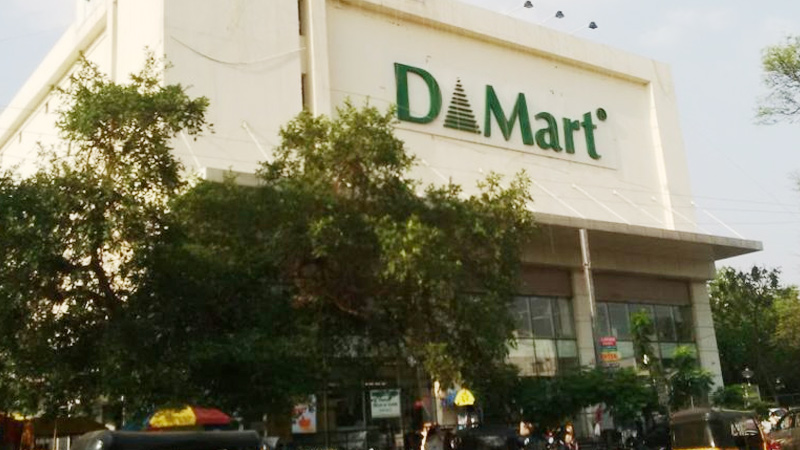
    MUMBAI: In a bustling FMCG retail landscape, where affordability meets aspiration, DMart emerges as the champion for value-conscious shoppers. Much like a modern-day Spiderman swinging through a web of rising costs and fierce competition, DMart’s Q3 FY25 results reveal its unwavering commitment to delivering affordability.

    The results, unveiled on 11 January 2025, showcase a robust revenue growth trajectory, driven by the brand’s steadfast focus on cost-effective retailing and operational efficiency.

    Yet, beneath the surface of this success lies a battle with tightening profit margins—a challenge that highlights the resilience and strategic adaptability of this retail giant in an increasingly competitive arena.

    As DMart continues to redefine FMCG retail with its unbeatable value-for-money offerings, the Q3 results provide a lens into how it balances growth aspirations with the pressures of a rapidly evolving market.

    This is the story of a retailer that, much like a superhero, delivers hope to neighbourhoods while navigating the complexities of its mission.

    DMart’s consolidated revenue from operations climbed to Rs 15,972.55 crore in Q3 FY25, marking a 17.7 per cent increase compared to Rs 13,572.47 crore in Q3 FY24. For the nine months ending 31 December 2024, revenue surged by 16.9 per cent, reaching Rs 44,486.19 crore compared to Rs 38,062.28 crore during the same period last year. This growth was driven by a combination of new store openings and robust demand in core categories.

    However, other income declined to Rs 24.14 crore in Q3 FY25 from Rs 32.92 crore in Q3 FY24, suggesting subdued performance in ancillary revenue streams.

    Despite the revenue upswing, DMart’s consolidated net profit for Q3 FY25 fell to Rs 723.54 crore, a 4.9 per cent decrease from Rs 759.44 crore in Q3 FY24.

    The nine-month net profit stood at Rs 2,156.66 crore, reflecting a marginal growth of 0.4 per cent from Rs 2,147.12 crore during the same period last year.

    Margins remained under strain, with the EBITDA margin compressing due to higher costs in employee benefits (up by 30.1 per cent YoY to Rs 304.83 crore) and depreciation (up 20.4 per cent YoY to Rs 228.12 crore).

    DMart’s purchase of stock-in-trade for Q3 FY25 escalated to Rs 13,376.72 crore, an 18 per cent rise from Rs 11,330.93 crore in Q3 FY24, aligning with its expansion strategy. However, changes in inventory of stock-in-trade presented a marginal increase, indicating effective inventory control amidst fluctuating demand.

    The company also reported a contingent liability of Rs 235.98 crore under the Goods and Service Tax Act, reflecting ongoing regulatory challenges.

    DMart’s robust revenue trajectory signals strength in its core retail operations. However, declining profit margins highlight the need for cost optimisation and operational efficiency. The company’s cautious approach to expansion and investment in digital initiatives will be crucial in navigating market challenges and enhancing shareholder value.

  • Lifestyle retailers ride on festive cheer, but will it last?

    Lifestyle retailers ride on festive cheer, but will it last?

    NEW DELHI: Businesses across varied sectors are trying their best to beat the lockdown blues altogether after months of economic slowdown. Apparel and lifestyle retailers have some cause for cheer as the sector is showing signs of revival. The players are banking on the festive season to revive their sales further.

    In August, lifestyle retailers reported almost 20 per cent growth, the best since outlets reopened in June after months of lockdown.

    Retailers say that the business has started picking up over the past few weeks, and now with Diwali and the wedding season around the corner, it will help brands to perform better as compared to the lockdown period. However, companies believe that it will take around six months at least for the business to be back on the actual sales and revenue figures.

    Consumer demand registered an uptick on the occasion of Navratri and Durga Puja but so far, the average ticket size is small.

    Cantabil Retail India Ltd director Deepak Bansal said the brand is expecting around 40 per cent growth compared to the previous months. “We anticipate achieving 75 per cent of what we achieved vis-à-vis last year. With the new merchandise and festive offers, we are hopeful it will act as a pull factor for the customers and the season will prove to be good for the whole industry.”

    He shared that to achieve the same growth figures as last year will take time, and not to expect the market to function at pre-pandemic levels before the next financial year.

    TCNS Clothing Co Ltd head – marketing Aarti Ahuja agreed that there has been a revival of demand for festive products such as ethnic dresses, accessories, and attires. Consumer trends may not match the demand created by festivals in normal times but the growing sale of festive products is reviving the sector and displaying high inclination of buying festive products, she added.

    Havas Media managing partner- North & West India Uday Mohan was of the view that the lockdown has resulted in pent-up demand. A lot of discretionary spends on travel/holidays/eating out have been cut down, so all these savings should be pumped towards retail spends especially with a plethora of deals available.

    By contrast, Spykar CEO Sanjay Vakharia doesn’t perceive the current situation to be sustainable. “Festive period would be comparatively good, and that will lead us into the end of season months. Post that will be the real test and what turns the business will depend on a lot of variables.”

    It was an unprecedented crisis for the retail sector when stores were shut for months during the lockdown, but the unlock phase has its share of challenges too. Now, customers are preferring to shop online instead of stepping out. The situation has driven companies to focus on the e-commerce model.

    Bansal explained while offline sales have bounced back in the second quarter and look stable for Tier 2 and 3 cities, the customer in Tier 1 cities are still more comfortable ordering online. “We have been working towards strengthening our digital channel. We have forayed into the online market space recently, so this would be the first festive season we would be available online and are expecting good traction in the number of sales".

    Ahuja also chimed that the brand is witnessing a rise in footfall as the year progresses, however, there is a growing trend of people leveraging both online and offline channels to purchase products.

    In order to boost sales, retailers have been offering heavy discounts of up to 60 per cent. Future Group, for example, is running discount offers of up to 60 per cent on apparels through third-party online sales, including Amazon India, and also offline via its own retail chains such as Big Bazaar and fbb.

    Considering most of the sales take place in this period, brands do extensive promotion and stress a lot on the marketing channels to leverage it. All the major brands have started launching campaigns, promoting products through the ATL and BTL modes.

    Ahuja shared that over the years, TCNS clothing has been exploring all mediums of advertising including print, outdoor, TV as well as OTT to reach the TG. However, the outbreak of the pandemic has disrupted the way media and content is being consumed. “We are evolving with the TG and focusing on changing trends in the ‘new normal’ by creating personalised communication for both online and offline consumers while bridging the gap. All costs are being challenged from a zero-based budgeting principle.”

    She further mentioned that various initiatives like hyper-local pop-up stores and virtual store visits are being experimented with. "The brand is exploring influencer marketing in a more structured and sustained manner. In terms of leveraging other media channels, it would depend largely on how the current situation evolves soon".

    Cantabil this year is focusing more on personalized communications for both offline and online consumers channels through SMS campaigns, influencer engagements, or strategic digital campaigns, in order to maintain connect with the target audience

    Biba MD Siddharth Bindra said that brands are planning innovative and creative ideas in terms of marketing to cope up with the current situation, with the maximum spend being on digital. “We, too, have changed our strategy and are adapting to the new. We are engaging with our existing consumers through our CRM tool and are very active online to keep our audiences abreast with what is new at Biba.”

    “From an overall perspective, TV and digital are the two lead mediums. For retail, specifically print (newspapers) continues to be the focus option. IPL and news are the key genres on TV where the bulk of advertising has been focused on,” Mohan concluded.

  • TRRAIN partners with JP Morgan to support 3000 women employees in retail sector

    TRRAIN partners with JP Morgan to support 3000 women employees in retail sector

    MUMBAI:  TRRAIN, a not for profit organisation, in partnership with JP Morgan has launched a rapid response program with the aim to assist 3000 women employees in the retail sector whose livelihoods have been impacted as a result of the Covid2019 crisis.

    The program will support women in Mumbai, Delhi, and Bangalore who have lost jobs or income and provide immediate relief in the form of an income bridge for three months until they can seek alternative employment.

    TRRAIN has also partnered with Haqdarshak, a technology platform that connects citizens with their eligible schemes, to link beneficiaries and their families to appropriate government schemes. It is also collaborating with industry leaders such as RAI, Images Safexpress, Marks & Spencer Reliance India, Siyarams, DLF-Mall, Inorbit, Levis and through Give India’s platform for donors, to expand its efforts to reach more individuals impacted in the retail sector.

    TRRAIN founder BS Nagesh said, “The Rs 1.2 crore program will support 3000 women and their families.  A huge number of women workforce in the retail sector have found it challenging to sustain their incomes due to country-wide lockdowns. Many of them are the sole breadwinners for their families and are most likely to have lost their employment or may not receive salaries in the coming months. This program will provide access to capital to help such individuals tide over their immediate financial needs.”

    All beneficiaries of the rapid response program will be on-boarded onto the TRRAIN Circle mobile app and will have access to counseling services over the phone, and e-learning skills training.

      JP Morgan head – CSR & philanthropic initiatives Maneesha Chadha said, “This philanthropic investment is part of our global commitment to address the immediate needs of hard-hit communities and help boost an inclusive economic recovery. The retail industry employs a number of women who have been disproportionately impacted in the current situation. This initiative will help such women get access to critical support through which they and their families can overcome immediate financial challenges as well as use the opportunity to ensure their long-term financial health. We are proud to partner with TRRAIN on this important initiative.”