Tag: Resul Pookutty

  • Paladin to theatrically release ‘India’s Daughter’ in US

    Paladin to theatrically release ‘India’s Daughter’ in US

    MUMBAI: Leslee Udwin’s documentary, India’s Daughter, will be released theatrically in the US by Paladin, with openings in New York and Los Angeles on 23 and 30 October respectively.


    India’s Daughter tells the story of the savage rape and eventual death of 23 year-old medical student, Jyoti Singh, in New Delhi in December of 2012, an event that shook the social fabric of the country — and the world — to the core. Udwin’s film was catapulted to global attention in March of this year when it was banned in India just two days before its scheduled broadcast. 


    Singh was a young physiotherapy student from a poor family in New Delhi, and a symbol of a 21 century India in which economic growth is expanding opportunity for women and men alike. With dreams of a career in medicine, she asked her parents to use her wedding dowry to pay for her education. Despite protest from the extended family, her parents willingly obliged and sold the family’s ancestral land to put her through school.


    On 26 December, 2012 she went to see Life of Pi with a male friend. When they boarded a private bus to return home, the young man was beaten senseless, and Singh was dragged to the rear of the bus and repeatedly gang raped. Her assailants brutalized her as they circled the city, injuring her internal organs, and ultimately eviscerating her with an iron rod. Miraculously, she survived for 13 days before her surgeons could do no more to save her. Her tragic death raised the fury of Indian women and men alike, and New Delhi saw an explosion of public outrage that resulted in a month of unprecedented mass street protests throughout the nation, and a government crackdown with water canons and tear-gas.


    In India’s Daughter, Udwin unspools the extraordinary story of Singh and her forward-thinking family, while also probing the culture of rape and the psyche of her attackers. One of the film’s most astonishing scenes is a confession by one of the perpetrators, filmed in prison, that provides crucial insight into the mindset of the men who committed the rape, and explores the wider dynamics of a patriarchal society and culture which seeds violence against women.


    Following its debut in Great Britain earlier this year, and presentations at festivals and conferences throughout the world,India’s Daughter has become a source of considerable controversy, with some advocates calling it essential viewing and a film that can spark change for women in India and worldwide, while others criticise it for giving a megaphone to the rapists’ point of view, for bringing shame upon India, ignoring the Indian women’s movement, and violating the rights of both the victim and the accused. For bearing witness to the truth about rape in global society Udwin was honored as a New York Times 2015 Woman of Impact, and won the prestigious Anna Lindh Human Rights Award for her groundbreaking work in advancing the rights of women.


    India’s Daughter is directed and produced by Udwin. Co-producer is Dibang and associate producers are Riddhi Jha and Frieda Pinto. Executive Producer is Nick Fraser. Editor is Anuradha Singh with original music by Krsna. Sound Designer is Resul Pookutty, CAS MPSE and story editor is Rob Ritchie. Shot on location in Delhi, India.

  • Indiantelevision.com introduces ‘Best Sound’ category in the 13th Indian Telly Awards

    Indiantelevision.com introduces ‘Best Sound’ category in the 13th Indian Telly Awards

    MUMBAI: Indian Television Dot Com and Dolby Laboratories have announced ‘Best Sound’ category in the upcoming 13th Indian Telly Awards. With the onset of digitisation of television services, high quality sound has increasingly become an important aspect of television content. Recognising this important industry change, Indiantelevision.com’s much acclaimed Indian Telly Awards has announced the inclusion of the ‘Show with the Best Sound’ category in its 13th edition. The sound category is being instituted in collaboration with Dolby Laboratories, a pioneer in audio technology.


    “Indian consumers have become more discerning today,” said Indian Telly Awards founder and creator Anil Wanvari, who is also the member of International Academy of Television Arts and Sciences (International Emmy Awards).


    “While watching a show at home, these consumers want a similar sound experience to what they get in a cinema hall. And this has become more important with over three million HD TV subscribers in India. With an aim to meet this need of discerning viewers, broadcasters have started investing to make shows sound much better. This trend is bound to increase with the spread and increase in the number of HD channels, digitisation, DTH and digital cable TV. We at the Indian Telly Awards are extremely delighted to introduce the sound category and are grateful to Dolby for collaborating with us on the initiative,” he added.


    A jury consisting of top names in the sound industry will take into consideration the entire gamut of the sound production process—location recording, sound design, mixing, rerecording, editing—to give the award to the one TV show with the best sound design and mixing. The jury will include Academy Award winning sound mixer Resul Pookutty; National Film Award winning sound designer Bishwadeep Chatterjee; Dolby Content Services Engineer Bhaskar Pal and Anil Wanvari.


    “It gives me immense pleasure to know that sound is being recognised as an award category in the Indian Telly Awards,” said Bishwadeep Chatterjee. “This would not only give a huge morale boost to the sound technicians but sensitise the producers, directors, actors and the public by and large to a relatively much lesser known yet very important aspect of television. Thanks to the initiative by Dolby, we can look forward to great sound quality, which will hopefully enable the producers to keep a substantial budget and time for the sound department.”


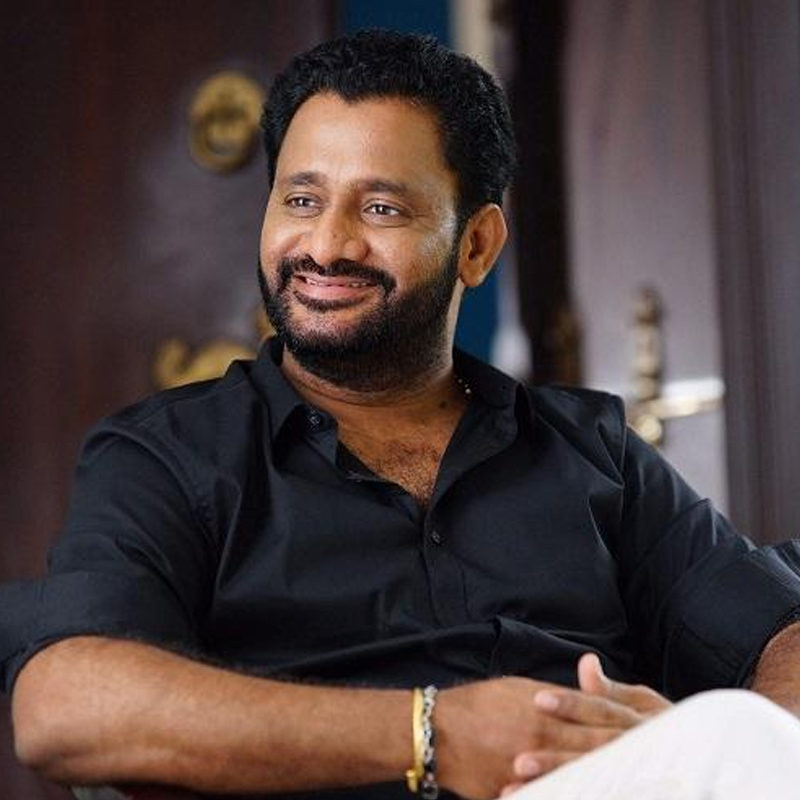
    Resul Pookutty commented, “Being a sound designer, I am very glad that the Indian Telly Awards and Dolby together are giving sound the due recognition which it very well deserves. I truly believe that this initiative will help raise awareness about the importance of good sound in television, which in turn will make audiences more interested in newer TV shows. I hope to see more such initiatives and importance being given to sound in Indian television shows going forward.”


    Dolby Laboratories India country manager Pankaj Kedia said, “We are very excited about this announcement, as this award will give the due recognition to sound in the broadcast industry. Dolby has participated and contributed in the transformation of sound in the Indian cinema and television industry. It gives us great pleasure that the role sound plays in storytelling and engaging the audiences is being given the due importance and recognition.”


    The Indian Telly award for the category of ‘Show with the Best Sound’ will be announced at the gala event on 9 September 2014, at Mumbai’s Film City.

  • Bollywood to get ‘Transformed’

    Bollywood to get ‘Transformed’

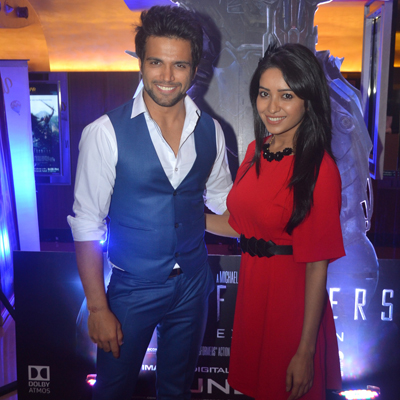
    MUMBAI: Touted to be the year’s most awaited, high octane action film, Transformers – Age of Extinction is the fourth edition of the epic Transformers franchise. With an ever growing fan base, this Hollywood flick seems to have transformed B–town celebs who attended the industry screening on Monday night at PVR Cinemas in Juhu.


    Celebrities that graced the occasion were Darsheel Safary, Resul Pookutty, Gaurav Chopra, Siddharth Shukla, Manish Paul, Salman, Lauren, Rithvik Dhanjani, Smita Bansal and Vishal Malhotra. MTV’s Ranvijay an ardent Transformers fan turned up in a super-cool Transformers belt and specially designed Transformers watch.


    The current movie will witness an all new star cast and a new twist. Directed by the maverick Michael Bay, the film includes a star studded cast with superstar Mark Wahlberg playing Cade Yeager, a single father who will go to any extremes for his daughter Tessa, played by Nicola Peltz and her handsome boyfriend Shane played by Jack Steynor.


    The film also introduces a series of new elements like the Dinobots, the dangerous intergalactic bounty hunter-Lockdown and the revival of the fire breathing T-Rex Grimlock.


    The returning Transformers include the courageous warrior and leader of the Autobots – Optimus Prime, the much loved Bumblebee who takes the most risks and will be seen in a new avatar and Drift, an Autobot tactician and a former Decepticon amongst others.


    Another first in the series, are human made transformers that join the evil forces of the Decepticons. Galvatron is a human-made Transformer who becomes the Decepticon overlord while Stinger becomes a Decepticon spy and sabotage specialist. The Army of the Dinobots is yet another challenge that Optimus Prime will have to overcome in this epic battle.


    Shot in 3D technology, Transformers – Age of Extinction is a spectacular cinematic experience in Dolby Atmos. Embellished with breathtaking VFX, it is also partly shot in IMAX.

  • Getting Dolby 5.1 audio into Anil Kapoor’s ’24’

    Getting Dolby 5.1 audio into Anil Kapoor’s ’24’

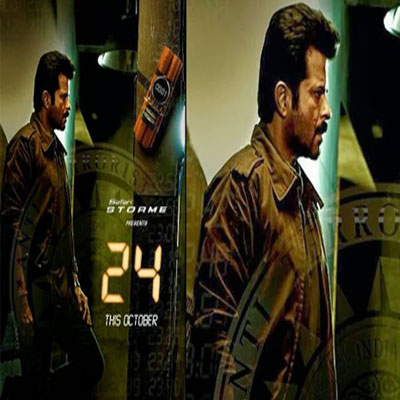
    While the Indian television industry is no stranger to 5.1 Dolby surround sound, the recently concluded season of Anil Kapoor’s 24 on Colors garnered much appreciation for skilful use of this technology, while setting a benchmark for television shows to follow. 

    As most readers would be aware, Dolby  5.1 (five point one) surround sound is the common name for six channel surround sound multichannel audio systems, using five full bandwidth channels and one low-frequency effects channel (point one). Dolby Digital, Dolby Pro Logic II and DTS  are all common 5.1 systems, and use the same speaker channels and configuration, having a front left and right, a centre channel, two surround channels and a subwoofer.

    I wanted the experience to be exactly the same as when viewers spend Rs 100-200 on a ticket to watch a film in a cinema hall, says Abhinay Deo

    So how was a technology commonly associated with commercial cinema incorporated to create a more immersive experience for viewers within the comfort of their homes?

    Says Dolby India country manager Pankaj Kedia: “We started the dialogue with 24 quite early when everything was in the pre-production stage. We supported and worked closely with them right through the entire production and post-production. I think 24 is unique because the promise that we have been talking about, the possibilities we have been talking about for 5.1 and HD, 24 has made it all possible. Because consumers watch the content; they are not watching a channel or a particular operator. I think 24 as content is a new genre from an Indian broadcast perspective, and it has taken this experience to an altogether different level, which has never been possible before.”

    For 24 director Abhinay Deo, sound was one of the stars of 24. “Sound for me is a very important aspect. A film or emotion cannot be complete without the right sound. We started with the show, and looked at it both as a television product and as a feature film. I wanted the experience to be exactly the same as when you spend Rs 100-200 on a ticket to watch a film in a cinema hall,” says Deo.

    “I didn’t care about what it is that television viewers are used to, and I was warned about it time and again… ‘This won’t work in television… we are not used to this… and so on…’ But we went out with what we believed in. Forget about who is used to it and who isn’t, who used it and who didn’t. We gave them the experience we feel they should have had,” he adds.

    With only LCDs, LEDs and Plasma TVs supporting HD, how did the team ensure that HD viewers with home theatre systems and those without and those with plain vanillas TVs with normal stereo sound have an equally enjoyable experience?

    Replies Deo: “That was the biggest challenge in sound for us. We did a lot of pre-production. We didn’t do anything majorly radical in either of these parts. We did a lot of R&D and made a standard so that people on both sides of the fence could enjoy that experience. We kept the volume at a level it should be at; not more, not less. And that is great because of the Dolby experience.”

    Coming to the technology itself, sound designer for 24 Nimish Chheda goes on to explain the nitty-gritty. “We gave it a cinematic approach, right from the start; our studio had speakers behind a perforated screen equipped with a digital projector, making you feel like you are sitting in a theatre,” he says. “We had layers of all the elements – dialogues, sound effects, and music. We mixed it, keeping in mind what was important for a particular shot. We highlighted what was important in every shot and moved onto the next shot and thus, ensuring a smooth flow.”

    To keep the sound as ‘real’ as possible, ambiences were used more than sound effects. For the purpose, the team scouted the city at particular times, recording four-channel or ‘quad’ sounds. Usually in 5.1 surround sound, dialogues are always in the centre speaker and sound effects are in the left and right speakers, while ambiences are in the front left and right and the rear left and right channels. Hence, a viewer seated in the centre gets a surround sound experience.

    To keep the sound as _real_ as possible, ambiences were used more than sound effects, says Nimish Chheda

    Recording location sound proved to be an uphill task throughout as each episode took at least seven to eight days to shoot. For example for episode No 3 which is supposed to happen between 2 am and 3 am. Since the filming of that specific episode was done over eight days, ambient sound kept changing every night. 

    Unlike the norm on TV wherein the camera audio with its two channels is used, for 24, the team opted for eight dedicated channels. Specific microphones were assigned to Kapoor as the main protagonist Jai Singh Rathod, and film sync sound set up was used for the rest of the cast.

    Approximately 60 per cent of the filming was outdoors as compared to a general TV series; and Deo was extremely rigid about filming locales with natural environments. “Hence, we had to be extremely particular about ambient sound interference like a lorry honking or a dog barking when sound was being recorded,” says Cheddha.

    Another requirement that they had to keep in mind was that of the title sponsor Tata Motors. There was a commitment from the team to ensure that each and every Tata car sounds as real and distinct as it does on the streets. Hence, all these sounds were recorded on location. 

    The five-member strong post-production team comprised a dubbing engineer, foley artist, foley recordist, sound editor, and the sound designer, who also served as the mixing engineer for the entire series. The background score was done by two music professionals – Mark and Gaurav – while a team of post-production coordinators made sure the entire process between sound and video was smooth.

    No particular servers were used for audio though there were dedicated two 2TBa Enterprise Edition internal drives (10,000 rpm) for the purpose. This apart, they were backed up on two 2 TB drives each; thus three back-ups happened simultaneously at the end of each day.
    Standard Avid and Protools software were used for designing, clean-ups, mixing and so on.

    According to Pankaj Kedia, the biggest challenge for Dolby during the making of 24 was to preserve the content creator_s intent

    First the dialogues recorded on the eight track location sound recorder (Deva), were cleaned up and in unfortunate cases, where the ambient levels were too high, they were marked for dubbing. In the episode which had Richa Chaddha and Anil Kapoor on a construction site, despite all efforts to do live noise reduction of ambient sound; the team had to dub almost 80 per cent of it.

    Then, the location ambience tracks were listened too very closely…as well as the sound design and sound effects. In the sound design process, we used certain sounds which were generated using Kyma Pacarana. The rest of the sound effects were used from the library or recorded live to ensure that the sound is as real as possible. The music tracks from the music composers were then layered into the session, and making it ready for the 5.1 Dolby mix. 70 per cent of the background score used in the Indian series was that used in the US, and the Indian music composers had to work with the two stereo tracks that the music came down in to add their elements and nuances.

    The challenge was to make sure all the elements worked well in TV 5.1 for which the team did a lot of R&D. All the tracks were mixed as per the Dolby Mix Level of -23dBfs.

    General television shows comprise of just dialogue and music; the challenge here was to keep the overall mix i.e. the sound effects, music and dialogue proportionately loud enough, yet crystal clear when listened to separately, giving you a complete cinematic feel out of your general tv speakers.

    It may come as a shock but on an average, 70 hours were spent on post-production per episode to deliver 42 minutes of content. Of these, 30 hours were devoted to cleaning up and leveling of dialogues, 25 hours to sound designing and the remaining 15 hours to the final mix. “Time was always a challenge, we had to give unmix’s, Dolby 5.1 mix & a stereo mix version for every episode to the channel for their Promos and the HD and SD platforms respectively” says Cheddha. “But it was fun, which generally TV is not.”

    The dogged focus on getting it right ensured that Colors’ technical and quality control team gave it the go ahead for almost every episode. The only exception was the first in the series, which had a problem that got clearance after corrections from the production house. 

    The show is a refreshing change to Indian television, believes Resul Pookutty
    Deo points that the sound and technical standards used in the original US version of 24 became the gold standard for Dolby audio in TV shows worldwide. And the desi version too toed the same line. “I think the US 24 in its time, reinvented TV there, which is what our intent was as well,” he says. “Hence, we were clear when we said that whatever they had, we must have. There is standardisation in terms of treatment of sound, as Dolby did with the original. But having said that, Los Angeles and Mumbai are totally different and the way they sound is totally different. We needed to hear Mumbai at a particular hour. In that sense, the original US version is pretty clean whereas ours is noisy and that is great.”

    According to Kedia, the biggest challenge for Dolby during the making of 24 was to preserve the content creator’s intent. “We wanted to deliver the content exactly in the same way it was meant to be and not in any different way. The bullet sound, the explosion and the whisper had to all sound exactly the same that they’d been designed to,” he says.

    That’s a sound way of looking at things. And it worked if one goes by the kudos the entire sound team has been getting. Hear out what Oscar winning sound designer Resul Pookutty has to say.  “I haven’t seen it much on TV; I was supposed to do the sound for the same. But my schedules didn’t allow me to work on it, what I’m hearing is a lot of good things about the show, which in a way is a refreshing change to Indian television.”

    Indeed. And may the tribe pushing the envelope on sound in Indian television increase.

  • Techinicians making Adaminte Makan Abu technically sound

    Techinicians making Adaminte Makan Abu technically sound

    MUMBAI: After the Academy of Motion Picture Arts and Sciences rejected the Malayalam film Adaminte Makan Abu, India‘s official entry to the Oscars, with the comment that the film was "technically too shoddy to make the grade with other contenders", a group of technicians have got together to get the film a technically correct look.

    "Year after year we keep missing out on the Oscar shortlist because our entries lag behind technically. So we felt the need to enhance the technical quality of the film substantially," said the production team in a statement.

    At the 58th National Film Awards last year, the film won four major national awards for best film, best actor, best cinematography and best background score.

    Oscar-winning sound designer Resul Pookutty, who is working on the project currently, said, "I am re-designing and re-mixing the sound for the film, so it would stand a better chance of making it into the final list after the Oscar submission. I am adding more sounds, and re-designing the entire sound scape and re-mixing the music in surround sound with the thematic aspect of the movie."

    Adaminte Makan Abu tells the story of a poor perfume (attar) seller Abu whose only wish in life is to perform a Haj pilgrimage, which he strives hard to fulfil. But at the verge of the fulfillment, he opts out when he fears that the means is not fully legitimate. The film, directed by Salim Ahmed under the banner of Alan Media, stars Salim Kumar and Zarina Wahab.

  • Film on Resul Pookutty in offing

    Film on Resul Pookutty in offing

    MUMBAI: A programme producer of Victers Channel, V. N. Pradeep, is all set to helm a film based on the life of Oscar-winning sound designer Resul Pookutty.


    Titled My Eighth Wonder, the film’s story begins with Pookutty’s journey from a village to his appearance at the venue of the Oscar awards ceremony.


    Confirming the making of the film, Pradeep said that Pookutty has already agreed to make the story of his life into a film.


    “Initially, we had planned to make the film as documentary,” Pradeep added.