Tag: Restrictions

  • Omicron Surge: Cinema halls, multiplexes shut in Delhi, ‘Jersey’ release put on hold

    Omicron Surge: Cinema halls, multiplexes shut in Delhi, ‘Jersey’ release put on hold

    Mumbai: Just when the theatrical business was limping back to normal, a sudden surge in Covid-19 cases has once again put a halt to the recovery plans, with fresh restrictions across several states. On Tuesday, the Delhi Disaster Management Authority (DDMA) announced the closure of cinema halls and multiplexes across the national capital with immediate effect.

    The decision was taken after Delhi recorded the highest single-day spike in Covid-19 cases since 9 June. As many as 331 fresh cases and one death was reported on Tuesday, while the positivity rate mounted to 0.68 per cent.

    Soon after the announcement, the makers of actor Shahid Kapoor starrer “Jersey” issued a statement regarding their decision to postpone the release of the film to a later date. The sports drama based on the life of a middle-aged cricketer who returns to the game for the love of his child was set to be released in theatres on 31 December.

    “In view of the current circumstances and new Covid guidelines, we have decided to postpone the theatrical release of our film ‘Jersey.’ We have received immense love from you all so far and want to thank you all for everything. Until then everyone please stay safe and healthy, and wishing you all the best for the new year ahead,” said the makers in a statement.

    Apart from cinemas, and theatres, schools, colleges as well as gyms have been directed to close with immediate effect. The restrictions have also been put on the functioning of shops, and public transport as a yellow alert was sounded under the Graded Response Action Plan (GRAP) in Delhi. Under the ‘yellow’ alert restrictions, shops and establishments of non-essential goods and services and malls will open based on odd-even formula from 10 a.m to 8 p.m.

    Also, the Delhi Metro will run at 50 per cent of its seating capacity, and buses too will ply at 50 per cent of capacity with exempted category passengers. Private offices can function with up to 50 per cent of the staff. “As the Covid-19 positivity rate has been above 0.5 per cent for the past few days, we are enforcing Level-I (Yellow alert) of the Graded Response Action Plan. A detailed order on restrictions to be implemented will be released soon,” said Delhi CM Arvind Kejriwal, adding that the decision was taken after a high-level meeting on Tuesday.

    According to the health ministry, India has logged 653 cases of the Omicron variant of coronavirus across 21 states and UTs so far out of which 186 people have recovered or migrated. Maharashtra recorded the maximum number of 167 cases followed by Delhi at 165, Kerala 57, Telangana 55, Gujarat 49 and Rajasthan 46.

  • Media should consider reasonable restrictions: Tewari

    Media should consider reasonable restrictions: Tewari

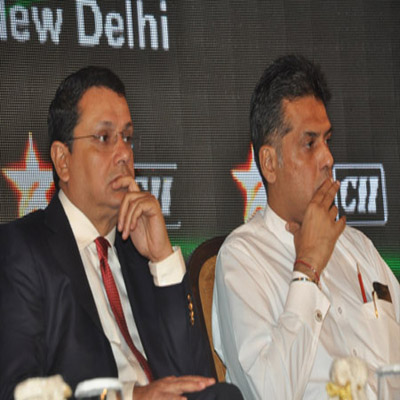
    NEW DELHI: Information and Broadcasting Minister (I &B) Manish Tewari today stressed that the government wanted the relationship with the media to be one of persuasion rather than regulation but the media should introspect about the reasonable restrictions laid down in the constitution to the freedom of speech.

    Making the inaugural address at the Big Picture Summit on Media and Entertainment organised by CII, the minister said the government will cooperate to ensure that the M & E sector is able to ‘unlock the potential of millions.’

    He stated that the phase III in FM radio will get underway next month with the e-auctions, adding that radio had seen a major resurgence thanks to mobile telephony.
    Manish Tewari believes that the industry must explore new avenues and technologies like mobile telephony and how it can be used to grow the sector

     The minister announced that the Justice Mudgal Committee which was going into the Cinematograph Act including film censorship was expected to give its report by mid-October. Tewari was responding to remarks made by previous speakers Star TV CEO Uday Shankar and Walt Disney MD Ronnie Screwvala about extra-constitutional authorities and even state governments raising voices even after a film had been cleared by the Central Board of Film Certification, and making a strong case for bringing cinema on the concurrent list.

    Tewari noted that despite the general slowdown the world over and in India, the M and E sector was expected to grow at a pace of 18.4 per cent CAGR to Rs 2,245 billion by 2017 from Rs 965 billion in 2012.

    He noted that the print and television sector comprised 48 per cent of this growth and the internet was expected to take over by 2017. He said the real success story was the print media since its growth continued at a rate of ten per cent per year when it was falling all over the world.

    Although India had the largest number of TV news channels in the world, it represented only 17 per cent of the M and E industry and therefore there was need to remove the bottlenecks in distribution.

    While the channels were not lagging in content, hardware was an area in which they were found lagging, he felt. The minister said that he wanted the industry to come up with ideas on how the number of cinema screens could be increased.

    Complimenting CII for its optimism in setting a target of USD 100 billion for the industry, he spoke of the opportunity that the sector presents in terms of innovation in content and non-content areas, adding that the government would partner the industry to put into place a system to see that the vision of USD 100 billion is translated into reality.

    He also mentioned that the industry must explore new avenues and technologies like mobile telephony and how it can be used to grow the sector, emphasising that the government would look to facilitate innovation and expansion.

    Screwvala in the keynote address said that although there have been challenges and a sense of gloom, there has been a fair amount of progress as well, especially in the movie industry, which has flourished.

    The M&E industry, he said, is seen as an industry of ‘high impact’ with the ability to bring about noteworthy transformation. Therefore, he felt that the time is right for the M&E industry, the government and other stakeholders to take time to deliberate upon the challenging issues that the industry faces such as dependency on advertising, inconsistent regulation, the need and ability to attract the best talent, unanimity and long-term thinking and then come up with a roadmap that will help the industry achieve the target of USD 100 billion.

    He hailed the progress in digitisation of cable TV and efforts to go on to better consumer TV viewing surveys, he said dependency on advertising remains a big problem and ways have to be found to make the consumer pay. There was need for unanimity and long-term thinking in the industry, a need to attract the best talent, and the need to recognise that new media needed a different kind of audience and talent.

    While India was among the least regulated countries in the world, he admitted that some regulation was necessary and this has to be consistent and not vary from state to state.

    He also wanted edutainment to be encouraged without being dependent on curriculum, sports to extend from just cricket as far as media was concerned, and the need for a greater bandwidth.

    He suggested setting up of a core group of the government and the industry which could work over the next 18 months or so to get over the bottlenecks, an issue supported by eminent filmmaker Amit Khanna.

    Khanna said the target of $100 billion for M &E was not unrealistic, if there was proper planning and greater cooperation between the government and the industry.

    He said it was unfortunate that the country was over-producing in cinema, considering the small number of screens.

    He suggested that the I & B ministry should change its name to the media ministry as new media was taking over.

    He regretted that there was no proper broadcasting regulator and the Telecom Regulatory Authority of India had been given this responsibility.

    India may have the largest number of TV news channels, but they were all getting ‘tabloidised’.

    He also felt the need for more trained professionals if the industry had to meet its targets.

     Delivering the theme address, Shankar said that openness to new ideas, capital and talent would unleash a fresh wave of growth, just as it did in the 1990s, when economic reforms ushered in a fresh wave of growth for the Indian economy.

    Earlier, in his welcome remarks, CII director general Chandrajit Banerjee spoke of the tremendous ‘soft power’ of the industry to bring about innumerable benefits to the Indian economy.
    A CII-PriceWaterhouse Coopers report on the M&E industry, titled ‘India Entertainment and Media Outlook 2013’ was also released on the occasion by Tewari.

  • Experts call for football alcohol advertising restrictions

    Experts call for football alcohol advertising restrictions

    MUMBAI: Newcastle University academics have called for the government to consider restricting alcohol marketing during televised football matches after studying a selection of games and finding they were ‘bombarded’ by references to drink.

    They found that on average there were 111.3 visual references to alcohol for every hour of football broadcast in the six games they looked at, nearly two every minute. This includes images on billboards at the side of the pitch and other references during replays or when scores were shown or substitutions were being made.

    The total broadcast time for the six matches, shown on the BBC, ITV and Sky TV, was 18 hours and 21 minutes. During that time there were 2042 visual references to alcohol of various types, mainly beer. There were also 32 verbal mentions, mainly of match or competition sponsors and 17 adverts during the matches, from last season, including games in the Premier League, Champions League, FA Cup, League Cup, UEFA Cup and Championship.

    In the UK ?202.5 million is spent every year on advertising alcohol, while over ?800 million goes on marketing every year. Previous studies have shown that alcohol marketing increases the likelihood that young people will start to use alcohol and will drink more if they already use it.

    It has been found that 96 per cent of all 13 years olds are aware of alcohol marketing and it has been suggested that 5.2 million 4-15 year olds were exposed to alcohol advertising during the 2008 European Championship.

    In the UK tobacco advertising has been banned since 1989 and in 2003 it was made illegal for tobacco companies to sponsor sporting events. Alcohol advertising is self-regulated by the industry itself through a code of practice and the Advertising Standards Authority, but previous studies have highlighted the belief that self-regulation is not working. There are restrictions, such as not equating drinking with social or sexual success or promoting irresponsible behaviour but there are no legal powers of enforcement.

    Dr Jean Adams, senior lecturer in public health at Newcastle University and a member of Fuse, the Centre for Translational Research in Public Health, said: “Alcohol – related hospital admission are continuing to rise, despite alcohol consumption falling overall because the heaviest drinkers are consuming more.”

    “This type of study has never been done before in the UK, looking at alcohol marketing during televised football matches. We wanted as broad a picture as possible, which is why we chose the matches from different broadcasters and from different competitions.”

    Andy Graham, speciality registrar in public health with the NHS, said: “Our findings show that young people are likely to be hugely exposed to alcohol marketing during televised football matches, and this is likely to have an influence on their attitudes to alcohol. We were surprised by just how many images there were during these games, it was a constant bombardment.

    “We believe a similar restriction to that imposed on tobacco products may be justified.”