Tag: Restaurant

  • Domino’s faces FSSAI heat as viral video raises question mark on its hygiene standards

    Domino’s faces FSSAI heat as viral video raises question mark on its hygiene standards

    Mumbai: Days after a Twitter user posted a video allegedly showing poor hygienic practises followed at a Domino’s outlet in Bengaluru, the Food Safety and Standards Authority of India (FSSAI) has swung into action. The authorities on Wednesday issued a spot memo to food business operators seeking an explanation regarding “unhygienic food handling practices” at the pizza outlet reported in the complaint.

    An improvement notice was also issued based on “inspection observations” which are to be complied with within 15 days, reported news agency ANI. Further necessary action will be taken against the multinational pizza restaurant chain by the designated officer (state licensing), Bangalore Urban District, as per the provisions under the FSS Act upon receipt of the explanation, said ANI in a tweet. 


    :


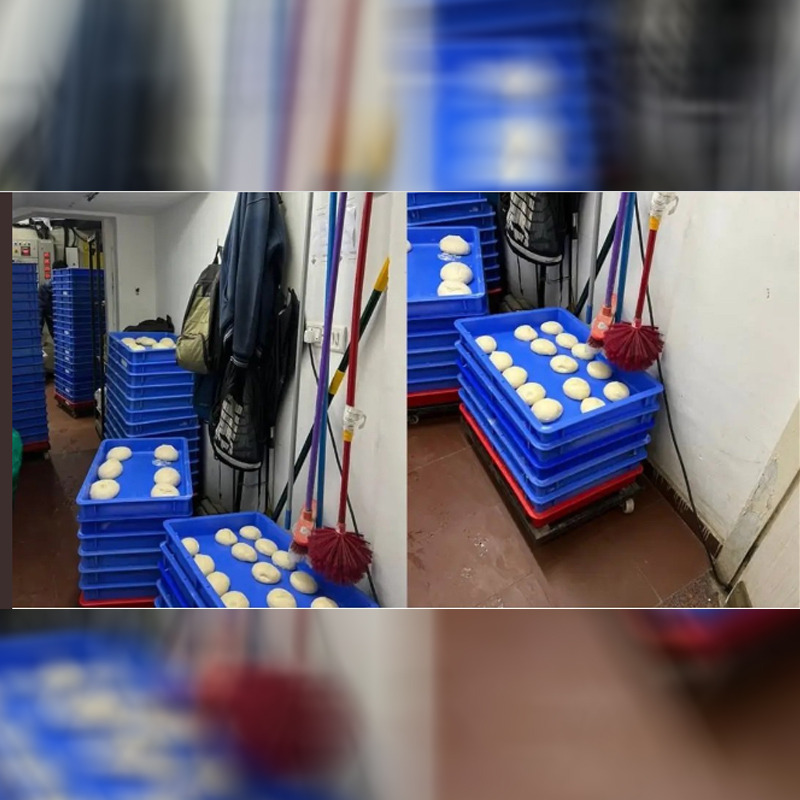
    The FSSAI crackdown comes on the back of a complaint raised by a Twitter user against alleged unhygienic practises being followed at the pizza brand’s outlet. The user had posted a picture last month, allegedly of a Domino’s outlet in Bengaluru, showing a mop and a toilet brush hanging in close proximity above the pizza dough.

    The user who identifies himself as an IT graduate wrote: This is how @dominos_india serves us fresh Pizza! Very disgusted. Location: Bangalore.

    He also tagged the FSSAI, the ministry of Health, the Karnataka health minister, and the union health minister.


    The Twitter user named Sahil Karnany followed it up with a video on 14 August, captioning the tweet, “Here is the video of the scene.”

    The tweet soon became viral, with several other netizens responding to it, some of them sharing their own bad experiences with the pizza brand.

    Soon after, the FSSAI took notice of the tweet. Responding to Karnany’s tweet on Tuesday, the official Twitter handle of the agency wrote, “FSSAI has taken note of the incident. The response of the FBO has been sought and appropriate action shall be taken in the matter as per the regulatory provisions under the FSS Act, 2006.”


    Meanwhile, Domino’s India has issued an official statement saying the brand adheres to “world-class protocols for ensuring the highest standards of hygiene and food safety.”

    “An incident involving one of our stores was recently brought to our notice. We want to assert that this is an isolated incident, and we have taken the strictest action against the restaurant in question. Please be informed that we have zero tolerance for violations of our high safety standards,” the pizza restaurant chain further stated.

  • Why restaurants are stepping away from Swiggy, Zomato with #OrderDirect campaign

    Why restaurants are stepping away from Swiggy, Zomato with #OrderDirect campaign

    MUMBAI: Food delivery continues to be the mainstay for the restaurant industry hit hard by the pandemic with lockdowns and restrictions in place. While this has come as a boon for the food aggregators and delivery apps, it has also taken away a significant portion of the restaurants’ earnings by way of commission to these platforms.

    With these food apps currently the only source of revenue for many restaurants across the country, restaurants fear the industry is emerging into a duopoly controlled by the food aggregators. With reopening of the hospitality sector looking uncertain in the near future, more eateries are looking to improve margins by trying out alternatives to aggregators Zomato and Swiggy.

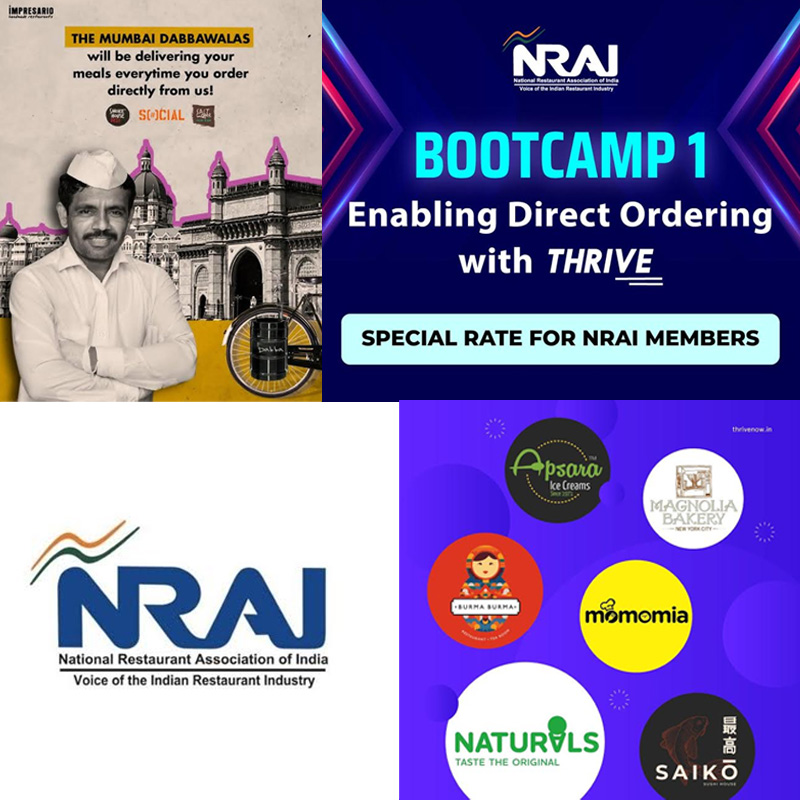
    The National Restaurant Association of India (NRAI) recently announced the #OrderDirect campaign to offer a democratized digital channel with low commissions, data ownership, control over policies, and an unbundled technology stack. NRAI president Anurag Katriar referred to the food aggregator apps as ‘virtual landlords’ last year highlighting the urgent need for the sector to reduce its dependence on such platforms. To safeguard their interest, restaurants are now collectively coming up with their loyalty scheme, bill settlement technology, and even a home delivery solution.  

    Riyaaz Amlani- CEO & MD, Impresario Entertainment and Hospitality, who operates a chain of restaurants in several cities- is among the key voices backing #OrderDirect in India. From this week onwards, in a first-of-its-kind pilot project, his hospitality portfolio has teamed up with Mumbai’s Dabbawala for home deliveries. Riyaaz Amlani posted on LinkedIn, “Thrilled to announce a partnership that just fits. Dabbawalas know a thing or two about getting you your meals on time. They are severely impacted by the pandemic. Working with this awesome group of people is a privilege and a natural extension of our D2C push. #orderdirect “.

    Impresario Handmade Restaurants is employing several dabbawalas in Mumbai who will service direct delivery orders received on Impresario’s tech-enabled platforms for their restaurant brands such as SOCIAL, Smoke House Deli, and Salt Water Cafe. Orders from these restaurants in the Lower Parel, Bandra, and BKC areas of Mumbai will be fulfilled by the dabbawalas starting this week in a seemingly win-win solution for both parties. The association will roll out in phases over the next few months, each employing more dabbawalas and strengthening the partnership.

    This association also takes away from delivery aggregators such as Swiggy and Zomato. According to Amlani, ordering directly from restaurants (and not through aggregators) empowers the company to have direct and deeper relationships with its customers and saves on prohibitive commissions paid to the aggregators. “We are then able to pass on these savings to our customers and allow them to benefit from ordering directly. Now, ordering directly is also helping to employ our dabbawalas, who have lost their livelihoods due to the pandemic. We need to support each other through these trying times, and this is Impresario’s way of meaningfully extending a helping hand. We are hopeful that this association will trigger the rest of the hospitality industry to employ them too,” he told a publication.

    While recognising the positive aspects of what the aggregators are offering the restaurants and customers, Food Matters’ founder and CEO India Gauri Devidayal, says “This relationship is no longer a partnership but rather is one built on dependency… This is not just about saving on commissions but also servicing an increased radius of delivery and therefore having the potential for higher revenues.”

    For restaurateurs looking to start their online ordering platform and reduce dependency on food aggregators DotPe, Thrive Now and Peppo are some of the tech partners supporting NRAI in this campaign. They are helping to build full-stack solutions and a sustainable hospitality ecosystem together with the restaurants.

    Whether these innovations are feasible and able to democratize the food industry, only time will tell.

  • Vocational training Generating Employable India

    Vocational training Generating Employable India

    NEW DELHI : Around 38-40 per cent of Indian population, between the age group of 14 and 25, who are on the verge of entering different skill level jobs do not possess marketable skills which are an impediment in getting decent employment and improving their economic condition. To counter this challenge, they require tailored short-term courses which directly lead to employment. This need is boosting the vocational education sector and opening numerous investment opportunities to investors as well.

    The major segments in vocational education and training businesses in India include the various trades related to restaurant, retail, IT training, airlines, and so on. Vocational education in India aims to develop skilled manpower through diversified courses to meet the requirements of mainly the unorganised sector. Also, the education aims to impart selfemployment skills in people through a large number of self-employment oriented courses.

    Gaurav Marya, Chairman, Franchise India, “The role of vocational education in facilitating social and economic development has long been recognized by the Indian government. Vocational education improves functional and analytical skills and, in turn, opens up opportunities for persons to achieve greater access in the industry.”

    There are various educational institutes participating at India Franchise Show 2013 to expand further franchisees at bigger platform. Few of them are Jaipuria, Aisect, Gras academy, Learning place and many more.

    The vocational education market in India is anticipated to grow at a CAGR of around 25 per cent during 2011-2015. The current market size is of USD 4.8 billion and is forecasted to scale up to USD 7.3 billion by the end of 2015.