Tag: Reserve Bank of India

  • TRAI rings the spam alarm as digital consent and 1600-series plans take charge

    TRAI rings the spam alarm as digital consent and 1600-series plans take charge

    MUMBAI: Spam beware, India’s digital regulators are tightening the screws. The Telecom Regulatory Authority of India (TRAI) convened the 9th Joint Committee of Regulators (JCoR) at its New Delhi headquarters on October 16, 2025, marking another decisive step towards a safer, cleaner digital ecosystem.

    The high-level meet brought together representatives from the Reserve Bank of India (RBI), Securities and Exchange Board of India (SEBI), Pension Fund Regulatory and Development Authority (PFRDA), and the Ministry of Electronics and Information Technology (MeitY), alongside officials from the Department of Telecommunications (DoT), Ministry of Home Affairs (MHA), Ministry of Consumer Affairs (MoCA), and the National Payments Corporation of India (NPCI). Industry heavyweights including Google, Meta, GSMA, and COAI were also present to discuss collective measures against spam and cyber fraud.

    Central to the deliberations was the progress of the Digital Consent Acquisition pilot, currently underway at 11 banks under joint supervision by TRAI and RBI. On track for completion by February 2026, the pilot aims to ensure consumers have greater control over consent for commercial communications, a key tool in fighting spam.

    Meanwhile, TRAI pushed ahead with plans to fully adopt the 1600-series numbering system for banking, financial services, and insurance (BFSI) communications, with a phased sunset timeline agreed in collaboration with sector regulators. The committee also flagged the need for flexibility for small-scale businesses, with TRAI set to issue guidance soon.

    Other significant outcomes included mandatory whitelisting of all URLs, OTT links, APKs, and callback numbers used in SMS communications. This initiative, paired with a crackdown on shortened links and blacklisting errant entities, aims to curb fraudulent messaging at scale. The committee also discussed enhanced PE-end security measures, including real-time credential validation and CAPTCHA enforcement for OTP systems, to bolster trust and safeguard users’ digital interactions.

    TRAI chairman Anil Kumar Lahoti highlighted the importance of collaboration. “In a digitally connected economy, cooperation among regulators for digital services, financial services, consumer protection, and law enforcement is paramount. The JCoR continues to be a crucial platform for ensuring orderly digital connectivity and cracking down on spam and cyber fraud. Today’s decisions underscore our shared commitment to a secure and transparent digital communication ecosystem,” he said.

    The committee’s discussions also reflected an emphasis on public deterrence, with plans for TSPs and TRAI to publish blacklisted entities involved in spamming activities. Such transparency is expected to reinforce compliance while warning potential violators.

    By combining regulatory oversight, technological interventions, and industry collaboration, TRAI and its partners aim to transform India’s digital messaging landscape making spam less profitable, fraud less frequent, and user trust more robust. With these initiatives, the 9th JCoR meeting set a precedent for proactive governance in India’s rapidly evolving digital communication space.

  • Leadership hires rise as firms chase performance over pedigree

    Leadership hires rise as firms chase performance over pedigree

    MUMBAI: From corner offices to boardroom briefings, India Inc. is hitting refresh on its leadership roster. As Indian enterprises tighten the screws on performance, governance and risk agility, CXO-level hiring has seen a 9.5 per cent spike in FY25, according to retained executive search firm Venator Search Partners. The leadership shuffle is part of a structural shift, with companies moving away from legacy-driven appointments toward outcome-oriented roles. According to Venator, over 50 per cent of its hires last year were board-level director positions, and business head mandates have risen by more than 30 per cent this fiscal year.

    “Leadership is no longer inherited. It’s being sculpted to meet sharper expectations,” said Venator Search Partners founder Deepraditya Datta.

    Post-pandemic pressures have forced boards and promoters to rethink how they evaluate leadership no longer by tenure, but by tangible impact. When results fall short, change comes swiftly.

    With regulatory scrutiny mounting, especially after the Reserve Bank of India imposed Rs 54.78 crore in penalties on 353 entities in FY25 for compliance failures, companies are seeking leaders who blend execution with governance.

    There’s rising demand for CXOs who can steer boardroom conversations, think through risk scenarios, and embed compliance into enterprise culture. Finance, audit, and risk functions are no longer just back-office guardians, they’re becoming frontline strategists.

    Inclusivity, too, is taking root at the top. Women now hold 20.6 per cent of CXO roles and 28 per cent of functional head positions, signalling a shift in how leadership pipelines are being built.

    Cybersecurity and digital resilience are also shaping boardroom priorities. As reliance on tech grows, so does the need for leaders who can manage digital risk and business continuity, especially across mid-market firms and large conglomerates alike.

    “The impulsive hire-and-fire culture is giving way to strategic realignment cycles, structured performance reviews, and impact-led assessments,” Datta added.

    In the age of transparency and accountability, Indian companies are rewriting the rulebook on what it means to lead and making sure the boardroom isn’t just where strategy starts, but where results are demanded.

  • Tata Sons’ N. Chandrasekaran joins IMF’s global advisory council

    Tata Sons’ N. Chandrasekaran joins IMF’s global advisory council

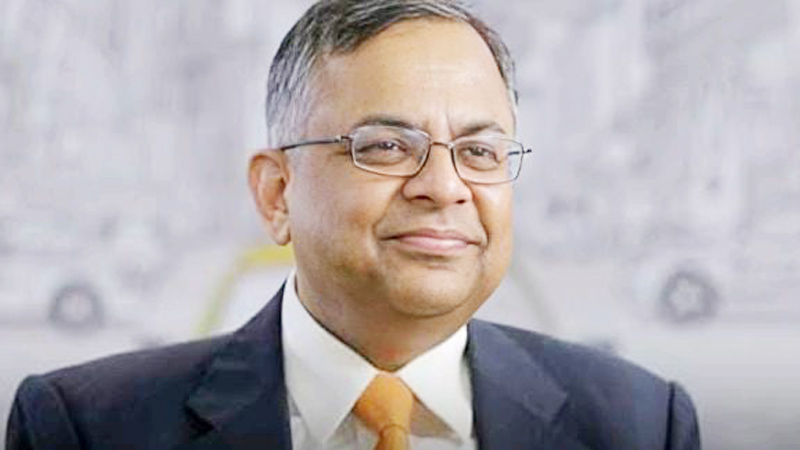
    MUMBAI: Tata Sons Limited chairman, N. Chandrasekaran, has been appointed to the International Monetary Fund’s (IMF) managing director’s advisory council on Entrepreneurship and Growth. The council, chaired by IMF managing director Kristalina Georgieva, brings together global experts from business, finance, academia, and policymaking to shape policies that drive innovation and productivity.

    In addition to his role at Tata Sons, Chandrasekaran is also a board member of the Reserve Bank of India (RBI). His inclusion in the council reflects his extensive experience in business strategy and economic affairs.

    Meeting quarterly, the council will contribute to the IMF’s policy research, focusing on solutions to address declining global productivity growth. With the world economy facing its slowest medium-term expansion in decades, the council’s expertise will help shape strategies that promote sustainable and inclusive growth across IMF member nations.


  • TRAI implements new measures to eliminate spam calls and SMS

    TRAI implements new measures to eliminate spam calls and SMS

    New Delhi – In a mission towards curbing the menace of spam calls and SMS, the Telecom Regulatory Authority of India (TRAI) has implemented a series of robust measures. These initiatives are aimed at safeguarding consumer interests and also ensuring accountability among service providers and telemarketers.

    TRAI’s directive issued on 13 August 2024, stated its no-tolerance policy toward entities engaging in promotional calls and messages that violate regulations. The mandate includes disconnection of telecom resources, blacklisting of violators for up to two years, and a prohibition on new resource allocation during the blacklisting period.

    These decisive actions have already shown promising results. Access providers, acting on TRAI’s directive, have significantly reduced the number of complaints against spam calls. In August 2024, 1.89 lakh complaints were registered. This figure dropped by 13 per cent to 1.63 lakh in September and further declined by 20 per cent to 1.51 lakh in October.

    To ensure transparency and traceability in messaging, TRAI issued a directive on 20 August 2024, requiring a clear trail of all messages from senders to recipients. This measure, set to take effect on 1 November 2024, ensures that accountability is embedded into the messaging ecosystem.

    Recognising the need for a smooth transition, TRAI extended the implementation deadline to 30 November 2024. This extension provides additional time for Principal Entities (PEs) and Telemarketers (TMs) to align with technical and operational requirements. Access providers have swiftly implemented the necessary technical solutions, laying the groundwork for a seamless transition.

    TRAI has actively engaged stakeholders through webinars aimed at raising awareness about these measures. On 12 November 2024, the first webinar, conducted in collaboration with Reliance Jio Infocomm Ltd., witnessed participation from over 1,000 representatives, including those from entities regulated by the Reserve Bank of India (RBI), Securities and Exchange Board of India (SEBI), Pension Fund Regulatory and Development Authority (PFRDA), and Insurance Regulatory and Development Authority of India (IRDAI).

    The second webinar, held on 19 November 2024, in association with Vodafone Idea Ltd., saw participation from over 800 representatives, including officials from central and state government departments. Building on this momentum, a third webinar is scheduled for 25 November 2024, in partnership with Tata Teleservices Ltd. This event is expected to engage stakeholders from diverse sectors, including consumer affairs, fintech, and technology organisations such as Nasscom and the Fintech Association for Consumer Empowerment (FACE).

    The collaborative efforts of TRAI and access providers have already driven remarkable progress. Over 13,000 Principal Entities have registered their communication chains with access providers, with many more registrations underway. Access providers are also issuing warning notices to entities that have yet to comply, emphasising the urgency of completing these declarations.

    As the 30 November deadline approaches, all principal entities and telemarketers are urged to prioritise compliance. Failure to adhere to the defined telemarketer chain will result in message rejections, reinforcing TRAI’s resolve to uphold consumer rights and regulatory standards.

  • RBI invites producers to make series about itself

    RBI invites producers to make series about itself

    Mumbai: We don’t see this happening very often. The Reserve Bank of India has placed a tender notice through which it is inviting producers, OTT platforms, TV channels to produce a series about itself. The series is expected to highlight the central bank’s journey as it enters its ninetieth year.

    The notice has invited interested parties to take part in the process through a two-bid system (technical and financial). A budget of Rs 70 million ($836,000-odd) has been kept aside for the production. Bidders have to submit an earnest money deposit of Rs 1.4 million through a bank guarantee.

    The Rs 70 million is expected to cover the cost of production and distribution with the former accounting for a minimum of 70 per cent of the overall expenses.

    The details of the tender are available by clicking on the link below.

    https://www.rbi.org.in/Scripts/BS_ViewTenders.aspx?Id=10499

  • Home Credit India looks to build brand resonance with ‘Zindagi Hit!’

    Home Credit India looks to build brand resonance with ‘Zindagi Hit!’

    Mumbai: On the occasion of the Diwali festival, Home Credit India (HCIN), a local arm of the leading global consumer finance provider, launched its new brand campaign with the promise of “Zindagi Hit” as an effort to redefine brand connect with consumers in the endeavour to fulfil aspirations. This campaign comes on the heels of Home Credit India having completed 10 years in the Indian market as a Reserve Bank of India (RBI) regulated consumer non-banking financial company (NBFC) this year.

    The brand launched as a Diwali campaign film, symbolising its reinvigorated mission to empower people to live the life they want now and reposition HCIN as an enabler of fulfilling wishes and aspirations to bring the joy & happiness customers long for.

    Home Credit, in its decadal journey in India, has seen that consumers across income categories have the same expectations from life. However, consumers in low-income categories often keep these expectations suppressed or in waiting owing to constraints in purchasing power. Herein lies the value of Home Credit India, who financially empowers the underserved borrowers through easy and hassle-free loans that bring to reality every wish & aspiration. And when dreams come true, every life moment becomes a hit.

    Speaking about the new brand tagline this Diwali, Home Credit India chief marketing officer Ashish Tiwari said, “This year, as we complete a decade in India, we saw it as the right time to take the brand even closer to our customers. Based on the learning imbibed with the “ZindagiHit” tagline, we want to rejuvenate the meaning and connect the brand Home Credit with customers and potential loan seekers. A loan is an empowerment for the right use cases, and Home Credit strives to be the enabler in people’s lives to help them make dreams and aspirations a reality. This way, we at Home Credit India are working with our customers to enable them to make their “ZindagiHit.”

    The value proposition of Home Credit India’s brand campaign centres on traits such as optimism, progress, trustworthiness, transparency, and that of an enabler, making it a brand of choice when it comes to consumer loans. The festive campaign is live across digital platforms, including Home Credit’s social channels such as Facebook, Instagram, Twitter, YouTube, LinkedIn, and on a popular OTT platform like MX Player.

    Adding to the fervour of the festive season and in an endeavour to boost consumer sentiments, this Diwali, Home Credit India makes “ZindagiHit” for customers on purchasing mobiles, consumer durables and home appliances worth at least Rs 20,000 from HCIN’s 50K+ points of sale (PoS) partner shops by giving out a 7.5 per cent cashback against the loan amount, which will directly be debited into the bank account.

    Home Credit India also recently launched a campaign “#10SaalBemisal” to celebrate its 10th anniversary. The campaign highlighted the brand’s decade-long journey in India and how they have been promoting financial inclusion by enabling credit penetration throughout the nation, resulting in the introduction of borrower-centric services and products like Safe Pay (payment holiday, no pre-payment penalty, and insurance), Care 360 (a holistic healthcare service protection product), Ujjwal EMI Card (the digital pre-set credit limit card), and more.

    Having built a strong brand presence in the country, Home Credit India is currently operating in over 625 cities, with a network of 53,000 PoS and a growing customer base of 15 million. A responsible consumer lender, Home Credit India has also engaged more than 3 million individuals through its financial literacy campaign “Paise Ki Paathshala” in order to foster a responsible borrowing culture in society at large.

  • Axis Bank board re-appoints Amitabh Chaudhry as MD & CEO

    Axis Bank board re-appoints Amitabh Chaudhry as MD & CEO

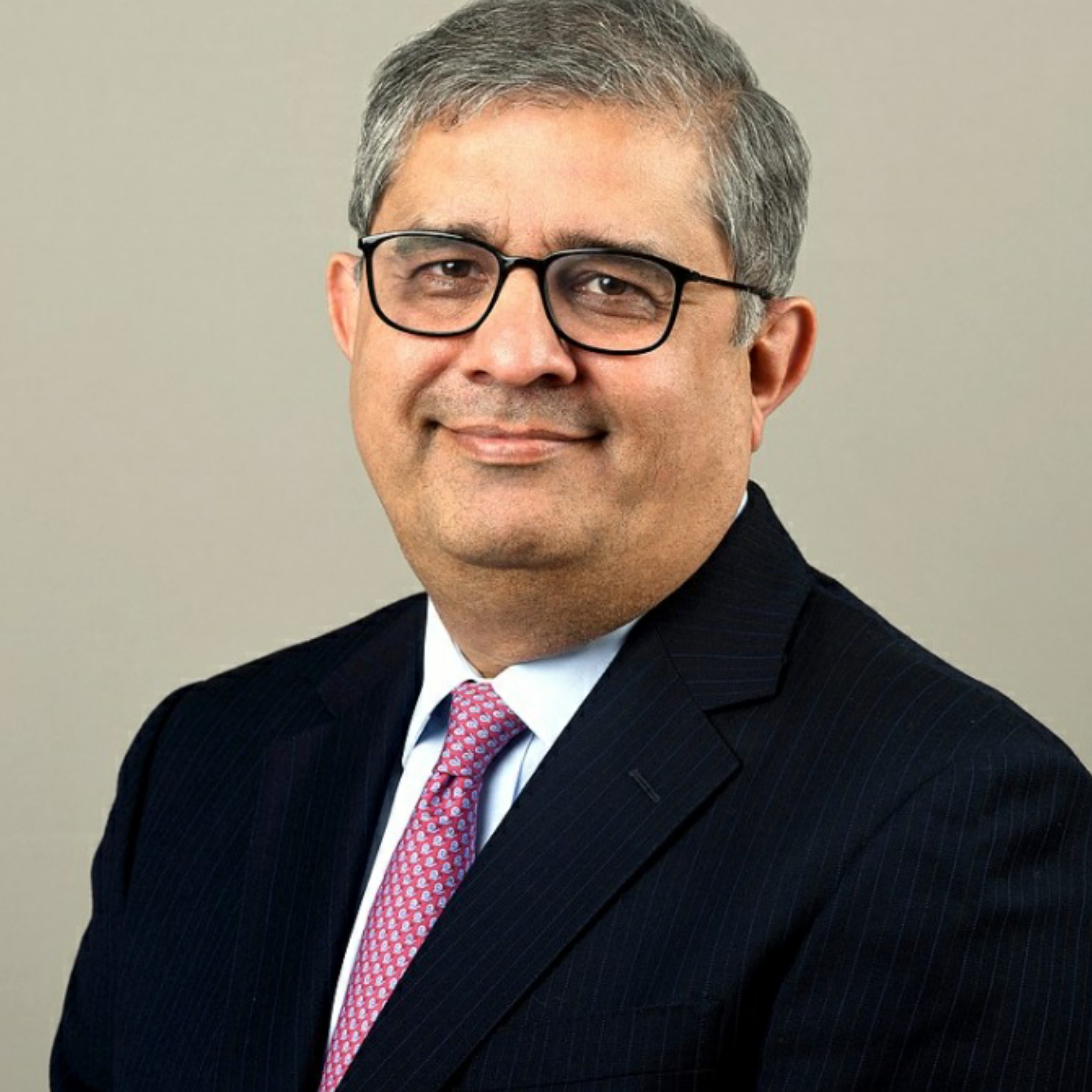
    KERALA: The Axis Bank board has approved the re-appointment of Amitabh Chaudhry as its managing director and CEO. Chaudhary, 56, will serve in this capacity for three years, starting 1 January 2022.

    In a regulatory filing, the private sector lender said that the re-appointment will be subject to the approval of the Reserve Bank of India (RBI) and shareholders of the bank. 

    “The board of directors of the bank, considered and approved the proposal relating to re-appointment of Amitabh Chaudhry as the managing director and CEO of the bank, for a further period of three years, with effect from 01 January 2022  up to 31 December 2024,” the bank said in the filing. 

    It was on 1 January 2019 that Axis Bank initially appointed Chaudhary as its MD and CEO. As his three-year term comes to an end on 31 December 2021, the bank has decided to retain him in the same positions. 

    Prior to joining Axis Bank, Chaudhry was MD and CEO of HDFC Standard Life Insurance Company. Under his leadership, HDFC Life emerged as one of India’s largest private life insurers. Before that, he was the MD and CEO of Infosys BPO and the Head of testing unit of Infosys Technologies. 

  • Atanu Chakraborty gets RBI nod as part-time chairman of HDFC Bank

    Atanu Chakraborty gets RBI nod as part-time chairman of HDFC Bank

    NEW DELHI: The Reserve Bank of India (RBI) has confirmed the appointment of Atanu Chakraborty as the part-time chairman of HDFC Bank.

    The privately-owned bank, on Friday, confirmed that former economic affairs secretary Atanu Chakraborty will be the part-time chairman of the bank for a period of three years, with effect from 5 May or the date of his taking charge, whichever is later. 

    Once appointed as part-time chairman, HDFC Bank will become the second private sector lender to have a former bureaucrat at this post. ICICI Bank had previously appointed former petroleum secretary and additional secretary in the ministry of finance GC Chaturvedi as its chairman. 

    A meeting of the board of directors of HDFC bank will be convened in due course inter‐alia to consider the appointment of Atanu Chakraborty as the part-time chairman and additional independent director, the bank said in a regulatory filing.

    Chakraborty is a 1985 IAS officer in the Gujarat cadre. He retired from the post of secretary of the department of economic affairs in April 2020. Before that, he had worked as secretary of the department of investment and public asset management (DIPAM). 

  • Sashidhar Jagdishan appointed new CEO of HDFC Bank

    Sashidhar Jagdishan appointed new CEO of HDFC Bank

    NEW DELHI: The Reserve Bank of India (RBI) has approved Sashidhar Jagdishan as the next the chief executive officer of HDFC Bank.

    "The Reserve Bank of India (RBI) vide its communication dated 3 August 2020, has approved the appointment of Sashidhar  Jagdishan as managing director & CEO of the Bank  for a period of three years wef his date of  taking charge, i.e., 27 October 2020, under Section 35B of  the Banking Regulation Act 1949," HDFC said in a statement.

    Jagdishan will replace Aditya Puri, current managing director and CEO of HDFC Bank, who is set to retire on 26 October. "A meeting of the board of directors of the bank will be convened in due course inter-alia to approve the appointment of Jagdishan as the MD & CEO," the bank said. 

    Puri's successor Jagdishan was among the top two internal candidates for the top job at HDFC Bank. Kaizad Barucha, who has the highest board experience, was the senior-most candidate in the fray.

    He is currently serving as the additional director of HDFC Bank and has been with the bank for nearly three decades. He served as the group head of finance, human resources, legal & secretarial, administration, infrastructure, corporate communications and corporate social responsibility.

    Jagdishan was the bank's top choice among the three shortlisted candidates, with Kaizad Bharucha and Sunil Garg also in the running.

  • Paytm appoints Ex- RBI deputy governor as advisor

    Paytm appoints Ex- RBI deputy governor as advisor

    MUMBAI: Indian e-commerce payment system and digital wallet company, Paytm has appointed former RBI deputy governor Rama Subramaniam Gandhi as an advisor to the company.

    In a blog post, the company said it would benefit from Gandhi’s knowledge and experience on payment systems, regulations, compliance and corporate governance. 

    Paytm founder and CEO Vijay Shekhar Sharma is excited about having Gandhi on board. He says, “Since the beginning of our journey, we have focused on building an organisation that has the culture and the resources of serving our customers responsibly. Mr. Gandhi joins our family, which now includes some of the most distinguished Indian and global leaders in the fields of finance, law, technology and business, all working together to help us achieve this goal.”

    Gandhi adds, “I am delighted to join Paytm as an advisor in its journey to bring digital and financial inclusion to half a billion Indians. I have dedicated my whole life to formulate policy and strengthen institutions in the financial services space. I will be happy to share my insights and guide Paytm in the creation of innovative financial services.”

    Before holding the position of the deputy governor, Gandhi worked with the central bank and was a member of the first Monetary Policy Committee. 

    He had a three-year secondment to the Securities and Exchange Board of India (SEBI) and has also been the head of two regional offices of the Reserve Bank. 

    Besides holding strategic roles in RBI, he had also piloted several innovative projects on IT, payment systems, financial literacy, financial inclusion and other developmental initiatives.