Tag: Republic Media Network

  • ‘Duologue with Barun Das’ Season 01 now on connected TVs

    ‘Duologue with Barun Das’ Season 01 now on connected TVs

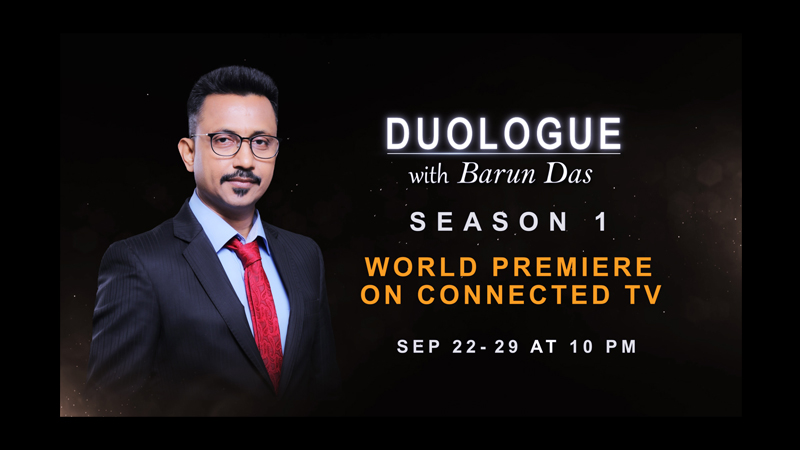
    Mumbai: The highly acclaimed and awarded Season 01 of ‘Duologue with Barun Das’ now makes its world premiere on connected TVs. This rendezvous of legends or legends in the making is set to enthrall audiences with cerebral exchanges of ideas, theories, and experiences that would challenge conventional wisdom.

    After redefining the talk show genre through intellectually stimulating exchanges between the host, TV9 Network MD & CEO Barun Das and his eclectic array of guests – ‘Duologue with Barun Das’ is now available on Connected TVs on News9 Live every night at 10 pm starting 22 September, through 29 September.

    Speaking about the world premiere TV9 editor News9 MediaVerse – English cluster Rakesh Khar said, “Duologue with Barun Das is the perfect blend of an eclectic discussion worthy of prime-time showcase, as well as an OTT series that stands the test of time. With the first season now premiering on Connected TVs, the synergy between News9 Live and News9 Plus truly comes to light. And that’s the convergence model at play at News9 Mediaverse.”

    News9 Live deputy managing editor Kartikeya Sharma said, “Duologue is not a typical TV interview, it is a stimulating piece of conversation, which is like a breath of fresh air in a cluttered audio-visual world. The series encompasses distinguished achievers from all walks of life, who have left an indelible mark in their respective fields.”

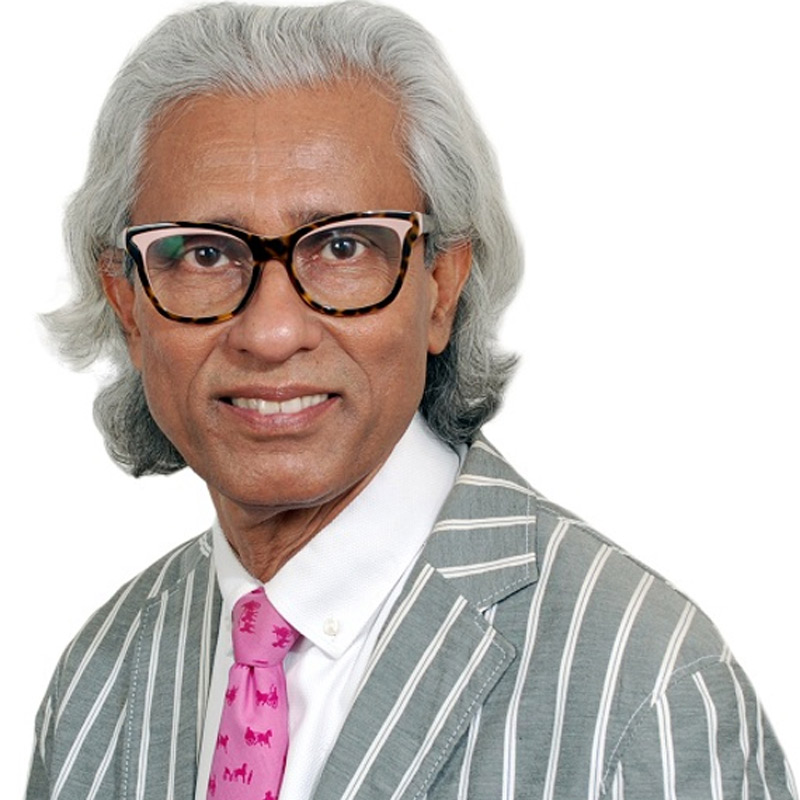
    Along with an updated play out of the News9 Plus season of Duologue, the connected TV and app convergence would truly happen on 29 September with a simulcast of the final episode of Duologue with Barun Das Season 01, featuring celebrated cardiac surgeon and founder of Narayana Health Dr Devi Shetty. This season finale is timed for release on World Heart Day – where the duo discuss the opportunity India has in creating a disruptive health insurance ecosystem that can cater to social security needs for the whole nation.

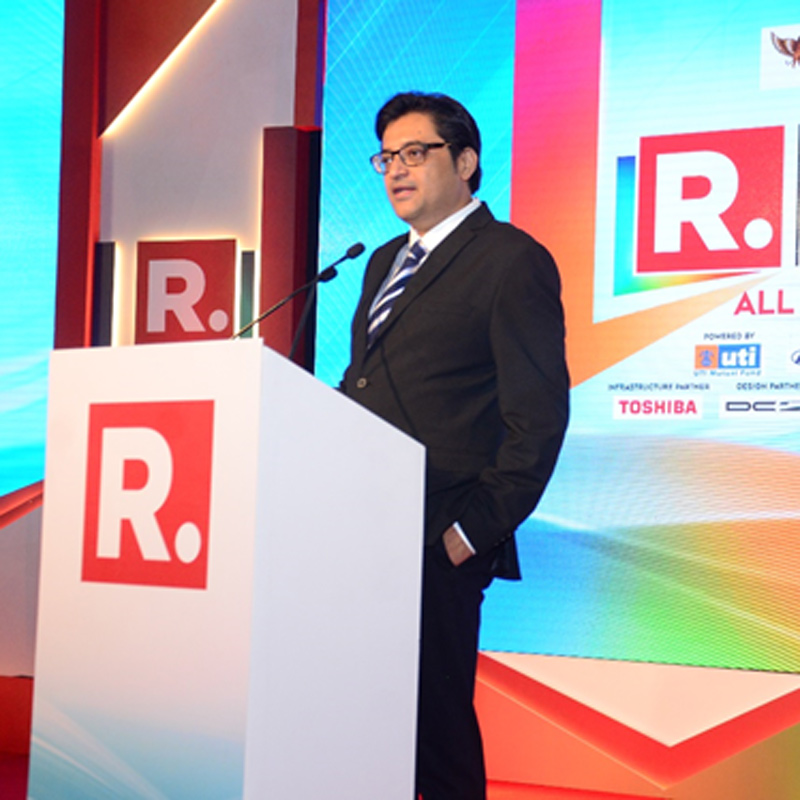
    “Barun has an easy-going and yet razor-sharp conversational style. He got me to open up on subjects I’ve been quiet about, and I’m glad we ‘duologued’ like I haven’t before,” shared Republic Media Network editor-in-chief and chairman Arnab Goswami about his experience being a guest on Duologue.

    Industry veteran and The Linus Adventures founder & chief evangelist Sunil Lulla said that the show is “Tantalising and intriguing. Duologue opens new voices and new perspectives.”

    News9 Live, which airs Season 01 on connected TVs, can be accessed across the connected TV ecosystem, including live streaming platforms such as Fire TV, Patchwall, Cloud TV, and TCL, as well as aggregator platforms like Distro TV and YuppTV.

    Catch one episode every night at 10 pm:

    22 September: David Cameron, Former Prime Minister of UK
    23 September:  Vijay Deverakonda, Actor
    24 September:  Arnab Goswami, Chairman & Editor-in-Chief, Republic Media Network
    25 September:  Subhash Chandra, Chairman Emeritus, ZEEL
    26 September:  Mithali Raj, Former Cricket Captain, India
    27 September:  Sadhguru Jaggi Vasudev, Spiritual Guru
    28 September:  Infosys co-founder NR Narayana Murthy and Author & Philanthropist Sudha Murty
    29 September:  Devi Shetty, Chairman & Executive Director, Narayana Health 

  • Republic TV’s Bhasker Das joins Unica Token

    Republic TV’s Bhasker Das joins Unica Token

    Mumbai: Bhaskar Das has started his new innings after resigning from the post of chief strategy officer in the Republic Media Network recently, according to a media report.

    He has now joined NFT (Non-fungible token) start-up ‘Unica Token’ as a director- content creation.

    Das was associated with Republic Media Network from the year 2019. He joined the network as group president. He was promoted to the post of chief strategy officer in September 2020, from where he had resigned recently.

    Das, who has an experience of four-decades, started his career with the Times of India group. He joined there as the head of advertising and sales department in Gujarat and gradually elevated to the position of group president of Bennett, Coleman and Company (BCCL).

    He also held the position of CEO at Zee Media Network and executive president of Dainik Bhaskar Group.

  • Republic Media Network’s interview with Ukraine president garners 600 mn impressions

    Republic Media Network’s interview with Ukraine president garners 600 mn impressions

    Mumbai: Republic Media Network’s exclusive interview with the president of Ukraine Volodymyr Zelenskyy has garnered 600 million estimated impressions across digital platforms within 24 hours of live broadcast, according to the broadcaster.

    President Zelenskyy was interviewed by Republic’s editor-in-chief Arnab Goswami which lasted 60 minutes and was telecast live across broadcast and digital platforms. The interview propelled crucial global conversations on the ongoing Russia-Ukraine war.

    The interview garnered over 20 million impressions on YouTube within the first day of playout. The coverage has also garnered 2.61 million views in less than 20 hours.

    On Twitter, the interview not only crossed over 532 million impressions and counting but also generated strong conversations in countries across the world. Engagement and tweets on the interview have been pouring in from countries including India, the US, Canada, Australia, the UK, Singapore, New Zealand, South Africa, Pakistan, and Iran, among others.

    The interview reached an audience of ~three million on Facebook and has been seen by over two million and counting on messaging service Telegram. “The interview continues to garner record views and consumption on Republic’s digital assets including republicworld.com, said the statement.

    “With four full playouts over the weekend, and an unstoppable ongoing virality on social media, new digital records will continue to be set by Republic Media Network,” the statement added.

  • Republic TV, Republic Bangla lead in their respective markets during week 12: Barc

    Republic TV, Republic Bangla lead in their respective markets during week 12: Barc

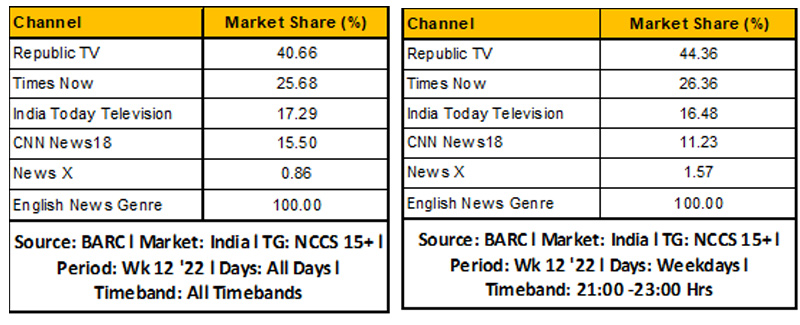
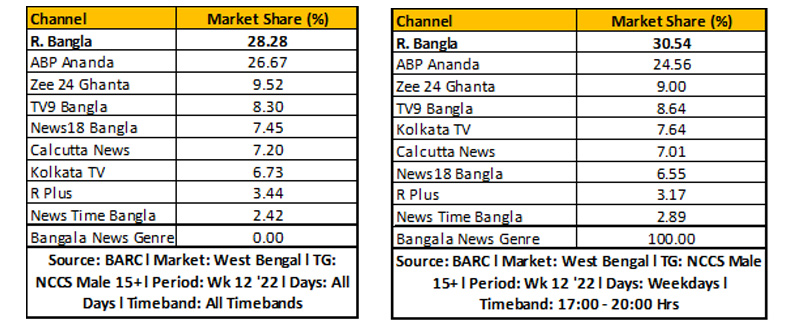
    Mumbai: Republic Media Network’s English and Bangla news channels, Republic TV and Republic Bangla have reported 40.66 per cent market share (English news genre) and 28.28 per cent market share (West Bengal) for Week 12 (19-25 March), as per Broadcast Audience Research Council (Barc) data.

    “Republic TV has continued its unbeaten run across all-time bands in the English news genre, Republic Bangla has unseated ABP Ananda, the two-decade-old news leader in the genre, as the Number 1 Bengali news channel,” the broadcaster said in a statement.

    The market leadership of Republic TV grew stronger during the 21:00-23:00 hour time band over the weekdays reporting a share of 44.36 per cent. “Republic TV has once again retained its supremacy in super prime time with a whopping 44.36 per cent viewership this week,” said the broadcaster.

    Furthermore, Republic Media Network’s Hindi news channel Republic Bharat had a market share of 17.32 per cent between the time band 19:00 to 20:00 hours on weekdays, according to Barc data.  Similarly, Republic Bangla also saw its market share increase in the time band 19:00 to 20:00 on weekdays to 30.54 per cent.

    “Republic Bangla has broken all records by unseating ABP Ananda strongly for the third consecutive week. Establishing itself as the decisive new news leader in the Bengali news genre, Republic Bangla has emerged as the number 1 in the Bengali news genre across all time bands,” said the broadcaster.

    “Republic Media Network has reached approximately 154 million last week alone and 266 million across India in a three-week period,” claims the broadcaster. This could not be independently verified by Indiantelevision.com.

    (Source: Barc data | 15+ | Period: Wk 12’22 | Market: English news genre, HSM and West Bengal)

  • Republic Media celebrates ‘Green’ International Women’s Day

    Republic Media celebrates ‘Green’ International Women’s Day

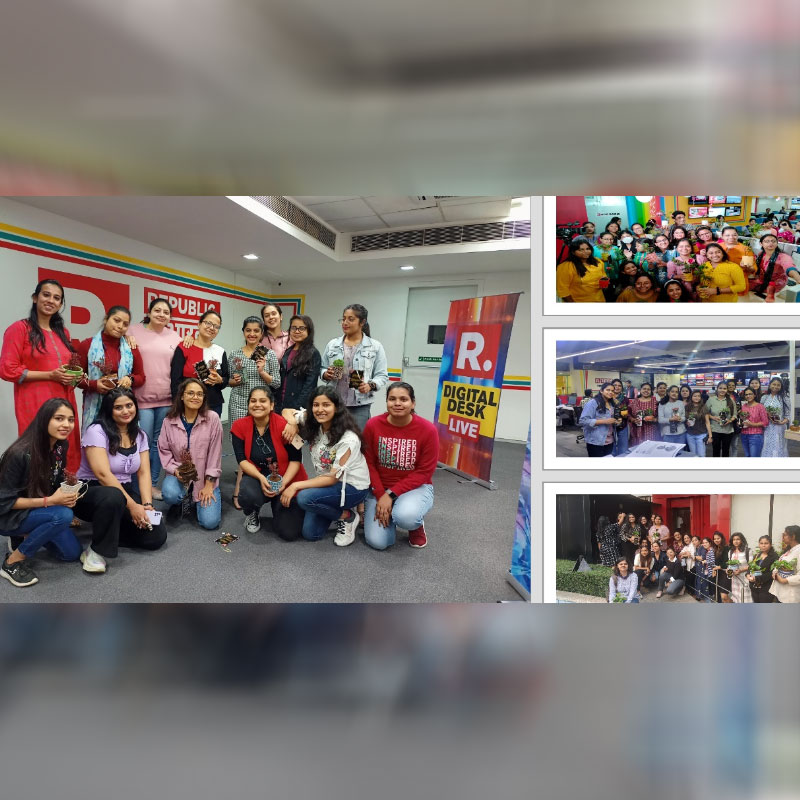
    Mumbai: On International Women’s Day, Republic Media Network celebrated the women within its family and across the world. As a gesture of appreciation and as a symbol of commitment to women empowerment, the broadcaster takes the pledge to save, seed, and protect our shared future by protecting the environment.

    Republic marked a truly ‘Green’ International Women’s Day with the women force, who are proudly at the core of the network, celebrating the special day by taking the pledge together to nurture plants and protect our future.

    Commenting on the initiative, Republic Media Network vice president and head – human resources Honey Kaur said, “Women are at the core of Republic Media Network. The women force of this Network are the drivers of the vision that we are all working towards. I am truly blessed and proud to be a part of such an energetic, ambitious, and passionate organisation that is led by powerful women in department after department. The future of our country and Republic will be shouldered by our unstoppable women force.”

    “As an organisation that has pledged to always put Nation First, it is only fitting that on the day that we celebrate the strength and unmatched contribution of our women force, we also do our bit to pledge for the betterment of the future of our great country. That is exactly the thought behind a Green International Women’s Day at Republic,” Kaur added.

    Indian women are the biggest asset to the country’s workforce and one that leads the charge for India’s future. Making unstoppable strides, Indian women are the backbone of the workforce globally. Their achievements, discipline, work ethic, innovation, resolve, and unmatched performance have made Indian women ultimate examples of strong leadership in sector-after-sector.

    With climate change and shrinking green belts, the onus is on us to protect the world we together build. It is with this intent that Republic Media Network will take the pledge this Women’s Day to save, seed, and protect plant life. Flora and fauna form the foundation of the ecosystem of our planet and there is no better day to pledge to protect it than a day marked to celebrate Women, who form the foundation of the ecosystem of our society. It is with this multi-pronged commitment in mind, that Republic Media Network gifted all women employees of the organisation potted plants.

    “Advice from a little sapling: Be bold, be brave, never fear growth. Rise, shine, and spread your seeds of happiness as far as you can. To all the ladies of the Republic Media Network, we thank you for your service, and for reminding us that together, women can achieve anything. At Republic Media Network, we are not empowering women, we are empowered by women,” said Republic Media Network group COO Hersh Bhandari.

    ​​​​​​

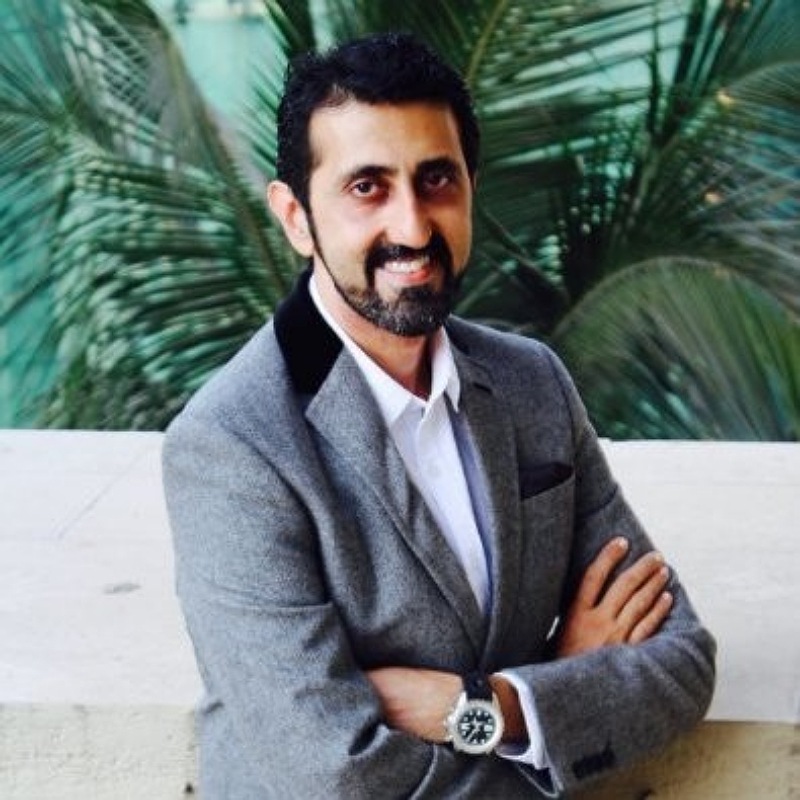
  • Republic Media Network group CEO Vikas Khanchandani moves on

    Republic Media Network group CEO Vikas Khanchandani moves on

    Mumbai: Republic Media Network group chief executive officer Vikas Khanchandani has moved on from the media company after a five-year stint. 

    A media professional with over two decades of experience, Khanchandani started his media career at Star TV network. He also set up NDTV Media, the commercial arm of NDTV Group. 

    He later launched his independent venture AIDEM, a media services business. He had a brief stint with Reliance Broadcast Network before joining Republic Media Network in January 2017. 

    His next move is unknown.

  • News channels data blackout could devalue TV ratings as a currency

    News channels data blackout could devalue TV ratings as a currency

    Mumbai: The news genre relies more heavily on TV ratings than others, argued industry stakeholders during a virtual webinar organised by Indiantelevision.com on Tuesday, highlighting that a major part of their revenues comes from advertising and discontinuation of TV ratings has impacted their ability to customise content, distribution and negotiate fair rates with advertisers.

    The virtual panel discussion – ‘The Need for News TV Ratings’ organised by Indiantelevision.com was powered by Megaphone TV, and joined by stakeholders in the news broadcast and advertising industry. The session was moderated by Indiantelevision.com group’s founder CEO and editor-in-chief Anil Wanwari.

    News broadcasters, agencies and advertisers highlighted that they are keen to understand how market dynamics have changed in terms of reach and viewership for the news channels after more than 15 months of ratings blackout by Broadcast Audience Research Council (Barc) India. The ministry of information and broadcasting has mandated that ratings for news channels be resumed immediately, however, Barc India is yet to share the ratings for news channels.

    TV ratings are a currency

    TV ratings are a currency for selling advertising and are important for news channels. In a populous and diverse country such as India, these ratings are intended to be a statistical representation that intends to show the trend of ‘What India Watches’ and relies on certain methodologies to arrive at these conclusions. In October 2020, Barc suspended reporting data for individual news channels though it continued to report the viewership trend for the entire news genre.

    “We are a midsized advertiser and we have a news-forward plan because we cater to a strong male audience,” said Lupin head of marketing consumer healthcare Supratik Sengupta. “During the blackout, at an AdEx level, we did not implement a news forward plan because we didn’t have the data. We shifted a certain amount of spends to digital and took gut calls on certain leading news channels in the absence of data. Without granular ratings, we started rotating our spends among the top four to five channels.”

    He added, “Week 39’2020 was the last time data was reported for news channels. We’ve had a data dark situation for almost 60 weeks. It is criminal that a genre is not reported for such a long time, whatever the reason. Today, I don’t know the changes, if any, in news channels’ ratings compared to last time data was reported.”

    “In absence of rating, we have been making justified recommendations to clients based on past data and other performance indicators such as views on digital assets,” stated Omnicom Media Group India managing partner and head of investment Yatin Balyan. “The advertisers’ sales team reviews on particular channels, in certain geographies also enabled us to make a more justified recommendation.”

    Patanjali Ayurved COO – media and communications Anita Nayyar highlighted that there was a lot of volatility of viewership in the news space due to factors like recent events such as elections or budget, therefore regular reporting of ratings is important. “A news channel that stood on top in one week may drop dramatically in the next week because they do not have decent content. As a currency accepted by the industry, TV ratings told us whether to stop investing in a news channel because we all know where to invest based on historical data. Unlike the GEC genre, there is no reason why a newcomer cannot top the charts in the news genre because it is completely dependent on the content and the pulse of the audience the channel touches upon,” she added.

    Impact on news channels

    The suspension of news channels had come at a time when relatively new channels were also garnering a significant share of viewership among news channels and advertisers were believed to be closely observing to see if this growth in ratings was a one-off or a long-term trend.

    “The new entrants in the news industry have broken many glass ceilings of content and distribution to go to the top,” said Republic Media Network owner founder and editor-in-chief Arnab Goswami. “Nobody studies TV ratings more than news channels, so we may respond with better quality content, deeper discussion and ways to make the content more interactive. I spend over Rs 100 crore in distribution every year and have a right to know which markets are contributing to my viewership and plan accordingly.”

    He further added, “Barc is supposed to make its decisions based on a consultative process but were media agencies, news channels and advertisers consulted before the decision to suspend ratings was taken? The process of determining ratings is the same for news genre and GECs yet only news channel ratings have been stopped.”

    “The Hindi news genre which commands the largest share of revenues in the news genre saw a distinct change in the pecking order just before TV ratings were stopped,” said TV9 Network CEO Barun Das. “Even today there is ambiguity on why only news channel ratings have been suspended. The Technical Committee at Barc has approved a fresh way of calculating the data for the news genre but it continues to report other genres as usual.”

    “There’s certainly going to be a spike in ratings during the elections,” noted Das alluding to the upcoming state elections. “Media buyers and advertisers would feel more confident spending their money and leveraging the news genre if the ratings are made available. The entire genre would benefit, especially the smaller regional channels whose dependence on advertiser confidence is greater than ours.”

    “A period of 15 months is too much time for any industry to go without measurement,” remarked independent media consultant and industry observer Paritosh Joshi. “Any industry that does not measure itself sees a drop in revenue. A currency is a store of value, medium of exchange and basis of accounting, and all of these things are relevant as far as broadcasting is concerned. If you don’t have a basis of accounting or a medium of exchange for a significant period of time then it devalues the currency.”  

    Monthly ratings for news genre

    The ministry of information and broadcasting has recommended that Barc release news channels data based on a four-week average rolling concept. It has also instituted a committee to look into return path data (RPD) and its applications to strengthen TV measurement. Right off the bat, Paritosh Joshi noted, “RPD is not a substitute for a statistically sound sample.”

    “In my mind, metrics such as TVR/TRP data tell you about the market share of a channel and as an advertiser I would like to have that data as quickly and frequently as possible,” said Sengupta. “While a four-week rolling basis for reporting data will not be a challenge at the planning level because we look at anywhere between four, six and 13-weeks average data for planning, it will be a problem at the post-evaluation level when I have to determine my campaign’s performance. That’s because we will only get an average and not exact data for the week that my ad spot ran.”

    “Secondly, I am not aware of what measures Barc has taken to protect my data,” he added.

    “While we take a long view of a four-week, eight-week or 13-week average basis, weekly ratings are important,” stated Balyan. “That’s because not every event, property or programme that we buy has a longer format. Take an election or any special programming on a news channel, we need to understand how our investments on that particular programme or channel have performed. We need to have a learning base to make a futuristic recommendation and thereby our approach to a particular partner.”

    Paritosh Joshi shared an example of best practice followed by the UK’s TV measurement council BARB. He said, “If a particular broadcast platform’s previous three or six-months’ share of voice in the entire raw panel has come down by a certain percentage (let’s say one per cent), it is no longer qualified for weekly ratings. Depending on how low the ratings have fallen, the frequency of that channels’ ratings may be changed to month, quarterly or even half yearly.”

    He elaborated, “This is not necessarily bad nor does it discredit the platform. Just because the India Readership Survey does a quarterly reporting of data or longer, doesn’t mean that has stopped anyone from buying print. In fact, in some cases it works very well, giving fairly decent forensics to show how viewers are behaving. So, the frequency of data reporting should not depend on the genre, but rather on an objective determinant that says what the share of voice was in the previously leading period. There is really no need to put out all the data in the same way. While we may choose to go with a one size fits all approach in India, this is not the best practice.”
  • Republic Media Network concludes first ‘India Economic Summit’

    Republic Media Network concludes first ‘India Economic Summit’

    Mumbai: Republic Media Network concluded the first edition of ‘India Economic Summit 2021’ on 26 November.

    The event put a spotlight on contemporary economic issues and was attended by union ministers, policymakers, corporate honchos, economists and business leaders at the Taj Palace in New Delhi. The summit was hosted by veteran news anchor Rini Simon Khanna.

    In his address at the summit, Republic Media Network’s editor-in-chief Arnab Goswami stated that India must not be the marketplace of the world. “We must be the hub of production, the hub of digitisation, the hub of technology, the hub of risk-takers, and the hub of innovation,” he said.

    Union minister of road transport and highway Nitin Gadkari, union minister of commerce and industry, consumer affairs, food and public distribution and textiles Piyush Goyal, union minister of petroleum and natural gas and housing and urban affairs Hardeep Singh Puri, union minister of women and child development Smriti Irani and union minister of state for entrepreneurship, skill development, electronics and technology Rajeev Chandrasekhar addressed the summit. Leading business personalities like Marico’s Harsh Mariwala, Bharat Biotech’s Dr Krishna M Ella shared their views on the Indian economy.

    One of the highlights of the event was the session on ‘India’s Role in the Global Economy’ presented virtually by reputed global economist and New York University’s Stern School of Business Dr Nouriel Roubini.

    “The massive success and gripping ideation sessions at The India Economic Summit 2021 prove beyond doubt that India’s economy is all geared up for greatness,” said Republic Media Network editor-in-chief, Arnab Goswami. “The first edition of the Summit has infused audiences across the world with confidence that India is a superpower in the making. And it gives me great joy that amidst it all, Republic is poised to lead and expand into new horizons with a massive digital operation.”

    The ‘India Economic Summit 2021’ took place on the back of India rebounding from the pandemic with stellar projections. As the RBI as well as the IMF, estimate the Indian GDP to grow 9.5 per cent making it the fastest-growing economy in the world, the summit was a platform to ideate on the trajectory ahead.

  • Republic Media Network, BeatO team up for diabetes awareness campaign

    Republic Media Network, BeatO team up for diabetes awareness campaign

    Mumbai: Republic Media Network and BeatO have come together to launch the social campaign called ‘India Beats Diabetes.’ The campaign focuses on showcasing facts about diabetes, breaking myths, and starting conversations with the masses to drive better health outcomes in the country.

    Through this campaign, BeatO aims at enabling people with diabetes and pre-diabetes to effectively control and reduce the severity of the condition, with the knowledge and expertise of top doctors and coaches from BeatO, said the statement.

    “The prevalence of diabetes in India is enormous. The general awareness of the condition in the country is low, which results in a significant effect on the number of complications that people experience,” stated Republic Media Network MD and editor-in-chief Arnab Goswami. “There is an urgency for a sustained conversation on this subject; creating awareness on diabetes and the necessary measures required to battle it. Republic stands tall with partners who dedicate themselves to a social cause.”

    “Gautam, Yash, and Kunal have a vision and they are here to revolutionise the path of access to healthcare for people across the nation, and we at Republic will support it in every possible way,” he further said.

    In India, more than 77 million adults live with diabetes. Researchers predict that this number will change to 134 million by 2045. High prevalence and the expected rise in lifestyle conditions call for an urgent need for all stakeholders to drive awareness of proper diabetes management and care.

    Research also estimates that 57 per cent of cases of diabetes remain undiagnosed. This is highly alarming, as the risk of complications increases when one avoids medication to control blood sugar regularly.

    At BeatO, our vision is to support every Indian family to beat diabetes. BeatO gives the power to prevent, control, and reverse diabetes into the hands of millions of Indians. We do this through our smartphone-connected glucometer and app that provides personalised insights and timely guidance by medical experts,” said BeatO co-founder and CEO Gautam Chopra. “This partnership with Republic will help us bring the same in-depth knowledge and expertise in diabetes care, control, and reversal (type 2 diabetes) to empower people across the country to manage the condition.”

    “At BeatO, we are working to alleviate the burden of chronic diseases to make sure India beats diabetes. Today when we face unprecedented challenges in the health sector, we at BeatO are taking diabetes management one step further and are now able to offer highly personalized care for type 2 Diabetes reversal – which addresses the root cause of diabetes- insulin resistance and carb intolerance,” added BeatO co-founder and COO Yash Sehgal.

  • Republic Media Network organises its first-ever Social Media Summit

    Republic Media Network organises its first-ever Social Media Summit

    Mumbai: The potential for digital & social media in India is unmatched, from the perspective of creators, platforms, engines as well as the audience. To address India’s Social Media Powerhouse, Republic Media Network hosted the first edition of the ‘Social Media Summit.’ The event will be telecast on the channel this weekend.

    The event brought together the best minds from different digital and social media avenues, from big-tech to Indian unicorns, from social media stakeholders to voices from the government – onto a single platform.

    The summit kick-started with an off-the-cuff one-one session with Facebook India managing director Ajit Mohan and Republic Media Network editor-in-chief Arnab Goswami in a freewheeling conversation about regulation, accountability, and how platforms need to comply with the law of the land under the theme “Bringing the World Closer.”

    “Over the last six months to a year, there has been an incredible amount of conversation about social media, its regulations & responsibility. These conversations are not in isolation but linked to the fact that internet penetration, usage, accessibility has grown dramatically over the last decade,” said Goswami. “When we conceived the idea of Social Media Summit, it was to ensure that we take two steps back away from our roles as stakeholders & users, and look at it as something in which the future of the country is vested in.”

    The event had several sessions, which included discussions on the fight against fake news, and social media market. ‘The Fight Against Fake News’ panel discussed the issue of misinformation and fake news. Moderated by Counselage India, managing partner Suhel Seth, the panel featured author Dr Ratan Sharda, Aarin Capital Partners chairman Mohandas Pai, brand guru Harish Bijoor, senior advocate Gaurav Pachnanda.

    The ‘Buck Stops with Platforms’ panel deliberated if there is a need to regulate platforms and discuss whether platforms are above accountability. It featured scientists Anand Ranganathan, Supreme Court advocate and founder Cyber Saathi N S Nappinai, Supreme Court advocate, Digital rights activist Lizzie O’Shea, and senior advisor, ministry of I&B, Kanchan Gupta.

    Nutritionist Rujuta Diwekar addressed the summit on the impact of the social media influencer phenomena. The Keynote address focused on the potential of change and reach that being an influencer provides and the counterbalancing of this with brand integrations, social responsibility, and being real with the audience under the theme ‘Influencers on Centrestage.’

    The ‘The Social Media Market’ panel deliberated on how equipped Digital India is to deal with this energised growth of social media. Moderated by the US immigration attorney Karthikeya, the panel featured Food Darzee co-founder Dr Siddhant Bhargava, magicpin co-founder and CEO Anshoo Sharma, Mullen Lintas chief creative officer Garima Khandelwal, and MYn founder and CEO AS Rajgopal.

    The panel ‘Social Media: Bane or Boon’ panel was dedicated to truly understanding the conundrum and possibly finding a solution to the baffling new issue the world faces. Featuring ANI editor Smita Prakash, actor Madhoo, Sinan Aral, Professor David Austin Professor, and Shefali Vaidya. The panel was moderated by defence and strategic analyst Major Gaurav Arya.

    The centrality of social media platforms to the creation and distribution of content will be a defining tenet of the Indian media landscape for the foreseeable future. Koo co-founder and CEO Aprameya Radhakrishna embodied the glorious potential of the Indian entrepreneurial spirit and the aspirations he has with respect to Koo’s future in his Keynote address under the theme ‘Future Social Media.’

    The panel on ‘What’s Next for Social Media?’ deliberated on the new and emerging challenges with respect to social media platforms. Moderated by Republic Media Network executive editor-news Niranjan Narayanaswamy, the panel featured Trell CEO Pulkit Agarwal, Dentsu CEO APAC and chairman India, Ashish Bhasin, Verse Innovation co-founder Umang Bedi, and advocate Dr Pawan Duggal.