Tag: Report

  • India gaming market poised to reach $6-7 billion by 2025: Report

    India gaming market poised to reach $6-7 billion by 2025: Report

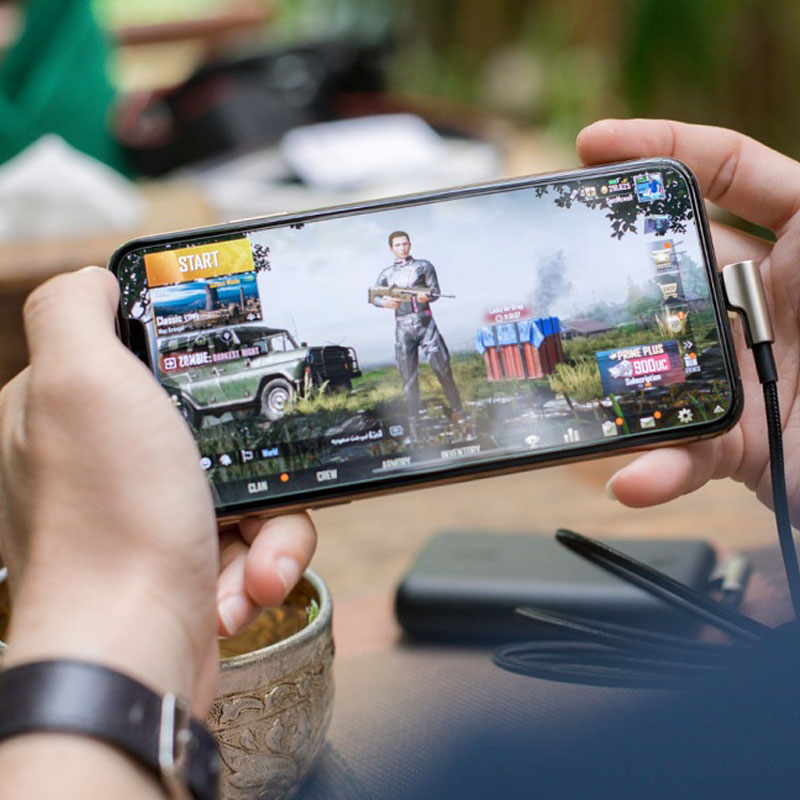
    Mumbai: The Indian gaming market is poised to reach $6-7 billion in value by 2025, according to a report by the Internet and Mobile Association of India (IAMAI) with OnePlus and RedSeer. India is currently home to over 400 million mobile gamers and the number of gamers is estimated to grow to 650 million by 2025. Currently, mobile gaming dominates the Indian gaming industry, contributing more than 90 per cent to the $1.8 billion gaming market, and is expected to further grow to generate $6-7 billion value by 2025, the report said.

    Mobile gaming dominates the Indian gaming industry, contributing more than 90 per cent to the $1.6 billion gaming market. As per the report, it is expected to grow further to generate a $3.9 billion value by 2025.  The number of mobile users is also estimated to grow from 430 million to 650 million by 2025, it added.

    “We are at the cusp of a gaming revolution and the gaming ecosystem is working towards user-friendly smartphones and leveraging 5G technologies,” said the principal secretary of the Telangana government’s department of industries and commerce and information technology Jayesh Ranjan. The report was released by Ranjan, along with the joint secretary of the ministry of electronics and information technology Saurabh Gaur.

    “The gaming sector has underlined the significance of affordable smartphones with capable hardware. I am happy that, parallelly, work is going on to make phones more user-friendly for gaming by leveraging 5G technology, developments in AI/ML, and hardware manufacturing,” he added.

    According to the report, 40 per cent of hardcore gamers pay for their games with an average spend of Rs 230 per month. The Covid-19 pandemic has accelerated the organic growth of digital games as mobile app downloads grew by 50 per cent and user engagement went up by 20 per cent, the study says. The increased gaming time has spurred the growth of hardcore gamers in India, even as casual games remain the most popular genre in India.

    Gaur voiced support for creating games for the Indian audience, based on Indian culture. “The [global] gaming industry can be matched with electronics, and consoles could be manufactured in India,” he said.

    Indian gaming has leapfrogged into the mobile gaming era due to the rapid increase in smartphone penetration in the country, with large console and PC games now being curated for mobile platforms. The industry is also attracting huge investment interest, with nearly $1 billion being invested in the sector in the last six months.

    Smartphones have become more affordable and pack strong hardware that is equipped to run games which may require medium to high specifications. This has opened accessibility to more immersive gaming for the masses, with smartphone OEMs also increasingly focusing on incorporating dedicated gaming features on their newest devices and launching gaming-specific phones.

    “Over the past few years, the e-gaming industry in India has grown tremendously, driven by the rising avenues for digitization promoted by the flagship initiative of the government, the Digital India program, and improved accessibility centered around innovation and affordability by OEMs,” said OnePlus India vice president, chief strategy officer and head of India sales, Navnit Nakra who was also present on the occasion. 

    Speaking on the occasion, Qualcomm vice president and president Rajen Vagadia Rajen Vagadia highlighted how efforts are being undertaken to nurture esports and ensure that it is seen as a field that can be taken up professionally as well.

  • DTH expands even as pay TV market saturates

    DTH expands even as pay TV market saturates

    Mumbai: Pay TV subscription revenue is expected to reach $7.6 billion by 2026 over $6.4 billion in 2021, stated Media Partners Asia in its latest report on India’s online video market, which also highlights the increasing market share of Direct-to-home (DTH) even as cable TV remains in structural decline.

    There are 127 million pay TV subscribers in India and DTH has been winning share from cable TV since 2019. While DTH grew its subscriber share from 42 per cent in 2019 to 47 per cent in 2021, the share of cable TV declined from 56 per cent to 52 per cent in the same period.

    According to the report, there will be one billion video screens in India by the end of 2024. There will be 47 million FTA households and 121 million pay TV homes. As many as 13 million homes will have hybrid set-top-boxes, 744 million users will have 4G connections and 155 million users will have 5G connections. In the long run pay TV homes will decline while FTA homes will continue to grow, the report indicated.

    By 2026, two-third of Indians will have access to high-speed mobile broadband reaching 899 million subscribers, out of which 34 million homes will be serviced by fibre, and three million homes will have wireline (digital subscriber line) connections. The report estimates that ~90 per cent of fixed broadband homes will be serviced through fibre.

    In terms of revenues, the video market scale will grow to reach $18 billion in 2026 over $11.6 billion in 2021. Pay TV subscription revenues may reach 7.6 billion, pay TV advertising revenues at $6.1 billion, OTT advertising-video-on-demand (AVOD) to reach $2.8 billion and OTT subscription-video-on-demand to reach $1.8 billion.

    D2C SVOD subscribers to reach 193 million by 2026

    Despite content supply bottlenecks, India’s OTT SVOD subscriptions continue to grow at a robust rate. This year OTT subscribers are expected to grow by 1.6 times over the previous year to reach 88.7 million. Most of these subscribers are expected to come through Disney+ Hotstar in Q4. As per the MPA’s estimate, Disney+ Hotstar subscribers is likely to reach 46 million, Prime Video to reach 21.8 million and Netflix to reach 5.5 million at the end of the year. These platforms will continue to account for 83 per cent of total direct-to-consumer subscribers in India.

    The OTT industry is also expected to invest $1 billion in content in 2021, according to the report. Their share of acquired and local content is 30 per cent and is expected to grow to 40-45 per cent in the near future. New D2C SVOD entrants are going to enter the market by 2022 including services from HBO and Comcast.

    The content strategy of the leading OTT players is diverse and has led to subscriber growth. For Disney+ Hotstar, the combination of sports and local originals has been increasing subscriber growth. It hiked its base plan by 25 per cent “which is justified given the value of its upcoming slate of premium sport and local original content”, said the company.

    Disney+ Hotstar, which is currently at the lower end of ARPUs (<$2), will see its pricing power improve after 2022, according to the report. Prime Video has benefitted from its regional content push and Netflix has invested heavily in original content with 41 original releases in 2021.  

    In 2022, the Indian Premier League (IPL) media rights will be up for grabs once again with TV and digital rights being sold separately. The report estimates that top bidders will include Disney, Amazon, Facebook, Jio and Sony.

  • India has 96 mn SVOD subscriptions, 40.7 mn subscribers: Ormax report

    India has 96 mn SVOD subscriptions, 40.7 mn subscribers: Ormax report

    Mumbai: India has 353 million OTT users and 96 active paid subscriptions, according to Ormax OTT Audience Report 2021.

    The research is based on a sample size of 12,000 across urban and rural India, was conducted from May to July 2021. The report breaks the universe by gender, age, NCCS, pop strata, states, and cities.

    The findings revealed that one in four Indians watched online videos at least once in the last one month. Apart from 96 million active paid OTT subscriptions, there are 40.7 million paying (SVOD) audiences, that is, an average of 2.4 subscriptions per paying audience member. 66 per cent of these paid subscriptions are with the male audience. The top six metros contribute only 11 per cent to India’s OTT universe but 35 per cent of total paid subscriptions. Bengaluru, Delhi and Mumbai are the top three cities in this regard, with more than eight million active paid subscriptions each.

    “India’s OTT audience universe is rapidly growing, and an accurate estimation of market size is a crucial strategic component in a growing category,” said Ormax Media, founder and chief executive officer, Shailesh Kapoor. “While streaming companies have data on usage and subscription of their own platforms, there is no industry-level audience research available to size and profile the Indian OTT market at large. This research, which will be conducted in the same period every year, aims to plug this significant data gap in the streaming industry in India.”

    Kapoor further said OTT is no longer a niche category, but at 25 per cent penetration, there is still a huge potential to grow the market, especially outside the top cities. “We have seen a rise in regional OTT platforms in India over the last year. This report provides market and demographic level data for platforms to take sound investment decisions on regional products, be it a stand-alone app or regional content within a national app,” he added.

  • Interbrand unveils top 30 brands set to revolutionise the US market

    Mumbai: Global brand consultancy Interbrand launched its Breakthrough Brands 2021 report unveiling the top 30 brands set to take the US market by storm in the coming decade.

    From mobile banking developed specifically for Black and Latinx customers to secure messaging services and plant-derived product coatings, Interbrand listed some challenger brands from across sectors that have got what it takes to become household names.

    The brands also reflect the broader context of a tumultuous year, with businesses required to experiment and be resilient in response to a global pandemic, social justice movements, and a highly contentious election cycle in the US. These growth-stage companies have a new set of challenges to contend with as we enter a ‘new reality post-pandemic.

    Five themes of innovation emerge

        Power in Representation: The impact and momentum of Black Lives Matter led to ripple effects on the corporate world and gave the momentum to companies focussing on increasing representation and diversity in different categories. Brands like Greenwood Bank, Omsom, SpringHill Company, and BREAD Beauty Supply are changing the conversations around how these communities are spoken to, represented, and empowered.
        Flipping the Focus on Preventative Health: Despite Covid, new brands and technologies are democratising healthcare – making monitoring and diagnostics available to those on lower incomes, with less comprehensive insurance and short on time. Healthy.io, Butterfly Network, and Owlet are key to fixing this critical aspect of the healthcare lifecycle, helping lift the pressure and impact on the entire healthcare system.
        Tackling Taboos: A long time in the making, we are seeing an explosion of brands in the personal care space bring empowerment and acceptance of our very human issues. With the likes of Starface, Megababe, and Frida Mom, taboos have never been more mainstream.
        Easing Parenthood Anxieties: Thanks to Covid, the lack of intergenerational networks providing support and wisdom means millennial parents feel like they are alone in this new phase. Young start-ups including Frida Mom, Owlet, and Lovevery are taking on this role, helping navigate this vulnerable transition into parenthood and providing reassurance throughout childhood.
        Gaming Everything: Gaming is no longer a stereotyped, niche activity – it is flowing into different industries and impacting the design aesthetic of brands. We are seeing playful characters, 3D illustrations, and immersive brand worlds, from Discord and Dapper Lab’s gamification of communication and blockchain respectively to Zwift’s game-like landscapes and Revolut’s graphics and brand identity.

    Zwift CEO and Co-Founder, Eric Min said: “My idea for Zwift was born out of a problem I faced personally – the lack of social connection using cycling simulators. Using the power of massively multiplayer gaming technology, we’ve created a social fitness environment that lets you train, explore and compete with other ‘Zwifters’ from all over the world.”

    Interbrand has shortlisted 30 companies that best exemplify brand growth from a list of over 400. Brands were selected against three core criteria: understanding human truths (with key indicators including social post volume and growth), creating exceptional brand experiences (brands that answer unmet consumer needs), and delivering superior business results.

    Interbrand New York CEO Daniel Binns said: “Following a tumultuous year for business across most sectors, this year’s brands are something special. In increasingly difficult circumstances, these brands have launched, pivoted, survived, and even thrived. They are more than ready to follow in the footsteps of the Breakthrough Brands alumni.”

    Interbrand New York Associate strategy director Naeiri Zargarian said: “This new class of Breakthrough Brands indicates the themes that will shape a post-pandemic world. The past year surfaced cultural tensions that will continue to be opportunities for brands and institutions; the realities of modern parenthood, inclusivity, and representation across categories and a willingness to tackle historically taboo topics.”

  • Alcohol digital ad spend grows to 24% in 2020

    Alcohol digital ad spend grows to 24% in 2020

    MUMBAI: Alcohol ad spend in 12 key markets, including India will grow by 5.3 per cent in 2021, ahead of the 4.9per cent growth of the ad market as a whole, as brands recover from a much steeper drop last year, according to a report by media agency Zenith published on Monday. Alcohol advertising will then grow roughly in line with the market, with 4-5 per cent annual growth in 2022 and 2023.

    Pandemic forced the alcohol ad spend to move online

    Alcohol brands have historically been slow to commit to digital advertising, devoting less than half as much of their budgets to it than the average brand in 2020. This is changing rapidly now. The closure of hospitality venues meant that brands needed a new route to market. Breweries, distilleries, bars, and restaurants diversified into direct-to-consumer shipping and takeaway drinks, facilitated by e-commerce, and advertised heavily on digital media, particularly social media. Alcohol brands increased their spending on digital media from 21per cent of budgets in 2019 to 24per cent in 2020. Seeking to create compelling brand experiences at home instead of at the bar, drinks companies invested in owned assets such as brand websites and educational content. Spirits brands were particularly prominent, using influencers and trade partners to teach consumers to mix their cocktails, for example.

    “Spirit brands have surpassed beer brands in terms of sales value by offering more premium experiences and rituals around their product and serve,” said Zenith global chief strategy officer Ben Lukawski. “With the pandemic taking audiences away from the on-trade we have seen a greater emphasis on bringing these premium experiences in the home through owned digital content.”

    Consumers are now much more aware of the available options for buying alcohol online, and alcohol brands now have distribution networks in place to supply them. Zenith expects brands to expand their digital advertising to support alcohol eCommerce even after pubs and restaurants are fully open, fueling 9.2per cent annual growth in digital ad spend between 2019 and 2023 when digital advertising will account for 30per cent of alcohol advertising budgets.

    Adspend on Television & OOH less effective

    Alcohol brands traditionally rely heavily on television and out-of-home advertising, spending twice as much on television as the average brand and nearly four times as much on out-of-home. Alcohol brands devoted 49 per cent of their budgets to television in 2020, compared to 24 per cent for the average brand, and 19per cent to out-of-home advertising, compared to 5per cent. This tactic has become less effective as audiences shift to digital media, though, particularly the young consumers most likely to visit a new bar and try out a new drink.

    Zenith predicts alcohol brands will reduce their expenditure on television by 2.4per cent a year to 2023, compared to the 2019 baseline, as traditional broadcast audiences continue to shrink. Out-of-home advertising, by contrast, will grow by 1.1per cent a year, even taking into account the pandemic-induced reduction in foot and road traffic. Television’s declining reach makes out-of-home ubiquity even more valuable.

    Alcohol advertising to recover from 2020 decline by 2023

    Alcohol advertising shrank nearly twice as fast as the overall ad market in 2020, falling by 11.6per cent compared to 6.4per cent of the market as a whole, Brand finances were squeezed by reductions in consumption volume, the average price per drink, and profit margins. With bars, pubs, and restaurants closed, consumers drank less alcohol and bought the drinks they did consume from shops where they cost less, with a much lower mark-up. Brands cut back their marketing sharply to protect their bottom lines, and their combined ad spend fell from $7.6bn in 2019 to $6.7bn in 2020.

    Brands are now bringing money back into the market as vaccine programmes have consumers socialising in person again, and the hospitality industry has begun to reopen. But the return to normality will be slow, and alcohol ad spend will still be 8per cent below the 2019 level by the end of 2021, at $7.0bn. Zenith does not expect alcohol advertising to exceed the pre-pandemic peak until 2023 when it will reach $7.7bn.

    “The alcohol industry has suffered more from the pandemic than most, and that was reflected in the steep drop in ad-spend last year,” said Jonathan Barnard, Head of Forecasting, Zenith. “The recovery won’t be as dramatic as the downturn, but investment in digital communication will drive steady growth in alcohol advertising for the next few years.”

  • 60% mobile gamers retain brand recall from in-app ads: Report

    60% mobile gamers retain brand recall from in-app ads: Report

    NEW DELHI: When it comes to entertainment, Indians are hooked to their mobile phones and unlikely to let go any time soon. In fact, mobile gaming, which registered an unprecedented uptake during the lockdown period, still holds substantial sway a year after the pandemic. According to a report by mobile advertising firm InMobi, gaming platforms witnessed a 1.5X increase in unique user count from February (pre-lockdown) to December (post lockdown) in 2020.

    Titled "Everyone's Gaming Among Us – Mobile Gaming through the Pandemic and Beyond', the report revealed that 45 per cent of Indians have started playing games on their smartphones. Majority of Indians are committed gamers who play at least once or more every day. The report also highlighted that women constitute 43 per cent of the mobile gaming audience, of which 12 per cent belong to the age group of 25-44, and 28 per cent are above 45 years.

    “Mobile gaming accelerated due to the lockdown in India as people continued to shelter at place and work from home. What was seemingly an emerging trend is now a lasting behaviour… With over 80 per cent of mobile gamers playing every day, it has evolved to become an integral part of the connected consumer’s life,” said InMobi Asia Pacific MD Vasuta Agarwal.

    It wouldn’t be wrong to say that gaming has become a habit – Indians play mobile games in multiple short spurts during the day. InMobi reported that time spent on gaming apps surged through the day as people played a lot more, often starting as early as 7:30 am till 11:30 pm. The sharpest surge in the use of gaming apps occurred at 11:30 am, with a 6.6X increase in gameplay.

    Close to 40 per cent of the respondents who participated in the survey indicated that they usually play in 10-minute sessions – in between meetings, chores, meals. Among women gamers, 32 per cent play in 10-minute sessions while 23 per cent tend to engage for over an hour every day.

    Experimentation is also on the rise, with 40 per cent of those surveyed saying they had more than three games on the phone at any given time and over half downloading a new game every week.

    Data also showed that 74 per cent of the gamers prefer to watch gaming advertisements over in-app purchases in order to move to the next stage in the game. They also boast of a high ad recall, with 60 per cent being able to recall an ad seen in or during a game. However, the report stated that most marketers seem to be hesitant when it comes to investing in the gaming space, due to misplaced notions on the lack of personas, placements, engagement, and brand safety.

    "Gaming is one of the most scalable channels for brands to reach diverse target audiences. Be it women, millennials, sports enthusiasts, or OTT viewers, everybody is gaming among us. Moreover, mobile gamers are receptive to advertising with three in four consumers preferring to see an ad. Gaming is the biggest opportunity for brands to maximise impact with video and other engaging formats in 2021,” asserted Agarwal.

    The InMobi report is based on the app usage patterns and trends that were analysed on the basis of 1.7 trillion ad requests between January 2020 and January 2021 on the InMobi Marketing Cloud and Audience Intelligence Platform, and a survey conducted among over 1,000 smartphone users from across India using InMobi Pulse.

  • Virat Kohli commands highest brand value in Indian cricket: Checkbrand report

    Virat Kohli commands highest brand value in Indian cricket: Checkbrand report

    New Delhi: Checkbrand, an online sentiment analysis company, has analysed data for 45 top players on social media for the period of August – October 2020 and released a report on the online sentiments around them. This is the first quarterly analysis on the latest trending Indian cricketers by any agency in the country. Since the report is released for the first time, there is no comparison to the past data. Checkbrand analyzed more than 100 million online impressions for the report.

    The most trending (Twitter, Google Search, Wiki, YouTube etc) player was Yuvraj Singh in the last quarter (1622) followed by Rohit Sharma (1591) and Virat Kohli (1574), Harbhajan Singh ( 1376) and Parthiv Patel (1362). It was interesting to note that three retired players were amongst the top three trending players in last quarter.

    Virat Kohli has taken the top position when it comes to engagement on social media at 1.1 lakhs followed by Mahendra Singh Dhoni 1.02 lakhs, Rohit Sharma at 0.80 lakhs, Kapil Dev at 0.51 lakh and HardikPandaya at 0.40 lakh. Four cricketers had zero engagement Rahul Dravid, Piyush Chawla, Axar Patel and Sunil Gavaskar.

    Top three positions are undertaken by ex-cricketers when it comes to mentions. Kapil Dev has the highest mentions in the last quarter 8.8 lakhs, Dhoni at 6.2 lahks, Irfan Pathan at 4.27 lakhs, Virat Kohli at 3.45 lakhs. Umesh Yadav has the maximum positive sentiment at 86.3 per cent followed by Yuvraj Singh at 85.6 per cent, Suresh Raina at 74.8 per cnet, Ashwin at 73.4 per cent and Kapil Dev at 73.7 per cent.

    Virat Kohli emerged as the clear winner with a brand score of 43.94, followed by Yuvraj Singh 40.40, Sachin Tendulkar 37.51, Umesh Yadav 35.91, Suresh Raina 35.01 and Dhoni at 34.80. The overall score is measured out of 100. Five parameters have been considered for devising this score which are followers (20), trends (10), sentiment (30), engagement (20) and mentions (20).

    The Indian captain’s brand value in monetary terms basis the engagement and followers stood at Rs 3.28 billion, for Sachin Tendulkar at Rs 1.67 billion, followed by MS Dhoni at Rs 1.24 billion, Rohit Sharma at Rs 0.96 billion and Suresh Raina at Rs 0.60 billion.

    Speaking on the sentiment analysis, Checkbrand.online and ADG Online MD Anuj Sayal said, “The mentions for Kapil Dev were the highest and engagement was in the top five players due to the biopic movie on the cricketer. Despite low performance during the IPL MS Dhoni has stayed in top 5 positions in almost all the parameters apart from trends. Sachin’s brand value is the second highest amongst all the cricketers.”        

    “This is our first report and we plan to add more interesting anecdotes in our next quarterly report. We wanted to create a platform that could help brands understand their real value in terms of presence on Digital media on real-time basis.  We are eager to work for them and help them improve their overall digital presence,” he further added.

  • Indians are spending more time on smartphones since lockdown: Vivo report

    Indians are spending more time on smartphones since lockdown: Vivo report

    NEW DELHI: Mobile manufacturer Vivo has shared the findings of the second edition of ‘Smartphones and their impact on human relationships 2020’, a study that showcases the impact of mobile devices on consumers in this year of social distancing.

    As the smartphone becomes the centre of universe in our lives, its impact on society, on behaviours and every day human connections is significant. The study evaluates and sheds light on the various dimensions of increasing smartphone usage – extent of usage, impact of lockdown on usage patterns, impact on personal health and social relationships.

    The study revealed that 66 per cent Indians believe that their smartphone improves their quality of life. Still, a shocking 70 per cent feel that if their smartphone usage continues increasing, it is likely to impact their mental/physical health. Additionally, 74 per cent of respondents said that periodically switching off their mobile phone can help them spend more time with family. However, only 18 per cent of users have actually switched off their phone on their own.

    Vivo India director – brand strategy Nipun Marya said, “The year 2020 was unusual – a year that nobody had imagined. Amidst the socially distant lives that the pandemic pushed us to lead, the smartphone emerged as the central nervous system for everything – be it working or learning from home or staying connected with friends and family. However, while smartphones have given much-needed flexibility to people, its excessive use has led to addiction among users, and that in turn is impacting human relationships and behaviour.”

    Here are the key takeaways from the report on smartphone usage and the impact of Covid2019 on it:

    •        25 per cent increase in average daily time spent on smartphone has increased in the post-Covid era

    •        Indians are spending more time on smartphone since lockdown (April 2020) – OTT (59 per cent), social media (55 per cent) and gaming (45 per cent)

    •        The smartphone is the central nervous system for everything that consumers do.

    o   79 per cent users agree that a smartphone helps them stay connected with their loved ones

    o   66 per cent users agree that smartphones improve overall quality of life

    Addiction – While smartphone emerged as a necessity and had given much-needed flexibility to people, its excessive usage has triggered addiction:

    •   88 per cent users said that people point them out for using the phone when they are with them

    •   46 per cent people pick up the phone at least five times in an hour-long conversation

    •   70 per cent users feel excessive use of smartphones is impacting their mental and physical health

    •    84 per cent users check their phones within 15 minutes of waking up

    Relationships – The smartphone addiction resulting from excessive usage of smartphone is impacting human behaviour and relationships:

    •    89 per cent respondents agree that excessive use of smartphone is having an impact on the quality of time spent with their loved ones

    •    74 per cent said that it is important to have a life separate from your smartphones

    •    70 per cent users feel that mindless usage of smartphones is adversely impacting their relationships 

    Empathy – Let’s #SwitchOff for a while for a healthy mind and a healthier life

    •    73 per cent would be happier if they spent less time on smartphones

    •    74 per cent of respondents feel that periodically switching off their mobile phone can actually help one spend more time with family 

    The study was commissioned by Vivo and executed by CyberMedia Research (CMR), conducted across top eight cities in India – Delhi, Mumbai, Kolkata, Bengaluru, Chennai, Hyderabad, Ahmedabad and Pune. The report cuts across age-groups and demographics: youth, working professionals and housewives spanning the age groups of 15 to 45. The total number of respondents were 2,000 out of which 30 per cent were females and 70 per cent were males. 

  • Zydus reports 4.9 per cent sales growth in Q2

    Zydus reports 4.9 per cent sales growth in Q2

    MUMBAI: Zydus Wellness Ltd reported a growth of 9.3 per cent in gross sales for the second quarter ending 30 September 2020. The total income from top line sales was reported at Rs 3,420 million, up by 4.9 per cent (y-o-y). 

    PBT before exceptional items was down by 63.1 per cent to Rs 74 million (y-o-y). However, the same was up by 27 per cent before GST budgetary support that ceased for Sitarganj plant from January 2020 onwards.

    During the quarter gone by, key brands namely, Sugar Free, Everyuth Scrub and Everyuth Peel Off, Glucon D and Nycil continued to hold strong positions in their respective categories.

    The company continued to grow the categories and increase market share of its brands with new offerings and expanding its reach through e-commerce channels and building brand advocacy during the quarter.

    Glucon-D ImmunoVolt was launched to tap the heightened need of Immunity products for kids. The product is fortified with Vitamin C, Vitamin D, and Zinc to boost immunity. Complan was launched in an economical and handy 75 gram sachet priced at Rs 30 per pack. Sugar Free has seen brisk sales in the e-commerce channel and has grown at more than 100 per cent versus the corresponding quarter last year on this channel. The quarter also witnessed the launch of Everyuth Aloe Vera & Cucumber Gel in face moisturizers segment.   

    During the quarter, the wellness brand completed preferential issue and QIP issue of equity shares by raising Rs 3,499 million and Rs 6,500 million respectively from the above issuance, the proceeds of which will be used towards redemption of non-convertible debentures. As a part of a strategic initiative to pare down the debt, the company bought back its own non-convertible debentures of Rs 11,050 million which will help the company reduce the debt burden and deleverage the balance sheet. In the process of buying back its own non-convertible debentures of Rs 11,050 million, the company has paid a one-time debenture redemption premium of Rs 980 million which is recorded as an exceptional item in the financials for the quarter.

    The completion of buy back of non-convertible debentures will result in lower interest cost and shall have a positive impact on the earning per share (EPS) of the company over a period of time.

  • Telcos may skip 5G spectrum auction due to high prices: Fitch Ratings

    Telcos may skip 5G spectrum auction due to high prices: Fitch Ratings

    MUMBAI: Credit rating agency, Fitch Ratings, stated that India’s new National Digital Communication Policy (NDCP) could manage to benefit the telecom sector by making it easier to meet continuous rising data demand and focusing on tax and fee duty on the manufactory.
    5G spectrum auctions could be skipped by the Indian telcos if prices are too high. The Indian telecommunication companies are likely to raise investment in 5G spectrum which directly depends on the 5G spectrum principal price. This can overextend the liabilities on balance sheets of these companies.
    Furthermore, Fitch also explained how private telcos are going to benefit and enlarge their broadband coverage funded by the universal service obligation fund.
    By initiating and creating two million Wi-Fi hotspots in rural areas and another one million in urban areas, the NDCP plans on connecting almost more than 600,000 villages to the digital network. Although, according to Fitch, there are going to be a few execution challenges but it will only lead to broadband adoption rate increasing and going higher.
    The research report also stated that telco costs and red tape could be cut by the NDCP’s plans to review and rationalise the sector’s tax structure and optimise future spectrum asset pricing.
    A Fitch statement read, “Indian telcos face heavy and multiple taxes – including licence fees, spectrum usage charges, and universal service fees on top of expensive spectrum assets. Meanwhile, intense competition has limited telcos’ pricing power. Overall, these pressures have stretched balance sheets”.