Tag: Renewable Energy India

  • Sparks fly at Times Now Summit as Pathan and Trivedi lock horns on stage

    Sparks fly at Times Now Summit as Pathan and Trivedi lock horns on stage

    MUMBAI: It was anything but a polite panel discussion. By the time the dust settled at the Times Now Summit 2025 in New Delhi, the audience had witnessed more fireworks than a Diwali finale. What started as a debate quickly turned into a political mud-wrestling match, as AIMIM’s Waris Pathan and BJP’s Sudhanshu Trivedi squared off in a no-holds-barred clash of ideologies, history, and hot potatoes.

    The brawl began with BJP MP Trivedi laying out his now-signature ‘chronology’ on the Aurangzeb controversy. According to him, the blame game begins not with the BJP but with Samajwadi Party’s Abu Azmi, followed by Congress’ Rashid Alvi and Imran Masood. “It was Abu Azmi of the Samajwadi Party who raked up the issue of Aurangzeb, followed by Rashid Alvi of the Congress Party and then Imran Masood,” Trivedi claimed, looking more historian than politician.

    Pathan, never one to duck a punch, fired back with a stinging retort. “Everyone knows who has mastered and holds a PhD in polarisation—it’s the BJP. For the last 10 years, we have seen BJP-driven polarisation across the country. The party has completely lost focus on its priorities,” he said, accusing the ruling party of sowing division like it’s sowing season.

    The debate flared up further over the Waqf Amendment Bill. Pathan slammed the BJP for what he called a deliberate attack on minority rights. “What message do you want to send? What was the need to bring the Waqf Amendment Bill? We know BJP’s intention is to take over our land. The BJP wants to usurp our Waqf land just to polarise the situation. Why do they want to spread hatred”

    Trivedi, unfazed, cited land statistics to back his party’s move. “The Waqf Board claimed 120 properties in Delhi, and the Congress handed them over by 2014. The move was necessary to protect government assets,” he argued.

    While the political slugfest stole the spotlight, the Summit wasn’t all fire and fury. BSE MD & CEO Sundararaman Ramamurthy joined virtually with a more optimistic pitch. “The theme of Keeping India Ahead aligns very well with India’s vision of Viksit Bharat, a developed nation by 2047, led by our PM Narendra Modi,” he said. He cited India’s $4.5 trillion economy and projected a leap to $30–35 trillion by 2047, potentially hitting $50 trillion.

    Minister of consumer affairs and renewable energy Pralhad Joshi, flexed the green credentials, revealing a Rs 20,000 crore investment push into renewables. “India is currently the third-largest producer of renewable energy globally,” he noted, casually.

    Jal Shakti minister Chandrakant Raghunath Patil dived into water politics—literally. Speaking on rainwater management and pollution, he pointed fingers at agricultural chemicals like urea for polluting rivers. “If agricultural water is used specifically for agriculture, this problem can be addressed,” he said. He added that the government had launched a cleanup drive for six major rivers, including the Ganga.

    The summit, backed by state partners such as Punjab, Uttarakhand, Madhya Pradesh, Uttar Pradesh, Goa and Haryana, along with Amrita Vishwa Vidyapeetham and a raft of brand partners, served up a heady cocktail of policy, polemics, and personality clashes.

    And if day one was anything to go by, Times Now Summit 2025 might need a referee as much as a moderator.
     

  • Micromax Ventures into solar market with 5GW facility, partners with Jinchen

    Micromax Ventures into solar market with 5GW facility, partners with Jinchen

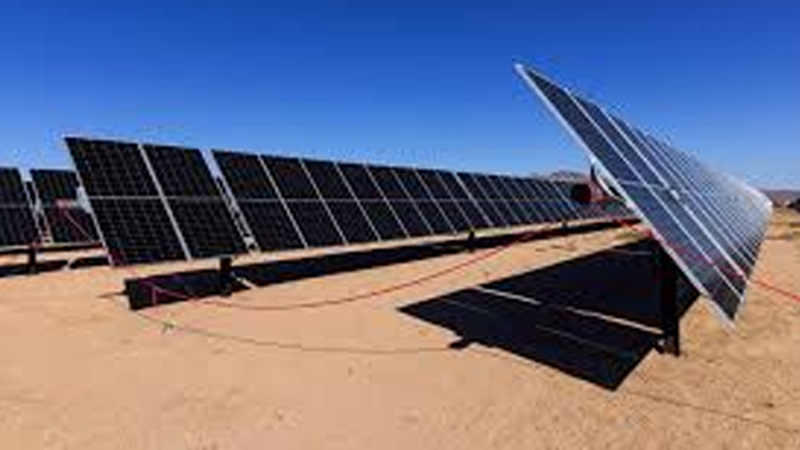
    MUMBAI: The sun isn’t just shining-it’s powering the next big leap for Micromax. Once a formidable name in India’s mobile revolution, the homegrown electronics giant is now setting its sights on the solar energy sector. With its latest venture, Startup Energy, Micromax is stepping into the solar panel manufacturing game in partnership with China’s Jinchen, a leading solar equipment manufacturer.

    Micromax has inked a strategic contract with Jinchen to establish a 5GW advanced solar module manufacturing line. The project will roll out in multiple phases, integrating automation, precision engineering, and high-efficiency production technologies.

    The goal? To deliver cost-effective, high-quality solar panels for residential, commercial, and industrial applications at scale.

    Micromax’s latest play aligns perfectly with India’s ambitious renewable energy mission. With the country eyeing 500 GW of renewable energy capacity by 2030, and installed solar capacity already surpassing 72 GW as of 2023, the demand for locally manufactured, high-performance solar panels is skyrocketing.

    Micromax Informatics MD Rajesh Agarwal elaborated on the company’s vision, “With Startup Energy, we are extending our expertise into the renewable energy sector, making clean power more accessible, reliable, and cost-effective for individuals and businesses.”

    Startup Energy’s manufacturing facility will leverage advanced automation and precision engineering, ensuring top-tier efficiency and scalability. But Micromax isn’t stopping there—the company also plans to explore strategic R&D partnerships to drive innovation in next-gen solar technologies. From enhancing energy efficiency to increasing long-term sustainability, Micromax is crafting an ecosystem where affordability meets cutting-edge advancements.

    With Startup Energy gearing up to power homes, industries, and the nation, Micromax is proving once again that it knows how to disrupt an industry—this time, under the Indian sun.

  • JSW Energy reports resilient Q2 FY25 results amid economic challenges

    JSW Energy reports resilient Q2 FY25 results amid economic challenges

    Mumbai: In a year marked by economic challenges and shifting global energy priorities, JSW Energy continues its steady performance, navigating volatility with a balanced mix of innovation, sustainability, and expansion. The company’s Q2 FY25 results underscore a nuanced position: while overall revenue reflects a modest decline, strategic initiatives in renewable energy and infrastructure lay the groundwork for long-term growth.

    In Q2 FY25, JSW Energy’s revenue from operations stood at Rs 3,237.66 crore, a slight decrease from the Rs 3,259.42 crore recorded during the same quarter last year. Although consolidated EBITDA dipped by 5 per cent YoY to Rs 1,907 crore, underlying EBITDA grew by 4 per cent, driven by increased energy generation across its thermal, wind, and hydro assets. Net Profit After Tax (PAT) grew to Rs 853 crore, marking a small but steady YoY increase, underpinned by an uptick in operational efficiency and an optimised debt position, with a net debt-to-equity ratio of 0.9x and net debt-to-EBITDA (excluding CWIP) at 2.2x.

    The company’s energy generation surged by 14 per cent YoY to 9.8 billion units (BUs), a growth attributed to the commissioning of 204 MW in wind projects and enhanced generation from both its thermal and hydroelectric assets. Total renewable energy (RE) generation rose by 14 per cent, hitting 5 BUs. Notably, wind generation surged by 37 per cent YoY, while hydro saw a 5 per cent increase. Thermal energy, despite broader industry challenges, remained resilient, contributing an impressive 4.8 BUs—an increase of 14 per cent YoY.

    JSW Energy’s commitment to environmental and social governance (ESG) is also noteworthy. The company received an ‘A’ rating from MSCI for its ESG practices and achieved a leadership score of “A-” for climate-related transparency from CDP. In addition, the company secured an all-time high score of 77/100 in S&P’s Global DJSI-ESG rating, underscoring its dedication to ethical and sustainable practices within the energy sector.

    As JSW Energy transitions toward a low-carbon energy future, its strategic focus remains steadfast on renewable energy expansion. The company’s cumulative RE generation capacity now stands at 19.2 GW, supported by significant new PPA signings for RE projects totaling 3.8 GW in Q2 FY25. Key projects include the nearly commissioned 454 MW SECI X Wind Project and new infrastructure projects in green hydrogen and battery energy storage. By March 2025, a 3,800 TPA hydrogen plant is anticipated to be operational, supplementing JSW’s green hydrogen agreements with JSW Steel, while a 1.0 GWh BESS project is slated for completion by June 2025.

    JSW Energy’s Q2 FY25 results present a complex yet promising outlook. Amid immediate financial challenges, the company’s strategic alignment with India’s renewable energy goals and commitment to ESG underscore a forward-thinking approach. With substantial growth in renewable capacity and promising new ventures, JSW Energy is positioning itself not only as a leader in India’s energy transition but as a globally responsible energy player.