Tag: Rena Golden

  • CNN’s global audience to ‘Debate the Debate’ on presidential election

    CNN’s global audience to ‘Debate the Debate’ on presidential election

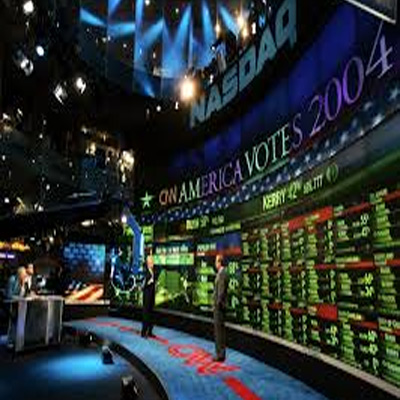
    MUMBAI: News broadcaster CNN is doing a cross-platform initiative that enables its global audience to engage in a real-time online dialogue. The conversation can be held with other viewers and users as well as with select CNN contributors as they watch the upcoming presidential and vice presidential debates.

    The live, interactive conversations called “Debate the Debate with CNN” kicked off during the first presidential debate on 26 September. It will take place on ‘The Forum’ which is CNN.com’s recently launched platform for social and political self-expression.

    CNN.com senior VP, executive producer Rena Golden says, “’The Forum’ is quickly evolving into a community whose members are actively engaging in conversations about today’s hottest topics, in particular the fast-approaching presidential election,“The opportunity to host a real-time conversation among viewers during each of the upcoming debates is thrilling.”

    To participate in “Debate the Debate,” online users must register as a member of ‘The Forum’. Upon registration, users are provided with simple tools for self-identification, social networking and community-building, including the ability to design a personalized virtual “badge” that graphically depicts their political passions and positions on top issues.

    In addition to discussing the debate with other users, registered members of ‘The Forum’ get an opportunity to sound off with CNN contributors participating in the live, online conversation. CNN correspondent Candy Crowley, senior political analyst Bill Schneider, political analyst Mark Preston and political contributors Roland Martin and Leslie Sanchez are scheduled to engage in the community.

    ‘The Forum’ provides access to the most current election information, including detailed candidate profiles and platforms; examination of salient issues; an extensive video archive allowing users to hear from the candidates in their own words – raw and uncensored; and links to relevant political Web sites and other resources.

  • ‘CNN is an American-owned news channel, but we are not America-centric’ : Rena Golden – CNN International senior vice president

    ‘CNN is an American-owned news channel, but we are not America-centric’ : Rena Golden – CNN International senior vice president

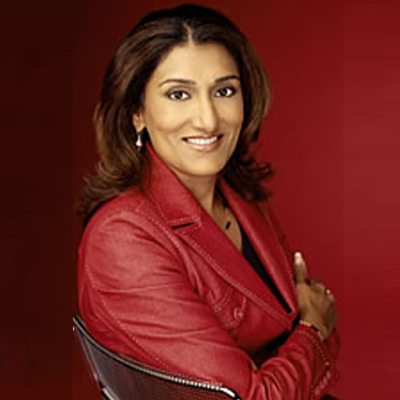
    A little girl from a small town in Bihar who migrated from India to the US when she was just six years old, Rena Golden is today at the very top rung of the hierarchy at global news major CNN International. As senior vice president, she visited India this week to announce the latest edition of “Eye on India”, focussed this time on the youth power of the country.

    Credited by her colleagues with amazing skills, journalistic and managerial, driving the world’s largest news broadcasting company CNN from just an all-American channel (“I joined 21 years ago when people used to call CNN Chicken Noodle News!”), to an international one reaching 2 billion viewers across 200 countries, she still retains a disarming level of simplicity.

    It is perhaps natural that an American of Indian origin would also be the head of CNN’s Diversity Committee, ensuring that community parity is maintained not just within the organisation but also in the dissemination of news.

    Golden, who studied in two universities in North Carolina, graduating in English with Honours (“My father wanted me to be a doctor, but I wanted to study English”) and started working with CNN from 1985, spoke to Indiantelevision.com’s Sujit Chakraborty on the present status and future plans of CNN.

    Excerpts:

    You have a large hand in shaping the strategic direction of CNN. What is the most significant area you are looking into at the moment?
    I think it is expansion of news beyond the television sphere. We are on the Internet, mobile phones… I think what CNN is interested in becoming is your news source, on whatever platform it may be… your phone, your Blackberry… We want to become your news information source and travel with you, wherever you are.

    CNN’s news website is a tremendous success which attracts a billion users every year. And CNN International has just launched its news service on mobile phone. We are also looking at video on demand and IPTV… we want to be platform agnostic.

    How is IPTV doing in America… there is content available on that platform here in India as well, but the problem is we do not have downloading technology or bandwidth?
    I think even now in the US market the bandwidth is still not there, but the market is growing in South Korea, in Hong Kong and in some of the Nordic countries in Europe, where we can stream the CNN news channel completely on mobile phones. We are still not there on that platform in the US, but I think the important thing is to have your foot in all the areas. CNN is known for that and one of the areas we are looking at is (improving) technology in news gathering.

    That is my second question, in fact. You also deal with the technology of news gathering?
    Yes, for instance, earlier, when we would go for coverage, say in India or the war in Iraq, we would have to travel with 30 suitcases of equipment. Now, thanks to CNN working with Sony, with Panasonic, and other organisations, we have cameras that fit in a suitcase, which you can take as your carry-on luggage.

    When we went to North Korea, we could move in easily and cover news in a much easier manner, which is often cheaper.

    What are the latest innovations and what are the next technological frontiers in news gathering and dissemination?
    Things are getting smaller and smaller… we are looking at shooting footage on a mobile phone. Only last week, we used a Nokia mobile phone and went “live” on CNN. You don’t have to book satellite space. You can just dial into the CNN offices in Hong Kong or Atlanta, and stream news live, so technology is getting smaller and mobile.

    CNN has more than once made public its ambitions to go regional and local. But at least in the context of the Indian subcontinent it has not happened. And now with the explosion in television news in the country, it looks like it never will. I can see your CNNj in Japan, then Turkish and Korean CNN, so why not in India?
    OK, what we have done in India goes beyond what we have done in some of the other regions. We have partnered with IBN and additionally, we have CNN International which covers India not just for Indians but for the rest of the world. Our partnership with CNN-IBN is less than a year old but it has emerged as the number one news channel in this country. That partnership is as strong as what we have in some other regions, say in Turkey where we have tied up with a media channel that broadcasts CNN in Turkish.

    I think there are different models for different markets and the model that we have for the Indian market… Wow! I mean we couldn’t have imagined this. There could be a partnership with some Hindi channel… I am not ruling that out, but what we need is as strong a partner as we have in CNN-IBN.

    We do not have anything to announce here (in terms of a regional channel) so far. We believe in having local partners and we would not do that in India and open a Hindi channel for instance, without a strong local partner. Local partners understand the country much better… So what you see, this partnership with CNN-IBN, is one of our proudest achievements.

    Chris Cramer had told us last year that BBC has a certain Mark Tully factor advantage in India. For the first time though, now both CNN and BBC can be said to running neck-and-neck. It’s been a long while coming but don’t you think it has come too late in the day because of the way Indian news channels have captured virtually all the mind space?
    Sixty years… not just Mark Tully… I think it is a huge association.

    I think also right from the days when we were ruled by the British there was some association, so what do you feel you are looking at here to change that?
    This is the only market where BBC leads the CNN. I think you just put your finger on that. India has a long historic association with Britain and BBC, especially BBC radio, which was here decades before CNN even came to the market. I respect the BBC, no doubt about that.

    But where CNN excels is in breaking news… that’s our DNA, the DNA of CNN-IBN. We also don’t have a British style of presentation, a British view of the world. We have journalists from 50 different nationalities covering news for us. Don’t get me wrong, I have a lot of respect for BBC, but I think CNN has very successfully differentiated itself.

    Unlike a few years ago, when even a major train accident here would not be covered on BBC or CNN, there is a lot of India on these channels now. But I also feel that there are documentaries that need to be made on India. What are the kinds of documentaries you think CNN ought to do on India in the near future? Do you have a kind of road map for that?
    I am glad you brought up that question. CNN has a documentary division, and one recent documentary was on Britain’s Muslim population. We also have a couple of them from Iraq and from Africa, etc. We are also doing documentaries with foreign filmmakers. We have partnered with a filmmaker from Sierra Leon who has done five or six films on the major issues of Africa. That gives us the opportunity to get into some of the under-reported stories of the world. So we are looking at filmmakers to partner with for making documentaries.

    But having said that, the important thing to remember is that we are not a documentary organisation, not a documentary channel. Our first and foremost work is 24-hour news. We believe in context, not only what’s happened but why it has happened.

    Everyone knows now India is changing, especially in the economic and knowledge sectors. What are the specific areas of change that excite you the most and why?
    I think it is the influence that Indians are now having in the diaspora… and not just the diaspora, because many Indians are also coming back home. India’s influence outside India is a story that really excites me.

    In the US, Indians are doing a lot of things. There are Indians heading technology companies, there are a couple of Indian filmmakers in Hollywood, and of course there are those in medicine and engineering. But one area where Indians are not there in the US is politics, which I think is important for us.

    The other thing, which is the topic of this edition of Eye on India, is the Indian youth. There is no other country in the world where 50 per cent of the population in under the age of 25.

    In the early days of the Iraq war, the media was not as critical as it should have been and a lot of American society regrets that

    Looking at the global picture, is there a region-wise break-up of how it all reports back to Atlanta? How does it work?
    Well, we have an Asian production hub in Hong Kong and a hub in Europe and the headquarters is in Atlanta, but we as an organisation are very decentralised. In India, we have 15 people in the bureau, but we cover India primarily by people who have been journalists in India. It is not just Atlanta dictating what stories are to be done, it’s journalists here saying that ‘these are the stories on the front pages of the newspapers today. We think these are the stories that need to be told about India’. It is people who are working in this country, living, breathing India that drives our India coverage (and likewise, across the globe). That is what makes CNN so unique.

    And speaking of regions, can you offer how revenues stack up in percentage terms?
    Our revenue increase over last year is 22 per cent. Which is very good, very, very strong growth.

    A lot has changed in the last 5-7 years. A global news perspective is not solely in the hands of the likes of the CNN and BBC anymore. The impact of Al Jazeera has been well documented. Now the French have also launched their own global news channel. How is CNN changing to meet the challenges of a world view that is no more ruled from a western Anglo-Saxon perspective?
    Let me put this clearly. CNN International is American owned, and we are proud of our American ownership, but CNN International is not America-centric. It would be crazy for us to be broadcasting internationally but from an American perspective. From the business point of view, that would be ridiculous.

    But I think competition always makes us stronger, because competition means we have to be always ahead. We welcome competition. We have been there for 25 years and there is vast acceptance, because CNN’s journalism is top notch. And we feel there is enough room for others as well.

    And we have been talking about ethics and so forth, so what are the checks and balances that are in place to make sure that stories are fair and accurate?
    First of all, we have the standard-practice guidebook, which, of course, all news organisations have, which all CNN journalists have to abide by. Obviously, the journalist reporting knows the story best, but that story is vetted by many people. Along the way there are many different people who touch that story and fact-check it before it actually goes on air. We are much more interested in getting a story right than getting it ‘first’. We are the Breaking News leader, but we would not be that if our objectivity failed.

    Yes, but say you hire me from India and I, for that matter no one, can be totally objective… maybe I am slightly with the BJP or the Congress or whatever, so a tinge of bias creeps in. So how do you correct that? At the desk level?
    Yes, there is always the issue of being subjective, but there are things like hard facts that cannot be changed. That is why we lay so much emphasis on attribution. If you watch the news channel you will sometimes find that one person has been quoted but the other one has not been… this happens sometimes even if the journalist wants to be objective. It’s in their DNA, but it happens, so we tell them, ‘Hey, that guy’s quotes are not there, so go get it’.

    There have been occasions when a story has been held back for a week to make sure that all the players have got the chance to comment. I can’t tell you how much CNN lives and dies by its credibility factor.

    We’ll pick up on a touchy issue, with American media in particular – “embedded” journalism. Isn’t the way the whole Iraq story has developed a severe indictment on the way the media reported on it from the very beginning? What’s the point of the truth coming out now, when all that is left is death and destruction?
    Well, I think the media had not been as critical as it should have been in the early days (of the Iraq war). Not only the media, there are many politicians and different segments of American society that regrets not having been more critical (at the outset). I think that a lot has changed.

    Because and after the massive Iraq fiasco?
    Because of the war in Iraq and other reasons, because of the political season in general, but I do think that a lot of that has changed. I do think the media has got a lot proper.

    Veering off from your day job, as it were, you are on the advisory board of the Atlanta Woman magazine. Tell us something about the magazine and your area of interest in this.
    I am no longer on the board, but this is a local magazine from Atlanta focussing on the businesswomen. I think as a person involved with international news, I am always interested in what’s happening outside my world. And as a mother, as a wife and as a citizen of Atlanta, Georgia, I also have my responsibility of giving something back to my community.

    As the head of the CNN committee on diversity, what are the crucial diversity issues you face and how do you resolve them?
    The diversity issue we face overall is to maintain the diversity of coverage, to be sensitive to diverse cultures. With American, Latin American, African, or Indian people, all working together in the newsroom, it can be tremendously exciting but there is a lot of opportunity of misunderstanding. And what we encourage is a very open communication in our newsrooms, where people can talk to each other honestly, without feeling they are being attacked. But it’s really difficult to work with such diversity of cultures. It’s a tough challenge.

    Sure, but the question is, how do you resolve that?
    We resolve that by getting people to get together and discuss issues together. And we also give people opportunity to take their issues up without putting their names. If somebody wants to talk to me about a report that he or she feels has been unfair to a particular group of people, they can send me an unsigned note.

    We also hold functions where I may not be there but my managers are there. Transparency is the most important thing.

    You are in charge of talent scouting too. What do you think of the talent pool in India in your line of work and how do you plan tapping that pool?
    Well, I’ll tell you what kind of talent we are looking at. There is a lot of talent here. For CNN International, the presenter has to be a really strong journalist, people who know how to write, and more importantly, people who can speak extempore without a script. There are times, during Breaking News stories, when people have to work for four hours at a stretch in front of the camera without a script. These are people who have to have a fairly strong recall, they have to know the history, the culture, and feel confident enough to express themselves without the written script.

    There are people who differ with me and say, ‘No, an anchor is very different from a reporter. They have to look good, have a good voice, look polished all the time… and it’s the reporter who has to be out there and do the story. No. I can’t afford to do that in CNN International.

    Our anchors are the ones who are on the field as much as possible. Because to my mind, there is no difference between an anchor and a reporter. In the case of Lebanon issue last year, for example, I had three or four anchors going from Atlanta reporting alongside CNN reporters.

  • CNN launches documentary strand

    CNN launches documentary strand

    MUMBAI: CNN International has teamed up with London based documentary maker ‘Journeyman Pictures’ to launch a new weekly 30 minute documentary strand, WORLD’S UNTOLD STORIES.

    Launching on 17 February, CNN International has purchased an initial run of 25 documentaries from ‘Journeyman Pictures’ for 2007 with the first four films looking at police recruitment in Iraq, the sex trade in India, Afghanistan’s first female governor and combating terrorism in the Philippines.

    “These are remarkable documentaries and I’m proud to have secured the rights to show them”, said CNN International senior vice president Rena Golden “The films are compelling and fresh, covering controversial issues and datelines that are not currently getting a lot of media attention. The series features superbly crafted journalism in which the commitment and courage of the reporters shines through.”

    Journeyman Pictures, director Mark Stuke said “We’re delighted to have agreed with CNN International to provide programme selections from the Journeyman throughput on an ongoing basis. There can be no more qualified platform on which to see the international niche of programming we dedicate ourselves to. And I know our suppliers are going to be as pleased as us.”

    Some of the documentaries include The Very Thin Blue Line which takes the viewer inside a police training camp in Jordan where the instructors focus on one skill in particular – survival, Land of Missing Children shows reporter Sam Kiley accompanying reluctant police on a raid where girls are rescued from prostitution only to disappear again.

    A Tale of Two Women is set in Bamiyan, Afghanistan where the country’s first and only female Governor. Habiba Sarabi is trying to carve out a new Afghanistan by sending girls to school and persuading farmers to give up their opium crops and Member of Parliament Malalai Joya who lives under constant threat of assassination. Road to Terrorism provides extraordinary access to the fight against terrorism at the ground level in Phillipines.

    The documentaries will be aired weekly on Saturdays at 9:30 am and 5:30 pm and Sunday at 5:30 pm.

  • CNN wins best channel at ATF ’06; NDTV takes best news award

    CNN wins best channel at ATF ’06; NDTV takes best news award

    MUMBAI: In the recent 11th Asian Television Awards held in Singapore, CNN and NDTV 24X7 have scooped various awards for India.

    CNN in the Asia Pacific region won Cable and Satellite Channel of the Year, CNN Today was selected as the Best news program, Kristie Lu Stout won the Best news presenter or anchor award, while Stan Grant won for Best current affairs presenter and also for Rising from the Ruins in the Best news/current affairs special category, asserts an official release.

    Commenting on the win CNN International’s senior vice president Rena Golden said, “To take home the prestigious Cable and Satellite Channel of the Year award on top of four other honours is simply a brilliant achievement and testament to our world class on-air and behind-the-scenes teams across the Asia Pacific region.”

    CNN International managing director Chris Cramer added, “This success is particularly sweet when you consider the proliferation of competition and the fact that these awards are voted for by our peers. Twenty one years after we launched, we continue to lead by example.”

    NDTV 24X7 won The Best News Programme for Waves of Destruction, a runner-up for Best Single News Story/Report for Bihar Floods – Forces of Nature, a runner-up for Best Live Event Coverage for Blast in Srinagar Transport Office and a runner-up for Best News/Current Affairs Special for Inside Pakistan Occupied Kashmir.

    Barkha Dutt was a runner-up for The Nation Tonight and Nidhi Razdan for The X-Factor in the Best News Presenter or Anchor category.

    Bennett, Coleman and Co. Ltd’s Zoom TV India won the Best Entertainment Programme award for Dangerous.

  • CNN doc traces the footsteps of Osama bin Laden

    CNN doc traces the footsteps of Osama bin Laden

    MUMBAI: News broadcaster CNN will air a documentary In The Footsteps Of bin Laden on 23 August at 5:30 pm. The two-hour investigation paints a portrait of bin Laden and his transformation from child to man using first-hand accounts of the people who have known him throughout his life.

    From his peaceful teenage years to orchestrating the events on 9/11, viewers are taken on a global journey, tracing the path of bin Laden’s life from his childhood home and school in Jeddah, Saudi Arabia to his residence in Peshawar, Pakistan, where al-Qaeda was born, and to the mountains of the Afghanistan-Pakistan border where he is being hunted today.

    Using never-before-seen photographs, video and even the minutes of the meeting in which al-Qaeda was created, the special weaves a story of the world’s most notorious terrorist.

    CNN International senior VP Rena Golden says, “In The Footsteps Of bin Laden is a unique insight into the world of a man who is both feared and revered in equal measure around the world. For the first time his life, for so long cloaked in myth and mystery, has been documented by Christiane Amanpour for CNN’s international audience.”

    Filmed in 10 countries on four continents, the documentary features 21 first-person accounts of bin Laden from his relatives, childhood friends, former schoolteacher, co-jihadists, bodyguard and even the wife of an al-Qaeda suicide bomber — many of them breaking their silence for the first time on camera.

    The documentary ties the evolution of bin Laden’s philosophy to the rise of Islamic fundamentalism from the late 1970s through the unique personal perspective of Amanpour.

    “The story of militant Islamic fundamentalism did not begin with September 11,” said Amanpour. “The Islamic Revolution that swept Iran in 1979 and forced the pro-American Shah from power was the first sign that Fundamentalist Islam had awoken as a movement in the Middle East and the entire world continues feeling its shockwaves today.”

    The special is based on the book The Osama bin Laden I Know by CNN terrorism analyst Peter Bergen. His book offers numerous new details about bin Laden’s transformation from a quiet, well-bred boy to the Western world’s most wanted terrorist. Bergen, an author and a Fellow at the New America Foundation in Washington, D.C., was a CNN producer at the time of the interview with Osama bin Laden in Afghanistan in March 1997. Bergen, along with others, is featured in the CNN documentary and is credited as a co-producer.

  • ‘CNN Future Summit’ global initiative launches 15 June

    ‘CNN Future Summit’ global initiative launches 15 June

    MUMBAI: Starting 15 June, CNN will showcase CNN Future Summit: Of Man and Machine. The international news channel unveiled this interactive two-year programming initiative, CNN Future Summit is designed to stimulate debate on technological advances that will shape tomorrow’s world.

    In a global initiative, CNN has compiled a think tank of the world’s leading futurologists, which, combined with an extensive multi-media open forum on CNN.com, will explore the potential impact of scientific innovation.

    In an official statement issued today, the first of four one-hour roundtable discussions, hosted by Michael Holmes from Singapore. For this, the panelist lined-up includes Alan Colman, CEO and chief scientific officer of ESI in Singapore (widely known for his work on cloning Dolly the Sheep in 1997), Joanne Pranksy billed as the world’s first robotic psychiatrist, University of Lausanne cultural and social anthropologist Daniela Cerqui, University of California synthetic biology department founding director Jay Keasling and Humanoid Robot Research Center, Korea’s Humanoid Robot Research Center Jun-Ho-Oh.

    CNN International senior VP Rena Golden says, “The world class caliber of our panelists for this first discussion is testament to the esteem in which CNN Future Summit is already held by both the scientific community and the general public. We are delighted that such an illustrious group has been chosen by the nominating committee to lead our global discussion and help form a vision of our future.”

  • CNN to air three summits in collaboration with Clinton Global Initiative

    CNN to air three summits in collaboration with Clinton Global Initiative

    MUMBAI: CNN will produce three programmes with the Clinton Global Initiative to be broadcast on both CNN International and CNN/US in April, August and September of this year. The former US president Bill Clinton will be a featured guest at each of the hour-long events.

    “These programs once again highlight CNN’s position as a global platform for news and debate. To pull together such important world players to discuss critical issues plays right to heart of CNN’s international audience,” said CNN International senior VP Rena Golden.

    The end of Aids: A Global Summit with president Clinton is the first special event and will premiere in April. The program takes a unique perspective on the Aids crisis. Imagine for an hour that Aids has been eradicated. How did it happen? What role did government, drug companies and non-governmental organizations play in ending the Aids crisis? How will the unique public-private model employed at the Clinton Global Initiative be a factor in this eradication? CNN senior medical correspondent Dr. Sanjay Gupta will moderate a discussion that will include some of the world’s leading Aids experts and activists, informs an official statement.

    Setting the scene for the debate, CNN Africa Correspondent Jeff Koinange travels to Botswana, where 40 percent of the population is infected with HIV/AIDS, and reports on how the government is testing for HIV. The end of Aids will also look at the most promising forms of treatment and the most effective government policies. The goal is to see how AIDS can be brought under control and eventually defeated.

    In August, CNN anchor Anderson Cooper, who reported on last year’s devastating hurricanes along the US Gulf Coast, will moderate the second Global Summit. The focus of this forum will be on poverty – not only in third world countries, but also in the US– and what is being done to reduce it. Poverty is one of the four topic areas at the Clinton Global Initiative.

    CNN chief international correspondent Christiane Amanpour will moderate the third and final Global Summit in September on the eve of the annual Clinton Global Initiative meeting in New York. Participants of this forum will discuss various topics of global significance including climate change, mitigating religious conflicts, global public health and effective global governance.

  • CNN to air new monthly show ‘Revealed’

    CNN to air new monthly show ‘Revealed’

    MUMBAI: News channel CNN has expanded its programme line up with a new half hour monthly show Revealed This presents an intimate portrayal of those most admired in the worlds of business, the arts, science and sport commencing this April.

    Each month the show follows a different high profile individual’s every step in the run-up to a crucial event in their professional lives, travelling with them and gaining exclusive behind-the-scenes access. The first episode features British fashion designer, Vivienne Westwood.

    The public personas of high profile personalities are often familiar due to press coverage and TV appearances and although these people are well known, they can also be elusive. The show provides an insight into their lifestyles, passions and inspirations; workspace and motivations.

    Westwood allows the show to spend time with her during the run-up to Paris Fashion Week meeting the people who have shaped her life and venturing into the future, looking at where her work is taking her. The show airs on 15 April at 5 pm, 16 April at 1 pm, 7 pm and on 17 April at 7 pm

    Westwood says, “On the one hand, I’m called avant garde, and on the other hand I know that ideas come from tradition, they come from the technique of tradition, and they come from looking at wonderful things that people did in the past. My opinions are formed from brilliant thinkers. ”

    CNN International senior VP Rena Golden said, “We are delighted to maintain CNN’s tradition of quality programming and expand our feature program line up with Revealed, a show that continues to demonstrate our access to high profile names. Revealed moves away from its traditional presenter-led format and is filmed as a ‘fly on the wall’ documentary, a new style for CNN.”

  • CNN Intl’s new initiative looks at technological innovations of the future

    CNN Intl’s new initiative looks at technological innovations of the future

    MUMBAI: With a view to offering a broad picture on how technological changes of the future will affect people’s personal and professional lives, news broadcaster CNN International is launching CNN Future Summit. This is a forum that brings together prominent personalities in an interactive process to explore how innovation and technology will shape our lives in years to come.

    This is a two-year multi-media programme aims at stimulating global discussion on new developments in medicine and health, communications, the environment and new habitat, and the implications of these changes for the future of mankind.

    CNN International senior VP Rena Golden says, “CNN Future Summit demonstrates our commitment to preparing viewers for the events of the future by providing insights into the issues that affect our world today. In addition, this initiative is set to engage our viewers in global dialogue and will prove as significant in inspiring people’s vision for the future.”

    The centerpiece of the initiative will be four televised roundtable discussions to be held in Singapore, hosted by CNN anchor Michael Holmes. Each roundtable focusses on one area of technology that is shaping the future. A nominating committee of respected experts will select a panel of global leaders in a specific field to discuss the promises, challenges and controversies sparked by their innovations.

    The initiative also provides a dedicated website, featuring interviews with the visionaries, profiles of the nominating committee, and details of the issues discussed. Viewers are encouraged to participate in the discussions through the website, offering their thoughts and insights, suggesting potential panelists and issues to be debated.

    The first topic of this global dialogue is Of Man And Machine. With genetic engineering, stem cell research, robotics and cybernetics offering the promise of dramatically reshaping the human machine, this program will explore the impact of these developments on societies around the world.

    Through the dedicated website: http://cnn.com/futuresummit, viewers around the world will be able to explore the views of the remarkable list of leading scientists, philosophers, entrepreneurs, futurists, authors, and journalists. Among them: Dr. Alan Colman, one of the team that cloned Dolly the sheep; astronaut Buzz Aldrin, and Ray Kurzweil, futurist/inventor/author. (A complete list of the nominating committee and their profiles can be found on this website)

    Highlighting the focus of the CNN Future Summit, Professor Balasubramanian, currently the director of research at the Hyderabad Eye Research Foundation, in Hyderabad, India and also a member of the CNN Future Summit Committee, said, “The role of scientists as interpreters to society about advances in stem cell therapy, genetics and such is vital. Dialog between us and ethicists, religious leaders and sociologists must occur in periodic intervals. That is the only way.”

    A final list of panelists will be named in mid-May. They will gather in Singapore for the roundtable to be aired on CNN International on 15 June.