Tag: Reliance

  • Reliance plans to raise $6bn for consumer biz

    Reliance plans to raise $6bn for consumer biz

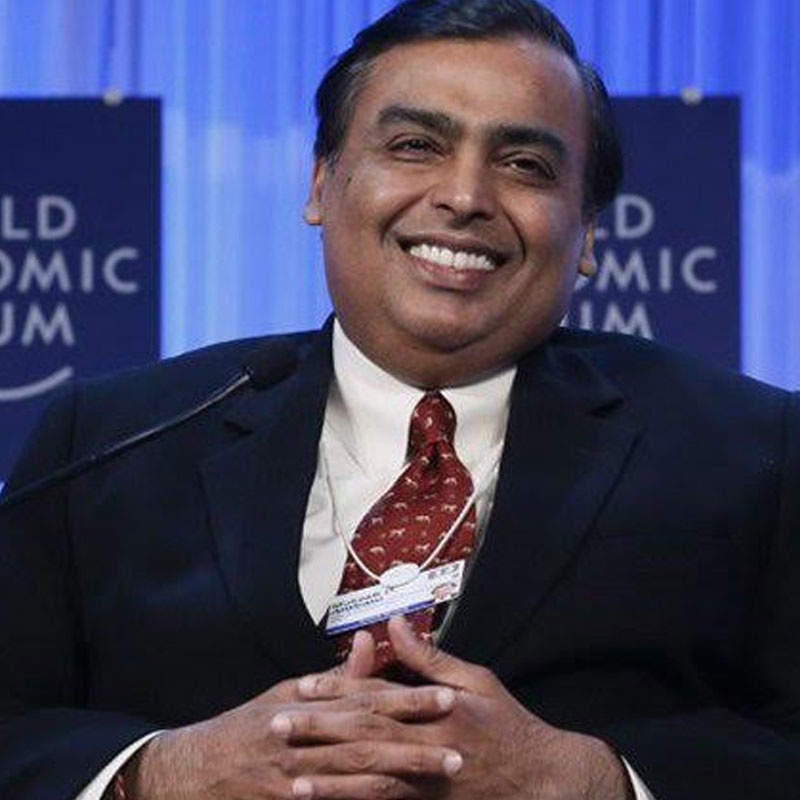
    MUMBAI: Reliance Industries Ltd has planned to raise about Rs 40,000 crore ($5.8 billion) in fresh debt for expansion of its consumer business, according to a Bloomberg report. The Mukesh Ambani-led company will raise funds through loans and bonds, mostly in the Indian currency.   

    The refining-to-retail conglomerate holds shareholder approval to raise as much as Rs 20,000 crore through non-convertible debentures. Because of the company’s new telecom venture along with its traditional petrochemical business total debt has tripled in the past five years.

    A part of the company’s investment this year will go for the roll out of newly announce fibre-broadband services. It will invest on acquisitions, including the purchase of telecom assets from Anil Ambani’s Reliance Communications Ltd. The company has agreed to pay about Rs 173 billion to purchase spectrum, mobile-phone towers and fiber assets from Reliance Communications.

    According to data by Bloomberg, the company has total borrowings of about 2.2 trillion rupees currently. More than half of this debt has to be repaid by 2022. “Reliance needs funds to refinance existing long-term debt or replace short-term debt with longer tenors, and to fund its announced acquisitions,” Somshankar Sinha, a Mumbai-based analyst at Jefferies India said as quoted by Bloomberg.

    After tapping the rupee bond market four times already this year Unit Reliance Jio on Tuesday sought bids to raise Rs 1500 crore via three-year notes.

  • Powered by Jio, RIL touches $100 bn market cap

    Powered by Jio, RIL touches $100 bn market cap

    MUMBAI: Reliance Industries becomes the second company to hit $100 billion market capitalisation after TCS in 2018. Previously, in 2008 too, the company has hit the $100 billion mark when the rupee was around 40 to the dollar, according to Moneycontrol.com.

    RIL has seen a hike in the share prices of oil-to-telecom for the fifth consecutive day on Thursday. The stock closed 4.42 per cent higher at Rs 1,082.20 on the BSE and taking total five-day gains to over 12 per cent. This could be due to an aggressive plan announced in the AGM and ahead of its June quarter earnings.

    While having a buy call on the stock with a target price of Rs 1,340 per share (which implies 29 per cent potential upside), global brokerage house Goldman Sachs said it expects Q1 EBITDA to grow 45 per cent YoY (up two per cent QoQ).

    The company’s market capitalisation stood at Rs 6,85,726.98 crore at its record price level and TCS at Rs 7,45,612.17 crore (One US dollar = Rs 68.64).

    SP Tulsian of sptulsian.com expects that the telecom business will be the biggest contributor to the share price of Reliance Industries over the next 18 months. Hence, he is banking on the growth of Jio and Reliance Retail.

    Speaking about positive factors that could impact the stock, he said, “There is an increase in margins of the petrochemicals and refinery segments. The monetisation plan for Reliance Jio and Reliance Retail are likely in the next 30 months.”

    KR Choksey Investment Managers MD Deven Choksey was quoted stating that, the visibility is clearly emerging for Jio as the average revenue per user of Jio will jump from Rs 150 to higher levels.

    “Through the fiber-to-home proposition, if Jio customer base reaches 40 crore from the current 20 crore, it would mean an addition of Rs two lakh crore to the total revenue and 50 per cent of that may be EBITDA which works out to Rs one lakh crore. This could happen in two or three years. This is why the market is gung-ho about Jio,” said Choksey, according to Moneycontrol.com.

    Reliance consumer businesses, including Jio and retail, up from two per cent to 13 per cent of consolidated EBITDA.

  • Mukesh Ambani pips Jack Ma to be Asia’s richest

    Mukesh Ambani pips Jack Ma to be Asia’s richest

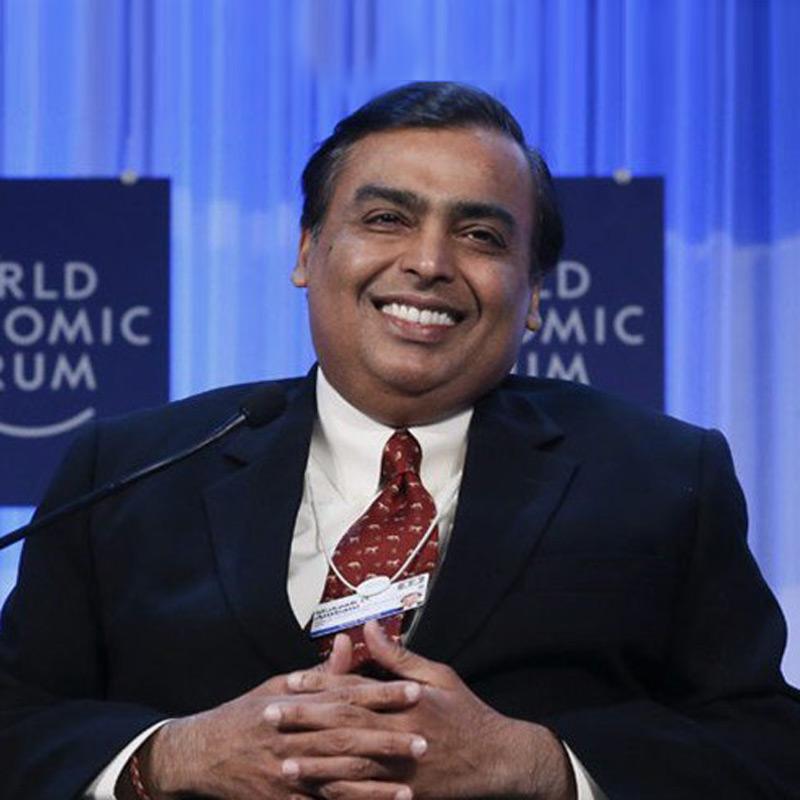
    MUMBAI: Indian business tycoon Mukesh Ambani overtook Alibaba group founder Jack Ma on Friday to become richest person in Asia. As Reliance Industry Ltd (RIL) share rose 1.6 per cent, the total wealth of Ambani hit $44.3 billion.

    Chinese e-commerce giant Ma’s wealth stood at $44 billion at close of trade on Thursday in the US, where the company is listed.

    This year Ambani has added another $4 billion to his existing emperor. RIL has reaped huge benefit from its telecom venture Jio along with doubling petrochemicals capacity too. Moreover, he unveiled plans to leverage his 215 million telecom subscribers to expand his e-commerce offerings earlier this month.

    He said Reliance saw its “biggest growth opportunity in creating a hybrid, online-to-offline new commerce platform,” involving the group’s retail and telecom business.

    “We need to broaden our horizon of expectation with Reliance,” a Mumbai-based analyst at Antique Stock Broking Nitin Tiwari said. “They are in for something really transformational,” he added.

    On the other hand, Alibaba Goup’s Ma has reportedly lost $1.4 billion in 2018.

  • ALTBalaji aims to double subscriber base by 2021

    ALTBalaji aims to double subscriber base by 2021

    MUMBAI: Balaji Telefilms’ video on demand platform, ALTBalaji has planned to invest up to Rs 500 crore over the next three years with a focus on strengthening its content offerings, according to a report by Brandequity. 

    The network is aiming to more than double its subscriber base to over eight million, which excludes Jio customers, by 2021 from 2.8 million at present. 

    ALTBalaji CEO Nachiket Pantvaidya said, “We plan to invest Rs 150-170 crore every year, out of which 70 per cent would be invested in strengthening our content offerings. Over the next three years, we plan to invest Rs 450-500 crore.”   

    The network is aiming to launch 45 to 50 shows in the next two years. 

    Pantvaidya added, “About 95 per cent cent of the content on ALTBalaji is original. We are planning to launch 45 to 50 original shows in the next two years. We are investing in good quality content and we aim to reach subscriber base of over eight million by 2021.”

    ALTBalaji gets 60 per cent of traction from cities outside the top-four metros. The network claims to offer an inventory of 32 shows and over 250 hours of entertainment.

  • In major Jio push, RIL to acquire Radisys for $74 mn

    In major Jio push, RIL to acquire Radisys for $74 mn

    MUMBAI: India’s largest private sector company Reliance Industries Ltd (RIL) has entered into an agreement with Radisys Corporation, US-based open telecom platform solutions provider, to acquire the latter. The deal involves a valuation of roughly $ 74 million or Rs 510 crore.

    According to a PTI report, Radisys, a NASDAQ listed company will be delisted post acquisition. RIL will acquire the US-based company for $1.72 per share in cash. 

    Radisys has nearly 600 employees with an engineering team based out of Bangalore, India, and sales and support offices globally, a press release from the company said.
    RIL hopes this deal will accelerate Jio’s global innovation and technology leadership in the areas of 5G, IoT and open source architecture adoption. Since the launch of its launch in 2016, RIL’s telecom venture Jio has been acquiring customers ata rapid pace.

    “Reliance and Jio have been disrupting legacy business models and establishing new global benchmarks. Radisys’ top-class management and engineering team offer Reliance rapid innovation and solution development expertise globally, which complements our work towards software-centric disaggregated networks and platforms, enhancing the value to customers across consumer and enterprise segments,” Reliance Jio director Akash Ambani said.

    Radisys CEO Brian Bronson said, “The backing and support of India-based global conglomerate Reliance, will accelerate our strategy and the scale required by our customers to further deploy our full suite of products and services. The Radisys team will continue to work independently on driving its future growth, innovation and expansion. The addition of Reliance’s visionary leadership and strong market position will enhance Radisys’ ability to develop and integrate large-scale, disruptive, open-centric end-to-end solutions.”

    The deal is subject to approvals from regulators and Radisys’ shareholders, and is expected to be officially sealed in the fourth quarter of 2018. RIL will finance the transaction through its own internal accruals.

    Also Read:

    Now, Reliance Jio coud set off broadband turf war with Airtel

    Reliance Jio ready to disrupt wired broadband: Matthew Oomen

  • Regulator Sebi orders open offer for NDTV within 45 days

    Regulator Sebi orders open offer for NDTV within 45 days

    MUMBAI: Regulator Sebi on Tuesday cleared the decks for Vishvapradhan Commercial to make an open offer for NDTV Ltd to indirectly gain control of up to 52 per cent stake through a convertible loan of Rs 350 crore in 2009 ‘sourced’ from a partner company of Reliance Industries Ltd, reported news agency PTI.

    Established in 2008, the ownership of ‘wholesale trading’ firm Vishvapradhan Commercial Private Ltd (VCPL) is believed to have shifted from RIL to Nahara group, from which the Mukesh Ambani-led company had acquired Infotel Broadband to re-enter the telecom business in 2010.

    Sebi’s order comes after an investigation into an alleged violation of takeover norms by VCPL with regards to the loan with a 10-year period ending July 2019, with multiple clauses giving it control for up to 52 per cent of NDTV, the regulator said.

    Sebi has also issued show-cause notices in this case to NDTV’s promoters — Prannoy Roy, his wife Radhika Roy and their holding firm RRPR — for allegedly failing to disclose the loan agreement with VCPL and partner companies.

    While ordering the open offer — for securing up to 26 per cent shares in NDTV from public shareholders as per Sebi rules — the regulator noticed that VCPL had — in a letter on 25 March 2016 — disclosed that the “source for the loan was the borrowing from Reliance Strategic Investment Limited, a wholly owned subsidiary of Reliance Industries Limited”.

    Although the regulator’s order did not disclose specifics of VCPL’s ownership pattern, it observed that the firm had a revenue of only Rs 60,000 in FY2017 and over Rs 400 crore in long-term loans and advances.

    Stating that the financial statements offered by VCPL raise questions regarding its motive in signing a loan pact with the NDTV promoters, Sebi said it was obvious that they did “neither have the history of advancing such loans nor do they appear to have had the financial wherewithal to advance loans on such liberal terms”.

    Sebi said the loan and call option agreements seemed to have been made use of to cover the trail of the transaction which was to acquire beneficial interest in NDTV.

    “The elaborate mechanism adopted by the noticee (VCPL) and its associates appear to be solely to deflect attention from this acquisition and thus covetously overcome the obligations imposed by the Takeover Regulations,” Sebi said.

    Sebi has directed VCPL to make a public offer for NDTV in the next 45 days and also make a payment, along with the offer price, an interest at the rate of 10 per annum to the company’s shareholders who held shares on the date of violation.

    Sebi, in its 28-page order, stated that the NDTV promoters had made an open offer in 2008, securing a loan of Rs 540 crore from Indiabulls to fund that.

    In order to pay off this loan, the company then secured another one to the tune of Rs 375 crore from ICICI Bank, which was repaid in 2009 by borrowing Rs 350 crore from VCPL with an agreement dated July 21, 2009.

    Based on the key clauses of the Loan Agreement, Sebi said it was an unsecured loan minus any interest payment.

    Sebi also stated that the “is not to secure the loan but to acquire control over all the affairs of the target company leaving only the right to control the editorial policies of NDTV to the promoters and borrowers, right from the day of execution of the loan agreement.”

    The agreement offered for RRPR handing a warrant to VCPL, convertible into equity shares aggregating to 99.99 per cent of RRPR at the time of conversion at any time during the tenure of the loan or thereafter. This translates to a 26 per cent stake in media company.

    VCPL can now buy from promoters all equity shares of RRPR at par value. There were also two call option agreements penned between Subhgami Trading Private Limited and RRPR, and Shyam Equities Private Limited and RRPR, respectively.

    This gave a chance to Subhgami Trading and Shyam Equities an option to buy up to 26 per cent stake in NDTV from RRPR. These companies were allies of VCPL’s shareholders at the time.

    Sebi said the agreements were in line with the strategy selected by VCPL to buy up to 52 per cent of NDTV shares via two modes — indirect acquisition of convertible warrants of the parent company; and by purchase of a freely exercisable call option to buy 26 per cent shares of NDTV.

    According to Sebi this takeover exercise has been masked as a loan agreement with the primary intention of VCPL being able to seize control over NDTV without having to worry about replaying the loan from the promoters or borrowers.

    After taking into account all submissions, Sebi stated that VCPL did indirectly seize control in NDTV Ltd, by entering into the loan and call option agreements, therefore allowing it to make an open offer based on takeover rules

    According to Sebi, the conversion option permitting VCPL to 99.99 per cent of RRPR shares can be implemented even after the loan amount is settled.

    The call option clause does not contain any time limitations and endows VCPL the right to pick up 26 per cent of NDTV at any time with no linkage to the loan.

  • Reliance Jio subscriber base up 16.5% QoQ to 186.6 million

    MUMBAI: According to Reliance Industries Limited’s annual report, Jio had 186.6 million subscribers at the end of March, up 16.5% from the 160.1 million at the end of last year. The company, however, did not mention how many of these are active subscribers.

     “Jio, now the world’s largest and fastest growing mobile data network, stunned the world and made us proud by turning profitable in the very first year of operations” said RIL, chairman and managing director, Mukesh Ambani.

    In its first year of commercial operations, Jio generated a net profit of Rs 723 crore on a turnover of Rs 23,714 crore.

    “Jio continued with its strong subscriber growth, with 186.6 million customers at the end of March 2018, and the lowest churn in the industry at 0.25 per cent per month. Each Jio subscriber on an average consumes 9.7 GB data, 716 minutes of voice calls, and 13.8 hours of video per month,” the report added.

    The report also made a mention of Jio’s superior speed, claiming that its average download speed of 17.9 Mbps was more than twice the network speed of any of its competitors.

    Also Read:

    Mukesh Ambani keeps salary unchanged for 10th year in a row

  • Obit: Remembering InCable’s Ram T Hingorani

    Obit: Remembering InCable’s Ram T Hingorani

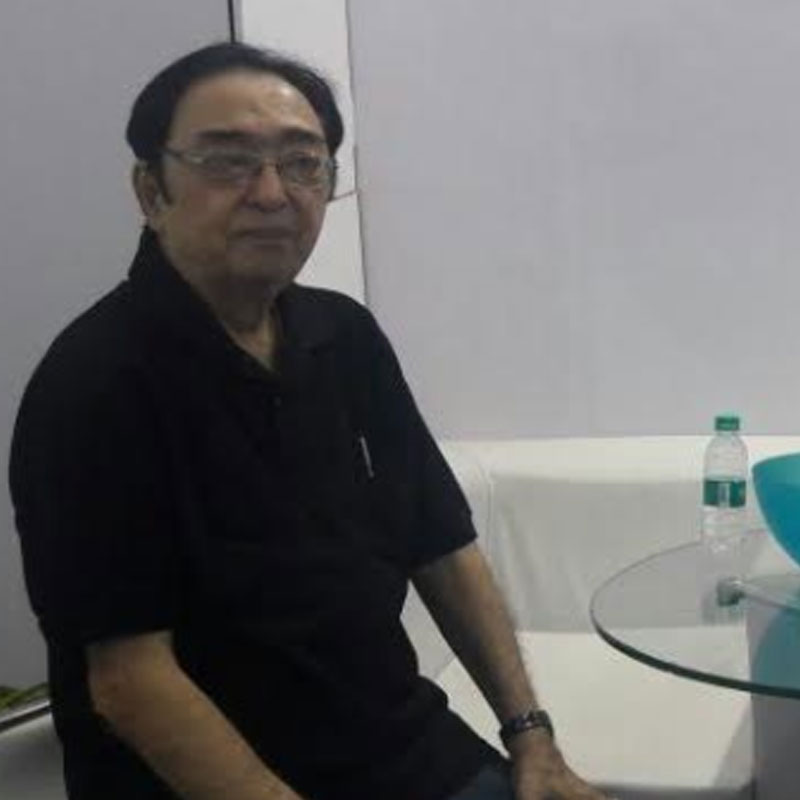
    MUMBAI: “Hi I am Ram Hingorani,” said the squeaky but very amiable voice. I looked around and saw this short bespectacled man dressed in a safari suit, with his hair slicked back. “I am here to show you around and I am with the media business of the Hindujas.”

    The time was the mid to late nineties and I was at the Hinduja office in Worli, Mumbai, just diagonally opposite the Haji Ali Dargah and next to the NSCI to meet up with the group of young men that had set up InCable – the Hinduja foray into the cable TV business.

    He was kind, gracious and over welcoming to a fault, Ram. He then went on to tell me how he had worked at The Times Of India for almost 30 years, retiring if I am right as a general manager or something like that. He then told me about being involved with the Ambanis in the nineties and the acquisition and relaunch of the quickly aborted Observer of Politics and Business and the Sunday Observer. He finally hopped onto the Hinduja group which had expanded into India by acquiring Gulf Oil, Ashok Leyland, apart from other companies.

    He talked about the group moving into the business of media by introducing newspapers, magazines, TV stations, cable TV networks, among other initiatives.

    The Hindujas had formed Induslnd Media & Communications company, which in turn would float four subsidiaries – In Cablenet, In Vision, In Movies and In Print. In Print was slated to publish magazines for specific niche markets, beginning with What’s In, a city entertainment and leisure guide which hit the stands and was distributed to its cable TV subscribers. RTH was in charge of In Print, which ran for a few years and then was phased out.

    He was the Hinduja man as they shopped around for their media ambitions reaching out to the existing media houses along with Sudheendra Kulkarni, the then vice-president of the Hinduja group’s media wing.

    Of all the ventures only one has survived the turbulent media times: the cable TV venture and part of the credit for that must go to RTH as he used to be called. He often played foil to the four musketeers as they were labeled– Yogesh Radhakrishnan, Jagjit Singh Kohli, Yogesh Shah, and Ram Punjabi –by working as a mediator between the Hindujas and them, easing out thorny issues. 

    Along with them, he expanded InCable into 14 cities over 10 years. With the network set up, he moved out, new executives replaced him and he went back to the Ambanis’ Reliance Communications in a bid to set up a triple play venture using the existing infrastructure of independent cable TV operators.

    RTH then retired in 2008 and lived a relatively sedate life – though he mixed around with the cable TV trade from time to time handing out advice – until he passed away on 24 May 2018.  

    The industry came out singing his praises. Said Ashok Mansukhani who currently runs InCable: “He was a giant of a man. He also helped ‘corporatise cable’ and was very hands-on in a world of armchair CEOs.”

    Added Dubai based president & CEO Mediastream FZE (an independent channel and content distribution company)  Rohinton Kapadia: “RTH was always positive even in the face of severe situations at critical times in our cable business. Having worked closely with him for many years I found him to be an inspiration for all of us and an invigorating leader at InCable. We all looked up to him as more of a father figure than our boss.”

    Like the rest of the cable TV trade, Indiantelevision.com sends out condolences to his family. And may his soul rest in peace.

  • We are becoming more platform and screen agnostic: Sudhanshu Vats

    We are becoming more platform and screen agnostic: Sudhanshu Vats

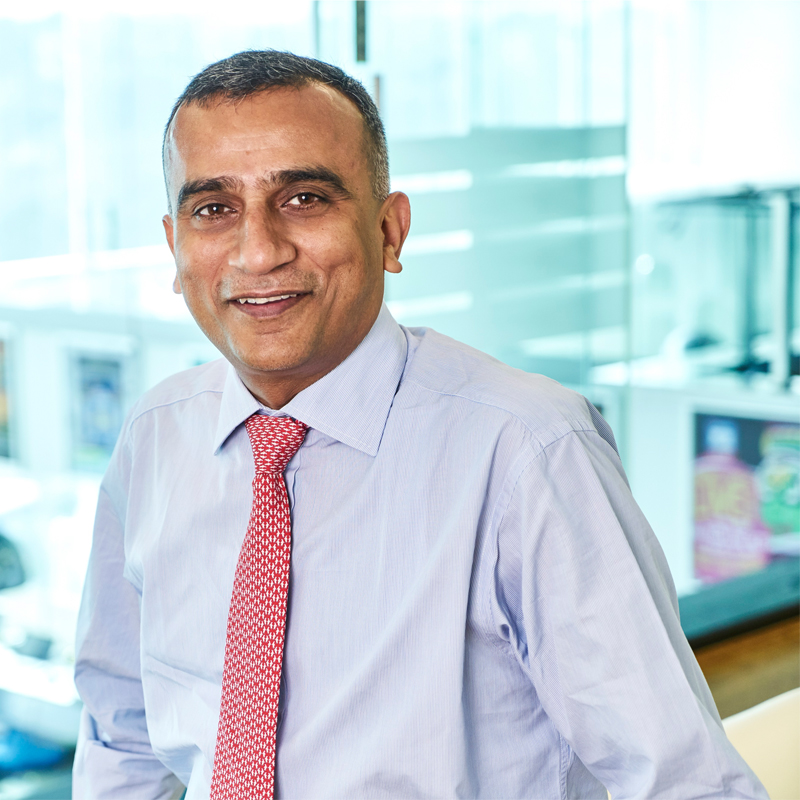
    He heads the youngest Indian network engaged in general entertainment television. Sudhanshu Vats, group CEO, has, over the past six years, steered Viacom18 India into launching a clutch of new channels catering to the different regions of India as well as niche segments. He has built a rock-solid leadership team to run the services, which have been growing at a rapid clip.

    Vats, a former long-serving Hindustan Lever (Unilever India) executive, has also seen the company transition from being a joint venture with global media major Viacom to one which is now majority owned by Mukesh Ambani’s Reliance Industries.

    A thought leader in the industry, he is constantly propagating the message that India is rich with media and entertainment potential at both domestic and international confabs. Vats was at the Media Partners Asia-run APOS in Bali late last month. On stage having a conversation with Vivek Couto, Vats spoke freely on a range of topics right from Viacom18, the Reliance ownership, Voot and the pay TV ecosystem in India. Excerpts from the interview.

    Your views on the pay TV ecosystem in India?

    At one level, the pay TV ecosystem is not developing as well as it should. Partly, all of us, as part of the ecosystem, are to blame. There is lack of addressability. There is lack of customer centricity and customer service attitude with the distribution partners. India being a poor country there will also be a pressure on free to air up to a particular stage.

    My view of the country is that it will be a hybrid ecosystem of both pay and free to air. And, in my opinion, both can exist. But for pay to exist, pay will have to earn its right. And as content players, we are concerned because it’s not going the way we would like it to.

    Free to air is growing and will grow and we need to find models, largely advertising-led models, to make that happen–that piece is okay. But the pay subscription growths are not commensurate–the addressability is not there. Recognition of change of viewership; change of pattern is not there today.

    And I think no better than us, we have leading channels in almost all genres; but our ability to get subscription income is very little. Because it is all dependent on this. Pick up a genre and we have a leading channel. We are not recognising the changes; we are not addressing the customer and not being customer specific.

    How is the Indian television ecosystem faring overall?

    There were two events in India in the last couple of years—GST and demonetisation. They affected ad sales in my opinion. But the good news is that in the last two or three months, it is coming back. We are clearly seeing certain sectors performing very well—FMCG is back and very strongly. Automobile is back in a reasonably big way. Consolidation in telecom will lead to more telecom spends. Handsets are there, they have always been there. Rural economy is also doing quite well. We are seeing a surge in the regional rural pieces quite a lot within our portfolio.

    If you look at Viacom18 per se – I think we have had a pretty good year in FY18, which we closed. We delivered 20 per cent top line growth led by our performance in films as well with Toilet ek Prem Katha. But even in ad sales, we have delivered a mid-teen growth for the year.

    And interestingly this has come at a time when our leading channel Colors was slightly muted because of the impact properties on Colors that came in. It’s the portfolio, which we built that has helped us—its regional, it’s FTA, it’s niche. I personally feel, moving forward, the ad sales will rebound to the levels that India has been used to seeing.

    The ad market will go to mid-teens and some of the better companies may look at doing even high teens.

    How has the change of majority ownership impacted the organisation you head?

    The advantage for us with the consolidation with Reliance is two-fold. Ambition and the things we can do is one big thing today. The second big thing is the resources that can come in which could be of a different level. Because, as a joint venture, we were balancing some of those pieces. Now perhaps we can take concurrent bets as we go forward. So that’s fantastic news for Viacom18. We need to continue to motor on what we have built as a culture that is critical for us. So, if we retain that culture and we bring in that ambition and resources, it’s good news.

    Your digital piece, Voot, how is that faring?

    Voot has been primarily advertising led. The good news here is that we have been growing quite rapidly. We exited March of 2018 at 3X the number we were at March of 2017 on almost all parameters.  So, today, according to App Annie, we are number two in everything which you see after Hotstar. We are number two in downloads; we are number two in active users. We are actually number one sometimes in time spent. We are between one and two in time spent. We have about 35-40 million monthly actives and close to about 45 minutes of watch time.

    The Voot service is doing very well. Interestingly, there is a lot of work which we are doing which is tailored for it. If you look at our content: the breakup of our viewership – if I were to give you an order of magnitude – would be about 60 odd per cent of what you have on television – that’s catchup maybe 60 to 65 per cent. About 20-odd per cent or sometimes 20-22 or 25 per cent is what we call Voot exclusives or content around content. So it is content which is running on television, that is the theme is running on TV – especially non-fiction – and there is a lot of content which is not on television which is shown here. That’s gaining a lot of traction. And finally there are originals and kids. That stacks up the full piece.

    What plans do you have for Voot?

    Our thinking moving forward is that this is just the beginning. It’s an AVOD piece, again advertising is coming in reasonably well from a very small base – we are doubling every year. But what we also do is we’ve built in a freemium layer, for people who are at the higher end where we offer them an ad free environment, maybe additional services—that is the thinking that is there.

    The second thinking that is there is that we are going to do something for Voot Kids. That’s a space we are very bullish on. We want to go well beyond video, we want to well beyond watch, we will go into spaces of watch, learn, play and all that. We are looking at the edutainment piece. You will come into it for entertainment, but you will have light gaming, some number of e-books, some amount of learning or options available to you particularly at the pre-school stage. We are not getting into pedagogy or hard-core education. That’s not the space we want to be in.

    We are looking four to five million daily active users currently. The kind of data you are seeing now is pretty rich. And we are just about beginning to learn to mine that data.
    On the original front, it has been part of our journey. This year you will see us going into overdrive or at least accelerate our originals. You will see a lot more of them in Hindi, you will see them in regional. And as we speak, there is work happening on many of them. We may use some of them to go behind our freemium service as well.

    You seem to have changed your mind on sports as a piece of content? Will Viacom18 drive deeper into sports?

    We have dabbled a bit in sports. We piloted a few things. We actually did the Nidahas Trophy on our channel. We are looking to see if there is a way of putting sports together that may not have cricket. Cricket, as you may know, is with Uday now. We are continuously looking at areas that might be of interest to us.
     

  • Owning IP not priority for Big Synergy

    Owning IP not priority for Big Synergy

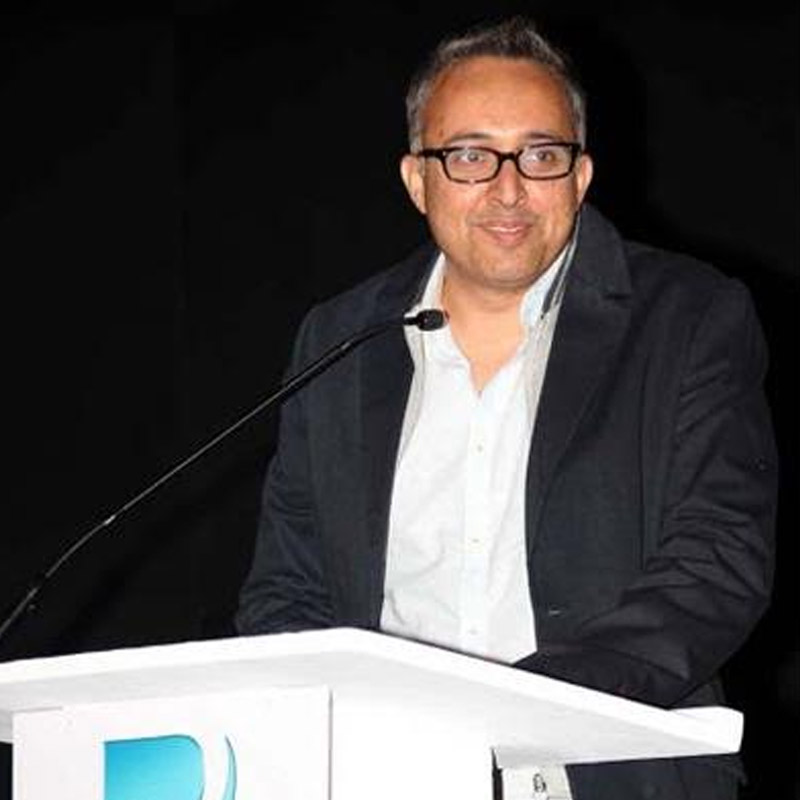
    MUMBAI: Broadcasters today are experimenting with a new type of show ownership–that of allowing the creators to hold the intellectual property (IP) rights. Most recently, Swastik Productions decided to own 100 per cent of its magnum opus Porus, which airs on Sony Entertainment Television in India, setting a benchmark in the industry as it went around the world gathering new broadcasters in new countries.

    In an interaction with Indiantelevision.com, Big Synergy partner producer Namit Sharma, however, said that the concept of owning an IP was a very subjective conversation and not too relevant in present times. “A lot of people hype it to make themselves look good, so it makes you look like a kingpin when in actuality, the real monetary value of that IP could be nothing,” he said.

    “I feel that the whole conversation in the industry is overrated. We want to be careful about when we do it and how we do it. We are a production service company. If we wanted to own an IP, we would have started making films, raised Rs 800 crore and taken the risk,” he added.

    Digital players are furiously churning out new formats to attract the moving eyeballs of younger audiences. New formats, ideas, execution–you get it all. But TV isn’t far behind. TV today has innumerable reality shows to pick from and is not restricted to saas-bahu sagas, sitcoms and period dramas.

    Sharma, feels that the Hindi GEC genre will not be experimenting anymore but this will be the prerogative of the digital industry. “They [Hindi GECs] are going to try and stick to what they have, whereas now all the experiments will start happening in the over the top and regional. We have a lot of developments happening in both these spaces,” he said.

    Shedding light on his plans for digital space, he said that talks with industry daddies Amazon and Netflix are on. “As part of a two-year plan, we intend to focus on getting together with storytellers; they could be filmmakers, writers, book authors, film writers, and they could be people who may have never written anything.” Big Synergy will set the ball rolling in the regional market with South India.

    Big Synergy, a part of the Anil Ambani-led Reliance Group, had tied up with Phantom Films, led by Anurag Kashyap, to create entertainment content across television and digital media. Speaking about the partnership, he said that there wasn’t any phenomenal interdependence apart operational synergies between the two entities. Both production set-ups co-ordinate in interesting ways behind the scenes.

    Recently, Big Synergy produced a web series for Viu named Kaushiki that has garnered a lot of traction for the OTT platform. The production company is looking to produce five marquee web series, such as Bose: Dead/Alive, in the next one year along with its slate of regular shows for OTTs.  

    Also read:

    Sony Yay banks on originals with a slew of fresh content

    No reason for GECs to panic as IPL grabs eyeballs

    The era of dance reality shows