Tag: Reliance

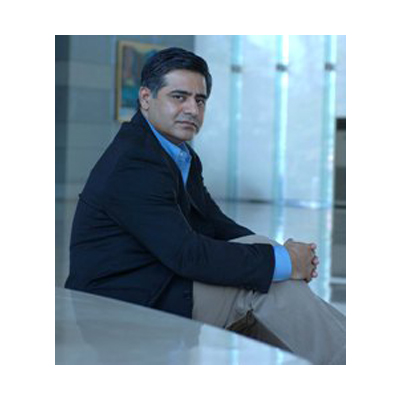
  • ‘Scaling up through film acquisitions is a risky model’ : Mahesh Ramanathan- Big Pictures COO

    ‘Scaling up through film acquisitions is a risky model’ : Mahesh Ramanathan- Big Pictures COO

    Rock On! was only the beginning. After going on to create a new set of cult audience with their first co-production, Reliance ADAG's Big Pictures is bullish on its 18-movie slate for 2009.

    On the distribution front, Big Pictures rode on the success of Ghajini at the fag end of 2008 to get a slice of the overseas business with Rs 390 million. The challenge this year is to step up the film production and distribution business.

    In an interview with Indiantelevision.com's Anindita Sarkar & Gaurav Laghate, Big Pictures COO Mahesh Ramanathan talks about the company’s production plans and the revenue scope that the film business offers as different studios scale up.

    Excerpts:

    Big Pictures had made a grandiose announcement of producing 18 movies in 2009. But with the economy slowing down, is there a revised plan?
    With the Indian film industry growing at a CAGR of 17 per cent, which is almost double the GDP growth rate, box office definitely remains unaffected. Though there is a slowdown in the economy, that definitely does not lead to any de-growth in demand. If the content remains right, there can't be any downturn in consumer sentiments when it comes to movies.

    Having the financial muscle of Reliance ADAG, why has Big Pictures gone in for six Bollywood co-productions out of this roster of 18?
    Co-production deals for us actually bring in a perfect marriage between creativity and commercial acumen. While we bring in certain virtues like financing, marketing, promotion and distribution of content through our various platforms (online, home video, mobile, DTH), the director still calls the shots. However, he has to align his creativity with us to bring in the viability for the product for commercial exploitation.

    You will also be producing seven regional films this year. What kind of potential do you see in the regional film space?
    The regional film space currently accounts for 50 per cent of the Indian film market and is growing. While there is a huge appetite for Bengali films, the Southern region is definitely a huge market to tap. Marathi film industry is also revamping. So the potential to commercially exploit these markets remains huge.

    Any plans of entering the Bhojpuri market?
    We don't plan to step into the Bhojpuri market as of now as there are huge distribution challenges.

    Recently, we have seen a lot of small and mid budget films raking in good numbers at the box office which also includes your first Hindi production Rock On. Do you plan to create more small budget movies?
    Our business model is not based on budgets. While we do have a few low budget films like Sikander and Chaloo lined up for 2009, we will begin the year with our big budget Luck By Chance. Budget is purely a derived figure based on the demands of the script. Our approach is more towards building a portfolio across a variety of genres that include small, medium and mid-budget movies.

    'Our business model is not based on budgets. Our approach is more towards building a portfolio across a variety of genres that include small, medium and mid-budget movies'
     

    Year 2008 was a year of film acquisitions for some major studios. Why did you decide to stay away from it?
    Scaling up through film acquisitions remains a very risky model. When you are acquiring a film, there is a lot of producer profit that is built in which jacks up the price. Our business model focuses on creating original content. Not only can you keep your costs low but also ensure that the viability of the film remains secured.

    If you are into acquiring of films, you are entitled to exploit the product only for a stipulated time period. This is not the same case with content creation. Original content helps you build your own catalogue and once the catalogue is built you can use it to create more revenue streams.

    What role does marketing and promotion play in increasing a film's occupancy in theatres and multiplexes?
    Huge! Take Ghajini for example. The pre-release marketing and promotional activities for the film induced extreme interests amongst audiences and as a result Ghajini witnessed almost 100 per cent occupancy in its first week at theatres. The marketing activities that we did across 40 territories overseas also helped us generate a lot of eyeballs. So marketing is definitely very important to tap the right audiences.

    How difficult is it to tap the right set of audiences?
    Because of media fragmentation, it is becoming very difficult to reach the right set of audiences and engage them. Today, you cannot pin your hopes onto only the press and television. You have to have a 360 degree approach and mass customise your communication to audiences – and this is where we score. We have a presence across almost all media and entertainment platforms – be it radio, home video, online, mobile, social network etc. Thus, synergising all these platforms helps market and promote our films in a much focused way. It is also very cost effective.

    How do you strategise your film marketing activities in the international space?
    Unlike India, it is more of micro-marketing in the overseas market where you target the diaspora. Hence, the choice of media vehicles is more local there. You have to be aware of the local newspapers and have to have a local expertise and channelise them smartly.

    Though in terms of value the Indian film industry is only 2 per cent of the entire global box office, it is generating interests across international studios. Why?
    When it comes to the number of films produced in a year, we are definitely the largest in the world. India produces over 1000 films a year. We are also the largest box office in the world with 3.5 billion admissions a year. While Hindi films account for approximately Rs 50 billion, a similar amount is generated from regional movies. So it's definitely an attractive market for international studios that have long term plans in this country.

    When it comes to value, our box office stands at only 2 per cent of the global box office. But that is because our collections are still dependent a lot on single screens where ticket rates are really low. However, with the establishment of 3700-3800 multiplex screens in the next five years, we will see a lot of value being added to the box office.

    How much of the revenue generation potential of a film is inflicted by piracy?
    Between theatrical, home video and cable, it is estimated that the overall piracy eats away almost 80 per cent of the film's entire revenue potential.

  • ‘Carriage market has exploded and will close this fiscal at Rs 14 billion’ – Gurjeev Singh Kapoor

    ‘Carriage market has exploded and will close this fiscal at Rs 14 billion’ – Gurjeev Singh Kapoor

    Broadcasters are being hit hard by hefty carriage fees as bandwidth is getting choked both on analogue cable and DTH (direct-to-home). Building formidable distribution bouquets is high on their agenda as they struggle to ramp up subscription revenues which are estimated to touch Rs 28 billion this fiscal.

    Star Den, a 50:50 joint venture between Star and Digital Entertainment Networks, is quickly adding regional channels to complete its otherwise strong Hindi and English entertainment-news-kids bouquet. Zee-Turner is the only other broadcasting distribution company which has a formidable regional content lineup.

    Star Den is eyeing a revenue of Rs 10 billion at a time when the television industry is beginning to feel the first serious signs of a slowdown in advertising revenues. Analysts say this will be a hard task to achieve, despite the boon from DTH revenues. Big TV and Airtel Digital TV launched later in the year, reducing prospects of a full-fiscal revenue gain for the broadcasters.

    In an interview with Indiantelevision.com’s Sibabrata Das, Star Den Media Services chief executive officer Gurjeev Singh Kapoor talks about the dark holes in the distribution business and how the company plans to ramp up growth in a tough business environment.Excerpts:

    Is the steep climb in carriage fees upsetting the business model of broadcasters?
    The carriage market has exploded and is expected to end this fiscal at close to Rs 14 billion, up from Rs 6 billion a year ago. As there is a huge amount of bandwidth constraint on analogue cable and even DTH, the industry has changed in terms of carriage. DTH operators are offering 200 channels while the Information and Broadcasting ministry has given the nod to 370 channels. A plethora of channel launches in the Hindi general entertainment, news and regional space has meant that there is a fierce fight for frequency. In a market where funding was easily available, channels were willing to pay more for space on cable networks. Insanity ruled the market.

    Will we see a correction in the carriage market?
    The balancing act has to happen now. With private equity and other sources of funding drying up, many broadcasters have started contracting their distribution budgets. We could see a flat carriage growth next year as channels start rationalising their costs. Broadcasters are in no position to be omnipresent in all cable networks; they will have to pick and choose where they want to be present and optimise their resources.

    But we will continue to see more channel launches next year as Reliance ADAG is planning to get into broadcasting space. Even existing players like Star India have plans to add more channels. Won’t this ensure that the carriage tap continues to flow freely?
    We may see a 10-15 per cent growth in carriage fee market in FY’11 as more channels enter the race. The next two years will be the blue litmus test for many broadcasters. For the weak channels, there could be a shake out. The fact is that distribution costs have grown unmanageably high.

    There can be no potential threat to carriage revenues unless the digital universe expands to at least 25 per cent. When we reach that stage, other models can emerge like broadcasters getting into agreements for sharing their distribution revenues with delivery platform providers.

    Are broadcasters getting united to resist on carriage fees?
    Broadcasters have doled out so much money in the past because of competition that it will be difficult to correct the system fully. More so, as we will see new channel launches. Carriage fee is being governed by market forces. But it is good that the thought process has started to fight carriage fees collectively. How far that will succeed only time will tell.

    Would you want Trai to (Telecom Regulatory Authority of India) come out with some regulation on carriage?
    I wish there could be some kind of formula that can be arrived at to regulate carriage. As an idea, it is definitely good since the regulator has mandated pricing issues.

    How difficult is it to ramp up subscription revenues in the backdrop of MSOs (multi-system operators) consolidating the cable TV market and Trai introducing pricing regulations?
    Subscription revenue for pay-TV broadcasters will close at Rs 28 billion in FY’09, up from Rs 23 billion a year ago. Even though there is a slowdown in the market and the times are tough, the industry expects a 10-15 per cent growth in FY’10.

    Isn’t that growth mainly because of DTH?
    DTH, undoubtedly, has expanded the market. But ARPUs (average revenue per user) haven’t grown in the DTH business; they are virtually the same as that of cable. IPTV, though much talked about, has also not happend this year.

    Will Star Den’s revenue touch Rs 10 billion this fiscal?
    While we are looking at very aggressive numbers and have set ourselves a very challenging task, I can’t comment on our financials.

    Do broadcasting distribution companies see the consolidation in the cable TV sector as a welcome change?
    The marketplace will make it difficult for small networks even as broadcasters rationalise their distribution budgets. Networks who have a geographical spread can bargain hard with broadcasters. In the short term, they will get paid more and will be reluctant to pay for more subscribers. But in the long term, it is better that the industry moves towards a better structured environment. MSOs and broadcasters have to join hands and realise that ultimately money has to come from the ground.

    Since the parent owner of Star Den also runs a cable TV company, how do you leverage the power of your bouquet to push the cable distribution business?
    We operate as independent entities. We treate Den like the other MSOs.

    Star India had earlier inked a distribution deal with sports broadcaster Neo which did not last long after the new management took over. Do you feel that the Star Den bouquet is strong but still incomplete without sports channels in its mix?
    We are currently distributing 23 channels and are in a very strong position to post growth. We have great quality content in the Hindi general entertainment space with Star Plus as the leader and Star One in the fifth spot. In the news television space, we have Times Now which leads in the English segment, CNN-IBN, IBN7 and Star News. CNBC TV18 and Awaaz, of course, are leaders in their segments and are powerful subscription-driven channels.

    In the kids genre, we have Hungama and the three Disney channels. For the English-viewing audiences, we have a formidable presence in Star Movies, MGM and Star World. We also distribute NGC and Zoom.

    We are now filling up the missing pieces and adding the regional bouquet. With Star buying majority stake in Asianet, we will cover all the languages down south. Star has also launched a Bengali and a Marathi general entertainment channel while the one in Gujarati is in the pipeline.

    Will Colors (the second most-watched Hindi GEC from the Viacom18 stable) automatically come to your bouquet when it decides to go pay?
    I wouldn’t like to offer any comments.

    Will you also be getting the MTV channels after Viacom’s contract with One Alliance expires on 31 March, 2009?
    I don’t want to comment on this.

    What about the wedding and home shopping channels that Star is planning to launch next year?
    Whatever niche channels Star launches, we will be happy to service. Niche channels will have a demand particularly on digital platforms. One the Fox channels launch, we will also be happy to distribute them.

  • ‘The commercialisation of IPTV will happen as we have a policy in place now’ : Sujata Dev – Time Broadband Services Pvt. Ltd co-founder, CEO & MD

    ‘The commercialisation of IPTV will happen as we have a policy in place now’ : Sujata Dev – Time Broadband Services Pvt. Ltd co-founder, CEO & MD

    Having stitched a deal with state-owned telecom major Bharat Sanchar Nigam Ltd (BSNL), Time Broadband Services Ltd (TBSL) is preparing for an IPTV roll out in 20 cities across Uttar Pradesh and the eastern region of India.


    Armed with an investment from Dubai Investment Group, the company has worked out on the technology front with H.264 AVC, Verimatrix encryption system and Amino set-top boxes.


    In an interview with Indiantelevision.com’s Gaurav Laghate, TBSL co-founder, CEO & MD Sujata Dev talks about the challenges that are in store for IPTV operators in India and the company’s growth plans.


    Excerpts:


    Why has a serious IPTV roll out not happened in India despite telecom majors like Reliance, Bharti and Tatas showing an interest in it for the last few years?
    The commercialisation of IPTV will happen now as the legislation has thrown some clarity on the policy issue. The Telecom Regulatory Authority of India (Trai) has also given its recommendations. When these were still dark areas, the telcos were in the trial stage. A proper IPTV roll out should happen within the next six months.

    Aren’t there areas of concern as the government is yet to give the nod to some of Trai’s recommendations?
    The policy is not clear whether IPTV providers can downlink directly or it has to be churned through the cable operator. Then there is the pricing issue. We need a similar policy like it is for DTH or digital cable in Cas (conditional access system) areas. If IPTV has to compete with other digital addressable delivery platforms, it has to have a level playing field. For the same content, you can’t have a different pricing.


    There is also the ‘must carry’ clause for eight Doordarshan channels while in case of cable it is four. This will occupy 16 mbps (2 mbps per channel). Copyright for IPTV is another challenging area.

    Time Broadband had a franchisee deal with MTNL for providing IPTV a few years back. Why no roll out happened since then while other players like IOL Broadband and Aksh Optifibre went ahead to launch their services?
    Since there was no IPTV policy, we didn’t want to launch commercially. There was no copyright definition for IPTV content. The technology was also evolving. Besides, MTNL worked out a different revenue sharing system with later franchisees like Aksh. We are sorting out our issues with MTNL.

    What was the roadblock on the technology front?
    We had decided on ADSL2+ technology. For a market like India where there is 2 mbps on the last mile, you will need H.264 AVC which was evolving as a technology. We have Amino set-top boxes (STBs) and Verimatrix encryption system.

    Since you were under arbitration with MTNL, what was it that attracted Dubai Investment Group (DIG) to take a 40 per cent stake in your company through its subsidiary Dubai Ventures?
    They were attracted by the knowledge base that we had acquired. DIG has a telecom and IPTV presence in many markets. Time Broadband will be the new technology company which will support their projects in different markets. We have launched IPTV over 2.5G mobile platform in Malaysia. They see us as futuristic telecom company.

    We are be profitable once we reach a 2.5 million subscriber base. For achieving this target, we will require an investment of around Rs 7 billion

    How much has DIG invested into the project and who are the other shareholders?
    The company has pumped in close to Rs 1 billion. DIG will continue to invest. We will become profitable once we reach a 2.5 million subscriber base. For achieving this target, we will require an investment of around Rs 7 billion. Aniyan Kutty Kunju, the chairman of Jai Hind TV (a Malayalam news channel), is another shareholder.

    How will you manage to have 2.5 million IPTV subscribers?
    We have signed up with BSNL to roll out IPTV on their network across 20 towns in Uttar Pradesh and the eastern region of India. We are also looking at MTNL. Unlike the private telecom operators, these two state-owned majors have the last mile connectivity. Besides, as content aggregators we have the advantage of even doing business with all the telcos. We are also optimistic about IPTV on mobile phones once 3G opens up in India.


    We have created a lot of content for mobile, as the screen and user habits are different. We have lifestyle, yoga, spiritual, music and sports content. We have tied up with IMI for music and different producers for other content.

    What makes you so bullish when the private telecom operators like Reliance, Bharti and Tatas have jumped into DTH as they feel IPTV can have slow growth in the Indian market, at least in the short run?
    The USP of IPTV is the interactivity which is not present in cable or DTH. IPTV has room for interactive and premium content. As for the telcos, they may work out a business model where they offer channels through DTH and rely mainly on interactivity for their IPTV success.


    In Korea, gaming has driven IPTV while in Hong Kong it is exclusive and premium content which has brought in subscribers. In India, interactive services and e-learning may drive IPTV.

    State-owned telcos BSNL and MTNL have gone in for non exclusive franchisees to develop their content delivery network. Do you see business feasibility for all of them?
    BSNL and MTNL are limiting their franchisees. Some of the franchisees may have entered to boost their value as they are listed entities. We are in as we see a serious business opportunity in IPTV. We realise that with low ARPUs (average revenue per user) and subsidy on STBs, profitability can come only after five years. IPTV is more part of telecom. We have a serious investor in DIG and have a business plan knowing the hardships of the Indian market.

    For acquiring content like movies, how successful have you been to work out revenue share arrangements with rights owners?
    We believe that is the best model to be in. We have done some deals along these lines. There can also be a MG (minimum guarantee) system for a certain number of subscribers, after which a revenue share model can be arrived at.

  • ‘Once digitalisation happens, let a thousand channels come’

    ‘Once digitalisation happens, let a thousand channels come’

    It is not looking so high-priced now because T-20 was not a factor in that purchase and now it’s there as a very high value part of that.
    T-20 is the best thing that happened to Indian cricket.

    It completely re-energised sport and completely reignited interest in it. Now between ICL and IPL, it has really brought the sport back. But the price points, because there is no distribution revenue in this model of note, it’s not robust at all.

    The lament is that distribution channels are clogged and yet we have all these channels launching? Isn’t that a big contradiction?
    Well distribution and then everything that will happen as a result. Some people look at this business and they say that, ‘Oh so many new players are launching there is no space.’ On the one hand we talk about how the market is growing, the media sector is growing. The other version is that it is growing but there is no space for new players, which is actually the exact opposite of growth. You know its like saying that the movie industry is growing but let’s any not make any more movies.

    They are completely contradictory terms. So once digitalisation happens, whichever version they choose to refer it by, I’d say let a thousand channels come. Because water finds it own level, and people decide what they want to see, when they want to see, how they want to see and what they want to pay for and it all sorts out in the end.

    But saying let not a thousand channels come, is not progress at all. It does not mark progress for consumers, or for operators. or for anyone as a matter of fact.

    The TV business needs is one nice kick in the butt, like the telecom business got. This is what will help it really surge forward. So far it has been sort of ambling along.

    Everybody is expecting that Reliance will give that kick. Reliance is launching DTH this year, Bharti is launching.
    This is why 2008 will be a year to write home about. We hope that 2008 will be the year for the industry to really surge forward and make that big leap forward. That the big leap forward had much been spoken about but has not actually occurred for many years.

    Each year we talk of the big leap forward, but it’s not happened. 2004, 2005, 2006. You know few things occurred here and there, like suddenly in 2006 the cricket purchase was big. But the rest of the industry didn’t keep up. The whole $ 612 million price point was based on some assumptions, and those assumptions didn’t really come through.

    The fact is that all of business is predicated over some basic parameters, which is that people will go to movies, people will buy movie tickets. People will pay their cable bills. Advertisers do need to reach to consumers and they will buy advertising. That’s basic, and our problem is that we don’t have this in the TV part of the business. We don’t have this one little basic matter about people will pay their cable bills which will then be passed on.

    So it leaves a lot of things in the air when you talk about the television business.

    You are talking about pricing, subscription?
    It is already priced. Subscription is priced. But when you try and compare talk time, in the telecom context to TV, that doesn’t really work. Because the input cost on TV for example is not talk, it is real cash. If people play cricket, make movies, shows, that is like a real cost. It is not talk time. So when you say that every home will pay Rs 5 per month for a channel to see movies and serials, at some point the mathematics are not going to add up.

    So it is just that these things will get sorted out as it goes along. As more players get into it I think that the industry itself will sort it out.

    But there is also the theory that the government will not allow the market to determine costs of TV (and cricket) because other forms of entertainment are becoming too expensive for too many. Multiplexes for example are out of reach for many. So there is only TV. This would mean that tomorrow the IPL will be termed as being of national importance and will become free to view?

    You must note that there is no such thing as a free lunch ever, so somebody has to pay the bill. What’s been happening in the last so many years is that the advertisers have been paying the bill. The advertiser is the ultimate God who is paying for everybody’s lunch.

    Currently there is a combination of private equity money and advertisers who are footing the bill. But eventually, the bill will have to be paid by the consumers, who consume content in whatever manner or the price points will have to come down. So either all the price points return to normalcy by which market settles and everything will sort, or you will have to pay the bill.

    Anywhere in the world in a mature TV / entertainment business, you have the twin model (advertising / subscription). That’s the way the business works. For us, it’s always been immature, fully lopsided towards the one side. Do you know any other market which boasts of 300-400 channels which are all essentially ad supported because distribution as a model is all over the place.

    You go to any other country where it is supported this way, you will find 5-10-15 channels. So that’s something which has to be sorted. It is not like players have to think that India is unique. And I think this has to happen.

    It is just a functional evaluation. This is what it needs, that leap forward. The input cost is going through the roof, return is coming down, and for the majors it is flattening their margins.

    For others what would be the plan be then? So that, I think that has to happen and as they see that as the defining moment. Whether you define a moment or the moment defines you, in any case the industry will have to define the way forward. Whether it is collective or individual something has to happen.

    That is exactly the contradiction in this. That it is true. But it needs resolution. Otherwise a lot of these contradictions can co-exist for a long time. Things can go round and round and circle and circle without imploding or exploding.

    Something has to give?

    Over the last 6-8 months, and with the spate of these new announcements in the last 2-3 weeks, there has been more addition into the TV space. This is obviously going to create enormous amount of pressure on the current infrastructure, obviously we are all new, we wish to make a mark for ourselves, so everyone will do things to try and make a good impression. There will be the existing players, who will obviously look to protect their turf.

    But it is at an interesting point because there is pressure on the system. Now this has never happened before, that there have suddenly been so much, forget new channels, so many new platforms that are all coming at the same time. There is this huge interest in the movie business all of a sudden. In the last year and a half all that has happened.

    Screens are opening up…

    Screens are opening up, It’s happening. So, as the pressure increases, obviously people will find newer and newer ways to do things. New minds enter into it, lots of different people, younger people, coming out with even cleverer ideas. It has to go through a change.

    So 2008 has a lot of potential?

    We hope, though these predictions have been made many times in the past and have sorely let you down. But 2008 seems to have a chance than most years to make a real impact.
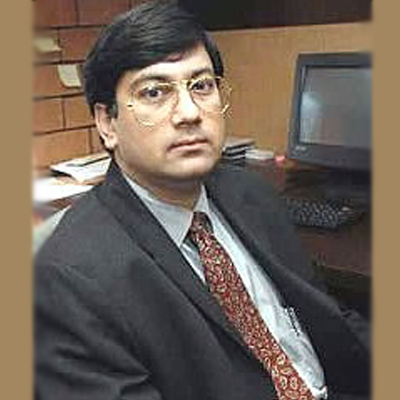
  • ‘Working on an umbrella brand strategy is a good way to build a presence in the entertainment space’

    ‘Working on an umbrella brand strategy is a good way to build a presence in the entertainment space’

    You will start your television business with film channels. With more movie channels coming in what affect will this have on rights prices?
    We are working on our plans. We are building our teams. We will launch two channels next year. What the genres are I cannot comment on. You however have to run channels across all genres to be taken seriously in the broadcasting space.

    In terms of more film channels coming in the price of content will rise. We are also seeing the evolution of different business models where content is not sold outright. It is syndicated to multiple players. I believe that movie channels will have to differentiate themselves and become genre specific. New models of presentation will have to emerge. The challenge for the players is that to achieve this, a library is needed.

    Do you see a shakeout in the Hindi GEC space?
    Three years back when there were 100 channels people said the same thing. Today there are 300 channels. Tomorrow there will be 1000 channels. We are moving to a situation where you will have thousands of channels when IPTV, DTH come into their own. When we move to a digital world niche channels become more viable. The long tail becomes viable. Today it is difficult to have more than 30 channels in an analogue model.

    The other area is your TV content production business. How is activity at Synergy Communications being scaled up?
    As the TV space explodes the demand for quality content is growing,. Synergy will be one of the beneficiaries of this change. They face choices in terms of how they grow the business. We have an arms length relationship with them. It is not a captive production house.
     

    ‘We are moving to a situation where you will have thousands of channels when IPTV, DTH come into their own’

    _____****_____

    In terms of the push towards complete digitisation the belief is that when companies like Reliance, Bharti enter DTH it will be the next inflection point for DTH growth as well as for the cable industry to push for complete digitisation. Your views?
    I hope that this happens. DTH is a huge opportunity as there is a need for addressability. Corporatisation will help improve the quality of service. While the penetration of existing players might not be great the industry is poised for a rapid change. You have to provide a differentiated service level to the consumer. You also have to provide services in the smaller towns which are neglected. Content offerings need to be differentiated which is not happening. There is scope to create exclusive, niche channels and service like e-commerce. We will push quality of service.

    At this point in time shoddy service is being provided in most parts of the country. The DTH industry has grown but if you expect it to touch 10 million in a day that will not happen. There are issues to be dealt with. But the consumer wants a change. We will differentiate as far as the last mile is concerned.

    What are the key changes that you expect to see happen in terms of how films are being made and consumed? Is the solo, independent producer a thing of the past?
    India makes 1,000 movies a year. The studio model has emerged but there will be scope for the solo producers to also work. In the US film corporates have helped grown the independent studios. The value of the content is being discovered now. But quality consciousness is important. If you are a small player niches need to be created. The issue is to find talent. This will be the biggest challenge in 2008. Talent needs to be broad based.

    On the social networking front how did the concept of Bigadda come about? What is its USP vis-a-vis sites like Orkut and Facebook?
    I believe that social networking platforms are for real. A new set of technologies have merged to connect people. It is becoming the centre of their social graph. We are in the very early stages of this phenomenon. It will take off with the evolution of broadband. When we talk of social networking sites there are two aspects. One is social networks while the other is social media. Social networking sites focus on connectivity and communication. Social media sites look at user generated, user rated content.

    The user becomes a creator or a filter or a participant of content. Bigadda looks at both aspects. We believe that there is a huge space for an Indian platform. We launched it three months back and are satisfied with the response. We already have a million users. We get a million page views a day. We add 12-15,000 users a day. In 2008 competition will emerge but we are confident of the innovations that we will be doing. Social networking will also depend on what is done in the mobile space.

    As per research, what extent is gaming competing with film and television for the Indian youth’s time?
    Zapak is not competing with traditional forms of entertainment. It is creating a new form of entertainment. Like any iconic brand, it is creating its own language, vocabulary and loyal set of consumers. Zapak has four million registered users. On Comscore it is the number one gaming site. Next year we will bring in MMOGs. We believe that India is ready and as broadband takes off value creation will happen. It is not that Indians are watching less films. It is just that Zapak is creating its own set of loyal consumers.

    When you talk about entertainment you can’t get away from cricket which is why Reliance is bidding for an IPL team. How useful do you see this as a brand building excercise?
    I cannot comment on IPL.

  • Reliance Capital buys 6 per cent in GBN via open market

    Reliance Capital buys 6 per cent in GBN via open market

    MUMBAI: Anil Ambani group company Reliance Capital has acquired 6.27 per cent stake in Global Broadcast News (GBN) through an open market transaction on the BSE.

    The purchase of 1.68 million shares in a bulk deal was made on 12 February. GBN, which operates English news channel CNN-IBN and Hindi news channel IBN7, was listed on the stock exchanges on 8 February.

    After a debut opening on the BSE at Rs 417.10, the scrip had closed at Rs 510.10 with over 13 million shares changing hands on the first day of trading.

    A day after Reliance Capital’s purchase, the scrip opened at Rs 495 and touched a high of Rs 526.70 before closing at Rs 508.65.

  • mobile2win, Saregama to distribute Rahul Sharma’s album ‘Ladakh – In Search of Buddha’

    mobile2win, Saregama to distribute Rahul Sharma’s album ‘Ladakh – In Search of Buddha’

    MUMBAI: mobile2win, mobile VAS platform company has partnered with Saregama for the wireless distribution of Rahul Sharma’s latest album ‘Ladakh – In Search of Buddha’.

    Mobile2win has been mandated to distribute mobile content around this album to all telcos and media houses in the country. They will be providing mobile content which includes imagery – wallpapers and music clips – ringtones in monotones, polytones, trutones. One can download ringtones by simply going through browser pages of their operator network. The Ladakh tones are live on the decks of operators to download and consumers are eligible for mobile phones as lucky draw prizes.

    The ‘Ladakh – In Search of Buddha’ content can be downloaded onto any GPRS enabled handsets via the Mobile2Win zone through major mobile operators like Airtel, Hutch, BPL, Idea, Spice, Reliance, BSNL, MTNL, Tata etc covering all circles across the country. This content has also been made available to leading media entities for downloads to their consumers.

    mobile2win India country head Rajiv Hiranandani says, “mobile2win is committed to bringing music and entertainment onto the fingertips of millions of mobile consumers. The demand for good content will always be there and we will make sure it is met via exclusive mobile content and applications.”

  • Jump Games, Virgin Comics tie-up for worldwide release of mobile games

    Jump Games, Virgin Comics tie-up for worldwide release of mobile games

    MUMBAI: Jump Games, mobile and web games developer and publisher has joined hands with Virgin Comics in an agreement to expand the Virgin Comics Shakti series characters into mobile games. With this association, action and role-playing games based on three Virgin Comics properties – Devi, The Sadhu and Ramayan 3392 AD are slated to launch globally in January, March and April 2007 respectively.

    Jump Games (previously Paradox Studios) CEO Salil Bhargava told Indiantelvision.com that the company had lined up telecom operators across the globe for this worldwide release including DoCoMo in Japan, Horizon in US, Vodafone in Europe. Ofcourse, in India he emphasised that they were in talks with all mobile players including the usual suspects Reliance, BSNL and Idea. The price points will be based on a pay-per download system as per expected rates.

    All these mobile games contain multiple levels of game challenges with varying difficulties. Jump Games has developed the mobile applications and will be responsible for marketing the games worldwide.

    These comics were released across the US and UK four months ago however, the titles have not yet arrived in India, the company is targeting December end for its launch. In addition, the comany is also looking at releasing localised versions of the same across Europe by the end Q1 ’07.

    There is a need to build the comic industry in India by targeting primarily Indian youth (15-25 year olds) which comprises the voice of a new generation, says Virgin Comics CEO Sharad Devarajan.

    Commenting on the new relationship filmmaker and Virgin Comics co-founder Shekhar Kapur said, “Mobile Gaming is predicted to be the fastest growing sector in the entertainment business worldwide, and I am excited by our collaboration with Jump Games. The clearly stated intention of Virgin comics, and indeed my personal ambition has been to showcase Indian talent to bring it to the forefront of international entertainment. I am sure that together we will create some of the most successful mobile gaming platforms in the world.”

    Bhargava said, “Virgin is one of the world’s most powerful youth brands and collaborating with Virgin Comics on this venture has been an excellent experience. Virgin’s larger-than-life characters provide us with a tremendous scope to recreate the magic of a comic book both on 2D as well as 3D gaming platforms. Our games based on the Shakti series are not only suited well for Indian audiences but also have a strong global appeal. Working with Virgin Comics has been a great start for Jump’s vision and focus on emerging as a leader in 2D and 3D Mobile gaming.”

    In addition to Devi which depicts an Indian female superhero created by Shekhar Kapur, Ramayan 3392 AD is a futuristic sci-fi story inspired by the original Ramayan mythology, also created by Kapur along with author Deepak Chopra. The third is The Sadhu, which follows the story of a British soldier who discovers the mystical powers of Indian sadhus. Actor Nicolas Cage has been roped in to play the role of The Sadhu in the feature film. A fourth mobile application based on Deepak Chopra’s recent book Kama Sutra will explore Chopra’s views on the connection between spirituality and sexuality.

  • ‘Barbie in the 12 Dancing Princesses’ hits mobile content in India

    ‘Barbie in the 12 Dancing Princesses’ hits mobile content in India

    MUMBAI: Mobile content based on Barbie’s latest movie, Barbie in the 12 Dancing Princesses has been launched across mobile networks in India including Hutch, Airtel, Idea, BSNL, MTNL, Reliance and Tata.

    Wallpapers, animations, themes, mono tones, poly tones, SMS tones, true tones, video clips and MMS Clips / M-cards will also be available and can be accessed by any GPRS enabled phone, informs an official release.

    Speaking on Barbie’s latest marketing initiative Mattel Toys India managing director Sanjay Luthra said, “The range of 12 Dancing Princesses: the dancing Barbie doll, the other doll characters, a musical castle, a stretch-limo Carriage etc. supported by lifestyle consumer products – takes every little girl deeper into the world of brand ‘Barbie’ and enhances her magical experience and interaction with her favourite Doll. Mobile content is one more avenue to reach out to parents’ who are trying to keep up with their tech-savvy Kids!”

    He added, “While Experiential Marketing has always been an important element of our Brand’s Strategy; 360 Degree programs such as these, merely help to build our consumer’s loyalty and inclination to “live in” Barbie’s world with Barbie and for parents who want to teach their children, traditional family values and togetherness that that we respect as part of our Indian beliefs, Barbie brings alive the same, through story and example.”

    Speaking on the mobile content offering the digital content production and distribution company, Rajshri Media (P) Limited managing director Rajjat A. Barjatya said, “We have been enthralled at the response to Barbie mobile content over the last one year and are delighted to release yet another property on the mobile phone. In fact very soon, we have plans to bring Barbie a lot more close to you, by launching the Barbie MobiWorld on our short code and a series of mobile games too. We are quite confident that the new initiatives we are taking, along with Mattel, will be well accepted.”

    In addition, this entertainment property is also supported by lifestyle consumer products such as: the animation movie content on VCD and DVD from Universal Pictures and distributed locally by SaReGaMa, and other licensed consumer products such as storybooks from Euro Kids and Sterling Publishers, role play toys and costumes, My Size jigsaw puzzles and tableware from Mahindra Intertrade , play cosmetics from Magicwell, bags from Genius Leathercraft, innerwear from A-Klass Fashions, nightwear from SD-Lounge and bed linen from Portico, adds the release.

  • Hungama mobile launches the ‘Don’ game, on a multiplayer gaming environment

    Hungama mobile launches the ‘Don’ game, on a multiplayer gaming environment

    MUMBAI: Hungama Mobile and Excel Entertainment, the producers of Don, have launched two mobile games on the movie and is said to be the first ever multiplayer online game for any bollywood movie on www.gaminghungama.com .

    The graphics of the game have been done at the same level as the quality of special effects in the movie to give it a contemporary look and the action sequences are just as slick as the movie itself.

    The game created by Hungama Mobile, was unveiled by Shah Rukh Khan in Mumbai, along with the film’s producer Ritesh Sidhwani and the director Farhan Akhtar.

    Speaking at the launch, Shah Rukh said, “Not only is it a treat for the game lover’s but also a great way to merchandise.This is just an initial step for this kind of a market and i’m sure it will grow tremendously in the time to come”

    Hungama Mobile MD and CEO Neeraj Roy said, “Our creative and gaming team visited Kuala Lumpur for the making of the movie to understand the flow of the movie and decide on game play. They came back and worked on the concept and created a storyboard and later the virtual game.”

    The Mobile game is available in two versions – one is the race and chase game on the streets of Kuala Lumpur, with the back drop of the Petronas Towers and the other is the role-playing game. The race and chase, gives the player a chance to outfox the Don and capture him. In the other, the player has to help Shah Rukh find the secret disc, which he desperately seeks to prove that he is not the Don, but a victim of a serious case of mistaken identity.

    “The Hungama creative team watched the movie rushes including car crashes in Kuala Lumpur, sky diving and some of the fight sequences and have incorporated all those hair-raising stunts in the game,” said movie director Farhan Akhtar.

    The game is available on mobile and online as a multiplayer game. All operators in India including Hutch, Airtel, Reliance, Tata, Idea and others will provide the Don game. Besides, it will also be available across the Hungama mobile distribution network with over 50 carriers in 20 countries.