Tag: Reliance

  • Reliance  MediaWorks  quarter net loss at Rs 2.33 bn

    Reliance MediaWorks quarter net loss at Rs 2.33 bn

    MUMBAI: Media and entertainment company Reliance MediaWorks has reported a consolidated net loss of Rs 2.33 billion for the quarter ended 30 September compared to Rs 1.20 billion for the same period last year.

    The company‘s total income from operations stood at Rs 2.14 billion in the quarter which is 8.59 per cent lower than Rs 2.35 billion reported in the earlier quarter.

    The current fiscal of the company extended till 30 September. In a filing on the Bombay Stock Exchange, the company informed: “The data in respect of the 18 months from April 1, 2010 to September 30, 2011 has been derived as a summation of the data for the year ended March 31, 2011 and the half year ended September 30, 2011. Accordingly, results for the quarter ended September 30, 2011, have been included as the corresponding quarter.”

    Reliance MediaWorks‘ revenue from film production services business stood at Rs 353.5 million. Income from theatrical exhibition and television/film production and distribution segments was Rs 1.63 billion and Rs 173.9 million respectively.

    The company‘s current liabilities stood at Rs 20.89 billion. Earlier this year, the company‘s board had approved raising up to Rs six billion through rights issue to ‘substantially reduce the debt‘ and is in the process of raising another Rs 6.05 billion from a foreign private equity fund by selling a substantial minority stake in its Film and Media Services division.

  • BBDO India hires Sidheshwar Sharma to head Blackberry biz

    MUMBAI: BBDO India has appointed Sidheshwar Sharma as the regional business director on the Blackberry regional and local business.

    Sharma will be based in Mumbai and will report to BBDO India CEO Ajai Jhala.

    Sharma moves in from Grey Worldwide where he was working as client services director and managing the Reliance 3G business.

    Jhala said, “We are excited to have Sid on board. He fully subscribes to our mantra of ‘Create Acts Not Ads‘. We agreed on terms during his ‘action‘ vacation in Zanskar, a perfect prelude to his taking over the reigns of the Blackberry regional and India businesses”.

    Sharma comes in with close to 10 years of experience in the business of brands and ideas. Prior to joining Grey, he had also worked with Ogilvy & Mather and McCann Erickson. He has worked on clients like Cadbury Dairy Milk, Cadbury Dairy Milk Silk, Dove Shampoo, Kissan and Kodak.

  • Carat bags Reliance backed Extramarks’ media biz

    MUMBAI: Carat Media has been appointed the media AoR for new age digital learning solution company Extramarks Education. The brand plans to make sizeable investments on the media front with a high profile media campaign conceptualised by McCann Erickson.

    Infotel Broadband Services Ltd. (Infotel), a subsidiary of Reliance Industries Ltd. (RIL), has acquired a 38.5 per cent stake in Extramarks Education through its affiliate Reliance Strategic Investments.

    Promoted by Atul Kulshrestha, Extramarks was launched two years back commercially. It helps in making regular classes more tech savvy to make the teaching process interactive and more interesting.

    Extramarks CEO Rohit Jain said, “Extramarks is setting revolutionary standards in education whereby we aim to enhance the regular classroom experience and take a quantum leap forward – in the process, raising the quality of delivery for both students and teachers alike.”

    Carat Media EVP Vidhu Sagar said, “We at Carat are extremely proud to have been chosen by Extramarks as their media partner. We shall be partnering Extramarks in the media management exercise holistically – thus we’ll manage the entire set of media responsibilities for the brand including planning, buying and execution. Of course, we shall endeavour to do this with the help of all pertinent media platforms – including television, print, digital, OOH as well as activation.”

  • Reliance Home Video & Games to market WinFun merchandise

    MUMBAI: Reliance Home Video and Games (RHVG) has partnered with WinFun- the leading supplier of outdoor and indoor play equipment for kids, in India.

    The two companies will collaborate to market and distribute various international properties of WinFun in India. The teams at RHVG and WinFun have already identified over 25 products that are suited for the Indian market with some of the titles already beginning to appear to in stores across the country.

    Reliance Home Video and Games COO Sweta Agnihotri said, “WinFun provides parents of new born babies with a wide range of high quality toys at very affordable prices. WinFun is a brand that is distributed worldwide because they produce safe and child-friendly products that match up to European and American standards. We are happy to be their business associates in India. For Indian parents buying WinFun means that ‘priceless moments of joy‘ will now cost less.”

    The distribution and marketing for the product will begin from Mumbai, Delhi and Bangalore and will expand into the other important tier-1 markets over the next six months. RHVG will be targeting both modern retail and traditional stores while distributing the products.

    WinFun CEO SK Hui said, “We are pleased to forge a partnership with Reliance to help provide the innovative and reliable toys to India families. We believe that this collaboration will not only enable WinFun to provide India customers with more choices of electronic educational toys but also help us to build up the market presence through the extensive distribution network of Reliance in India.”

    Some of the popular products from WinFun in India are Kids Learning Pad, Mini Book, My Flip UpSound Phone, Musical Fun Activity Ball, Baby‘s Dreamland Soothing Projector and Baby Racer Playmate etc.

  • Fame to merge with Inox

    Fame to merge with Inox

    MUMBAI: Inox Leisure Ltd is having its own say on how Fame India is going to be run, after brushing aside Reliance ADAG‘s threat to own the multiplex chain.

    Fame and its three subsidiaries are going to merge with Inox to create the country‘s largest multiplex chain with 257 screens. Big Cinemas has 252 screens, PVR Ltd 162 screens , Cinemax India 141 screens and Fun Cinemas 73 screens.

    The board of Inox will meet on 15 June to consider the merger proposal.

    “The board will consider the amalgamation of Fame India Limited with Inox,” said InoxLeisure Ltd CEO Deepak Asher.

    The merger of Fame India Limited (a subsidiary of the company) with Inox will also include the existing wholly owned subsidiaries (namely, Fame Motion Pictures Limited, Big Picture Hospitality Services Private Limited and Headstrong Films Private Limited), Inox said in its filing to the BSE on 7 June.

    In early 2010, Reliance Capital had launched a hostile bid for a 62.08 per cent stake at Rs 83.40 a share, 63.5 per cent higher than Inox‘s open offer of Rs 51. The promoter group of Fame had offloaded their 43.28 per cent stake to Inox for Rs 66.48 crore in an all-cash deal. Inox further upped its stake in Fame India through an open offer.

  • Paresh  Chaudhry  joins  Madison PR as CEO

    Paresh Chaudhry joins Madison PR as CEO

    MUMBAI: Paresh Chaudhry has joined as Madison PR. The current CEO Veena Gidwani retires after a stint of 12 years on 30 June.

    Chaudhry will be based out of Mumbai.

    With over 24 years of experience in brand communication and reputation management experience across industries and key global markets, Chaudhry has worked with companies like Reliance Industries, Hindustan Unilever, Ranbaxy and Wockhardt. His last assignment was as group president -corporate communications, Reliance Industries where he reported to Reliance Industries Limited chairman and MD Mukesh Ambani. At RIL he was responsible for putting together systems and processes for effective global (internal and external) communications at RIL.

    Through the years, Chaudhry has been involved in building the Ranbaxy‘s corporate brand in North America, Europe and India. He was also associated with the campaign for aligning regional communication country teams to bring alive â€?the transition to one Unilever brand‘ and driving the corporate name change from ‘HLL‘ to â€?HUL‘. He is also the founder President of the Indian Forum of Corporate Communicators (IFCC).

    Madison World chairman and managing director Sam Balsara said, “Paresh‘s cross client category and cross country experience should help him add great value to our FMCG clients. Veena has done a wonderful job in building Madison PR into a specialist Brand PR consultancy and meeting the professional needs of our over 40 clients in Mumbai, Delhi, Bangalore and Pune and I wish her a very happy and fulfilling life ahead.”

    Chaudhry said, “I am delighted with the opportunity to work with Madison PR that has carved out a distinct and distinguished niche within the industry and is known for its strong values and relationships with some of the best known companies in Corporate India. I look forward to working with Sam & his team of professionals to take Madison PR to the next level.”

    Madison PR is a 12-year-old image management company specialising in innovative brand building techniques and campaigns. Its clients includes the likes of Procter & Gamble, Britannia, Godrej, Levis, Caf?© Coffee Day, Titan Fastrack, Parle Agro and many other brands; and has offices in Mumbai, Delhi, Bangalore and Pune.

  • Indian films need to up revenues to attract funding

    Indian films need to up revenues to attract funding

    MUMBAI: Indian films will need to scale up revenues if they are to attract investors to a high-risk business.

    Independent filmmakers will also have to think of themselves as entrepreneurs and present viable projects.

    “I don’t think funding is a problem as there are enough people out there to finance film projects. But the filmmakers should think of themselves as entrepreneurs, come up with a solid business plan and then approach investors,” said Banknet Group chairman and MD Anurag Khanna.

    Khanna cautioned that filmmakers should do their homework properly before approaching investors as it is the first impression that counts.

    “We at Six Sigma Films get five to six applications every month and some of the applications that come to us are general stating they want to make a film, the budget is Rs 100 million and the film will be a super-hit. The point is that independent filmmakers should treat a project as a startup,” he elaborated.

    The Indian filmmakers need to learn from Hollywood. “If you look at Hollywood, they are very structured. The Indian filmmakers need to become more professional in order to attract investors,” Khanna said, while speaking at the International Conference on Film Financing, organised by Banknet Group.

    Khanna admitted that film finance is still considered a risky investment by most investors, despite the Indian film industry coming of age.

    Technicolor India country head Biren Ghose bemoaned the fact that the Indian film industry had not caught the fancy of the investors.

    “The Indian film industry needs to have a growth of at least 2.5 x 3X in order to become a viable proposition. The issue that we need to figure out is how do we create business out of films. If you look at growth projections for the film industry, in the best case scenario it is a CAGR of 10 per cent which means that after adjusting for inflation we are pretty much treading on the same path as we were in 2006,” he contended.

    The film industry has also not been able to create iconic brands. “Why we have not being able to create brands? The television industry has done a much better job of creating brands and franchises. Nothing new happens around the brand Sholay or Don. I also don’t see any IP creation in the way we make movies,” Ghose averred.

    According to Reliance Entertainment CFO Shibasish Sarkar, corporates are willing to put money into a venture only if there is an assurance of earning profits. He also said that fiscal discipline is of paramount importance for the success of a film.

    Sarkar sees growth opportunities in the regional space as well. While creativity and passion is important in film making, the film planning process from scripting to casting and budgeting is also important. The budgeting stage of a movie decides the viability of the project,” he said.

    Flick the Switch Founder/CEO Sheena Morjaria said that digitalisation and Internet are changing the structure of finance, marketing and distribution.

    She also pointed out that crowd funding (collective funding by a network of individuals) is becoming a popular form of capital raising vehicle outside traditional domains like soft money, pre-sales, deferred payments, equity and debt financing.

  • When creative entrepreneurship saw a renaissance: Leo Burnett India national creative director KV Sridhar

    When creative entrepreneurship saw a renaissance: Leo Burnett India national creative director KV Sridhar

    As an industry, 2011 has seen a creative resurgence last year. Big brands and big agencies did a lot of creative work on big campaigns. There was good work from Vodafone, Airtel, Docomo, Reliance, Cadbury, McDonald‘s, Cole and Pepsi.

    The other thing that has happened in the past year is the emergence of the independent creative agencies. We have not seen creative entrepreneurship thriving since the last 30 years. The last renaissance of creative entrepreneurship was with Enterprise, Contract and Ambience; this can be called the golden era in that aspect. Ravi Gupta set up Trikaya around that time while Gopi Kukde and his Onida campaign also happened simultaneously.

    After that though, the creative entrepreneurship in the country died down. All the Indian creative agencies were sold out to international agencies with Chaitra becoming Leo Burnett, Sistas becoming Saatchi and Saatchi, etc. All these agencies merged with international companies working with global brands, therefore creating a vacuum for creative entrepreneurship.

    If you see, all new creative agencies are doing very well. Whether it is Aggi and Padhi or it is Raj Kurup or Priti Nair or Prashant Godbole, all of them have started something in their own capacity. It is very heartening to see that they are doing campaigns which have actually changed the perception of the people and may actually challenge the work of the top three agencies. I just hope that this time around the Indian entrepreneurship is not sold out to multinationals in a hurry. I only wish that these guys hold on to the Indian flag for a little more time and then buy out the foreign guys as the future is India.

    What has been disappointing and has been consistently so over the past couple of years is the growth of digital media. It is a medium that holds lots of promise and it should become big, but it did not become so big.

    Effective Creativity

    You need creativity to be more effective. If you have a solution, it maybe very effective on paper, but in the market it may not be as good if you need more money for people to see it. So you need creative work which not only does the job with lesser money but also in a much more emphatic manner. Therefore creativity and effectiveness go hand in hand. In recognition of that, even Cannes introduced the Effective Awards, the pre-requisite for which is that you should have won a creative award first and then put up the case for the Effective category.

    The clients are becoming increasingly demanding. Large clients are doing good creative work. Today, the big guys have understood that creative is the only way to be effective and it also helps you spend less money.

    You need a creative person when you need to make a rupee work like a hundred bucks. To make a rupee work like a rupee, you need a CA not a creative agency. Therefore creativity is the biggest currency which clients are cashing on and it is the biggest currency that all agencies possess today.

    There are two things here. One is that humanity and the insights have become much more valuable. Moreover, the transparency of communication and the way you do business is becoming more important. The values brand posses is far more important than the technological superiority because tech itself is becoming a commodity.

    The World A Global Village

    In this day and age with social media and borderless communication, you can’t pretend to be what you are not. It will take a nanosecond to get exposed. It takes one tweet to expose someone’s misdeeds. See what happened to Dow chemicals. An agitation in a small town of India in Bhopal actually catapulted and became a global thing and then put pressure on the company. So today, brands are trying to understand how humanity is connected with each other and how this information travels without loosing absolutely any time and how to deal with this borderless, timeless communication.

    People with a Premium

    Everything is becoming a commodity now. Nothing is patented, everything is commoditized. The only thing which you have and own is the emotional equity with your consumer. The emotional bond that the brand has actually created is far more superior to the patent of the technology that it has. All the patents can be copied, but my affinity for Apple cannot be copied or replicated because of the joy I get using an Apple phone and the emotional equity I share with the brand.

    Today, marketing, advertising, and entrepreneurship itself has changed. The way you manufacture things, the way you sell things, everything starts with people and ends with people. Therefore, the people who understand people are at a premium.

    You need people who understand how human beings behave. What motivates them to do what they do? And finally what is it that you need to do to make them do what you require them to do? So understanding human behaviour is becoming very important to business. All these new values are coming in and they have given a new lease of life to people like us who know nothing apart from how to communicate with people. No amount of internet or new media is going to take that away from us. At the end of the day every medium or every business deals only with human beings. No McKenzie’s of this world, no digital companies can ever take our jobs away because we understand human beings.

    As long as we get new talent which has passion, zest for life and can understand how people behave, we have a bright future. We don’t need to go with a microscope; we only need to relive our past experiences, how our mother used to behave in different situations and understand that and then try and use it to connect with many mothers in the world to sell your products.

    Those with a passion for advertising come to advertising, despite getting high paying jobs at other places. Because they believe they can use their creative talent to entertain people and engage them. People who lasted long in advertising, they are the ones who know nothing apart from liking and studying human beings and discovering insights to connect with consumers.

    Also, today life itself has become much richer. I believe that the first standard years of life, that is the first 16 years, whatever you see observe and learn stays with you. What I have experienced in the first 16 years of my life is very little when compared to this generation’s 16-year-olds. This generation’s 16-year-olds have got a much wider world view and they have more experiences and knowledge and more understanding and, thus, are more mature. Also, till the age of sixteen, they have no selfish motives.

    Therefore, I am very confident that the next generations of people who come into the field are much richer and better than us. They would have had much better and richer experiences to draw from and connect back to people. So I am very optimistic that everything about our profession is going to be better tomorrow.

    We were quite scared in the 80’s and 90’s because foreign companies were coming here. There was uncertainty regarding what will happen. People thought that computers will come and take over and there will be no jobs and foreign companies will come here and suck our blood dry and export it to other countries. We did not know about the world economy and, therefore, have no clue how to get integrated into this new bold new world.

    But through liberalization we understood the benefits of it. We realised that machines can’t do everything. So, we had actually not seen the threat and what happened subsequently in 2007 and 2008, changed our view of world economy.

    In 2007-08 we were growing at around 15 to 20 per cent, our business and economy was good. Our banks were not exposed and our real estate was doing well and still is. But we have understood the impact of being in a global economy and with global customers. Despite doing a 20 per cent and contributing to profit, we have understood that if our cousins in the UK or US don’t do well, you have to finance them. So we have taken salary cuts so that people in the US and in Europe don’t loose their jobs.

    The Indian companies eyed the opportunity, paid more money and took the talent away from MNCs. Also, the client started to cut fee. So apart from the 15 per cent commission thing, the second shocker to the industry was the task of retaining talent without paying more, or at lower pay. Also, how do you work with the same client at 20 per cent or 30 per cent less fees? Those two things have really taught us that we need to run faster and faster to stay in the same place.

    I feel we are better prepared this time around. Most of the things that we do in the bad times are actually things we should do in the good times so that bad times never occur. If you think that travelling business class is a waste, and in bad times we travel by economy. Now, it has become a norm.

    We know how to retain the talent, we know how to command premium in hard times. We know how to sell products in a time of bad sentiment. We know that we need to make our customers prioritise. It all depends on how you argue with your customer and make him prioritise. If people prioritise and find you/your product/service as a necessity, they will buy it.

    Lessons learnt

    The marketing people have learnt a lot of lessons. So, this one is not going to be as bad as the previous one. The Indian exposure to world economy has increased many folds in the past three to four years, but this time around, we are much more prepared. Even people are planned, so they know what it means to be in a multinational company. They know what kind of risk is involved and what the upside is and what is the downside. They know that if anything happens in France or Germany, this company will be affected.

    This time around the companies are prepared, so are the people and clients as well. So we know how to handle it. People have also understood that during the slow down, the companies which invested in branding have benefitted. In hard times, it is not the discounts that you give, but the assurance and trust you give to your customers. If you withdraw the discount, people don’t buy it and you fall into a trap and then each time you give a discount, it is eating into your pocket. On the other hand, investing 50 per cent of that discount into advertising will help build brand affinity. Then the chances of even in bad times people buying you are much higher. So people are putting back into advertising.

    I am super optimistic as a person. I think we have learnt some good lessons and we will sail through even if we have to go through hard times. Actually, what is hitting us very badly is our domestic issues like not having a majority government, the government not functioning properly, lack of new and contemporary policies, lack of encouragement to the economy and the continuing indecisiveness is stalling the entire mechanism. The confidence is very low as we have hardly made any progress in the past three years.


  • 3 films from Reliance DreamWorks nominated for Oscars

    3 films from Reliance DreamWorks nominated for Oscars

    MUMBAI: Three films namely War Horse, The Help and Real Steel from Reliance DreamWorks have garnered eleven Oscar Nominations.

    Earlier, Adaminte Makan Abu, India’s official entry at this year’s Oscars, had failed to make it to the top nine shortlisted films for the Best Foreign Film for 2011.

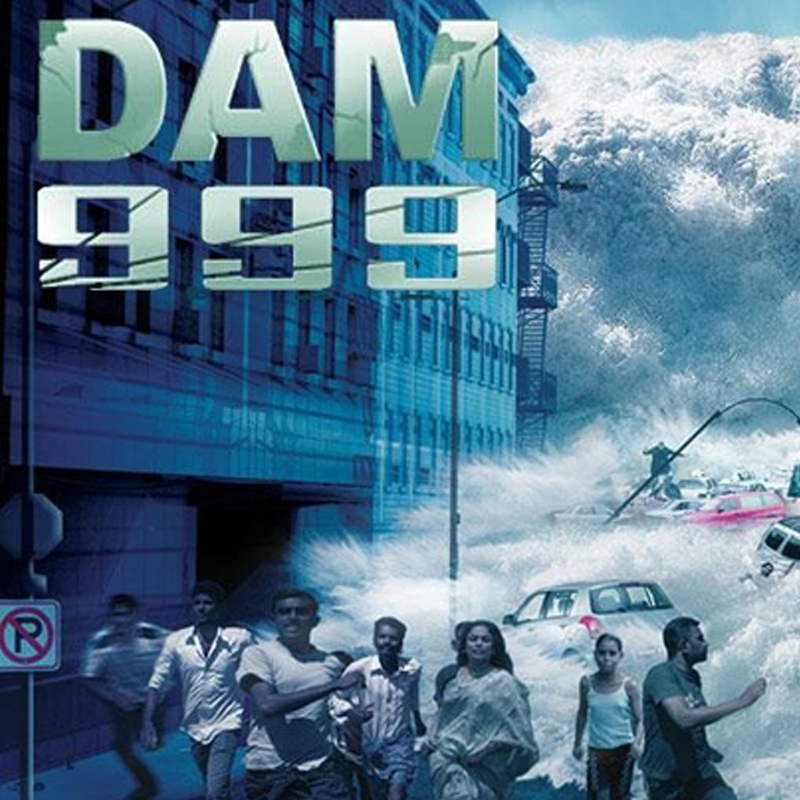
    Sohan Roy‘s DAM 999, the country‘s only hope at the Oscars this year, had been eliminated from the Oscar race. The filmmakers were expecting nominations in the best picture, best original song and best original score categories. Though the film was not India’s official entry, it was individually sponsored by the makers.

    Despite Indian cinema being recognised globally for its technological advancements, variety, visual splendour, skilled technicians and also for its reach and returns, our films have not been able to break into the coveted Oscar circle for a long time.

    Commenting on why we don’t make films worth an Oscar award, producer Mukesh Bhatt said, “ This is because we make films for millions of our Indian audience. That in itself is a herculean task. Though as a rule we send one film as an official entry to the Oscars, we have never grudged about our films being eliminated from the Oscars.”

    Among the 30 films that were the country’s official entry at the Oscars, only three films namely Mother India in 1957, Salaam Bombay in 1988 and Lagaan in 2001 got Oscar nominations, while those that failed include Sahib Biwi Ghulam, Reshma aur Shera, Garam Hawa, Manthan, Shatranj Ke Khiladi, Saagar, Rudaali, Bandit Queen, Devdas, Shwas,Rang De Basanti,Tare Zameen Par and Adaminte Makan Abu among others.

  • Nokia, Tata remain India’s most trusted brands; Anna Hazare is top personality

    Nokia, Tata remain India’s most trusted brands; Anna Hazare is top personality

    BANGALORE: Nokia and Tata have retained their position as the top two trusted brands in India this year, according to a recent brand study.

    Anna Hazare has surged, gaining the nation’s trust ahead of Sachin Tendulkar, Salman Khan, Amitabh Bachchan and Aamir Khan who feature in that order.

    According to the second edition of Brand Trust Report (BTR) released by The Comniscient Group’s Trust Research Advisory (TRA), Sony has slipped two positions to become the fifth most trusted brand, while LG and Samsung have moved up to the third and fourth positions.

    The BTR India Report 2012 lists India’s 1000 most trusted brands. There are 22 personalities listed in BTR.

    Reliance has slipped from its number six position last year to No.10, while Bajaj at No.7 has eased out Titan from the top 10 positions. LIC and Airtel have retained their last year’s positions of eighth and ninth ranks respectively.

    TRA CEO N Chandramouli said, “In life, without trust, there is nothing. Each time a human engages with anything, the basis for all decisions is trust. Be it brands, other humans, or just ideas, one will react to them on the basis of the trust it generates. Last year was tumultuous for several brands, but those which focused on trust, have gained market-share, revenues and profits. On the other hand, the brands which have focused only on the latter, have invariably lost both. Focus on building trust and all else will follow automatically.”

    Most Trusted leaders in some other categories are Armani in Branded Fashion, DLF in Construction, NIIT in Education, ONGC in Energy, PVR in Entertainment, Pepsi in F&B, Dabur in Healthcare, Taj Hotels in Hospitality, Google in Internet, ACC in Manufacturing, Thomas Cook in Services, Being Human in Social Sector, Hewlett Packard in Technology, and Air India in Airlines.

    The BTR is an attempt to understand and simplify concepts related to Brand Trust – it tries to help decipher, analyse and measure trust as the basis for all human-based engagements and interactions.

    The research has been carried out using TRA’s proprietary Trust Matrix comprising 61 different ingredients or components of trust. The research has been conducted with 2,718 ‘influencer’ respondents from 15 cities in India and is based on more than two million data points from 12,000 hours of research, said TRA.