Tag: Reliance

  • AL Jazeera English inks distribution deal with Airtel Digital TV

    AL Jazeera English inks distribution deal with Airtel Digital TV

    MUMBAI: In a bid to expand its distribution network in India, Al Jazeera English has signed a distribution agreement with Airtel Digital TV.


    The channel will be available on the Airtel Digital TV’s channel no. 321. With this partnership, Al Jazeera English will now be accessible on all major Direct to Home (DTH) platforms such as Dish TV, Tata Sky, Reliance and Airtel Digital TV in India.


    Al Jazeera Media Network executive director, marketing and distribution Abdulla Al Najjar said, “We are very pleased with this agreement. We have a strategic commitment to employ new avenues and platforms for audiences across the world to access our content. We look forward to delivering Al Jazeera English’s ground-breaking content for audiences across India with such partnerships.”


    Al Jazeera English’s association with Airtel Digital TV will allow them to cater to its users on the network. Viewers will now be able to access Al Jazeera’s award winning news and programme content from around the world. Globally, Al Jazeera English is available in over 260 million households across 130 countries.


    Launched in November 2011 in India, Al Jazeera English is known for its belief in the shared humanity of the global community, and as a result keeps real people at the centre of the story.


  • Effect of 4G rollout on the e-commerce industry

    Effect of 4G rollout on the e-commerce industry

    4G i.e. fourth generation is an advanced version of 3G that facilitates its users with mobile broadband internet access. The technology provides wide area coverage and high speed to mobile as well as laptop users. Offering peak upload rate of 500 mbps and peak download rate of 1gbps; 4G supports HD streaming. 4G network can ensure optimal use of HD phones. With its WiMAX LTE technology, 4G provides path-breaking speed and impeccable connectivity to its users. A game-changing internet technology, 4G network is slowly becoming the ‘Next Big Thing’ that provides immediate access to everything from around the world at your fingertips. 


    With 4G taking the Indian market by storm, the demand for smartphones is taking an upward swing. The 4G rollout is further influencing the sphere of e-commerce immensely. Online retail firms have to confront logistics as well as connectivity hindrances in order to serve their patrons efficiently. These issues can be solved with 4G internet services. By providing cutting-edge speed and connectivity, 4G is helping online firms to tackle their problems easily. 


    Escalated speed and enhanced connectivity provides users with a compelling and satisfactory browsing and shopping experience. Usually it is seen that potential buyers leave a particular site when they are just going to finalise their purchase. The reason being – connectivity problem or slow internet. With 4G, customers can quickly make purchases without having to face any such hassles. This is thus, indirectly boosting the sales of e-commerce companies. 


    With 4G for mobiles as well as laptops, e-commerce companies can be unperturbed about the size of images or videos. Even on smartphones, users can enjoy the same experience as on a laptop or PC, due to higher connectivity and speed offered by 4G. Another situation will justify the sturdy role that 4G is playing in the realm of e-commerce. Many a times, it happens that online shopping websites hang or the speed of internet dips while making payments or while checking out. This leads to reduction in the confidence level of customers, leaving them in a dilemma of whether to purchase online or not to take the chance. This can result in dwindling sales for e-commerce companies. With 4G at hand, buyers are able to make instant purchase decisions and check-out in a hassle-free way. 


    In order to gain maximum advantage of the fourth generation internet technology, the market is witnessing various e-commerce firms going the mobile-way. In short, for better results, e-commerce firms are turning to m-commerce. With 4G on mobile, people are preferring to use their handheld devices to fulfill their day to day needs. Hence, e-commerce firms are coming up with ground-breaking designs and models to utilise the lucrative mobile space efficiently, making scores of firms turn to the m-commerce platform. 


    4G, the improved and enhanced version of 3G, is metamorphosing the entire domain of e-commerce, making transactions instant, thus delivering reliable and constraint-free experiences.


    (These are purely personal views of iSpyPrice.com founder and director Suresh Sharma and Indiantelevision.com does not necessarily subscribe to these views.)

  • “ISL teams to breakeven in two-four years”: Andy Knee

    “ISL teams to breakeven in two-four years”: Andy Knee

    International Management Group or simply known as IMG has been a world renowned leader in sports, fashion and media management with operations in more than 30 countries.

    In 2014, IMG was acquired by WME a global entertainment and media agency. In India, the company has formed a joint venture with Reliance Industries. The JV was formed between good buddies Mukesh Ambani and former IMG chairman Teddy Forstmann who died of brain cancer in November 2011.

    IMG Reliance has signed a 15 year partnership with the All India Football Federation (AIFF) to improve and popularise football in India beginning from the grassroots to the professional level. One of its initiatives is the Hero Indian Super League- an IPL styled tournament for football that is slated to begin from 12 October 2014.

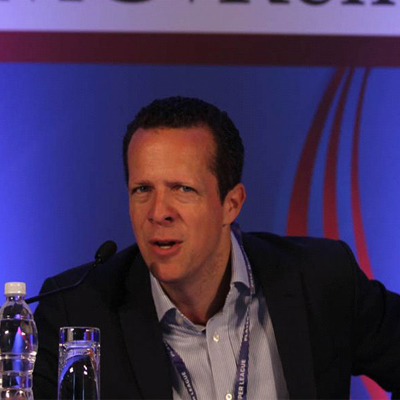
    Present at the international and domestic player draft was IMG football vice president Andy Knee.  His previous stint was at electronic giant Phillips where he was the head of sponsorship. In 2006 he was appointed as director of the Football Championship League where he was responsible to raise the profile for the 24 clubs and improving the competitions revenue.

    Though the league is highly pressurising, one will find Knee always at ease and silently observing team owners replying to hard hitting questions from journalists. On the day of the international player draft, Knee speaks exclusively to indiantelevision.com’s Herman Gomes.

    Excerpts

    The league will kick off in October this year. How is IMG-Reliance developing the league for the first time in India?

    We are doing something unique. We are taking a lot more risks than we typically do in a project. So we are investing in buying rights, in the infrastructure, marketing and putting up an expert team of football from India and abroad to help galvanize the league for the first time.  We want to make the Hero ISL an astounding success and generate value and return more importantly for our clubs and the league to be a catalyst for football to explode interest and participation here.

    In China, IMG has stake in the Chinese Football Association promoted Super League. Commercially the league there is secure and financially controlled by the government. Why have you chosen a private drive model here?

    What we do in China is very different. There we have a 10 year deal with the Association where we represent rights and sell those rights to sponsors. They have an existing league and therefore we do not have an ownership position in China.  IMG works with them to help generate more revenue from the league. We also advise them on how to improve their administration and governance of the sport. In India it is very different. It is not typical of what IMG normally indulges in. Usually we have clients or we work with or on the behalf of partners.  We have had business in India for a very long time and we have been successful in the creation of the IPL. We now looked at football and thought how is it possible that a country of this importance and size does not have advanced football infrastructure industry? So our former owner Ted Forstmann along with Mukesh Ambani discussed it together and decided to do something great in football by coming up with the ISL.

    China has certain advantages. They have got some great stadia and they are fortunate from that point of view, but China hasn’t been in the world cup in recent memory.  Japan and Korea have also risen fast and it proves it can be done. So I think if everyone is pulling in the same direction it will be a very big help.

    IMG has a presence in almost 30 countries. What are the global learnings you have put in to develop the sport in India?

    Globally, we have been representing TV, sponsorship and licensing rights. We have also worked with player business, TV production, hospitality, ticketing, commercialisation of stadia over multiple markets.  We bring that experience to India.  Frankly speaking only some of it is relevant here. For example we helped the financing and seat sale of the Wembley stadium. Is that relevant to India? Unfortunately not! Sadly we are away from our teams being in a position to invest in a significant new stadium. I hope that opportunity comes but that’s a little bit down the chain. So we take the expertise we have all gained through working many years in football and apply those bits that are relevant for India.

    Sports fans and analysts are of the opinion that the ISL will reduce the I-League tournament to an inconsequential format. What are your thoughts?

    I understand that when a new format is introduced it can be seen as a threat to the established leagues. My view is that it can’t be a threat to the I-League because the football pie in the country is very small at the moment. I do not know what is the size of the football industry here but all I know is that it is very small. We could all fight over a small slice of the football pie but actually there is just not much there to get there. We all need to make that pie 100 times bigger and there is plenty to go around. So it is about the game at the moment. It’s not about who gets what bit. Co existence can happen very easily but I hope the ISL will popularise the sport unbelievably. So people would want to watch Delhi Dynamos and then go and watch Mohun Bagan at different time of the year. They are just football fans who watch the Premiere League but they also love the fact that India has a real football league they can support and be proud of.

    How much will IMG-Reliance be investing for the infrastructure of the game in India?

    Well we are not spending too much money on the grassroots facilities. I would love us to be in a position to do so but we are not going around building pitches. We need some far better football facilities but we are not doing that. We hope that will happen organically because people are getting greater interest in football so more space is given to football. Whether its I-League or ISL teams there will be greater money coming for the sport but that money will be reinvested for the football ecosystem to grow, develop and expand.

    It is understood that each of the eight teams have to annually spend Rs 2 crore to invest in grassroots programme to develop football. How will that amount be utilised?

    This is what the teams have to do. Teams bought the rights to run their respective teams and the money they have paid is for a 10 year period and they pay it in 10 equal slices in one year. On top of that there is a requirement to invest in grassroots. This is the requirement we put on teams but at the same time actually we probably didn’t need to because all the teams understood how important this is. The teams know they have to invest in grassroots, in local football programmes in local communities. The teams have got to spend on two requirements-  grass roots and  marketing. The teams do not have to send us that money. Absolutely not! That’s for the teams to build their brand, popularity and love of the game in their local cities.

    IMG ran a three day Grassroots Developmental Programme in Kolkata where we conducted theory as well as practical sessions. We are going to roll that out farther to other cities and teams will do their bit in local cities.

    What is the age group you are planning to target through the Grassroots Developmental programme?

    Typically we look towards the age group of 11 or 12 year olds. This is not certain but we may go a little older because the U-17 World Cup is a very focal point. The teams and we would like to play our part in helping India to produce a team to be proud of in 2017.

    Will the Hero ISL have a league ambassador?

    We had talks if we wanted a league ambassador a big name who just works on the behalf of the league but we decided not to. The teams have got some great owners and some great marquee players so there is no magic celebrity we are planning to unveil. We want the league owners to stand out and the teams themselves. Yes we know we need some stardust but we have people like Ranbir Kapoor and Sachin Tendulkar to do that.

    How did the league go about deciding a fixed price for each of the players?

    Well we had a base price for each of the players that the teams agreed. There is pressure on the business models of the teams. They will lose money for the first couple of years but this is an investment. But we agreed on a price that will make the teams happy. This is the sport where if you want the best you have to spend eye watering sums of money. We found a point where we said not all of these guys are a big name but they are going to be of very good quality. So we will get great playing products and market these guys so that Indians appreciate. They might not be the Beckhams , Messis or Ronaldos but these guys are fantastic players in their own rights. But more importantly than that we need to showcase Indian talent and reassure the country and sports fans that we might be 150th in the FIFA rankings but there is talent here and reasons for real optimism about the future.

    India will be hosting the under 17 World Cup in 2017. What is the Indian government planning for the World Cup and how will it be contributing to the league?

    From what I have heard the government has some plans in terms of upgrading the stadia. I assume the stadia will be good. Well we have got some great team owners and known companies who are behind the league. We have got support of the government and so there will be greater investment in the sport from that point of view.  It’s funny how 20 to 30 years ago you could find the typical teams in an U 17 World Cup like England, East Germany, France and Spain. But now, those teams can come from anywhere. Everyone is developing football unbelievably fast and India has a big gap and it’s not like we can close it. With the third highest number of people playing football (I think only Germany and the States has more active footballer) Don’t tell me there is no talent here. Of course there is talent. We just need to put the processes and infrastructure in place in developing the talent.

    By when do you see the teams breaking even?

    We hope that will happen in two-four years and that depends on certain factors. If India properly embraces football and fans turn on their TV and come to the stadia, it will happen faster. If the reception takes a little bit longer to get warmed up it will happen a bit later. We realise this will not be a success overnight. We will love it if it explodes interest in the first year but at the same time there is the acceptance that Rome wasn’t built in a day. So every team and the league knows you have got to have some patience here. 

    How do you see Star’s association helping the league and will there be localisation of the sport in terms of commentary?

    This is a sport that must succeed on TV.  We have got the most powerful Indian TV network that is going to publicise the ISL across all its channels in different languages.  We have got a partner that really believes in it and has invested significant money. There will be some localization, I am sure, but I do not know how many languages. Star is desperate to take the game to people across India. They have got their skin in the game and their bosses in the states are looking at it closely and there is pressure on us too and we have a partner that is very committed for this league to succeed.

    On a parting note what message would you like to give to football fans in India?

    Tune in, come and have a look and enjoy it. I think this is going to be something that India has never seen from a quality and show point of view and I hope people embrace it, whether they watch 20 minutes of one game or whether every single game of the ISL.

  • Sensex turns positive, rises 150 points

    Sensex turns positive, rises 150 points

    MUMBAI: Just as Finance Minister Arun Jaitley presented Budget for the year 2014-15, stock markets showed positive signs. However, by the end of the day it had fallen lower than its opening value. At 3:34 pm the Sensex closed at 25,372.75, down 72.06 points and Nifty ended trading at 7,567.75, falling by 17.25 points. Among specific sector indices Midcap index was up 0.35 per cent, Realty index up 4.67 per cent and Bank Nifty down 1.25 per cent. The IT index was down by 0.96 per cent while infrastructure index  was up by 0.15 per cent.


    At 3:10 pm was when the Sensex turned negative and was down 81 points at 25,363. The  Nifty down 17.3 points at 7,568 but at 1:16 pm the Sensex was trading at 158 points higher at 25,603.61 and Nifty was up  by 45 points at 7,630.


    At 1:00 pm the realty index was up by 1.05 per cent but at 12:20pm, the 30-share benchmark BSE sensex was down 139.75 points, or 0.6 per cent at 25,305.06 points


    Sensex stocks like Wipro rose by 2.2 per cent while IT giant Infosys rose by 1.5 per cent.


    Stocks of Sesa Sterlite fell by 2.5 per cent along with Bharti Airtel whose stocks were down by 2.4 per cent. The stock exchange’s power and banking indices were down by 1.5 per cent each.


    Shares of defence companies and financial services companies, with interests in insurance, rose after Jaitley raised the cap for foreign direct investment (FDI) in these two sectors by up to 49 per cent.


    Financial services firms Reliance Capital and Bajaj Finserv were up by 1.9 per cent each, while Max India rose by 2.7 per cent.


    “Difficult as it may appear, I have decided to accept this target as a challenge,” Jaitley said, adding that the fiscal deficit would be brought down to 3 per cent of GDP by 2017. “We cannot leave behind a legacy of debt for our future generations.”


  • Nikhil Wagle: Another one bites the dust at Network18?

    Nikhil Wagle: Another one bites the dust at Network18?

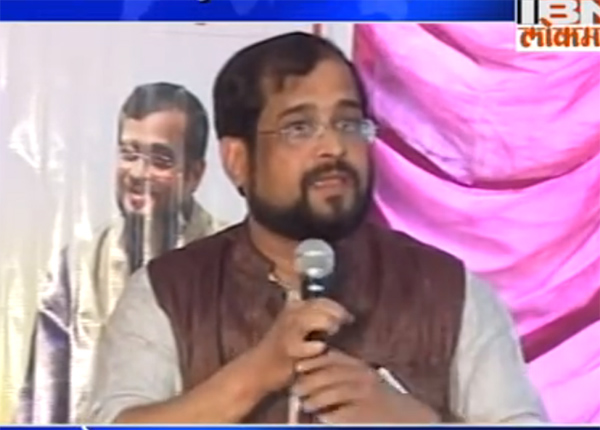
    MUMBAI: Is senior journo Nikhil Wagle going to end up as another casualty at the Network18 group? 


    What has got tongues wagging is a tweet which Wagle sent out this morning in which he stated: “My decision to leave Mum (read Mumbai) is final. Need to get away from crowds and madness! Want ultimate peace.”


    Wagle is editor in chief at IBN Lokmat which is part of IBN18 which itself is part of the Network18 group. Apparently, he has been on leave for some time now.


    RTI activist and senior journalist Vinita Deshmukh questioned him on his tweet, “What are u saying? Where are you going? Will you be the next TV star to desert us?” Wagle responded by saying: “Will always be with people n activists like u! Don’t know about TV!”

    So we at indiantelevision.com also got into the twitter game and messaged him asking him what was going on. He responded after some time, saying he was on leave. And when questioned whether his leave was permanent or just a short break, his quick repartee was “Wait and watch!”


    Wagle tweeted later at close to midnight: “Please don’t spread rumors. I am with@ibnlokmattv. Not resigned. On leave.Was hospitalized n adviced rest. (updated at 11:23 pm, 28 June 2014).

    Wagle has worked with Doordarshan as well as newspaper Aapla Mahanagar and has been with IBN Lokmat since its launch in 2008.


    Currently, IBN18 editor in chief Rajdeep Sardesai and CNN-IBN deputy editor Sagarika Ghose are on leave. Though Rajdeep has calmed his team by saying that he would be back in July before he went on leave earlier this month, the rumour is that he is not returning.


    After Reliance announced its acquisition of the network last month from founder Raghav Bahl, group CEO B Saikumar, COO Ajay Chacko, CFO RDS Binni Bawa and several others put in their papers. It is unknown who will be taking their positions. Meanwhile, the open offer for Network18 is slated to go on till August.


  • More Network18 senior management to exit as Reliance begins to take full control

    More Network18 senior management to exit as Reliance begins to take full control

    MUMBAI: Black Wednesday. Network18 employees must be quite bewildered by the happenings of 28 May 2014. First came the announcement that group CEO B. Sai Kumar had decided to call it a day after 14 years of nurturing and growing it along with Raghav Bahl and Haresh Chawla. Then came the news that even COO Ajay Chacko had decided to bolt for the door.


    But this is just the tip of the iceberg, according to sources. Apparently, a senior management exodus is likely to hit the group over the next few days.  The group today issued a release  on the BSE stating that CFO RDS  Binni Bawa has already tendered in his resignation.  Among those who are tipped to follow  include : senior vice-president corporate affairs and company secretary Anil Srivastava and group general  counsel Kshipra Jatana. 


    Their departure is a precursor to the biggest announcement that is likely to come out: that of the exit of founding/controlling shareholder & managing director Raghav Bahl.


    Whether leading journalists like Rajdeep Sardesai, Sagarika Ghose, Senthil Chengalvaryan, Sheeren Bhan, amongst others would quit  the Network18 group or not is not known at the time of writing. Though speculation is running rife that this will also come to pass in the next few days.  However, insiders insist that Sardesai is believed to have assured the team of CNNIBN journalists at an internal meeting at CNNIBN a couple of days ago that “he would be staying and that things are only going to get better from now on.”


    No one from the company was available for comment, despite several attempts by indiantelevision.com journalists.


    Apparently, the entire exercise is part of Reliance Industries getting into the driver’s seat at the Network18 group. The former is likely to make an announcement to buy out Raghav Bahl’s equity stake, followed by a offer to the public, in order to take a controlling stake in Network18


    Says a media observer: “These changes are happening at a time when Reliance Industries Ltd (RIL)  has in recent times plumped up on media heavyweight media executives. It has lured away Zee Media Corp Ltd CEO Alok  Agrawal, senior journalists Gautam Chikermane, BV Rao and Rohit Bansal. Speculation is that this exodus is taking place as a precursor to Reliance taking over the management and control  of the group.”


    No one from Reliance Industries was also available for comment either, at the time of filing this report. Spokesperson Tushar Pania said he would send a formal statement as soon as possible. 


    It may be recollected that Bahl had sought the help of RIL chairman Mukesh Ambani to bail out Network18 when its debt had ballooned beyond manageable proportions a couple of years ago. Ambani had extended a loan through a trust to Bahl’s companies that held the Network18 stake. That loan was used to pare down the group’s debt and also acquire the ETV channels. But it also left open the door for Ambani to wholly take over the Network18 group at a  later stage, though the commitment had been made that Bahl and the team would be left alone to manage it.


    Sources indicate that RIL has been pushing  Bahl to cede control of the management over the past few months and he seems to have finally consented. 


    (updated on 30 May 8 am)

  • India back as No1 ranked T20I side

    India back as No1 ranked T20I side

    MUMBAI: India has become the number-one ranked Twenty20 International (T20I) side after the annual update of the Reliance ICC T20I Team Rankings, which was announced on 1 May.


    India has swapped places with ICC World Twenty20 Bangladesh 2014 champion Sri Lanka.


    In the past 12 months, India has lost just one T20I (against Sri Lanka in the recent ICC WT20 Final in Bangladesh), while Sri Lanka has lost four matches. The 2013-2014 results are weighted at 100 per cent whereas, the results in 2011-2012 and 2012-2013 are now weighted at 50 per cent. Therefore, Sri Lanka’s strong performances in those two earlier years now count for less. 


     In the other major change, the West Indies has slipped two places. This drop has moved Australia and New Zealand up by one place each.


     The updated table now reflects all T20I matches completed after 1 August 2011. All T20I matches played until the start of May 2015 will be added to this table, so that by May 2015, the ratings will be based on just under four years of results.


    In all 14 countries have played sufficient T20I matches to be ranked on the table.  Three countries are unranked, as they haven’t played the minimum number of eight matches during the rankings period, but do have a rating.


    Reliance ICC T20I Team Rankings (as of 1 May, after annual update)

    Rank   (+/-) Team              Rating (+/-)

    1          (+1) India                  131   (+1)

    2          (-1)  Sri Lanka           130  (-3)

    3          (-)   Pakistan             123   (+3)

    4          (-)   South Africa      121   (+3)

    5          (+1) Australia            112   (+2)

    6          (+1) New Zealand    110   (+3)

    7          (-2) West Indies       110    (-4)

    8            (-)  England               97     (-4)

    9            (-)  Ireland                 87     (+2)

    10           (-) Bangladesh          72     (+1)

    11        (+1) Netherlands        68    (+6)

    12        (-1) Afghanistan         62     (-4)

    13            (-)   Zimbabwe         52     (+2)

    14             (-)   Scotland            51     (+1)


    Not ranked as fewer than eight T20I matches played since August 2011

    Nepal   63

    Hong Kong 30

    UAE     0

     (Developed by David Kendix)

  • Broadband usage sees 3.09% increase for the period Dec-Jan

    Broadband usage sees 3.09% increase for the period Dec-Jan

    NEW DELHI: There were 56.9 million broadband subscribers in the country at the end of January 2014, showing an increase of 3.09 per cent as compared to the previous month.


    The total broadband (>512 Kbps) usage is based on the information provided to the Telecom Regulatory Authority of India (TRAI) by 144 broadband service providers.


    The top five broadband service providers constitute 82.57 per cent market share of total broadband subscribers. They are BSNL (16.54 million), Bharti (11.49 million), Reliance (7.07 million), Idea (6.26 million) and Vodafone (5.63 million).


     The top five Wired Broadband Service providers are BSNL (9.98 million), Bharti (1.39 million), MTNL (1.11 million), Hathway Cable (0.36 million) and Beam Telecom (0.36 million). The top five Wireless Broadband Service providers are Bharti (10.10 million), Reliance (6.96 million), BSNL (6.56 million), Idea (6.26 Million) and Vodafone (5.63 million).


     There has been a 0.08 per cent increase between December and January in the wired broadband segment to 14.55 million, while the wireless segment (mobiles and dongles) have shown a rise of 4.2 per cent in the same period with 41.05 million subscribers. There has been an increase of 1.66 per cent in this period to 0.4 million subscribers for Wi-Fi, Wi-Max, Point-to-Point Radio and VSAT


  • GroupM crowned ‘The Dream Company to Work For’

    GroupM crowned ‘The Dream Company to Work For’

    MUMBAI: GroupM India, the country’s largest media investment conglomerate, was honored with the ‘The Dream CompanyTo Work’Award for in the Media and Entertainment sector. GroupM is also in the overall list of ‘Dream Employer of the Year’in India. The awards have been conferred by the World HRD Congress 2014 in Mumbai.

    The ‘Dream Companies To Work’ is an annual event organized by the World HRD Congress to reward and recognize People and Talent initiatives of organizations across various sectors. Over 100 companies participate at the World HRD Congress 2014event including Accenture, Angel Broking, Citibank, HDFC, Infosys, Samsung, SBI, Cavin Care,Reliance, Novartis,TCS and many more.This was the first time that GroupM participated at the ‘Dream Companies to Work For’ Awards.

    CVL Srinivas, CEO, GroupM South Asia said, “GroupM is extremely proud to receive the awards from the World HRD Congress. The awards reaffirm that investing in our people is the best way to ensure cutting edge product quality and superlative customer delight. Talent management remains a critical focus area for us at GroupM South Asia.”

    Added Gaurav Hirey, Chief Talent Officer, GroupMSouth Asia, “GroupMand its agencies have pioneered some of the best Talent practices in the South Asia markets. We are investors in people and in the last year, we have aggressively pursued a people transformation agenda. We have worked on various capability-building initiatives like the Youth Executive Committee (YCo), The New ME Initiative for digital orientation and looked at getting in fresh ideas and talent through an engaging Campus Connect effort. This allows us to provide huge value to all our stakeholders, especially our clients and our employees.”

    Over the last 11 plus years, GroupMIndia has cemented its position as an innovator and thought leader in the media industry. GroupM also has a distinction of having invested in a full fledged talent management team the only one in the media and entertainment industry. Over the last year, GroupM has made a paradigm shift in the way it operates in South Asia, keeping in mind the ever changing media landscape. With digital at the heart of their processes and planning, it has resulted in the conglomerate winning over 82 new businesses across its agencies and specialist units.


  • Samsung is India’s Most Trusted Brand; Sony ranks 2nd, Tata is 3rd

    Samsung is India’s Most Trusted Brand; Sony ranks 2nd, Tata is 3rd

    MUMBAI: India’s much anticipated and most rigorous brand evaluation, The Brand Trust Report, India Study, a comparison of the trust held in brands, has been released for 2014. Samsung has emerged as India’s Most Trusted brand this year. Sony ranks as India’s 2nd Most Trusted Brand followed by Tata which has ranked 3rd this year. In 2013, the three brands had ranked second, third and fifth respectively. LG, ranks 4th in this year’s list, followed by the three year leader, Nokia, at 5th place. Hewlett Packard move up fourteen ranks over last year to become India’s 6th Most Trusted Brand and Hero leaps seventy-nine ranks to become India’s 7th Most Trusted. Honda is at rank 8th, followed by Reliance at 9th. Mahindra betters its last year rank by sixty-nine places to get ranked as India’s 10th Most Trusted brand.

    The Brand Trust Report, the fourth in its series, is the result of a comprehensive primary research conducted on the proprietary 61-Attribute Trust Matrix of TRA (formerly known as Trust Research Advisory). This year’s study involved 15000 hours of fieldwork covering 2500 consumer-influencers across 16 cities in India and generated 5 million datapoints and 20000 unique brands from which the top 1200 brands have been listed in this year’s report. These brands have been classified into 284 different categories as against 213 categories in 2013. The 244-page report is available for Rs. 14000/-.

    N. Chandramouli, CEO, TRA, said on the occasion of the report’s launch, “Samsung has grown steadily in trust ranks over the last four years – 5th in 2011, 4th in 2012, 2nd in 2013 and has reached India’s Most Trusted rank this year. When a brand focuses on its trust with intensity, apart from trust the brand gains in market-share, product premium and acceptance of new products as an automatic by-product. Samsung’s strategy of focusing on the core intangibles of its brand is evident from its climb to leadership in BTR 2014.”

    An analysis of the 100 Most Trusted Brands in 2014 revealed that most brands were represented from Diversified with 11, Consumer Electronics with 10, Bath/Beauty with 9, Mobiles with 8, 4-Wheelers, Telephony, and 2-Wheelers with 4 each, and Personal Technology, Sportswear and Aerated Drinks with 3 brands each.

     “Among the top 100 Most Trusted brands, 75 were net gainers while 25 took a fall. The gainers gained an average of 86.23 ranks, while those that fell took a dip of 27.16 ranks on average, showing that the average gain among the top hundred beats the average loss in ranks by 317%. A connected surmise


    could be drawn that in the year that was slow for many, brands took the opportunity to focus more on their trust intangibles, scoring points in the process. For long term sustainability and success, it is important that brands have a long term investment in trust”, Chandramouli added.