Tag: Reliance

  • Q3-2016: Reliance organised retail continues on growth path, Jio launched

    Q3-2016: Reliance organised retail continues on growth path, Jio launched

    BENGALURU: The Mukesh D Ambani led Reliance Industries Limited’s (RIL) organised retail segment – Reliance Retail, continued its growth momentum and profitability in the quarter ended 31 December, 2105 (Q3-2016, current quarter, Q3-16).


    RIL chairman and managing director Ambani said, “Our portfolio of world-class refining and petrochemical assets are paying-off handsomely. Refining business delivered yet another record performance on the back of seven-year high refining margins and highest ever crude throughput. In the current nine-month period, our refining business EBIT has surpassed the record earnings it achieved in FY-2015. The petrochemical business also delivered amongst its best quarterly performance, driven by robust polymer margins. The benefits of low crude oil and energy prices for our downstream businesses clearly outweigh the impact of these factors on our upstream segment, reflecting in the record earnings for the quarter.”


    “In the last quarter we also achieved significant milestones in our consumer facing businesses. In the biggest ever launch, Jio services have been offered to over 100,000 group employees and their families enabling them to experience the world-class digital services and applications, and help co-creating the best experience for all our customers. Our retail business crossed Rs 6,000 crore quarterly revenue milestone with a footprint now encompassing over 3,000 stores in 371 cities,” added Ambani.


    Revenues from RIL’s retail segment for Q3-2016 grew by 28.9 per cent YoY to Rs 6,042 crore (8.9 per cent of consolidated net turnover) as compared to Rs 4,686 crore (five per cent of consolidated net turnover) and grew 18.7 per cent QoQ as compared to Rs 5,091 crore (7.2 per cent of consolidated net turnover). RIL says that consolidated its leadership position in the grocery category. It further optimised its network operations to enhance profitability across the grocery retailing chain. Several private label products were launched under various grocery and general merchandise categories during the quarter. These continue to attract consumers due to compelling value proposition and great quality.


    The business delivered operating profit growth of 10.5 per cent YoY at Rs 147 crore (2.4 per cent margin)in Q3-2016 as against Rs 133 crore, and grew 25.6 per cent QoQ as compared to Rs 117 crore in Q2-2016.


    RIL numbers


    For Q3-2016, RIL achieved a consolidated net turnover of Rs 68,261 crore, a decrease of 27 per cent YoY, as compared to Rs 93,528 crore in Q3-2015 and 3.7 per cent lower than the Rs 70,901 crore in the immediate trailing quarter.


    However, RIL’s net profit after tax (PAT) increased 39.3 per cent YoY in Q3-2016 to Rs 7,431 crore as compared to the Rs 5,271 crore in Q3-2015 and increased 9.4 per cent as compared to the Rs 6,709 crore in the previous quarter.


    Reliance Jio Infocomm Limited


    Reliance Jio Infocomm Limited (RJIL), a subsidiary of RIL, is rolling out a state-of-the-art pan India digital services business. In addition to fixed and wireless broadband connectivity offering superior voice and data services on an all-IP network, RJIL says that it will also offer end-to-end solutions that address the entire value chain across various digital services in key domains such as education, healthcare, security, communication, financial services, government-citizen interfaces and entertainment. RJIL aims to provide anytime, anywhere access to innovative and empowering digital content, applications and services, thereby propelling India into global leadership in digital economy. RJIL aims to bring connected intelligence to the country through its extensive true 4G connectivity.


    RJIL is the first telecom operator to hold pan India Unified License. It holds 751.10 MHz of liberalised spectrum across the 800 MHz, 1800 MHz and 2300 MHz bands. RJIL plans to provide seamless 4G services using LTE in 800 MHz, 1800 MHz and 2300 MHz bands through an integrated ecosystem. The combined spectrum footprint across frequency bands provides significant network capacity and deep in-building coverage. In addition, RJIL has entered into agreements with RCOM for change in spectrum allotment in the 800 MHz band from RCOM to RJIL across nine circles and sharing of spectrum in the 800 MHz band across 17 circles.


    Media business


    Consolidated revenue and EBITDA of Network18 Media & Investments Limited was Rs 906 crore and Rs 95 crore, respectively during the quarter. Network18’s news channels (CNBC-TV18, CNBC Awaaz and CNN-IBN) and entertainment channels (Colors, Vh1, MTV, Nick) continued to be leaders in their respective genres says the company. Network18’s digital properties Moneycontrol and Bookmyshow continued to be market leaders. Moneycontrol launched new Android and iOS versions of Moneycontrol App during the quarter.

  • Reliance to release ‘Ghayal Once Again’ in India; B4U to distribute internationally

    Reliance to release ‘Ghayal Once Again’ in India; B4U to distribute internationally

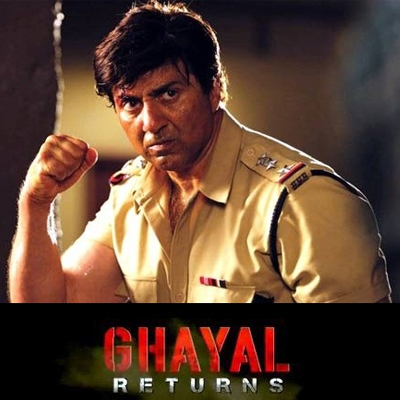
    MUMBAI: The Sunny Deol starrer Ghayal Once Again, which is the sequel to the yesteryears film Ghayal, will be distributed in India by Reliance Entertainment.


    Internationally, the movie will be distributed by B4U.


    Ghayal Once Again will release on 5 February, 2016. The movie’s release date has been pushed from January as Reliance Entertainment and Deol’s teams will be strategising on efficiently promoting and distributing the movie.

  • DreamWorks, Reliance, Participant Media, eOne form new film, TV & digital venture

    DreamWorks, Reliance, Participant Media, eOne form new film, TV & digital venture

    MUMBAI: DreamWorks Studios principal partner Steven Spielberg, Participant Media chairman Jeff Skoll, Reliance Group chairman Anil Ambani and Entertainment One (eOne) president and CEO Darren Throop have announced the formation of a new film, television and digital content creation company called Amblin Partners.


    The new company will create content using the Amblin, DreamWorks Pictures and Participant brands and leverage their power and broad awareness to tell stories that appeal to a wide range of audiences. Participant Media will remain a separate company that continues to independently develop, produce and finance projects with socially relevant themes.


    Amblin Partners will be led by CEO Michael Wright and president and COO Jeff Small.


    In addition, Amblin Television will become a division of Amblin Partners and continues to be run by co-presidents Justin Falvey and Darryl Frank, who maintain their longtime leadership roles. They join producer Kristie Macosko Krieger and president of production Holly Bario on the film side, to complete Amblin Partners’ senior management team.


    Participant Media CEO David Linde and Participant’s narrative feature team, led by executive vice president Jonathan King, will work closely with Amblin Partners to develop and produce specific content for the new venture in addition to exploring opportunities for co-productions and other content.


    Spielberg said, “We are thrilled to partner with Jeff Skoll, Participant Media, and to continue our prolific relationship. We are of like minds, as our many collaborations have illustrated, with a mutual commitment to quality, premium entertainment and global vision.”


    Skoll added, “I have had the good fortune of working with Steven for many years. We share a passion for stories that can truly affect change. And this new venture will further Participant’s growth and global impact.”


    DreamWorks Studios and Participant Media have collaborated on many Academy Award nominated films such as Lincoln and The Help as well as the critically acclaimed The Hundred-Foot Journey, and the recently released Bridge of Spies.


    Spielberg continued, “We are honoured to continue our long-term association with our dear friend, Anil Ambani and his team at Reliance. We have had the opportunity to develop and produce wonderful films thanks to their ongoing support.”


    “We are delighted to continue our now seven-years-strong relationship with our valued partner, Steven Spielberg, and to extend this alliance to the formation of Amblin Partners with Jeff Skoll. We look forward to the combination of Steven’s passion and integrity with Jeff’s unique socially conscious vision to create uplifting and quality content to entertain global audiences,” Ambani said.


    Spielberg said, “We are also grateful to Darren Throop and his team at Entertainment One for their contribution to Amblin Partners. We look forward to expanding our relationship.”


    “We are delighted to join Steven Spielberg, Jeff Skoll and Reliance in launching this unique new venture,” Throop said. “We continually strive to partner with producers of the highest quality content, and Amblin Partners certainly represents the gold standard.”


    Through this new partnership, eOne extends its collaboration into television production and distribution and expands its successful film distribution relationship across additional territories. eOne will handle the direct distribution of Amblin Partners films on a multi-territory output basis in Australia/New Zealand and Spain as well as the United Kingdom and the Benelux, where it previously had a successful output arrangement with DreamWorks Studios.


    J.P.Morgan Chase structured and arranged the $500 million debt syndication together with Comerica Bank, which served as co-lead. Other financial institutions involved included Sun Trust Bank, Union Bank, City National Bank and Bank of America, among others.

  • Reliance Jio touches 70 mbps download speed during trials

    Reliance Jio touches 70 mbps download speed during trials

    NEW DELHI: The download speed on Reliance Jio’s 4G network during its beta-test phase peaked at 70 megabit per second but remained in 15-30 mbps range on most occasions, as per field trial report by brokerage firm Credit Suisse.


    “We experienced peak download speed of 70 mbps during our trials, and on most occasions in the 15-30 Mbps range, even on the move,” said the report by Credit Suisse Research Analysts Sunil Tirumalai and Chunky Shah.


    At 70 mbps download speed, a Bollywood movie size video can be downloaded in about half a minute while at 15-30 mbps, the same can be downloaded in about three minutes.


    The report compared the commercially launched 4G service of telecom major Airtel and beta network of Reliance Jio and found “Airtel 4G giving 10-20 mbps, often slower than Jio, and 3G network speeds of sub 2 mbps (peak 7 mbps).”


    Analysts found urban coverage of RJio network at par with incumbents but remarked rural coverage as “poor.”


    During trials analysts experienced call drop-free RJio network in Mumbai but lost signal three – four times when they entered on village roads.


    Analysts said that they experienced seamless phone call experience between Reliance Jio and network of other telecom operators.


    “Overall, our take away is that the Reliance Jio network is turning out to be as strong a threat to incumbents as we had feared. Next focus would be on pricing and marketing execution,” the report said.


    The conglomerate is planning to do a soft launch of the 4G services on Dhirubhai Ambani’s birth anniversary this year, which falls on 28 December.


    Credit Suisse analysts said that the speeds will fall once a commercial launch happens and more users get on to the network but globally 4G has delivered better speed than 3G services.


    The company has matched up with incumbents on coverage in urban area but there is not much rural focus.


    “Until the rural network is fixed, RJio could enter into roaming agreements with other operators. We suspect Jio would use sub-1GHz spectrum for rural coverage,” the report said.


    Commenting on handset availability for Reliance Jio’s 4G service, the report said that ZTE is making Reliance Jio’s LYF branded 4G handset and some handsets of Samsung, LG, Lenovo and ZTE also supported VoLTE calls.


  • Reliance Industries appoints IPL ex-COO Sundar Raman As CEO – Sports

    Reliance Industries appoints IPL ex-COO Sundar Raman As CEO – Sports

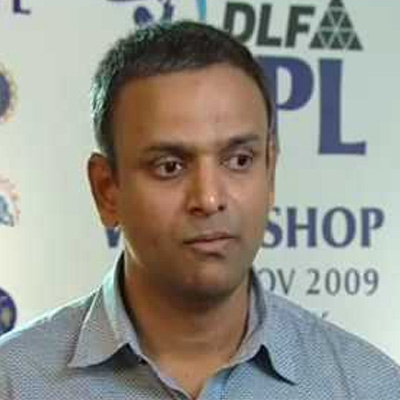
    MUMBAIFormer sports administrator and sports marketing and management professional Sundar Raman is joining Reliance Industries Limited (RIL) as its CEO – Sports. He will be responsible for consolidation and integration of RIL’s sports portfolio including its Foundation activities in sports. In addition to the existing sports properties of RIL, Raman will be driving newer avenues of growth in this area and also at integration with Reliance’s digital services of Jio. 


    Over the course of last few years, RIL has invested in a variety of sports properties and is now positioned as one of India’s leading sports businesses.  RIL is involved in multiple sports (cricket, football, basketball, tennis, golf) either on its own or through its Joint Ventures. In addition, the Reliance Foundation has several initiatives such as Basketball and Young Champs.


    Raman said “I am delighted at the opportunity to join Reliance. The group’s existing sports properties coupled with its Jio digital services provides newer areas of growth. RIL has a huge aspiration in the sports area. The opportunity to be engaged in integrating the entire sports portfolio and make Sports also an integral and important element in RIL’s growth will be an exciting journey”


    Raman brings with him to Reliance a rich and unique experience of over two decades in understanding consumer insights and as a pioneer in the growth of sporting properties in India. Until November 3, 2015, Raman was COO of the Indian Premier League (IPL), a post from which he resigned. Raman was officially appointed as IPL COO after a decade in strategic media thinking business working for brands such as Unilever, PepsiCo, Motorola, Samsung and Amex through J. Walter Thomson and later as Managing Director of Mindshare.

  • Zee Media Corporation CEO & executive director Ashish Kripal Pandit resigns

    Zee Media Corporation CEO & executive director Ashish Kripal Pandit resigns

    MUMBAI: Zee Media Corporation executive director and CEO Ashish Kirpal Pandit has resigned from the company with effect from 12 October.


    He handled senior management roles for more than 27 years in industries from ranges from telecom to retail. He has been associated with brands like Alcatel, Efirst Technologies, Fortis Healthcare Limited,  Reliance Webstore and Tata Teleservices. 


    Pandit joined Zee Media Corporation in October 2014 and looked after senior management team. Pandit was with Digicall Global for three years before joining Zee.

  • Reliance Industries names Karthik Lakshminarayan as VP of Vibrant Media

    Reliance Industries names Karthik Lakshminarayan as VP of Vibrant Media

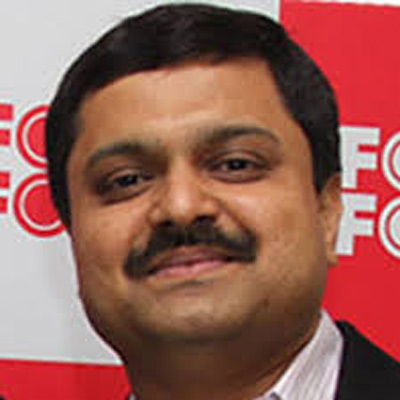
    MUMBAI: Reliance Industries’ in-house agency Vibrant Media has appointed Madison Media COO Karthik Lakshminarayan as vice president. 


    According to information available with Indiantelevision.com, Lakshminarayan’s role will encompass developing media strategy for Reliance Jio to begin with.


    He will report to Vibrant Media senior vice president Nikhil Dave and is likely to join the company in November. 


    Currently serving his notice period at Madison, Lakshminarayan joined the agency in November 2011 from FoodFood where he was COO.


    At the time of filing this report, Lakhminarayan was not available for comment.

  • India early adapter of new technology but not IPTV: Dataxis

    India early adapter of new technology but not IPTV: Dataxis

    NEW DELHI: India stands out as an early adapter of latest technology despite being a price sensitive market, according to a Dataxis Research report.


    While on the one hand, India has the highest DTH subscribers as well as HDTV subscribers, on the other, public sector companies MTNL and BSNL have given up their hopes on IPTV. Airtel, ACT and Reliance are retaining the service only in few circles.


    India, Pakistan and Sri Lanka are the three countries with active IPTV subscriber base in the SAARC region.


    IPTV is still evolving and is not widely accepted as a pay-TV model by SAARC countries. The total active IPTV subscriber base in SAARC (adding these three countries) will be around 270,000+.


    Sri Lanka’s IPTV subscriber base contributes to nearly 48 per cent of the overall SAARC IPTV subscribers, followed by Pakistan and India with about 33 per cent and 18 per cent respectively.


    Sri Lanka and Pakistan are showing high interest in pushing IPTV. On the other hand, Nepal’s internet service providers are planning to launch commercial IPTV services by the end of 2015.


    Meanwhile, the video markets of 12 East Asia Pacific countries tracked by Dataxis are forecast to generate total digital video revenues of $4.31 billion in 2017 – surpassing the physical video market for the first time driven by fast-growing, high-speed broadband penetration.


    APAC Video Market 2015 analyses the transformation of the video market across the 12 countries covered over the period 2007-18, including physical and digital video unit sales, rentals, revenues and forecasts, as well as profiling each market and the individual digital video services available.


    The four main markets in the region (Australia, Japan, New Zealand and South Korea) together accounted for about 96 per cent of total digital and physical video revenues end-2014, with Australia and Japan alone generating about $5.4 billion in physical video revenues, representing more than 90 per cent of total physical revenues across the region.


    However, South East Asia is plagued by piracy and the official physical video market is almost negligible. Unauthorised CDs, VCDs, DVDs and CD ROMs proliferate due to the lack of affordable digital content and low disposable incomes. Indonesia, for example, had 5.75 million Pay-TV subscribers by end-2014, but only two Pay-TV players offered VOD services and Dataxis estimates that just 1.5 per cent of Indonesian TV households will be VOD-enabled by 2018. 

  • DTH operators woo customers with lucrative offerings

    DTH operators woo customers with lucrative offerings

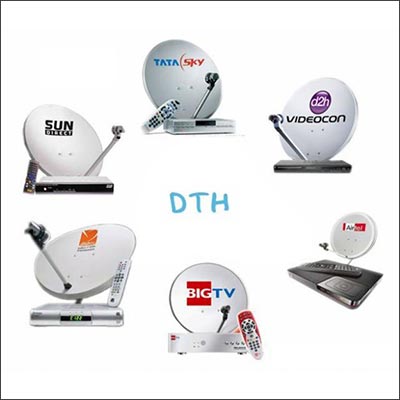
    The year has started on a good note for direct to home (DTH) subscribers. Even as Indian DTH players have seeded close to four million set-top-boxes (STBs) across the country in Q1-2015 alone, with growing competition and increasing digitization push, the companies are now also putting their best foot forward to woo more subscribers, while retaining existing ones.


    Going by the latest Telecom Regulatory Authority of India (TRAI) report, almost 34.90 million DTH subscribers in India are inactive as against the total registered subscriber base of 76.05 million till the quarter ending March 2015. So while the DTH operators have been thumping their chests about adding new subscribers, their constant effort is channelized towards luring existing subscribers to stay on. And one such way to do that is by launching new products and services.


    As the year kicked off with the ICC Cricket World Cup and Indian Premiere League (IPL), DTH players got into overdrive mode early on with offerings galore. From Tata Sky launching 4K STBs, Videocon d2h rolling out a 4K Ultra HD multi genre channel, Dish TV offering discount packs, Sun Direct giving away an HD DVR connection at the cost of an HD connection on buying Samsung Curve to Airtel Digital TV’s UHD TV, it has been the year when DTH subscribers have been spoilt for choice.


    Over the past eight months, different players have come up with different strategies to increase subscription as well as add more active subscribers.


    Here’s a lowdown on who did what:


    Dish TV


    The DTH operator, which had in 2014 created a sub-brand called Zing, started the year by launching Zing for the Tamil Nadu market. Dish TV had introduced the sub-brand to cater to the specific needs of consumers in different regions and also give competition to the cable industry. Through this, Dish TV offered more than 145 channels, including 49 Tamil channels and services in a mere price of Rs 99 per month. Soon after, the operator launched Zing for the Kerala region as well. This time, it gave more than 150 channels, including 16 Malayalam channels at Rs 99 per month.


    Cashing in on the IPL, Dish TV, which was one of the sponsors for Kolkata Knight Riders, introduced a special Cricket+ package to increase its subscription revenues as well as the entertainment quotient.


    Dish TV, in order to get the ‘Art of Living’ lovers onboard launched Anandam Active to showcase the teachings of the spiritual guru Sri Sri Ravishankar. The service was made available to the subscribers of Dish TV with a monthly subscription fee of Rs 59 per month.


    “It has been our constant endeavour to make television viewing a wholesome experience for the entire family. We have always believed in offering unique content to our subscribers,” Dish TV COO Salil Kapoor had then said.


    Soon after, in order to lure music lovers, Dish TV tied up with Hungama to launch ‘Music Active Service.’ The service was launched to enhance Dish TV’s portfolio in the field of VAS and music and provide unlimited music to subscribers. While it launched the service at an introductory price of Rs 35 till 31 October, it will be priced at Rs 45 starting 1 November.


    The platform has something for everyone. In order to satiate the needs of movie lovers, Dish TV launched its first Home Video System – DishFlix. With this first of its kind push VOD service, Dish TV aims to empower consumers to enjoy uninterrupted ad-free entertainment. Through the service, viewers will be able to pause, play, fast forward and rewind movies or TV shows at their own convenience. Another unique feature is that this service will not require an internet connection as the content will be pushed to the customer’s STB via satellite. The customers for the service will need a DishFlix Box, which is priced at Rs 5990 that comes preloaded with 50 movies. Out of these, 15 movies will be refreshed every month on FIFO (First in First Out) basis (one new movie every two days) so that the viewable movie library is always updated. The monthly subscription to Flix studio is Rs 100.


    Tata Sky


    Tata Sky started its year with the launch of first 4K STB in India at a time when the country was preparing for the biggest cricketing extravaganza, the ICC Cricket World Cup 2015. While for the new subscribers, the 4K box was available for Rs 6400, existing subscribers could avail the box at Rs 5900.


    Soon after, the DTH operator decided to disrupt the market by making DTH connections affordable for its customers. Keeping this in mind, the operator launched the ‘Daily Recharge’ voucher, which empowered subscribers to pay only for the day they watched TV at Rs 8. This also became the smallest denomination of recharge voucher in the television-viewing sector globally. Tata Sky’s aim was to make inroads into untapped markets.


    “This initiative elevates the DTH sector by redefining the pace of digitization and reach to markets nationwide,” said Tata Sky MD & CEO Harit Nagpal at the time of launching the service.


    The latest addition to the DTH operator’s offering is its new upgraded STB – Tata Sky+ Transfer, which will enable users to transfer the recorded content onto alternative screens. The new product addresses the growing consumption of video on the move, through smartphones, tablets and other alternative screens. The new STB, which is priced at Rs 9300 for new subscribers and Rs 7200, for existing customers, will work on a Wi-Fi connection.


    Videocon d2h


    For Videocon d2h, the highlight of the year has been the launch of the first 24-hour 4K Ultra HD multi genre channel in January. The 4K Ultra HD channel is a content pipe that can carry multi genre feeds like movies, video on demand, travel, infotainment, sports etc provided by international broadcasters or independent content providers. The channel was launched just before the ICC Cricket World Cup, thus enabling subscribers to experience the sport in 4K Ultra HD.


    In June, the company unveiled its new initiative aimed at preschool and elementary school aged children with the launch of SMART Services. This comprised value-added bouquet of learning activities and games available exclusively to Videocon d2h subscribers at a subscription rate of Rs 45 per month. The banner included Smart Learning, Smart Kids and Smart Games, all available on subscription basis.


    Airtel Digital TV


    Airtel Digital TV was the first to launch indigenously manufactured STBs, in keeping with Prime Minister Narendra Modi’s ‘Make in India’ campaign. The STBs have been made available in HD and soon all of Airtel Digital TV’s STBs will be manufactured in India. These indigenous Airtel Digital TV HD+ STBs offer features like – Full HD 1080p support, MPEG-4 video with Dolby Digital Plus Surround Sound; 5X picture clarity; unlimited recording (via USB-drive); and USB-based Wi-Fi connectivity for On-demand, Anytime TV and Interactive Gaming.


    In order to make available DTH account details easily, Airtel Digital TV launched the missed call service for customers. Through this, customers can get their DTH account details on their mobile number by just giving a missed call on 08130081300. The service is completely free of cost for all Airtel Digital TV customers and provides information regarding customer ID, balance and validity, package name, monthly rental, base package rental, top up rental, last recharge date and amount and number of connections to customers on an SMS within five seconds of the missed call.


    The company also rolled out an innovative and easy to use Self-Care application for television sets, a first-of-its kind by a DTH service provider. A TV replica of the ‘My Airtel mobile app,’ the Self-Care enables customers within Airtel Digital TV HD STBs could easily access their account details real-time on their TV sets. The app can be accessed by connecting the STB to an internet connection via a LAN cable or with the help of the newly launched plug and play Wi-Fi dongle– Airtel Infinity.


    Sun Direct


    DTH operator Sun Direct wooed its customers during the two mega sporting events of the year – the ICC Cricket World Cup and IPL. The platform, which believes that events like these help increase its existing subscriber base, came up with special packs during the World Cup and IPL. While it offered the Star Sports bouquet on its bestselling Cinema+Sports pack for the World Cup, it provided Sony Six, the official broadcaster for the league free to new customers in order to incentivize them during the IPL.


    Sun Direct offered the Cinema+Sports package at Rs 195 per month during WC and focused on the pack in order to fulfill the requirements of its customers, during the cricketing season.


    During IPL, the operator also provided IPL add-on free for customers, who recharged beyond six months. That apart, Sun Direct also came up with an add-on for Rs 44, which allowed customers to watch the T20 matches for the entire duration of the tournament. “We see the IPL as a good tool to win back customers and improve our recharges substantially,” Sun Direct CEO Mahesh Kumar had earlier told Indiantelevision.com.


    While DTH operators have been putting their money where the mouth is by launching innovations as well as technological upgrades, the fact remains that close to 45 per cent of DTH subscribers are inactive in India. Going by this figure, DTH players will have to ramp-up their offerings to ensure that those coming onboard stay with them on as loyal customers in the long run.

  • Mark Zuckerberg on net neutrality debate in India

    Mark Zuckerberg on net neutrality debate in India

    Over the past week in India, there has been a lot written about Internet.org and net neutrality. I’d like to share my position on these topics here for everyone to see.


    First, I’ll share a quick story. Last year I visited Chandauli, a small village in northern India that had just been connected to the internet.


    In a classroom in the village, I had the chance to talk to a group of students who were learning to use the internet. It was an incredible experience to think that right there in that room might be a student with a big idea that could change the world — and now they could actually make that happen through the internet.


    The internet is one of the most powerful tools for economic and social progress. It gives people access to jobs, knowledge and opportunities. It gives voice to the voiceless in our society, and it connects people with vital resources for health and education. 


    I believe everyone in the world deserves access to these opportunities.


    In many countries, however, there are big social and economic obstacles to connectivity. The internet isn’t affordable to everyone, and in many places awareness of its value remains low. Women and the poor are most likely to be excluded and further disempowered by lack of connectivity. 


    This is why we created Internet.org, our effort to connect the whole world. By partnering with mobile operators and governments in different countries, Internet.org offers free access in local languages to basic internet services in areas like jobs, health, education and messaging. Internet.org lowers the cost of accessing the internet and raises the awareness of the internet’s value. It helps include everyone in the world’s opportunities.


    We’ve made some great progress, and already more than 800 million people in 9 countries can now access free basic services through Internet.org. In India, we’ve already rolled out free basic services on the Reliance network to millions of people in Tamil Nadu, Maharashtra, Andhra Pradesh, Gujarat, Kerala and Telangana. And we just launched in Indonesia on the Indosat network today.


    We’re proud of this progress. But some people have criticized the concept of zero-rating that allows Internet.org to deliver free basic internet services, saying that offering some services for free goes against the spirit of net neutrality. I strongly disagree with this.


    We fully support net neutrality. We want to keep the internet open. Net neutrality ensures network operators don’t discriminate by limiting access to services you want to use. It’s an essential part of the open internet, and we are fully committed to it.


    But net neutrality is not in conflict with working to get more people connected. These two principles — universal connectivity and net neutrality — can and must coexist.


    To give more people access to the internet, it is useful to offer some service for free. If someone can’t afford to pay for connectivity, it is always better to have some access than none at all.


    Internet.org doesn’t block or throttle any other services or create fast lanes — and it never will. We’re open for all mobile operators and we’re not stopping anyone from joining. We want as many internet providers to join so as many people as possible can be connected.


    Arguments about net neutrality shouldn’t be used to prevent the most disadvantaged people in society from gaining access or to deprive people of opportunity. Eliminating programs that bring more people online won’t increase social inclusion or close the digital divide. It will only deprive all of us of the ideas and contributions of the two thirds of the world who are not connected.


    Every person in the world deserves access to the opportunities the internet provides. And we can all benefit from the perspectives, creativity and talent of the people not yet connected. 


    We have a historic opportunity to connect billions of more people worldwide for the first time. We should work together to make that happen now.


    (Mark Zuckerberg is the founder of Facebook.com. This article was first published on Mark Zuckerberg’s official Facebook page. The views expressed here are that of the writer and Indiantelevision.com does not necessarily subscribe to them.)