Tag: Reliance Jio

  • DEN Network fixed-line b’band biz plan hinges on partnerships & leveraging present infra

    DEN Network fixed-line b’band biz plan hinges on partnerships & leveraging present infra

    MUMBAI: With telcos handing out data at cheap rates in various package sizes under innovative schemes, mobile data consumption has increased rapidly in India in the last few years, while the growth of fixed-line broadband (FLBB) users has been tepid, if not completely static. MSO DEN Networks now wants to tap the hitherto unexplored opportunities of FLBB as a business proposition. So, what’s the plan?

    Not only DEN wants to use its own and partners’ customer bases in 100 small cities of India, but is also, probably, eyeing the huge FLBB market that will open up as the Indian government ramps up its BharatNet project to provide Internet and broadband services to approximately 250,000 gram panchayats or local village administrations through state-run telcos and third-party service providers, including cable operators. 

    The reason for hi-speed broadband in 100 cities in 10 Indian states is to try overcome the low returns in big cities and metros. “We have also seen a lot of stress in the fixed line broadband ARPUs of all the major metros, be it Mumbai, Delhi, Bangalore [and] Kolkata,” DEN Networks CEO SN Sharma said during a recent analyst call, going onto add that the ARPUS were low in the “top 10 towns of the country”.

    public://graph_1.jpg

    In April, DEN Broadband Pvt. Ltd, a subsidiary of DEN Networks, had announced expansion of its hi-speed internet services to 100 cities across India.  After completion, DEN Broadband aims to enable 1.1 crore (11 million) Indian households with high-speed broadband services by 2020 with 20 MB speeds on an average under different sets of packaging and schemes — in contrast to average lower offerings from various telcos.

    And, to back its claims, DEN Networks quotes data from international and domestic sources. In a presentation made to investors, the Sameer Manchanda-founded company justified its focus on FLBB by saying that if regulator TRAI’s December 2017 data was to be believed, there were 425 million wireless Internet subscribers, while there were only 18 million FLBB subs. Over the years, Indian FLBB growth has remained static compared to its APAC peers like Australia, China, Vietnam and Thailand.

    So, how is DEN going to go about its FLBB plans in 100 cities? The company plans to leverage its existing cable universe and tie-ups with last mile operators by going the franchisee model, leveraging present infrastructure (80 per cent already fibre-enabled), and lower capex and operational costs. Affordable technology like Metro Ethernet and GPON, coupled with standardized technical solutions, customer support from DEN and a pre-paid collect model on B2C basis, according to the company, would make good business sense.

    “We have a plan to enable 15 towns in the first quarter. Overall, 100 towns have to be enabled, and you will be surprised that LCOs themselves are approaching us,” Sharma informed an analyst, adding that it was not just a one-way traffic as company execs too were tapping LCOs informing them of the benefits as the infrastructure is already in place and the project could have additional revenue spin-offs for the LCOs. DEN has earmarked Rs. 100 crore (Rs.1 billion) as capex for the FLBB project over the three-year period.

    What is fueling DEN’s aspirations? Quoting Singapore-based Media Partners Asia figures, the company presentation told investors that there had been 

    15X rise year-on-year in Internet data traffic in 2017 with video content contributing 65 per cent of total mobile data traffic apart from the fact that India’s FLBB penetration was expected to increase to 10.3 per cent from the present single digit share by year 2022. Moreover, as content and applications keep getting heavier and denser in size, FLBB high speed broadband solutions could be ideal for offices and homes.

    “Our fiber is just 100 meters away from each of the subscriber that is being served by us,” Sharma explained to analysts, adding with broadband ARPUs low in metros and bigger cities it was decided to target the rest of the country that is not only a “virgin area” but has “equally good” demand.

    Asked about Reliance Jio’s ambitious plans to rollout broadband services in the country, which can disrupt this segment too, Sharma refused to comment, saying, “I am nobody to comment on others business.” 

    Also Read :

    DEN expands broadband services; plans Rs 100 cr capex

    Aim to take phase 3 ARPU to phase 1 value: Den Networks’ SN Sharma

    DEN readies Android-based STB for Feb launch

    TDSAT rules in favor of DEN Networks, directs ZEE entertainment to provide channels on RIO basis
  • Sorrell pats Mukesh Ambani’s back for telecom explosion

    Sorrell pats Mukesh Ambani’s back for telecom explosion

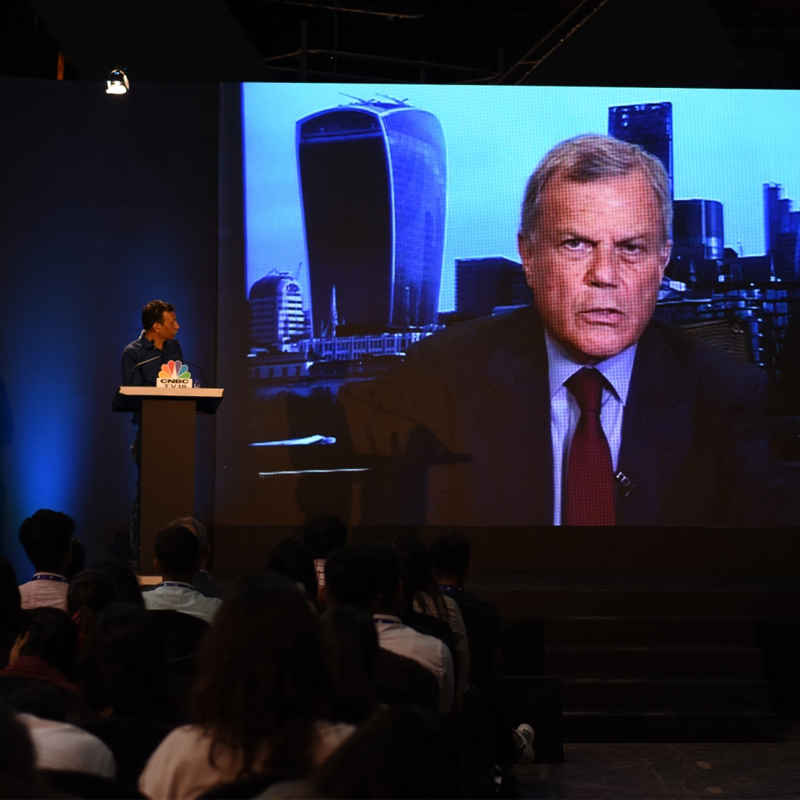
    MUMBAI: Though the announcement of ad guru and former WPP CEO Sir Martin Sorrell’s comeback strategy was announced yesterday in faraway London — a London Stock Exchange notification on Derriston Capital said so — the excitement was running equally high here at the venue where Zee Melt event was being held. And, why not? Sorrell was scheduled for a live video interaction with delegates at the event in the evening.

    But true to his style, Sorrell did not give out any juice to the media and refrained from answering anything particular about his new venture, S4. However, he did have a lot to say about the industry, in general, and India. 

    Sorrell thinks that advertising and marketing industry is in a state of flux today and will only bring opportunities for agencies and brands alike. “The discussion is whether the flux is strategic or structural. But, it is clearly a mixture of both. The A&M [advertising and marketing] industry is worth a trillion dollars with $500 billion in traditional media and traditional communication services, and $500 billion in new media,” Sorrell said speaking to the Zee Melt delegates live via CNBC’s London studio.

    “There is a clear significant change, whether it is because of Google, Facebook, Accenture, IBM or Deloitte. And this flux will bring opportunities. If you look at the $20 billion in WPP, there are parts of it that are growing and there are parts of it that are flat and parts of it that are declining. It is all about identifying those growth opportunities,” he emphasised, giving a hint at what people may expect from him in future with his new venture, which experts say could be a repeat of the WPP story with a modern-day twist.

    For the records, Sorrell is investing $53 million from his own pocket into London Stock Exchange-listed Derriston Capital, a company which will now be remade into S4 Capital, a reference to four generations of Sorrell’s family. While he will become executive chairman in the business that could explore opportunities in technology, data and content, media reports stated institutional investors have pledged 150 million pounds to buy marketing companies — a way Sorrell-founded WPP grew into a global behemoth with presence in 112 countries.

    Coming back to Sorrell-speak for the Mumbai event, the former WPP CEO, ousted on allegations of misconducts about six weeks back, hailed India as being pivotal to WPP growth with 14,000 “talented people”. He noted that India is growing fast in terms of GDP, population and potential.

    Pointing out that India, in the near future, will become the most populous country in the world with the youngest profiles, Sir Martin felt that, from a technological point of view, India has leapfrogged a lot of technologies —such as migrating directly from desktop and normal phones to smartphones. The country has seen huge distribution changes too with and Alibaba entering the market.

    On the distribution side, according to him, Mukesh Ambani’s significant investment in telecommunications and technology in Jio mobiles and SIM card has put India on the global map. In short, India represents opportunities and growth in terms of economy and technology. 

    Year 2017 saw a lot of shakeup and disruption in the industry. Of these, two iconic events that signaled disruption and structural changes for Sorrell and the industry were Unilever’s hostile takeover bid by Kraft Heinz, proving no company is safe today, and when Rupert Murdoch signaled he would negotiate 21st Century Fox business with The Walt Disney Company. What made this 21CF-Disney deal “more complicated” was the involvement of Comcast.

    Holding forth on large agencies and groups owning them, Sorrell felt that that such corporate houses have a “legacy associated with them” and come with a lot of backlog and challenges. When you have a legacy company, the business becomes more of a challenge with time as compared to when you start with a clean sheet, he said. Probably, his new venture S4 will give him and the company an opportunity to build afresh taking into account the changes taking place at client’s end and new structures and approaches that clients want.

    According to Sorrell, a major shakeup in the media industry today has been the General Data Protection Regulation (GDPR), an EU-mandated law on data protection and privacy for all individuals within the European Union (EU) and the European Economic Area (EEA). It also addressed the export of personal data outside the EU and EEA.

    The GDPR primarily aims at giving control to citizens and residents over their personal data and simplify the regulatory environment for international business by unifying the norms within the EU. Sorrell thinks these were early days to assess the impact of GDPR, but from what he’s heard Facebook’s ad sales revenue has remained un-impacted even after the news of Cambridge Analytica. He is also of the opinion that GDPR in early stages seems to favour technology giants as “we have seen smaller or media tech companies withdraw from European market rather than compete”. 

    He ended the session by applauding the Indian government and Prime Minister Narendra Modi for making a significant impact on the Indian economy, although the momentum has slowed down due to GST rollout and after-effects of demonetisation along with other factors. Pointing out that India’s economy will continue to grow and will continue to attract big brands and agencies to put their money in the country, Sorrell concluded, “I continue to be an unashamed, raging India bull and confident that the Indian economy will regain momentum soon.”

    Meanwhile, reporting on Sorrell’s new venture in detail Reuters said Derriston Capital is a little-known two-year-old listed shell company set up to invest in medical technology.

    Over 30 years ago Sorrell built WPP into a company with 200,000 staff in 112 countries by adding market research groups, media buyers, and public relations firms such as Finsbury. Worth 16 billion pounds, WPP returned millions to shareholders, including its CEO, and dominated the industry for decades. According to Thomson Reuters data, Sorrell is still the eighth biggest investor in WPP, with a 1.4 percent stake.

    The Reuters story further stated that Sorrell had vowed to break down the barriers at WPP to make it easier for clients to get all the services they needed from a small team, rather than from a range of people among the more than 400 agencies it owned. WPP competes with US groups Omnicom and IPG, France’s Publicis and Japan’s Dentsu, while thousands of small independent companies provide everything from ads for mobile phones to creative work and data analytics.

    Also Read :

    WPP board begins investigation of its CEO Sir Martin Sorrel, says WSJ

    Sir Martin Sorrell says ta-ta to WPP, Roberto Quarta becomes exec chairman

    Martin Sorrell bullish on India

    TAM or BARC, the market has to decide: Sir Martin Sorrell

  • JioFiber to take on DTH players

    JioFiber to take on DTH players

    MUMBAI: December 2018 is the target that Reliance Jio has set for itself to launch its broadband services. According to a report in Digit, JioFiber will be launched in 20 cities initially with a minimum speed of 40 Mbps.

    An optical network termination (ONT) box will be installed in the homes of users which can even handle IPTV requests. This means that Jio’s target is not just broadband companies but even DTH providers including Tata Sky, Dish TV, Airtel DTH, etc., as it gets ready to offer all-in-one bundled services.

    The ONT box can be connected to a TV or any device. There are four LAN ports attached to the device. Subscribers opting for special plans can avail speeds of one Gbps. The pricing of the service isn’t yet known but it is expected that people will get unlimited packs like its current mobile phone schemes.

    It will initially target tier I and II cities including Mumbai, Delhi, Kochi, Bhopal, Chandigarh, etc before it moves into other towns.

    In its FAQs, the company boasts of the superiority of JioFibre by stating that the connectivity will be till each house ensuring high speed internet while other companies only provide fibre till the building after which traditional cable is used to reach every house thereby reducing the speed and causing frequent disturbances. It goes on to say that the fibre network need not be changed after the first installation since the company will ensure upgradation with latest technology that will create electronic light pulses.

    (Source : Reliance Jio plans to roll out JioFiber across India by December this year bundled with Internet Protocol Television (IPTV) services)

    Also Read :

    Reliance Jio ready to disrupt wired broadband: Matthew Oomen

    Reliance Jio readies Rs 60,000 cr war chest: Report

    Jio partners Screenz for interactive TV solution

  • Reliance Jio ready to disrupt wired broadband: Matthew Oomen

    Reliance Jio ready to disrupt wired broadband: Matthew Oomen

    MUMBAI: There’s further disruption coming thanks to the Reliance Jio juggernaut. Reliance Industries chairman Mukesh Ambani has said this time and time again for the mobile space where price wars have seen call and data prices plummeting, making consumers rub their hands in glee.

    And now this was reiterated by Reliance Jio president network, global strategy and service development Matthew O Oommen, according to a report on telecoms.com of his key note address at the Big Communications Event in Texas earlier this week. Said he: “ We disrupted the mobile industry and now we are looking further. India and Jio are just getting started.”

    The “further” he is referring to is wired broadband services to the home as well as to business customers. Its aggression in the telecom space has seen it snare 186 million subscribers for its 4G services who accounted for 372 billion minutes of VOLTE calls (in Q1 of this year) and 2.4 billion hours of video each month.

    Ambani has set an even more ambitious target: that of an overall 500 million subscribers for its video-centric network.

    But it has set its sights on shaking up the broadband FTTH and enterprise solutions segment as well. Just like it is doing in the 4G space where it is driving innovation in pricing, delivery and product. Tests have been on in different cities for its FTTH service with select residential and enterprise customers.

    Oommen, during his keynote in Texas, said that the Reliance Jio philosophy is disrupt or be disrupted and that both segments are relatively under-served. There are just18 million broadband residential customers and the enterprise market is just one fifth of the size it could be, he shared in India, he stated, according to telecoms.com.

    He also proudly claimed that FTTH will also see innovation as has been evidenced in the wireless segment with its MyJio app which has had 150 million downloads, with the JioTV service signing up 100 million subs and JioChat 50 million. Among the other services figure: JioBank, JioHealthHub and JioMusic which is slated to get a pump up with the acquisition of global Indian music leading streaming music service Saavn.com.

    Are the existing wired broadband providers ready for the coming meltdown? Watch this space!

  • Winning bid nets BCCI Rs 6138.70 crore for home rights

    Winning bid nets BCCI Rs 6138.70 crore for home rights

    MUMBAI: The battle for the Board of Control for Cricket in India’s (BCCI) home media rights has finally ended with the e-auction coming to a close after a three-way fight between Star India, Sony Pictures Network and Reliance JIO for the past two and half days. The bidding value has reached Rs 6138.10 crore. The BCCI will announce the winner of the rights at 5 pm today.

    The penultimate bid at the auction was Rs 6,111.70 crore. The first bid on day three was recorded at Rs 6,085.30 crore. Within minutes, the bid bar was raised by another Rs 26.4 crore.

  • Star India beats Sony, Jio to win media rights for BCCI’s home matches

    Star India beats Sony, Jio to win media rights for BCCI’s home matches

    MUMBAI: You never know who  the winner is till the last ball is bowled in an India-Pakistan match. Since this morning most media were reporting that Star India was out of the race to pocket the media rights to the  Board of Control for Cricket in India’s (BCCI’s) home cricket featuring the Indian team. And that it was a two horse race between Jio and Sony Pictures Networks India.

    But the Uday Shankar-headed network  came out of nowhere in a  rapid sprint to the finishing line and breasted the tape to emerge the winner of BCCI’s  worldwide media rights sweepstakes. It thus strengthened its hold on television and digital rights to cricket in India, by coughing up a staggering Rs 6138.70 crore for the 2018-23 window.

    The broadcaster now holds the two most valuable broadcast rights in cricket, having bought the IPL global media rights for Rs 16,347.50 crore in September 2017 for 2018 to 2022.

    The battle for the BCCI home media rights finally ended today with the e-auction coming to a close after a three-way fight between Star India, Sony Pictures Network and Reliance JIO for the past two and half days. The BCCI will formally announce the winner of the rights at 5 pm today.

    The penultimate bid at the auction was Rs 6,111.70 crore. The first bid on day three was recorded at Rs 6,085.30 crore. Within minutes, the bid bar was raised by another Rs 26.4 crore.

  • CCI okays RCom’s asset sale to Reliance Jio

    CCI okays RCom’s asset sale to Reliance Jio

    MUMBAI: The Competition Commission of India (CCI) has cleared the proposals for the sale of assets of Reliance Communications Ltd (RCom) to Reliance Jio Infocomm Ltd.

    “@CCI_India approves acquisition of RCOM’s towers, optic fiber cable, right to use spectrum and media convergence nodes by RJIO,” the anti-trust regulator tweeted. 

    The proposals cleared include RCom’s towers, India fibre, spectrum holdings and media convergence nodes. While neither Jio nor RCom had divulged the size of the deal, sources have pegged the transaction value at Rs 18,000 crore.
    The deal appears to be a win-win for both brothers as Jio gets most of RCom’s assets, giving it more firepower in its telecom business, while the Anil Ambani-promoted firm will reduce its debt overhang substantially.

    Anil Ambani on 26 December, 2017 said his company had agreed to a new debt resolution plan that will see RCom sell its assets—spectrum, fibre, telecom towers and real estate other than Dhirubhai Ambani Knowledge City—and did not entail lenders and bond-holders writing off dues or converting it into equity.

    Through this process, he hoped to cut RCom’s debt by Rs 39,000 crore from the Rs 45,000 crore it owed lenders at the end of October.

    According to the terms of the deal, Jio will buy RCom’s assets which include 122.4 MHz of 4G spectrum in the 800/900/1,800/2,100 MHz bands, over 43,000 towers, 178,000 RKM (route km) of fibre with a pan-India footprint and 248 media convergence nodes covering five million square feet, used for hosting telecom infrastructure. At the time of the deal announcement, the companies had also said that the transaction is likely to be completed in a phased manner by March 2018.

    RCom is also left with around 134 MHz of spectrum assets for which it is understood to have found other bidders.
    However, an arbitration panel in an interim order recently, restrained RCom from asset sale or transfer, without its “specific permission.”

    Also Read :

    RCom’s 3rd quarter numbers improve on Big TV, consumer business exit

    Reliance Jio acquires RCom’s wireless infra assets

    TV18 completes acquisition of Viacom shares

  • RIL to buy 5% in Eros; cos to set up $150 mn content fund

    RIL to buy 5% in Eros; cos to set up $150 mn content fund

    MUMBAI: Continuing its media march, which is also an indication of further disruptions in the Indian and global entertainment industry, the USD 51 billion Reliance Industries Ltd (RIL) is all set to acquire 5 per cent equity stake in NYSE-listed Eros International Plc (Eros) and jointly set up a $150 million (Rs 1,000 crore) fund to co-produce and consolidate content from India.

    In the transaction, which is subject to regulatory and other approvals, RIL, through a subsidiary, is looking to pick up the minority stake at a price of $15 per share, representing an 18 per cent premium to the last closing price of the stock. Eros stock quoted at $13.30 on the NYSE at local US time of 16:01:15 on 20 February 2018, having opened at $13.25. RIL closed Tuesday at Rs 919.40 on the Bombay Stock Exchange.

    RIL and Eros International Media Ltd (Eros India) will equally invest in the fund to produce and acquire Indian films and digital originals across all languages, according to a joint statement put out late on Tuesday evening.

    RIL’s investment will also result in some management changes in both the companies. Eros’ group CEO and MD Jyoti Deshpande will be stepping down from her executive role after over 17 years and move on to head the media and entertainment (M&E) business at RIL as the president of the chairman’s office.

    Deshpande will start her role at RIL from April 2018 but will continue to remain as a non-executive director on the board of Eros, while Kishore Lulla will resume his position as group chairman and CEO of Eros, the statement added.

    In her new role at RIL, Deshpande will lead the company’s initiatives in M&E to organically build and grow businesses around the content ecosystem, such as broadcasting, films, sports, music, digital, gaming, animation as well as integrate Reliance’s existing media investments such as Viacom18 and Balaji Telefilms with a view to build, scale and consolidate the fragmented $20 billion Indian M&E sector.

    RIL chairman and MD Mukesh Ambani said, “We are pleased to join hands with Eros, as it will bring further synergies into our plans, making for a win-win partnership. We are delighted to welcome Ms Jyoti Deshpande into the Reliance family and believe that she will not only give wings to our plans but also play a pivotal role in transforming the sector.”

    Lulla elaborated, “I am very pleased that Eros is partnering with RIL in its entertainment journey with several synergies across technology, content and digital with Eros Now. We look forward to collaborating and growing as we continue to make new strides on the digital and content forefronts. I am confident that together, we can make a meaningful difference. Jyoti Deshpande has been an invaluable part of the incredible Eros growth journey and I am confident that she will make a positive impact on the industry in her new role at RIL.”

    Eros International Plc (NYSE: EROS) is a leading global company in the Indian film entertainment industry that acquires, co-produces and distributes Indian films across all available formats such as cinema, television and digital new media. Eros International Plc became the first Indian media company to list on the NYSE and also runs a fledgling OTT service under Eros Now brand. 

    “I am delighted that RIL has strategically aligned with Eros. My new assignment at RIL will allow me to push boundaries, set new standards of excellence, assemble a world-class young leadership team and adopt a collaborative approach to architect and execute this ambition…but more than anything, I cannot wait to roll up my sleeves,” said Deshpande while commenting on the proposed partnership.

    The Eros and earlier Balaji investments by RIL indicate that Ambani may be investing small in content and distribution companies, but taking big steps towards building an integrated media and entertainment behemoth, an industry observer opined, adding that with the financial muscle that the Ambanis have, the Indian media sector should brace itself for some more disruptions after the Reliance Jio show.

    In the TMT sector, RIL already has investments in media companies like Viacom18 (majority stake), TV18/Network18, telecom company Reliance Jio and a host of other media properties, including magazines and digital ventures.

    Also Read :

    TV18 to increase Viacom18 stake to 51%

    Reliance Industries buys Balaji Telefilms stake for Rs 4.13 bn

    Viacom18 celebrations: Mukesh Ambani sets the roadmap for next 10 years

    Reliance Jio, China’s Omnicom fuel massive global mobile data traffic

  • ALTBalaji, Reliance Jio in content partnership deal

    ALTBalaji, Reliance Jio in content partnership deal

    MUMBAI: With original content and a robust distribution strategy, ALTBalaji aims to reach out to a wide base of subscribers. In a bid to achieve these goals, the OTT platform has announced a strategic partnership with Reliance Industries Ltd (Reliance) to make available original content to customers of the online platforms of Reliance, such as Jio Cinema and Jio TV. This content would be enjoyed by all Reliance Jio (Jio) subscribers.

    ALTBalaji is available in more than 90 countries and caters to the need of Indian consumers and diaspora spread across the globe. Jio’s established user base of over 160 million will help to strengthen the distribution of ALTBalaji content.

    ALTBalaji group COO and CEO Nachiket Pantvaidya  said, “Our content caters to the Indian language mass audience and is targeted at 18-45 years demographic. The early response to our content has been good and now we wish to be available inside all environments where audiences exist and consume videos. We believe that our association with the Jio platforms will help us reach their consumers and let them enjoy the content we are proud to present. Our offerings have a very good fit with the Jio Digital Life eco-system.”

    Also Read:

    ALTBalaji is essentially everything that Balaji on TV is not: Sameer Nair

    ALTBalaji bets big on first-time producers with Haq Se

    2017: The year OTTs went regional in India

  • The BCCI India rights conundrum

    The BCCI India rights conundrum

    MUMBAI: With BCCI’s India media rights coming up in March, big broadcasters and digital players are readying their war chest of cash.

    The current holder, Star India, acquired the rights in 2012 at Rs 3851 crore for a six-year period across 96 matches. The amount comes down to an average of Rs 40 crore per match. Multi Screen Media (Sony) bid a close second with Rs 3700 crore.

    Last year, The Hindu quoted a BCCI official who said, “I wondered how Star India even agreed to pay that price for each of the three forms of internationals. The reserve price could be Rs 30 crore for home internationals, if not even lower, next year.” In the last couple of years, BCCI officials, both former and present, have made no secret of the fact that Star India would not agree to enter the India bid race if the reserve price for a home international match (including Tests, ODIs and T20Is) is set anywhere close to Rs 43 crore.

    Therefore, it is fair to assume that Star India struggled to make money on the matches. Supporting this argument, a media observer said, “We can’t say how much of the subscription revenue they would be apportioning to India team, because when Star sells its subscription bouquet, it is sold as an overall sports package, not right wise. If we compare ad rates vis-à-vis the rights acquisition, they have not made money.”

    Star India, in September 2017, hit all other bidders in the fray for a six with just one single mind-boggling global bid of Rs 16,347.50 crore to acquire the broadcast and digital rights of the Indian Premier League (IPL) for the next five years. IPL is hotter than even international events. An IPL game will fetch Rs 55 crore per whereas an international match brings about Rs 40 crore. Star India might focus on making the IPL the biggest revenue-generating property in the world after the EPL and the NBA.

    According to industry sources, broadcasters will be looking at paying Rs 35 crore per match, touted to be a fair amount in current market standards, to the BCCI for the upcoming rights acquisition.

    Sony Pictures Network (SPN) India is likely to make a strong bid for the Indian cricket team home rights. We know that Sony already has the Rs 11,000 crore that it was ready to splurge on the IPL rights.

    The other contender, Dsport, is also rumoured to throw its hat into the ring for the BCCI rights. In an interview to Mint last month, Discovery Communication India SVP and GM Karan Bajaj stated, “We may look at putting cricket on Dsport next year after launching the general entertainment channel Discovery Jeet.” The channel even picked up the bidding document for IPL media rights but didn’t turn up on the bidding day.

    For digital rights, players like Facebook, Twitter, Reliance Jio, Amazon Prime, Hotstar, and Sony Liv will play a crucial role. Facebook was the highest bidder from the digital communication platforms for the IPL with Rs 3900 crore followed by Jio with Rs 3075 crore. Hotstar, which was launched in February 2015, wasn’t in the picture when Star India acquired the BCCI rights in 2012. 

    Meanwhile, Twitter and Amazon have gotten their hands on one of the most high-profile sports properties in the world, the National Football League (NFL). In the time to come, both players have vowed to dominate the live sporting segment on digital in India, too.

    The contract with Nimbus, before the rights went to Star in 2012, had a base price of Rs 31.25 crore per game for each of the three formats purely for the broadcast rights. The BCCI’s marketing committee had kept the base price at Rs 31.25 crore plus Rs 1 crore (i.e, Rs 32.25 crore) for an international game in the A category and Rs 33 crore plus Rs 1 crore (Rs 34 crore) for B category matches.

    Looking at the current scenario, broadcasters will have to cough up a reasonable amount, which can be in the range of Rs 32-38 crore, in order to be in profit. The fact that Star India may not agree to enter the India rights bid, if the reserve price for a home international match is set anywhere close to its previous bid, will help broadcasters such as Sony and Discovery to be in strong contention.

    Also Read :

    The year of big switch in sports broadcasting

    BCCI invites brands to acquire third-party rights for IPL

    Comment: Is BCCI lbw on Star’s sponsorship googly?