Tag: Reliance Jio

  • Reliance Jio touches 70 mbps download speed during trials

    Reliance Jio touches 70 mbps download speed during trials

    NEW DELHI: The download speed on Reliance Jio’s 4G network during its beta-test phase peaked at 70 megabit per second but remained in 15-30 mbps range on most occasions, as per field trial report by brokerage firm Credit Suisse.


    “We experienced peak download speed of 70 mbps during our trials, and on most occasions in the 15-30 Mbps range, even on the move,” said the report by Credit Suisse Research Analysts Sunil Tirumalai and Chunky Shah.


    At 70 mbps download speed, a Bollywood movie size video can be downloaded in about half a minute while at 15-30 mbps, the same can be downloaded in about three minutes.


    The report compared the commercially launched 4G service of telecom major Airtel and beta network of Reliance Jio and found “Airtel 4G giving 10-20 mbps, often slower than Jio, and 3G network speeds of sub 2 mbps (peak 7 mbps).”


    Analysts found urban coverage of RJio network at par with incumbents but remarked rural coverage as “poor.”


    During trials analysts experienced call drop-free RJio network in Mumbai but lost signal three – four times when they entered on village roads.


    Analysts said that they experienced seamless phone call experience between Reliance Jio and network of other telecom operators.


    “Overall, our take away is that the Reliance Jio network is turning out to be as strong a threat to incumbents as we had feared. Next focus would be on pricing and marketing execution,” the report said.


    The conglomerate is planning to do a soft launch of the 4G services on Dhirubhai Ambani’s birth anniversary this year, which falls on 28 December.


    Credit Suisse analysts said that the speeds will fall once a commercial launch happens and more users get on to the network but globally 4G has delivered better speed than 3G services.


    The company has matched up with incumbents on coverage in urban area but there is not much rural focus.


    “Until the rural network is fixed, RJio could enter into roaming agreements with other operators. We suspect Jio would use sub-1GHz spectrum for rural coverage,” the report said.


    Commenting on handset availability for Reliance Jio’s 4G service, the report said that ZTE is making Reliance Jio’s LYF branded 4G handset and some handsets of Samsung, LG, Lenovo and ZTE also supported VoLTE calls.


  • TO THE NEW Venture growing 100% YoY: Puneet Johar

    TO THE NEW Venture growing 100% YoY: Puneet Johar

    MUMBAI: In the wake of the digital boom, internet product & services company TO THE NEW Ventures, which specialises in emerging markets, has witnessed a 100 per cent year on year (YOY) growth.


    What’s more the company’s services business has witnessed of growth of 40-50 per cent, whereas its consumer internet business comprising American Swan and #fame have also been growing 100 per cent YOY.


    TO THE NEW five businesses include TO THE NEW Digital, American Swan, #fame, Blogmint and ThoughtBuzz.


    #fame has been great combination of the engagement of social media with the power of live video where users can go live on a simple click of a button on their mobile.


    Speaking to Indiantelevision.com, TO THE NEW Ventures CEO Puneet Johar said, “As a service company, technology and analytics are the two cores of digital offering. Content and marketing is always the icing on the cake as they clearly engage with the consumer. If you see the overall growth, our company is growing 100 per cent year on year, our services business is growing around 40-50 per cent and our consumer internet business is growing by 100 per cent year on year.”


    Talking about the growing digital space, Johar added, “Smartphones, internet connections and mobile internet have all witnessed a tremendous growth so obviously people are consuming more content on mobile devices, which is an irreversible phenomenon in my opinion.”


    From the advertisers’ perspective, people are using digital for engagement, innovation as well as for reach. “There are different matrixes available where people can measure their results from social media and videos. Targeting is much more superior than print or any other media as far as digital is concerned. We believe the intensity of targeting will only get strengthened over the next two years when more and more machines will come, which is already happening based on people’s past usage. We will see targeting based on more and more usage,” Johar informed.


    Over the past few years, the digital space has been growing by rapidly. It’s already a big and sizable platform now. Johar said, “Approximately Rs 4000 – 5000 crore was spent on digital this year. It’s already a very big platform in India and it will only get bigger and bigger in the coming days. In the next five – six years it will become as big as print.”


    While on the one hand there are the popular upper crust channels that do well in terms of viewership, on the other there are also those at the bottom rung, which don’t command healthy viewership. Johar said, “It’s very tough to aggregate and do a campaign with measured money. However on the digital platform, even on a smaller budget, one can make a good impact on the target group with creative content. One can create a lot of buzz on digital as opposed to television. In today’s time, the consumer likes to discover things, they like to interact rather than being just told about it.”


    Throwing light on digital monetisation, he said, “In a business, which is just one year old, we are not worried about profitability. Currently we are more concerned about user’s usage and increased viewership. I think profitability will naturally be slow with these things.”


    TO The NEW Digital invested $10 million last year in #fame and is still working with the same funds.


    Reliance Jio offering a unique combination of telecom, high speed 4G internet data, digital commerce, media and payment services has already created a lot of buzz in the country. Opining on the same, Johar said, “I think everybody is looking forward to a great telecom infrastructure. Essentially data will be available to everyone at a compelling rate and it will expand the usage of data on all smartphones and PCs. It’s an exciting road ahead. It can be positive development for the digital environment.”


    With rural India getting connected by the internet slowly but surely, digital players are smiling from ear to ear. “We are also looking forward to the infrastructure enhancement. While I do believe data is expensive now, the cost is likely to come down soon. Rural India will start adopting when the cost will come down. This will happen sooner or later and things will change,” he said. 


    Johar informs that TO THE NEW is eyeing new revenue models from advertising, subscription and gamification in the future.


    Sharing his future insight about the company, he added, “For all the three businesses, we are looking at strategic partnerships. Our aim is to have at least our key businesses namely American Swan and #fame to strike strategic partnerships so as to expand the business in India and South East Asia over the next year.”

  • Rajiv Kapur’s views on India scenario

    Rajiv Kapur’s views on India scenario

    MUMBAI: When it comes to content consumption, India is no different from the rest of the world. The Indian consumers’ appetite for content, for when to watch, for where to watch, and for how to watch, along with customisation is growing. With the internet, content consumers are becoming device agnostic, moving from one media to another and enlarging contact points to access content and information. Media consumption habits are changing. People in such a scenario will not be happy with just the basic offerings. In terms of phones which were primarily made for voice calls, people look for additional facilities like video, whereas for television which is meant for video, people want a wide variety of features.


    Keeping the emerging scenario in mind, Broadcom has devised a number of technological innovations.  These offerings can only be utilized  fully if there is supporting broadband infrastructure and connectivity.


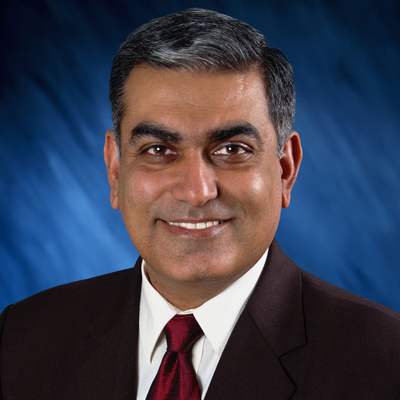
    Broadcom MD Rajiv Kapur believes that Reliance Jio can emerge as disruptor in India. He says, “Reliance Jio, with whatever they are doing is going to be a game changer, and the competition should be worried. Its foresight and deep pockets make the future look extremely interesting.”


    The cable industry is at a cusp. To start making money from avenues besides just carriage of television, the industry has to make the right technological upgradations. Internet data services must ride on the back of its existing infrastructure. Though all the players might not immediately realize the need for the right kind of upgradation, a few progressive minded ones can be the torch bearers, and their success will draw the rest in. Cable television or video ARPUs’ are not rising in India at the same rate as in the US or other geographies, where true high speed data ARPUs are a fraction, albeit quite a large fraction of Video ARPUs’. In India, it is the other way around- internet ARPUs’ are anything from twice to five plus times of cable television ARPUs’.


    Kapur says, “In every country there are a set of progressive minded operators and there are a few who reactively catch up. All that is needed is a few operators adapting hybrid technology with a goal of providing enhanced satisfaction to the consumer and in return getting more returns in terms of higher ARPU.”


    Broadcom now has devices based on DOCSIS 3.1 specifications, which obviously is an upgradation of the DOCSIS 3.0 version. DOCSIS 3.1 specifications hardware offer speeds of 1 gbps (Giga byte per second) as compared to the 100 mbps (Megabytes per second) or less that most DOCSIS 3 specification hardware is capable of. Kapur thinks “there is no real need of DOCSIS 3.1 in India at this stage” and he recommends that new innovators in the broadband space could start with DOCSIS 3.0.


    He says, “Let’s be realistic about India as a country. 100 mbps to 1 gbps!  There is no reason why India cannot talk about it, but as a country India still does not have the need for 1 gbps. But to begin with Docsis 2 today certainly makes no sense. It is like setting the ceiling lower than your own height.”


    “Data consumption for video is still the heaviest usage of internet by Indian consumers. For quality 1080 p viewing experience consistent 15 to 20 mbps speed is more than enough. So DOCSIS 3.1 is yet not a necessity in India,” avers Broadcom fellow and vice president Sherman Chen


    Kapur feels OTT will play a pivotal role in driving the need of broadband in India. Referring to the scenario five years back he says, “Today every hotel, coffee shop has Wi-Fi. Go back just five years and this was a rarity, so the evolution is happening. We are seeing taxi services offering Wi-Fi in their cabs during cab rides. OTT, telemedicine services will drive the need and the pipe will subsequently grow to meet the demand.”


    Kapur believes that the default HD box should be a hybrid ready and rest can be customer defined. The DAS phase III deadline is knocking at the door, Kapur opines that the boxes placed should be in a position to serve the needs of consumers for at least five years. “If we place 100 million boxes and in a year we land up in a situation where we have to change the boxes that will be sad. So depending on the need we must deploy the best we can. I don’t want to see them replaced even in 5 to 7 years. Quality is my biggest concern as we do not have a situation of testing arrivals” he concludes.

  • What’s exciting Times Now’s Arnab Goswami these days

    What’s exciting Times Now’s Arnab Goswami these days

    MUMBAI: With the explosion in social media such as Twitter and Facebook, the very nature of news is being redefined. New news icons have emerged, whether personalities or organisations, in the digital ecosystem having as many followers  – if not more – as a TV channel. One tweet or update – on most occasions sent out even before traditional print and TV news – is enough to send shockwaves running through the globe.


    The digital shift has resulted in cord cutting with many subscribers preferring the cheaper OTT services in many other parts of the world. India is going through its digitization pangs. Internet penetration complemented by aggressive growth of smartphone has grabbed the attention of many wealthy investors to invest in digital assets and Mukesh Ambani’s visionary weapon to overcome bandwidth issue Reliance Jio looks set to rejuvenate the entire ecosystem.        


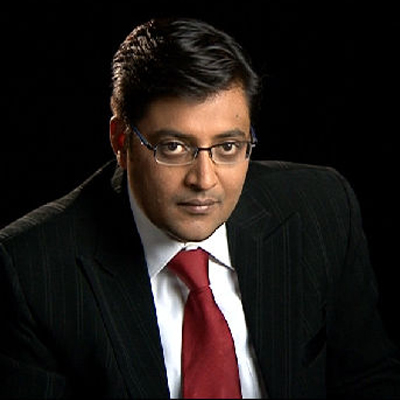
    But all this does not faze Times Network (Times Now, ET Now and Magic Bricks Now) news president and editor-in-chief Arnab Goswami at all. He believes that television is “super young in India” and he is hedging his bets on it being the first medium of choice at least for the foreseeable future.


     “As a medium TV will continue to be dominant,” he says. “I think for the next 10 years TV will lead and digital will follow. In the coming six to seven years TV and Digital will co-exist, which it does now days also.”


    To shore up his argument he points towards the viewership his prime time show Newshour notches up. “While the digital interaction counts between 10000 to 20000, through television we reach out to millions,” he explains.


    According to the flamboyant journalist there is a huge room for innovation in news television – something which existing players are hardly exploring. “If you ask me what are the innovations that we are doing in the television news space, I don’t think there are any. Innovations are key to prosperity. Newshour was an innovation, and we keep innovating with it. We open up phone calls, use social media to make it interactive. Emergence of digital will bring in way more innovations,” asserts Goswami.


    Sharing his assessment on demographic segmentation Goswami says, “I believe the people who are over 25 will consume TV and ones below 20 will prefer digital.”


    Despite being upbeat about television Goswami is not ready to leave any stone unturned to establish his news network as the leader in the digital space. The Times Now app which at this stage has approximately 700,000 downloads (as per Times Now) is what he has trained his eyes on.


    A specialist team of 25 people has been put in place to expand The Times Now digital presence. “If there is an audience between 10-20 years which is a digital-only audience, I don’t want to lose them. That’s why we are aggressively innovating in the digital space,” informs Goswami.


    The most successful part in the mobile app as per Goswami’s observations is the Newshour Shorts, a section where small clips consisting key moments of a debate are uploaded.


    And it’s not just video, Goswami and his team have enabled an audio only feed of Newshour to cater to the bandwidth impoverished. Says he:  “The story of our country is we have poor bandwidth even in cities, so what about the guys in the rural area who don’t have the bandwidth to buffer the audio visual feed. They are taking the audio feed and enjoying Newshour as a radio series. We find that at 9 o’clock, a huge number of people tune in to the app to enjoy the audio only version of Newshour.” 


    What’s engaging him these days is the quickly evolving consumer, he confesses. “People now want to watch content when they want and how they want. We service providers cannot be arrogant and say we will only be on TV if you want to watch us tune in at 9. It is important to be appealing to each and every segment.”


    Marking one of the moments of 2015 television audience measurement body Broadcast Audience Research Council (BARC) India started rolling out its rural data from week 41. Even as advertisers and media planners are waiting for the viewer panels and data reportage to settle down, still every one expects air time pricing to enter a new dynamic.


    Times Now has had a tendency to attract urban advertisers, mainly because it is an English news channel and is perceived to have premium audiences. So the fact that the rural monitoring would start coughing out viewership numbers needn’t have perturbed Arnab.


    But the TV scribe says he spent sleepless nights before week 41 data. He reveals: “People from the fraternity told me to relax as the advertisements and revenues come from the urban areas. But my question was: What is the point of being relevant at urban areas if nobody watches in rural areas? I am a journalist, advertising can come from urban areas but if people don’t watch in small towns I will feel that I don’t have the impact in those areas. If I am doing a story on Lalitgate I want people from Bongaigaon as well as Bombay to watch it. I was very nervous but next day I was thrilled that in terms of viewership, rural is higher than urban. I thank BARC (India) for doing us a great service by breaking the myth that English news is consumed only in metros by males.”


    Despite not being on social media, Arnab Goswami often turns out to be the trending topic amongst Indian netizens across platforms. And he points out that he promotes every hashtag with optimum zest.


    “The hashtags are important to us,” he says. “For me conversation is important. I feel like involving the audience up to the time where they feel like sharing their opinion. Even if you agree or disagree I want to involve you in it and that’s where the hastags play a vital role.”


    But it’s not as if only positive hastags relating to Arnab go viral on social media. Often irked netizens, have expressed their angst in a flood against the channel’s and Arnab’s views. One such scenario was #ShameonTimesNow which trended for four days after the news broadcaster aired a Newshour debate #ShameinSydney describing the performance of Team India in Cricket World Cup semifinal.


    “The performance of Team India was shameful and I had no fear in calling it so, I will not change my opinion even now. But people talked about the episode because they watched it and I am happy that they watched it. I want to have that conversation and I want to track the conversation, and go back and read the tweets. I may not change my point of view, but I am aware of what other people are thinking. I do follow lot of conversations so it gives me sense of how it works and what is going on” Goswami asserts.


    The English News genre as per the Ficci-KPMG 2015 report has 0.1 per cent of total television viewership. As against that, five per cent of the entire TV adspend of Rs 155 billion is spent on the genre.


    And even in this space Times Now is setting the pace. “In terms of revenue through advertising Times Now is a clear number one in the English News genre,” informs a senior media planner. He further adds, “The primetime show Newshour charges approximately double when compared to the other competitors.”


    The rate for a 10 second slot during Newshour is over Rs 45,000, and there are close to 12 advertisers on board, “We have more advertisers than we can accommodate and I am grateful to the advertisers for helping us do what we do,” says Goswami.


    Looking back at 2015 Goswami terms it as one of the best years in recent times. And that’s broadly because of four reasons, he states, pausing for a few seconds.


    “Four things make me term this as one of the best years. Firstly Times Now has got 90 per cent channel share multiple times in terms of viewership. Secondly Times Now has over 50 per cent channel share despite some channels trying to change their names in the market where there is no number two. Thirdly, the new innovation The National Debate, got over 91 per cent of viewership share. And lastly we were able to increase the viewership of ET Now by 15-20 per cent after taking over. So now I have three shows Newshour, Frankly Speaking, and The National Debate. I am excited about them,” he says, signing off with a confident smile on his bespectacled face.
  • Reliance Jio’s Nikhil Rungta joins Housing.com as CMO

    Reliance Jio’s Nikhil Rungta joins Housing.com as CMO

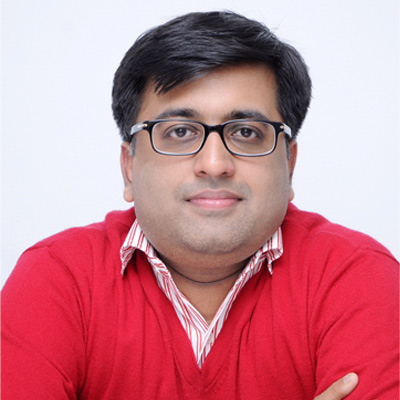
    MUMBAI: Reliance Jio senior vice president – marketing Nikhil Rungta as joined real estate giant Housing.com as chief marketing officer.


    Rungta replaces Pratik Seal, who resigned from his post in September this year.


    Prior to Reliance Jio, Rungta served as the CMO for Google in India for four years. He also played key business leadership roles at start-ups like Yebhi and Yatra.com.


    Housing.com chief business officer Jason Kothari said, “Nikhil is one of India’s leading marketers who has achieved remarkable success during his career. For the last two decades, he has worked in leadership roles across sales, marketing and e-commerce with both multinationals and start-ups. He has a deep understanding of the Indian consumer market and has used a mix of traditional marketing and digital media to grow world-class businesses and brands from the ground up. His rich experience will be a valuable addition to Housing.com’s growth plans and senior management team. We are very excited to have him on board with us.”


    Appreciating Housing.com’s disruptive approach to the market, Rungta said, “Housing, like Apple, has a great mix of technology and design thinking, their UI and UX is world class. They are making the home buying decision much easier for customers. The company has all the ingredients to become the next unicorn from India, and I am really excited to be a part of this journey with Housing. I would like to quote Travis Kalanick – CEO of Uber – ‘There are certain things in life where you have to go for it – just for the sheer adventure of it, and also for the potential.”

  • Reliance Jio Media on track for Phase 1 of cable TV rollout between Jan – Mar 2016

    Reliance Jio Media on track for Phase 1 of cable TV rollout between Jan – Mar 2016

    MUMBAI: Reliance Jio Media, which acquired a pan-India multi system operator (MSO) licence from the Ministry of Information & Broadcasting (MIB) in June this year, is on track for the roll out of its cable television business across digital addressable system (DAS) in Phase 3 areas.


    Calling a recent report published as “misleading,” which stated that the company is going to  focus more on 4G and broadband,  as compared to digital television and distribution, a senior Reliance Jio official tells Indiantelevision.com, “MSO business is an integral part of our services and we are as focussed on it as we were from the very beginning.”


    Reliance Jio Media has already shortlisted the cities for the first round of MSO rollout. “We will start with 15 cities initially and eventually will reach out to more than 100 cities over the next three years. The first round of launch will take place anytime between January to March 2016,” the official informs.


    The MSO will offer both standard definiion (SD) and high definition (HD – incluing Ultra HD)  services to garner high average revenue per user (ARPU). “We will follow a model, which is sustainable in the long run. Having all the viewing experiences for consumers is an important factor and we won’t compromise with that,” added the official.


    “Headends, technological partnerships and other infrastructure deals have already been sealed with a few vendors and we will have everything sorted out before 31 December. We are in conversation with several LCOs for both broadband and cable partnerships. Post Diwali we will have the final round of discussion with LCOs for digital cable business,” said the official.


    Reliance Jio CEO K Jayaraman leads the company’s MSO business.


    A source from the industry opined, “The team that they’ve got in place has the muscle power to deal with any situation. I don’t think there is any lacklustre attitude towards the MSO business from the conglomerate.”


    Another senior official from a technological giant, on condition of anonymity said, “We have been working closely with Reliance Jio creating different products for them. We are actively pursuing our partnerships and have no information of a slow down or postponement of launch of distribution of cable TV.”

  • Q2-2016: Reliance Jio to ramp beta program; organized retail on growth path

    Q2-2016: Reliance Jio to ramp beta program; organized retail on growth path

    BENGALURU: The Mukesh Ambani led Reliance Industries Limited (RIL) organised retail segment – Reliance Retail, continued its growth momentum and profitability in the quarter ended 30 September, 2105 (Q2-2016, current quarter).


    RIL chairman and managing director Ambani said, “Reliance Retail achieved a milestone of Rs 5,000 crore quarterly turnover mark for the first time, reflecting continuing growth momentum in physical retailing. In Digital Services, we have substantially completed the network roll-out across the country and initiated the process of beta testing of our network and platforms.”


    “We achieved record levels of EBITDA and profits for the quarter, underscoring our ability to optimally utilise our assets across the value chain to leverage favourable market conditions. Refining business performance was notable, as it benefited from a combination of high utilisation levels, advantageous crude market opportunities and strong global fuels demand. Petrochemicals segment performance reflects strong volume growth, product mix improvement and lower energy costs,” he said.


    “We maintained a rapid pace of construction activity during the quarter. The company’s world-scale petroleum coke gasification facility and ethylene cracker complex remains on track for its planned 2016 start-up,” added Ambani.


    Revenues for Q2-2016 grew by 22 per cent Yo-Y to Rs 5,091 crore from Rs 4,167 crore and 8.4 per cent QoQ from Rs 4698 crore. RIL says that all format sectors grew through store additions as well as like for like growth ranging up to 16 per cent. The business delivered PBDIT growth of 12.9 per cent at Rs 210 crore in Q2-2016 as against Rs 186 crore in the corresponding period of the previous year, and PBIT growth of 3.4 per cent from Rs 203 crore in Q1-2016.


    Further, Reliance Retail expanded its reach with a net addition of 110 stores during the quarter. As on 30 September, 2015, Reliance Retail operated 2,857 stores across over 250 cities in India.


    The company says that Reliance Retail 2.0 initiatives encompassing fashion and lifestyle e-commerce, development of market place platform and building distribution ecosystem for Reliance Jio devices are on track and gearing up for rollout in a staged manner.


    Reliance Retail would soon launch its own brand of 4G LTE smartphones under the brand LYF. The brand built on the premise of unmatched user experience will offer high performance handsets that deliver a true 4G experience comparable to the best in the world. LYF range of smartphones with features like Voice over LTE (VoLTE), Voice over Wi-Fi (VoWi-FI), HD Voice and HD quality video calling will enable users to experience a new digital life.


    LYF phones will reach consumers across the country through one of the widest distribution and retail network for smartphones. The devices will soon be available at multi-brand outlets (MBOs) and modern trade including Reliance Retail stores across India.


    RIL numbers


    For Q2-2016, RIL achieved a turnover of Rs 75,117 crore, a decrease of 33.8 per cent, as compared to Rs 113,396 crore in Q2-2015 and 9.6 per cent lower than the Rs 83064 crore in the immediate trailing quarter.


    However, RIL’s net profit after tax (PAT) increased 12.5 per cent in Q2-2016 to Rs 6720 crore as compared to the Rs 5972 crore in Q2-2015 and increased 8 per cent as compared to the Rs 6222 crore in the previous quarter.


    Sale of Network18 shares


    In July 2015, RIL sold 3.25 crore shares of Network18 Media & Investments Limited, (representing 3.10 per cent of the equity capital of NW18) to bring down the aggregate shareholding of the promoter and promoter group to 75 per cent and increase the public shareholding to 25 per cent as mandated by Clause 40A of the listing agreement pursuant to Securities Contract (Regulation) Rules, 1957.


    Reliance Jio Infocomm Limited


    Reliance Jio Infocomm Limited (RJIL), a subsidiary of RIL, has substantially completed its network roll-out across the country. The network is currently being tested and optimised. Most of the business platforms have been rolled out and are being tested in a limited use environment. Large number of testers have been employed by the company across the country to facilitate extensive testing of network and business platforms.


    The company expects to ramp up its beta program over the next few weeks to further optimise the network, prior to commercial launch of operations. Financial year 2016-17 is projected to be the first year of commercial operations for RJIL.


    RJIL has launched Wi-Fi hot spots across several locations in the country and has entered into agreements with some of the State and Local Authorities to provide Wi-Fi services. RJIL has also started rolling out last-mile connectivity for its fibre-to-the-home (FTTH) business.

  • Reliance Jio’s Wi-Fi service goes live in Himachal Pradesh

    Reliance Jio’s Wi-Fi service goes live in Himachal Pradesh

    MUMBAI: Dharamshala & Mcleodganj have become the first hill stations in Himachal Pradesh to have Reliance Jio’s Wi-Fi service – JIOnet.


    Minister of Housing, urban development and town & country planning of Himachal Pradesh Sudhir Mishra inaugurated the service. JIOnet’s high speed Wi-Fi service will cover Macleo Chowk and Temple road in Mcleodganj and Kotwali in Dharamshala of Himachal Pradesh.


    It is part of the Himachal Pradesh government’s initiative to convert Dharamshala into a ‘Smart City.’ People and visitors of Dharamshala and Mcleodganj will be able to access the services on their smart phones and tablets. This service will also be available at Mall Road, Manali, Kullu and Hamirpur locations.


    Speaking on this new advancement, a Reliance Jio spokesperson said, “High speed data connectivity is one of the foundations on which future prosperity of cities and nations will be built. By deploying Jionet’ Wi-Fi services at Dharamshala and Mcleodganj, a famous tourist destination, we want people to experience the high speed internet and rich digital content through specially designed apps to enrich their lives.”


    The feedback from users will be used to improve the services further as Jio gets ready for its formal launch. After commencement of service,  4G LTE, Wi-Fi and LTE networks will operate seamlessly with each other.

  • Will Mukesh Ambani’s Reliance Jio do what Bill Gates’ Windows did?

    Will Mukesh Ambani’s Reliance Jio do what Bill Gates’ Windows did?

    MUMBAI: Computer in its early days was only used by government organisations for various defence purposes. The size of the device kept getting smaller as generations passed by and now, deemed as a necessity, it is omnipresent in almost every house. But what opened the floodgates for computer in every house almost twenty years ago in 1995 was Bill Gates’ Windows 95.

    Cut to 2015 and the present scenario in India. The current fad, which might just be here to stay, are Over The Top (OTT) players. Media and entertainment content companies are bullish on the OTT scenario and multiple apps have mushroomed left, right and centre over the last few months. However, they haven’t yet managed to augment a revolution of sorts by their services, thanks to the poor infrastructure support in the country. The broadband or mobile internet bandwidth is, on the one hand, too slow to offer a good viewing experience and on the other, it is also very expensive.

    The country currently has more than 350 million internet users and the number is expected to reach 640 million by 2019, of which 528 millions are estimated to be wireless consumers as per a report by KPMG.

    The growth rate of smartphones and tablets is also very encouraging for the video on demand (VOD) ecosystem. The number of tablets in India is is expected to be more than 18 million by 2019, according to the US-based firm’s Visual Networking Index (VNI) global mobile data traffic forecast for 2014 to 2019.

    The report said that in India, the number of smartphones grew 54 per cent during 2014, reaching 140 million in number and the number of smartphones will grow 4.7-fold between 2014 and 2019, reaching 651 million in number.

     What Colors CEO Raj Nayak has to say is by far the most apt depiction of the Indian OTT ecosystem in the current scenario. “The only reason why digital has not yet taken off in  India is because of the bandwidth issue. If any service can resolve that issue, it will be a complete game changer. There will be a leapfrogging of content consumption in mobile devices be it smartphones or tablets,” he opines.


    And addressing that issue soon will be Mukesh Ambani’s ambitious project Reliance Jio.

    Reliance Jio is Ambani’s visionary mission of spreading internet to every nook and corner of the country. Industry watchers say that the organisation in entering the market with a ginormous corpus fund of approximately Rs 70,000 crore. Under the able leadership of cable industry veteran K Jayaraman as CEO of Reliance Jio, the company has now started to take the aerial route to fast forward proceedings. It is now connecting pole to pole through cable in order to spread deep and fast.

    Jio is also teaming up with multiple last mile owners (LMOs) to expedite execution. As was reported earlier by Indiantelevision.com, Reliance is planning to carry out Jio’s soft launch on the occasion of Dhirubhai Ambani’s birth anniversary on 28 December this year. 

    Speculations are also rife that Reliance Jio is planning to unleash its services with affordable pricing, which will no doubt disrupt the market. “The focus with Jio is not money but the vision that we have. The pricing and speed will surprise many,” said a source close to the development.

    The question on every one’s lips is: Will Reliance Jio resolve bandwidth issues in the country? Moreover, will Mukesh Ambani’s Jio do what Bill Gates’ Windows did?

    Indiantelevision.com spoke to multiple industry stakeholders to ascertain their expectations. Here’s what they had to say: 

    Spuul Global CEO Subin Subaiah says, “Give a consumer higher speed at lower costs, and it gives him a huge incentive to consume more content – especially video – online. We  are watching Reliance Jio’s launch with keen interest, which should lead to other service providers following suit – creating a market where data costs and speeds are not an  impediment to consumption.”


    Reliance Industries’ latest AGM grabbed Eros Now COO Karan Bedi’s attention. “Mr Ambani in their AGM announced that they are rolling out Reliance Jio in December and that’s  a very positive move. The statement made Airtel roll out their 4G services immediately and the service is good. Other telcos are also planning to unleash their services soon. So  overall it’s certainly a move towards the positive side,” he says.  


    ”Bandwidth has been an issue for OTT services and we are looking forward to the new launch of Reliance Jio. Hope it turns out to be a consumer friendly proposition. Any improved internet service will certainly help the ecosystem,” asserts Zee Digital Convergence Limited CEO and India web portal CEO Debashish Ghosh.


    #Fame CEO Saket Saurabh adds, “We are waiting for the launch. Let’s see how it goes. If the internet infrastructure develops, it will be good for the entire ecosystem.”  


     “From a consumer perspective, 4G would more be a network bandwidth problem solver and hence would immensely expand the experience of browsing and interacting with  mobile internet products. And from a digital and mobile player perspective, I expect 4G to significantly enhance the reach and innovation in the mobile video ecosystem. Today,  Indian online users watch approximately 40 per cent of YouTube videos on their mobile phones even when the experience is not the best and I am really looking forward  to Reliance Jio’s launch. Any new player disrupting the mobile ecosystem adds a new dimension to the environment. So from a consumer perspective, just as Monsoon Dhamaka  was a massive disruption to making mobile phone accessible to all, I expect 4G launch of Reliance to be also a dhamaka for the consumer and the mobile marketing,” opines Madhouse South Asia COO Milind Pathak.


    Ping Network CEO Rajashree Naik adds, “Even a marginal shift in internet speeds will have a significant impact in data consumption – for us in the video space, there is a relevant link between consumption and speeds. For everyone in the internet and content space, if the consumer experience is enhanced because of speeds much of our own    business metrics will change. So whether it is Jio or any other data options that will make it cheaper to consume and remove the buffering hurdle, will certainly be something to look forward to.”  

    Even as the stage is set for Reliance Jio’s disruptive entry into the Indian telecom market, rivals are gearing up to fire their respective salvos. While India is waking up to some interesting times ahead in the telecom space, what each one does to change the ecosystem, only time will tell.

  • Reliance Industries names Karthik Lakshminarayan as VP of Vibrant Media

    Reliance Industries names Karthik Lakshminarayan as VP of Vibrant Media

    MUMBAI: Reliance Industries’ in-house agency Vibrant Media has appointed Madison Media COO Karthik Lakshminarayan as vice president. 


    According to information available with Indiantelevision.com, Lakshminarayan’s role will encompass developing media strategy for Reliance Jio to begin with.


    He will report to Vibrant Media senior vice president Nikhil Dave and is likely to join the company in November. 


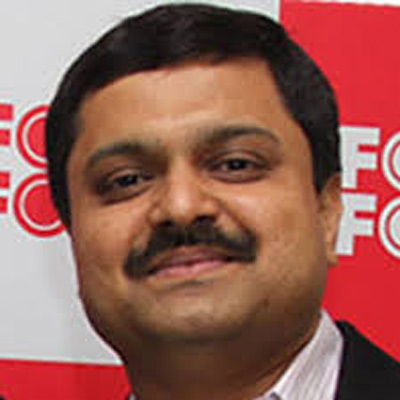
    Currently serving his notice period at Madison, Lakshminarayan joined the agency in November 2011 from FoodFood where he was COO.


    At the time of filing this report, Lakhminarayan was not available for comment.