Tag: Reliance Jio

  • RIL AGM to be streamed live from 11 am onwards 1 Sept

    RIL AGM to be streamed live from 11 am onwards 1 Sept

    MUMBAI: A lot is expected to be revealed about Reliance Jio progress and rollout plans during the course of Reliance Industries Ltd’s 42 annual general meeting with its shareholders on 1 September.

    Punters are betting that its tariffs will be disclosed as well as the plans it has VoLTE, IPTV and broadband.
    RIL has reportedly spent over Rs 29,000 crore over Jio and is expected to invest more. And while the profits are not expected to start rolling out during its investment and growth phase, RIL would still like to know what chairman Mukesh Ambani has in store. As Jio is expected to revolutionise the way Indians consume data and engage on their mobiles.

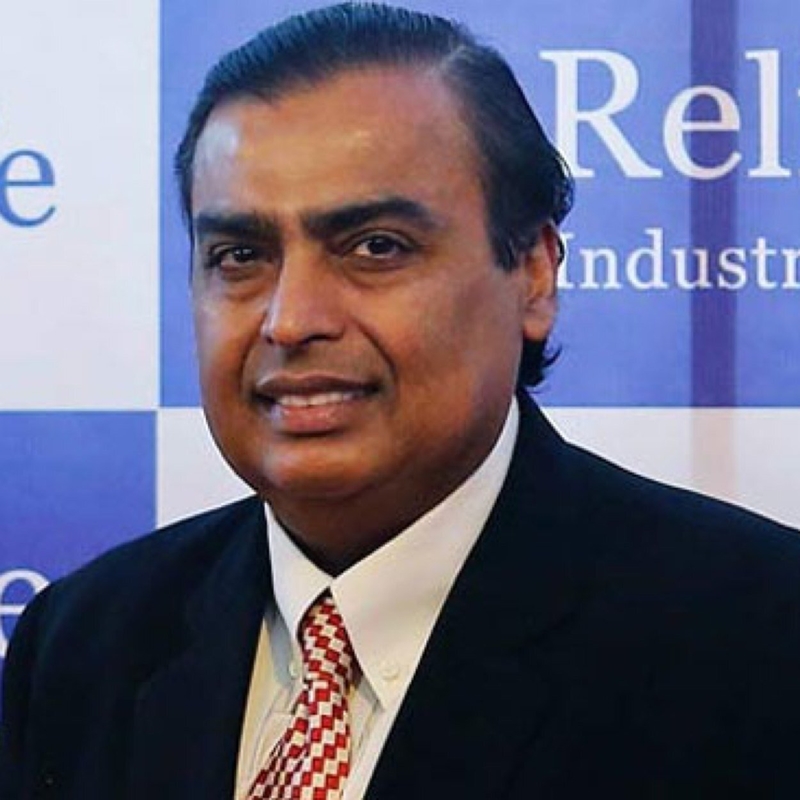
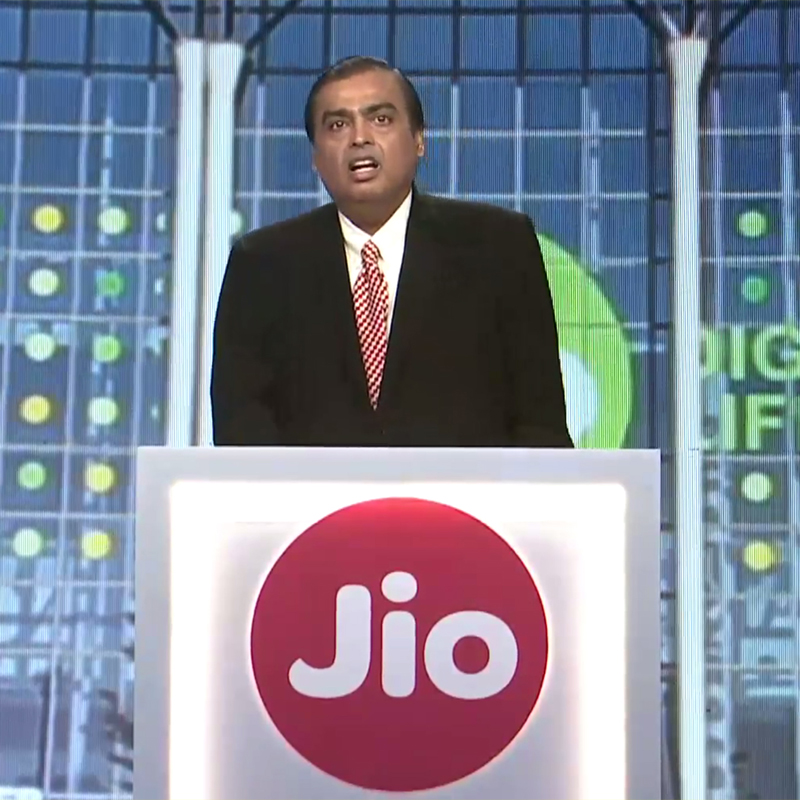
    Keeping this in mind, RIL has decided to stream the AGM live on its various online digital channels from 11 am when Mukesh Ambani is slated to begin his speech.

    YouTube

    o   Flame Of Truth channel (https://www.youtube.com/user/flameoftruth2014)

    o   Jio Digital Life channel (https://www.youtube.com/channel/UCuXlQvucItKHNH4b0ega0DA)

    ·        Facebook

    o   Reliance Industries Limited (https://www.facebook.com/RelianceIndustriesLimited/)

    o   Jio (https://www.facebook.com/Jio/)

    ·        Twitter

    o   @FlameOfTruth (https://twitter.com/flameoftruth)

    o   @RelianceJio (https://twitter.com/reliancejio)

    ·        Jio Chat

    ·        Jio Play

  • BSE seeks & gets clarification on Eros Now-RelianceJio deal

    BSE seeks & gets clarification on Eros Now-RelianceJio deal

    MUMBAI: The Bombay Stock Exchange (BSE), which had sought clarification from Eros International Media Ltd on a partnership with Reliance Jio, has been told that the deal pertains to US-based parent Eros International Plc and not the India-listed entity.

    On 25 August, Eros International had announced a deal between its over-the -top (OTT) platform Eros Now and Mukesh Ambani-led Reliance Jio, which is slated to launch its telecom services soon offering subscribers high- speed broadband and other related services.

    The Eros Now service with its huge library of Bollywood movies, including recent blockbusters such asBajrangi Bhaijaan, Bajirao Mastaani, Tanu Weds Manu Returns, Prem Ratan Dhan Payo, will power Jio’s on-demand entertainment offering.

    The company in its announcement yesterday claimed the “game changing partnership” with Reliance Jio will allow consumers to access high quality Eros Now service within the Jio ecosystem. Jio will provide Eros Now with an opportunity to acquire new subscribers throughout urban and rural India, the company had stated.

    Eros International group CEO and MD Jyoti Deshpande was quoted in an official statement as saying , “As a market leader in the film business, Eros has always strived to bring our users the best of Indian entertainment, offering them the same unified experience across screens and networks. Eros Now’s philosophy is to be platform agnostic and embrace the very best in technology as we continuously enhance our content offering. With the broadband and 4G stage set to explode, our alliance with Jio is part of our philosophy to provide consumers entertainment whenever and wherever they want it.”

    Eros Now has over 44 million registered users across Web, WAP and APP globally and is available across 135 countries with a vast majority of users from India. Currently it’s focused on monetization and achieving a target of one million paying subscribers by the end of fiscal year 2017.

    With a pricing of Rs. 49 ($0.73) per month for a streaming service and Rs. 99 ($1.47) per month, which has additional features such as offline viewing, high definition, subtitles and progressive viewing, the Eros Now service is competitively priced in India compared to other OTT services offering Indian language and international content, the company had claimed.

  • BSE seeks & gets clarification on Eros Now-RelianceJio deal

    BSE seeks & gets clarification on Eros Now-RelianceJio deal

    MUMBAI: The Bombay Stock Exchange (BSE), which had sought clarification from Eros International Media Ltd on a partnership with Reliance Jio, has been told that the deal pertains to US-based parent Eros International Plc and not the India-listed entity.

    On 25 August, Eros International had announced a deal between its over-the -top (OTT) platform Eros Now and Mukesh Ambani-led Reliance Jio, which is slated to launch its telecom services soon offering subscribers high- speed broadband and other related services.

    The Eros Now service with its huge library of Bollywood movies, including recent blockbusters such asBajrangi Bhaijaan, Bajirao Mastaani, Tanu Weds Manu Returns, Prem Ratan Dhan Payo, will power Jio’s on-demand entertainment offering.

    The company in its announcement yesterday claimed the “game changing partnership” with Reliance Jio will allow consumers to access high quality Eros Now service within the Jio ecosystem. Jio will provide Eros Now with an opportunity to acquire new subscribers throughout urban and rural India, the company had stated.

    Eros International group CEO and MD Jyoti Deshpande was quoted in an official statement as saying , “As a market leader in the film business, Eros has always strived to bring our users the best of Indian entertainment, offering them the same unified experience across screens and networks. Eros Now’s philosophy is to be platform agnostic and embrace the very best in technology as we continuously enhance our content offering. With the broadband and 4G stage set to explode, our alliance with Jio is part of our philosophy to provide consumers entertainment whenever and wherever they want it.”

    Eros Now has over 44 million registered users across Web, WAP and APP globally and is available across 135 countries with a vast majority of users from India. Currently it’s focused on monetization and achieving a target of one million paying subscribers by the end of fiscal year 2017.

    With a pricing of Rs. 49 ($0.73) per month for a streaming service and Rs. 99 ($1.47) per month, which has additional features such as offline viewing, high definition, subtitles and progressive viewing, the Eros Now service is competitively priced in India compared to other OTT services offering Indian language and international content, the company had claimed.

  • COAI vs. TRAI: Is incumbents’ wrath justified?

    COAI vs. TRAI: Is incumbents’ wrath justified?

    When an industry organisation goes out on a limb to hit out against one of its own members, it raises questions. When the industry body is a powerful one like Cellular Operators’ Association of India (COAI), it should raise eyebrows all round.

    In a rare instance, COAI, an apex body representing Indian and global telecom companies providing telecoms-related converged services (voice, broadband, VAS, content, etc) in the country, went public with its grievances against Telecom Regulatory Authority of India (TRAI) alleging the regulator’s actions (rather proposed ones) were biased against incumbent players.

    What COAI meant is that a discussion paper of  TRAI, which has a possibility of forming basis of a regulation in future, is designed to favour new players in the telecoms convergence arena (read Reliance JIO).

    Oh boy! This industry body-regulator face-off  is not only juicy but is a curious one on many counts too.

    First, it’s rare for an industry organisation comprising companies with  competing business interests to go public with a view that hits out against one of its own members.

    Second, the under-current of panic (or is it arrogance?) amongst existing established telcos at the arrival of  a  newcomer may indicate to lack of self-confidence though it must be admitted that the cash-rich new kid on the block has the potential of starting a pricing bloodbath that can turn the bottomlines of existing players scarlet.

    Third and last, going public accusing the regulator of bias and appealing to the government to intervene may not be the correct way to address the issue of bias, if at all it exists. Simply because getting the government involved as a third umpire could be slippery slope.

    So, why is COAI hitting out at TRAI and insinuating that the regulator’s discussion papers on inter-connects and related issues are drafted to benefit Reliance JIO, which has publicly stated has invested about Rs. Rs. 1,34,000 crore so far in the project?

    COAI’s allegations revolve around  the way  telecoms business is done via inter-connections (where a service provider lets its customer hook on to another network in the absence of its own infrastructure in an area), the charges levied therein and the fact that certain aspects of the business is being tried to be removed to ease the entry path of newcomer Reliance JIO. The latter has  claimed to have 15 lakh customers in a test/trial phase with over 50 per cent call drops in the absence of other telcos refusing to interconnect despite the fact Reliance JIO’s network is quite widespread in the country.

    An industry and trade organisation normally settles differences and conflicting interests of members (that is bound to exist and should be allowed to flourish in the true spirit of transparency and democracy)  beyond the pale of public glare as a divided house is not taken as seriously  by  target audience.

    But by washing part of the dirty linen in public via the executive office, COAI may end up undermining its own credibility as an organisation representing the telecoms sector in India.

    Thus, even if there are differences of opinion (and business interest) within COAI, the dissenting note(s), if there were any, also should have been played  out so transparency was maintained.

    This brings us to incumbents’ sense of entitlement.

    Existing telcos (and many other players in other businesses too), all claiming to have subscriber bases in millions in the world’s largest market in terms of numbers, have often cried foul at the arrival of a disruptive newcomer or technology saying in the interest of a level playing field the new entities should also be regulated and restricted.
    Reliance JIO could turn out to be as ruthless and apathetic to customer satisfaction as some other existing players in the future, but that’s no reason to create more hurdles in its path or object to its test services.

    One wonders where was the level playing field when Indian telecom customers, plagued by indifferent implementation of consumer protection laws and falling quality of services, turned towards cheaper and newer technologies to communicate? And when it became apparent to incumbents that the new techs were more efficient (for example, OTT services, including Skype, WhatsApp, etc), again the bogey of level-playing field was raised to seek regulatory interventions.

    A status quo is the best scenario for existing players all over the globe; and especially so in India where any change or possibility of  betterment of consumer satisfaction is resisted more efficiently than providing a service. The recent Delhi taxi and auto-rickshaw unions stir against cab aggregators like Ola and Uber is a great case in point of the sense of entitlement that existing players in business and politics want to have in India; irrespective of (pathetic) quality of services and low customer satisfaction.

    Though Reliance JIO is capable of  taking care of  its interests in all possible ways, as is evident in the letter it sent out to Telecoms Secretary JS Deepak earlier this month rebutting COAI’s allegations point-by-point,  the double-standards of existing telcos is not only confounding but also goes against the grain of level-playing field that COAI and its members have flaunted so often in the past.

    (The author is Consulting Editor of Indiantelevision.com)
  • COAI vs. TRAI: Is incumbents’ wrath justified?

    COAI vs. TRAI: Is incumbents’ wrath justified?

    When an industry organisation goes out on a limb to hit out against one of its own members, it raises questions. When the industry body is a powerful one like Cellular Operators’ Association of India (COAI), it should raise eyebrows all round.

    In a rare instance, COAI, an apex body representing Indian and global telecom companies providing telecoms-related converged services (voice, broadband, VAS, content, etc) in the country, went public with its grievances against Telecom Regulatory Authority of India (TRAI) alleging the regulator’s actions (rather proposed ones) were biased against incumbent players.

    What COAI meant is that a discussion paper of  TRAI, which has a possibility of forming basis of a regulation in future, is designed to favour new players in the telecoms convergence arena (read Reliance JIO).

    Oh boy! This industry body-regulator face-off  is not only juicy but is a curious one on many counts too.

    First, it’s rare for an industry organisation comprising companies with  competing business interests to go public with a view that hits out against one of its own members.

    Second, the under-current of panic (or is it arrogance?) amongst existing established telcos at the arrival of  a  newcomer may indicate to lack of self-confidence though it must be admitted that the cash-rich new kid on the block has the potential of starting a pricing bloodbath that can turn the bottomlines of existing players scarlet.

    Third and last, going public accusing the regulator of bias and appealing to the government to intervene may not be the correct way to address the issue of bias, if at all it exists. Simply because getting the government involved as a third umpire could be slippery slope.

    So, why is COAI hitting out at TRAI and insinuating that the regulator’s discussion papers on inter-connects and related issues are drafted to benefit Reliance JIO, which has publicly stated has invested about Rs. Rs. 1,34,000 crore so far in the project?

    COAI’s allegations revolve around  the way  telecoms business is done via inter-connections (where a service provider lets its customer hook on to another network in the absence of its own infrastructure in an area), the charges levied therein and the fact that certain aspects of the business is being tried to be removed to ease the entry path of newcomer Reliance JIO. The latter has  claimed to have 15 lakh customers in a test/trial phase with over 50 per cent call drops in the absence of other telcos refusing to interconnect despite the fact Reliance JIO’s network is quite widespread in the country.

    An industry and trade organisation normally settles differences and conflicting interests of members (that is bound to exist and should be allowed to flourish in the true spirit of transparency and democracy)  beyond the pale of public glare as a divided house is not taken as seriously  by  target audience.

    But by washing part of the dirty linen in public via the executive office, COAI may end up undermining its own credibility as an organisation representing the telecoms sector in India.

    Thus, even if there are differences of opinion (and business interest) within COAI, the dissenting note(s), if there were any, also should have been played  out so transparency was maintained.

    This brings us to incumbents’ sense of entitlement.

    Existing telcos (and many other players in other businesses too), all claiming to have subscriber bases in millions in the world’s largest market in terms of numbers, have often cried foul at the arrival of a disruptive newcomer or technology saying in the interest of a level playing field the new entities should also be regulated and restricted.
    Reliance JIO could turn out to be as ruthless and apathetic to customer satisfaction as some other existing players in the future, but that’s no reason to create more hurdles in its path or object to its test services.

    One wonders where was the level playing field when Indian telecom customers, plagued by indifferent implementation of consumer protection laws and falling quality of services, turned towards cheaper and newer technologies to communicate? And when it became apparent to incumbents that the new techs were more efficient (for example, OTT services, including Skype, WhatsApp, etc), again the bogey of level-playing field was raised to seek regulatory interventions.

    A status quo is the best scenario for existing players all over the globe; and especially so in India where any change or possibility of  betterment of consumer satisfaction is resisted more efficiently than providing a service. The recent Delhi taxi and auto-rickshaw unions stir against cab aggregators like Ola and Uber is a great case in point of the sense of entitlement that existing players in business and politics want to have in India; irrespective of (pathetic) quality of services and low customer satisfaction.

    Though Reliance JIO is capable of  taking care of  its interests in all possible ways, as is evident in the letter it sent out to Telecoms Secretary JS Deepak earlier this month rebutting COAI’s allegations point-by-point,  the double-standards of existing telcos is not only confounding but also goes against the grain of level-playing field that COAI and its members have flaunted so often in the past.

    (The author is Consulting Editor of Indiantelevision.com)
  • TRAI-COAI spar on interconnect charges consultation paper

    TRAI-COAI spar on interconnect charges consultation paper

    MUMBAI: Telco watchdog  the Telecom Regulatory Authority of India (TRAI) has garbaged allegations by the Cellular Operators Associaiton of India (COAI) that its latest consultation paper on call connect charges was “unfair” on incumbent operators and favouring newer entrants. TRAI chairman RS Sharma told PTI that the allegations against the regulator are “baseless.”

    TRAI maintained that it will continue to work according to its mandate. “Trai will continue to work in the areas in which it is mandated to work…We will continue to perform functions assigned in the Trai Act, with regard to consumer protection, Quality of Service, encouraging competition, fair play and growth of industry,” Sharma said.

    COAI had questioned the regulator’s urgency in initiating the process of  reviewing interconnect charges – paid by one operator to another for connecting calls, which the association claimed “favours new entrants.” TRAI  said it had undertaken this review in the backdrop of 4G and internet telephony changing the way consumers communicate.
    Currently, termination charges for a mobile to mobile local and national long distance call is pegged at 14 paise per minute while the termination charges for international incoming call to wireless and wired line stands at 53 paise per minute.

    Trai had sought fresh views on whether this should be continued or whether a new way of computing could be considered which is Bill and Keep (BAK) – to maximize consumer welfare, adoption of more efficient technologies and growth of the telecom sector. Under the BAK method, each telco bills its own subscribers for outgoing traffic that it sends to the  other interconnecting network and keeps the revenue received from its subscribers.

    COAI has finger pointed at the regulator’s suggestion, saying it essentially favours new operators as they would  not have to pass any payments to existing older operators, while the latter would end up incurring costs. “This is a misguided effort from the TRAI that will help new entrants at the cost of the incumbent. We are extremely disturbed by this, this further tilts the level playing field,” COAI director general Rajan Matthews had stated yesterday.

    This is not the first time that India’s private sector telecom operators have tried to put pressure on the regulator.
    Even in the case of net neutrality and zero-rating plans of telecom operators, the telcos had termed certain orders of TRAI without any basis that did not give the telcos a level playing field against new technologies (OTT services like WhatsApp, Skype, etc) and their backers.

    Matthews told PTI that his association   had sought a meeting with the telecom minister and secretary “so that the matter can be debated in a transparent manner.”

    The Mukesh Ambani-led Reliance Industries Ltd, which has a pan-India licence for providing telecom services by a subsidiary company under Reliance Jio brand name, is slated to launch its services formally later this year. Reliance Jio is also slated to offer its consumers hi-speed 4G broadband services on low-priced Lyf handsets at  monthly subscription rates, telecoms observer opine, that are likely to start a blood-bath in the telecoms sector.

    RIL also controls the Network18 media group, founded by Raghav Bahl, which owns several TV channels and online and digital properties.

    In recent times, incumbent telecoms operators have been severely criticised within and outside the government for the low quality of services and rampant call-drops that TRAI had tried to rectify by proposing fines to benefit consumers.

    This move and other such regulatory initiatives too were criticised by telecos and various telecom industry bodies like COAI and Broadband India Forum.

    Interestingly, Reliance Jio  is also a member of COAI, though, according to media reports, its position on the present round of TRAI bashing by telcos is not known and unclear.

    ALSO READ:

    BIF bats for OTT regulations & level-playing field for all in Net Neutrality debate

  • TRAI-COAI spar on interconnect charges consultation paper

    TRAI-COAI spar on interconnect charges consultation paper

    MUMBAI: Telco watchdog  the Telecom Regulatory Authority of India (TRAI) has garbaged allegations by the Cellular Operators Associaiton of India (COAI) that its latest consultation paper on call connect charges was “unfair” on incumbent operators and favouring newer entrants. TRAI chairman RS Sharma told PTI that the allegations against the regulator are “baseless.”

    TRAI maintained that it will continue to work according to its mandate. “Trai will continue to work in the areas in which it is mandated to work…We will continue to perform functions assigned in the Trai Act, with regard to consumer protection, Quality of Service, encouraging competition, fair play and growth of industry,” Sharma said.

    COAI had questioned the regulator’s urgency in initiating the process of  reviewing interconnect charges – paid by one operator to another for connecting calls, which the association claimed “favours new entrants.” TRAI  said it had undertaken this review in the backdrop of 4G and internet telephony changing the way consumers communicate.
    Currently, termination charges for a mobile to mobile local and national long distance call is pegged at 14 paise per minute while the termination charges for international incoming call to wireless and wired line stands at 53 paise per minute.

    Trai had sought fresh views on whether this should be continued or whether a new way of computing could be considered which is Bill and Keep (BAK) – to maximize consumer welfare, adoption of more efficient technologies and growth of the telecom sector. Under the BAK method, each telco bills its own subscribers for outgoing traffic that it sends to the  other interconnecting network and keeps the revenue received from its subscribers.

    COAI has finger pointed at the regulator’s suggestion, saying it essentially favours new operators as they would  not have to pass any payments to existing older operators, while the latter would end up incurring costs. “This is a misguided effort from the TRAI that will help new entrants at the cost of the incumbent. We are extremely disturbed by this, this further tilts the level playing field,” COAI director general Rajan Matthews had stated yesterday.

    This is not the first time that India’s private sector telecom operators have tried to put pressure on the regulator.
    Even in the case of net neutrality and zero-rating plans of telecom operators, the telcos had termed certain orders of TRAI without any basis that did not give the telcos a level playing field against new technologies (OTT services like WhatsApp, Skype, etc) and their backers.

    Matthews told PTI that his association   had sought a meeting with the telecom minister and secretary “so that the matter can be debated in a transparent manner.”

    The Mukesh Ambani-led Reliance Industries Ltd, which has a pan-India licence for providing telecom services by a subsidiary company under Reliance Jio brand name, is slated to launch its services formally later this year. Reliance Jio is also slated to offer its consumers hi-speed 4G broadband services on low-priced Lyf handsets at  monthly subscription rates, telecoms observer opine, that are likely to start a blood-bath in the telecoms sector.

    RIL also controls the Network18 media group, founded by Raghav Bahl, which owns several TV channels and online and digital properties.

    In recent times, incumbent telecoms operators have been severely criticised within and outside the government for the low quality of services and rampant call-drops that TRAI had tried to rectify by proposing fines to benefit consumers.

    This move and other such regulatory initiatives too were criticised by telecos and various telecom industry bodies like COAI and Broadband India Forum.

    Interestingly, Reliance Jio  is also a member of COAI, though, according to media reports, its position on the present round of TRAI bashing by telcos is not known and unclear.

    ALSO READ:

    BIF bats for OTT regulations & level-playing field for all in Net Neutrality debate

  • Reliance Jio declares readiness for 4G launch; imports IPTV STBs

    Reliance Jio declares readiness for 4G launch; imports IPTV STBs

    MUMBAI: The Reliance Jio juggernaut is getting ready to enter the next phase. According to the Q1 2017 presentation Reliance Industries Ltd (RIL) made to investors over the weekend, Relaince Jio’s Preview Offer for its 4G LTE services tests phase is doing very well.

    Reliance Jio officials announced that the company is ready to roll them out nationally, apart from four circles (these will take six to eight weeks) which were awarded to it on 6 July.

    It said that its network is available over 18,000 cities and more than 200,000 villages in the 2300 MHz/1800 MHz band.

    The company stated that its JioLyf Preview Offer is now being expanded and has attracted 1.5 million plus users to it. Each subscriber is consuming 26GB and speaking for about 355 minutes each month.

    Reliance Jio revealed that there has been a strong uptake of all the services it has been offering, considering the humungous data consumption. Among the ones that are popular is Jio Play offering 300+ channel (30 of them HD) across 15 languages in 10 genres, offering seven day catch up TV with pause and play and personalization features. The others that are gaining in popularity are JioOnDemand, (100,000 hours of HD-ad free movies and trailers), JioBeats (million plus songs in 20 different languages), JioXpresNews (500 plus content publishers) and JioMags (5,000 magazine plus issues across 15 categories and 10 languages).

    According to the RIL presentation, the company has set up a 100,000 strong retailer base to sell its LYF devices, which include Flame, Wind, Water and Earth priced between Rs 2,999 and 19,999. Another 500,000 outlets for SIM and recharge sales have been signed up.

    Last week Reliance Jio extended its Preview Offer to select Samsung Galaxy Phone users and it is now expected to allow IPhone 6, and 6S users to be able to sign up for it too by next week.

    Observers expect Reliance Jio to levy a data usage fee much lower than the 0.5 p per 10 kb – that has been talked about so far – when it launches. A commercial launch date that is being talked about is 15 August.

    Additionally Reliance Jio has also imported 15,000 IPTV set top boxes from Vietnam earlier this month, according to reports.

    The boxes reportedly have a price tag of Rs 5,500 and are an indicator that the company is possibly readying to introduce its fibre to the home services (FTTH) and could start delivering IPTV to customers in the not too distand future. All that subscribers have to do is download the JioPlay and JioOnDemand Apps to tune into content that could rival that offered by many other cable operators and DTH operators. Reliance Jio already has a national MSO licence. Pricing plans have not been revealed as yet, but expect them to be competitive.

    RIL reported a turnover of Rs 71,451 crore with a net profit of Rs 7,113 crore. in Q12017.

  • Reliance Jio declares readiness for 4G launch; imports IPTV STBs

    Reliance Jio declares readiness for 4G launch; imports IPTV STBs

    MUMBAI: The Reliance Jio juggernaut is getting ready to enter the next phase. According to the Q1 2017 presentation Reliance Industries Ltd (RIL) made to investors over the weekend, Relaince Jio’s Preview Offer for its 4G LTE services tests phase is doing very well.

    Reliance Jio officials announced that the company is ready to roll them out nationally, apart from four circles (these will take six to eight weeks) which were awarded to it on 6 July.

    It said that its network is available over 18,000 cities and more than 200,000 villages in the 2300 MHz/1800 MHz band.

    The company stated that its JioLyf Preview Offer is now being expanded and has attracted 1.5 million plus users to it. Each subscriber is consuming 26GB and speaking for about 355 minutes each month.

    Reliance Jio revealed that there has been a strong uptake of all the services it has been offering, considering the humungous data consumption. Among the ones that are popular is Jio Play offering 300+ channel (30 of them HD) across 15 languages in 10 genres, offering seven day catch up TV with pause and play and personalization features. The others that are gaining in popularity are JioOnDemand, (100,000 hours of HD-ad free movies and trailers), JioBeats (million plus songs in 20 different languages), JioXpresNews (500 plus content publishers) and JioMags (5,000 magazine plus issues across 15 categories and 10 languages).

    According to the RIL presentation, the company has set up a 100,000 strong retailer base to sell its LYF devices, which include Flame, Wind, Water and Earth priced between Rs 2,999 and 19,999. Another 500,000 outlets for SIM and recharge sales have been signed up.

    Last week Reliance Jio extended its Preview Offer to select Samsung Galaxy Phone users and it is now expected to allow IPhone 6, and 6S users to be able to sign up for it too by next week.

    Observers expect Reliance Jio to levy a data usage fee much lower than the 0.5 p per 10 kb – that has been talked about so far – when it launches. A commercial launch date that is being talked about is 15 August.

    Additionally Reliance Jio has also imported 15,000 IPTV set top boxes from Vietnam earlier this month, according to reports.

    The boxes reportedly have a price tag of Rs 5,500 and are an indicator that the company is possibly readying to introduce its fibre to the home services (FTTH) and could start delivering IPTV to customers in the not too distand future. All that subscribers have to do is download the JioPlay and JioOnDemand Apps to tune into content that could rival that offered by many other cable operators and DTH operators. Reliance Jio already has a national MSO licence. Pricing plans have not been revealed as yet, but expect them to be competitive.

    RIL reported a turnover of Rs 71,451 crore with a net profit of Rs 7,113 crore. in Q12017.

  • Sub Rs 3K LYF 4G smartphones

    Sub Rs 3K LYF 4G smartphones

    MUMBAI: Bringing Mukesh Ambani’s vision of digitising the entire country to get its people to use the internet a step closer to fruition, LYF Smartphone+, the True 4G smartphone brand from Reliance Retail, has pushed the envelope of affordability in the Indian smartphone space by announcing a very aggressive price of Rs. 2999 on four of its Flame models – Flame 3, Flame 4, Flame 5 and Flame 6. This move also resonates with the Prime Minister Narendra Modi’s vision of a digitally-connected India says a Reliance Retail press release.

    The Indian device ecosystem always featured a clear line of distinction between smartphone users and featurephone users with price acting as a major barrier. With the introduction of 4G smartphones at a price which rivals that of featurephones, LYF has made it easy for featurephone users to upgrade to smartphones.

    Like all LYF devices, the Flame series too offers smartphones equipped with VoLTE, or voice over LTE — a technology that enables the device to provide advanced features such as faster call setup, high-definition (HD) voice and video calling, seamless switching between voice and video calls and multi-party conferencing on a 4G LTE network.

    The dual-SIM slots, a characteristic feature of every Flame phone, allow users to simultaneously use a 4G SIM in either of the slots. Further, all LYF devices come with a free Jio preview offer, under which every user buying a LYF phone gets access to the entire range of Jio services, Flame series provides a platform for users to migrate from older networks such as 2G or 3G to the more advanced 4G ecosystem. In addition to this, Flame series also offer smart aesthetic features and superior hardware technology claims the Reliance Retail release.

    With all the models being equipped with a primary camera and also a front camera, or a selfie-shooter, Flame series allows users to shoot images of all types with a range of photography features such as HDR, panorama, face detection, smile shutter, burst mode, slow motion video, metering, white balance, anti-banding and ISO. 

    Will the competition, especially the Chinese smartphone manufacturers for whom India is a focus market, react with aggressive price points? Only time can tell. The Indian consumer will definitely benefit with lower priced smartphones, bringing closer the mission of Indian political and industry leaders to have every Indian connected.

    Also read:

    Reliance Retail launches LYF Wind 5 smartphone

    Reliance Jio’s mid-segment LYF Water 5 smartphone launches on Amazon

    Reliance Jio embarks 4G trail service for public