Tag: Reliance Jio

  • Reliance AGM 2023: Highlights key announcements at the 46th Annual General Meeting

    Reliance AGM 2023: Highlights key announcements at the 46th Annual General Meeting

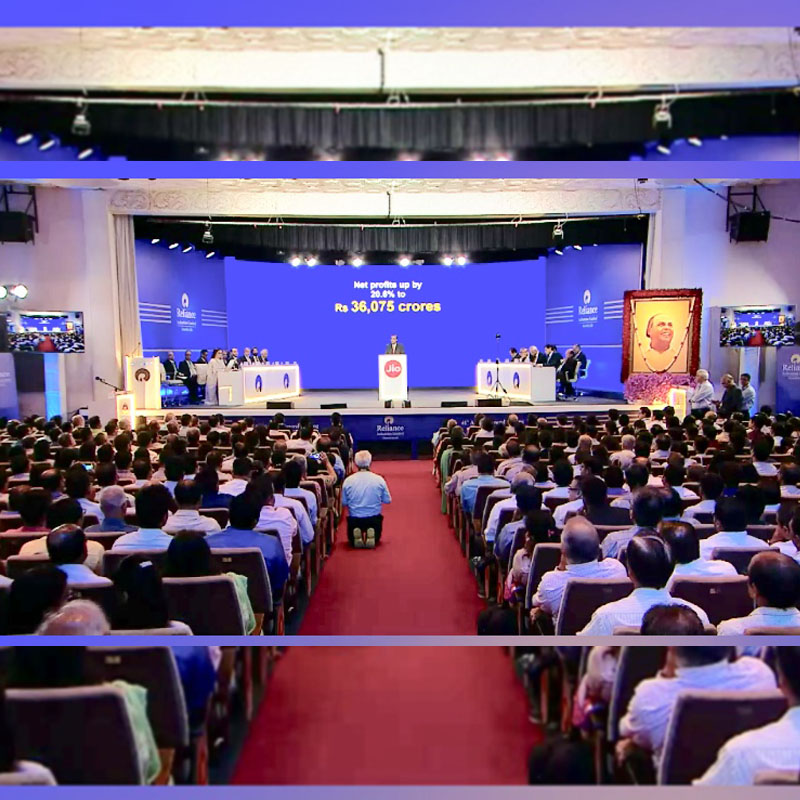
    Mumbai: Reliance Industries Ltd. today in its 46th annual general meeting on 28 August 2023, just like in the previous AGMs, investors are anticipating significant revelations during this yearly event. This occasion holds added significance as it marks RIL’s inaugural AGM subsequent to the listing of Jio Financial Services (JFSL) shares on various stock exchanges.

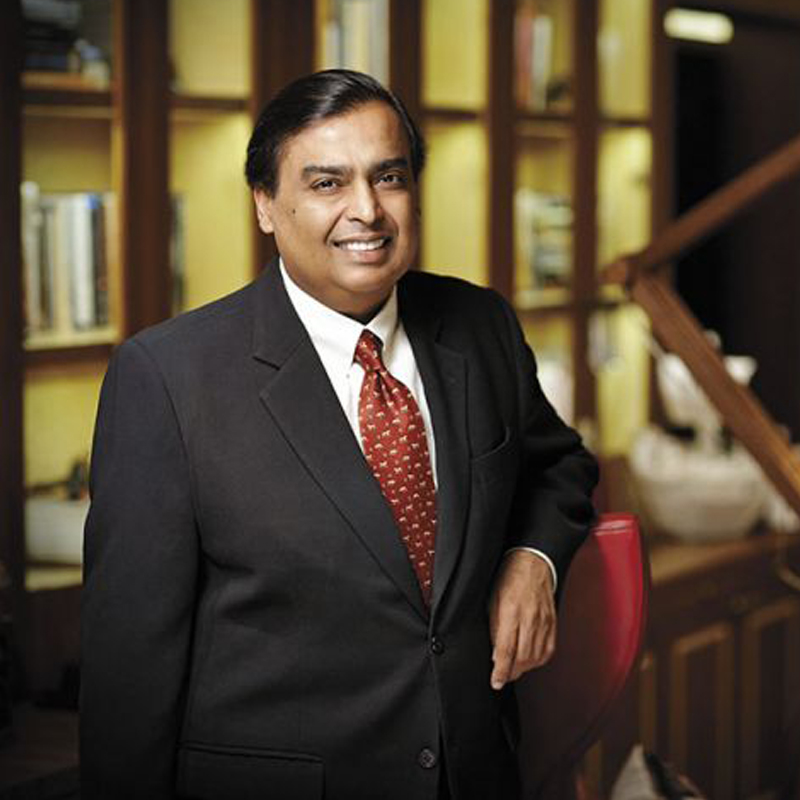
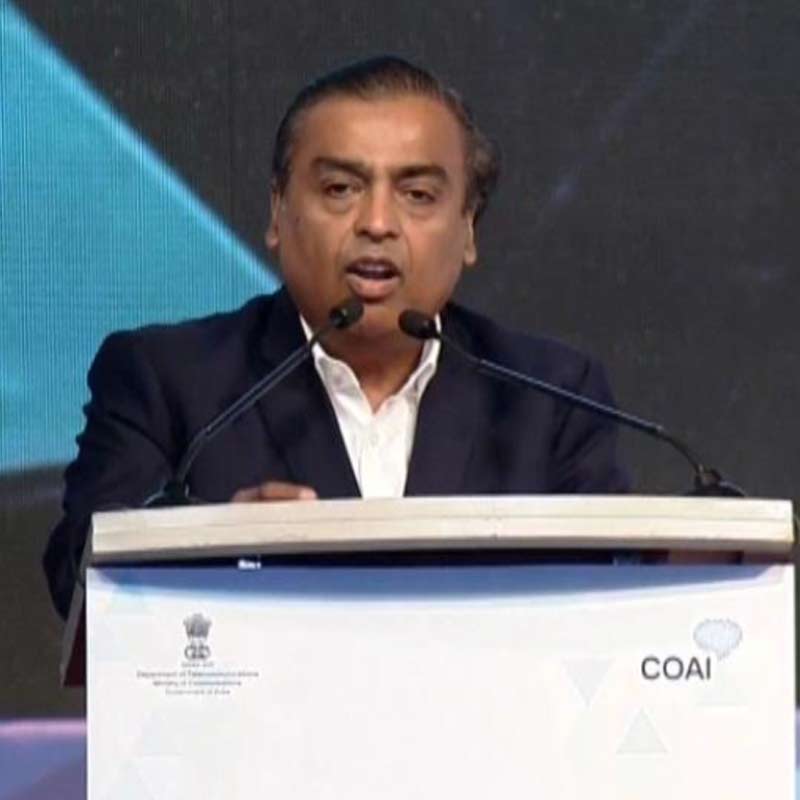
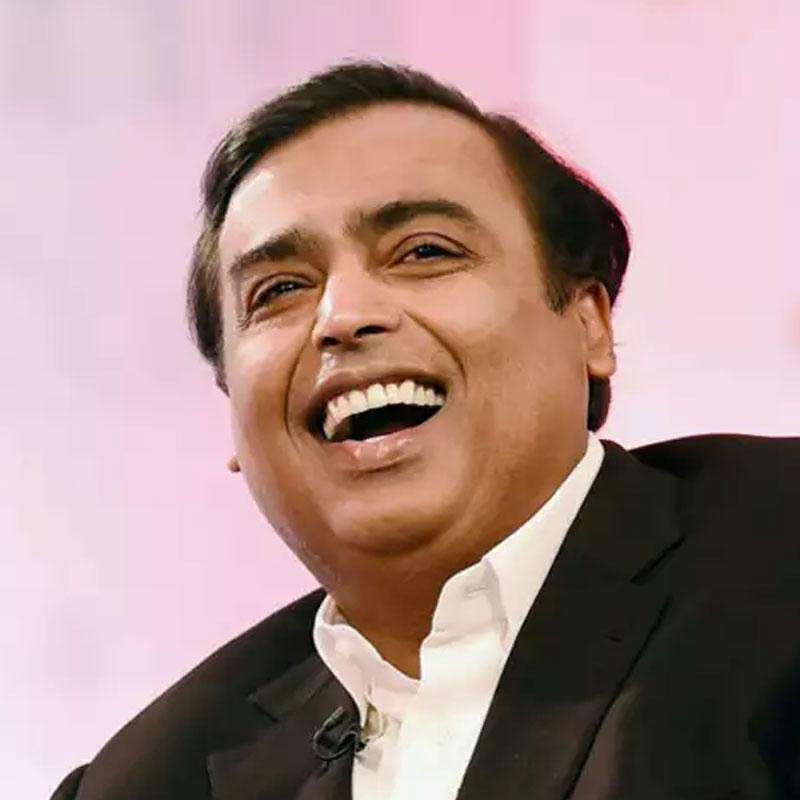
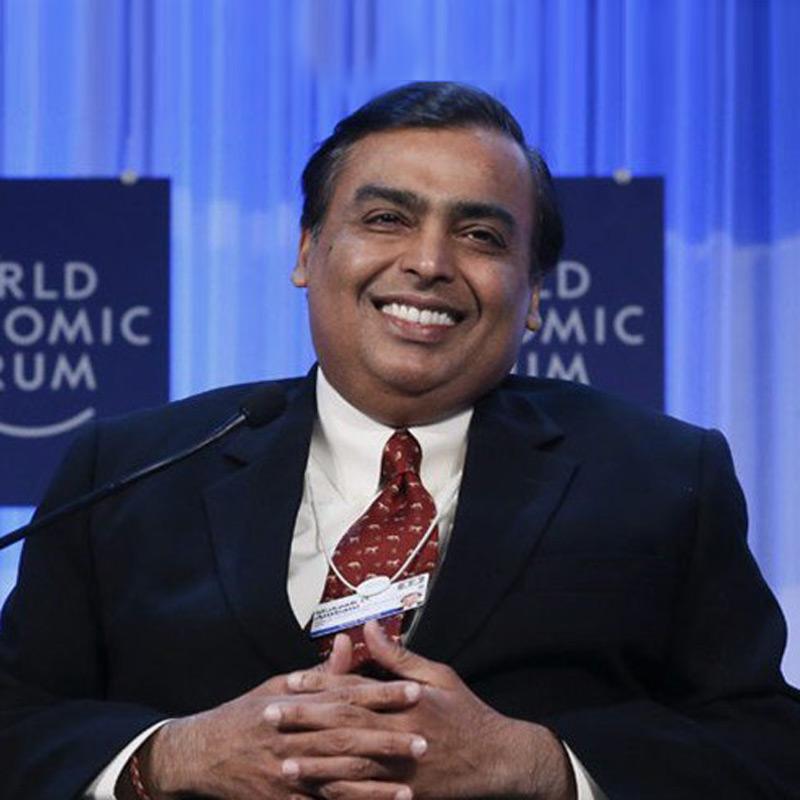
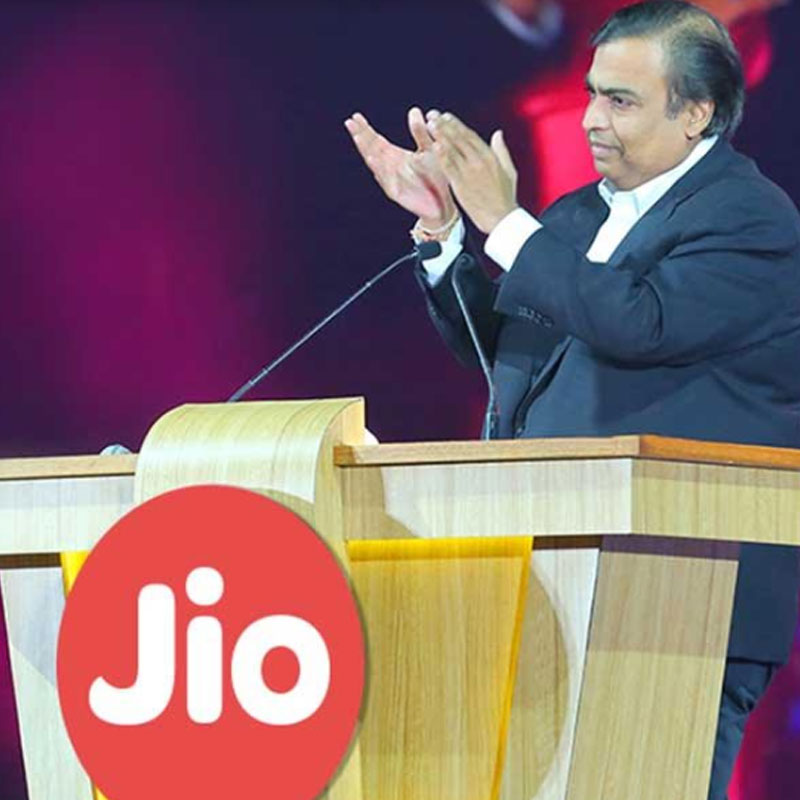
    RIL chairman and managing director Mukesh Ambani, made a series of announcements including the company’s plans to roll out 5G services by December 2023, high-profile partnerships with Meta and Google, and the AirFiber service.

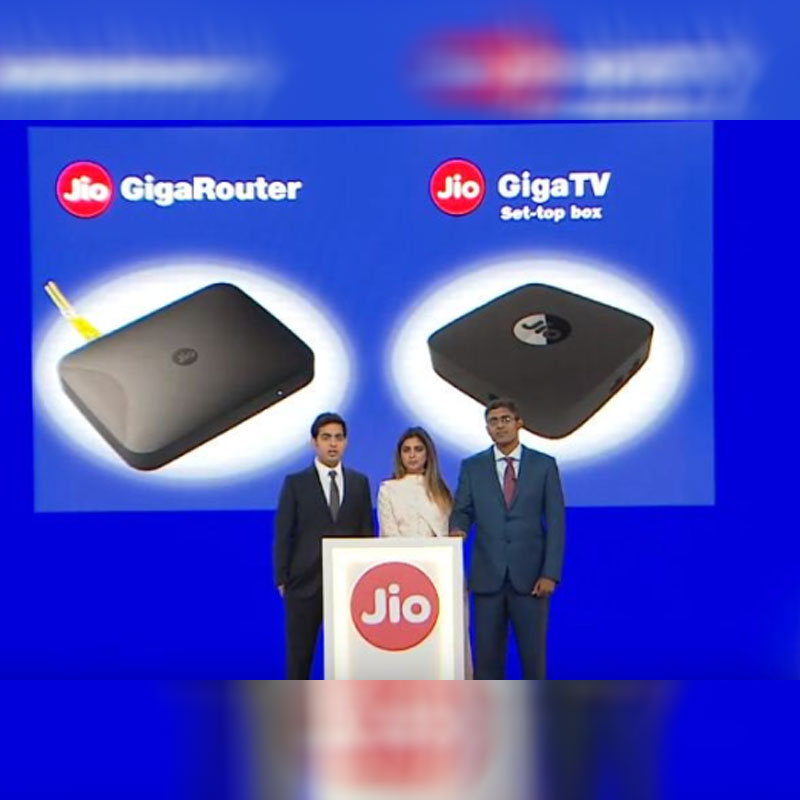
    Ambani has announced that Jio AirFiber will be launched on Ganesh Chaturthi. Also Akash Ambani has introduced Jio Smart Home services. Over the past few years, major groundbreaking declarations from the Ambani conglomerate have consistently been unveiled during the RIL AGM. Consequently, this occasion has assumed a pivotal role on Dalal Street.

    Mukesh Ambani said, “Jio Platforms is already providing end-to-end professional and managed services for all businesses of RIL group, including Telecom, Retail, Media, and Fin Services. It is ideally placed to offer these services outside the RIL group.”

    He continued, “For the first time, IPL was streamed free on JioCinema. It created a global record with a staggering 45 cr viewers tuning in. More people watched IPL on digital devices than on linear television, marking a tectonic shift.”

    It is widely anticipated that Mukesh Ambani will present a strategic plan for the financial services sector, building upon the recent $300 million collaborative agreement with BlackRock, the world’s largest asset management firm. This partnership is geared towards establishing a digital-centric approach, with the goal of making investment solutions accessible to a broader range of Indian investors.

    During the announcement of the financial results for the June quarter, Reliance Jio expressed its commitment to achieving a nationwide 5G rollout across India by the end of this year, as reiterated during the Annual General Meeting (AGM). Moreover, shareholders are keen to gain insights into the company’s investment strategies for the present year and the specific areas of concentration for its expansion endeavors.

    Reliance AGM 2023- Key things to look for:

    Plans for Jio Financial

    5G Roadmap

    Reliance Retail IPO

    Reliance Jio IPO

    Renewable energy plans

    Reliance Jio Infocomm IPO

  • Vodafone Idea lost 4 mn wireless subscribers in September 2022: Trai

    Vodafone Idea lost 4 mn wireless subscribers in September 2022: Trai

    Mumbai: As per subscription data by the Telecom Regulatory Authority of India (Trai), Reliance Jio added 0.72 million wireless subscribers at the end of September 2022. Bharti Airtel added 0.41 million subscribers during the same period. Vodafone Idea, on the other hand, lost 4 million wireless subscribers.

    The total number of wireless subscribers decreased to 1,145.45 million at the end of September 2022, in comparison to 1,149.11 million at the end of August 2022.

    The number of wireless subscribers in urban areas increased from 627.09 million to 627.14 million for the same period, while in rural areas it decreased from 522.02 million to 518.31 million.

    In September 2022, as per Trai data, there were 1,013.97 million active wireless subscribers. Reliance Jio had the highest number of active wireless subscribers at 386.08 million during the period, followed by Bharti Airtel at 358.99 million and Vodafone Idea at 212.19 million. From public-sector units, BSNL had 56.23 million active wireless subscribers.

    As per information received from 846 operators in September 2022, Trai found that total broadband subscribers increased from 813.94 million to 816.24 million. In September 2022, the broadband subscribers comprised 783.99 million mobile device users, 31.09 million wired subscribers, and 1.15 million fixed wireless subscribers.

    The top five service providers constituted 98.36 per cent of the total broadband subscribers at the end of September 2022. These service providers were Reliance Jio Infocomm with 426.80 million subscribers, followed by Bharti Airtel (225.09 million), Vodafone Idea (123.20 million), BSNL (25.62 million), and Atria Convergence (2.14 million).

    The top wired broadband service providers included are Reliance Jio Infocomm with 6.83 million subscribers, followed by Bharti Airtel (5.27 million), BSNL (3.91 million), Atria Convergence (2.14 million), and Hathway Cable & Datacom (1.13 million).

    Reliance Jio Infocomm, with 419.97 million subscribers, is followed by Bharti Airtel (219.82 million), Vodafone Idea (123.20 million), BSNL (21.71 million), and Intech Online (0.23 million) in the list of the top five wireless broadband service providers.

    The number of wireline subscribers increased from 25.97 million in September 2022 compared to 26.47 million in August 2022.

    The number of telephone subscribers decreased from 1,175.08 million to 1,171.92 million during the same period.

    Both urban and rural telephone subscribers recorded increases in numbers from 651.07 million to 651.61 million and 524.01 million to 520.30 million, respectively, at the end of September 2022.

    Also, during the same period, a total of 11.97 million requests were received for mobile number portability (MNP).

  • Reliance Jio adds 3.28 mn wireless subscribers in August : Trai

    Reliance Jio adds 3.28 mn wireless subscribers in August : Trai

    Mumbai: As per subscription data by the Telecom Regulatory Authority of India (Trai), Reliance Jio added 3.28 million wireless subscribers at the end of August. Bharti Airtel added 0.32 million during the same period. In August, Vodafone Idea lost 1.95 million wireless subscribers.

    The total number of wireless subscribers increased from 1,148.03 million to 1,149.11 million in August. The number of wireless subscribers in urban areas increased from 626.74 million to 627.09 million. However, wireless subscriptions in rural areas increased from 521.29 million to 522.02 million.

    As per Trai data, there were 1013.46 million active wireless subscribers during the month. Reliance Jio had the highest number of active wireless subscribers at 384.63 million, followed by Bharti Airtel at 357.66 million and Vodafone Idea at 214.29 million. BSNL had 56.23 million active wireless subscribers.

    As per information received from 767 operators in August, Trai found that total broadband subscribers increased from 807.42 million to 813.94 million. The broadband subscribers comprised 782.46 mobile device users, 30.37 million wired subscribers, and 1.11 million fixed wireless subscribers.

    The top five broadband service providers were Reliance Jio Infocomm with 425.80 million subscribers, followed by Bharti Airtel (223.98 million), Vodafone Idea (123.12 million), BSNL (25.80 million), and Atria Convergence (2.13 million).

    The top five wired broadband service providers were Reliance Jio Infocomm with 6.56 million subscribers, followed by Bharti Airtel (5.13 million), BSNL (3.88 million), Atria Convergence (2.13 million) and Hathway Cable & Datacom (1.13 million).

    The top five wireless broadband service providers were Reliance Jio Infocomm (419.24 million), Bharti Airtel (218.85 million), Vodafone Idea (123.12 million), BSNL (21.92 million) and Intech Online (0.23 million).

    The number of wireline subscribers increased from 25.63 million to 25.97 million in August.

    The number of telephone subscribers in India increased from 1,173.66 million to 1,175.08.66 million. Urban telephone subscriptions increased from 650.40 million to 651.07 million. However, rural subscriptions also increased from 523.26 million to 524.01 million.

    During August, a total of 11.35 million requests were received for mobile number portability (MNP).

  • PM Modi launches 5G services in India

    PM Modi launches 5G services in India

    Mumbai: On Saturday, prime minister Narendra Modi launched 5G services in India at the India Mobile Congress in New Delhi.

    At the launch, while addressing the nation, Modi said that 5G technology will revolutionise the telecom sector and that it is a historic day for India in the twenty-first century. “The launch of 5G is a gift from the telecom industry to 130 crore Indians. It is a step toward a new era in the country, and is the beginning of infinite opportunities.”

    He emphasised how digital India’s success is based on four pillars, including the cost of a device, digital connectivity, data costs, and the digital first approach.

    Over the next few years, the services will gradually expand to cover the entire country. The fifth generation (5G) service, capable of supporting ultra-high-speed internet, is expected to open up new economic opportunities and societal benefits, serving as a transformative force in Indian society.

    Also read: Reliance Jio to roll out 5G services in major cities by Diwali

    “Earlier, the cost of one GB of data was about Rs 300. It has come down to about Rs 10 per GB now. On average, a person in India consumes 14 GB per month. This would have cost about Rs 4,200 per month but costs Rs 125-150. It’s the efforts of the government that led to this,” he added.

    Speaking further, Modi said, “With developments in technology and telecom, India will lead the industry’s 4.0 revolution. This is not the decade of India, but the century of India.”

    At the event, Modi was accompanied by telecom minister Ashwini Vaishnaw, junior telecom minister Devusinh Chauhan, and Reliance Industries chairman Mukesh Ambani, Bharti Enterprises founder & chairman Sunil Bharti Mittal, and Aditya Birla Group chairman Kumar Manglam Birla.

    After officially opening the show, Modi visited pavilions set up by several telecom carriers and technology providers to get a first-hand look at what 5G is capable of. He began at the Reliance Jio booths.

    Reliance chairman Mukesh Ambani thanked the prime minister for inspiring the vision of a developed nation by 2047. “Every action and policy of the government is skillfully crafted to propel India towards that goal. Steps taken to fast-track India’s march into the 5G era provide compelling proof of our prime minister’s determination.”

    He narrated the possibilities of 5G in key areas like education, education, and climate change, etc. “Your leadership has raised India’s prestige, profile, and power globally like never before. In today’s fast-changing world, there will be no stopping a resurgent India from soaring to the top,” Ambani concluded.

    Bharti Enterprise chairman Sunil Bharti Mittal remarked that the launch of 5G is the beginning of a new era and since it is happening during “Azadi Ka Amrit Mahotsav,” it makes it even more special. “With the efforts of the prime minister, this will usher in new energy in the country. We are fortunate to have a leader in the prime minister who understands technology very well and has deployed it to the development of the country in an unmatched manner,” he noted.

    Mittal further said that it will open up a sea of opportunities for people, especially in our rural areas. He recalled the PM’s initiatives in the fields of infrastructure and technology from his Gujarat CM days. He said that during the pandemic, traffic shifted to villages and homes and the country’s heartbeat did not stop even for a second. Credit for that goes to the digital vision. He also praised the audacity and achievement of the vision of “Make in India.” “Along with “Digital India,” the prime minister also took forward the “Start-up India” campaign and, soon enough, India started producing unicorns,” Shri Mittal added. “With the advent of 5G, I’m sure that the country will add many more unicorns to the world.”

    Aditya Birla Group Chairman Kumar Mangalam Birla called the advent of 5G a transformational event that proves India’s prowess on the global stage and reiterates the role of telecom technology as the bedrock of India’s growth. He thanked Modi for his vision and leadership for a generational leap in technology that has resulted in India’s making a mark on the global stage. He also thanked the PM for his inspirational role in supporting the telecom industry during the ongoing pandemic and for the path-breaking telecom reforms in the industry.

    Birla said that the launch of 5G marks the beginning of an exciting journey for India. “We will see limitless potential for 5G development and use cases in the years to come,” he added.

    Reliance Jio connected a teacher from a school in Mumbai with students in three different locations in Maharashtra, Gujarat, and Odisha.

    The Vodafone Idea test case demonstrated the safety of workers in an under-construction tunnel of the Delhi Metro through the creation of a ‘Digital-Twin’ of the tunnel on the dias.

    In the Airtel demo, students from Dankaur, Uttar Pradesh, witnessed a lively and immersive educational experience to learn about the solar system with the help of virtual reality (VR) and augmented reality (AR).

  • Reliance Jio adds 2.9 mn wireless subscribers in July: Trai

    Reliance Jio adds 2.9 mn wireless subscribers in July: Trai

    Mumbai: Reliance Jio added 2.9 million wireless subscribers at the end of July, as per subscription data by the Telecom Regulatory Authority of India (Trai). Bharti Airtel added 0.51 million wireless subscribers during the same period. Vodafone Idea lost 1.54 wireless subscribers in July.

    The total number of wireless subscribers increased from 1,147.39 to 1,148.03 million in July. The number of wireless subscribers in urban areas decreased from 625.49 million to 626.74 million. However, wireless subscriptions in rural areas increased from 521.90 million to 521.29 million.

    As per Trai data, there were 1,013.18 million active wireless subscribers during the month. Reliance Jio had the highest number of active wireless subscribers at 382.17 million, followed by Bharti Airtel at 356.17 million and Vodafone Idea at 216.92 million. BSNL had 52.27 active wireless subscribers.

    As per information received from 694 operators in July, Trai found that total broadband subscribers increased from 800.94 million to 807.42 million. The broadband subscribers comprised 776.81 mobile device users, 29.47 million wired subscribers, and 1.14 million fixed wireless subscribers.

    The top five broadband service providers were Reliance Jio Infocomm with 422.23 million subscribers, Bharti Airtel with 222.12 million subscribers, Vodafone Idea with 122.98 million subscribers, BSNL with 25.25 million subscribers, and Atria Convergence with 2.13 million subscribers.

    The top five wired broadband service providers were Reliance Jio Infocomm with 6.27 million subscribers, Bharti Airtel with 4.99 million subscribers, BSNL with 3.85 million subscribers, Atria Convergence with 2.13 million subscribers, and Hathway Cable and Datacom with 1.13 million subscribers.

    The top five wireless broadband service providers were Reliance Jio Infocomm with 415.96 million, Bharti Airtel with 217.13 million, Vodafone Idea with 122.97 million, BSNL with 21.39 million, and Intech Online with 0.22 million.

    The number of wireline subscribers increased from 25.57 million to 25.63 million in July.

    The number of telephone subscribers in India increased from 1,172.96 million to 1,173.66 million. Urban telephone subscriptions increased from 649.09 million to 650.40 million. However, rural subscriptions decreased from 523.87 million to 523.26 million.

    During July, a total of 10.23 million requests were received for mobile number portability (MNP).

  • Ericsson is ready to power India into the 5G future: VP marketing & communications Ruchika Batra

    Ericsson is ready to power India into the 5G future: VP marketing & communications Ruchika Batra

    Mumbai: With 5G set to take flight in India, telecom companies are gearing up to be the first in the 5G race. The country’s first auction of the 5G spectrum concluded early last month, with service providers Bharti Airtel, Reliance Jio, Vodafone Idea, and Adani Data Networks paying the department of telecom (DoT) a total of about Rs 17,876 crore for the spectrum they acquired. With this spectrum allotment, India is in the final stage of rolling out high-speed 5G telecom services.

    Ericsson India recently unveiled its new brand campaign “Imagine Possible” that sets out to show the limitless possibilities of increased connectivity with 5G for Indian industries, people, and communities. In an interaction with Indiantelevision.com, Ericsson VP-marketing and communications Ruchika Batra talks about the campaign objective, the significance of the Indian market for the brand and how ready the Indian consumer is to welcome the 5G network.

    India has been a strategic market for Ericsson and the leading provider of telecom network equipment has been partnering with the country through generations of mobility—2G, 3G, and 4G—even as it now sets the stage for the 5G rollout.

    The fifth generation of mobile networks or 5G, as it is referred to, is currently the fastest communication network available in the world, as it gradually makes its way to every part of the globe. It opens up a whole new world of entertainment and applications, enabling users to download full-length movies in a matter of seconds and take advantage of more advanced linked technologies like gaming with augmented reality.

    Ericsson’s global campaign – India chapter

    Elaborating on the objective of launching the India chapter of this global campaign, Batra says that “Imagine Possible” brings to life the company’s purpose and vision in the Indian context. “The objective of the campaign is all about showcasing the limitless possibilities that 5G will bring to Indian enterprises, people, and communities. It emphasises the transformational role that 5G can play in creating a more digitally inclusive society in India through relevant use-cases across industries like healthcare, manufacturing, education, and entertainment.” With 5G, the possibilities are endless and the campaign depicts the same, she adds.

    It highlights the potential of 5G through five scenarios: a schoolgirl taking remote lessons from a rural homestead; fans enjoying an extended reality cricket experience; a mountain medic wearing an AR headset allowing him to see the diagnosis from surgeons back in the hospital whilst attending patients at a remote location; a farmer enjoying the benefits of connected digital financial services in a rural setting; and drone operations with 5G powered smart factories.

    Ericsson’s significant achievements in the Indian 5G market

    According to Batra, Ericsson has viewed India as a strategic market since 1903. It became one of the first companies to manufacture telecom equipment for domestic players as well as export it to other parts of the world. So, when Batra was asked about the 5G readiness in the country, she said, “Our Ericsson radio solutions introduced in India in 2015 are 5G ready and we are well prepared to support Indian service providers in their journey from 4G to 5G. We have been working with our operator partners, enterprises, as well as the academic community to test and curate various 5G use cases that would be relevant for the country with the trial spectrum that was made available.”

    Post the recently concluded 5G spectrum auctions in the country, Bharti Airtel awarded its first 5G contract in the country to Ericsson. Some of the recent 5G milestones that Ericsson has achieved include partnering with Bharti Airtel to demonstrate India’s first 5G live network in Hyderabad and trials in Gurugram and Manesar. This was followed by a demonstration of India’s first 5G rural trial in Bhaipur Bramanan village on the outskirts of Delhi/NCR. Ericsson also partnered with Vodafone Idea (VIL) to showcase the power of 5G to bring healthcare to remote parts of the country.

    “At our end, Ericsson is ready to power India into the 5G future. In fact, our radio system hardware has been 5G-ready since 2015 enabling operators to upgrade to 5G with a remote software installation,” asserts Batra.

    Influence of 5G on consumers and enterprises in India

    With 5G services to be rolled out in India shortly, India’s top telcos Reliance Jio, Bharti Airtel and Vodafone Idea are firming up plans to tap into the emerging gaming and e-sports segment that is expected to see strong growth and investments amid faster speeds and low latency. The next phase of growth for gaming is expected to be driven by the accelerating adoption of 5G, cloud gaming, gamification, and mobile gaming devices, among others. For instance, 4K video on a smartphone, AR/VR and mobile gaming applications benefit from 5G capabilities such as ultra-low latency and ultra-high reliability for an enhanced user experience.

    According to Batra, some of the use cases that consumers will see with 5G are cloud gaming, live sports and enhanced video content, with 5G enabled sports being the top predicted revenue drivers. A spectator will get an even more immersive experience using 5G-enabled stadiums, 5G network slicing, 5G enabled cameras and virtual transmission centres, she adds.

    The need for low latency will be even more crucial with AR/VR entering the market for consumers to have a captivating experience, and 5G will be able to address this quickly, points out the Ericsson marketing and communications head.

    In future, gaming will form a core of major telcos’ business strategy going forward, as they seek to increase average revenue per user (ARPU) by engaging more subscribers and boosting user stickiness, predicts industry experts.

    Will 5G services be welcome with premium prices?

    Batra is categorical about Indian consumers’ willingness to pay more for value-added premium services. “There is already quite a lot of enthusiasm amongst Indian consumers for 5G and they are willing to pay a premium for the capabilities it brings,” she asserts.

    According to Ericsson’s ConsumerLab study, at least 40 million smartphone users in India are expected to take up 5G in the first year of it becoming available, she points out. “In fact, they are also willing to pay 50 per cent more for 5G plans that include bundled digital services, compared to just 10 per cent more for 5G connectivity.”

    The latest Mobility Report from Ericsson predicts that by 2027, nearly 40 per cent of all mobile subscriptions in India will be on 5G, which is a whopping 500 million subscribers. This adoption will be driven by significant investment by mobile operators, who are expected to dedicate a huge part of their capital expenditure on building 5G infrastructure, estimates the report.

  • Telecom companies pay DoT Rs 17,876 crore up front for 5G spectrum

    Telecom companies pay DoT Rs 17,876 crore up front for 5G spectrum

    Mumbai: Bharti Airtel, Reliance Jio, Adani Data Networks, and Vodafone Idea have paid the department of telecom an upfront sum of about Rs 17,876 crore for the spectrum they recently won in an auction.

    DoT has received a total payment of approximately Rs 17,876 crore. Only Bharti Airtel has made full payment for four annual instalments. Reliance Jio has made payments of Rs 7,864.78 crore, Vodafone Idea paid Rs 1,679.98 crore, and Adani Data Networks paid Rs 18.94 crore.

    Bharti Airtel has paid Rs 8,312.4 crore, or four annual instalments, while all telecom operators have chosen to pay in 20 annual instalments.

    With a bid of Rs 87,946.93 crore, Mukesh Ambani’s Jio secured nearly half of the airwaves sold in the nation’s largest-ever auction of telecom spectrum, which attracted bids totaling a record Rs 1.5 lakh crore.

    Gautam Adani’s group has bid Rs 211.86 crore for 400 MHz in a band that is not used for providing public telephony services.

    Bharti Airtel, owned by telecom tycoon Sunil Bharti Mittal, submitted a winning bid of Rs 43,039.63 crore, and Vodafone Idea purchased spectrum for Rs 18,786.25 crore.

  • Reliance Jio adds 4.2 million mobile subscribers in June: Trai

    Reliance Jio adds 4.2 million mobile subscribers in June: Trai

    Mumbai: Reliance Jio added 4.2 million mobile subscribers in the month of June, followed by Bharti Airtel at 0.7 million, as per subscription data by the Telecom Regulatory Authority of India (Trai). Vodafone Idea lost 1.8 million subscribers during the same period.

    The total number of mobile subscribers increased from 1,145.50 million to 1,147.39 million, registering a growth of 0.16 per cent. Wireless subscriptions in cities increased from 624.55 million to 625.49 million, while rural subscriptions increased from 520.96 million to 521.90 million.

    There were a total of 1,017.56 active mobile subscribers (VLR subscribers) during the month. Reliance Jio had the greatest number of VLR subscribers at 383.24 million, followed by Bharti Airtel at 357.21 million and Vodafone Idea at 218.67 million.

    As per data received from 666 operators in June, the total broadband subscribers increased from 794.68 million to 800.94 million. Out of which, 28.71 million were wired subscribers; 771.13 million were mobile device users; and 1.10 million were fixed broadband users.

    The top five wired broadband service providers were Reliance Jio Infocomm at 6.16 million, followed by Bharti Airtel at 4.85 million, BSNL at 3.84 million, Atria Convergence Technologies at 2.11 million, and Hathway Cable and Datacom at 1.11 million subscribers.

    The top five service providers constituted 98.47 per cent of the total broadband subscribers at the end of June. These service providers were Reliance Jio Infocomm at 419.17 million, followed by Bharti Airtel at 219.41 million, Vodafone Idea at 122.96 million, BSNL at 25.02 million, and Atria Convergence at 2.11 million.

    The total number of wireline subscribers increased from 25.23 million to 25.57 million in June.

    The number of telephone subscribers in India increased from 1,170.73 million to 1,172.96 million, thereby showing a monthly growth rate of 0.19 per cent.

    Urban subscriptions grew from 647.81 million to 649.09 million, and rural subscriptions grew from 522.92 million to 523.87 million.

    In the month of June, 9.02 million subscribers submitted their requests for mobile number portability (MNP). With this, the cumulative MNP requests increased from 705.54 million at the end of May to 714.56 million at the end of June since the implementation of MNP. The number of active wireless subscribers in June was 1,017.56 million.

  • Reliance Jio launched its streaming platform ‘JioGamesWatch’

    Reliance Jio launched its streaming platform ‘JioGamesWatch’

    Mumbai: Mukesh-Ambani-led Reliance Jio has launched its new streaming platform called ‘JioGamesWatch’ recently. It is the one-stop solution for all types of gaming content that the users will enjoy watching. The streaming service will be available on Android, iOS and even Set Top Boxes.

    Similar to Twitch, JioGamesWatch will offer game-streaming to the users in a convenient way. “The platform has set its sights on empowering and enabling creators to go live, with any device, under low Latency, and showcase the best of their content to millions of viewers,” Jio said in a press release.

    Its viewer engagement tools help to stay ahead of competition, such as emotes & audience polls. The app is fruitful for casual gaming enthusiasts, developers and game publishers. It also has amazing online games, esports and tournaments.

  • 5G auctions: Govt to earn Rs 1.5 trillion from sale of 51.236 Mhz of spectrum

    5G auctions: Govt to earn Rs 1.5 trillion from sale of 51.236 Mhz of spectrum

    Mumbai: After seven days and 40 rounds of bidding, the 5G spectrum auctions concluded on Monday and the government generated revenues to the tune of Rs 1,50,173 crore from the sale of 51,236 MHz of spectrum out of 72,098 MHz total spectrum.

    “The process of allocation of spectrum shall be completed within the timeframe and 5G services are likely to be rolled out by September/October,” said the press statement.

    Telco Reliance Jio Infocomm obtained 24,740 MHz spectrum in 700, 800, 1700, 3300 MHz and 26 GHz bands and bid a total amount of Rs 88,078 crore.

    Bharti Airtel obtained 19,867.8 MHz spectrum in 900, 1800, 2100, 3300 MHz and 26 GHz bands and bid a total amount of Rs 43,048 crore.

    Vodafone Idea obtained 6,228 MHz spectrum in 1800, 2100, 2500, 3300 MHz and 26 GHz bands and bid a total amount of Rs Rs 18,799 crore.

    Adani Data Networks obtained 400 MHz spectrum in mm wave band 26 GHz and bid a total amount of Rs 212 crore.

    All the auction winners will pay the government in annual installments of Rs 13,365 crore.

    Reliance Jio Infocomm chairman Akash Ambani said, “Jio is committed to offering world-class, affordable 5G and 5G-enabled services. We will provide services, platforms and solutions that will accelerate India’s digital revolution, especially in crucial sectors like education, healthcare, agriculture, manufacturing and e-Governance.”

    Bharti Airtel MD and CEO Gopal Vittal said, “This spectrum acquisition at the latest auction has been a part of a deliberate strategy to buy the best spectrum assets at a substantially lower relative cost compared to our competition. We are confident that we will be able to deliver the best 5G experience in India in terms of coverage, speeds and latency. This will allow us to change a lot of established paradigms for both our B2C and B2B customers.”

    A statement by Vodafone Idea said, “We actively participated in the spectrum auction to strengthen our pan-India 4G footprint and embark on our 5G roll-out journey in the country in line with our long-term vision. We believe that the above spectrum acquisition will enable us to strengthen our position in our key markets and it aligns well with our long-term strategic intent.

    It further added, “We have successfully acquired mid band 5G spectrum (3300 MHz band) in our 17 priority circles and mm Wave 5G spectrum (26 GHz band) in 16 circles, which will enable us to offer a superior 5G experience to our customers as well as strengthen our enterprise offerings and provide new opportunities for business growth in the emerging 5G era. We will continue to collaborate with enterprise customers and partners in prioritising and developing 5G use cases for real-world deployments. The additional 4G spectrum acquisition in 3 circles of Andhra Pradesh, Karnataka and Punjab will further improve the customer experience; an area where we have been consistently leading the league tables, as per various third-party reports, over the last several quarters.”

    Adani Group chairman Gautam Adani said, “The Adani Group’s foray into the industrial 5G space will allow our portfolio companies to offer a set of new add-on services that capitalizes on all the other digital segments we are building.”

    He elaborated, “Given that our portfolio is a highly distributed asset intensive investment that is all being revolutionized by sensorisation and fast becoming IoT (Internet of Things) enabled, we believe the next data surge will be created more by machines than by people as all devices get interconnected. This data will need to be streamed, stored, processed, and analysed by other machines in real time and this capability will change every single industry. It will help build a set of services that the market cannot even fully conceptualize today. This volume will be exponentially higher and generated at the edges, especially in a country like India, where the Tier 2 and 3 cities are witnessing the fastest all-round growth.”

    The government did not receive any bids for the 600 MHz spectrum band which was auctioned for the first time. The 600 MHz band is still not developed for mobile telephony but may become important in a few years.

    Telcos bid Rs 1.45 lakh crore for the highly-priced 700 MHz spectrum for which the 5G ecosystem is very well developed. The band provides a large range and good coverage. Reliance Jio obtained pan India 10 MHz spectrum.

    Participants who bid for bands between 800 to 2500 were primarily looking to augment capacity and improve 4G coverage.

    Reliance Jio, Bharti Airtel and Vodafone Idea obtained spectrum in the mid band i.e., 3300 MHz which is crucial in providing high throughput. The telco operators are likely to augment existing 4G capacity and provide 5G services in the 3300 MHz band.

    All four telcos acquired mm wave band i.e., 26 GHz band which can be utilised for the captive or non-public network. The 26 GHz band has high throughput but a very short range. The band is becoming popular for fixed wireless access (FWA) that can be used as an alternative to fibre in high-density/congested urban areas.

    The 5G auctions were conducted by Metal Scrap Trading Corporation (MSTC) a public sector undertaking of the government.