Tag: Reliance Jio

  • Jio battles incumbents as Airtel launches Rs 1495 free data plan

    Jio battles incumbents as Airtel launches Rs 1495 free data plan

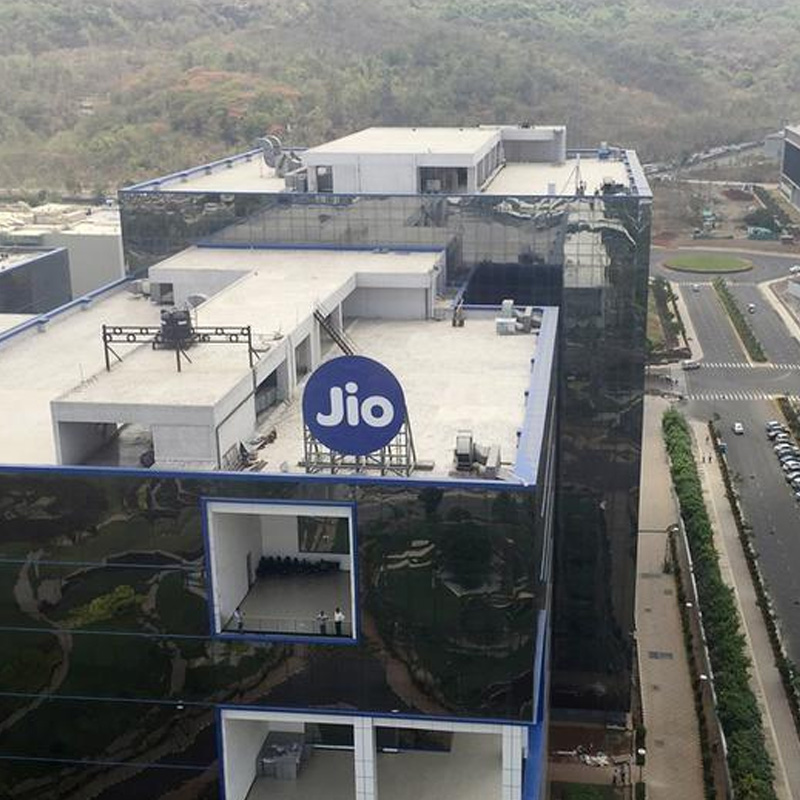
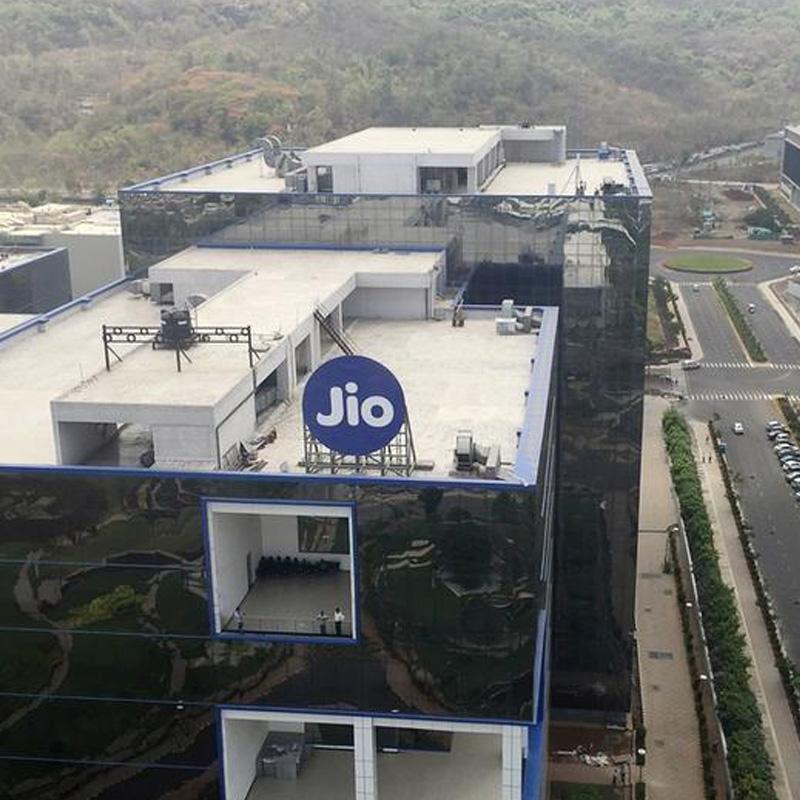
    MUMBAI: The fisticuffs continue in the 4G telecom marketplace. Even as Reliance Jio has been waging a war of press releases, highlighting how many of its subscribers’ calls are being refused by Idea, Airtel and Vodafone, the Sunil Mittal-led telco today too issued a press release through which it is taking a jab at the Mukesh Ambani-owned telco’s free call and data offer.

    Airtel says it has started offering a free data package for Rs 1495 only, and for prepaid customers only. If you are paying for it, then how is it free? Airtel explains that consumers can surf at wild speeds up to the 30GB data and 90-day limit, after which the accelerator needle will drop to 64kbps. And that’s when the free part of surfing will come in – but at super slow speed.

    At the price of Rs 1495 for 30 GB means the data is coming your way cheaper than the Reliance Jio offer of Rs 50 for a GB. The only difference is you are plonking down the money upfront.

    Will Reliance Jio react to this outrageous offer from a rival telco? No one knows, but it definitely has reacted to rival telco Idea on another front: that of call drops. It says that the Aditya Birla group-owned Idea is blocking out calls from Jio customers, refusing them connectivity. Says the Jio press release: “Adequate interconnection capacity so that call failure rate is less than 5 per 1,000 is a license obligation of all telecom operators. As against this, over 750 calls per 1,000 are failing per day between Idea and Jio networks, which translates to four crore calls failing per day. Over 12 crore calls fail daily between Jio and the networks of Airtel, Vodafone and Idea. This is a breach of licence conditions by the incumbent operators and severely impacts customer interests. This is against zero call failures on the Jio network.”

  • Jio sees top-level resignations; CMO Shrivastava quits

    Jio sees top-level resignations; CMO Shrivastava quits

    MUMBAI: Reliance Jio is seeing resignations of several high-profile executives in its top management.

    After the exit of the chief digital marketing officer, senior vice president digital channels, Martijn de Jong, the chief marketing officer Pradeep Shrivastava too has reportedly stepped down. He was responsible for leading the marketing function for Reliance Jio.

    Before joining Jio, he was a member of the board of directors at PT XL Axiata Tbk (XL). At Idea, among other, Shrivastava was also associated with the ‘What An Idea, Sirji’ campaign.

    In the recent past, Jio’s chief cloud architect Soren L Hansen, assistant vice president – data science & analytics of cloud engineering Hari Charan Rao, assistant vice president – security operations Maya R Nair and Pawan S Yadav, business head of public Wi-Fi, left in quick succession.

    Amitabh Jaipuria, who managed Jio’s mobility business, too resigned in June.

    Reliance Jio Infocomm’s business head of public WiFi Pawan S Yadav also quit after a stint of over two years. He looked after the rollout of the company’s Wi-Fi facilities across the country.

  • Jio sees top-level resignations; CMO Shrivastava quits

    Jio sees top-level resignations; CMO Shrivastava quits

    MUMBAI: Reliance Jio is seeing resignations of several high-profile executives in its top management.

    After the exit of the chief digital marketing officer, senior vice president digital channels, Martijn de Jong, the chief marketing officer Pradeep Shrivastava too has reportedly stepped down. He was responsible for leading the marketing function for Reliance Jio.

    Before joining Jio, he was a member of the board of directors at PT XL Axiata Tbk (XL). At Idea, among other, Shrivastava was also associated with the ‘What An Idea, Sirji’ campaign.

    In the recent past, Jio’s chief cloud architect Soren L Hansen, assistant vice president – data science & analytics of cloud engineering Hari Charan Rao, assistant vice president – security operations Maya R Nair and Pawan S Yadav, business head of public Wi-Fi, left in quick succession.

    Amitabh Jaipuria, who managed Jio’s mobility business, too resigned in June.

    Reliance Jio Infocomm’s business head of public WiFi Pawan S Yadav also quit after a stint of over two years. He looked after the rollout of the company’s Wi-Fi facilities across the country.

  • Jio registers Airtel’s support, inadequate measures

    Jio registers Airtel’s support, inadequate measures

    MUMBAI: Reliance Jio, in a press release, has hailed Airtel’s decision to provide more points of interconnection but laments failing of calls between the two networks and alleged blockage of network portability.

    Reliance Jio Infocomm Limited (RJIL) has welcomed the decision of Bharti Airtel Limited (Airtel) of providing more points of interconnection (POI) to it, as was communicated in the bilateral discussions. However, the quantum of POIs proposed to be released by Airtel is substantially less than the estimated requirement.

    More than two crore calls are failing everyday between the two networks, which is far in excess of QoS parameters. It is unfortunate that TRAI’s intervention was required for Airtel to resume augmentation of POIs.

    Airtel has also insisted on certain unilateral deviations from the Interconnection Agreement with respect to installation of one-way E1s as against both-way E1s. Airtel allegedly continues to abuse its market dominance by imposing onerous conditions which will imminently hinder RJIL’s ability to efficiently utilize the additional E1s.

    Airtel has also been allegedly blocking the mobile number portability
    (“MNP”) facility for its subscribers who wish to subscribe to Jio services on baseless and unsubstantiated grounds, the release stated.

    RJIL hopes that Airtel will enhance the PoI’s sufficiently to meet its license obligation of QoS. Airtel must also immediately make available MNP to all its subscribers opting to port to RJIL.

    Reliance Jio Infocomm has built a world-class all-IP data strong future proof network with latest 4G LTE technology. It is the only network born as a Mobile Video Network from the ground up and supporting voice over LTE technology.

  • Jio registers Airtel’s support, inadequate measures

    Jio registers Airtel’s support, inadequate measures

    MUMBAI: Reliance Jio, in a press release, has hailed Airtel’s decision to provide more points of interconnection but laments failing of calls between the two networks and alleged blockage of network portability.

    Reliance Jio Infocomm Limited (RJIL) has welcomed the decision of Bharti Airtel Limited (Airtel) of providing more points of interconnection (POI) to it, as was communicated in the bilateral discussions. However, the quantum of POIs proposed to be released by Airtel is substantially less than the estimated requirement.

    More than two crore calls are failing everyday between the two networks, which is far in excess of QoS parameters. It is unfortunate that TRAI’s intervention was required for Airtel to resume augmentation of POIs.

    Airtel has also insisted on certain unilateral deviations from the Interconnection Agreement with respect to installation of one-way E1s as against both-way E1s. Airtel allegedly continues to abuse its market dominance by imposing onerous conditions which will imminently hinder RJIL’s ability to efficiently utilize the additional E1s.

    Airtel has also been allegedly blocking the mobile number portability
    (“MNP”) facility for its subscribers who wish to subscribe to Jio services on baseless and unsubstantiated grounds, the release stated.

    RJIL hopes that Airtel will enhance the PoI’s sufficiently to meet its license obligation of QoS. Airtel must also immediately make available MNP to all its subscribers opting to port to RJIL.

    Reliance Jio Infocomm has built a world-class all-IP data strong future proof network with latest 4G LTE technology. It is the only network born as a Mobile Video Network from the ground up and supporting voice over LTE technology.

  • Race to acquire IPL rights commences

    Race to acquire IPL rights commences

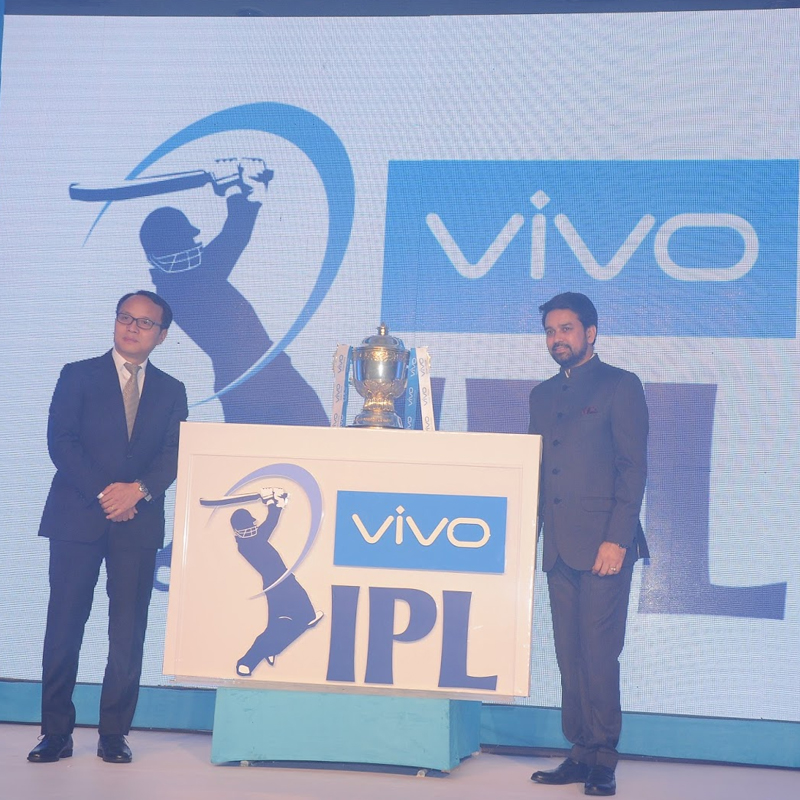
    MUMBAI: It’s the business of sports! The countdown to the media rights of what is arguably India’s most premium sports property, the Vivo IPL, has begun with the Board of Control for Cricket in India (BCCI) announcing the timeline of the bidding process. The BCCI has made the IPL rights an invitation tender process with the document being made available for purchase from today (19 September) at a purchase price of $10,000.

    Three bunches of media rights are being made available: domestic Indian subcontinent TV rights for all the 10 seasons (2018-2027), domestic digital telecast rights, and the rest of the world (RoW) rights — either as a whole package or as territory groupings – each for five seasons (2018-2022). Bidders have also been permitted to make their offers in any combination of the above three rights. The digital rights entail a five-minute delayed telecast.

    Non-news TV broadcasters will be in a position to bid for the TV rights. However, the field has been thrown open to broadcasters, mobile operators and internet operators for both the digital and RoW rights, with marketing agencies also being permitted to throw in the hat into the ring for the latter.

    The bids can be made singly or as a consortium, as long as the person doing is fit and proper, meets financial standing and BCCI suitability standards criteria, and has no litigation with the cricket body, the BCCI announced.

    At the press conference in Delhi, BCCI president Anurag Thakur said:
    “IPL is the fastest, most popular cricket league and also the sixth most popular sports league in the world. We want it to be a very transparent process. It is going to be bid- but a most historic. In the last nine years, what we have seen is that the world has recognized it has the top most league. BCCI has been proud to start the league which others have followed.”

    BCCI CEO Rahul Johri who made a presentation on the tender process said that it will be two tiered, based on eligibility and on the financial commitment. Bidders will have to make their submissions in two envelopes: Envelope A which will detail the eligibility and envelope B which will contain the financial bid and signed media rights agreement. Financial Bids of only compliant bids will be opened, Johri clarified. He added that the organization was under no obligation to accept the highest financial bid and that it could change the process at any time at its discretion.

    Johri pointed out that potential bidders will have an opportunity to seek clarifications till 4 October, with 18 October being the last date for purchasing the tender, and bid submissions will close at 9:30 am on 25 October. Financial bids of only compliant bids will be opened, Johri clarified. The BCCI is expected to announce the winners of the rights the same day.

    For the RoW, the BCCI has broken up the rights into territory groups, almost like the league it runs. Group A broadly consists of Asia, Australia, Canada, Caribbean, Central and south America, New Zealand, and Israel. Group B consists of middle east and north Africa while Group C covers the whole of South Africa. Group D includes sub-Saharan Africa, Group E covers the UK and Ireland and British territories and Group F, the whole of the US.

    Media observers expect a tough fight between current TV rights holder Sony Pictures Network (SPN) India – which recently acquired the Zee Network’s TEN Sports brand – and digital rights holder Star India for the rights.

    Other bidders who could be contenders include telcos like Reliance Jio and Airtel. The next 10 years rights of the IPL are expected to bring in anywhere between $2.5 billion to $3.5 billion for the BCCI.
  • Race to acquire IPL rights commences

    Race to acquire IPL rights commences

    MUMBAI: It’s the business of sports! The countdown to the media rights of what is arguably India’s most premium sports property, the Vivo IPL, has begun with the Board of Control for Cricket in India (BCCI) announcing the timeline of the bidding process. The BCCI has made the IPL rights an invitation tender process with the document being made available for purchase from today (19 September) at a purchase price of $10,000.

    Three bunches of media rights are being made available: domestic Indian subcontinent TV rights for all the 10 seasons (2018-2027), domestic digital telecast rights, and the rest of the world (RoW) rights — either as a whole package or as territory groupings – each for five seasons (2018-2022). Bidders have also been permitted to make their offers in any combination of the above three rights. The digital rights entail a five-minute delayed telecast.

    Non-news TV broadcasters will be in a position to bid for the TV rights. However, the field has been thrown open to broadcasters, mobile operators and internet operators for both the digital and RoW rights, with marketing agencies also being permitted to throw in the hat into the ring for the latter.

    The bids can be made singly or as a consortium, as long as the person doing is fit and proper, meets financial standing and BCCI suitability standards criteria, and has no litigation with the cricket body, the BCCI announced.

    At the press conference in Delhi, BCCI president Anurag Thakur said:
    “IPL is the fastest, most popular cricket league and also the sixth most popular sports league in the world. We want it to be a very transparent process. It is going to be bid- but a most historic. In the last nine years, what we have seen is that the world has recognized it has the top most league. BCCI has been proud to start the league which others have followed.”

    BCCI CEO Rahul Johri who made a presentation on the tender process said that it will be two tiered, based on eligibility and on the financial commitment. Bidders will have to make their submissions in two envelopes: Envelope A which will detail the eligibility and envelope B which will contain the financial bid and signed media rights agreement. Financial Bids of only compliant bids will be opened, Johri clarified. He added that the organization was under no obligation to accept the highest financial bid and that it could change the process at any time at its discretion.

    Johri pointed out that potential bidders will have an opportunity to seek clarifications till 4 October, with 18 October being the last date for purchasing the tender, and bid submissions will close at 9:30 am on 25 October. Financial bids of only compliant bids will be opened, Johri clarified. The BCCI is expected to announce the winners of the rights the same day.

    For the RoW, the BCCI has broken up the rights into territory groups, almost like the league it runs. Group A broadly consists of Asia, Australia, Canada, Caribbean, Central and south America, New Zealand, and Israel. Group B consists of middle east and north Africa while Group C covers the whole of South Africa. Group D includes sub-Saharan Africa, Group E covers the UK and Ireland and British territories and Group F, the whole of the US.

    Media observers expect a tough fight between current TV rights holder Sony Pictures Network (SPN) India – which recently acquired the Zee Network’s TEN Sports brand – and digital rights holder Star India for the rights.

    Other bidders who could be contenders include telcos like Reliance Jio and Airtel. The next 10 years rights of the IPL are expected to bring in anywhere between $2.5 billion to $3.5 billion for the BCCI.
  • Chrome releases HD’s India penetration report

    Chrome releases HD’s India penetration report

    MUMBAI: Chrome Data Analytics and Media has released ‘Now Playing: HD’, a report around the rise and penetration of high-definition television in the Indian broadcast industry.

    The report covers key aspects of the evolution of HD TV, which primarily gives broadcasters and advertisers a deeper insight into potential target markets. Not just this, the report captures nuances of an HD TV consumer that industry players can make the most of, for maximizing their consumer base.

    Amongst a range of observations and findings, the report has come up with a list of factors that drive a consumer into purchasing high definition packs and set top boxes. During the research, it was found that DTH & Digital Operators push attractive offers while selling the SD or HD DTH boxes including foregoing installation costs that greatly encourage consumers to opt for HD TV viewing. On the other hand, when the consumer upgrades from SD to HD, he is required to pay for installation charges.

    It was further found that on events of significance (eg: sports tournaments), HD boxes were charged to fulfil high quality viewership needs which means HD pack top ups were primarily event led.

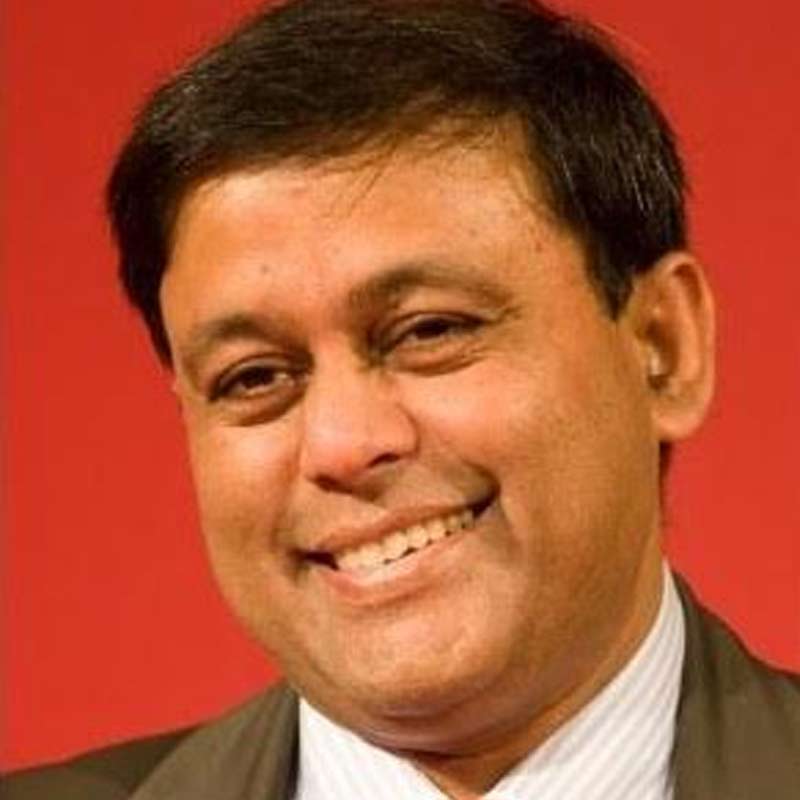
    Commenting on the changing trends in TV viewership, Chrome DM MD Pankaj Krishna said “HD is here to stay but understanding consumer behaviour, which is ever evolving, is the key to capture maximum markets. Also, with the launch of Reliance Jio, OTT HD consumption will be on a steep rise and we see this complimenting the HD consumption growth on television.”

    The 60-page long report is divided into four sections, where the first part talks about the HD penetration in India. The second and third sections talk about factors affecting consumer choice of DTH Player and the last one talks about industry projections, making the report a wholesome approach towards understanding the HD penetration in the broadcast industry.

    Owing to the rise of HD viewership in India, the overall HD penetration for All India metro cities stands at 1,766,709, whereas for tier II cities, the penetration is at 1,338,551.

  • Chrome releases HD’s India penetration report

    Chrome releases HD’s India penetration report

    MUMBAI: Chrome Data Analytics and Media has released ‘Now Playing: HD’, a report around the rise and penetration of high-definition television in the Indian broadcast industry.

    The report covers key aspects of the evolution of HD TV, which primarily gives broadcasters and advertisers a deeper insight into potential target markets. Not just this, the report captures nuances of an HD TV consumer that industry players can make the most of, for maximizing their consumer base.

    Amongst a range of observations and findings, the report has come up with a list of factors that drive a consumer into purchasing high definition packs and set top boxes. During the research, it was found that DTH & Digital Operators push attractive offers while selling the SD or HD DTH boxes including foregoing installation costs that greatly encourage consumers to opt for HD TV viewing. On the other hand, when the consumer upgrades from SD to HD, he is required to pay for installation charges.

    It was further found that on events of significance (eg: sports tournaments), HD boxes were charged to fulfil high quality viewership needs which means HD pack top ups were primarily event led.

    Commenting on the changing trends in TV viewership, Chrome DM MD Pankaj Krishna said “HD is here to stay but understanding consumer behaviour, which is ever evolving, is the key to capture maximum markets. Also, with the launch of Reliance Jio, OTT HD consumption will be on a steep rise and we see this complimenting the HD consumption growth on television.”

    The 60-page long report is divided into four sections, where the first part talks about the HD penetration in India. The second and third sections talk about factors affecting consumer choice of DTH Player and the last one talks about industry projections, making the report a wholesome approach towards understanding the HD penetration in the broadcast industry.

    Owing to the rise of HD viewership in India, the overall HD penetration for All India metro cities stands at 1,766,709, whereas for tier II cities, the penetration is at 1,338,551.

  • Decongestion: Jio hails Airtel’s fair practice

    Decongestion: Jio hails Airtel’s fair practice

    MUMBAI: Reliance Jio has welcomed Airtel’s decision to provide moreB points of interconnection in line with fair business practices and Trai regulations. Bharti Airtel Limited has indicated its decision in its press statement.

    RJIL has been writing regularly to Airtel and other incumbent operators regarding its requirement for interconnection capacity over the last few months. Necessary details have been provided to Airtel from time to time, highlighting the urgency of the requirement and the impact on Quality of Service parameters. However, no action was taken over the last several weeks, resulting in non-compliance of Trai regulation on quality of service which mandates that POI congestion should not affect more than one call in every 200 calls made.

    The situation deteriorated significantly in the last few weeks, with over 75 calls failing out of every 100 call attempts. In last 10 days alone, over 22 crore calls on the Airtel network failed, while 52 crore calls failed cumulatively on the networks of the three incumbent operators viz. Airtel, Vodafone India Ltd and Idea Cellular Ltd.

    While RJIL has rolled out a state-of-the-art network, the benefits of superior voice technology have been denied to Indian customers due to the POI congestion. Indian customers have not been able to enjoy RJIL’s free voice offer as a result of such anti-competitive behaviour of incumbent operators.

    RJIL has been raising the issue of insufficient POIs as anti-competitive aimed at hindering the entry of a new operator. Such hurdles result in poor experience for RJIL customers who are trying to make calls to incumbent operators’ networks. “We have repeatedly appealed to the incumbent operators to create a fair and reciprocal framework of coopetition that is good for India and Indian customers,” RJIL stated.

    On the unsubstantiated apprehension regarding asymmetric voice traffic raised by Airtel, RJIL clarified that the voice traffic on its network is in line with industry trends and as expected for any new operator. When a new operator begins its operations, its customer base is understandably low and a large proportion of these are new numbers that are not yet in the address book with whom they communicate. Therefore, in the early days of operations of any new operator, there are more outgoing calls than incoming calls. Over time, as the customer base grows, this asymmetry reduces and the traffic becomes symmetric.

    RJIL’s outgoing traffic is less than two calls per customer per hour even during peak traffic period, which requires only a reasonable number of POIs. These calls are not to one operator but distributed over all the operators. Incumbent operators are describing such a modest call rate as a Tsunami of traffic from RJIL.

    Moreover, asymmetry of traffic has absolutely nothing to do with the number of POIs required, which is based on the total traffic in both directions and not just in one direction. The equipment required for POI are two-way trunks, which means that the same equipment is used for both directions. No additional equipment is needed for handling the calls coming from RJIL to the other operator. It is therefore in customer interest to have adequate interconnection capacity irrespective of direction of traffic.

    RJIL hoped that Airtel as well as other incumbent operators would enhance the PoIs sufficient to meet their license obligation of QoS with immediate effect and maintain these parameters on an ongoing basis.