Tag: Reliance Jio

  • Jio-Apple strike a win-win deal as Airtel plans aggressive 4G offer

    Jio-Apple strike a win-win deal as Airtel plans aggressive 4G offer

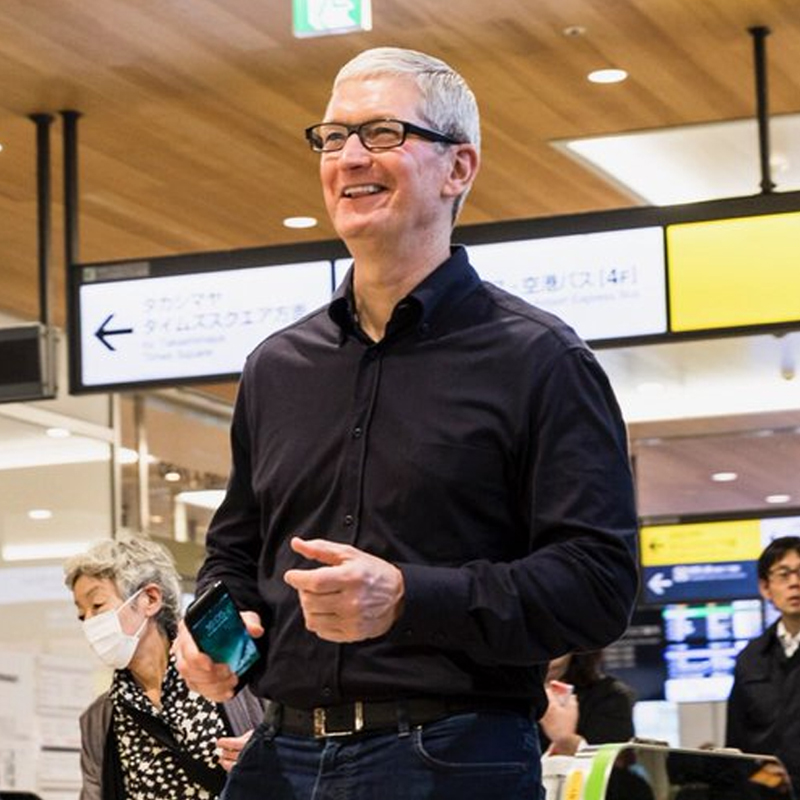
    MUMBAI: Even as Reliance Jio is giving a tough fight to the market leader Airtel, and other leading incumbent operators Vodafone and Idea, it is making significant tie-ups with cell-phone makers to up its 4G gameplan. Substantial investments are being made in high-speed telecom networks in India, said Apple CEO Tim Cook citing Reliance Jio’s 4G roll-out although he admitted its smartphone has “not done as well” in the country.

    Airtel meantime is reportedly planning to launch aggressive 4G bundled offers to take on Reliance Jio as India’s No 1 mobile carrier struggles to boost penetration and revive its slowing data revenue growth amid competition. Bharti Airtel managing director – India & South Asia Gopal Vittal agreed that it’s difficult to compete with a free services offer as it expects Jio’s full-fledged price launch to take place in December. Vittal said it will approach the regulator to clear any confusion over interconnection points (PoIs) as it has provided more PoIs to Jio than any other telco.

    Reliance Jio was the first of its kind all-IP network in India with 4G coverage in 18,000 cities and 200,000 villages, Cook said in the company’s fourth quarter earnings call. He said Apple is partnering with Reliance Jio, which is offering a free year of service to purchasers of new iPhones, to ensure “great iPhone performance” on their network. “Our iPhone sales in India were up over 50 per cent in fiscal 2016 compared to the prior year, and we believe we’re just beginning to scratch the surface of this large and growing market opportunity,” Cook said.

    He, however, noted that Apple’s smartphone has “not done as well” in India in general and one of the key reasons for that is the “(high-speed telecom networks) infrastructure hasn’t been there”. The Apple head was optimistic on the efforts being made by the Narendra Modi-led government to create jobs and develop infrastructure.

    Whether India could in future be as big of an opportunity as China for Apple, Cook said it is important to look not only at per capita income in India but also the number of people that are or will move into the middle class over the next decade. He said this class will “really want a smartphone, and I think we can compete well for some percentage of those.

    “I think it’s clear that the population of India will exceed China sometime in probably the next decade or so. I think it will take longer for the GDP to rival it, but that’s not critical for us to have a great success there,” he said.

  • Q2-17: Airtel Digital TV revenue up, sees highest subscriber growth

    Q2-17: Airtel Digital TV revenue up, sees highest subscriber growth

    BENGALURU: Indian telecom major Bharti Airtel Limited’s Digital TV Services segment (DTH segment) reported 21.9 percent year-over-year (y-o-y) increase in operating revenues for the quarter ended 30 September 2016 (Q2-17, current quarter). Also, Operating Profit (Earnings Before interest and Tax – EBIT) of the DTH segment in the current quarter more than quadrupled (by 4.11 times) y-o-y.

    Airtel DTH reported revenues of Rs 854.5 crore in Q2-17 and Rs 706.8 crore in Q2-16. EBIT for the corresponding periods was Rs 69.9 crore (8.2 percent margin of the segment’s operating revenue) and Rs 1.7 crore (2.4 percent margin of the segment’s operating revenue) respectively.

    However, quarter-over-quarter (q-o-q) the segment reported 42.7 percent drop in EBIT for the current quarter as compared to Rs 121.9 crore (14.6 percent margin of the segment’s operating revenue) in the immediate trailing quarter. Revenue in Q2-17 was 2.1 percent higher q-o-q than Rs 836.9 crore in Q1-17.

    Subscription numbers, ARPU

    Airtel’s DTH segment added 18.29 lakh subscribers between Q2-16 and Q2-17, or a 17.3 percent y-o-y increase. The company says that this is the highest growth in percentage terms over seventeen quarters. It had 124.05 lakh subscribers as on 30 September 2016. Q-o-q, the segment witnessed a 2.1 percent growth (2.56 lakh adds) in subscribers from 121.49 lakh in Q1-17.

    ARPU in Q2-17 increased to Rs 232 from Rs 224 in the corresponding year ago quarter, but declined marginally (by Re 1) from Rs 233 in the immediate trailing quarter.

    Airtel numbers

    Bharti Airtel Limited saw a 3.4 percent increase in operating revenue to Rs 24,651.5 crore in Q2-17 as compared to Rs 23,835.7 crore in Q2-16, but witnessed a 3.5 percent q-o-q decline from Rs 25,546.5 crore. Profit after tax (PAT) in the current quarter declined 4.9 percent y-o-y to Rs 1,460.7 crore (5.9 percent margin) from Rs 1,536.1 crore (6.4 percent margin) and was almost flat (0.1 percent decline) q-o-q as compared to Rs 1,462 crore (5.7 percent margin).

    The JIO effect – Company speak.

    In a statement, Airtel MD and CEO, India & South Asia, Gopal Vittal said, “Our strong focus on enhancing customer experience and building a robust network has resulted in continued acceleration of revenue market share. Overall revenue momentum in India has been sustained during Q2 with a growth of 10.1 percent y-o-y. This is primarily due to the strong performance of our non-mobile businesses which grew in aggregate at 18.8 percent y-o-y, albeit our mobile business has experienced a slowdown in growths due to free services being offered by a new operator. But, we remain excited about the long term opportunity in India and believe that with the recently acquired spectrum, we are well positioned to lead India’s data revolution”.


  • Q2-17: Airtel Digital TV revenue up, sees highest subscriber growth

    Q2-17: Airtel Digital TV revenue up, sees highest subscriber growth

    BENGALURU: Indian telecom major Bharti Airtel Limited’s Digital TV Services segment (DTH segment) reported 21.9 percent year-over-year (y-o-y) increase in operating revenues for the quarter ended 30 September 2016 (Q2-17, current quarter). Also, Operating Profit (Earnings Before interest and Tax – EBIT) of the DTH segment in the current quarter more than quadrupled (by 4.11 times) y-o-y.

    Airtel DTH reported revenues of Rs 854.5 crore in Q2-17 and Rs 706.8 crore in Q2-16. EBIT for the corresponding periods was Rs 69.9 crore (8.2 percent margin of the segment’s operating revenue) and Rs 1.7 crore (2.4 percent margin of the segment’s operating revenue) respectively.

    However, quarter-over-quarter (q-o-q) the segment reported 42.7 percent drop in EBIT for the current quarter as compared to Rs 121.9 crore (14.6 percent margin of the segment’s operating revenue) in the immediate trailing quarter. Revenue in Q2-17 was 2.1 percent higher q-o-q than Rs 836.9 crore in Q1-17.

    Subscription numbers, ARPU

    Airtel’s DTH segment added 18.29 lakh subscribers between Q2-16 and Q2-17, or a 17.3 percent y-o-y increase. The company says that this is the highest growth in percentage terms over seventeen quarters. It had 124.05 lakh subscribers as on 30 September 2016. Q-o-q, the segment witnessed a 2.1 percent growth (2.56 lakh adds) in subscribers from 121.49 lakh in Q1-17.

    ARPU in Q2-17 increased to Rs 232 from Rs 224 in the corresponding year ago quarter, but declined marginally (by Re 1) from Rs 233 in the immediate trailing quarter.

    Airtel numbers

    Bharti Airtel Limited saw a 3.4 percent increase in operating revenue to Rs 24,651.5 crore in Q2-17 as compared to Rs 23,835.7 crore in Q2-16, but witnessed a 3.5 percent q-o-q decline from Rs 25,546.5 crore. Profit after tax (PAT) in the current quarter declined 4.9 percent y-o-y to Rs 1,460.7 crore (5.9 percent margin) from Rs 1,536.1 crore (6.4 percent margin) and was almost flat (0.1 percent decline) q-o-q as compared to Rs 1,462 crore (5.7 percent margin).

    The JIO effect – Company speak.

    In a statement, Airtel MD and CEO, India & South Asia, Gopal Vittal said, “Our strong focus on enhancing customer experience and building a robust network has resulted in continued acceleration of revenue market share. Overall revenue momentum in India has been sustained during Q2 with a growth of 10.1 percent y-o-y. This is primarily due to the strong performance of our non-mobile businesses which grew in aggregate at 18.8 percent y-o-y, albeit our mobile business has experienced a slowdown in growths due to free services being offered by a new operator. But, we remain excited about the long term opportunity in India and believe that with the recently acquired spectrum, we are well positioned to lead India’s data revolution”.


  • Interconnect tussle: Vodafone, Airtel, Idea may move court against proposed Rs 3,000-cr penalty

    Interconnect tussle: Vodafone, Airtel, Idea may move court against proposed Rs 3,000-cr penalty

    MUMBAI: The Telecom Regulatory Authority of India (TRAI) plans to impose a heavy penalty on three major telecom operators for failing to provide adequate interconnectivity to RJio even as operators attempted to comply with the rules. Jio had written to the TRAI seeking action against incumbent operators for not giving an adequate number of interconnection points.

    Several thousand customers of Reliance Jio’s new 4G network were facing disruption in service due to shortage of interconnection with other operators for some weeks now. TRAI had earlier called Idea Cellular, Airtel, Vodafone and Jio for a meeting. Point of interconnection, the place where two networks connect, is needed for seamless communication when a user of one operator calls a user of another operator.

    TRAI has now proposed penalties on Vodafone India, Bharti Airtel, and Idea Cellular for denying interconnection to Reliance Jio Infocomm (RJio), the new entrant into telecom space in India.

    The three incumbent operators meanwhile may take a legal recourse to challenge TRAI’s suggestions. A source from one of the operators told the Hindu, it was ‘surprising that RJio’s network was having congestion in all the circles’.

    TRAI has suggested levying of a ₹50-crore penalty per circle on the three incumbent players, which could total more than ₹3,000 crore. According to TRAI, Airtel and Vodafone have to pay ₹1,050 crore each, and Idea Cellular ₹950 crore. The penalty has been imposed for violating quality of service norms.

    RJio had written to TRAI seeking action against incumbent operators for not giving an adequate number of interconnection points on July 14 and July 15, to which TRAI had communicated to all three operators on July 19 to do the needful.

    According to RJio, it is targeting 100 million subscribers, for which it had approached existing operators seeking adequate interconnection. “Instead of augmenting the PoIs, other operators are blocking the PoI augmentation on various unreasonable grounds,” RJio said in a letter to DoT.

    However, incumbent operators initially refused to give these points of interconnection. The operators earlier said they could not release more interconnections because RJio was allegedly bypassing regulations by offering full-fledged services under the guise of test connections.

    However, after a meeting between the rival operators, hosted by TRAI, the incumbent operators started releasing points of interconnection. Though this eased the congestion on RJio’s network, the operator said that a majority of calls on its networks were still dropping.

    Meanwhile, the three incumbent operators may take a legal recourse to challenge TRAI’s suggestions. According to sources from one of the operators, it was ‘surprising that RJio’s network was having congestion in all the circles’.

    Under the licence conditions, operators are required to offer interconnection to each other. TRAI has set a cap of 14 paise as the interconnection charge, which means that operators on whose network the call originates have to pay that fee to the operator on whose network the call terminates. However, incumbent operators have refused to give interconnection.

  • Interconnect tussle: Vodafone, Airtel, Idea may move court against proposed Rs 3,000-cr penalty

    Interconnect tussle: Vodafone, Airtel, Idea may move court against proposed Rs 3,000-cr penalty

    MUMBAI: The Telecom Regulatory Authority of India (TRAI) plans to impose a heavy penalty on three major telecom operators for failing to provide adequate interconnectivity to RJio even as operators attempted to comply with the rules. Jio had written to the TRAI seeking action against incumbent operators for not giving an adequate number of interconnection points.

    Several thousand customers of Reliance Jio’s new 4G network were facing disruption in service due to shortage of interconnection with other operators for some weeks now. TRAI had earlier called Idea Cellular, Airtel, Vodafone and Jio for a meeting. Point of interconnection, the place where two networks connect, is needed for seamless communication when a user of one operator calls a user of another operator.

    TRAI has now proposed penalties on Vodafone India, Bharti Airtel, and Idea Cellular for denying interconnection to Reliance Jio Infocomm (RJio), the new entrant into telecom space in India.

    The three incumbent operators meanwhile may take a legal recourse to challenge TRAI’s suggestions. A source from one of the operators told the Hindu, it was ‘surprising that RJio’s network was having congestion in all the circles’.

    TRAI has suggested levying of a ₹50-crore penalty per circle on the three incumbent players, which could total more than ₹3,000 crore. According to TRAI, Airtel and Vodafone have to pay ₹1,050 crore each, and Idea Cellular ₹950 crore. The penalty has been imposed for violating quality of service norms.

    RJio had written to TRAI seeking action against incumbent operators for not giving an adequate number of interconnection points on July 14 and July 15, to which TRAI had communicated to all three operators on July 19 to do the needful.

    According to RJio, it is targeting 100 million subscribers, for which it had approached existing operators seeking adequate interconnection. “Instead of augmenting the PoIs, other operators are blocking the PoI augmentation on various unreasonable grounds,” RJio said in a letter to DoT.

    However, incumbent operators initially refused to give these points of interconnection. The operators earlier said they could not release more interconnections because RJio was allegedly bypassing regulations by offering full-fledged services under the guise of test connections.

    However, after a meeting between the rival operators, hosted by TRAI, the incumbent operators started releasing points of interconnection. Though this eased the congestion on RJio’s network, the operator said that a majority of calls on its networks were still dropping.

    Meanwhile, the three incumbent operators may take a legal recourse to challenge TRAI’s suggestions. According to sources from one of the operators, it was ‘surprising that RJio’s network was having congestion in all the circles’.

    Under the licence conditions, operators are required to offer interconnection to each other. TRAI has set a cap of 14 paise as the interconnection charge, which means that operators on whose network the call originates have to pay that fee to the operator on whose network the call terminates. However, incumbent operators have refused to give interconnection.

  • Welcome offer lands Reliance Jio in 4G speed soup

    Welcome offer lands Reliance Jio in 4G speed soup

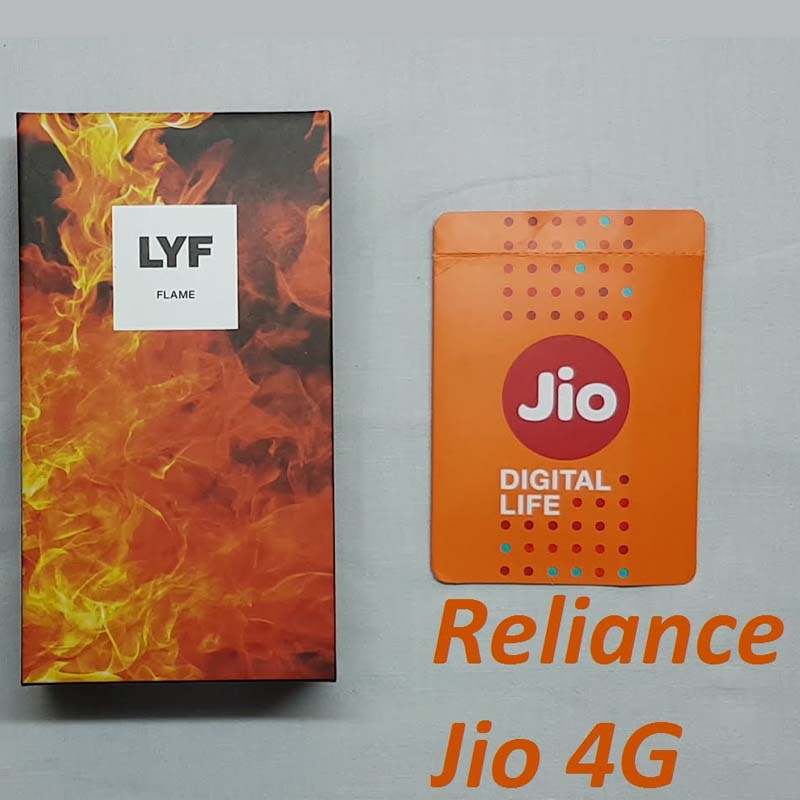
    MUMBAI: Even as Reliance Retail today launched 4G F1, the first device under the LYF brand outside the four elements branding, Reliance Jio seems to have received a setback with TRAI declaring its speed to be the poorest among five telecom operators. LYF F1 has been launched with advanced 4G for Reliance Jio at 13,399.

    Reliance Jio entered the telecom market with the aim of democratising Internet access in India. But, according to data by Telecom Regulatory Authority of India recently-launched My Speed website, the average pan-India 4G download speed by Reliance Jio stands at 6.2Mbps, making it only the fifth-fastest network in the country. TRAI data has found Reliance Jio 4G speed is the slowest in India. It is sixth in upload speed, and lags in internet speeds in all major markets. However, Jio has said that its Fair Usage Policy (FUP) policy has caused the average speed to come down

    In Delhi circle, for example, Jio’s ranking on the same parameter rises to third, but the speed decreases to 5.9Mbps. In Mumbai, a major market, Jio’s download speed goes up to 10.7Mbps and its position rises to second. In Karnataka circle, Jio fell out of the top 5 entirely, despite an average download speed of 7.5Mbps. Jio’s average download speed of 6.2Mbps, on the other hand, still makes it the fastest network in the country if the ‘technology’ on the TRAI website is set to ‘all’, which includes 2G and 3G networks as well.

    In a statement, Reliance Jio said that it has performed an internal analysis of its network and found that “the comparison of Jio speeds with other operators has an inherent bias against Jio data usage.”

    Statement from a Reliance Jio spokesperson:

    “With reference to statistics published TRAI’s analytics website, we have performed an internal analysis of the same. The nature of this skew is explained below. As you may be aware, under the Jio Welcome Offer, there is a daily fair usage policy (FUP) limit of 4GB data consumption per user. This limit has been setup with the express intention of preventing heavy data users from degrading the experience of other users.

    Before this FUP limit is reached, Jio customers enjoy unmatched 4G LTE speeds on the Jio network. However, after the FUP usage limit is reached, speeds are reduced to 256kbps. Full 4G LTE speeds are once again restored once the next 24-hour period begins. Historically, we have observed that a disproportionate number of speed tests are performed once the FUP comes into effect. This is so since most users don’t consider performing the test until they observe a deterioration of speed. Such users also tend to perform multiple tests until full speeds are restored.

    Given that data usage under Jio Welcome Offer is completely free, a higher proportion of Jio users run up against the FUP limit. In comparison, not all non-Jio users have FUP based plans (rather their usage is completely stopped, and they are entirely prevented from performing the speed test), and even those who have FUP based plans face this situation only once a month. Further, such customers tend to recharge quickly and restore full speeds.

    This difference in the offer structures, and associated customer behaviors, result in a large proportion of the speed tests being conducted on Jio network when the speeds are reduced via FUP to 256kbps. This has the effect of dragging the average far below the speeds experienced by Jio customers who are enjoying full 4G LTE speeds.

    Having said that, we continuously measure the speeds experienced by Jio customers – adjusting for factors such as FUP, and are proactively working to improve service levels for all our customers.”

  • Welcome offer lands Reliance Jio in 4G speed soup

    Welcome offer lands Reliance Jio in 4G speed soup

    MUMBAI: Even as Reliance Retail today launched 4G F1, the first device under the LYF brand outside the four elements branding, Reliance Jio seems to have received a setback with TRAI declaring its speed to be the poorest among five telecom operators. LYF F1 has been launched with advanced 4G for Reliance Jio at 13,399.

    Reliance Jio entered the telecom market with the aim of democratising Internet access in India. But, according to data by Telecom Regulatory Authority of India recently-launched My Speed website, the average pan-India 4G download speed by Reliance Jio stands at 6.2Mbps, making it only the fifth-fastest network in the country. TRAI data has found Reliance Jio 4G speed is the slowest in India. It is sixth in upload speed, and lags in internet speeds in all major markets. However, Jio has said that its Fair Usage Policy (FUP) policy has caused the average speed to come down

    In Delhi circle, for example, Jio’s ranking on the same parameter rises to third, but the speed decreases to 5.9Mbps. In Mumbai, a major market, Jio’s download speed goes up to 10.7Mbps and its position rises to second. In Karnataka circle, Jio fell out of the top 5 entirely, despite an average download speed of 7.5Mbps. Jio’s average download speed of 6.2Mbps, on the other hand, still makes it the fastest network in the country if the ‘technology’ on the TRAI website is set to ‘all’, which includes 2G and 3G networks as well.

    In a statement, Reliance Jio said that it has performed an internal analysis of its network and found that “the comparison of Jio speeds with other operators has an inherent bias against Jio data usage.”

    Statement from a Reliance Jio spokesperson:

    “With reference to statistics published TRAI’s analytics website, we have performed an internal analysis of the same. The nature of this skew is explained below. As you may be aware, under the Jio Welcome Offer, there is a daily fair usage policy (FUP) limit of 4GB data consumption per user. This limit has been setup with the express intention of preventing heavy data users from degrading the experience of other users.

    Before this FUP limit is reached, Jio customers enjoy unmatched 4G LTE speeds on the Jio network. However, after the FUP usage limit is reached, speeds are reduced to 256kbps. Full 4G LTE speeds are once again restored once the next 24-hour period begins. Historically, we have observed that a disproportionate number of speed tests are performed once the FUP comes into effect. This is so since most users don’t consider performing the test until they observe a deterioration of speed. Such users also tend to perform multiple tests until full speeds are restored.

    Given that data usage under Jio Welcome Offer is completely free, a higher proportion of Jio users run up against the FUP limit. In comparison, not all non-Jio users have FUP based plans (rather their usage is completely stopped, and they are entirely prevented from performing the speed test), and even those who have FUP based plans face this situation only once a month. Further, such customers tend to recharge quickly and restore full speeds.

    This difference in the offer structures, and associated customer behaviors, result in a large proportion of the speed tests being conducted on Jio network when the speeds are reduced via FUP to 256kbps. This has the effect of dragging the average far below the speeds experienced by Jio customers who are enjoying full 4G LTE speeds.

    Having said that, we continuously measure the speeds experienced by Jio customers – adjusting for factors such as FUP, and are proactively working to improve service levels for all our customers.”

  • Pricing, analytics, customization, video quality crucial to decide OTT market leader: Frost

    Pricing, analytics, customization, video quality crucial to decide OTT market leader: Frost

    MUMBAI: The nascent over the top (OTT) video market in India is growing as smartphone penetration and 3G and 4G subscribers continue to increase rapidly. The recent launch of Reliance Jio’s affordable data services and initiatives, such as Bharat Net, will continue to drive down data service prices, boosting video consumption over fixed and mobile broadband.

    “It will be critical for market participants to gauge viewership trends, price sensitivity and technical requirements while offering their video services,” said Frost & Sullivan digital media director Vidya S Nath. “Pricing, data analytics, personalization and video quality will be crucial in defining the market leader in the next five years.”

    The Over the Top (OTT) Video Market Update, India, 2016 analysis is part of Frost & Sullivan’s Digital Media Growth Partnership Service program, which includes research, consumer analytics, consulting and advisory services on pay television (TV) services and media technologies.

    While the dominance of YouTube and TV reins in subscription-based models, making digital advertising the most used business model for now, OTT video providers have confidence in the growth prospects of the market:

    . India has over 300 million Internet users and about a billion smartphone users

    . Millennials and Gen Y comprise about a third of the population and are driving viewership trends toward personalized content

    . The country’s fragmented demography offers more than 20 types of audiences by major languages, creating tremendous opportunity for content creators and producers

    . OTT providers can target Indian immigrants internationally

    The market is already crowded with about 25 market participants that include telecom operators, direct-to-home (DTH) TV providers, broadcasters and individual OTT providers. The number of participants will grow further over the next two years.

    “Even though the return on investment for OTT services providers is slow and does not justify the business proposition in the short run, competition will spur all broadcasters to consider the OTT business,” noted research analyst Aafia Bathool. “Exclusive content at a competitive price with a sophisticated, user-friendly interface is the way forward. To achieve this, the market will see increasing strategic alliances among ecosystem players.”

    Key participants in the current market include Hotstar, Eros Now, Ditto TV (Zee Networks), Asianet Mobile, YouTube, and Netflix. New market participants who will likely intensify competition include Amazon and Balaji ALT. Other market participants include Reliance Jio, Airtel, Vodafone, Zee Network, Voot, Viacom, Spuul, Veqta, Yupp TV, Dish TV, HOOQ, Hungama, Shemaroo, SonyLIV, and Tatasky.

  • Pricing, analytics, customization, video quality crucial to decide OTT market leader: Frost

    Pricing, analytics, customization, video quality crucial to decide OTT market leader: Frost

    MUMBAI: The nascent over the top (OTT) video market in India is growing as smartphone penetration and 3G and 4G subscribers continue to increase rapidly. The recent launch of Reliance Jio’s affordable data services and initiatives, such as Bharat Net, will continue to drive down data service prices, boosting video consumption over fixed and mobile broadband.

    “It will be critical for market participants to gauge viewership trends, price sensitivity and technical requirements while offering their video services,” said Frost & Sullivan digital media director Vidya S Nath. “Pricing, data analytics, personalization and video quality will be crucial in defining the market leader in the next five years.”

    The Over the Top (OTT) Video Market Update, India, 2016 analysis is part of Frost & Sullivan’s Digital Media Growth Partnership Service program, which includes research, consumer analytics, consulting and advisory services on pay television (TV) services and media technologies.

    While the dominance of YouTube and TV reins in subscription-based models, making digital advertising the most used business model for now, OTT video providers have confidence in the growth prospects of the market:

    . India has over 300 million Internet users and about a billion smartphone users

    . Millennials and Gen Y comprise about a third of the population and are driving viewership trends toward personalized content

    . The country’s fragmented demography offers more than 20 types of audiences by major languages, creating tremendous opportunity for content creators and producers

    . OTT providers can target Indian immigrants internationally

    The market is already crowded with about 25 market participants that include telecom operators, direct-to-home (DTH) TV providers, broadcasters and individual OTT providers. The number of participants will grow further over the next two years.

    “Even though the return on investment for OTT services providers is slow and does not justify the business proposition in the short run, competition will spur all broadcasters to consider the OTT business,” noted research analyst Aafia Bathool. “Exclusive content at a competitive price with a sophisticated, user-friendly interface is the way forward. To achieve this, the market will see increasing strategic alliances among ecosystem players.”

    Key participants in the current market include Hotstar, Eros Now, Ditto TV (Zee Networks), Asianet Mobile, YouTube, and Netflix. New market participants who will likely intensify competition include Amazon and Balaji ALT. Other market participants include Reliance Jio, Airtel, Vodafone, Zee Network, Voot, Viacom, Spuul, Veqta, Yupp TV, Dish TV, HOOQ, Hungama, Shemaroo, SonyLIV, and Tatasky.

  • TRAI questions Jio tariff; GSMA seeks 700 MHz band price recalibration

    TRAI questions Jio tariff; GSMA seeks 700 MHz band price recalibration

    MUMBAI: There has been palpable unrest among the Indian telcos since Reliance Jio disrupted the telecom ecosystem by bringing in lucrative data and voice offers for the price-conscious Indian consumer a few weeks ago. Telecos instantly put together their counter-offers and also made some quick tie-ups to face the newest competition from the late entrant. Blocking inter-connectivity to calls to and from Jio seemed to a part of strategy of some telcos while the regulator TRAI watched from close quarters.

    After several meetings with the competing telcos, TRAI has now sought an explanation from Reliance Jio Infocomm over its offer of free-calling as it differed from the Rs 1.20-per-minute voice tariff plan reported to the regulator. Jio officials reportedly may soon make changes in their tariffs, which would be conveyed to TRAI.

    TRAI officials discussed with Reliance Jio executives seeking details of the tariff plan, TOI reported. Jio had printed two paise-per-second call plan on its SIM card brochures.

    Jio may have to tackle an issue related to an amendment to the 2004 telecom tariff order. Telecom companies cannot have tariffs below the interconnect user charge (IUC), or the charge that a mobile operator pays to another for terminating its calls. The IUC rate is currently 14 paise per minute, while Jio has made calls free.

    Telcos had alleged that Jio was engaging in predatory practices by offering free voice calls. However, TRAI did not find any merit in this accusation.

    Meantime, GSMA wants the government to revisit 700 MHz spectrum band pricing. Global mobile industry body GSMA has called upon the government to reconsider pricing of 700 MHz band that failed to find takers in the just-concluded auction due to its “unrealistically” high price.

    GSMA chief regulatory officer John Giusti, urged the government to reassess the approach to spectrum auction reserve prices after India “failed” to sell any of the critical 700 MHz band last week. The reserve prices for this highly sought-after band were set at an unrealistically high level of more than USD 60 billion (over Rs 4 lakh crore), Glusti said.

    GSMA added that high reserve prices inhibit investment or delay deployment in next-generation networks at a time when demand for mobile data is growing mani-fold.

    “Regulators should consider the conditions of the local market while setting reserve prices for spectrum auctions. In India, mobile operators have been asked to pay some of the highest rates for spectrum compared to other markets even though it has a low average revenue per user, PTI quoted Glusti’s statement.

    Urging the Indian government to work with the regulator to recalibrate spectrum pricing, GSMA said that timely deployment of this spectrum will expand the reach of mobile broadband services and deliver positive social and economic benefits to the country’s citizens, creating a truly digital India.