Tag: Reliance Jio

  • TRAI to examine whether 4G offer can ‘Jio’ till Mar ’17

    TRAI to examine whether 4G offer can ‘Jio’ till Mar ’17

    MUMBAI: In his attempt to arduously chase the 100-million subscriber base, Reliance Jio CMD Mukesh Ambani announced extension of free domestic voice calls and data till 31 March, 2017, having crossed 50 million in 83 days. The Telecom Regulatory Authority of India (TRAI), however, said it will examine Jio’s latest offer providing free 4G services for all till 31 March.

    Jio’s new offer, meanwhile, struck a blow at competing incumbent operators — Idea Cellular, Bharti Airtel, and Vodafone India. The latest offer hurt the rivals’ share price. Airtel was down 1.66% at Rs 319.10 on the Bombay Stock Exchange (BSE), and Idea Cellular and Reliance Communications, respectively, dropped around 6% and 5%. By contrast, RIL price was up 0.45%.

    Ambani, on Thursday, announced the continuation of freebies currently being offered for fourth-generation (4G) long-term evolution (LTE) data and voice services till March next year. TRAI had earlier allowed Reliance Jio to provide free service till the end of this year.

    About the validity of Jio’s offer, TRAI chairman R S Sharma said that they would look into it. Every tariff that was filed before the authority was examined. TRAI would give its response at an appropriate time, Sharma added. TRAI had earlier allowed the new operator to provide free services till the end of 2016 for subscribers who joined till 3 December.

    The Prime Minister’s Office (PMO) meantime stated that it did not formally allow use of the prime minister Narendra Modi’s picture in electronic and print advertisements of Reliance Jio.

    Meanwhile, lower penetration of broadband (7 per cent) may slow down the ‘Digital India’ drive, according to TRAI. Sharma suggested that a potential solution would be to use connections for cable TV for broadband delivery. TRAI has already made the recommendation to the government, he added. Digital India would have to ride on that infrastructure, and if India did not have robust infrastructure, it was not going to achieve the objective of knowledge economy, Sharma added.

    Also read:

    http://www.indiantelevision.com/iworld/telecom/jio-money-merchant-app-helps-transition-to-cashless-economy-161201

    http://www.indiantelevision.com/iworld/telecom/jio-extends-hny-free-data-offer-up-to-31-march-17-161201

  • Jio extends HNY free data offer up to 31 March ’17

    Jio extends HNY free data offer up to 31 March ’17

    MUMBAI: Taking a significant lead over the incumbent telecom operators, Reliance Industries Ltd (RIL) chairman and managing director Mukesh Ambani today showed some more `datagiri’ while announcing a slew of new offers and initiatives that all had an underline themes of Digital 2017 and Happy New Year (HNY).

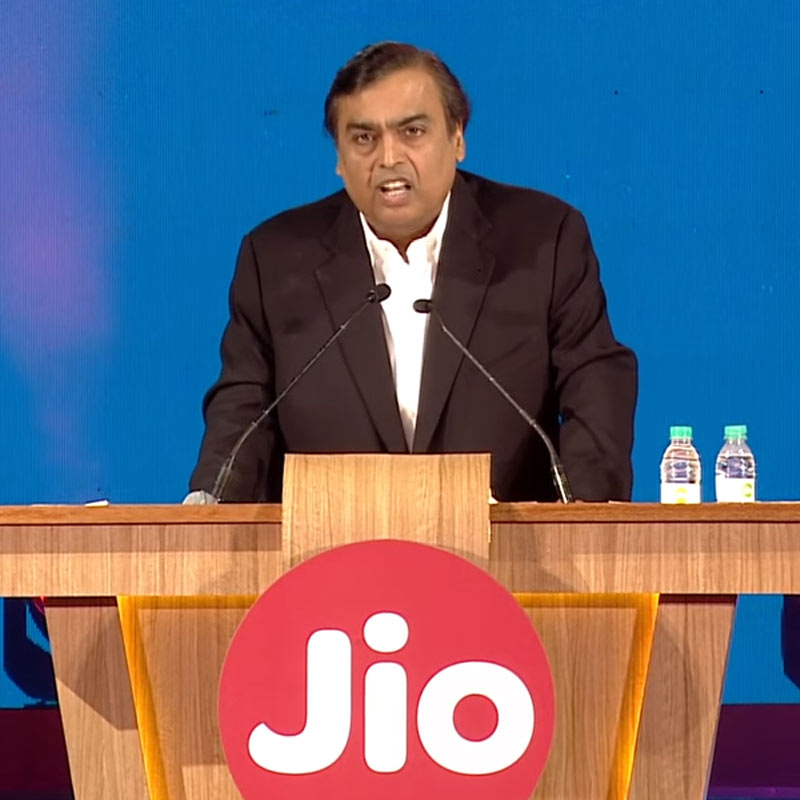
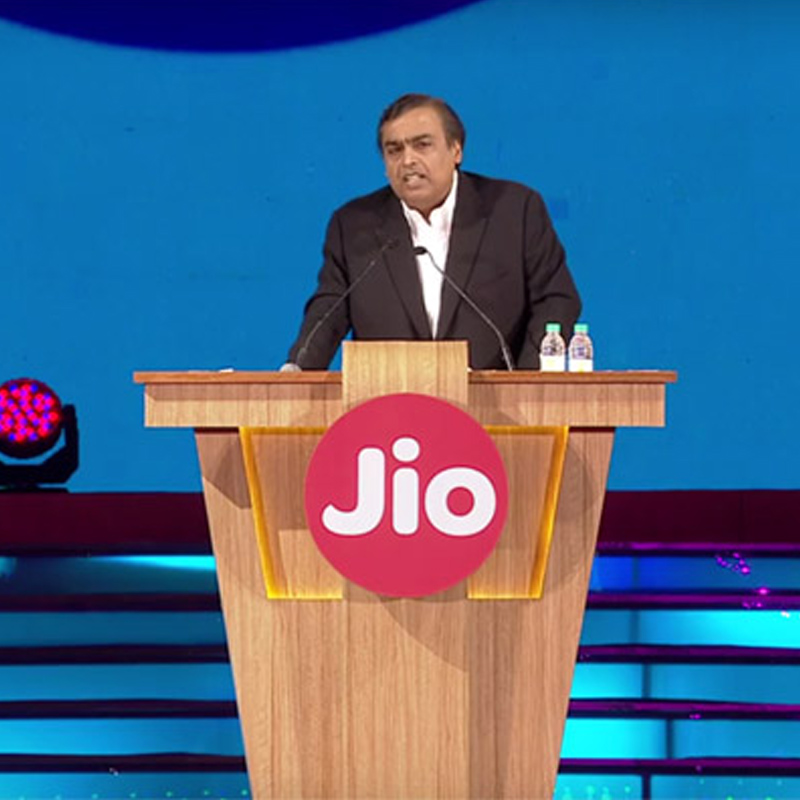
    Ambani, while addressing RIL employees and stakeholders in a meeting, revealed that starting 4 December 2016, every new Jio user will get data, voice, video and the full bouquet of Jio applications free till 31 March, 2017. He also added that all the existing customers will get extended benefits of Jio Happy New Year offer on the existing SIMs.

    Speaking about Jio’s success, India’s richest man said that it was the fastest-growing technology company in the world. He said that the e-KYC (know your customer or the customer verification process) allowed the activation of SIM within five minutes — the fastest experience for SIM activation in the world.

    Ambani said that Jio successfully rolled out e-KYC across 200,000 outlets in India, which is nearly equal to ATMs in India. “We are in the process of doubling this network to 400,000 digitally enabled outlets by March of 2017,” he added.

    RIL CMD also mentioned that, in the first three months, Jio has grown faster than Facebook, Whatsapp or Skype. “In 83 days, Jio added 50 million customers on its 4G LTE all-IP wireless broadband network.”

    However, swelling subscriber numbers are also a burden on the infrastructure; especially when 50 million+ customers vie to take full advantage of the free Jio `Welcome Offer.”
    On an average, a Jio customer, as per claims, is using 25 times more data than the average Indian broadband user. And, Jio signed up over 600,000 customers every day for the past three months. According to Ambani, a Jio customer today is consuming data “on par” with and, in many cases, “more” than sophisticated users anywhere in the world.

    Still, admitting that Reliance has found out few issues with data speed on Jio network, Ambani said that about eight per cent of Jio towers experienced “congestion” due to “abnormally high data usage, which resulted in customers served by such telecom towers experienced lower data speeds.

    “While 92 per cent of our base stations and customers have been experiencing consistently high data speeds, we are working to de-congest these eight per cent towers, so that impacted customers go back to experiencing true-4G speeds. On the whole, Jio is not only delivering four times more data than all other Indian telecom operators combined, but also much faster throughputs than any other mobile network in India.”

    Reliance Jio, which has been at loggerheads with other telecom operators and also the telcos’ apex industry body COAI, is now playing the customer card having announced expansions and new initiatives like digital wallet/money.

    Dwelling on indifferent to bad voice services on Jio network, Ambani took a pot-shot at competition: “While customers have shown unprecedented love for Jio services, we have not received the required support from existing operators. In the last three months, nearly 9000 million voice calls from Jio customers to the networks of our three largest competitors were blocked… We thank the government and regulator for enforcing the licence conditions.”

    Targeting the high-end customers, who, probably, don’t have time to go to a Jio store to acquire a SIM card and want to retain their existing phone numbers, Reliance is offering SIM delivery at home and full number portability. “I am happy to inform that Jio now fully supports mobile number portability,” Ambani said, adding free home delivery and e-KYC features were being launched across India through the MyJio application to be available in the top 100 cities by 31 December 2016.

  • Jio extends HNY free data offer up to 31 March ’17

    Jio extends HNY free data offer up to 31 March ’17

    MUMBAI: Taking a significant lead over the incumbent telecom operators, Reliance Industries Ltd (RIL) chairman and managing director Mukesh Ambani today showed some more `datagiri’ while announcing a slew of new offers and initiatives that all had an underline themes of Digital 2017 and Happy New Year (HNY).

    Ambani, while addressing RIL employees and stakeholders in a meeting, revealed that starting 4 December 2016, every new Jio user will get data, voice, video and the full bouquet of Jio applications free till 31 March, 2017. He also added that all the existing customers will get extended benefits of Jio Happy New Year offer on the existing SIMs.

    Speaking about Jio’s success, India’s richest man said that it was the fastest-growing technology company in the world. He said that the e-KYC (know your customer or the customer verification process) allowed the activation of SIM within five minutes — the fastest experience for SIM activation in the world.

    Ambani said that Jio successfully rolled out e-KYC across 200,000 outlets in India, which is nearly equal to ATMs in India. “We are in the process of doubling this network to 400,000 digitally enabled outlets by March of 2017,” he added.

    RIL CMD also mentioned that, in the first three months, Jio has grown faster than Facebook, Whatsapp or Skype. “In 83 days, Jio added 50 million customers on its 4G LTE all-IP wireless broadband network.”

    However, swelling subscriber numbers are also a burden on the infrastructure; especially when 50 million+ customers vie to take full advantage of the free Jio `Welcome Offer.”
    On an average, a Jio customer, as per claims, is using 25 times more data than the average Indian broadband user. And, Jio signed up over 600,000 customers every day for the past three months. According to Ambani, a Jio customer today is consuming data “on par” with and, in many cases, “more” than sophisticated users anywhere in the world.

    Still, admitting that Reliance has found out few issues with data speed on Jio network, Ambani said that about eight per cent of Jio towers experienced “congestion” due to “abnormally high data usage, which resulted in customers served by such telecom towers experienced lower data speeds.

    “While 92 per cent of our base stations and customers have been experiencing consistently high data speeds, we are working to de-congest these eight per cent towers, so that impacted customers go back to experiencing true-4G speeds. On the whole, Jio is not only delivering four times more data than all other Indian telecom operators combined, but also much faster throughputs than any other mobile network in India.”

    Reliance Jio, which has been at loggerheads with other telecom operators and also the telcos’ apex industry body COAI, is now playing the customer card having announced expansions and new initiatives like digital wallet/money.

    Dwelling on indifferent to bad voice services on Jio network, Ambani took a pot-shot at competition: “While customers have shown unprecedented love for Jio services, we have not received the required support from existing operators. In the last three months, nearly 9000 million voice calls from Jio customers to the networks of our three largest competitors were blocked… We thank the government and regulator for enforcing the licence conditions.”

    Targeting the high-end customers, who, probably, don’t have time to go to a Jio store to acquire a SIM card and want to retain their existing phone numbers, Reliance is offering SIM delivery at home and full number portability. “I am happy to inform that Jio now fully supports mobile number portability,” Ambani said, adding free home delivery and e-KYC features were being launched across India through the MyJio application to be available in the top 100 cities by 31 December 2016.

  • Jio impacts Vodafone India H1-17 results

    Jio impacts Vodafone India H1-17 results

    BENGALURU: Vodafone Group Plc (Vodafone group) reported Group organic service revenue up 2.3 per cent for the half year ended 30 September 2016 (H1-17).  H1-17 Group revenue declined 3.9 per cent to €27,054 million as compared to € 28,151 million for H1-6 (corresponding period of the previous year). H1-17 Vodafone Group reported organic EBITDA growth of 4.3 per cent to €7,906 million, supported by strong cost control. In real terms, EBIDTA declined 1.7 per cent from $8,039 million reported for H1-16.

    India numbers

    Vodafone India contributed about 11.1 per cent to Vodafone Group revenues and adds about 43.7 per cent to Vodafone group mobile subscriber base in the quarter ended 30 September 2016 or Q2-17. About 51.4 per cent of the group’s voice usage was from India in Q2-17 at 183,555 million minutes (Total group 357,034 million minutes).

    Vodafone India Service revenue grew by 5.9 per cent (quarter ended 30 June 2016 or Q1-17: 6.4 per cent, Q2-17: 5.4 per cent) in H1-17 to Rs 22,579 crore from Rs 21,321 crore in H1-16. Excluding regulatory drags including MTR cuts, roaming price caps and an increase in service tax, the quarterly rate of growth slowed from 7.7 per cent in Q1-17 to 6.3 per cent in Q2-17. This underlying slowdown was mainly driven by lower data revenue growth resulting from increased competitive pressure says the company.

    Data revenue growth slowed from 22 per cent in Q1-17 to 16 per cent in Q2-17. This was driven by a flattening of unique data user growth quarter-on-quarter, reflecting the impact of ‘free’ promotional offers from a new entrant, viz., Reliance Jio. 

    Vodafone group’s active data customer base at the period end was 69.6 million or 6.96 crore (Q1-17- 69.7 million or 6.97 crore). Overall data pricing declined 14 per cent year-on-year, while data usage per customer continued to grow strongly to 504MB (+28 per cent). Vodafone group 3G / 4G customer base continued to grow to 36 million (3.6 crore), up 51 per cent, and smartphone penetration was now 34.5 per cent says the company. Vodafone India reported revenue from data of Rs 4,617 crore. Data ARPU (for users more than 1MB) was at Rs 164 in Q2-17 versus Rs 158 in Q2-16.

    Voice revenue growth increased to 2.7 per cent in Q2-17 (Q1-17: 2.2 per cent) supported by a growing customer base. This was despite seasonally lower average minutes of use per customer. Total mobile customers increased 2.8 million (28 lakh) over the period, giving a closing customer base of over 200 million for the first time (Q2: 200.7 million or 20.07 crore).
    During the period Vodafone India added 4,100 new 3G sites, taking the total to 63,000. It also has 13,000 4G sites. In the Indian spectrum auction during October Vodafone India increased its total spectrum holding by 62 per cent. 

    Overall Vodafone paid Rs 20,300 crore (€2.7 billion), of which 92 per cent was on spectrum for the 12 circles in which it claims to be a market leader. Vodafone India plans to extend its 4G footprint from 9 to 17 circles by the end of the current financial year. These circles cover around 91 per cent of Vodafone India’s service revenues and 94 per cent of its data revenues.

    EBITDA grew by 2.6 per cent in H1-17 to Rs 6,704 crore from Rs 6,534 crore, with the EBITDA margin declining by 0.1 percentage points to 29.6 per cent due to higher network and customer acquisition costs, which were largely offset by significant operating cost savings says the company.

    The Vodafone Group intends to proceed with an IPO of Vodafone India as soon as market conditions allow. It does not expect this to take place during the current financial year.

    Company speak

    Vodafone group chief executive Vittorio Colao said, ‘We have further improved our performance during the first half of the financial year with Europe modestly ahead of our expectations – led by Germany and Italy – and good execution in AMAP. Our substantial network investments and ‘more-for-more’ propositions have allowed us to capture opportunities from strong data demand, supporting European mobile contract ARPU and continued growth in emerging markets. As Europe’s fastest-growing broadband operator, we are driving rapid uptake of our consumer fixed and TV services while our wholly converged Enterprise business continues to outperform its peers. We are now translating faster revenue growth into margin expansion, supported by our focus on cost efficiency.

    Competition in India has increased in the year, reducing revenue growth and profitability. We have responded to this changing competitive environment by strengthening our data and voice commercial offers and by focusing our participation in the recent spectrum auction on acquiring frequencies in the more successful and profitable areas of the country.

    Overall, we expect to sustain our underlying performance in the second half of the year and remain on track to meet our full-year objectives despite macroeconomic uncertainties. This performance allows for improved returns to our shareholders, as reflected by the growth in the interim dividend.

    Vodafone India managing director and CEO Sunil Sood commented: “Amidst a dynamic environment, we delivered a solid performance. We are well prepared for the increased level of competitive intensity that we are experiencing. We have strengthened our customer value propositions making Vodafone Play, your one window to the world of entertainment, launched exciting 4G offers – 9GB free on purchase of 1GB pack for new 4G handsets and revamped Vodafone RED for high end voice and data users. Further, we pioneered lifestyle propositions such as Vodafone U for young customers and Vodafone Flex, which allows customers to make a single recharge for voice, sms and data. We expanded our 4G footprint to 9 circles by launching services in 4 new circles. With the spectrum bought recently, we will roll out the Vodafone SuperNet 4G experience rapidly to 2,400 towns and in 8 additional circles by March. We continue to invest to expand our modern and scalable network with a strong backhaul, to support the increasing volumes and need for speed from both retail and enterprise customers. We remain committed to fulfill the evolving needs of our customers and leverage our global experience plus rich understanding of India to play a meaningful role in enabling Digital India.”
  • Jio impacts Vodafone India H1-17 results

    Jio impacts Vodafone India H1-17 results

    BENGALURU: Vodafone Group Plc (Vodafone group) reported Group organic service revenue up 2.3 per cent for the half year ended 30 September 2016 (H1-17).  H1-17 Group revenue declined 3.9 per cent to €27,054 million as compared to € 28,151 million for H1-6 (corresponding period of the previous year). H1-17 Vodafone Group reported organic EBITDA growth of 4.3 per cent to €7,906 million, supported by strong cost control. In real terms, EBIDTA declined 1.7 per cent from $8,039 million reported for H1-16.

    India numbers

    Vodafone India contributed about 11.1 per cent to Vodafone Group revenues and adds about 43.7 per cent to Vodafone group mobile subscriber base in the quarter ended 30 September 2016 or Q2-17. About 51.4 per cent of the group’s voice usage was from India in Q2-17 at 183,555 million minutes (Total group 357,034 million minutes).

    Vodafone India Service revenue grew by 5.9 per cent (quarter ended 30 June 2016 or Q1-17: 6.4 per cent, Q2-17: 5.4 per cent) in H1-17 to Rs 22,579 crore from Rs 21,321 crore in H1-16. Excluding regulatory drags including MTR cuts, roaming price caps and an increase in service tax, the quarterly rate of growth slowed from 7.7 per cent in Q1-17 to 6.3 per cent in Q2-17. This underlying slowdown was mainly driven by lower data revenue growth resulting from increased competitive pressure says the company.

    Data revenue growth slowed from 22 per cent in Q1-17 to 16 per cent in Q2-17. This was driven by a flattening of unique data user growth quarter-on-quarter, reflecting the impact of ‘free’ promotional offers from a new entrant, viz., Reliance Jio. 

    Vodafone group’s active data customer base at the period end was 69.6 million or 6.96 crore (Q1-17- 69.7 million or 6.97 crore). Overall data pricing declined 14 per cent year-on-year, while data usage per customer continued to grow strongly to 504MB (+28 per cent). Vodafone group 3G / 4G customer base continued to grow to 36 million (3.6 crore), up 51 per cent, and smartphone penetration was now 34.5 per cent says the company. Vodafone India reported revenue from data of Rs 4,617 crore. Data ARPU (for users more than 1MB) was at Rs 164 in Q2-17 versus Rs 158 in Q2-16.

    Voice revenue growth increased to 2.7 per cent in Q2-17 (Q1-17: 2.2 per cent) supported by a growing customer base. This was despite seasonally lower average minutes of use per customer. Total mobile customers increased 2.8 million (28 lakh) over the period, giving a closing customer base of over 200 million for the first time (Q2: 200.7 million or 20.07 crore).
    During the period Vodafone India added 4,100 new 3G sites, taking the total to 63,000. It also has 13,000 4G sites. In the Indian spectrum auction during October Vodafone India increased its total spectrum holding by 62 per cent. 

    Overall Vodafone paid Rs 20,300 crore (€2.7 billion), of which 92 per cent was on spectrum for the 12 circles in which it claims to be a market leader. Vodafone India plans to extend its 4G footprint from 9 to 17 circles by the end of the current financial year. These circles cover around 91 per cent of Vodafone India’s service revenues and 94 per cent of its data revenues.

    EBITDA grew by 2.6 per cent in H1-17 to Rs 6,704 crore from Rs 6,534 crore, with the EBITDA margin declining by 0.1 percentage points to 29.6 per cent due to higher network and customer acquisition costs, which were largely offset by significant operating cost savings says the company.

    The Vodafone Group intends to proceed with an IPO of Vodafone India as soon as market conditions allow. It does not expect this to take place during the current financial year.

    Company speak

    Vodafone group chief executive Vittorio Colao said, ‘We have further improved our performance during the first half of the financial year with Europe modestly ahead of our expectations – led by Germany and Italy – and good execution in AMAP. Our substantial network investments and ‘more-for-more’ propositions have allowed us to capture opportunities from strong data demand, supporting European mobile contract ARPU and continued growth in emerging markets. As Europe’s fastest-growing broadband operator, we are driving rapid uptake of our consumer fixed and TV services while our wholly converged Enterprise business continues to outperform its peers. We are now translating faster revenue growth into margin expansion, supported by our focus on cost efficiency.

    Competition in India has increased in the year, reducing revenue growth and profitability. We have responded to this changing competitive environment by strengthening our data and voice commercial offers and by focusing our participation in the recent spectrum auction on acquiring frequencies in the more successful and profitable areas of the country.

    Overall, we expect to sustain our underlying performance in the second half of the year and remain on track to meet our full-year objectives despite macroeconomic uncertainties. This performance allows for improved returns to our shareholders, as reflected by the growth in the interim dividend.

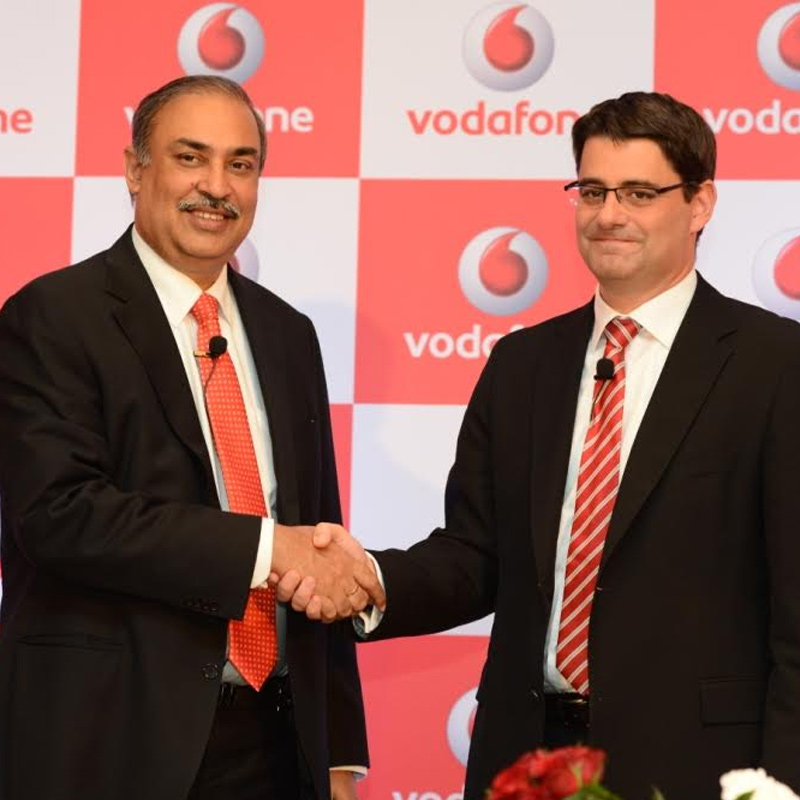
    Vodafone India managing director and CEO Sunil Sood commented: “Amidst a dynamic environment, we delivered a solid performance. We are well prepared for the increased level of competitive intensity that we are experiencing. We have strengthened our customer value propositions making Vodafone Play, your one window to the world of entertainment, launched exciting 4G offers – 9GB free on purchase of 1GB pack for new 4G handsets and revamped Vodafone RED for high end voice and data users. Further, we pioneered lifestyle propositions such as Vodafone U for young customers and Vodafone Flex, which allows customers to make a single recharge for voice, sms and data. We expanded our 4G footprint to 9 circles by launching services in 4 new circles. With the spectrum bought recently, we will roll out the Vodafone SuperNet 4G experience rapidly to 2,400 towns and in 8 additional circles by March. We continue to invest to expand our modern and scalable network with a strong backhaul, to support the increasing volumes and need for speed from both retail and enterprise customers. We remain committed to fulfill the evolving needs of our customers and leverage our global experience plus rich understanding of India to play a meaningful role in enabling Digital India.”
  • TRAI’s CDR idea rejected; Govt to look into Rs 3050 cr penalty

    TRAI’s CDR idea rejected; Govt to look into Rs 3050 cr penalty

    MUMBAI: The telecom ministry has formed a committee to look into TRAI’s penalty suggestion on Vodafone, Airtel and Idea as they allegedly failed to provide sufficient inter-connect points (PoI) to Reliance Jio, leading to severe call drops.

    Telecom operators across GSM and CDMA platforms meantime turned down TRAI’s recommendation of computing call drop rates through a meta data analysis of CDRs (call detail records). This, TRAI asserted, has been designed for billing purpose only, and not for checking quality of service. Such an analysis, the operators said, would project a flawed picture as abnormal call disconnects/terminations could be triggered by handsets getting turned off due to other errors, or due to battery draining out or a subscriber moving to an underground building or a station.

    Cellular Operators Association of India (COAI) represented the operators, the Economic Times reported.

    On the the hand, the union telecom minister Manoj Sinha said the ministry has formed the committee to look into the regulator’s recommendation on the proposed Rs 3,050 crore penalty, Business Standard reported. Last month, the regulator had proposed the penalty on the three telcos.

    Lately however Reliance Jio has been allegedly limiting all voice calls to 30 minutes. As a part of Jio’s free Welcome Offer, users were allowed unlimited voice calls. However, lately, the calls were being abruptly disconnected after a duration of 30 minutes, which is not an isolated case.

    The regulator had earlier sent a letter to the Department of Telecommunications recommending a charge of Rs 50 crore per circle for 21 service areas, except for Jammu & Kashmir, for Airtel and Vodafone. For Idea Cellular, TRAI suggested penalty for 19 circles.

    At the meeting of BRICS Ministers of Communications, Sinha said that the committee would give its considerations on the TRAI suggestion.

    The regulator’s suggestion came after Reliance Jio complained that more than 75 per cent of the calls on its network were dropping since the incumbent operators were not giving sufficient PoIs. The regulator stated that the incumbents went “against public interest.”

  • TRAI’s CDR idea rejected; Govt to look into Rs 3050 cr penalty

    TRAI’s CDR idea rejected; Govt to look into Rs 3050 cr penalty

    MUMBAI: The telecom ministry has formed a committee to look into TRAI’s penalty suggestion on Vodafone, Airtel and Idea as they allegedly failed to provide sufficient inter-connect points (PoI) to Reliance Jio, leading to severe call drops.

    Telecom operators across GSM and CDMA platforms meantime turned down TRAI’s recommendation of computing call drop rates through a meta data analysis of CDRs (call detail records). This, TRAI asserted, has been designed for billing purpose only, and not for checking quality of service. Such an analysis, the operators said, would project a flawed picture as abnormal call disconnects/terminations could be triggered by handsets getting turned off due to other errors, or due to battery draining out or a subscriber moving to an underground building or a station.

    Cellular Operators Association of India (COAI) represented the operators, the Economic Times reported.

    On the the hand, the union telecom minister Manoj Sinha said the ministry has formed the committee to look into the regulator’s recommendation on the proposed Rs 3,050 crore penalty, Business Standard reported. Last month, the regulator had proposed the penalty on the three telcos.

    Lately however Reliance Jio has been allegedly limiting all voice calls to 30 minutes. As a part of Jio’s free Welcome Offer, users were allowed unlimited voice calls. However, lately, the calls were being abruptly disconnected after a duration of 30 minutes, which is not an isolated case.

    The regulator had earlier sent a letter to the Department of Telecommunications recommending a charge of Rs 50 crore per circle for 21 service areas, except for Jammu & Kashmir, for Airtel and Vodafone. For Idea Cellular, TRAI suggested penalty for 19 circles.

    At the meeting of BRICS Ministers of Communications, Sinha said that the committee would give its considerations on the TRAI suggestion.

    The regulator’s suggestion came after Reliance Jio complained that more than 75 per cent of the calls on its network were dropping since the incumbent operators were not giving sufficient PoIs. The regulator stated that the incumbents went “against public interest.”

  • Reliance Jio to launch Android powered 4K STBs

    Reliance Jio to launch Android powered 4K STBs

    MUMBAI: Enjoying huge waves of success, Reliance Jio, within few months of its launch, plans to launch Android powered set-top boxes (STBs) in India. Following its idea of providing free 4G internet, this is believed to be Jio’s second step in building their envisioned Digital Ecosystem in India.

    Though they have not announced any date of the launch as of yet, several reports have surfaced hinting at the company’s plans to introduce three STBs, differing in prices and hardware. One will be the high-end STBs powered by Broadcom chipset, the other two would be powered by the Marvell processor. According to reports, the Broadcom powered by STB comes with dual core Brahma CPU and OGLES 3.1 GPU.

    The three STBs are also rumoured to support 4K UHD by default and runs on Android 6.0 Marshmallow out of the box. However, the users would require a 4K supported TV for the best experience.

    The devices come with a pre-installed Google PlayStore along with native Android apps. It also contains Jio Suite apps like Jio TV and Jio On Demand. With these STBs, the normal LCD/LED TV can be converted into a smart TV running on Android.

    Instead of the regular IR remote controller, these boxes come with Bluetooth remote controllers. They can be also controlled with smartphones using the app, similar to something Xiaomi debuted in the U.S market a couple of weeks back. The remote controller also has a mic for voice search with LAN, USB, and HDMI ports along with built-in Wi-Fi support.

    If reports are to be believed, the company has already imported 15,000 STBs priced at Rs. 5,500 per unit.

  • Reliance Jio to launch Android powered 4K STBs

    Reliance Jio to launch Android powered 4K STBs

    MUMBAI: Enjoying huge waves of success, Reliance Jio, within few months of its launch, plans to launch Android powered set-top boxes (STBs) in India. Following its idea of providing free 4G internet, this is believed to be Jio’s second step in building their envisioned Digital Ecosystem in India.

    Though they have not announced any date of the launch as of yet, several reports have surfaced hinting at the company’s plans to introduce three STBs, differing in prices and hardware. One will be the high-end STBs powered by Broadcom chipset, the other two would be powered by the Marvell processor. According to reports, the Broadcom powered by STB comes with dual core Brahma CPU and OGLES 3.1 GPU.

    The three STBs are also rumoured to support 4K UHD by default and runs on Android 6.0 Marshmallow out of the box. However, the users would require a 4K supported TV for the best experience.

    The devices come with a pre-installed Google PlayStore along with native Android apps. It also contains Jio Suite apps like Jio TV and Jio On Demand. With these STBs, the normal LCD/LED TV can be converted into a smart TV running on Android.

    Instead of the regular IR remote controller, these boxes come with Bluetooth remote controllers. They can be also controlled with smartphones using the app, similar to something Xiaomi debuted in the U.S market a couple of weeks back. The remote controller also has a mic for voice search with LAN, USB, and HDMI ports along with built-in Wi-Fi support.

    If reports are to be believed, the company has already imported 15,000 STBs priced at Rs. 5,500 per unit.

  • Jio-Apple strike a win-win deal as Airtel plans aggressive 4G offer

    Jio-Apple strike a win-win deal as Airtel plans aggressive 4G offer

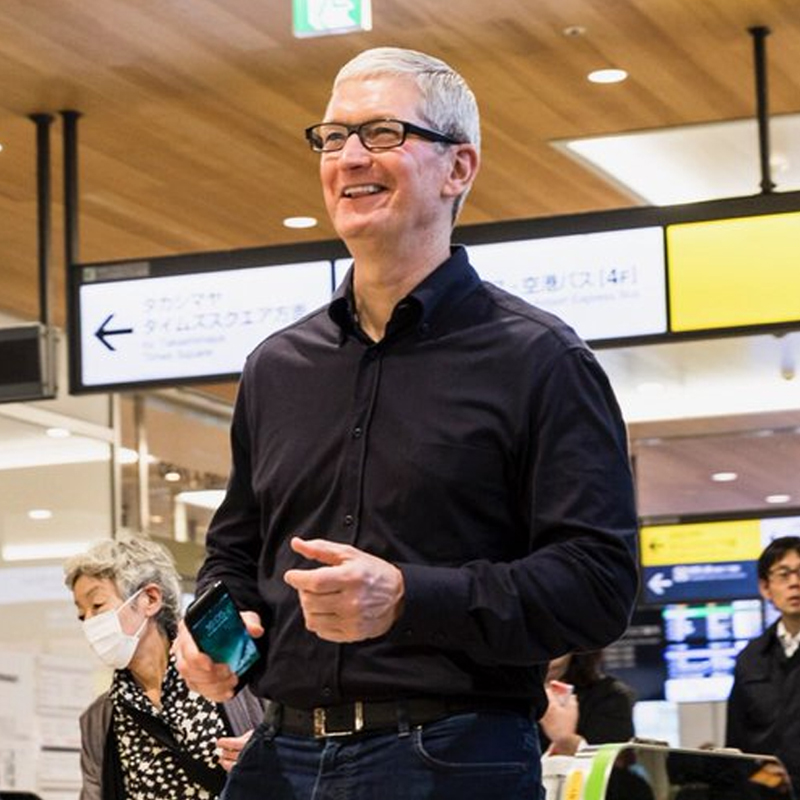
    MUMBAI: Even as Reliance Jio is giving a tough fight to the market leader Airtel, and other leading incumbent operators Vodafone and Idea, it is making significant tie-ups with cell-phone makers to up its 4G gameplan. Substantial investments are being made in high-speed telecom networks in India, said Apple CEO Tim Cook citing Reliance Jio’s 4G roll-out although he admitted its smartphone has “not done as well” in the country.

    Airtel meantime is reportedly planning to launch aggressive 4G bundled offers to take on Reliance Jio as India’s No 1 mobile carrier struggles to boost penetration and revive its slowing data revenue growth amid competition. Bharti Airtel managing director – India & South Asia Gopal Vittal agreed that it’s difficult to compete with a free services offer as it expects Jio’s full-fledged price launch to take place in December. Vittal said it will approach the regulator to clear any confusion over interconnection points (PoIs) as it has provided more PoIs to Jio than any other telco.

    Reliance Jio was the first of its kind all-IP network in India with 4G coverage in 18,000 cities and 200,000 villages, Cook said in the company’s fourth quarter earnings call. He said Apple is partnering with Reliance Jio, which is offering a free year of service to purchasers of new iPhones, to ensure “great iPhone performance” on their network. “Our iPhone sales in India were up over 50 per cent in fiscal 2016 compared to the prior year, and we believe we’re just beginning to scratch the surface of this large and growing market opportunity,” Cook said.

    He, however, noted that Apple’s smartphone has “not done as well” in India in general and one of the key reasons for that is the “(high-speed telecom networks) infrastructure hasn’t been there”. The Apple head was optimistic on the efforts being made by the Narendra Modi-led government to create jobs and develop infrastructure.

    Whether India could in future be as big of an opportunity as China for Apple, Cook said it is important to look not only at per capita income in India but also the number of people that are or will move into the middle class over the next decade. He said this class will “really want a smartphone, and I think we can compete well for some percentage of those.

    “I think it’s clear that the population of India will exceed China sometime in probably the next decade or so. I think it will take longer for the GDP to rival it, but that’s not critical for us to have a great success there,” he said.