Tag: Reliance Jio

  • BSNL violating TRAI’s IUC norms, complains COAI

    BSNL violating TRAI’s IUC norms, complains COAI

    NEW DELHI: The Cellular Operator Association of India (COAI) has approached the Telecom Regulatory Authority of India against the state-owned Bharat Sanchar Nigam Ltd’s (BSNL) new limited fixed mobile telephony app-based calling service that virtually turns mobiles into a cordless phone.

    The new service works in sync with landlines to make and receive calls within home premises.

    Claiming it was like the “in-principle same version of their fixed mobile telephony (FMT) services” launched last year and subsequently withdrawn, COAI members want TRAI to direct BSNL to withdraw the new service. BSNL has so far marketed its service as “distinct”.

    Interestingly, Reliance Jio has not joined in as it claims to have divergent views.

    While launching the new service in mid-January, BSNL had stated that the latest limited Fixed Mobile Telephony (FMT) service is “different” from the contentious Fixed Mobile Telephony service it had announced last year. The PSU was subsequently forced to put on hold the service following opposition from cellular operators.

    The operators say the new service is disguised as a Public Switched Telephone Network (PSTN) service and violation of numbering plan and breach of licence conditions.

    In its letter to TRAI, COAI has also alleged that BSNL’s service represents evasion and bypass of Interconnect Usage Charges (IUC) in the form of termination charges. “We understand that the new service will use fixed line Caller Line Identification for making calls from mobiles and currently no termination charges are applicable for calls to and from fixed line in terms of TRAI’s prevailing IUC regulation,” COAI said.

    If the service is allowed, other operators with landline number series may also start using the methodology for saving on IUC leading to major revenue implications, COAI has argued.

    “In light of the serious concerns … we request your kind intervention in issuing an immediate direction to BSNL for withdrawing this app-based calling service,” COAI has said.

    While putting its service on hold, BSNL chairman Anupam Shrivastava had said the earlier service allowed customers on roaming in India and overseas to connect their landlines through mobile and make calls through them, but the new service is restricted within the home premises.

    “Landline subscribers find it inconvenient to fetch the contact details from mobiles and then dial the number on fixed line … This service will turn mobile handset into a cordless device within the home premises, which means that customers can still avail the attractive landline tariffs of BSNL,” Shrivastava had said.

    Also Read:

    BSNL launches FMT & Ditto TV; 4G planned this year

    Fazed by expensive 4G spectrum, BSNL gifting Kerala 1k hotspots
  • Q3-17: Jio affects Airtel revenue; Digital TV segment numbers up

    Q3-17: Jio affects Airtel revenue; Digital TV segment numbers up

    BENGALURU: Indian telecom major Bharti Airtel Limited (Airtel) reported 3 percent decline in total revenue for the quarter ended 31 December 2016 (Q3-17, current quarter) as compared to the corresponding year ago quarter. The drop was partially affected by a drop in revenue due to divestments of its Africa operating units, tower assets sale and merger of Bangladesh operations. However, like in the previous quarter, Reliance Jio’s entry has resulted in a drop in the company’s India mobile revenues which contribute a lion’s share to overall revenue.

    Airtel MD and CEO of India and South Asia regions Gopal Vittal said, “The quarter has seen turbulence due to the continued predatory pricing by a new operator. The present termination costs at 14 paise which are well below cost has resulted in a tsunami of minutes terminating into our network. This has led to an unprecedented year on year revenue decline for the industry, pressure on margins and a serious impact on the financial health of the sector. At the same time our commitment to provide a superior experience to our customers has led to revenue market share crossing a lifetime high of 33 percent. Airtel revenues grew by 1.8 percent Y-o-Y and our non-mobile businesses continue to grow at a healthy clip and now contribute a sizable 24 percent of our total revenues.”

    In consonance with Vittal statement, Airtel’s Digital TV Services segment (DTH segment) reported 17.7 percent year-over-year (y-o-y) increase in operating revenues for the quarter ended 31 December 2016 (Q3-17, current quarter). Also, Operating Profit (Earnings Before interest and Tax – EBIT) of the DTH segment in the current quarter increased 27.1 percent year-over-year (y-o-y).

    Airtel DTH reported revenues of Rs 873.5 crore in Q3-17 and Rs 742.2 crore in Q3-16. EBIT for the corresponding periods was Rs 68.4 crore (7.8 percent margin of the segment’s operating revenue) and Rs 53.8 crore (7.2 percent margin of the segment’s operating revenue), respectively.

    EBIDTA in Q3-17 also increased y-o-y – by 22.3 percent to Rs 302.6 crore (34.6 percent margin of the segment’s operating revenue) in the current quarter from Rs 247.4 crore (33.3 percent margin of the segment’s operating revenue).

    Subscription numbers, ARPU

    Airtel’s DTH segment added 14.82 lakh subscribers between Q3-16 and Q3-17, or a 17.3 percent y-o-y increase. It had 125.88 lakh subscribers as on 31 December 2016. Q-o-q, the segment witnessed a 1.5 percent growth (1.83 lakh adds) in subscribers from 124.05 lakh in Q2-17.

    ARPU in Q3-17 increased to Rs 232 from Rs 229 in the corresponding year ago quarter, but remained flat q-o-q as compared to the immediate trailing quarter.

    Airtel numbers

    Bharti Airtel Limited saw a 3 percent decline in operating revenue to Rs 23335.7crore in Q3-17 as compared to Rs 24065.9 crore in Q3-16.. Profit after tax (PAT) in the current quarter declined to less than half (declined by 54.5 percent) y-o-y to Rs 504 crore (2.2 percent margin) from Rs 1,108 crore (4.6 percent margin). The company attributes decline in profits to net interest costs of Rs 1,810 crore that have risen from Rs 1,360 crore in the corresponding quarter last year largely due to increased spectrum related interest costs. Further, forex and derivative losses for the quarter came in at Rs 126 crore compared to Rs 57 crore in the corresponding quarter last year as well as exceptional items net losses of Rs 114 crore.

  • Q3-17: Jio affects Airtel revenue; Digital TV segment numbers up

    Q3-17: Jio affects Airtel revenue; Digital TV segment numbers up

    BENGALURU: Indian telecom major Bharti Airtel Limited (Airtel) reported 3 percent decline in total revenue for the quarter ended 31 December 2016 (Q3-17, current quarter) as compared to the corresponding year ago quarter. The drop was partially affected by a drop in revenue due to divestments of its Africa operating units, tower assets sale and merger of Bangladesh operations. However, like in the previous quarter, Reliance Jio’s entry has resulted in a drop in the company’s India mobile revenues which contribute a lion’s share to overall revenue.

    Airtel MD and CEO of India and South Asia regions Gopal Vittal said, “The quarter has seen turbulence due to the continued predatory pricing by a new operator. The present termination costs at 14 paise which are well below cost has resulted in a tsunami of minutes terminating into our network. This has led to an unprecedented year on year revenue decline for the industry, pressure on margins and a serious impact on the financial health of the sector. At the same time our commitment to provide a superior experience to our customers has led to revenue market share crossing a lifetime high of 33 percent. Airtel revenues grew by 1.8 percent Y-o-Y and our non-mobile businesses continue to grow at a healthy clip and now contribute a sizable 24 percent of our total revenues.”

    In consonance with Vittal statement, Airtel’s Digital TV Services segment (DTH segment) reported 17.7 percent year-over-year (y-o-y) increase in operating revenues for the quarter ended 31 December 2016 (Q3-17, current quarter). Also, Operating Profit (Earnings Before interest and Tax – EBIT) of the DTH segment in the current quarter increased 27.1 percent year-over-year (y-o-y).

    Airtel DTH reported revenues of Rs 873.5 crore in Q3-17 and Rs 742.2 crore in Q3-16. EBIT for the corresponding periods was Rs 68.4 crore (7.8 percent margin of the segment’s operating revenue) and Rs 53.8 crore (7.2 percent margin of the segment’s operating revenue), respectively.

    EBIDTA in Q3-17 also increased y-o-y – by 22.3 percent to Rs 302.6 crore (34.6 percent margin of the segment’s operating revenue) in the current quarter from Rs 247.4 crore (33.3 percent margin of the segment’s operating revenue).

    Subscription numbers, ARPU

    Airtel’s DTH segment added 14.82 lakh subscribers between Q3-16 and Q3-17, or a 17.3 percent y-o-y increase. It had 125.88 lakh subscribers as on 31 December 2016. Q-o-q, the segment witnessed a 1.5 percent growth (1.83 lakh adds) in subscribers from 124.05 lakh in Q2-17.

    ARPU in Q3-17 increased to Rs 232 from Rs 229 in the corresponding year ago quarter, but remained flat q-o-q as compared to the immediate trailing quarter.

    Airtel numbers

    Bharti Airtel Limited saw a 3 percent decline in operating revenue to Rs 23335.7crore in Q3-17 as compared to Rs 24065.9 crore in Q3-16.. Profit after tax (PAT) in the current quarter declined to less than half (declined by 54.5 percent) y-o-y to Rs 504 crore (2.2 percent margin) from Rs 1,108 crore (4.6 percent margin). The company attributes decline in profits to net interest costs of Rs 1,810 crore that have risen from Rs 1,360 crore in the corresponding quarter last year largely due to increased spectrum related interest costs. Further, forex and derivative losses for the quarter came in at Rs 126 crore compared to Rs 57 crore in the corresponding quarter last year as well as exceptional items net losses of Rs 114 crore.

  • Jio may use US$4.4bn to lay OFC, expand network to stifle competition

    Jio may use US$4.4bn to lay OFC, expand network to stifle competition

    MUMBAI: It’s common knowledge that Reliance Jio, Mukesh Ambani’s telecom venture, is up against incumbent rivals such as Vodafone, Bharti Airtel, and Idea Cellular. Jio closed 2016 with 72.4 million subscribers. Last September, it claimed to be the fastest growing technology operation in the globe after signing up 50 million subs in 83 days.

    Ambani has already invested Rs 1,71,000 crore (approx US$25 billion) into Jio to build India’s first fourth-generation (4G)-only infrastructure to provide high-speed internet. He recently announced that Jio will raise another Rs 30,000 crore through a rights issue, which will be used to expand existing network and lay additional optical fibre cable (OFC). OFC is vital for high-speed internet as it joins one telecom tower, transmitting air waves for wireless connectivity, to the other, via cables.

    Reliance announced plans for a rights issue of convertible preference shares at Jio to raise US$ 4.4 billion. A part of the funds will be used to continue funding its free internet services, which has been a reason for regulatory tussle with other telecom operators.

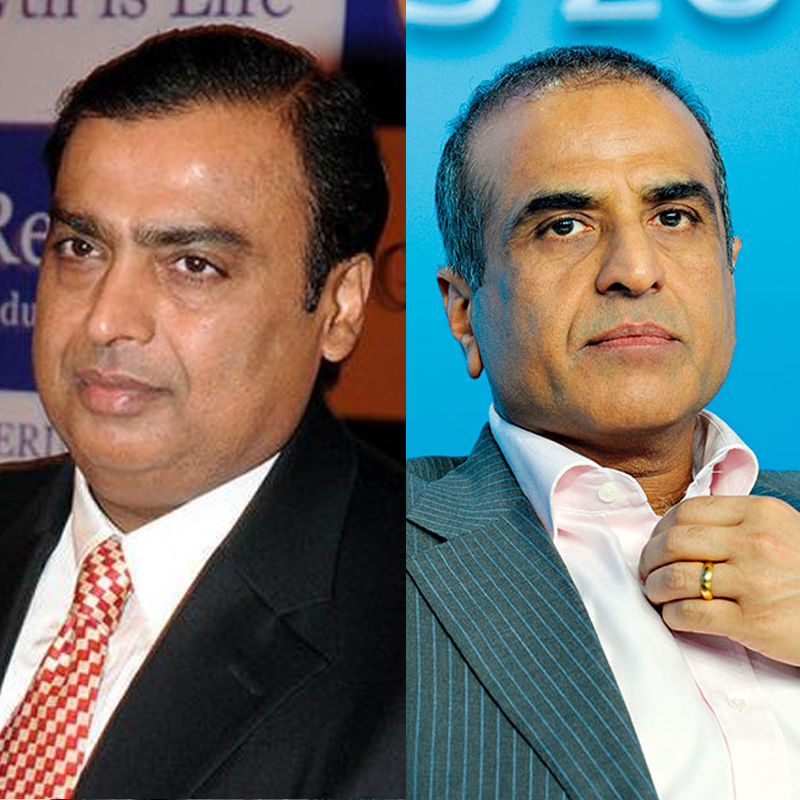
    Vodafone is fighting a legal case against Jio. Bharti CMD Sunil Mittal said that Jio’s free services started an unfair competition.

    Jio has already acquired 72 million subscribers, and is adding six lakh new ones every day, the company says. Jio’s offers set off a price war. Airtel now is offering Rs 9,000 of free 4G data to new subs and has also cut down its data prices by two-thirds. Idea also is offering several schemes to data users.

    Jio is getting more subscribers with an introductory and then New Year offer of free services until March. The company also claims the most extensive Indian 4G network which will reach soon 90 per cent population.

  • Jio may use US$4.4bn to lay OFC, expand network to stifle competition

    Jio may use US$4.4bn to lay OFC, expand network to stifle competition

    MUMBAI: It’s common knowledge that Reliance Jio, Mukesh Ambani’s telecom venture, is up against incumbent rivals such as Vodafone, Bharti Airtel, and Idea Cellular. Jio closed 2016 with 72.4 million subscribers. Last September, it claimed to be the fastest growing technology operation in the globe after signing up 50 million subs in 83 days.

    Ambani has already invested Rs 1,71,000 crore (approx US$25 billion) into Jio to build India’s first fourth-generation (4G)-only infrastructure to provide high-speed internet. He recently announced that Jio will raise another Rs 30,000 crore through a rights issue, which will be used to expand existing network and lay additional optical fibre cable (OFC). OFC is vital for high-speed internet as it joins one telecom tower, transmitting air waves for wireless connectivity, to the other, via cables.

    Reliance announced plans for a rights issue of convertible preference shares at Jio to raise US$ 4.4 billion. A part of the funds will be used to continue funding its free internet services, which has been a reason for regulatory tussle with other telecom operators.

    Vodafone is fighting a legal case against Jio. Bharti CMD Sunil Mittal said that Jio’s free services started an unfair competition.

    Jio has already acquired 72 million subscribers, and is adding six lakh new ones every day, the company says. Jio’s offers set off a price war. Airtel now is offering Rs 9,000 of free 4G data to new subs and has also cut down its data prices by two-thirds. Idea also is offering several schemes to data users.

    Jio is getting more subscribers with an introductory and then New Year offer of free services until March. The company also claims the most extensive Indian 4G network which will reach soon 90 per cent population.

  • Jio HNY: TDSAT raps TRAI as contest deepens

    Jio HNY: TDSAT raps TRAI as contest deepens

    MUMBAI: Telecom tribunal TDSAT has ordered the Telecom Regulatory Authority of India (TRAI) to take a stand on Reliance Jio’s free 4G offer in reasonable time. A tribunal bench, comprising A K Bhargava and B B Srivastava, heard arguments of both sides — TRAI and Airtel — and posted the matter for 1 February, PTI reported.

    Meanwhile, other telecom operators in the country are scrambling to catch up. 

    The new TDSAT order came while hearing a petition filed by Bharti Airtel, against TRAI decision allowing Reliance Jio to continue with its promotional offer beyond the stipulated 90 days, alleging that the regulator acted as “a mute spectator” to violations. 

    Reliance Jio earlier chose not to respond to queries regarding its reply to TRAI that was expected on 29 December in connection with questions raised against alleged violations in extending its free offer till 31 March 2017 much beyond its introductory offer. After two emailed queries and phone calls from indiantelevision.com, Jio chose not to respond.

    Airtel had filed a petition before TDSAT accusing TRAI of being ‘sleeping trustee’ to the violations carried out by Jio. In the petition, Airtel had alleged that TRAI had “erroneously” concluded that since Jio’s promotional offer of free services was only valid till 3 December, it is consistent with the direction for 90 days.

    Jio, in a meeting with TRAI, had reportedly said that the latest offer was different from the previous offer as, in the former, the company provided 4GB of free data per day, but in the latter case, it restricted the free internet up to 1GB under Fair Usage Policy. Jio also stressed the fact that in the new offer if the data limit was exhausted, then one had to buy recharge vouchers, which was not the case in the initial offer.

    Meanwhile Airtel and Idea offered free data to woo 4G users eventually deepening the telecom price war.  Bharti said it would offer three gigabytes of free 4G data per month until the end of the year for customers who switch to some of its plans from other carriers and to existing customers who upgrade to 4G by 28 February. Idea Cellular is reportedly going to offer unlimited free data to topple Jio and Airtel’s plans. Idea, which ranks third in Indian telecom ranking, will now come up with new 4G data packs with an extended validity of up to one and half years. BSNL has also started offering unlimited free calls for six months at Rs 144. Vodafone and BSNL too have come up with cheaper plans.

    Also read:   TRAI violations query: Reliance Jio mum on ‘response’

  • Jio HNY: TDSAT raps TRAI as contest deepens

    Jio HNY: TDSAT raps TRAI as contest deepens

    MUMBAI: Telecom tribunal TDSAT has ordered the Telecom Regulatory Authority of India (TRAI) to take a stand on Reliance Jio’s free 4G offer in reasonable time. A tribunal bench, comprising A K Bhargava and B B Srivastava, heard arguments of both sides — TRAI and Airtel — and posted the matter for 1 February, PTI reported.

    Meanwhile, other telecom operators in the country are scrambling to catch up. 

    The new TDSAT order came while hearing a petition filed by Bharti Airtel, against TRAI decision allowing Reliance Jio to continue with its promotional offer beyond the stipulated 90 days, alleging that the regulator acted as “a mute spectator” to violations. 

    Reliance Jio earlier chose not to respond to queries regarding its reply to TRAI that was expected on 29 December in connection with questions raised against alleged violations in extending its free offer till 31 March 2017 much beyond its introductory offer. After two emailed queries and phone calls from indiantelevision.com, Jio chose not to respond.

    Airtel had filed a petition before TDSAT accusing TRAI of being ‘sleeping trustee’ to the violations carried out by Jio. In the petition, Airtel had alleged that TRAI had “erroneously” concluded that since Jio’s promotional offer of free services was only valid till 3 December, it is consistent with the direction for 90 days.

    Jio, in a meeting with TRAI, had reportedly said that the latest offer was different from the previous offer as, in the former, the company provided 4GB of free data per day, but in the latter case, it restricted the free internet up to 1GB under Fair Usage Policy. Jio also stressed the fact that in the new offer if the data limit was exhausted, then one had to buy recharge vouchers, which was not the case in the initial offer.

    Meanwhile Airtel and Idea offered free data to woo 4G users eventually deepening the telecom price war.  Bharti said it would offer three gigabytes of free 4G data per month until the end of the year for customers who switch to some of its plans from other carriers and to existing customers who upgrade to 4G by 28 February. Idea Cellular is reportedly going to offer unlimited free data to topple Jio and Airtel’s plans. Idea, which ranks third in Indian telecom ranking, will now come up with new 4G data packs with an extended validity of up to one and half years. BSNL has also started offering unlimited free calls for six months at Rs 144. Vodafone and BSNL too have come up with cheaper plans.

    Also read:   TRAI violations query: Reliance Jio mum on ‘response’

  • TRAI to meet b’casters, MSOs, DTH ops, telcos on ’17 roadmap

    TRAI to meet b’casters, MSOs, DTH ops, telcos on ’17 roadmap

    NEW DELHI: As promised by TRAI chairman RS Sharma, the regulator is getting pro-active. It has scheduled meetings with top executives of telecom, broadcasting, DTH and MSO companies over the next one week starting 6 January, 2017 to seek their opinion on issues to be taken up during 2017.

    The first of these high-level meetings would take place Friday when TRAI Chairman and other officials would interact with CEOs of all telecom companies, including Bharti, Vodafone and Reliance Jio, to discuss and identify important issues that need to be taken up during the year, PTI reported.

    A similar meeting is slated with top executives of cable, broadcasting, MSO and DTH companies on January 10, 2017, PTI quoted TRAI sources as saying.

    “We have invited the CEOs of all telecom companies, including Bharti Airtel, Vodafone, Idea Cellular, Reliance Jio and others for a discussion on January 6. Similarly, we have invited top executives of broadcasting companies, MSOs, and DTH companies on January 10,” the PTI report quoted sources as saying.

    TRAI’s latest initiatives are in line with what Chairman RS Sharma had told indiantelevision.com in a year-end interview middle of December 2016 on charting a roadmap for 2017.

    “What we plan to do in 2017 is something interesting. While there will be always issues that will need TRAI’s urgent attention — for example, the government may ask for advice on spectrum prices — we are trying to create a calendar for the next year…. highlighting the works that need to be taken up in 2017 and which will act as a roadmap,” Sharma had told indiantelevision.com.

    Asked about the issues likely to be taken up by TRAI in2017, in consultation with the industry, Sharma had indicated it could involve data and consumer protection, Internet of Things (IoT), digital terrestrial broadcasting and other issues related to emerging technologies.

    ALSO READ

    “There would be a lot on TRAI’s plate in 2017” – RS Sharma

  • TRAI to meet b’casters, MSOs, DTH ops, telcos on ’17 roadmap

    TRAI to meet b’casters, MSOs, DTH ops, telcos on ’17 roadmap

    NEW DELHI: As promised by TRAI chairman RS Sharma, the regulator is getting pro-active. It has scheduled meetings with top executives of telecom, broadcasting, DTH and MSO companies over the next one week starting 6 January, 2017 to seek their opinion on issues to be taken up during 2017.

    The first of these high-level meetings would take place Friday when TRAI Chairman and other officials would interact with CEOs of all telecom companies, including Bharti, Vodafone and Reliance Jio, to discuss and identify important issues that need to be taken up during the year, PTI reported.

    A similar meeting is slated with top executives of cable, broadcasting, MSO and DTH companies on January 10, 2017, PTI quoted TRAI sources as saying.

    “We have invited the CEOs of all telecom companies, including Bharti Airtel, Vodafone, Idea Cellular, Reliance Jio and others for a discussion on January 6. Similarly, we have invited top executives of broadcasting companies, MSOs, and DTH companies on January 10,” the PTI report quoted sources as saying.

    TRAI’s latest initiatives are in line with what Chairman RS Sharma had told indiantelevision.com in a year-end interview middle of December 2016 on charting a roadmap for 2017.

    “What we plan to do in 2017 is something interesting. While there will be always issues that will need TRAI’s urgent attention — for example, the government may ask for advice on spectrum prices — we are trying to create a calendar for the next year…. highlighting the works that need to be taken up in 2017 and which will act as a roadmap,” Sharma had told indiantelevision.com.

    Asked about the issues likely to be taken up by TRAI in2017, in consultation with the industry, Sharma had indicated it could involve data and consumer protection, Internet of Things (IoT), digital terrestrial broadcasting and other issues related to emerging technologies.

    ALSO READ

    “There would be a lot on TRAI’s plate in 2017” – RS Sharma

  • Respond to Vodafone’s TRAI challenge in two weeks, govt directed

    Respond to Vodafone’s TRAI challenge in two weeks, govt directed

    MUMBAI: Terming it as “premature”, the central government has opposed a plea by the telecom major Vodafone Mobile Services challenging TRAI’s recommendation to impose Rs 1,050 crore penalty for not providing interconnectivity to Reliance Jio.

    The government rejected the plea by Vodafone, which operates in 21 circles, against a penalty of Rs 50 crore per telecom circle recommended by TRAI. The Telecom Regulatory Authority of India had suggested the penalty on grounds that Vodafone had violated terms and conditions relating to points of interconnection among service providers.

    Additional solicitor-general Sanjay Jain, appearing on behalf of the Centre, said that since the role of TRAI was advisory, what material did the telecom company had to show that the Centre’s decision would be clouded by the recommendation.

    Justice Sanjeev Sachdeva, who was hearing the matter, directed the Centre to file a short affidavit within two weeks and limit it to the question of maintainability of the suit.

    TRAI recommendation was made to DoT (department of telecommunications), and is based on a complaint by Reliance Jio Infocomm Ltd, which alleged that Vodafone had refused to comply with interconnection norms. TRAI had also recommended a similar penalty on Bharti Airtel and Idea Cellular Ltd.

    Senior advocate Rajiv Nayar, appearing for Vodafone, urged the court to decide whether TRAI exceeded its jurisdiction by giving the recommendation. The telecom argued that TRAI has the power to impose “financial disincentives” for breach of Quality of Service regulations and to ensure compliance of terms and conditions of licence.

    The ASG opposed the maintainability of the petition, saying once DoT took a decision, then it was an appealable order.

    The court gave the telecom ministry and TRAI two weeks to file their reply on the issue of maintainability and listed it for hearing on 6 February.