Tag: Reliance Jio

  • Reliance Jio, China’s Omnicom fuel massive global mobile data traffic

    Reliance Jio, China’s Omnicom fuel massive global mobile data traffic

    NEW DELHI: Global mobile data traffic growth reached a six-year high in the third quarter of 2017, increasing by 115 per cent worldwide year-on-year with China and India—riding on Reliance Jio primarily—accounting for half of all traffic growth globally, according to new report released yesterday.

    According to Strategy Analytics’ latest `Wireless Operator Performance Benchmarking’ database and accompanying report, Reliance Jio, China Unicom and Vodafone drove accelerated mobile data traffic growth in Q3 2017.

    India and China accounted for half of all traffic growth globally with Jio’s continued disruption in India and strong growth in unlimited data plans in China driving both of those markets. In Europe, Vodafone has enjoyed healthy early traction for its zero-rated Passes, the report said.

    Strategy Analytics provides competitive edge with advisory services, consulting and actionable market intelligence for emerging technology, mobile and wireless, digital consumer and automotive electronics companies. With offices in North America, Europe and Asia, Strategy Analytics delivers insights for enterprise success.

    Other key findings of the report include:

    — Reliance Jio was carrying more data traffic than any mobile operator globally within six months of launch, but its disruptive impact on the market has meant profitable traffic growth has been hard to find.

    — Unlimited plans have accelerated traffic growth in China, up 166 per cent year-on-year in Q3 2017 and have generated a healthy recovery in both service revenue and EBITDA.

    — Vodafone had eight million customers using Passes by the end of September 2017, with a positive impact on ARPU and usage. It has delivered 2.6 times growth in traffic in Europe over the last two years with near-flat opex.

    Phil Kendall, report author and director, Service Provider Group, in a statement said, “It is encouraging to see more success stories from operators using unlimited or zero-rated pricing to unlock growth in both revenue and profitability. The success of China’s Unicom’s unlimited plans and collaborations with local internet giants highlights the importance of partnering with content providers to add value to data plans.”

  • Netflix expects rapid content growth from India

    Netflix expects rapid content growth from India

    MUMBAI: When Netflix CEO and president Reed Hastings comes calling—and it was his second visit to India this year—you know it means serious business. On a content partnership and library programming hunt, the video-streaming service’s team met up with several Indian media houses, including Shah Rukh Khan-promoted Red Chillies Entertainment and other independent production houses last week.

    Hastings and the Netflix team had a meeting late last week with the editorial team of Network18, a part of Viacom18, an equal Indian joint venture of the US media giant Viacom and a group company of India’s oil-to-energy-to-telecoms-to-broadcast conglomerate Reliance Industries Limited (RIL).

    Netflix later clarified on Monday to Indiantelevision.com that Hastings met up with the editorial team of Network18 before his interview was conducted on the business news channel last week and that no business was discussed.

    Incidentally, Viacom18 not only sits on a huge library of Indian language programming and the ability to produce fresh shows but is also active in the studio business having produced several Hindi blockbusters. Its latest production Padmavati, though, has run into a history vs. fiction controversy and, according to an official statement from the company, the 1 December 2017 release of the film has been voluntarily deferred.

    Both RIL chief Mukesh Ambani and Hastings believe that digital holds a great future for content distribution. Ambani on Friday at the Viacom18 10th anniversary bash here extolled the “synergies” that can come from the talent in the “Viacom18 family and digital distribution” (of Voot and Reliance Jio) where there’s “no limit to growth”. Hastings, in an interview to CNBC-TV18 channel last week, said Netflix “makes TV watching so easy because it is on the internet.”

    Expect Rapid Content Increase from India, says Hastings

    Excited about the one billion plus Indians who “are just wild about entertainment and television market,” Netflix CEO Reed Hastings is betting big here and wants to source more content—originals and Bollywood related—even as his team hunts for partnerships. 

    “You should expect rapid increase (in Indian content on Netflix), dozens of series a year from now will be underway,” Hastings told business news channel CNBC-TV18 in an interview aired late last week when asked to give a sense of investments being made in content from India for the rest of the world. “Of course, there are the global shows we have like Narcos, filmed in Columbia, popular all around the world. We have got a new German original Dark…and then we are adding more Bollywood films. We are also adding Sacred Games and originals that we are doing here in India.”

    Though he has “never completed a whole Bollywood movie” having sampled several of them, Hastings said he does “get the subtlety” of the content and it was fascinating to see the “breadth of entertainment (in India) and how that works”.

    According to Hastings, Netflix is a comparatively new player in India, being active for just two years, but would be indulging in producing more content for the Indian market and simultaneously the world too.

    He also did not envisage that uneven bandwidth infrastructure in India could pose problems to streaming services. “We launched in Mexico five years ago, which had a relatively slow internet, and it has just accelerated tremendously because people want to watch Netflix, YouTube, other content sourced online and it is moving to the internet life,” he said. “In India, in last two years with Reliance Jio, just the biggest explosion in bandwidth (has happened) that the world has ever seen. It is just incredible what is happening here in India. As we go to other countries, (we are) saying an investment like Reliance Jio is transformative for the society.a”

    Though Netflix globally is spending crazy amounts on content and customer acquisition—its content budget is approximately $8 billion—analysts say the company is also adding to its liabilities.

    Despite reporting an impressive earnings report for Q3 of 2017 in October, analyst Ryan McQueeney of US’ Zacks Investment Research pointed to some shortcomings: “Netflix’s third-quarter report revealed that its long-term debt now totals $4.89 billion. This is up nearly 46 per cent from the $3.36 billion in long-term debt that it started the year with, and it marks a 106 per cent growth in debt from the end of the year-ago period. Investors should also note that Netflix said its total liabilities have reached $13.62 billion, up from $10.91 billion at the end of 2016 and $9.82 billion in the prior-year quarter.”

    However, such criticism hasn’t deterred Netflix or its co-founder yet. “Content is best when it really has a local flavour, but then it is approachable by other people,” Hastings said in the CNBC-TV18 interview, adding, “We have an American comedian, Hasan Minhaj, who does stand-up in California and he is popular all over the world now on the Netflix platform. Same is with Narcos. So you get all these interesting crossovers.”

    Netflix relies a lot on data and technology to source and create content. Pointing out that the 110 million-member global company has reached its position because it was producing content that people were “excited about”, Hastings said that they use artificial intelligence to help them figure out what was best.

    “We call it informed intuition. While we want the creatives to have a lot of data but ultimately, it is a judgment call of a human being with a creative vision and that is the intuition. The intuition is the most important part but we would like it to be informed by how other shows have done,” he explained.

    Like a true champ, Hastings did not shy away from giving credit to his competitors where due. “Hotstar is doing a great job here in India. They are leading in the subscription internet category. There are a lot of other global internet companies, YouTube, Facebook, Amazon and Apple. So there are many competitors – the traditional media companies and the entire internet sector. And what that is doing is everybody is bidding to have the most valuable content. So the prices now for creators are increasing,” he told the TV channel interviewer.

    Netflix-Red Chillies Partner For Multilingual Spy Series

    A new multilingual Netflix original series, based on the book Bard of Blood, in partnership with Shah Rukh Khan’s Red Chillies Entertainment has been announced. Penned by young Indian author Bilal Siddiqi, the book will be brought to life as an eight-episode high-octane political espionage thriller series for more than 109 million Netflix members around the world.

    Khan said in a statement, “We have always tried to create world-class content and entertainment from India. Netflix has shown that Indian stories have a global audience and we would love to use this platform and its reach to tell more stories.”

    Set against the backdrop of the Indian sub-continent, the multilingual series will tell the story of an expelled spy, Kabir Anand, who is recalled from his new life as a Shakespeare professor in Panchgani to save his country and long-lost love. A combination of combat skills, intellectual background and personal circumstances propel Kabir to avenge the past and face his deadliest enemies in a race against time. The series will be shot on location and the characters will interact in Hindi, Urdu, English and other languages.

    “We believe in the global vision of Red Chillies to create groundbreaking content out of India. It’s exciting to deepen our relationship with Red Chillies and expand our slate of originals in India,” Hastings said.

    In a series of tweets, dwelling on the partnership, Khan said “Netflix and Red Chillies chill” and later joked “think will cast Reed Hastings in the series too. He is a natural.”


  • Broadcasters, DPOs to crack down on piracy, analogue transmission

    Broadcasters, DPOs to crack down on piracy, analogue transmission

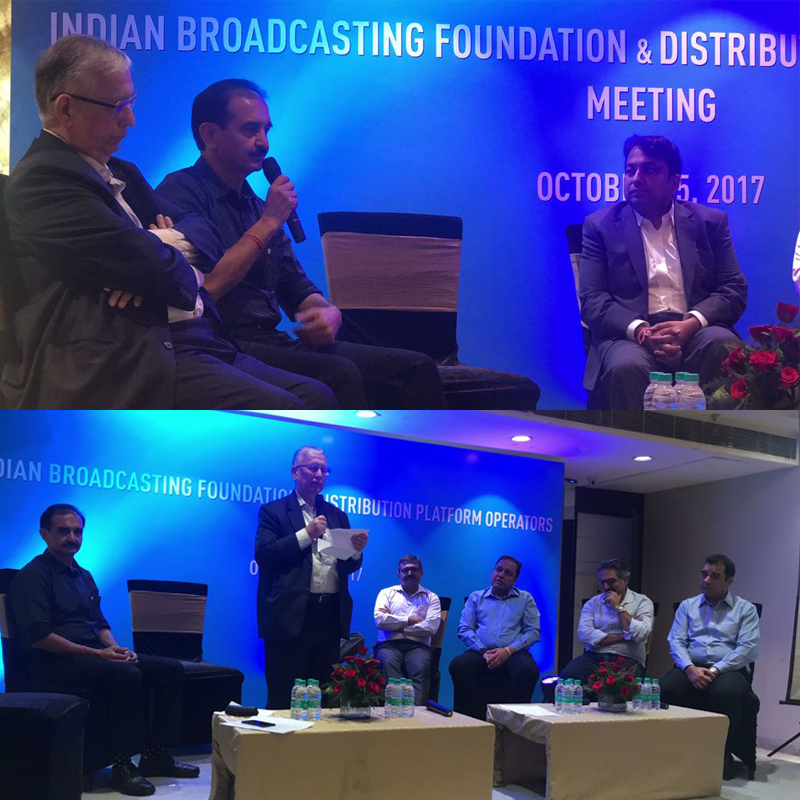
    NEW DELHI: There is general agreement among broadcasters and delivery platform operators including direct to home (DTH) as well as digital cable operators that a joint industry task force should be set up to check and report cases of piracy in the third and fourth phases of digital addressable system (DAS).

    There was general consensus that certain states – particularly Andhra Pradesh and Telengana – had high levels of pirated material on local television channels.

    Such were the thorny issues being discussed in a meeting held between the All India Digital Cable Operators Federation and the DTH Operators with the Indian Broadcasting Foundation (IBF) on Wednesday.

    As senior AIDCF member Ashok Mansukhani said that it was more appropriate for the stakeholders to meet in this manner than in courts of law.

    Among others, the meeting was addressed by IBF President Punit Goenka, Jawahar Goel of Dish TV, AIDCF President Rajan Gupta and senior office-bearer S N Sharma.

    Goel said there was an attempt by Punjab and other states to bring back what he termed as the ‘inspector raj’ by imposition of local taxes. Furthermore, he said broadcasters were free to give content to OTT or YouTube, but this should not be live as it would directly hit the DPOs like the DTH players and digital cable operators.

    The larger multi-system operators (MSO) said the inefficient handling of piracy by broadcasters was the cause of their suffering. Broadcasters neglect to take actiom against operators carrying analogue signal. There are small MSOs who do not have CAS & SMS system and do not follow TRAI QoS guidelines so broadcasters should refrain from giving content to them. Hence a joint industry task force should be made to raid such operators / MSOs and initiate legal action against those operators. The News Broadcasters Association should also be made part of this.

    Issues were also raised relating to OTT, Doordarshan’s FreeDish, and Reliance Jio and the DPOs alleged that providing signals to these entities led to huge losses to the digital cable and DPOs.

    Answering various question in a presentation, Goenka said OTT rights and digital cable rights were two different issues and should not be confused. OTT was an interactive and on-demand platform and in any case was never free being part of a subscription bandwidth. Thus this should not be compared with other platforms.

    YouTube content are only the ones that have already been broadcast and therefore, there was no conflict of interest. He denied any concessions to Reliance Jio and said it was in fact paying more than digital cable.

    He expressed concern by the Jio announcement that its mobile phone could receive the signals of not only new LCD/LED television sets but also the old sets. AIDCF said that this would bring Jio under TRAI’s regulations.

    Goenka said he will advise IBF members to take up the issue with OTT providers, especially Reliance Jio. In any case, he said the present contracts forbid such activity.

    He said broadcasters are not offering OTT content on television screen by connecting Reliance Jio phone through a cable and they prohibit such an activity. But agreeing with the concern of the AIDCF, he said this would be rigorously monitored and action will be taken in case there is any violation.

    Referring to the AIDCF charge that pay channels were being given as Free to Air (FTA) to Doordarshan’s FreeDish after paying huge carriage fees, Goenka said that broadcasters like Star and Sony are offering paid live content free on Freedish but with a time lag of one year. He agreed that this should be implemented across all genres and it should be completely free to all platforms.

    He said that in any case digital cable had more channels than FreeDish which primarily comprised FTA channels and so it was unreasonable to compare the two especially as the content was also being provided to digital cable operators.

    The speakers from AIDCF said MSOs have invested around Rs 200 billion in digitisation and are yet to get the return on their investment. This is primarily on account of the growth in rates that the broadcasters demand every year. Hence it was now the question of viability and survival of the MSOs that broadcasters should come out with their MRP based pricing.


  • Alternative sports has big demand in India & consumers willing to pay for premium content: Veqta

    Alternative sports has big demand in India & consumers willing to pay for premium content: Veqta

    Where there’s a will, there’s a way. And three sports enthusiasts live up to this adage beautifully. Building a company from ground zero to a level where it’s considered a leading digital media company is no mean achievement. The company: Veqta. The persons involved: co-founders Varun Mathur, Vikram Tanwar and Gaurav Gill.

    So, what does Veqta do? It is a leading (some say the first) Indian OTT subscription service dedicated exclusively to sports. It brings a unique selection of sports action across football, basketball, motorsports, tennis, MMA, Baseball, Fight Sports, badminton, etc. from authentic sources all over the world and the best analysis/opinions from world-class experts.

    Mathur is a former management consultant having worked with companies like TCS, Accenture, Nimbus, IMG and PGTI in leadership positions. Tanwar, apart from being a member of the founding team of Veqta, was previously the founder, CEO and MD of ITW Consulting. Similarly, Gill is also the founding partner and director at Chatsworth Management & Advisors. The company, now gets viewers for sports content, which is not available on other broadcasting and OTT platforms.       

    The business whiz-cum-sports-enthusiasts talk about their journey of a year and a half at Veqta in a free-wheeling conversation with Indiantelevision.com’s Kirti Chauhan. Edited excerpts from the interview follows:

    Q. How was Veqta conceptualized and what are the changes today from the time the platform was launched?

    Gaurav Gill (GG): To design Veqta’s offerings, we were looking at the biggest catchment areas in the Indian context outside the cricket and then we started handpicking our choice of sports properties to serve the needs and demands of the Indian market. Undoubtedly, we have a sound and solid offering in fight sports like wrestling, martial art and boxing, which is the biggest category in the country after cricket. We have a strong offering for basketball lovers because the game has a high demand in urban India. South India has a fan following for motorsports. As tennis is heavily demanded but underserved sports property in India, we have kept a wide offering in the tennis category.

    Varun Mathur (VM): Life certainly has changed from the time we started this OTT platform in many ways. Most notably, when we started, it was us who chased various sports league and federations for content, but today many global sports leagues, federations and sports companies get in touch with us to have their content on Veqta.

    Q. As you have chosen a niche area of sports streaming, how much traction and viewership you are netting? What is the average time spending on Veqta?

    Vikram Tanwar (VT): We monitor user engagement on a day to day basis and have observed that users are spending fairly large time on our platform. 1.2 minute per page is the average time spent by a user and statistics say that we have an average of 11 unique page views for every user. We have crossed 150,000 downloads within a month post the subscription service launch. We have catered 1.8 million page views on Veqta’s website within the first two weeks of the subscription launch. Our digital campaign has got 1.4 billion impressions across various mediums and the campaign video has crossed five million views.

    Q. Recently, you broadcast the boxing bout between Floyd Mayweather and Conor McGregor. How was the response in India?

    VT: Boxing bout between Floyd Mayweather and Conor McGregor was our first live property after the launch of subscription package on Veqta. Our strategy was to make the battle available only on Veqta not even on television. The boxing battle and the digital campaign was a huge success, gathering around 1.4 billion digital impressions across various mediums. Within a month of activation of a subscription package, we have crossed over 150,000 downloads. This made it clear to us that in India there is a big demand for alternative sports, apart from mainline sports like cricket, and there are people willing to pay for premium sports content.

    Q. What is the strategy behind keeping subscription low, compared to other OTT platforms’ rates?

    VT: India was an unexplored market for sports outside cricket and that’s one of the main reasons for Veqta to come alive. As sports fans, our aim was to make Veqta available to as many people and give them the comfort and flexibility to watch sports whenever and wherever on the go.

    GG: Initially, we have kept the pricing very low to make people aware of the product. If the person is genuinely interested in sports, the pricing context should not be a deterrent factor. We have an introductory offer of Rs 99 (actual cost Rs 399) to attract viewers, but it is for a limited time period. We surely want to have a sound subscription revenue based model, but at the same time, we don’t want the journey of watching sports to be difficult in India.

    Q. What is your revenue model?

    VM: Veqta is primarily a subscription-based service and so a bigger share of revenue will come from subscription. According to us, India is completely ready for a very large subscription service. For certain events, Veqta will look at sponsorship and advertising revenue, but that would be the secondary focus. In India, currently, advertisement rate is low for non-cricket sports. Being a sports-oriented service, we don’t want too much of clutter with lots of advertising on our page currently. In future, we might have sponsors’ logo along with sports content.

    Q. Do you presently have advertisers on board?

    VT: Although we do not have any advertiser on board currently, we would look forward getting them. At this juncture, we want our consumers to experience the uninterrupted live sport. Every sport is designed differently. Some sports allow us to showcase ads during a game, while some don’t. While we can fill airtime during a cricket match with ads, sports like basketball, football or tennis do not allow us to showcase uninterrupted feed along with advertising spots as in-between breaks in such games are absent.

    Q. What is your marketing strategy?

    VT: We have a focused marketing strategy, which is to acquire exclusive content rights without sharing it with any other broadcaster. We have adopted this marketing strategy from the time we have launched our subscription service and it is working efficiently. The big fight between Floyd Mayweather and Conor McGregor exemplified our marketing strategy of streaming exclusive content. Also, we are using a targeted digital marketing approach through which our marketing campaign focuses on identifying the sports fan segment specifically in the country. We then interact with them over various digital platforms to engage them with Veqta.

    GG: We are currently focusing on the digital-driven campaign. Our user acquisition cost is currently exciting vis-a-vis industry norms. But in future, we would look forward at above the line (ATL) campaigns. Considering the user demographics, digital is a more efficient and effective medium compared to television in the entire spectrum of various age groups. Based on the matrix, a majority of our users currently are under 15-28 age group, which is active on digital mediums. With the help of our analytics, it is easy to track and grab more subscribers.

    Q. How is the customer acquisition done?

    VT: Our customer acquisition strategy is centered on unique content offering across sports that have a very strong offering via exclusive rights to top sports leagues, events and tournaments for the Indian territory. We use targeted digital marketing to amplify our content package with our target customers.

    Q. Do you think there is a space for a service such as Veqta when domestic players such as SonyLiv, Hotstar, Jio and international ones like Amazon and Perform Group are getting into the business of sports streaming in India?

    VM: Based on Veqta’s offerings, we don’t have direct competitors at this juncture. As compared to us, other OTT platforms like SonyLiv and Hotstar, which offer sports, talk to a different audience with different content offerings. The competitive market of OTT platforms is extremely large and diverse, which has space for multiple service providers. The OTT market space of China has got 11 sports platforms, which are running successfully. Currently, in India, we are the only dedicated sports platform. And, we believe to have a great growth opportunity having crossed the benchmark of a million users within a year. Veqta is turning out to be a great piece of a compact show for which Indian consumers are willing to pay for high-quality content.

    Q. Do you think is there any opportunity for Veqta in cricket?

    VT: We are not targeting cricket at present. At this stage, our bouquet is full of other sports like fight sports, football, basketball, table tennis and much more. We are aware of the fact that India can’t be a single sports country.

    GG: The reason cricket fans are receiving a good experience is the quality and quantity of coverage by various broadcasters and OTT platforms. At the same time, fans of other sports do not receive the same quality experience generally. Looking at this scenario, our prime focus is to address the need of non-cricket sports fans.

    Q. Are you looking at adding any new sport in Veqta’s kitty?

    VM: Veqta would be adding Cue Sports, squash, American sports, eSports, indoor sports and games and much more very soon. Apart from this, we would look to add more properties of basketball and football and more of racquet sports like tennis, badminton and squash in our kitty.

    Q. It would be really helpful if you can enumerate the sports being showcased on Veqta presently.

    VM: VEQTA is currently covering a broad spectrum of sports including boxing, MMA, wrestling, baseball, basketball, tennis, table tennis, and rugby. In tennis, we are exclusive rights holder of WTA (Women’s Tennis Association). We have the rights to broadcast International Table Tennis games. In rugby, we own the rights to stream HSBC Sevens World Series. In the rally category, we own rights to broadcast World Rally Championship. 

    Q. Would you explore adding talk shows-type content on Veqta?

    GG: We are progressively into acquiring content rights to create Veqta as the biggest sports library. We are not targeting producing content ourselves, but we have explored sports reviews, sports analysis, and pre-news shows. in the near future, we would be looking at adding sports reviews, comments, analysis, and pre-match shows. We will be focusing towards reality instead of fiction. Our immediate priority is to make sure that live sports offerings keep growing.

    Q. What type of distribution alliances would be useful for Veqta?

    VT: OTT adoption and consumption is constantly evolving and we believe that distribution alliances will help realise the true potential of any OTT offering. We are already in advanced discussions with two large telecom service providers and with one of the largest OEM handset manufacturers for distribution alliances. We are also having discussions with hardware providers to offer Veqta for the home screen and large screen viewing. These alliances might be done by pre-embedding the Veqta flagship platform in hardware and on handsets or by offering limited Veqta content through a specialist Veqta Sports offering as a part of an OTT listing/marketplace offering by the respective service providers.

    Q. As sports rights are expensive propositions how such acquisitions are funded — internal accruals or are you looking at raising funds?

    VM: We are in active discussions with companies to raise more capital. However, we have spoken about our seed funding once in media, which was Rs. 33.5 million.

    Q.  Since Veqta was a late entrant in the Indian OTT space, what were the challenges faced and benefits reaped?

    GG: OTT as a concept in India is in an evolutionary stage, so we do not consider ourselves a late entrant. As far as dedicated sports platform is concerned, we are one of the early players. Earlier entrants into space successfully introduced the term OTT to the masses, which was not only welcomed but also got a great push from the likes of Reliance Jio. After studying the market and scenario, we decided to be in the SVoD category through which we are netting good subscriber numbers. We feel the subscription-based model is the correct approach to generate good revenue.

    Q: Would you be offering sports content in Indian regional languages and from when?

    VM: We firmly believe that sports still need to touch its potential reach in India. The basic problem we face is the offering of sports in India is limited to a few languages. For example, a sport like a football has a big fan following in pockets like Kerala, West Bengal and North-East, but if the nuances are not understood by a consumer other than his/her mother tongue or in the language spoken in the region, the viewing experience could diminish. We are aiming to go forward and give more customized experience to our viewers, but not immediately. In near future, we would be able to choose some sports properties and offer commentaries and related information in various regional languages.

    Q. Is there a possibility that in future Veqta transforms into a television broadcaster?

    VT: We strongly believe in the long run OTT consumption and viewership globally across general entertainment genres will replace (traditional) television. But, our key business strategy is “never say never” as we keep striving for improvements.

    Q. What technology are you using and who has designed your backend technology?

    VT: Veqta uses the services of multiple third-party technology companies like MultiTv, Switch, Amazon Web Services (AWS), Limelight and a few more. Earlier, people were putting a lot of money in developing in-house technology. As it is difficult for niche digital broadcasters to put a huge amount of money in developing in-house technology, we prefer to use various third-party operators, including those for satellite downlink. Unlike other OTT platforms like Hotstar, Amazon Prime, SonyLiv and Voot, we play 6,000 hours of live content, which has to be accurate and efficient in terms of streaming. Ours is a tougher job as we receive IP feeds from many of our partners who are pushing content from various corners of the globe. This content bounces of several servers and IPs, so we have deployed servers closer to source to receive LIVE match feed and process it there itself, before pushing it on to the CDN. For certain other partners, we receive the LIVE matches through satellite and process the feeds here in India after downlinking them.


    Q. What is your glass-to-glass latency?

    VM: The signals we receive are delivered on CDN (content delivery networks), which are the high-speed global servers that cache and deliver web content instantly. With the help of good internet connectivity, our glass-to-glass latency level maintains less than one second, which is around 300 milli-seconds, much less than television and other sports OTT platforms. It is one of the reasons that we are getting more subscribers as they are willing to pay less and get quick sports updates instead of investing time and money on subscribing television channels.

    Q. Where do you see Veqta over the next five years?

    GG: Five years down the line, Veqta will be one of the dominant forces in the sports streaming and OTT ecosystems. It will evolve into a world-class sports network in terms of number of a sports broadcast, number of customers and in the number of geographies we operate in. Most probably, Veqta will be a global player in the coming five years. Also, we want every sports fan to have a fabulous world-class experience while watching best of sports from all over the world at any point of time.

    ALSO READ:

    Floyd Mayweather vs Conor McGregor boxing fight on Indian OTT VEQTA4

    OTT: VEQTA is exclusive Major League Baseball partner for India

    Sports OTT VEQTA launches its mobile app for sports programming

  • OTT players claim voluntary compliance as TRAI petitioned on anti-tobacco norms breach

    OTT players claim voluntary compliance as TRAI petitioned on anti-tobacco norms breach

    MUMBAI / NEW DELHI: Even though the Indian government has asked the broadcast carriage and telecoms regulator TRAI to rein in OTT platforms for alleged flouting of norms relating to tobacco and alcohol advisories in programmes, a majority of digital players claim to be voluntarily adhering to government directives meant primarily for TV shows despite absence of regulations for the sector.

    “As we belong to the traditional medium of television, it comes from within to carry Indian government-advised disclaimer (relating to scenes in TV shows and films involving tobacco and alcohol consumption),” Alt Balaji CMO Manav Sethi told Indiantelevision.com, adding, it is “not mandatory” for OTT platforms to do so, though.

    According to Arre co-founder and CEO Ajay Chacko, “OTT platforms are regulated under the Information Technology Act, but carrying a disclaimer relating to tobacco and alcohol consumption in shows depends upon the online content creators. We certainly carry a disclaimer highlighting the negative effects of alcohol and tobacco on health in our shows as done in films.”

    In a controversial and much-debated move, which some critics dubbed as killing creative freedom, the ministry of health and family welfare, some years ago, had come out with a directive stating that all films and TV shows had to carry a disclaimer regarding the negative effects of tobacco and alcohol consumption during scenes where artistes were shown doing the same.

    But why a hue and cry now relating to shows on OTT platforms?

    The ministry of health, according to a report in Millennium Post yesterday, has written to TRAI to ensure that OTT players such as Amazon Prime, Netflix, Hotstar, Reliance Jio and Voot adhere to the ministry’s directive relating to anti-tobacco and alcohol norms. The ministry felt that OTT and digital platforms were not running health-related disclaimers as done by movies and traditional TV shows. 

    But, why lobby with TRAI, which doesn’t regulate or govern content-related issues? In the opinion of the ministry of health, as enunciated by the newspaper report, internet-based services fell within the purview of the Telecoms Ministry and Telecom Regulatory Authority of India and the issue was flagged with TRAI since anti-alcohol and anti-tobacco agencies were finding it difficult to enforce the rule on errant OTT players.

    Though a source in Voot said it voluntarily runs during shows a health warning ticker — like “Smoking is injurious to health” — as part of “best practices”, the health ministry’s letter to TRAI highlights the conundrum of content regulation relating to OTT platforms.

    Indian films and TV programmes started carrying disclaimers on the negative effects of alcohol and tobacco consumption to adhere to the health ministry directive, indirectly enforced by the ministry of information and broadcasting (MIB), but at present there are no regulations relating to OTT platforms in India.

    TRAI has been debating the issue of OTT regulations, as part of net neutrality, with the stakeholders for over a year now but is still in the process of finalising its recommendations, which are expected to be unveiled some time soon.

    However, it is pertinent to point out that TRAI’s jurisdiction doesn’t extend to content regulation and is limited to content distribution and distribution platforms. As there’s no official content regulator like the Ofcom or the FCC, Indian TV channels broadly follow industry-formulated self-regulation norms, guided by pointers enumerated in the Cable TV Networks Regulation Act that’s enforced by MIB.

    ALSO READ :

    TRAI’s final recommendations on net neutrality likely by September

    Net neutrality: TRAI recommendations likely to keep Indian context in mind

    Surrogate liquor advertising: Time for change?


  • Star’s Uday Shankar on distribution challenges, IPL, FTA vs. pay TV, innovations, Made in India content…and much more

    Star’s Uday Shankar on distribution challenges, IPL, FTA vs. pay TV, innovations, Made in India content…and much more

    From the thirty seventh floor room, consisting of a table for the occupant to stand and work, some thought-provoking books and a huge TV screen, apart from other knick-knacks, the city life and environs below look scenic. Rather, most of the surrounding sea-facing skyscrapers in between the  green patches of land that could be seen below belie the image that it’s India. Until a Mumbai local train passes by, giving away the address of  Urmi Estate (which houses Star India’s Hq) , it could have been located anywhere in Hong Kong or Singapore for that matter.

    But in sharp contrast to the tranquil view of Mumbai from behind big glass windows of the thirty seventh floor, in most of the other 14 floors occupied by Star India in a tony building in South Mumbai’s Lower Parel business area, there is a sense of urgency — and excitement. And, why not? After all one of the biggest media companies in India — some say it’s the largest in terms of revenues — has many things on the plates of every employee, including the top honchos residing in the top floor. Bagging the global media rights for the  much-coveted IPL  is just one of the many issues engaging Star India’s employees. Though, in all fairness, it won’t be wrong to state that IPL probably could be one of the most important issues presently. Simply because, as the dust settles on the euphoria of this massive win , the difficult task of planning for returns on  the investment of $ 2.55 billion starts now.

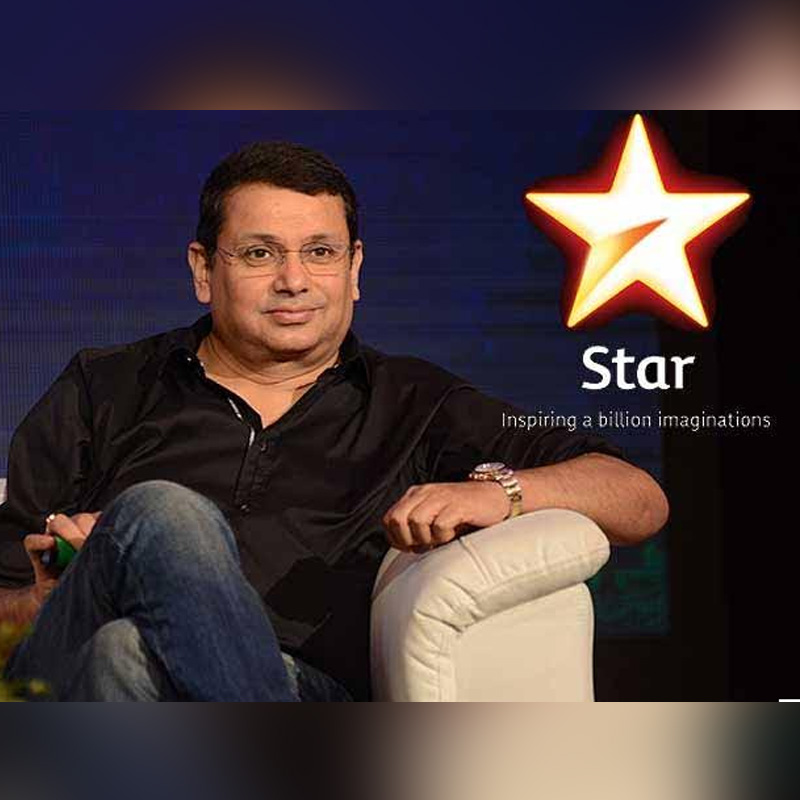
    Ushered into the room with a view, its occupant and Star India chairman and CEO Uday Shankar shakes my hand warmly, exuding the same camaraderie that he did almost three decades back when we used to meet as journalist colleagues sometimes in the New Delhi house of one of his early mentors, Siddharth Ray (India’s first general manager  for Star TV  – yes, in the 90s it carried that name officially). Over tea (for him) and strong Espresso coffee for Indiantelevision.com’s consulting editor Anjan Mitra, a wide range of media matters were debated for about 90 minutes. Edited excerpts from a free-wheeling interview follow. Read on:

    How do you view the Indian broadcast and entertainment industry as of today?

    There are two or three things that I feel very strongly about. From a consumer point of view it’s a great time for them because large volumes and range of domestic and global content is being made available to them at increasingly competitive prices. But when it comes to the industry itself, it’s a bit of a mixed bag. Though the industry has grown dramatically in terms of the number of players in the last several years, the business case of the industry looks under pressure. When I say business case, I don’t mean just the profit model, which is under pressure for a large segment, but the sustainability itself for the whole industry. 

    I think, the IPL bidding is a very interesting case in point and an indicator of things to happen in future in the media sector.  This is probably the only place and example where for a major content right, the contenders included two very strong media companies (Star and Sony Pictures Networks India), two big telecom companies (Airtel and Reliance Jio) and a couple of global digital/technology companies (including Facebook). And, they all valued the property almost equally as important and almost in the same ballpark.

    So, media is no longer the sole domain of traditional media companies. We have heard this being said for some time now, but it played out for the first time in broad day light here. What is more significant is that such competitive bidding for content has not happened in the UK or the US, which are considered mature and big media markets with good broadband infrastructure, but in a country where the digital distribution of content is of very recent vintage.

    I think in some way we set ourselves up for such high inflation by creating Hotstar, which led everybody to realize that there is a value in that kind of a business model. So, for the industry this is time to wake up and take note.

    Third, while parts of the media and entertainment businesses have leaped forward as has the consumer, the distribution and the regulatory models remain locked up in legacy issues and that’s creating a bit of a mismatch. That’s a challenge that we need to solve together as an industry.

    What are the problems besetting video content distribution in India?

    There are various aspects. If you are talking about it in the digital domain, I think with the launch of Reliance Jio there has been a huge disruption. But access to data still remains limited and expensive. The broadband infrastructure has improved in the last 12 months or so, but is still nowhere where it should be. The number of smart phones has grown dramatically in India, but is still a small percentage of the total mobile penetration.

    On the TV side, the industry has done a great job on many fronts. Still, we have to realize that we are competing with global companies with great resources and scale, and the benchmarks too are global. Whether it is story telling or quality of production or marketing or brand strategy, benchmarks are global. So, we the content industry need to step up our game.

    The competition for Star will not be only from similarly placed media companies in India but will come from technology and other global companies; from the likes of Amazon, Alibaba, Google and Facebook. Are we ready for that as an industry? Individual companies may be ready for such competition, but I am not sure if we are ready as the content industry.

    Part of the problem is because the monetization models haven’t evolved much. We still have regulatory issues, which are challenges, though I don’t want to go into too many details on that aspect.

    Still, the entire TV distribution industry, according to me, has done an amazing job of creating 180+ million connected homes. Now that segment has to make sure each one of those homes is going up the value chain rather than trying to offer them discounts, etc. The stakeholders are competing only on the price front. If you are competing only on the price point, then you are compromising on the consumer experience and soon the consumer will start questioning whether it is worth having a cheap service, minus the experience. So, there is this whole challenge of getting the consumer up the value chain.

    Where do you see Star India placed in the scenario that you have painted where both challenges and the opportunities abound?

    There are things that an individual or a company can do with its own enterprise. Then there are things that all of us can do as an industry. I believe that if the whole industry is not progressing, individual companies can only progress so much. In that context, at Star India, we have done a good job and I am satisfied. Can we do more? Of course we can always do better. But we have managed to create a fairly deep and diverse entertainment platform on television and have leadership in a large number of entertainment markets.

    To give you an example of the enterprise we have shown, take sports for instance. Five years ago we got into sports (management and broadcasting) and have created, perhaps, some of the most exciting franchises anywhere in the world. We have not limited ourselves to the sport that guarantees success (cricket), but have gone and experimented too. We have put our faith behind new initiatives in sports whether they are kabaddi or badminton or hockey or football. Our mission is to try turning India from a one-sport nation to a multi-sport one, while maintaining the pre-eminence of cricket. Some progress in that direction has been made and it’s satisfying.

    Can Star make it a mission to get India the Olympic gold considering its continued investments in sports?

    Star is a media and entertainment company and I would not want to have the arrogance to say we can make India win an Olympic gold medal. All I can say is that we’d be happy to partner with any agency or initiative that is designed to get India closer to the Olympic gold(s). Our job is to make sure that we showcase sports’ growth and breakout stories. I think we have done that job very well. I would like to believe that with Star Sports we are able to showcase the new (sporting) heroes far more prominently today than what we could have done few years back. If national team members of various sports, who were relatively unknown, now are recognized by ordinary citizens, I think we have done our job — in fact we are doing just that.

    That being said, I would like to add that private investment in sports ought to be welcome as it is this investment that helps sporting organizations plough funds into infrastructure, training and facilities, which in turn contribute to sporting success.

    What are the changes on the content distribution front that you have seen and what are the continuing challenges for the industry, considering Star has had limited exposure to the distribution business?

    If you look at how much we have moved in the last 10 years, it’s an impressive story.  The problem is that the process of digitization, which started essentially with DTH, and then picked up steam in 2011-2012 hasn’t delivered the full value.

    Digitization still remains an unfinished agenda though it was meant to have been over quite some time back. It was supposed to have meant that people had access to better content at competitive prices and for good content to get easier distribution avenues. That hasn’t happened. The idea of digitization was also to allow content creators like us to offer integrated services to the consumers. That too hasn’t happened and the story has really not moved. Broadband access may have improved dramatically, but the participation of cable and DTH sector in that is miniscule.

    public://Uday Image--1_1.JPGDigitisation still remains an unfinished agenda. People should have access to better content at competitive prices, and for good content to get easier distribution avenues

    To put it bluntly, a bunch of people, who have got used to the idea of benefitting from an economy of shortages or scarcity, continue to create scarcities or continue to create conditions of scarcities (of content) and benefit. Fundamentally, it hurts the society and the industry. That is the disappointing side of the distribution business.

    Star could have continued contributing by remaining a stakeholder in the distribution business. Comment.

    While we were a minority shareholder (in Hathway) our ability to influence the business was limited. That is why we decided to get out because we were not shaping the (distribution or the company) agenda. We do have a minority investment in Tata Sky, but, again, our ability to set the agenda of that company is limited.

    Will Star review its distribution business exit or its paring down, now that the government has liberalized investment norms for the DTH and cable sectors?

    Government has allowed (increased FDI in DTH and cable companies) only at a headline level. The problem is that we were restricted even before the FDI investment limits went to 100 per cent. I think the Prime Minister has eased the investment norms facilitating more FDI in this sector, but we are hampered by other regulations. Cross media restrictions, which in any case is a discriminatory piece of regulation, has only blocked a company like Star from investing in the distribution sector more aggressively. This restriction is applicable only to DTH/HITS ventures but not to cable or IPTV, which in itself appears to be an arbitrary measure. And, we don’t want to skirt around regulations to create business entities to be in a business. We don’t want to invest and create a value when our say in a company remains locked. In that sense, our ability to invest more in Tata Sky is still restricted.

    Is the business model in India changing for content aggregators and owners like Star? Has it now boiled down to free-to-air (FTA) vs. pay TV?

    I am glad you asked this question. It is amazing how in this country we indulge in polarized arguments where none needs to exist.  Where does the question on pay TV versus FTA arise? Why should it exist at all? In most other countries, there is a place for FTA and pay TV businesses. The problem starts arising when they start competing with each other and that does not need to happen. In this country, a major part of the broadcasting business that developed in the last 20 years was primarily done by pay TV broadcasters. As access to FTA broadcasting, which is mostly terrestrial, was not open to private broadcasters it remained in the hands of the public broadcaster. Until Doordarshan FreeDish came along.

    Now technology has opened up an opportunity creating a space for FTA and pay TV broadcasting.  I personally believe that the two should and could co-exist in this country — pay TV for those who want to pay and have access to a much diverse and richer range of content and FTA platform for those who don’t want to pay as much for all of it but still want to get some basic content.

    Does it happen vice versa too when pay TV content or channel is brought onto a free platform just to botch up the competitor’s business plans?

    I think that should not happen. My public position has been that we should not take pay TV content onto a free platform (like DD FreeDish) because it not only undermines a pay TV consumer, but also a pay TV platform. In my opinion that is a wrong strategy. I personally started a dialogue between platforms and broadcasters to stop such a practice but it has not been too fruitful. We launched Star Bharat on the FreeDish platform, but it has fresh content.

    Q: Will Star Bharat continue to remain a pay channel also as per media reports?

    Don’t trust everything that you read in the media. However, there is nothing that prohibits a channel being available on DD FreeDish and on pay TV platforms. A whole bunch of channels in the past have done this; almost the entire language news category is on pay TV and FreeDish platforms at the same time. A whole bunch of entertainment channels too have followed that practice. So, what you hear about Star Bharat is simply mischievous.

    Q: Please clarify whether for Star Bharat a consumer will have to pay if available on DTH or cable platforms?

    Yes, a consumer of a DTH service or a cable platform will continue to pay for Star Bharat just as he did for Life OK for the time being. We sought permission from the government saying the channel will be rebranded as Star Bharat and would be offered on DD FreeDish as well. So, the pricing issue remains where it is.  Some people have chosen to find a problem with Star Bharat, while being totally comfortable with their own friendly channels. We are the only ones to have fresh original content for a channel on FreeDish like Star Bharat. Quality of production is high on Star Bharat as we are spending the same amount of money per hour or per half hour that we would have spent on Star Plus, which is a premium channel.

    Q: James Murdoch said in an investor call that Star India is on course for $ 500 million EBIDTA for year 2018 and that cricket bids would have to be disciplined. Do you agree?

    (Smiles) If my bosses have said that we are on course, then I would have to follow the directions. However, those statements were made in a responsible manner as we do have a plan and are working towards the goal. If the Indian economy remains on course, we are on course for all that.

    As far as disciplined bids (for cricket rights) are concerned, of course it was a disciplined bid for IPL. Everybody has seen how close it was where the margin of victory was just three per cent. So, what more can I say in defense? Six years ago when we signed up for BCCI rights (media rights to Indian cricket), we paid Rs. 430 million (per match). At that time critics said Star had probably paid too much. It turns out now that we didn’t and that worked out really well for us. Today that (figure) has become the new normal. Now people are saying we are paying too much for IPL (US $ 2.55 billion for a five-year global media rights) only because 10 years ago it went at a much lower price. But then ten years ago the world was different, India was different and IPL was an untested product.

    Q: Would you agree with Indiantelevision.com’s analysis that Star actually got a good bargain for the $ 2.55 billion it bid for IPL rights?

    I don’t understand why people are so excited about it. Hardly ever a sports media rights been awarded at such a close margin. Why are people asking ‘why has Star paid so much’? Clearly there were a whole bunch of people who were willing to pay and it was evident in the bidding numbers.

    public://Uday Image--2_2.JPGEach media company has its strengths. I respect Zee enormously

    As an aside, my personal view is that BCCI (Indian cricket board) lost a lot of value because of the duration of the contract. If it had been for 10 years, the value would have gone up dramatically. And, I am not just saying so because of the length (of the contract). Had it been for a longer period, per year value too would have increased tremendously —shorter the period, lesser is the flexibility. 

    Q: What are your plans to monetize the IPL property?

    These are still early days, so you have to give us time to think through our strategies, which will unfold in due course. But I certainly won’t share with the media what I am trying to do.

    Whether we have bid high or not will be judged by the fans of cricket. All I know is that IPL’s a very powerful tournament and cricket runs really deep in everybody’s bones in this country. To be successful, you just need to work on intensifying and heightening the experience of cricket further.

    I believe that power of sports is such that you don’t need to give it steroids. You just need to be true to the spirit of the game and make sure that the experience for the fans is evolving continuously.  That is where our strength comes in and I would like to believe that as Star is the company that successfully created a few sports franchises that didn’t exist in the public domain earlier. We should be able to do that with IPL too. With cricket it’s not a one shot affair, it’s a process where you need to continuously evolve and we will work on that.

    Q: Will you continue to work on Pro Kabaddi League too and bring it up to the IPL level?

    We have brought PKL already in the limelight. But to be honest, though PKL still has some distance to travel to reach the levels of IPL, its growth has been phenomenal. When we were looking for franchisees for the inaugural edition, it took Anand Mahindra’s personal charm to get people in. This time round, when we added four new teams, there was a problem of plenty — a large number of top corporate houses and individuals were extremely keen to get associated with PKL. So, clearly people believe in what we are trying to do. Look at the Indian Super League (soccer) story, which is in partnership with Reliance Industries. Except a few loyal pockets in the country, football nowhere figured in the country’s psyche or much in public debates. However, we have managed to turn the passion for football into a serious commitment for fans all over the country.

    Q) Is that why you are picking up another indigenous game kho-kho to try its rediscovery?

    Are we? We haven’t taken a decision on that sport yet. 

    Q) Which media company is the closest competitor of Star whom you respect?

    Each media company has its strengths. I respect Zee enormously.  I think it is very strong on discipline and doesn’t get distracted by what others are doing. It works hard to execute a plan it has. Similarly, other companies have their own strengths.

    This is a business where competition is very dynamic and the power lies in the hands of the consumer. One half hour gone wrong can swing things away from you. As we have such a diverse portfolio, it is not about one competitor. Even if we are the leaders in one segment, in some other part of the business we are facing heat. But the entire business, hopefully, will not face heat from any one competitor.

    Q: So Star is in a dominant position.

    I don’t like the `dominant’ word. Especially because I feel this whole idea of dominance in a business — especially a media business — is a spurious claim. Either it comes from a complete lack of understanding of the business or it’s a mischievous allegation. Simply because there is no one product called Star India. For viewers and advertisers, it is a combination of multiple TV channels and each of those channels consist of large number of shows. You may have a show at 8 pm that is chart-busting and then at 8.30 pm you may have a show that nobody is watching, which usually is the case. A show that was doing really well three months ago can go into a total free fall if one artist is not there or there’s twist in the story-line.

    Take sports, for example, again. You go and get rights of a property for a number of years and after that it goes to the public when anybody else can also bid for the rights and participate. On the digital front, the competition is even crazier. So this argument of anybody building dominance, not only Star, is totally mischievous and spurious.

    Q: Let us rephrase the question. Isn’t it a great feeling to continue being a leader?

    In some parts of the business, we continue to stay ahead and that’s because we work harder. We spend more money on our content and are less focused on profits. We reinvest (in the business) more than probably anybody else in this sector in the country. Media and critics have written for the last five years or so that Star was not making profits in sports after investing heavily in sports content and now people are saying otherwise. We have now started investing in Hotstar, a digital platform. I think the one big difference between us and everybody else, and which gives us leadership and a little more of steadiness, is that we are always trying out new things.

    We have tried to explore new horizons and boundaries. Not all such initiatives have been successful, though. I would like to believe that we have pushed the creative envelope in a responsible way far more than what has been done in the past. Are we trying to future-proof ourselves, as you ask? I wish it could have been possible. But, yes, we are investing in the future.

    Q: Critics and some industry players feel that Star India has become so big that it can challenge the sector regulator too. Comment.

    First, we have not taken on any regulator. We have had some fundamental and limited issues, which became sharper in the new tariff order (of TRAI, the broadcast regulator). Our understanding of the TRAI Act says that the regulator has jurisdiction over distribution/transmission of content, but not the content itself, which in our case can be determined only under the ambit of the copyright law of the country. The law of the land gives every aggrieved person the freedom to go to a court for adjudication. And, that’s what we have done. There is nothing like challenging the jurisdiction of the TRAI.

    Q: Is the India market over regulated compared to some other markets in Asia or the west?

    I would not make such a blanket statement. There are parts of the market that are over regulated and there are parts which are not. All I would like to humbly submit is that there are some parts in the existing regulations — especially those dealing in relationships between distributors and content owners — that are debatable. If the proposed regulations were to come into effect today as they are, any new entrant to the Indian broadcast industry would find it a difficult and expensive proposition.

    Q: What more would you like the government and regulator to do to be a bigger facilitator of doing business apart from what they have already done?

    We don’t have to create a shoe to fit every foot as there are different feet sizes. Similarly, there are different needs for different set of people in terms of content. However, let me make it clear that I am not making a case for smut because Star doesn’t do sleazy content.

    TV is a family medium and we should be mindful of that; Star certainly is. There may be families where kids also watch television along with elders, but there are homes where there are no kids. Hence, the need (for content) of the latter family might be different and mature. So, content creators should be allowed to factor in all such diversities and create a spectrum of content rather than just uniform content in a one shoe-fits- all model. TV is an instrument of change and also a huge driver of employment and wealth creation.

    While agreeing there are areas where some restrictions are needed, I would say policy-makers should allow the whole eco-system to come together and be more flexible. Take, for example, the number of people who are dependent, formally or informally, on the TV industry as a category. That number would be around five million if the whole value chain is taken into consideration. I feel the number can increase manifold.

    Q: How do you see the Hotstar growth story now that it has been launched in the US and Canada?

    I find that space very exciting. It’s a market with an affluent South Asian diaspora with huge appetite for Indian content whether sports or drama or movies. They pay high subscription money presently to watch Indian content on American platforms as the structure for getting access to South Asian content is complicated and expensive. We think with Hotstar we can make a difference by offering people living abroad high quality content and world class experience at prices far more competitive than what they are paying now.

    Q: Does Star have a time frame, say 12 months, to rollout Hotstar worldwide?

    I don’t have a hard and fast deadline. For me it is more important to first build a business, stabilize it and then scale it up. We are not playing a valuation or a stock market game. I would like to build things on a solid foundation. So, to answer your question, I think it is clearly not going to happen in one year’s time.

    Q: How closely is IPL’s monetization linked with Hotstar?

    We have got the global rights for IPL and we will explore internally what trade-offs we can do. We would have to examine whether we can get better business value by offering it (IPL) ourselves or we should license it to other companies. The financial case will influence those decisions.

    Q: Is Star still in the lookout for properties to acquire to fill gaps?

    We are not a big M&A company. In my 10 years at Star India, we have acquired MAA TV and before that Asianet (both companies located in South India).  In this company, my bosses, my colleagues and I like to build things ourselves as that way we can shape the business the way we want to. Such initiatives are also more sustainable and self-sufficient and, remember, we have an exceptionally high quality plan execution team.

    However, I would admit there are always gaps, but you need not fill all of them. Also, there are not many quality assets available in the media space presently.

    Q: What about the regional space? No opportunities there?

    There would always be opportunities, but I don’t think we are considering any (M&A) in the regional language side in the foreseeable future and going deeper in the regional markets. We already have much on the plate.

    Q: Would Star like to review an earlier decision and return to news business in India?

    There is no plan to get back into the (television) news business. Moreover, with my limited understanding, news on television globally faces challenges these days as second on second updates are available on one’s hand-held devices. So, what new proposition can one create for people to come back night after night, 365 days on television, to spend some time watching you? Those who had created a brand on news television and are carrying on can continue to benefit from a legacy habit. But creating new news brands on television is lot more difficult today than in the past. People also have access to news on digital platforms as there is so much news available in one form or the other, including professionally produced and user generated. So, at the moment there are no plans to revisit our decision to exit news business in India.

    Q: Hotstar seems to have a special affinity for Republic TV and is it filling Star’s news need?

    (Smiles) In the same way Hotstar offers Sky News, Republic too is offered to consumers. If others are interested, we will give them a platform too. Don’t read too much into the agreement with Republic TV; it’s a simple distribution arrangement.

    Q: Would you agree that because of the audience ratings game, entertainment is becoming news and news is becoming entertainment in India?

    I would, rather, not get into that argument at all. However, since you have asked, I don’t think TRP(s) is a bad word. In the business that we are in, which is called mass media, if you take out the mass there is no business left. If it is mass media, measurement of the masses comes from ratings. The question is: what all would you do to get ratings? The answer lies in each individual and each company’s value systems. At Star, we have decided that we would do certain things and we would never do certain other things to get ratings. Some other people have defined that differently.

    Q: You have said in the past media and entertainment industry is not throwing up young talents because of inadequate human resources R&D. Do you still believe so and what has Star done to counter the inadequacy?

    The industry was not geared for creating so much of output as it is today between films and TV. Look at these small shops that have mushroomed all over.  We have been unable to expand the pipeline of training creative talent whether it is at the MCRC or the FTII, for example. In the meantime, requirement has grown manifold.

    I, generally, believe that our ability to compete with companies that are modern, resourceful and global will depend on the (human) resources and talent we create in the country. In a country where formal institutions are not geared to identify and shape new talent, the industry has to do it. I have been an advocate of that for a long time. Though we need to do this collectively as an industry, a beginning has been made by Star. We have created a big academy where we have got a respected name from Hollywood to be based in India to teach.

    Q: What are your thoughts on Made in India content for the world market?

    We are doing some things on that front by creating products that we can take outside India. We have succeeded in that endeavour with few Hindi films like `Neerja’ and ‘Dhoni’.  Hopefully, we will be able to open up that market more. At some stage, hopefully, some of the sports leagues that we have created, especially kabaddi, will be of interest to people outside India.

    public://60371509.jpg

    Technology has created space for FTA and pay TV. The two could co-exist — pay TV for those who want diverse and richer content, FTA for those who want basic content

    However, I don’t see Indian drama in its current form travelling outside India for a long time. Such shows are culturally too specific and too rooted in our family culture. Moreover, our business model is different that works the best when we offer large number of episodes. When you do that, given the monetization model, limited revenue comes from the investments made in a show with huge number of episodes. Until a totally distribution driven business model for premium content comes along, I think Indian entertainment content would not be competing in the global market.

    Q: What’s your perception on linear TV continuing as a medium in India?

    In this country TV will continue for a long time. I am not one of those who believe that linear TV would disappear in five years time and people would go completely digital. First, in a country where the family values are still strong, TV continues to act as glue for the family to get together. I don’t think, and hope, it would change very soon. Second, TV’s biggest comparative advantage comes from it being very affordable. Despite prices of broadband having dropped, if you take into account the cost of data and content, a digital platform is still way more expensive than TV. For anything between Rs 150-Rs 400, people can get more content than they can ever watch on TV.

    Then there is a long tail of households that is still waiting to get into the television world. The question is: can we create innovative price models for different user groups so it’s a win-win for the creative people and the business too? 

    It is also a mistake to think that television is only competing with television. No. TV also competes with digital platforms and people only have finite time to spend watching shows. Again, are we innovating enough? I think we are not innovating enough for TV to be at the cutting edge of competition with digital.

    Q: In terms of management of Star’s Indian operations some structural changes happened two years ago. Are some more in the offing?

    We created a new structure, as you have said, where we pushed decision making further down. I think Star India is, probably, the most decentralized media company in this country. We have different CEOs for sports, entertainment, digital and South Indian markets, and a head for international business. Not only it is fairly deep, but also diverse and aimed towards creating more entrepreneurship.

    Q: Having begun your career as a print media journalist, you have gone on to head Star India, an entertainment company. What would be the achievements over the last 10 years for the company, people and you?

    We have created a healthy and robust company with a bench of high quality talents across all segments of our business. Not only at Star we have encouraged innovation and entrepreneurship, but have created serious consensus on a whole bunch of issues in the industry ranging from content creation to brands. Personally, I take a lot of satisfaction in driving initiatives like self-regulation in content, etc. Above all, it is a matter of huge satisfaction that we have taken initiatives that have gone beyond the remit of a traditional media company like Star — like create and build sports leagues.

    I keep talking about it (various sports leagues) only because it’s only a matter of time before other companies will also get into it and then the transformation would really impact the country. I would like to see the same transformation in India that has been seen in places like parts of Latin America, Africa and Europe where the power of sports has acted as a social glue to create opportunities for people who would otherwise be totally on the margins of society. Being able to be part of such a transformation has been hugely motivating for me all these years.

    Q: Where do you see yourself five years from now?

    I am typically the kind of person who doesn’t forget his background and my base has been in news where I was extremely focused on tonight’s headlines as tomorrow is another day. So, I am very focused on clarity for today without worrying about tomorrow. I believe that one thing leads to another. Honestly, I have never planned my life, but it has been a great ride till now.

    ALSO READ:

    Major restructuring in Star India; Uday Shankar, chairman & CEO, Sanjay Gupta, MD

    Comment: With IPL rights Uday Shankar gambles audaciously, must plan pragmatically

    TRAI can only regulate transmission, not broadcast material: Star tells Mds HC

    Jawahar Goel raises alarm of emerging Star cricket monopoly (updated)

    Life OK rebranded as Star Bharat may start from 15 Aug
  • Guest Column: Star India’s IPL deal raises three crucial questions

    Guest Column: Star India’s IPL deal raises three crucial questions

    “Astronomical”, “whopping” and “staggering” were some of the words used to describe Star Group’s consolidated global bid of $2.55 billion for the media rights of the Indian premier League (IPL). Several newspapers described it as the “costliest” cricket property in the world.

    It seems to be an opportune time to look at the truth behind the numbers, and answer a few relevant questions. Was Star’s “all or nothing” bidding strategy exceptionally brilliant or extremely stupid? Does the seemingly-high price reflect the enormous and growing valuation of the IPL? Are IPL’s media rights costlier than those for the Indian national team?

    The Board of Control for Cricket in India (BCCI) allowed two kinds of bids – a consolidated global bid for the seven rights, including TV and digital, through a consortium, or individual bids for the specific rights. For example, a company could bid for the TV rights for the sub-continent only or only for the ‘Rest of the World’. Another could bid for two, three or four of the seven rights. A fourth could bid for all the seven rights separately. A fifth could do this, and also put in a consolidated global bid through a consortium.

    All-or-nothing Strategy

    From the information that’s available, Star was the only bidder to exercise the last option – a consolidated bid and separate bids for the seven rights. The others chose to focus on specific rights based on their strengths. Sony, which held the IPL TV rights for the first 10 years (2008-2017), put almost all its budgeted payment – over 99 per cent — on the TV rights for the sub-continent. Facebook, Airtel and Reliance Jio had huge, but single, bids each for the digital rights.

    The second component of Star’s “all or nothing” strategy was to bid really high for its consolidated bid, and fairly low for the specific rights. The idea was simple: make sure that it had a relatively higher chance to bag the composite bid, and ensure that if it got only a few individual rights, it paid much less. This is clear from the bid amounts. Star’s consolidated bid was Rs 163,475 million for five years. However, the sum of its bids for the seven individual rights was only Rs 788,247 million, or less than half of the former amount.

    Take a look at the comparative individual bids by the various players to understand Star’s game plan.

    Its bid for the subcontinent TV rights was Rs 61,969 million or much less than Sony’s Rs 110,500 million. Its price for the digital rights was Rs 14,430 million, or even lesser in percentage terms than Facebook’s Rs 39,000 million, Airtel’s Rs 32,800 million, and Reliance Jio’s Rs 30,757 million. Thus, Star made certain that it wouldn’t overpay for the individual rights.

    But Star was willing to go overboard for the consolidated and overall rights. The reason for this was obvious: BCCI’s tender stated that a combined bid could win only if the amount was higher than the sum of the highest bids in the individual categories. The latter figure, as it turned out, was Rs 158,195 million, or just over 3 per cent lower than Star’s consolidated bid of Rs 163,475 million. It was a lucky break for the winner – if its bid had been four per cent lower, it would have got only a puny ‘Rest of the World’ right that was worth Rs 487.5 million.

    Seeking Synergies

    In the future, the “all or nothing” strategy may turn out to be exceptionally brilliant or extremely stupid.

    This can be explained by two examples. When entrepreneurs opt for mega takeovers, they generally have two kinds of plans. The first is to sell off the various assets as they feel that the sum of the parts will be considerably higher than the whole. The other is to leverage and extract synergies that will result in a higher valuation for the whole.

    Both can work, but will the latter strategy work for Star? The quick answer: only if it knows the art and science of synergies.

    Over the past several years, sports organizers, media rights-winners (bidders) and advertisers have explored ways to take advantage of sport viewers’ habits in the age of convergence. According to a 2016 working paper by the Harvard Business School, some of the organizers, like UEFA (football), have successfully integrated “commercial activities and resources of sponsors into sports events” to improve “audience experience”.

    According to a 2016 piece by Patrick Hanavan, Chief Client Officer, Extreme Reach, a cloud technology platform, “There is increasing evidence that consumers are pairing their TV watching with ‘second-screen’ behaviour on social media….” This provides advertisers with “more opportunities for synergy between their TV buys and video buys… and potentially more cost-effective inventory.”

    public://BCCI_1.jpg

    Given such trends, a rights-holder, who has combined and comprehensive TV and digital rights presence, is ideally-placed to woo a larger set of audience, reach more advertisers, grab more spend from the same advertiser, and work closely with the sport organizer. The global trend is towards a seamless ‘rights’ strategy that encompasses TV, digital, broadband and social media.

    Although it’s not strictly similar, Turner Sports’ handling of the NBA media properties is an example. According to a report, Turner’s handling of the NBA’s digital business became so extensive to encompass “everything from mobile and social to broadband and the NBA’s out-of-market package”. Add TV to this mix, and what you have can be a winning combination.

    Star can easily drive, rather than merely woo, IPL traffic to its different properties. Star owns Indian cricket as it has the crucial rights for IPL and national team (the Indian cricket rights are with Star till first half 2018). It can extract cricket synergies if it innovates and thinks differently. Over time, the IPL viewership can translate into increased audience for non-IPL content on Star’s properties like Hotstar. The net result: higher returns on overall investment.

    Unfortunately, such grand strategies can unwind easily. Star’s attempt to drive traffic internally can drive it away. Seamless integration requires time, and five years may not be enough to translate the objectives into reality. Moreover, the fresh bidding for the Indian team’s rights will take place in 2018, and Star may lose them. It will be left with the IPL rights for a short summer period.

    Crucially, competition will keep nipping at Star’s heels, and may overtake it in the future. Next year, Sony, Facebook, Airtel and Reliance Jio will bid more aggressively. This will definitely happen when fresh tender for the IPL bids are floated in 2022. The story of how the bidding for the IPL digital rights has panned out is an indicator. The last time, Star won them for mere Rs 3,030 million for three years or Rs 1,010 million a year. This time, FB bid Rs 39,000 million for five years or Rs 7,800 million a year. It implies that the annual worth has gone up by nearly 225 per cent. Clearly, the social media network hopes to ride the cricket wave. The next time, Star’s “all or nothing” may come to nothing.

    Worth of IPL

    In 2009, when the IPL rights were renegotiated, Sony agreed to pay Rs 82,000 million for a nine-year period or Rs 9,111 million a year. At a simple inflation rate of 10 per cent, the figure will escalate to Rs 17,311 million over nine seasons. At a compounded rate of 10 per cent, the figure will be Rs 21,483 million. Star agreed to pay Rs 32,695 million per year, or a sizeable over 50 per cent higher than the 10 per cent compounded figure. This indicates that the IPL’s valuation has shot up, or at least the stakeholders think so.

    Of course, if one accounts for the rupee devaluation between 2009 and 2017, the math will be different. In 2009, the dollar averaged Rs 46, and is now just over Rs 64.

    A similar 10 per cent inflationary calculation for the price paid per match for the national team (the contract was bagged by Star in 2012) and IPL (2017 deal) will reveal that the conclusion that IPL is more expensive isn’t correct. If one looks at the overall scenario from a different perspective, IPL’s valuation has come down. A couple of years after the inaugural season, the league’s value was $4.1 billion in 2010. In 2016, Duff & Phelps found that it was still worth the same — $4.16 billion.

    Only this year did Duff & Phelps upgraded the valuation of IPL to $5.3 billion. Even this signifies an increase of 29 per cent over seven years, or less than what you can earn on fixed deposits. In fact, according to Brand Finance, the value of the league has diminished from a high of $4.1 billion to $3.8 billion now, after reaching a low of $2.9 billion in 2012.

    But at the same time, other deals indicate that the stakeholders still have faith in IPL. Recently, IPL title sponsorship was sold for Rs 22,000 million or twice the figure for the Indian team sponsorship.

    Only time will tell whether Star India can convert the opportunities to shore up its bottomlines further, considering its financial clout and business acumen.

    ALSO READ:

    Star bids highest for BCCI’s IPL media & digital rights and is the winner

    IPL has come to the rightful home of cricket in India: Star’s Uday Shankar


    public://Alam_Srinivas.jpg(Alam Srinivas, a senior business journalist and Executive Editor of Patriot, has authored two books on IPL, `IPL: Cricket and Commerce’, and `Cricket Czars: Two men who changed the gentleman’s game’. The views expressed are personal and Indiantelevision.com need not necessarily subscribe to them.)
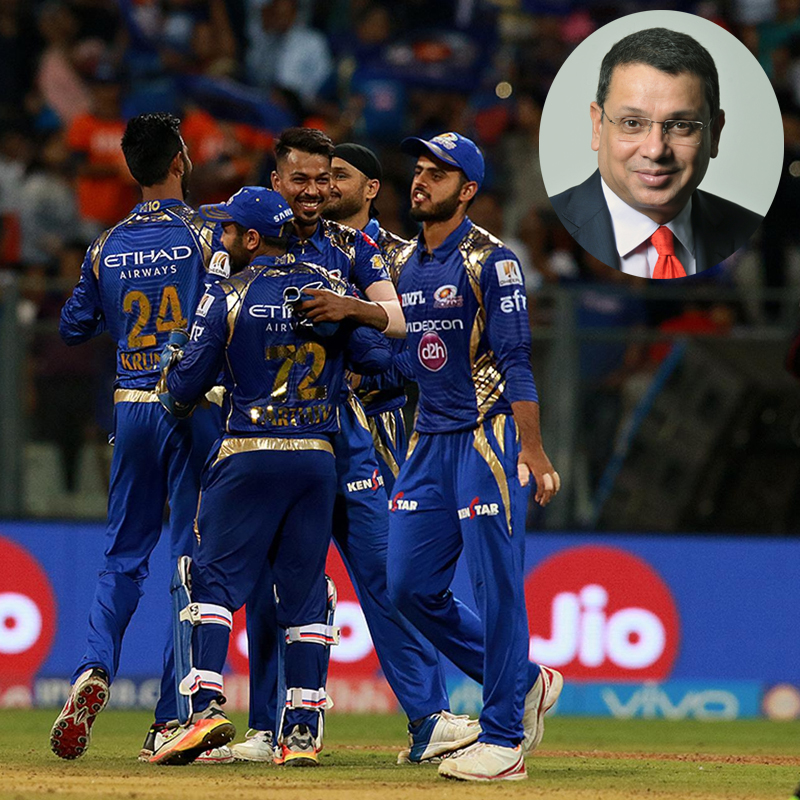
  • Comment: With IPL rights Uday Shankar gambles audaciously, must plan pragmatically

    Comment: With IPL rights Uday Shankar gambles audaciously, must plan pragmatically

    The numbers were close to what we at indiantelevision.com were betting on. In conversations with senior executives from various companies, we had predicted that the telecast rights to the Board of Control for Cricket in India’s (BCCI)’s Indian Premier League (IPL) would fetch it around twice the price that Sony had earlier coughed up. And that too for a rights period which has been halved as compared to Sony’s time.

    Star India’s bid of Rs 16,347.50 crore ($2.56 billion) lived up to that expectation. Sony had last paid Rs 82,000 million ($1.6 billion then) for the rights. In rupee terms that’s close to twice what was earlier paid.

    Of course, the key execs in Star India – led by chairman & CEO Uday Shankar – have good reason to pop the bubbly. They bested a slew of broadcasters, telcos, OTT players and more experienced global sports rights owners to the IPL rights tape with an offer that may appear  mindboggling – nay mind numbing – to many an industry observer.

    Star India, however, got through by what many might say is a thin whisker. The combined highest individual bids for all the rights on offer including India, digital, ROW A,B,C,D, E totted up to Rs 15,8195 million, whereas the 21st Century Fox owned network’s global bid for all rights was Rs 16,3475 million — a difference of just Rs 5000 million. A seasoned industry observer like Kunal Dasgupta, former head of  Sony Entertainment in India, said Star hasn’t bid too high — if one takes into account the combined figure of bids of others.

    Star India led the individual bidding for only one territory – the UK. Elsewhere its rivals bid higher. So, if Star India had not safeguarded itself by putting in a global bid, it well may have been sitting on the losing side with telecast rights only for old Blighty.

    However, it is on the winning side now. And media watchers are questioning whether  Shankar and his team have  bitten off more than they can chew. The network is already anteing up Rs 430 million a match since 2012 for telecast and digital rights to all international cricket that India plays. Thankfully, the Rs 38,510 million deal ends mid-2018 when the IPL-Star era begins.

    But who knows the broadcaster might make its pitch for the same rights once again. If one goes by its hunger to create and own Indian sport, one can expect a spurt in prices for the rights to international cricket featuring India too. So much so that the Rs 550 million per IPL match it is now committed to pay out may look relatively cheap. As things stand today, India cricket rights are cheaper than theIPL’s— and that says a lot about a league that has been valued at a shade over $ 5 billion by an international company.

    That’s for another day. Clearly, new benchmarks have been set with the new IPL deal. For Shankar, it is a calculated gamble that may actually help him raise his stocks within the 21CF family. Star is clearly pulling out all the stops in India. As are his bosses Rupert, Lachlan and James Murdoch. Because it is something they have been used to doing. Up the stakes and keep a stranglehold on sport that viewers cannot do without. Monetising it effectively comes later; remember Kaun Banega Crorepati, the Indian version of Who Wants To Be A Millionaire.

    In 2015, the UK’s monolith satellite operator Sky (21st Century Fox owns 39.14  per cent of Sky and is seeking to own completely through its December 2016 offer of pounds sterling 11.7 billion) agreed to fork out £4.176bn to keep hold of the maximum possible number of English Premier League matches – 126 – in the new three-year cycle, almost double the £2.28bn it shelled out in 2013. That worked out almost £10.2 million (Rs 844 million per game). So doesn’t Rs 550 million look cheap?

    Sky had signed a cheque of just £191 million for rights to the EPL (60 matches a year) from 1992 to 1997 – a steal at £0.6 million per match.

    In  July 2017, the leading UK DTH player  raised the stakes even further by launching an English Premier League channel, which would air the 126 matches as part of an initiative to revamp its sports channels. Ten of its sports channels were available at £27.50 per month, whereas individual channels could be subscribed to at £18 a month.

    Will Star go for a similar spin-off play in India?

    Will it launch an exclusive IPL Star Sports channel with debates and coverage of what the various teams and team owners are doing?  And biopics around some of the main players in the teams? Can it start a talent hunt to zoom in on cricketers who could play in the IPL? Can it create special programmes, format shows around the IPL? Sure the creative ideas are many, and many of them could end up being money spinners as well as duds. A lot of this has not been attempted before and is new territory for all, but Star India knows how to enchant viewers with its programming. However, one expects a lot more from it then just bringing TV characters and actors from its top shows onto the field for some of the ceremonies – something it did when it was the India team sponsor.

    Or will the network go for a simpler idea— broad base its telecast across its TV channel network with regional language commentary? Will it work with the BCCI to bring in further entertainment or excitement into cricket?

    While some may question Uday Shankar and team’s thinking behind paying out such a fat purse, clearly there’s some arithmetic and growth strategy in place. Shankar admitted to that when at a post bidding press conference he hinted that the winning bid seemed the “right” figure keeping in view the competitiveness of the bidding by others. Star India has displayed what many considered derring-do when it took the path to develop very local Indian sports like kabaddi, not to mention badminton, table tennis, football and other sports in India. But it has had the last laugh; especially with kabaddi that has found traction and is emerging as a money-spinner.

    With the world as his playground and the rights to digital and television globally at his disposal, expect Shankar and co to do magic. In one market the Star India team could sell the rights to a telco for the live feed, in the same market,  it could sell it to a VOD player for a delayed telecast and also sell it to a broadcaster there for pay TV or run a pay TV channel. In the UK, it has got a ready buyer in the Sky Sports cricket channel, which it launched along with  EPL Sports.

    The IPL teams have got representation from several cricket and emerging cricket playing countries; so the interest is bound to be there. And, if it is limited, Star and local partners will work to whip up the excitement.

    Otherwise, it could use the fun and action on the IPL cricket field to seduce subscribers in various countries to opt for its VOD and streaming service Hotstar. It has just about begun its global journey for Hotstar with its launch in Canada and the US a couple of days ago.

    The VOD platform has been blanked out in all other nations apart from these two and India. Viewers in these markets are used to paying – even if it is only a monthly fee of $9.99 to $13.99. In Indian rupees that is a lot of money: around Rs 650 to Rs 800. If Star manages to lure in even five million paid subscribers, at those levels it will generate an average of a whopping Rs 100,00 million annually per three month IPL season. Over a five year period it can expect its total subscription pie to grow to Rs 65,000 million in digital revenues from just Hotstar. Of course, one has to calculate expenses and operational costs. But then it will also rope in ad revenue too for the service.

    It is in India where it will seek to really exploit the IPL magic. Television advertising and subscription revenues,  premium VOD revenues for both live and delayed feeds – as well as ad  commercial sales  revenues on the free basic Hotstar service. Or, it could license the live digital feed to a social media network or a telco. Remember Facebook, Airtel and Reliance Jio bid in excess of Rs 30,000 million for the India digital rights alone. If any of them bite when Star makes them an offer, it would secure the broadcaster’s India’s revenue to some extent at least. Star well might keep the free delayed feed in house and stream it on Hotstar or sell even that to another player. The opportunities are mind-boggling.

    Of course, the big money monster is clearly going to be TV in India for the next five years, and even 10 or more, possibly. And that’s where Star India will go in for the kill.  The Indian cable TV ecosystem is evolving. However, cable TV operators and DTH players have been wary of raising subscription rates as well paying more for the content to broadcast partners.
    Though, through cricket, Star may look at building a walled garden — something that competitors have hinted at — the success or failure of it could only be gauged by a future time. As they say, hindsight is a great teacher.

    ALSO READ:

    Star bids highest for BCCI’s IPL media & digital rights and is the winner


  • Star bids highest for BCCI’s IPL media & digital rights and is the winner

    Star bids highest for BCCI’s IPL media & digital rights and is the winner

    MUMBAI: Star India has been investing heavily in Indian sport. And that investment – and promise to invest more – got the vote of confidence from the Board of Control for Cricket in India (BCCI) when its  offer of Rs 16,3475 million or Rs 16347.5 crore or approximately $ 2.55 billion proved high enough for it to snare the five year global consolidated (telecast & digital) rights for the most lucrative and prized cricket league in the world – the Indian Premier League (IPL). 

    Star India’s offer was about Rs 5000 million more than the consolidated highest individual bid total which stood at Rs 15,8195.1 million.  The bidding rules had made it clear that the global rights  (Rs 16,347.50 crore) bid would get precedence over the individual bids if the latters’ sum total (Rs 15,8195.1 million) was lower than the former.  For viewers, what this means is that they will be watching IPL action on Star India’s sports channel bouquet and VOD platform Hotstar for the next five seasons of the IPL (2018 to 2022).

    Though 24 companies picked up the offer documents, only 14 turned up for the bidding process early this morning, from which BAM Tech was disqualified. Those who took part included:  beIN, Star India., Followon Interactive Media, Sony Pictures Networks (SPN) , Times Internet, Supersport International, Reliance Jio, Gulf DTH, Econet Media, Facebook, DAZN / Perform Group, Yupp TV, Airtel and BAM Tech.

    Star India and SPN India were the only two bidders for the Indian subcontinent TV rights and the latter’s  bid  of Rs 11,0500 million was much higher than Star India’s Rs 6,1969. million.  Facebook India was the highest bidder for digital Indian subcontinent rights with its offer of Rs 3,9000 million. It beat back telcos Jio, which bid Rs 3,0757.2 million, and  Airtel’s offer of Rs 3,2800 million, and even Star India that had bid Rs 1,4430 million. The Rest of World A (Austrailia, New Zealand & rest of world) telecast rights saw a bid of Rs 700.1 million by Followon emerging as the highest offer, ahead of Times Internet Ltd’s  (TIL’s) Rs 533 million and Star at 178.8 million. 

    The beIN bid of Rs 3900 million for the Rest of World B (Middle East) rights  was much higher than OSN’s Rs 2112.5 million, YuppTV’s Rs 1001. million and Star India’s Rs 650 million.

    Supersport came out tops on the Rest of World C (South Africa) rights with its bid  of Rs 1202.5 million as against Econet’s Rs 845 million and Star India’s Rs 617.5 million. The Rest of the World D (UK) rights  had only one bidder: Star India with its offer of Rs 487.5 million, the only territory for which it emerged as the highest  individual bidder.

    The Perform group led the race for the Rest of the World E (US) rights by bidding Rs 2405million leaving YuppTV (Rs 2346.5 million), TIL (Rs 1852.5 million) and Star India (Rs 491.6 million) far behind.  The consolidated figure for the highest bids for each individual right thus worked out Rs 15,8195.1 million.

    Almost all the cricket ecosystem players were cock-a-hoop with delight about the successful global bid placed by Star India.

    Said BCCI acting president CK Khanna in a press release:  “We are happy to announce Star India as our new global media and digital partner. We thank all the bidders that participated in the process. We have ensured that transparency of the highest form was maintained throughout the process. I would like to thank cricketers and franchises for making the league one of the eminent sporting leagues in the world. I would also like to thank all the fans for showing their continuous support for the VIVO IPL for the last 10 years.”  

    Added BCCI acting secretary Amitabh Choudhary:  “We welcome Star India on board as our broadcast and digital partner. Cricket as a sport has evolved over the years, and today’s bids were a reiteration of VIVO IPL’s growing global popularity.”

    Star India chairman & CEO Uday Shankar too expressed his excitement about his company’s successful bid. Said he:  “We are honoured to be selected as IPL’s global media rights partner and we thank BCCI for conducting such a transparent process. The VIVO Indian Premier League is undoubtedly one of the most exciting sporting leagues in the world and this acquisition of media rights reaffirms our commitment to serve cricket fans and make cricket even bigger than it is. We are delighted that in Star, IPL has found its natural home. We look forward to bringing this exciting format to our audiences across the world in a quality that all our viewers are accustomed to both on television as well as on digital on Hotstar.”

    Shankar further added, “At Star India, we believe that Indian sports have barely scratched the surface of its potential. Both the viewership of sports and more importantly participation in sports is something that we would like to grow substantially over the next few years. The acquisition of these rights is symbolic of our commitment to not just cricket but to the growth of a wider sports culture in the country.” Not to let go of a chance like this, Shankar also added that Star would have to come up with solid business proposal to monetise the IPL property over a period of five years as pay TV revenues — read tariffs — were highly regulated in India.

    BCCI CEO Rahul Johri expressed:  “We are grateful to the Supreme Court, the Committee of Administrators and the office bearers of BCCI. We are also thankful to Deloitte and our legal partners Cyril Amarchand Mangaldas for their support in carrying out a fair and transparent bidding process efficiently. We would like to welcome Star India on board as our IPL global media and digital partner.  We believe this is a global benchmark and all the stakeholders of IPL will significantly benefit from this association with Star India.”

    Sportingly, SPNI congratulated and wished Star India all the best in its endeavor to shape the  IPL over the next five  years.  Said the previous rights holder in a press note:  “SPNI  has nurtured the IPL since its inception and within a span of 10 years established it as one of the most popular sporting properties in the world. We would like to thank all those who supported us in curating the lineage and legacy of IPL.  At the same time, we take this opportunity of wishing STAR India the best as they shape IPL over the next five years. With our recent acquisition of the Ten Sports network, the sports network of SPNI holds the broadcast rights to five cricket boards, guaranteeing that our channels will continue to offer a strong mix of programming for cricket fans.”

    Also Read:


    IPL tender submission & result date rescheduled

    IPL chief Shukla recuses from ‘live-streaming’ media rights auction

  • Dish TV shoots off letter to IBF; alleges discrimination by b’casters, OTT platforms

    Dish TV shoots off letter to IBF; alleges discrimination by b’casters, OTT platforms

    NEW DELHI: In a move that’s certain to set the cat amongst the pigeons, Dish TV, one of India’s biggest satellite platform in terms of subscribers, has not only accused broadcasters of  “discrimination” relating to making available content to various pay distribution platforms vis-à-vis likes of OTT, but also “creating huge disparity” in the market.

    “Broadcasters, on one hand, keep on charging huge subscription fee from us and, on the other hand, provide the same content/channel to the OTT platforms at highly subsidized rates, thereby not only creating a non-level field, but also causing huge detriment to the subscribers of Dish TV. Availability of same content/channel on alternate distribution platform on much cheaper rate vis-a-vis DTH has started resulting into migration to the alternate distribution platforms,” Dish TV has said in a letter to the Indian Broadcasting Foundation, an apex body of TV channels or broadcasting companies operating in India.

    The Dish TV letter dated 11 August 2017, reviewed by Indiantelevision.com, goes on to highlight why the move of TV channels to turn FTA, join Doordarshan’s free-to-air DTH platform DD FreeDish after paying a carriage fee, and making available content at highly subsided rates to OTT platforms like YouTube and that being proposed by Reliance Jio slides the Indian television market’s business model to be largely advertising driven.

    “It is a common industry knowledge that the broadcasters have provided their channels to the OTT platforms at a highly discounted rates, which is totally prejudicial and discriminatory to the DTH platforms,” the Dish TV letter stated, which has also been sent to the DTH Association of India and the All India Digital Cable Federation, a body of digitally-able MSOs.

    The letter from Dish TV, written by the satellite platform’s managing director Jawahar Goel, is addressed to IBF president Punit Goenka, who also is Zee Entertainment Enterprises Limited MD and CEO, and a nephew of Goel. Goenka’s father and media baron Subhash Chandra is a member of India’s Upper House or Rajya Sabha.

     According to people familiar with the development, IBF’s member-companies have been asked to give their feedback on the content of the letter, which could be put to vote some time mid-September.

    “The IBF constitutes of seven major members, viz. Star, Zee, Sony, IndiaCast, Sun (TV group), Discovery and Times, which not only control the IBF but also are the major players collecting the subscription and advertisement revenue— collecting more than 99 per cent of the subscription and advertisement revenue of the Indian broadcasting industry,” the letter stated, adding that actions of the broadcasters “clearly indicate” the focus was shifting towards increasing the advertising revenue against subscription revenue.

    Raising the issue of sector regulator TRAI and disputes tribunal TDSAT’s emphasis on “fairness, reasonability and non-discrimination” as far as making available content to distribution platforms,  Dish TV pointed out that strategies employed by broadcasters were “deterrent to the pay TV market.”

    Pointing out that certain actions of the broadcasters could amount to breach of cross-media restrictions too, the letter exhorted the IBF members to discuss “whether the emphasis has to be on pay model (where the broadcasters can collect subscription) or an FTA model (where the broadcasters can get the advertisement revenue)”.

    Till the time of writing this report, Indiantelevision.com could not get across to IBF for a reaction.

    “Availability of same content/channel on alternate distribution platform on much cheaper rate vis-a-vis DTH rate has started resulting in(to) migration to the alternate distribution platforms,” the letter highlighted, adding that big broadcasters’ own OTT platforms (like Star’s Hotstar, Viacom18’s Voot, Sony Pictures Entertainment’s SonyLIV and Zee’s dittoTV, for example) also contributed to compounding the problem.

    The letter added: “It will be critical for your (IBF) members to spell out the strategy to hold/grow the pay TV market, which has been contributing to around 35-40 per cent of the total revenue of the pay broadcasters.”

    However, it seems that the present slew of letters from Dish TV and accusations will again rock the approximately Rs 558  billion Indian media and entertainment industry, which had thought corporate skirmishes of mid 1990s to mid 2000s had been buried in favour of overall growth of the broadcast and cable sectors and the media and entertainment industry, in general.

    ALSO READ:

    Jawahar Goel raises alarm of emerging Star cricket monopoly