Tag: Reliance Jio

  • India adds 2.7 million new telecom users in July, led by Jio

    India adds 2.7 million new telecom users in July, led by Jio

    MUMBAI: India’s telecom dial tone got a bit louder this July, as the country added a net 2.7 million new telephone connections, taking the total subscriber base to 1,180.87 million, according to TRAI’s latest figures. That’s a ring in the right direction especially with wireless connections doing the heavy lifting. Wireless subscriptions grew by 2.74 million, pushing the total to 1,172.57 million. On the other hand, wireline subscriptions held relatively steady, dipping slightly by 7,747 users, ending the month at 8.29 million.

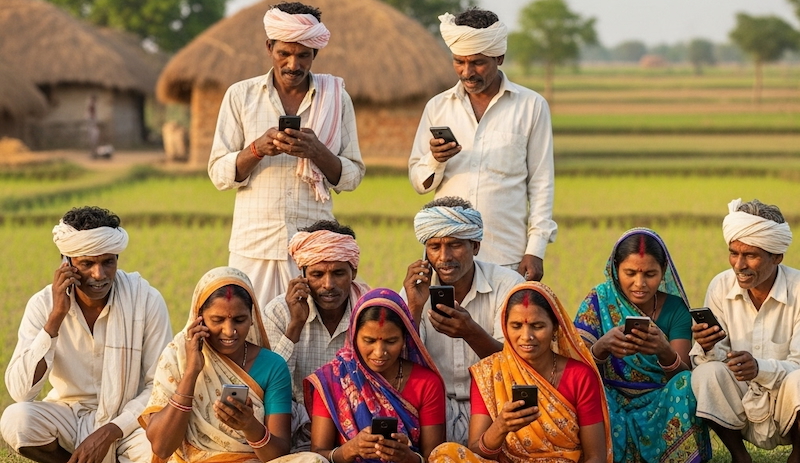
    The urban-rural divide saw rural India catching up, with rural wireless users increasing to 526.27 million while urban counterparts stood at 646.30 million. Urban tele-density saw a slight decline to 126.62 per cent, while rural tele-density edged up to 58.66 per cent as reported by TRAI.

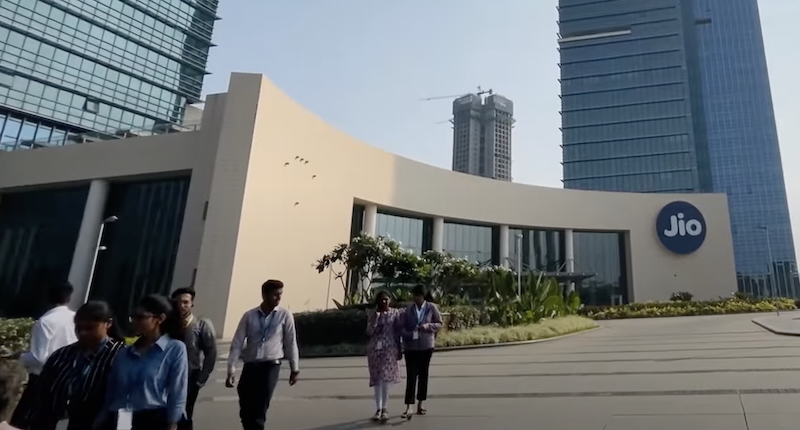
    Jio continued to be the star caller in town, adding a whopping 3.16 million wireless subscribers, cementing its lead with 458.95 million users. Bharti Airtel held strong in second with 383.57 million, gaining 1.11 million subscribers. Vodafone Idea continued its slow slide, losing 1.32 million subscribers, taking its count to 218.49 million.

    But not all subscribers are equal when it comes to active users, Jio again leads with a 104.08 per cent VLR (visitor location register), indicating some dual SIM overlap. Airtel boasted a healthy 99.21 per cent active base, while Vi clocked in at 87.17 per cent. BSNL trailed behind with only 50.64 per cent of its users actively using services.

    On the MNP (mobile number portability) front, Indians are still keeping their digits mobile with 12.94 million requests in July alone, bringing the all-time total to a staggering 921.94 million.

    In the wireline game, Jio added 0.25 million subscribers, now holding 33.11 per cent market share, while BSNL shed 0.20 million, dropping to 23.03 per cent. Airtel’s steady ship saw it maintain a 22.97 per cent slice.

    Meanwhile, broadband connections both wired and wireless stood strong at 940.52 million, led by Reliance Jio (487.59 million), Airtel (264.33 million), and Vodafone Idea (125.08 million).

    So, while some telcos may be dropping calls and customers India’s telecom sector as a whole is still very much in signal, especially as it tunes into deeper rural penetration and data-led digital expansion.

    (If you are an Anime fan and love Anime like Demon Slayer, Spy X Family, Hunter X Hunter, Tokyo Revengers, Dan Da Dan and Slime, Buy your favourite Anime merchandise on AnimeOriginals.com.)

  • Elon Musk’s Starlink clears final regulatory hurdle in India

    Elon Musk’s Starlink clears final regulatory hurdle in India

    MUMBAI: Elon Musk’s satellite internet venture Starlink has finally received the green light from India’s space regulator, In-Space, clearing the last major regulatory roadblock to launch commercial operations in the country.

    On 8 July, the Indian National Space Promotion and Authorisation Centre (In-Space) Igranted Starlink permission to operate its Gen1 non-Indian GSO and NGSO satellite constellation for broadband services over Indian territory. The authorisation is valid until July 7, 2030.

    The nod includes specific frequency band allocations. For gateway beams, Starlink can use uplink bands of 27.5–29.1 GHz and 29.5–30 GHz, and downlink bands of 17.8–18.6 GHz and 18.8–19.3 GHz. For user terminals, the uplink band is 14.0–14.5 GHz (LHCP), while the downlink is 10.7–12.7 GHz (RHCP).

    The approval follows Starlink’s receipt of a Global Mobile Personal Communication by Satellite (GMPCS) licence from the department of telecommunications (DoT), positioning it as the third player—after Eutelsat-OneWeb and Reliance Jio—to secure full clearance to provide satellite broadband in India.

    Next on the to-do list: acquiring administrative spectrum from the government, setting up ground stations, and passing security compliance trials. Starlink plans to establish three gateway stations across the country as part of its rollout.

    Sources say the DoT will soon allocate trial spectrum to facilitate security demonstrations. Final spectrum pricing and allocation guidelines are also expected shortly, following recent recommendations from TRAI.

    Starlink has already inked deals with Indian VSAT providers, signalling a B2B and B2G push ahead of a consumer rollout. Insiders hint that Starlink could soon begin offering direct-to-consumer connections via its website, though pricing is still under wraps. A promotional plan pegged at Rs 840 per month is reportedly on the table, but not officially confirmed.

    The road to India hasn’t been easy. Starlink has waited since 2022 for regulatory approvals, facing national security concerns and policy disputes with Jio over spectrum allocation. Eventually, the government backed Musk’s view that satellite spectrum should be assigned, not auctioned.

    Meanwhile, Amazon’s rival satcom venture, Project Kuiper, remains stuck in regulatory limbo. Despite completing operational and security checks, its application is still under review. Kuiper is proposing a more ambitious infrastructure plan, including 10 gateways and PoPs in Mumbai and Chennai—well ahead of Starlink’s three.

    India, the world’s second-largest internet market, is shaping up as a critical battleground for satellite broadband. With Musk’s firm now officially in the race, the stage is set for a high-stakes space-age showdown.

  • TRAI telecom data:  India’s rural surge, internet binge and DTH downfall ring loud in March

    TRAI telecom data: India’s rural surge, internet binge and DTH downfall ring loud in March

    MUMBAI: India’s telecom scene in March 2025 was a tale of two Indias—rural Bharat rising on data dreams and legacy players like BSNL and MTNL gasping for bars. According to TRAI’s fresh data, it was a month of gains for mobile and broadband, and growing static for DTH.

    The total number of wireless subscribers climbed slightly to 1,160.65 million, with rural India accounting for nearly 80 per cent of new additions. Villages added 1.1 million users, urban India added just 296,000—proof that the real action is beyond city limits.

    Reliance Jio was on fire, gaining 2.15 million wireless users and reinforcing its market leadership with 39.6 per cent share. Bharti Airtel added 1.03 million, keeping pace. Vodafone Idea lost nearly 700,000 subscribers, and BSNL continued its freefall with a 1.25 million loss.

    India’s broadband subscriber base touched 946.32 million, a monthly growth of 0.21 per cent. Unsurprisingly, 4G/5G mobile broadband accounted for 921.4 million of those connections—soaring on reels, reels, and more reels.

    On the wireline broadband front, Jio continued to hustle, adding over 320,000 subscribers, bringing its fixed-line share to 33.6 per cent. Airtel stayed solid with over 100,000 adds, while government dinosaurs BSNL and MTNL lost tens of thousands more. Between sluggish service and vanishing relevance, they’ve become the landline’s last rites.

    In the home entertainment arena, the direct-to-home (DTH) sector saw a slide. Total active DTH subscribers dropped to 64.17 million from 64.45 million—a fall of over 278,000 users in just one month.

    Cord-cutting is no longer a western trend; it’s happening across Indian homes as OTT apps and smart TVs eat into satellite’s share. Operators like Tata Play and Airtel Digital are still holding their ground, but the writing is on the (living room) wall.

    The big takeaway? Rural India is dialling up, streaming more, and finally enjoying digital parity. Jio’s aggressive expansion is paying off across both mobile and fibre, while BSNL’s steady subscriber bleed raises existential questions.

    DTH is beginning to look like the landline of television. The OTT wave is here, and it’s pulling viewers—and revenue—away from satellite.

    With spectrum auctions around the corner and AI-fuelled data demands skyrocketing, India’s telecom race is less about who picks up the call—and more about who controls the cloud.

  • Indian mobile count goes up as does broadband: TRAI data Jan 2025

    Indian mobile count goes up as does broadband: TRAI data Jan 2025

    MUMBAI: India’s telecom sector added a modest 2.1 million net subscribers in January 2025, nudging the total count to 1.19 billion, according to the Telecom Regulatory Authority of India’s monthly data release. But it wasn’t all smooth signal—wireline connections tanked, dropping over 10 per cent as TRAI shifted 5G Fixed Wireless Access (FWA) from wired to wireless accounting.

    Mobile still rules the roost, with 1.16 billion users riding the wireless wave, including 5.7 million FWA users. Urban India continued to drive growth, adding over 5 million new mobile connections. Meanwhile, rural areas quietly chipped in with just under a million more.

    Broadband subscriptions inched up 0.04 per cent to 945.16 million—an uninspiring climb, considering Reliance Jio and Bharti Airtel hold over 80 per cent of the market. Wireline broadband, meanwhile, shrank slightly as users cut the cord in favour of FWA.
    MARKETSHAREDATAMobile Number Portability (MNP) remained red-hot with 14.14 million requests in Jan alone—pushing the all-time tally past 1.09 billion. Uttar Pradesh (East) and Maharashtra topped the charts for most switched loyalties.
    The market remains firmly in private hands, with Jio and Airtel leading across broadband and mobile. 

    Government-owned players like BSNL and MTNL continue to struggle, holding just 8 per cent of wireless subscribers and less than a quarter of the wireline market.

    Tele-density stood at 84.54 per cent—Delhi being the most connected with an eye-popping 274 per cent, while Bihar lagged behind at 56.6 per cent.

    And while fixed lines may be flatlining, India’s telecom story continues to be a mostly wireless wonder.

  • Indian government to take nearly half of Vodafone Idea as debt converts to equity

    Indian government to take nearly half of Vodafone Idea as debt converts to equity

    MUMBAI: India’s beleaguered mobile operator Vodafone Idea is about to get a new sugar daddy—the government itself. The ministry of communications has decided to convert the firm’s towering spectrum auction dues of Rs 36,950 crore into equity shares, catapulting the state’s ownership from 22.6 per cent to a whopping 48.99 per cent, according to a company regulatory filing with the BSE.

    The move, communicated via an order dated 29 March and received by the company on Sunday, follows the Modi government’s 2021 telecom sector bailout package. Vodafone Idea, which has been gasping for financial breath against rivals Reliance Jio and Bharti Airtel, will issue 3,695 crore equity shares at Rs 10 each within 30 days after securing regulatory approvals.

    Despite the government now holding the largest slice of the pie, the existing promoters will remain at the controls—suggesting New Delhi prefers to play sleeping partner rather than backseat driver in this marriage of convenience.

    The pricing methodology wasn’t plucked from thin air but follows regulatory guidelines—taking the higher of the volume-weighted price over either 90 or 10 trading days preceding 26 February 2025.

    This fiscal lifeline throws Vodafone Idea a much-needed oxygen tank as it struggles to keep up in India’s brutally competitive telecom market, where rock-bottom tariffs have made profitability as rare as an uncapped data plan.

  • Reliance Jio launches smart TV OS  for Indian market

    Reliance Jio launches smart TV OS for Indian market

    MUMBAI: Three days from today and a whole new bunch of TV sets with a new type of operating system are slated to launch. Reliance Jio, the technology arm of Indian conglomerate Reliance Industries, has unveiled JioTele OS, a new operating system for affordable smart televisions, which will hit stores on 21 February.

    The platform, designed specifically for Indian viewers, will debut through partnerships with television manufacturers Thomson, Kodak, BPL and JVC. Jio says the system will offer artificial intelligence-powered content recommendations and support multiple Indian languages.

    The company’s president of technology claims the platform will deliver lag-free 4K streaming and seamless integration of television channels, streaming apps and cloud gaming services. A unified remote control will manage all content sources.

    This launch follows Jio’s recent merger of JioCinema with Disney+ Hotstar to create JioHotstar, expanding its streaming content library. The platform is expected to integrate JioGamesCloud, allowing users to access high-end games without requiring powerful hardware.

    The announcement comes amid growing demand for connected television services in India, with approximately 35 million households currently using smart TVs. Jio plans to roll out regular software updates to maintain compatibility with new apps and enhance security features.

    Additional television manufacturers are expected to adopt the platform later in 2025, though specific pricing details remain under wraps until the official launch next week.

  • India leads in global app usage and downloads but trails in user spending

    India leads in global app usage and downloads but trails in user spending

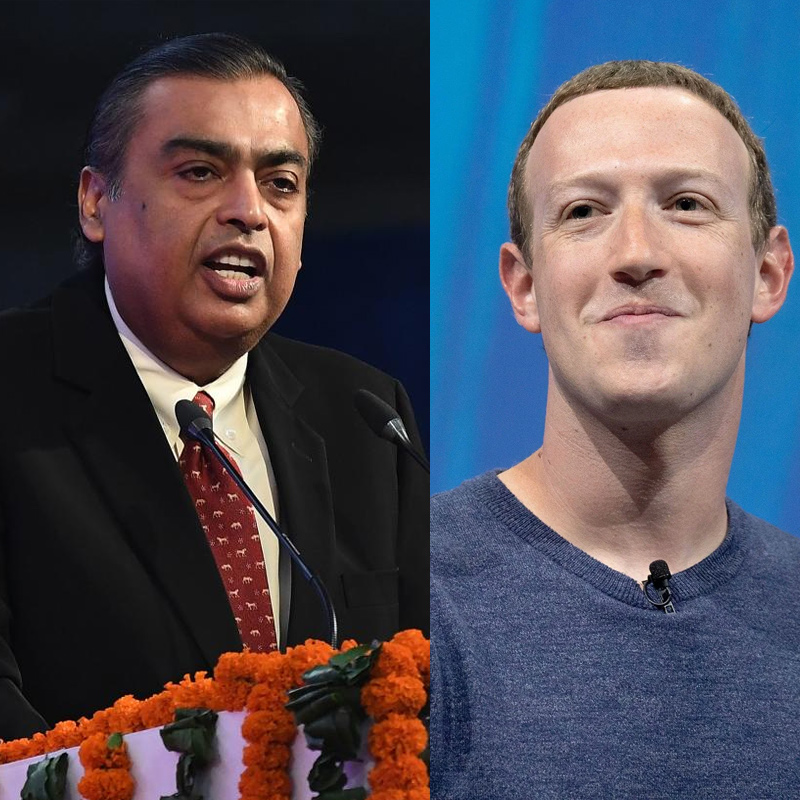
    MUMBAI: When Mukesh Ambani unleashed Reliance Jio onto India like a storm on 5 September 2016, it wasn’t just a telecom revolution—it was the dawn of a digital obsession. Cheap data plans and free calls? Indians grabbed them faster than a free plate of samosas at a wedding. Apps, once exotic creatures of the tech-savvy elite, became everyone’s new best friends, spreading like wildfire across cities, towns, and even the smallest villages.

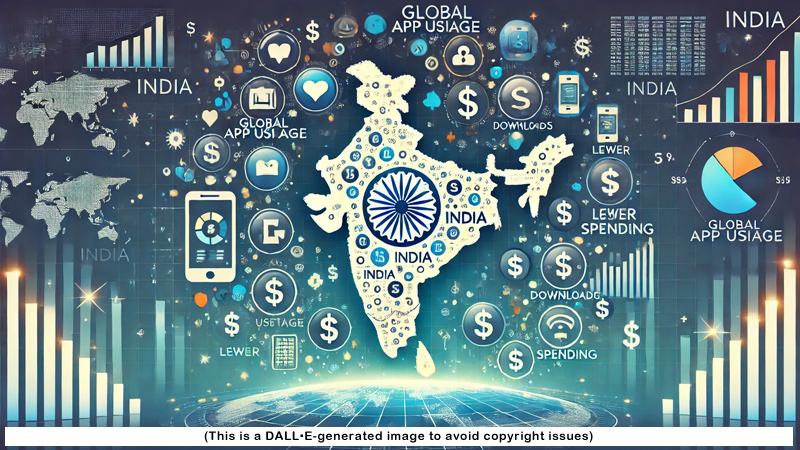
    Fast forward to 2024, and India isn’t just flirting with mobile apps—it’s a full-blown love affair. The country now holds the crown for the highest global app downloads and usage, clocking in a jaw-dropping 1.12 trillion hours glued to screens. But here’s the plot twist: while Indians swipe, scroll, and stream like pros, they aren’t exactly reaching for their wallets. In-app purchases? Still a shy, hesitant nod rather than a full embrace. Turns out, we’re better at clicking than cashing in.

    According to Sensor Tower’s State of Mobile 2025 report, India recorded 24.3 billion app downloads last year, down slightly from 25.6 billion in 2023. However, the time spent on apps climbed significantly from 991 billion hours in 2023 to 1.12 trillion hours in 2024—a staggering demonstration of just how glued to screens Indians truly are.

    Globally, in-app purchases surged 13 per cent year-on-year (YoY) to reach $150 billion, but India fell behind, failing to make the top 20 countries in IAP revenue. For context, the United States led the pack at $52 billion, followed by China at $25 billion.

    But India had its bright spots: IAP revenue in the media & entertainment (M&E) category (dating apps, specifically) jumped 25 per cent YoY to $55 million, with Bumble leading the charge. Similarly, IAP revenue in the social media category climbed 29 per cent YoY to $54 million, led by YouTube. The film & TV streaming segment saw the most significant growth, with IAP revenue skyrocketing 86 per cent to $45 million, dominated by Disney+ Hotstar.

    Social media and entertainment apps still rule

    Social media and entertainment apps continued to dominate user preferences, with Instagram and Jiocinema topping the charts. However, downloads in these categories slipped, with social media app downloads dropping 10 per cent to 1.19 billion and M&E app downloads dipping 8 per cent to 663 million.

    Despite this dip in downloads, Youtube and Whatsapp retained their positions as the undisputed leaders in user engagement, cementing their status as essential apps for entertainment and communication.

    Generative AI apps steal the spotlight

    Generative AI was the showstopper in 2024, with downloads soaring to 177 million—a jaw-dropping leap from 75 million in 2023. Revenue in this category also tripled, reaching $12 million, driven by the success of apps like Chatgpt and Gemini. Clearly, India’s appetite for AI-powered tools has grown, and it shows no signs of slowing.

    Gaming hits a speed bump

    India’s mobile gaming market, which generated $3.8 billion in revenue in 2024—a 22.6 per cent increase from 2023—has hit a roadblock as downloads fell by 11 per cent year-on-year to 8.5 billion in the same year.

    Despite gaming remaining a vital part of India’s app ecosystem, this drop in downloads suggests a possible shift in user behaviour or preferences. This trend raises questions about the sustainability of growth in the mobile gaming sector amidst evolving market dynamics.

    With 900 million internet users, India’s mobile app market continues to thrive, even as it grapples with challenges in monetisation. The data tells a compelling story:

    1    Total downloads in 2024: 24.3 billion
    2    Time spent on apps: 1.12 trillion hours
    3    IAP revenue in M&E (dating): $55 million (+25 per cent  YoY)
    4    IAP revenue in social media: $54 million (+29 per cent  YoY)
    5    IAP revenue in film & TV streaming: $45 million (+86 per cent  YoY)
    6    Generative AI app downloads: 177 million (+136 per cent )

    As India’s app-hungry users swipe, scroll, and binge their way through the digital universe, one thing is clear: the potential here isn’t just big—it’s mind-bogglingly massive. All that time spent on apps isn’t exactly translating into cash for developers yet. It’s like owning a cricket team full of star players who can’t find the boundary.

    The question now is, can 2025 be the year India’s digital ecosystem finally hits a six? With generative AI promising to spice up content and app developers scheming to turn downloads into dollars, the stage is set. The world’s watching, India’s clicking, and app creators are sweating it out like it’s the IPL finals.

    Who’ll crack the code to India’s app goldmine? Stay tuned, because this is one game where the ads might just be worth watching.

  • TRAI releases telecom subscription data for 30 September 2024

    TRAI releases telecom subscription data for 30 September 2024

    New Delhi: The Telecom Regulatory Authority of India (TRAI) unveiled its report on telecom subscription data as of 30 September 2024. The findings highlight trends across wireless and wireline segments, broadband subscriptions, and mobile number portability (MNP) requests, reflecting a dynamic yet challenging period for the sector.

    Decline in total subscribers

    India’s total telecom subscriber base saw a decline of 9.41 million in September, with numbers dropping from 1,200.07 million in August to 1,190.66 million. This translates to a monthly contraction of 0.78 per cent. Urban areas reported a slight dip in tele-density from 132.94 per cent to 131.86 per cent, while rural tele-density dropped from 59.05 per cent to 58.48 per cent. The declining figures underline challenges such as market saturation and migration of users to alternative communication platforms.

    Broadband subscriptions decreased by 0.51 per cent, from 949.21 million in August to 944.40 million in September. Mobile devices accounted for most of this decline, witnessing a contraction of 0.63 per cent. However, wired broadband and fixed wireless users showed growth, with increases of 1.83 per cent and 9.01 per cent, respectively. Reliance Jio retained its dominance with 477.94 million subscribers, followed by Bharti Airtel (285.17 million) and Vodafone Idea (126.36 million). These top players collectively command 98.42 per cent of the broadband market, underscoring limited competition in this segment.

    Wireline subscribers on the rise

    The wireline segment emerged as a bright spot, growing by 1.93 per cent to reach 36.93 million subscribers. Urban areas accounted for 92.14 per cent of these connections, highlighting an urban-centric growth trajectory. BSNL and MTNL, despite being public-sector entities, maintained a combined market share of 23.95 per cent, showcasing resilience amidst stiff competition.

    The wireless segment faced a challenging month with a decline of 10.11 million subscribers, a 0.87 per cent drop. Urban and rural wireless subscriptions declined by 0.80 per cent and 0.95 per cent, respectively, as affordability and service reliability remained key issues. Bharti Airtel led the active wireless subscriber base with a remarkable 99.27 per cent activity rate on its Visitor Location Register (VLR).

    The MNP service recorded 13.32 million requests in September, raising the cumulative total to 1,039.11 million. Zone-I, encompassing Northern and Western India, saw Uttar Pradesh-East leading the pack with 100.56 million porting requests. In Zone-II, Madhya Pradesh topped the charts with 81.06 million requests, reflecting high user dissatisfaction or a quest for better services.

    Regional tele-density variations

    Tele-density across circles revealed stark disparities. Delhi boasted the highest tele-density at 278.55 per cent, while Bihar recorded the lowest at 56.40 per cent. This gap highlights persistent inequalities in telecom penetration across states.

    While the report signals challenges, particularly in the wireless and rural segments, it also hints at potential opportunities in wireline growth and broadband expansion. As operators strive to innovate and enhance service quality, the sector remains poised for a possible turnaround. 

  • TRAI releases Indian Telecom Services-Yearly Performance Indicators report for 2023-24

    TRAI releases Indian Telecom Services-Yearly Performance Indicators report for 2023-24

    Mumbai: TRAI’s Indian Telecom Services-Yearly Performance Indicators report for 2023-24 highlights that gross revenue also saw a modest increase of 0.71 per cent year-on-year, climbing from Rs 3.33 trillion in 2022-23 to Rs 3.36 trillion in 2023-24. Meanwhile, the Applicable Gross Revenue (ApGR) grew by 6.38 per cent, reaching ₹3.23 trillion in 2023-24, up from Rs 3.03 trillion in the previous financial year.

    In 2023-24, the Adjusted Gross Revenue (AGR) of telecom service providers grew by 8.24 per cent year-on-year, driven by increased data consumption and consumer upgrades, according to a report by the Telecom Regulatory Authority of India (TRAI). The AGR rose from ₹2.49 trillion in 2022-23 to Rs 2.7 trillion in 2023-24.

    License fees experienced an 8.45 per cent increase, rising from Rs 19,954 crore in 2022-23 to ₹21,642 crore in 2023-24. Conversely, spectrum usage charges (SUC) saw a significant decline of 32.20 per cent, dropping from Rs 4,968 crore in 2022-23 to ₹3,369 crore in 2023-24.

    Among telecom service providers, Reliance Jio recorded a 9.62 per cent year-on-year growth, with its AGR increasing from ₹89,279.39 crore in 2022-23 to Rs 97,868.06 crore in 2023-24. Bharti Airtel posted a 12.12 per cent rise, reaching ₹80,529.33 crore in 2023-24. In contrast, Bharat Sanchar Nigam Ltd (BSNL) reported a 1.92 per cent decline, while Mahanagar Telephone Nigam Ltd (MTNL) experienced a sharp 22.34 per cent decrease, with its AGR falling from ₹785.6 crore in 2022-23 to Rs 610.11 crore in 2023-24.

    The share of public sector undertakings (PSUs) in the access AGR of telecom services decreased to 6.64 per cent in 2023-24, down from 7.04 per cent in 2022-23. The PSUs’ share in such AGR amounted to ₹17,973 crore in 2023-24, compared to Rs 17,605 crore in the previous fiscal year.


  • Jio AirFiber set to be unveiled in September

    Jio AirFiber set to be unveiled in September

    Mumbai: Reliance Industries chairman Mukesh Ambani revealed in a virtual annual general meeting that Jio will launch Jio AirFiber, its fixed wireless access offering on 19 September. Jio, which has 50 million 5G users, shall have a pan- India coverage by December 2023. It will also be among the first globally to put 6G competencies in place, as per media reports.

    The launch of Jio AirFiber comes on the heels of its rival, Bharti Airtel launching its own device commercially, and is anticipated to swell the former’s addressable market to over 200 million high-paying homes and premises, over the next three years.

    Mukesh also brought out that “providing last-mile connectivity is a painstaking process in most parts of our country,” and that’s where the fixed-wireless broadband offering, Jio AirFiber, would play a role. Additionally, he pointed out that Jio has more than 450 million subscribers, say reports.

    As of now, the pricing of the new offering is under wraps. The new service is expected help the telco multiply its connected premises to 1,50,000 connections per day, which is a 10-fold growth from 15,000 premises a day that optical fibre would allow.

    Mukesh also underlined the in-house developed Jio 5G stack which possesses features like standalone 5G architecture, network slicing, carrier aggregation, and AI/ML capabilities.

    Jio’s 5G customer has reached 50 million since the October 2022 launch, and Jio 5G is already present in over 96 per cent of the census towns of the country.

    Reliance Jio chairman Akash Ambani also spoke about the telco building a ‘transformative platform’ which will alter the way Indian enterprises, small businesses, and tech start-ups work with the digital world.

    He also announced the Jio True5G Developer Platform – a comprehensive platform combining the 5G network, edge computing, and a spectrum of applications and services.