Tag: Reliance Infocomm

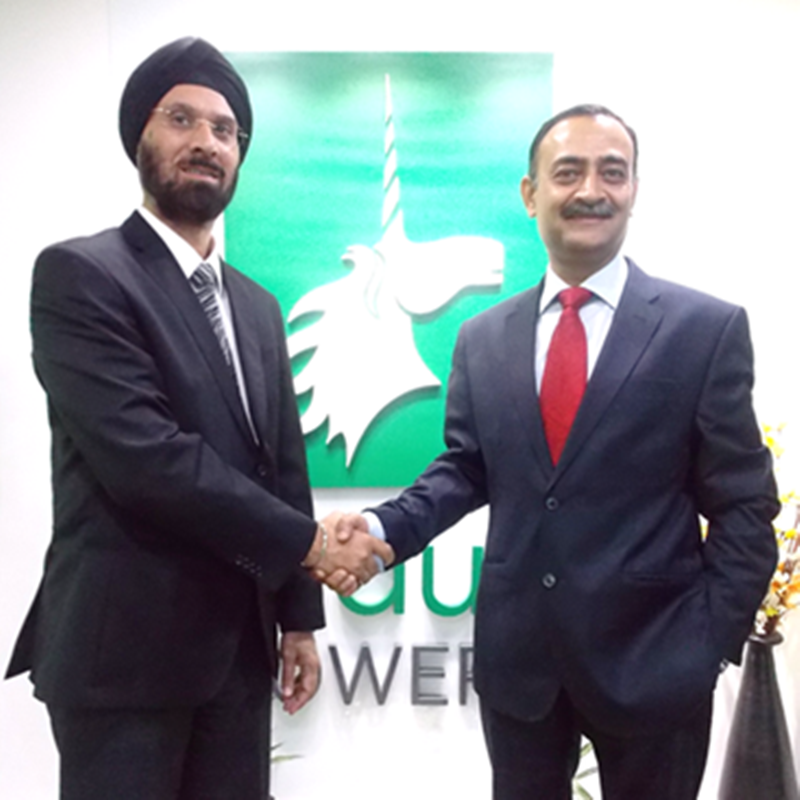
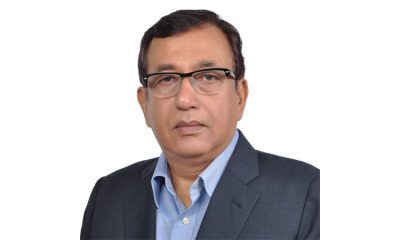
  • Tejinder Kalra is COO at Indus Towers

    Tejinder Kalra is COO at Indus Towers

    MUMBAI: Indian Telecom tower company Indus Towers announced the appointment of Tejinder Kalra as the chief operating officer (COO), as on 1 July 2016. With over 26 years of experience in the telecom and telecom services industry, Tejinder holds an extensive experience in strategy development, implementation and service delivery across geographies  says an Indus Towers release

    Indus Towers CEO Bimal Dayal said, “In line with Indus’ pursuit of building a strong leadership team for the future, I would like to announce appointment of Tejinder Kalra. His passion, strategic clarity and disciplined execution will help ensure that Indus Towers’ continues to deliver our best to our customers.”

    Tejinder joins Indus Towers from Nokia, where he was the Global Head for Bharti Business in his most recent role. He has worked with Nokia for over 13 years, and has been a pivotal part of their growth story. In his last role, he managed the end to end P&L ownership for Bharti Telecom business globally. He was also the Sub-Region Head for Central, East and Western Africa in an earlier role where he helped set-up Nokia’s Airtel operations in Africa.

    Tejinder has been associated with Reliance Infocomm, Satyam Infoway, Sprint RPG India amongst other organizations in the past. He has done his engineering from Thapar Institute of Engineering & Technology and Executive Diploma in International Business from IIFT.

  • Tejinder Kalra is COO at Indus Towers

    Tejinder Kalra is COO at Indus Towers

    MUMBAI: Indian Telecom tower company Indus Towers announced the appointment of Tejinder Kalra as the chief operating officer (COO), as on 1 July 2016. With over 26 years of experience in the telecom and telecom services industry, Tejinder holds an extensive experience in strategy development, implementation and service delivery across geographies  says an Indus Towers release

    Indus Towers CEO Bimal Dayal said, “In line with Indus’ pursuit of building a strong leadership team for the future, I would like to announce appointment of Tejinder Kalra. His passion, strategic clarity and disciplined execution will help ensure that Indus Towers’ continues to deliver our best to our customers.”

    Tejinder joins Indus Towers from Nokia, where he was the Global Head for Bharti Business in his most recent role. He has worked with Nokia for over 13 years, and has been a pivotal part of their growth story. In his last role, he managed the end to end P&L ownership for Bharti Telecom business globally. He was also the Sub-Region Head for Central, East and Western Africa in an earlier role where he helped set-up Nokia’s Airtel operations in Africa.

    Tejinder has been associated with Reliance Infocomm, Satyam Infoway, Sprint RPG India amongst other organizations in the past. He has done his engineering from Thapar Institute of Engineering & Technology and Executive Diploma in International Business from IIFT.

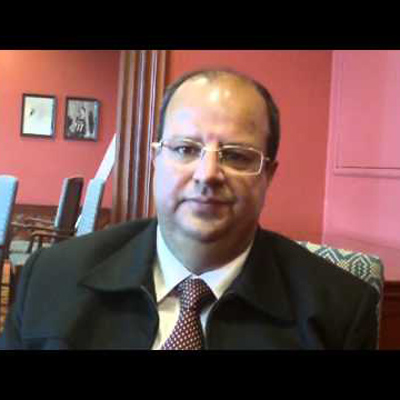
  • Rajat Nigam: Innovation, pricing and technological flexibilities are keywords of the business model

    Rajat Nigam: Innovation, pricing and technological flexibilities are keywords of the business model

    People are seldom aware of the importance of technology in seamlessly supporting a large media network such as the one Reliance has. Owned by Mukesh Ambani’s Reliance Industries, Indian mass media venture Network18 Media and Investments Limited is one of the oldest television networks in India. Known for its array of business channels in India, the network has partnered with other networks such as ETV and Viacom.

    At the helm of the group’s technologically integrating other networks and channels under one umbrella efforts is Group Chief Technology Officer Rajat Nigam. Managing the technology and technical infrastructure of all Network 18 products, be they television, radio or digital and also looking after Reliance Infocomm, industry veteran Nigam has an experience of about 20 years in the fields of television, radio, sports etc.

    Nigam is gearing up to bring better upgradations and new technologies with best practices that include having an unified digital newsroom with integrated technology and workflow supporting different businesses of traditional broadcast and digital platforms.

    Speaking with Indiantelevision.com’s Megha Parmar, Nigam sheds light on the challenges that he faces for the smooth functioning of all the channels under the network, digitization, DAS, VOOT, on HD and 4K, competition and the technological roadmap. Excerpts of the interaction:

    What books and blogs do you read, more so currently?

    In this collected world, you have lots of things to read about. If you are asking about my personal interest, I like reading blogs on cricket and the discussions that happen in various business forums. I also keep track of multiple newsletters globally that keep me updated about everything for which I have subscribed. It’s my sneak-peek into what is happening in this world.

    What has been the most complicated assignment done by you?

    I have been here in Network18 for about 10 months now, which is a significantly small time. However, I can’t say that there was nothing challenging, because Network18, just by its size and expanded horizon is a challenge as well as an integrated opportunity.

    With so many channels under the group, what are the challenges that you usually face for the smooth functioning of all of them?

    Broadly speaking, we can divide Network 18 into two parts. One is the entertainment sector and the channels which are related to it and the other is the news sector. In entertainment there is fiction as well as factual entertainment. So the more challenging aspect from a technical point of view is to create a workflow around the sector. Entertainment channels by their very nature are packaged channels with more emphasis on the creative content.

    From the technology point of view, the challenge of virtue and integration happens mostly in news channels. The content keeps generating instantly and all the time across the globe to which we need access. You have to start putting it out with speed and accuracy. So, from Network18’ perspective, it’s a very difficult thing to integrate this and to enhance the quality and productivity to ensure an efficient workflow. It’s more of an opportunity. But this requirement is more on the news channels side. We currently operate more than 20 news channels in India and are the biggest news network in the country. All the news channels are based out of different places and locations in the country. We have an integrated newsroom operation which creates an opportunity for professional satisfaction as well as the channels’ growth.

    Network18, on the one hand is a content generator, and on the other is a content aggregator. We are quite rich on digital as well, with portals like moneycontrol.com which has a huge subscriber base.

    Network 18 has taken over some other networks. How easy or difficult was it integrate technologically these other networks and channels under the Network18 umbrella. What were the challenges faced?

    Technology in the broadcast and digital industry is moving very fast. That by itself is a challenge in every aspect. Having different networks and groups integrated is a challenge, but it is a challenge that is possible to overcome. We have laid a roadmap for it and are working towards it. We have partly achieved it as well.

    We will reveal more information about the unified newsroom soon.  As far as integration is concerned, it will be one of the biggest in the globe.

    Network18 has recently launched VOOT, what are your thoughts on that and other digital properties?

    Yes, VOOT managed by our group company Viacom18, is the OTT carrying content of entertainment genre. We, as a group, are committed to provide premium quality offering for our viewers across platforms. VOOT is a destination where superior quality entertainment content for all age groups can be accessed at any place and on any device. Network18 has been one of the top two digital networks for many years now, having a variety of rich content. All of our products have uniqueness and are widely accepted, be it Moneycontrol, Firstpost, Overdrive or any other property. News18 and Pradesh18 provide digital consumers news as it happens with the latter being highly localised and available in multiple language. We shall continue to expand our digital offerings in the coming months with innovative and smart technology solutions creating digital destinations underlined with philosophy of mobility and personalisation.  

    What are the challenges you face on your digital platform as India is yet to see a completely rolled-out phase of digitization?

    If you see the global practices, it’s natural to consider and figure out what could be in store for India. We clearly are at an early stage when it comes to digitisation. One part of it is happening on field – that is the roll-out of DAS IV which will get completed by December 2016 and is very important from broadcast’s business point of view. But, from the technology point of view, digitisation or the digital world, enabling us around content differentiation is more relevant. There are a large number of OTT platforms that are getting rolled out in India, while some are available in India from outside. VOOT is an entertainment platform which has rolled-out effectively and the response has been very good. We are very confident about the content that we have.

    VOOT uses high end technology and surely provides a high quality experience which is very important in this era. With respect to content, the advantage that we see as a network is the vastness in our content, which is our USP.

    How many updates has the app undergone so far as in the software that runs these devices, considering that portable devices – be they on mobile screens and other touch screens that are evolving quickly?

    In a digital era, the upgrades and updates are extremely important. Five years back, innovation was supposed to be a unique thing where the focus on innovation was an option. In today’s time, innovation is a routine and continuous. If we don’t innovate, we are sure to perish. The upgradations and updations will be a regular part, whether it is VOOT or for all our digital products. We will continue to enhance our user experience and the aim is to provide quality service. Consumer gratification is the bottom line.

    We have a highly capable team of talented people who remain updated on what is happening in the world and they innovate themselves. It gives us confidence in enhancing our product. We continue to reach the expectations of the viewers and that also provides us an edge over the competition. Everything which is good for the network will be explored.

    What is your take on OTT and where do you see it over the next five years in India and globally?

    OTT is openly a very generic word. It’s a term which is used in hurry. The most common OTT that we use in our daily lives is WhatsApp. When we see the bigger picture, OTT is across. From the content consumption point of view, the challenge is with respect to the infrastructure as we are not yet a digital country. We are yet to have a digital structure at par with the other countries in the world. In the next few months or in a year, we will have a better infrastructure and that’s when the actual OTT business model will start working.

    With Netflix entering India, is India using that as an advantage and leapfrogging technologically?

    India is a different country and the consumers are totally different. We cannot generalise what is happening outside with the Indian market. The platform that you are referring to is extremely successful in the world, but the challenge with respect to India is pluralism of taste, language and the fragmented consumers. This is where the problem lies in India in contrary to other international players.

    Innovation, pricing and technological flexibilities are keywords of the business model. We keep that as a part of our working guidelines. The challenge that we have from a network’s point of view and a network dominated by news is skilled talent with innovative approach. It is a part of the culture and it needs to be imbibed.

    What’s your idea about expanding Talent Quotient (TQ)?

    There is always a need to improve TQ and should happen in a coordinated fashion, so that we can reach the common objective.

    Will DAS IV be a boon or a curse for the network? How has DAS I, II and III affected Network 18?

    This is the last phase of digitisation. Digitisation has been long in demand from the industry. We surely look forward to get benefitted from it. DAS IV is in the interest of everyone i.e., the broadcasters as well as the viewers. Honestly, even if there is no guarantee on it, digitisation is bound to happen. One has to compete with different platforms with the content available across platforms, its digital formats. It is also important to have content delivered in good quality as well as in a controlled or adequate manner that the consumer wants. It’s good that we are in the last phase and post December, the scenario is going to be better and there will be unification across.

    The earlier phases have been beneficial. DAS has provided us better control on the business. More of control and transparency is good for business.

    Given that many networks are going HD and 4K, what is your take? And your take on 8K?

    India as a country has been late at adopting technology. High definition TV channels started in 2010 in India which was by far quite late if we compare the availability of HD TV and content outside. From 2010 to 2016, suddenly there was a splurge of HD channels in the country and that will continue to happen. Going further into the next stage, more people have started talking about 4K and 8K. Honestly, 8K is something which is used as a term in the labs today; it does not have relevance for the consumer’s application at present. From the television perspective, 4K is a generic term. The real term is UHD TV which is more relevant for television.

    Now the way the chain for television is built, for the conversion of a channel to 4K, the complete chain has to be changed from content production to content delivery. The content can be produced at a controlled rate as a broadcaster. 4K is surely bound to happen, but it will take time. 4K content is premium quality content which will ride on the digital platform for sure. In the days to come, there are platforms which will carry 4K content, but the challenge there again would be the availability of 4K content.

    We have been exploring 4K content and as a group we want to be at the forefront in that respect. We have also highlighted some 4K content. We have studied the entire workflow. We are sure that we would be one of the early adopters of 4K content, but it’s still sometime away before 4K content starts streaming into houses.

    What are Network18’ plans in that direction?

    4K is more relevant for entertainment channels and sports. We don’t have a demand or high compulsion for news channels in HD as yet. Conversions are driven by business models, and currently the models that are followed in SD news channels are themselves not hugely motivating. That is why if a channel wants to get upgraded to HD, the big value chain has to get upgraded. The entire infrastructure also needs to get upgraded. However, gradually we will see a few news channels in HD, but the entire news fraternity going HD is not an immediate proposition.

    In the case of Network 18, we are HD ready and have a proper technology roadmap with us whenever it happens. We will look into giving HD feeds in near future.

    What is your opinion about reverse signals and the challenges its implementation will bring out?

    They all are different philosophies and ideas to provide innovation to the consumers. We are looking at new cultures and technologies and building them up even more, which will translate to a good workflow. The challenges are common, though the viewer/consumer remains the king and he needs to be gratified. Every strategy needs to be driven for the viewer’s benefit. We are migrating to a unicast industry, but as the number of users is high and each consumer would be the user of the content, it is still far for us.

    Many companies have started going the cross platform partnership way. Your view on that? Will Network 18 do something similar?

    As I mentioned earlier, innovation is the key in today’s time and is extremely important. Network 18 has a portfolio which is highly diversified. There is no immediate need for looking for collaborations from outside. However if there is an opportunity, we will be open to it.

    Network18 has an eCommerce platform, online publications, etc. How are they different from the technology perspective compared to eCommerce giants such as Flipkart, Amazon, etc.?

    Every organisation is bund to have an advantage of carrying legacy with it. We were in the business much before the earlier younger players started coming into this market. We have been in the market. However, legacy also comes with experience and that is our strength. But the challenge is to have an integrated infrastructure and technology to support each other that we are working on.

    We have seen news in two forms – video and text. What type of results does that have?

    Video is certainly going to be the future. We have recently rolled out our new website news18 and it has got a good response. The user satisfaction has been high and the quality is good. The technology that has been used for it is also optimum quality. The decoding that has been done is also high. It is integrated with news TV. It is only to provide news in a better way to the on-the-go users.

    What else is there on Network18’s technology road map?

    Technology has, off late, changed its form from being a business enabler to being a business driver and this has been duly recognised internally by us. The industry is witnessing interesting times wherein technology is galloping imparting pluralism in relevant aspects from content production of next generation 4K and HDR immersive experience to gratifying content consumption on multiple platforms taking the industry from broadcast to unicast mode

    Network18 technology teams, supported by the management, are engaged in all these emerging trends and continue to focus on evaluating newer technologies and innovative workflows to enhance working efficiencies and improve presentation values. Upgradations and bringing new technologies with best practices in the facility is work- in- progress.

    We shall soon have a unified digital newsroom with integrated technology and workflow supporting different businesses of traditional broadcast and digital platforms. Going by our size of such a vast news network in multiple languages and genres, a global solution designed for the network that would allow searching and sharing of content and news stories across locations with ease and efficiency will soon be commissioned. It will be a one of its kind, even globally. We are quite excited about our plans and these will unfold in the days to come. We continue to strive for professional excellence.

  • Rajat Nigam: Innovation, pricing and technological flexibilities are keywords of the business model

    Rajat Nigam: Innovation, pricing and technological flexibilities are keywords of the business model

    People are seldom aware of the importance of technology in seamlessly supporting a large media network such as the one Reliance has. Owned by Mukesh Ambani’s Reliance Industries, Indian mass media venture Network18 Media and Investments Limited is one of the oldest television networks in India. Known for its array of business channels in India, the network has partnered with other networks such as ETV and Viacom.

    At the helm of the group’s technologically integrating other networks and channels under one umbrella efforts is Group Chief Technology Officer Rajat Nigam. Managing the technology and technical infrastructure of all Network 18 products, be they television, radio or digital and also looking after Reliance Infocomm, industry veteran Nigam has an experience of about 20 years in the fields of television, radio, sports etc.

    Nigam is gearing up to bring better upgradations and new technologies with best practices that include having an unified digital newsroom with integrated technology and workflow supporting different businesses of traditional broadcast and digital platforms.

    Speaking with Indiantelevision.com’s Megha Parmar, Nigam sheds light on the challenges that he faces for the smooth functioning of all the channels under the network, digitization, DAS, VOOT, on HD and 4K, competition and the technological roadmap. Excerpts of the interaction:

    What books and blogs do you read, more so currently?

    In this collected world, you have lots of things to read about. If you are asking about my personal interest, I like reading blogs on cricket and the discussions that happen in various business forums. I also keep track of multiple newsletters globally that keep me updated about everything for which I have subscribed. It’s my sneak-peek into what is happening in this world.

    What has been the most complicated assignment done by you?

    I have been here in Network18 for about 10 months now, which is a significantly small time. However, I can’t say that there was nothing challenging, because Network18, just by its size and expanded horizon is a challenge as well as an integrated opportunity.

    With so many channels under the group, what are the challenges that you usually face for the smooth functioning of all of them?

    Broadly speaking, we can divide Network 18 into two parts. One is the entertainment sector and the channels which are related to it and the other is the news sector. In entertainment there is fiction as well as factual entertainment. So the more challenging aspect from a technical point of view is to create a workflow around the sector. Entertainment channels by their very nature are packaged channels with more emphasis on the creative content.

    From the technology point of view, the challenge of virtue and integration happens mostly in news channels. The content keeps generating instantly and all the time across the globe to which we need access. You have to start putting it out with speed and accuracy. So, from Network18’ perspective, it’s a very difficult thing to integrate this and to enhance the quality and productivity to ensure an efficient workflow. It’s more of an opportunity. But this requirement is more on the news channels side. We currently operate more than 20 news channels in India and are the biggest news network in the country. All the news channels are based out of different places and locations in the country. We have an integrated newsroom operation which creates an opportunity for professional satisfaction as well as the channels’ growth.

    Network18, on the one hand is a content generator, and on the other is a content aggregator. We are quite rich on digital as well, with portals like moneycontrol.com which has a huge subscriber base.

    Network 18 has taken over some other networks. How easy or difficult was it integrate technologically these other networks and channels under the Network18 umbrella. What were the challenges faced?

    Technology in the broadcast and digital industry is moving very fast. That by itself is a challenge in every aspect. Having different networks and groups integrated is a challenge, but it is a challenge that is possible to overcome. We have laid a roadmap for it and are working towards it. We have partly achieved it as well.

    We will reveal more information about the unified newsroom soon.  As far as integration is concerned, it will be one of the biggest in the globe.

    Network18 has recently launched VOOT, what are your thoughts on that and other digital properties?

    Yes, VOOT managed by our group company Viacom18, is the OTT carrying content of entertainment genre. We, as a group, are committed to provide premium quality offering for our viewers across platforms. VOOT is a destination where superior quality entertainment content for all age groups can be accessed at any place and on any device. Network18 has been one of the top two digital networks for many years now, having a variety of rich content. All of our products have uniqueness and are widely accepted, be it Moneycontrol, Firstpost, Overdrive or any other property. News18 and Pradesh18 provide digital consumers news as it happens with the latter being highly localised and available in multiple language. We shall continue to expand our digital offerings in the coming months with innovative and smart technology solutions creating digital destinations underlined with philosophy of mobility and personalisation.  

    What are the challenges you face on your digital platform as India is yet to see a completely rolled-out phase of digitization?

    If you see the global practices, it’s natural to consider and figure out what could be in store for India. We clearly are at an early stage when it comes to digitisation. One part of it is happening on field – that is the roll-out of DAS IV which will get completed by December 2016 and is very important from broadcast’s business point of view. But, from the technology point of view, digitisation or the digital world, enabling us around content differentiation is more relevant. There are a large number of OTT platforms that are getting rolled out in India, while some are available in India from outside. VOOT is an entertainment platform which has rolled-out effectively and the response has been very good. We are very confident about the content that we have.

    VOOT uses high end technology and surely provides a high quality experience which is very important in this era. With respect to content, the advantage that we see as a network is the vastness in our content, which is our USP.

    How many updates has the app undergone so far as in the software that runs these devices, considering that portable devices – be they on mobile screens and other touch screens that are evolving quickly?

    In a digital era, the upgrades and updates are extremely important. Five years back, innovation was supposed to be a unique thing where the focus on innovation was an option. In today’s time, innovation is a routine and continuous. If we don’t innovate, we are sure to perish. The upgradations and updations will be a regular part, whether it is VOOT or for all our digital products. We will continue to enhance our user experience and the aim is to provide quality service. Consumer gratification is the bottom line.

    We have a highly capable team of talented people who remain updated on what is happening in the world and they innovate themselves. It gives us confidence in enhancing our product. We continue to reach the expectations of the viewers and that also provides us an edge over the competition. Everything which is good for the network will be explored.

    What is your take on OTT and where do you see it over the next five years in India and globally?

    OTT is openly a very generic word. It’s a term which is used in hurry. The most common OTT that we use in our daily lives is WhatsApp. When we see the bigger picture, OTT is across. From the content consumption point of view, the challenge is with respect to the infrastructure as we are not yet a digital country. We are yet to have a digital structure at par with the other countries in the world. In the next few months or in a year, we will have a better infrastructure and that’s when the actual OTT business model will start working.

    With Netflix entering India, is India using that as an advantage and leapfrogging technologically?

    India is a different country and the consumers are totally different. We cannot generalise what is happening outside with the Indian market. The platform that you are referring to is extremely successful in the world, but the challenge with respect to India is pluralism of taste, language and the fragmented consumers. This is where the problem lies in India in contrary to other international players.

    Innovation, pricing and technological flexibilities are keywords of the business model. We keep that as a part of our working guidelines. The challenge that we have from a network’s point of view and a network dominated by news is skilled talent with innovative approach. It is a part of the culture and it needs to be imbibed.

    What’s your idea about expanding Talent Quotient (TQ)?

    There is always a need to improve TQ and should happen in a coordinated fashion, so that we can reach the common objective.

    Will DAS IV be a boon or a curse for the network? How has DAS I, II and III affected Network 18?

    This is the last phase of digitisation. Digitisation has been long in demand from the industry. We surely look forward to get benefitted from it. DAS IV is in the interest of everyone i.e., the broadcasters as well as the viewers. Honestly, even if there is no guarantee on it, digitisation is bound to happen. One has to compete with different platforms with the content available across platforms, its digital formats. It is also important to have content delivered in good quality as well as in a controlled or adequate manner that the consumer wants. It’s good that we are in the last phase and post December, the scenario is going to be better and there will be unification across.

    The earlier phases have been beneficial. DAS has provided us better control on the business. More of control and transparency is good for business.

    Given that many networks are going HD and 4K, what is your take? And your take on 8K?

    India as a country has been late at adopting technology. High definition TV channels started in 2010 in India which was by far quite late if we compare the availability of HD TV and content outside. From 2010 to 2016, suddenly there was a splurge of HD channels in the country and that will continue to happen. Going further into the next stage, more people have started talking about 4K and 8K. Honestly, 8K is something which is used as a term in the labs today; it does not have relevance for the consumer’s application at present. From the television perspective, 4K is a generic term. The real term is UHD TV which is more relevant for television.

    Now the way the chain for television is built, for the conversion of a channel to 4K, the complete chain has to be changed from content production to content delivery. The content can be produced at a controlled rate as a broadcaster. 4K is surely bound to happen, but it will take time. 4K content is premium quality content which will ride on the digital platform for sure. In the days to come, there are platforms which will carry 4K content, but the challenge there again would be the availability of 4K content.

    We have been exploring 4K content and as a group we want to be at the forefront in that respect. We have also highlighted some 4K content. We have studied the entire workflow. We are sure that we would be one of the early adopters of 4K content, but it’s still sometime away before 4K content starts streaming into houses.

    What are Network18’ plans in that direction?

    4K is more relevant for entertainment channels and sports. We don’t have a demand or high compulsion for news channels in HD as yet. Conversions are driven by business models, and currently the models that are followed in SD news channels are themselves not hugely motivating. That is why if a channel wants to get upgraded to HD, the big value chain has to get upgraded. The entire infrastructure also needs to get upgraded. However, gradually we will see a few news channels in HD, but the entire news fraternity going HD is not an immediate proposition.

    In the case of Network 18, we are HD ready and have a proper technology roadmap with us whenever it happens. We will look into giving HD feeds in near future.

    What is your opinion about reverse signals and the challenges its implementation will bring out?

    They all are different philosophies and ideas to provide innovation to the consumers. We are looking at new cultures and technologies and building them up even more, which will translate to a good workflow. The challenges are common, though the viewer/consumer remains the king and he needs to be gratified. Every strategy needs to be driven for the viewer’s benefit. We are migrating to a unicast industry, but as the number of users is high and each consumer would be the user of the content, it is still far for us.

    Many companies have started going the cross platform partnership way. Your view on that? Will Network 18 do something similar?

    As I mentioned earlier, innovation is the key in today’s time and is extremely important. Network 18 has a portfolio which is highly diversified. There is no immediate need for looking for collaborations from outside. However if there is an opportunity, we will be open to it.

    Network18 has an eCommerce platform, online publications, etc. How are they different from the technology perspective compared to eCommerce giants such as Flipkart, Amazon, etc.?

    Every organisation is bund to have an advantage of carrying legacy with it. We were in the business much before the earlier younger players started coming into this market. We have been in the market. However, legacy also comes with experience and that is our strength. But the challenge is to have an integrated infrastructure and technology to support each other that we are working on.

    We have seen news in two forms – video and text. What type of results does that have?

    Video is certainly going to be the future. We have recently rolled out our new website news18 and it has got a good response. The user satisfaction has been high and the quality is good. The technology that has been used for it is also optimum quality. The decoding that has been done is also high. It is integrated with news TV. It is only to provide news in a better way to the on-the-go users.

    What else is there on Network18’s technology road map?

    Technology has, off late, changed its form from being a business enabler to being a business driver and this has been duly recognised internally by us. The industry is witnessing interesting times wherein technology is galloping imparting pluralism in relevant aspects from content production of next generation 4K and HDR immersive experience to gratifying content consumption on multiple platforms taking the industry from broadcast to unicast mode

    Network18 technology teams, supported by the management, are engaged in all these emerging trends and continue to focus on evaluating newer technologies and innovative workflows to enhance working efficiencies and improve presentation values. Upgradations and bringing new technologies with best practices in the facility is work- in- progress.

    We shall soon have a unified digital newsroom with integrated technology and workflow supporting different businesses of traditional broadcast and digital platforms. Going by our size of such a vast news network in multiple languages and genres, a global solution designed for the network that would allow searching and sharing of content and news stories across locations with ease and efficiency will soon be commissioned. It will be a one of its kind, even globally. We are quite excited about our plans and these will unfold in the days to come. We continue to strive for professional excellence.

  • Rajiv Khattar bids adieu to Dish TV

    Rajiv Khattar bids adieu to Dish TV

    MUMBAI: In the season of movements, Dish TV president-project Rajiv Khattar has decided to move on from the direct to home (DTH) platform.

    Confirming the news to indiantelevision.com, Khattar said, “Yes I have resigned.” He refused to furbish any further details about his movement.

    He has been associated with Dish TV for more than nine years, where he was responsible for content, technology, CPE and regulatory environment management.  

     
    Prior to joining the DTH operator, Khattar had a short stint with Reliance Infocomm as president Netway. He was also associated with multi system operator Siti Cable for a decade as its executive vice president.


  • Ad cap dispute to move to High Court?

    Ad cap dispute to move to High Court?

    MUMBAI: Its wings have been clipped. If one goes by the decision of the Supreme Court announced yesterday, all appeals against regulations set by the Telecom Regulatory Authority of India (TRAI) will now be dealt with in the various High Courts, not by the Telecom Disputes and Appellate Tribunal (TDSAT).


    TRAI has since 2010 been contending that TDSAT cannot hear appeals against its regulations, only those against its directions, decisions or orders. And yesterday a bench of the Supreme Court ruled in its favour.


    The authority normally sets regulations on issues such as rates, inter-connection and quality of service. TDSAT, TRAI states, was set up to adjudicate any dispute between a licensor and a licensee, between two or more service providers, between a service provider and a group of consumers, and to hear and dispose appeals against a direction, decision or order of TRAI.


    This is clearly set to have an impact on the course of the ad cap regulation set by the TRAI, which the TDSAT is set to adjudicate upon, following hearings involving broadcasters’ and the regulator’s lawyers. Broadcasters have been stating that the TRAI-mandated ad cap is going to have a detrimental impact on their business and the argument has been on whether it is in the form of a direction or a regulation. The stance of the TRAI has been that what it has issued is a regulation and not a direction under the quality of service, keeping in mind the interests of consumers.


    Observers expect the ad cap hearing to now move to the High Court. Other cases that will be impacted included the VAS regulation which has crippled the VAS industry but was issued by the TRAI keeping in mind consumer interest.


    The background of the Supreme Court ruling is that over the years several appeals have been filed with it by telcos such as Bharat Sanchar Nigam , Cellular Operators Association of India, Tata Teleservices and Reliance Infocomm against TDSAT orders involving regulations set by TRAI. And the TRAI had itself filed a petition in the Supreme Court in 2010 against a TDSAT order which had asked the authority to take a fresh look at the telecommunication interconnection (port charges) Amendment regulation 2007 after Bharat Sanchar Nigam had filed an appeal against it.


    TRAI had under that regulation reduced port charges by about 23 to 29 per cent on various slabs.


    TRAI had petitioned in the Supreme Court that TDSAT can only decide against any direction, decision or order passed by the TRAI, and not its regulations. And yesterday’s ruling by the Supreme Court clearly indicates where the law of the land lies.

  • B.A.G Films to launch glamour channel in January, 2 more by mid-2008

    NEW DELHI: B.A.G Films & Media Ltd. will launch its glamour channel E24 by January-end and the spirituality and lifestyle channels will be up by the middle of 2008.

    This was disclosed by B.A.G Films MD Anurradha Prasad while stating that the Hindi news channel, News 24, would launch on 13 December, 5.30 pm onwards.

    Indiantelevision.com had earlier reported that B.A.G Films would invest Rs 4 billion in its broadcast venture and the Hindi news channel would launch on 13 December.

    News 24 is aimed at the “Young Adult.” Said Prasad, “Why another channel in this already cluttered Hindi news channel space? We feel that news has vanished from the channels. The youth particularly do not take any interest in the news channels. That’s why we decided on a new channel addressing that target group.”

    The entire editorial guideline of the channel is based on reporting, analysing and presenting hardcore news for the youth. “There is no room for infotainment in our channel, since I have a hard news background. This is what we are going to restore in the Hindi TV news space,” said Prasad.

    Asked about the differentiator between her channel and channels like IBN 7, which also thinks on similar lines, Prasad said that this would be finally decided by the viewers.

    With regard to marketing research for positioning her channel, she said, “I consciously avoided research because my experience is that people get influenced by researches. I am sure that any research agency would ask me not to get into this cluttered market. We are in the content business, and content is a gut feeling. So we went with our gut feeling. But yes, on taking that decision, we did some focused research on what the target group would want to see.”

    The channel will have a dedicated 30-minute programme daily focused on youth and the issues that concern them. They will also feature a programme on campus life and issues relating to coming of age, presenter of the campus programme Anjana Kashyap said. She added that there is a separate group of 30 reporters for the youth programming, which is distinct from the general news set-up.

    Prasad said that the channel will be “hugely interactive” with a clear presence on the Internet and not just the use of the SMS system.

    News 24 will use state-of-the-art technology for all editorial inputs from its 42 reporters, and 300 stringers across the country who will come on the Internet using FTP.

    News 24 is adopting tapeless cameras making time-consuming physical delivery of tapes completely redundant. Moreover, the innovative IT News Gathering Technology will enable on-field journalists to upload/uplink recordings instantly, thus ensuring immediacy of news. The entire network is transparently connected across the 13 bureaus. The network has implemented a revolutionary digital archiving system that can store up to 5,000 hours of coverage with expandable memory.

    The channel has tied up with Reliance Infocomm to gather news from wherever their own reporters or stringers are not present, giving them a much higher penetrating news gathering machinery, an official from the channel explained during a tour of the studio.

    The channel will be seen in most states across north India but not in some of the southern states, which would happen in the second phase, a distribution official said.

  • Digital cinema to go low-cost route in India

    Digital cinema to go low-cost route in India

    MUMBAI: Digital cinema is about to take off in India with major players like Anil Ambani-controlled Adlabs Films and Subhash Chandra’s E-City chalking out rollout plans, speakers at a seminar in Mumbai said.

    There are around 400 theatres who have installed digital systems and many more are in the pipeline. But the model being followed so far is low-cost digital cinema or “e-cinema” in contrast to the 1200 installations of “d-cinema” (top quality) made across the world.

    “E-cinema is going to be the larger play in India because of its low-cost model. There is no proper initiative of d-cinema with just two installations so far,” Texas Instruments India business development manager of DLP Products S Ganesh said while speaking at the sixth exhibition of Cinema India 2006.

    Though digital cinema is yet to catch on, this year will see growth from the US which had 600 installations till 31 March 2006. “D-cinema installations are expected to touch 2500 in FY07 with US seeing close to 1800 screens,” said Ganesh.

    Mumbai-based UFO Moviez, a service provider, services 300 theatres in B and C centres. Though it also uses hard disk mode of distribution, the main format to download movies is through satellite delivery. “Digital cinema was a dormant market that was not addressed. Digital delivery of movies has made it possible for B and C centre theatres to have first day releases of big movies. This has meant more audiences and revenues for them,” said Valuable Media Pvt Ltd chief technical officer Sanjay Chavan.

    There are three modes of digital delivery of movies. At the low end is the hard drive model which is loaded into the server in the theatre. Big telecom players like Reliance Infocomm can use their fibre optic backbone to deliver content. The most cost-effective model is the satellite distribution system but it would require more bandwidth.

    “Interoperability and playability across the service providers need to be tackled. We provide solutions which can interchange packages with Dolby and Kodak among others,” said real Image Media Technologies director Senthil Kumar.

    Real Image, which recently received funding from Intel Capital, serves 70 cinema theatres in Tamil Nadu. The Chennai-based company has also sold servers to theatres in the US. “Digital cinema enables democracy in filmmaking and can beat back video pirates. Only a complete end-to-end digital solutions can completely prevent piracy,” says Senthil.

    There is a big task at hand if digital cinema has to be a major force as India has converted only 400 out of a total of 8,000 theatres. While there are 110,000 theatres across the world, the US has 35,000 screens.

  • Indians notch up MipTV success

    Indians notch up MipTV success

    MUMBAI: MipTV, the world’s biggest content marketplace, which ended last week in Cannes, proved to be a very successful one for India’s content creators, distributors and aggregators.

    Some 43 production, broadcasting and mobile phone companies jetted their way down to Cannes to keep a tab on content trends in Europe and globally, buy and sell films, series and formats, find co-production partners and schmooze with the world’s most important players in the TV, animation, film and mobile content sweepstakes.
    The change this time around was that TV producers have invested in buying formats as against just broadcasters doing so. “The power has been weighing heavily in the hands of TV channel programming executives who have been behaving in a high handed manner with TV producers ordering them around as if they were serfs and they – the programmers – the fount of all that is creative,” one of the producers was candid enough to say. “Now with us buying formats, we will also be able to have our say. The times have to change. More power has to come to TV producers’ hands.”
    And mobile players from India aggressively scoured the landscape looking to do deals for video. Among these: Reliance Infocomm, Hungama Mobile, and Cellnext Solutions.

    Almost everyone who attended the market from India went back with a smile on their faces. Krishna Durbha Head of Business and Marketing – Reliance Infocomm Ltd., Applications Solutions Group (India), a panelist at a session on Asian markets, received a standing ovation and was spoken of as one of the more eloquent and candid speakers during the conference programme. Says Durbha: “It’s been a major eye opener for us. We are in the content space for the mobile and I got at least half a dozen leads which will lead to positive results.”

    Sahara Motion Pictures, which took a stand for the first time, was so delighted with the response that it has evinced interest in exhibiting in MipCom as well. “MipTV proved a great platform for us for creating business opportunities,” says Sandeep Bhargava, Chief. Operating Officer, Sahara One Motion Pictures. “We get to meet the who’s who of content in the world in one place and get results.”

    Sony Entertainment Television India, which took a stand, too had a rewarding market. Led by Kaushal Modi on the sales and syndication side, and by programming head Anupama Mandloi on acquisition, the content owner had a very busy market.

    WEG India, Eros and Suman – three other companies that have been attending and exhibiting at MipTV and MipCom for several years now – too had a good market. “Both MipCom and MipTV to be honest are great ways for us to meet, greet and service all our clients at one place,” says Vimal Gupta of the UK based distributor Suman Film.

    Zee TV, which was represented by Deblina Chakrabarty, Parul Chatruvedi and digital head Abhijit Saxena, too, made its mark. While Chakrabarty was sizing up opportunites for content acquisition – though she had a fall from the stairs in the Palais des Festivals and was even taken to hospital – Chatturvedi was exploring how India’s largest network could up its syndication revenues. Saxena – like a lone ranger – moved around in the shadows meeting all and sundry trying to further milk the potential of the 60,000 hours or so of the Zee TV content library, which is currently being digitized by IBM. Watch out for action in this space from Saxena as Zee TV chairman Subhash Chandra is himself driving the digital initiative with Saxena as his lieutenant.

    Star India, which used to have a separate stand until a year and a half ago when it was brought under the umbrella of Hong Kong based centralized syndication arm Fortune Star, too had a sizeable presence. Viren Popley, Ravi Menon and Manju Nair were at the forefront of the Star TV charge. Syndication experts however point out that it would be better if Star India’s Hindi content were not subsumed by the larger interests of Fortune Star’s huge Chinese library. A separate stand with a separate identity for Star India would help it further exploit its syndication potential.

    Other broadcasters who made their way to the market included NDTV (represented by KVL Narayan Rao and I.P. “Baj” Bajpai) and Aaj Tak (CEO G Krishnan).

    The buzz this year from the Indian delegation was centered around the production companies. Optimystix, Contiloe, Miditech, Maverick, Clapstem, AIM Television, UTV, ESP Films were amongst those who made waves. ESP is on the verge of signing a huge deal with a European producer for co-producing a new documentary.

    Sorely missed at MipTV were the two other big players Balaji Telefilms and BAG Films, who, are missing out on several opportunities in the global content marketplace. “Agreed they are more than busy in the domestic marketplace,” says a Cannes veteran. “But not being present internationally means that not many people in the world know you at a time when boundaries between nations are dissolving and cultures are beginning to merge. That is a huge opportunity loss.”

    The animation presence at MipTV came in the shape of Maya, Crest, Toonz Animation, Graphiti Multimedia which continued with their efforts to make themselves better understood by the world at large. And in the process snap up some co-production, original IP deals.

    Indian presence at MipTV:

    Aim Television Pvt. Ltd.
    Broadcast Worldwide Limited
    Cellnext Solutions Limited
    Clapstem Productions
    Color Chips India Limited
    Contiloe Films Pvt Ltd.
    Dawsen Infotech Private Limited
    Dessin Works
    Digikore Studios Limited
    Digimate Productions
    DQ Entertainment Ltd
    Escotoonz Entertainment Pvt Ltd (Subsidiary Of Escosoft Tech)
    ESP Films
    Fortune Star
    Fusion Films Inc. (Part Of Giriraj Group)
    Graphiti Multimedia Pvt Ltd
    HTMT
    I Stylus
    Maverick Productions Pvt. Ltd.
    Maya Entertainment Ltd.
    Miditech Pvt. Ltd.
    New Delhi Television Limited
    Optimystix Entertainment India Pvt. Ltd.
    Oxigen Infovision Pvt. Ltd
    Percept Picture Company Pvt Ltd
    React Media Pvt Ltd
    Sahara One Media And Entertainment Limited
    Sony Entertainment Television India (P) Ltd
    Super Cassettes Industries Limited Aka-T-Series
    Toonz Animation India Pvt. Ltd
    TV Today Network Ltd
    UTV / Hungama TV
    Video Movie International
    Weg India Pictures Pvt Ltd
    Zee Telefilms Limited

  • IPTV to face tough climate: research firms

    IPTV to face tough climate: research firms

    MUMBAI: This is a piece of news that should put a word of caution on telecom firms like Reliance Infocomm and Bharti who are keen on IPTV. While the telcos are keen on leveraging the new media platform to augment revenues, two research reports indicate that they face severe challenges ahead.

    One report from research firm Gartner says IPTV services will struggle for years against the established pay-TV and free-to-air (FTA) platforms. Subscribers for television services over the internet, which hit 1.7 million last year, is expected to grow at a 58.8 percent aggregate rate until 2010, when the service is expected to attract 16.7 million subscribers.

    But despite this robust growth prediction, Gartner says IPTV will struggle over the next five years to become a mainstream revenue opportunity for carriers.

    The other report from Multimedia Research Group (MRG) states that uncertainties in large carriers in the US and Asia holds the forecasts for these regions down. Europe should be the strongest IPTV market through 2009, with Asia catching up by the end of the forecast period. IP TV set-top boxes will dominate the capital spending for IPTV services and account for two-thirds of spending.

    Europe is surging ahead with a large number of strong IPTV deployments that include France Telecom, Free, Neuf in France, Telefonica in Spain, FastWeb in Italy, and a number of strong competitive offerings in Scandinavia.

    Gartner meanwhile notes that while the short- to medium-term profits from IPTV will be modest at best, carriers cannot afford to delay the deployment of the IPTV platform. Those who delay too long will risk undermining their ability to be long-term key players in the consumer ‘infotainment’ communications business.

    There will be 3.3 million subscribers to IPTV services in Western Europe by the end of this year and 16.7 million within four years, according to the report.

    The UK currently has one of the smallest numbers of IPTV subscribers in Western Europe with only 75,000 subscribers predicted in 2006.

    Although this is set to increase fairly rapidly to reach 1.9 million by 2010 with the introduction of services such as BT Vision Gartner predicts that the UK will remain a weaker prospect for IPTV. This is mainly due to the existing pay TV landscape and dominance of Sky TV.

    In contrast Gartner predicts that by the end of 2006, almost half of Western Europe’s IPTV subscribers will be based in France – a total of 1.7 million generating revenues of €141m.