Tag: Reliance Industries

  • Reliance Jio Media applies for pan-India license, over 200 others in queue for phase III of DAS

    Reliance Jio Media applies for pan-India license, over 200 others in queue for phase III of DAS

    NEW DELHI: Reliance Jio Media, a subsidiary of Reliance Jio Infocomm, has applied for a pan India cable television multi system operator (MSO) license as part of its step to enter the broadcast distribution sector.
     

    Confirming this to indiantelevision.com, an Information and Broadcasting Ministry official said that around 200 MSOs are in the queue for phase III of digital addressable system (DAS) license at present. Following the recent extension in date for registration of MSOs for phase III, the official said it was expected that this number may go up by another 70-80 MSO applicants.
     

    At least 50 per cent of these applicants including Reliance Jio are expected to get clearances by March 2015.
     

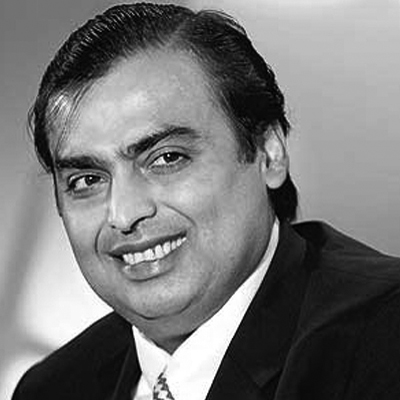
    Reliance Jio, the telecom arm of Mukesh Ambani led Reliance Industries, is the only company to have pan-India Broadband Wireless Access spectrum that can be used for 4G services. Reliance Jio has plans to start 4G services across most of the telecom circles by March 2015.
     

    Reliance Industries has already announced that it will launch commercial 4G telecom service of Reliance Jio in 2015 entailing investment of Rs 70,000 crore. It will initially cover about 5,000 towns and cities accounting for over 90 per cent of urban India, as well as over 215,000 villages in India.
     

    The company is focusing on convergence space and has bagged Broadband Wireless Access spectrum in 2010 and Internet Service Provider license was bagged through acquisition of Infotel Broadband Services in 2010.
     

    The company has also showcased a ‘Jio Television’ that can be delivered through 4G network.
     

    All these services will help Reliance Jio to offer broadband services through wireless media, wireline media and cable TV media thereby focusing on all types of broadband services pan-India.
     

    Reliance Jio in February 2014 acquired airwaves in 1800 MHz band across 14 out of 22 service area in the country. The spectrum in this band can also be used for providing 4G services. The company already holds Unified Licence (UL), which allows it to use any technology to provide telecom services.

    Under UL, sources said, Reliance Jio can offer Fiber-To-The-Home services and high speed broadband services to home and enterprise users.

    An MSO license will help Reliance Jio to offer cable TV services through optical fiber thereby providing triple play service as done by large MSOs in the country say Hathway, Siti Cable, IN cable, DEN and others.

  • Q3-2015: Network18 reports improved results

    Q3-2015: Network18 reports improved results

    BENGALURU: Network18 Media & Investments Limited (Network18) reported better results in Q3-2015 as compared to Q2-2015. Improved performances by its media operations, web and publishing operations helped buoy the company’s topline. Q2-2015 was a bad quarter overall for the media and entertainment (M&E) industry in India. Is the Ambani habit of reporting good results rubbing on to its newly-taken over companies – TV18 and Network18; minnows when compared to the giant that the Mukesh Ambani run Reliance Group of Industries is? Only time will tell.

    Note: 100,00,000 = 100 Lakh = 10 million = 1 crore

     The company reported 11.7 per cent growth in Income from Operations at Rs 839.1 crore in Q3-2015 from Rs 744.8 crore in Q2-2014 and 14.3 per cent more than the Rs 727.6 crore in Q3-2014. During 9M-2015, Network18 Income from Operations improved 16.9 per cent to Rs 2285.1 crore from Rs 1954.1 crore in 9M-2014.

     Network18’s Profit Before Tax and Exceptional Items (PBT) improved to Rs 22.4 crore in Q3-2015 from a loss of Rs 14.8 crore in Q2-2015 and 15.7 per cent more than the Rs 19.3 crore in Q3-2014. For 9M-2015, loss at Rs 36.4 per cent was lower than the loss of Rs 65.6 crore in 9M-2014.

     Let us look at the other numbers reported by Network18:

     The company’s operating profit (Profit before depreciation, interest and tax – PBDIT) in Q3-2015 at Rs 67.1 crore was almost quadruple (up 3.8 times) than the Rs 17.4 crore in Q2-2015 and 12.7 per cent higher than the Rs 59.5 crore reported in the corresponding quarter of the previous year. For 9M-2015, PBDIT at Rs 97.2 crore was 2.5 times the Rs 39 crore reported for 9M-2014.

     Network18 reported 5.6 per cent higher Total Expense (TE) at Rs 788.5 crore in Q3-2015 versus the Rs 746.9 crore in Q2-2015 and 14.7 per cent more than the Rs 687.6 crore in Q3-2014. In 9M-2015, the company’s TE at Rs 2268.9 crore was 15.2 per cent more than the Rs 1969.5 crore in 9M-2015.

    Programming cost in Q3-2015 at Rs 202.1 crore was 13 per cent more than the Rs 178.8 crore in the immediate trailing quarter and 30.8 per cent more than the Rs 154.5 crore in Q3-2014. In 9M-2015, programming cost at Rs 546.5 crore was 37.8 per cent more than the Rs 396.5 crore in 9M-2014.

     Network18’s distribution, advertising and business (DAB) expense in Q3-2015 at Rs 214 crore was 3 per cent lower than the Rs 220.7 crore in Q2-2015 and 3.3 per cent less than the Rs 221.3 crore in Q3-2014. In 9M-2014, the company reported 5.2 per cent lower DAB expense at Rs 626.6 crore versus the Rs 660.7 crore in 9M-2014.
     
    Depreciation and amortisation cost (depreciation) in Q3-2015 at Rs 23.8 crore was 22.7 per cent lower than the Rs 19.4 crore in Q2-2015 and 22 per cent less than the Rs 19.5 crore in Q3-2014. Depreciation in 9M-2015 at Rs 80.9 crore was 48.7 per cent more than the Rs 54.4 crore in 9M-2014.

     Network18 says that its digital content operations – moneycontrol.com, Ibnlive.com, Firstpost.com and News18.com and its digital commerce operations bookmyshow.com and Homeshop 18 performed well in the current quarter with a monthly average reach of approximately 25 million visitors for first two months in this quarter.

    Its television business also performed well. The company said that its business news operations (CNBC-TV18, CNBC Awaaz, CNBC Bajar and CNBC-TV18 Prime HD) sustained their leadership position in the genre. CNBC Bajar showed accelerated growth in viewership with a 182 per cent increase in Q3-2015 over Q2-2015. CNN-IBN stood at No.2 position in the English General News category in Q3-2015 with a market share of 25 per cent. In the entertainment segment, Colors was the No.1 channel on weekend prime time with a market share of 28.3 per cent in Q3-2015. History TV18 ended the year 2014 with No.1 position in December 2014 with a market share of 25 per cent in 6 Metros and garnered the maximum time spent per viewer at 178 minutes in 6 Metros and 132 minutes in all India. The company’s regional news and entertainment group of channels under the ETV umbrella also performed well.


  • Reliance Retail to develop market for Mukesh Ambani’s Jio

    Reliance Retail to develop market for Mukesh Ambani’s Jio

    MUMBAI: Mukesh Ambani-led Reliance Industries, which will soon launch its pan-India 4G datacom services under the brandname ‘Jio’, has assigned the mandate to develop the market for compatible devices and drive its growth to its retail arm – Reliance Retail.


    As per an IANS report, Ambani in a letter to the Reliance Retail team wrote, “Devices are cornerstone in bringing broadband to the masses. The long-term evolution (LTE) ecosystem for devices in India is nascent.”


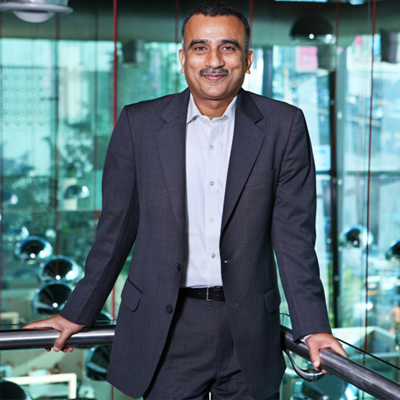
    Ambani also announced that Reliance Jio MD Sandip Das will step down from his current role and drive the initiative by joining the board of Reliance Retail to mentor the Jio division.


    The report quotes sources as saying that Ambani is attaching much importance to the 4G data telecom space and sees it as one of the major drivers of growth within the $75-billion group.


    The next-gen of the company, Isha and Akash Ambani, recently, secured approvals to join Reliance Jio Infocomm’s board of directors.


    Das had personally sought a shift in his role to mentor the Jio initiative of Reliance Industries, said the report.


    “It will take the resources, deep conviction and substantial expertise of Reliance to build an LTE device ecosystem to a level similar to the availability of 3G devices,” said Das, who has been associated with a host of Indian and global telecom firms in the past, in the report.


    And added, “As Reliance Retail is building electronic goods sales stores and channels to pioneer and dominate this ecosystem, it will be a wonderful challenge for me to mentor this.”


  • Few shareholders tender Network 18 and TV18 shares against Reliance open offer

    Few shareholders tender Network 18 and TV18 shares against Reliance open offer

    BENGALURU: A small fraction of the shareholders tendered their shares to the Reliance Industries led Independent Media Trust (IMT), in its bid to acquire over 90 per cent stake in the two companies – TV18 Broadcast and Network 18 Media & Investments.

    Only 54 lakh TV18 Broadcast shares representing 0.32 per cent were tendered against the 44.65 crore shares representing 26 per cent that Reliance proposed to buy , and a meager 2.6 lakh Network 18 shares representing just 0.2 per cent of the shareholding were tendered. IMT spent just Rs 16.43 crore for the TV 18 tendered shares and Rs 1.06 crore for the Network 18 shares. IMT’s offer was Rs 30.18 per TV18 Broadcast equity share and Rs 41.04 per Network 18 equity share.

    The new acquisitions brought IMT/Reliance group’s stake in TV18 Broadcast to 60.29 per cent and to 78.07 per cent in Network 18.

    Reliance may have to sell off some Network 18 shares to meet the minimum shareholding norms of 25 per cent. At present, the public shareholding in the company stands at 20.27 per cent.


  • 2014: The year of big movements in the news channel space

    2014: The year of big movements in the news channel space

    MUMBAI: The year 2014 was an important year for the news channel industry, monetarily and otherwise. The bonus for the industry was the national election which not only kept them busy for the first half of the year, but also sent all the networks into profits for the first financial quarter. However, several changes took place on the people front with numerous big names moving out from their associated companies.

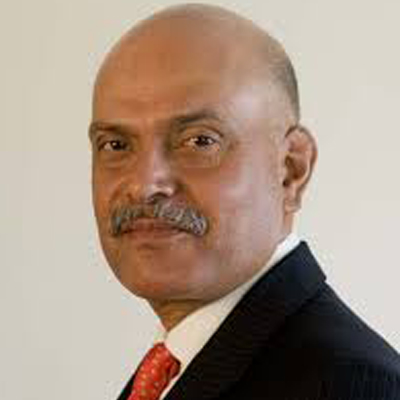
    The biggest shocker that hit the industry was the acquisition of Network18 by Reliance Industries’ subsidiary Independent Media Trust, putting the entire TV18 (news channels) section under the Mukesh Ambani conglomerate. Network18 founder and chairman Raghav Bahl, this year sold his baby to Ambani for a whopping Rs 4000 crore. Bahl has now set up his own new venture in the mobile space called Quintillion Media.


    What followed this was an upheaval of sorts, as one by one, the main pillars of the company began to fall. As soon as the meeting concluded between Bahl and the management of Network18, departures began which included group CEO B Sai Kumar, COO Ajay Chacko, CNN-IBN deputy editor Sagarika Ghose, IBN Network editor in chief Rajdeep Sardesai, Network18 Media CEO Sanjay Dua, Network18 digital CEO Durga Raghunath, Network 18 CFO RDS Binni Bawa and deputy foreign affairs editor Suhasini Haidar.

    Soon after, the discussion circled the possibilities of news manipulation by the conglomerate as well as editorial interference started cropping up. In order to assuage the racing thoughts of the employees, the newly formed management took a town hall meeting. A new set of executives joined the company including former Zee Media CEO Alok Agrawal who took charge as Network18 group COO, Umesh Upadhyay as news director, Rohit Bansal as non executive director, Hariharan Mahadevan as CFO and Deepak Parekh and Adil Zainulbhai as independent directors.

    The year also saw several people shifting loyalties due to various reasons. The biggest of them were Rajdeep Sardesai joining India Today as consulting editor and primetime anchor, Dilip Venkatraman and Savvy Venkatraman joining ITV Network as group COO of strategy and business development and group chief marketing officer respectively, former Indian Express editor in chief Shekhar Gupta moving to India Today as the vice chairman and editor in chief of news properties but within two months relinquishing his positions and becoming editorial advisor to the group and Sanjay Dua joining ITV Network as NewsX CEO and ITV network chief revenue officer.

    Months after Times Television Network MD and CEO Sunil Lulla was elevated to BCCL Group president of corporate development, he quit the company to join Grey group India as chairman and managing director.  Meanwhile, Times Now, ET Now and Zoom CEO Avinash Kaul went to IBN18 Network as CEO. ITV Network elevated CEO RK Arora to group CEO and soon after Arora quit to join News Nation as its CEO, which had been vacated by Shailesh Kumar, the former CEO and editor in chief of the channel. Kumar recently joined Focus Group as the managing editor for regional channels. Neeraj Sanan who headed distribution and marketing for MCCS that operates ABP news channels, quit and went to Focus Group as group CEO.

    News Xpress CEO and editor in chief Vinod Kapri decided to step down as well and was replaced by Prasoon Shukla. Early in the year, CNN-IBN managing editor Ashutosh quit to join the Aam Aadmi Party (AAP) and was replaced by Vinay Tewari who after several months shifted to Headlines Today as managing editor, a place left vacant by Nalin Mehta. Radhakrishnan Nair was appointed in place of Tewari.

    On the business side, Bloomberg TV India editor in chief Vivek Law quit to pursue entrepreneurial activities and the position was filled by Siddharth Zarabi. Zee News resident editor Sumit Awasthi joined IBN7 as deputy managing editor. News24 managing editor Ajit Anjum joined India TV in the same capacity. QW Naqvi who joined India TV as editorial director, left after a few months’ stint.

    On the international channels side, Naveen Jhunjhunwala replaced Preet Dhupar as BBC Global India COO while Ravi Agrawal was appointed as CNN International bureau chief for India. Bhupendra Chaubey who became executive editor of CNN-IBN, post takeover by Reliance, decided to shift his role to consulting editor. The year also saw the demise of veteran journalist Jehangir Pocha.

    The News Broadcasters Association (NBA) has been fighting tooth and nail for keeping news broadcasters out of the 12 minute ad cap. The case is still being heard in the High Court for more than a year. NDTV executive vice chairperson KVL Narayan Rao, after four years of heading the NBA as president was succeeded by India TV chairman and editor in chief Rajat Sharma. A new entity called the All India News Broadcasters Association (AINBA) was formed for the regional news channels with Azad News chairman MS Walia as its chairman.

    The other big takeover rumour that was making rounds was about the Adani group trying to stake claim in NDTV (which completed 25 years) which the company vehemently stated as a false one.

    The year also saw a few channel launches such as CNBC Bajar, News Nation UP/Uttarakhand, several regional news channels under the ETV group (now under Network18), Zee Purvaiya and Zee Kalinga which have now been converted into fully entertainment as against the earlier format of 50 per cent news and 50 per cent entertainment.

    2014 was also the year of revamps, with India TV, IBN7, NewsX, News Xpress and Zee News changing the look and feel of the channel. NDTV Profit converted into a dual channel NDTV Profit/Prime, with Prime operating as a fully sponsored channel, aimed at easing out the losses being made by Profit over the years.

    The 16th Lok Sabha general election added the much needed boost to the balance sheets of news channels that have been cribbing about high carriage fees, low subscription fees and advertising rates. CNN-IBN and Times Now came up with their election apps. The latter also tied up with north east channel News Live for poll coverage. Network18 tied up with Microsoft to set up an analytics centre for the elections while BBC used WhatsApp and WeChat for getting more traction from Indian audiences. This election season saw a new trend: that of editors moving out of the comfort zone of their studio and reporting from ground zero.

    As we approach the new year, burning issues are yet to be resolved such as the ad cap, carriage fees, paid news as well as foreign direct investment in news channels which is still stuck at 26 per cent and does not seem to have a better future any time soon.

  • Network18 appoints new directors and a CFO

    Network18 appoints new directors and a CFO

    MUMBAI: New appointments have been made at the Reliance Industries’ controlled Network18.


    Rajiv Luthra and Dhruv Kaji have been appointed as independent directors of the company. Additionally, Hariharan Mahadevan has been appointed as the chief financial officer (CFO) and Kshipra Jatana as manager.


    The appointments are effective from 27 November. Earlier this year when Reliance Industries’ took over Network18, CFO RDS Bawa quit along with a host of other executives including CEO B Sai Kumar, COO Ajay Chacko, editor in chief Rajdeep Sardesai etc.


    As of now, founder Raghav Bahl, Rohit Bansal, Vinay Chhajlani, Deepak Parekh and Adil Zainulbhai are the directors of Network18.

  • “I am a firm believer of strengthening what we have already started”: Sudhanshu Vats

    “I am a firm believer of strengthening what we have already started”: Sudhanshu Vats

    Over the past seven years, Viacom18 has grown to be one of the bigger conglomerates in India. The JV which started off as a partnership between Viacom International and Network18’s subsidiary TV18 and is now a JV between Viacom and Reliance Industries which has taken over Network18 has grown out of just a broadcasting business into a film and live events business.


    At the helm of it is Viacom18 group CEO Sudhanshu Vats who joined the company nearly three years ago after a double decade long stint at Hindustan Unilever Limited (HUL). Energetic and dynamic, Vats has a belief of uniting the entire Viacom18 channels and departments into ‘one Viacom18’.


    Spending much of his career at HUL, Vats still thinks from a consumer perspective. Speak to him now of content and he will first think of what the consumer is doing. On the occasion of the completion of seven years of the company, he speaks to indiantelevision.com’s Meghna Sharma and Vishaka Chakrapani about the growth of the company and where it is headed.


    Tell us about the seven year journey.


    When Viacom18 was formed seven years ago, there were only three channels MTV, Vh1 and Nick, and now we have 10 channels. That is an expansion in our broadcast business. We have also entered the film entertainment business through Viacom18 Motion Pictures in 2011. About a year and half ago, we got into experiential/live entertainment business. So now we have broadcast, films and live entertainment under our wings. We began our journey at about Rs 100 crore. In the last seven years we have grown 20 times. 


    A significant milestone is that we have turned PAT profitable in FY-14. That was our first year of PAT profitability at Viacom18. It’s important to not only grow exponentially but also profitably. Profitable growth is sustainable and gives you fuel for investment.


    What’s your growth strategy?


    I am a strong advocate of sharper segmentation. The more I think about it, the more I am convinced. Let us start from a consumer point of view. What is happening in India is that the country is urbanising at a very fast pace, income levels are growing, people are becoming more aware. Urbanisation is happening more rapidly than we see because it goes beyond the tangible phenomenon of growth in cities / urban habitats, attitudinally India is urbanising at a rapid pace. 


    Prime Minister Shri Narendra Modiji’s campaign is all about tapping in to the mindset of urban Indian youth who may not stay in urban India but has a mindset of aspiration, opportunity, development, fair play, which is universal. From the point of view of content, we see that when we move from rural to urban we move from a “We to I” mindset and develop a stronger individual identity. So we want to customise content for every Indian. In the utopian sense 1.2 billion people want 1.2 billion packages. Are there screens available to consume content? Yes 900 million. Is there capacity to carry content? Yes, with the digitisation of cable network and planned growth in broadband and 3G/4G we are building sufficient capacity in the content pipes. With consumer desiring more and more content it can’t be the same/similar content being churned out. So sharper segmentation is needed.


    In each of the genres we exist, we will segment further and deepen our presence. We will continue to look at adjacent genres. We have Colors and Rishtey in Hindi GEC. Post legal and regulatory clearances, we will have a strong presence of Viacom18 in regional GEC genre as well.


    Within Colors, a few years ago we didn’t have comedy sub-genre and we now have Comedy Nights with Kapil – and that’s a hit. We are also looking at other sub-genres. It’s about providing a spectrum of options to viewers within the channel.


    Was moving into movies an alternative to launching a movie channel?


    When we look at movies, we look at whether there is a consumer case, and also a commercial case. Movies have about a 13-14 per cent viewership according to TAM. So there is a consumer case. However a movie channel isn’t differentiated enough. We aren’t so sure if there is a commercial case for us, given the rising acquisition rights for films.


    What about a sports channel?


    Sports is a genre that we aren’t looking at in the short- to medium-term. If you look at the consumer case again people are watching a lot of cricket. But even in that, it’s a 0-1 situation. When India is playing international cricket or it is a short form game, viewership is huge but the moment India isn’t playing, or it is test cricket, viewership drops. At the same time viewership for domestic cricket is very poor. For other games, viewership will take time to develop. 


    It is a genre which has promise in the future. But it is a long gestation game. It needs deep investment and commitment.


    Leagues are increasing in number. Where do you see them going?


    Leagues are an interesting development where players are finding a sweet spot between sports and entertainment. Is it a promising place in the future? Perhaps yes. All this depends on the journey of the company. For Viacom18, I think there is enough and more to be done in deepening our current genres or entering identified adjacent genres. Our focus should be to strengthen the same. Having said that, we will continue to evaluate all opportunities from time to time. 


    How is the business of Live Viacom18 doing? A few months ago it was bringing in 2 per cent of your revenue. What is it now?


    This year we should be at about 4 per cent of our total revenue.  Live entertainment is the place where we start getting straight into the wallet of the consumer. It broadens our revenue streams – first is advertising, second is subscription and third is direct share of the wallet. In urban India, this phenomenon will grow rapidly. Particularly in certain genres like music, there is nothing to beat live entertainment. Other forms of entertainment are passive. So if you see in EDM or Bollywood dance music, we have two properties – Vh1Supersonic and MTV Bollyland. I am equally keen on the kids genre. The entire piece on experiential entertainment is a good space. We want to surely reach 10 per cent in future.


    Are you expanding the number of events that you have?


    Last year Vh1Supersonic was a standalone property. This year we are doing arcades and mini events in big towns- Bengaluru, Mumbai, Delhi with three artists. We have taken Vh1 Supersonic gigs to 50+ clubs and hundreds of colleges. With MTV Bollyland, we went deeper to mini-metros and towns with 1 million + populations – in fact it’s going to be 12 towns this year. We are also taking the IP outside India with the first event soon to be held in Dubai.


    Will there be any more additions to the list?


    I am a firm believer of deepening and strengthening what we have already started. For Colors, we will evaluate as we move forward, because we do a lot of non-fiction shows and the genre lends itself very well to live events.


    How has your ad inventory grown due to the 12 minute ad cap rule?


    A 12-minute ad cap for pay TV is a step in the right direction – it improves viewer experience. The viewer wants quality content and while he or she may want to watch some advertising, the problem lies in the fact, that there are cases when advertising outweighs the content duration. In future good content will command a premium on the 12-minute ad inventory. In India ad rates are under-indexed, possibly amongst the cheapest in the world, so there is a lot of room for growth. Colors, MTV, Nick, Vh1 and Comedy Central have successfully improved ERs. Across our genres our attempt will be to get good content that leads to higher viewership and better rates.


    What is the network’s take on geo targeting?


    The pilot has been conducted in the kids’ cluster. It’s a clear win-win situation for both broadcaster and advertiser, therefore it gives us confidence to scale it up across genres. While the FMCG sector will derive a lot of value, other sectors also stand to benefit from this. In addition geo-targeting will help us tap newer clients and local advertisers in future.


    What is the state of carriage fees? Has it come down or is it still on an upward swing?


    Overall carriage has come down in the past two years. The broad understanding was that with digitisation there would be no carriage at all. So it hasn’t come down as much as we would have liked it to. This is due to the lack of addressability of the consumer/viewer. No wonder then, that carriage, rather than continually coming down, has begun to rise again in recent months. As we move forward, MSOs would need to drive revenues and collections from the subscribers, thereby reducing /eliminating dependence on carriage.


    What about the unequal advertising/subscription skew in India?


    Worldwide ad subscription revenue tends to be almost equal. Like many things in India, change for the better is slow but gaining momentum.


     What best practices does Viacom18 need to grow?


    The next growth phase requires that we build capacity in talent, systems and processes and invest behind key strategic opportunities. Capacity building especially in processes and systems is an ongoing journey. We have begun to lay greater emphasis on analytics, automation and processes such as ERP. They are being implemented at Viacom18. We have focused leading brands in each genre and this is unique to us. Finding the right balance between independence and interdependence is important, hence we are driving synergy as we grow. We are building greater interdependence – in our processes and in our culture.


    We are hiring from colleges, as well as carrying out lateral hires. We constantly evaluate how best do we provide our people with new and exciting opportunities within the organisation. Finally, we also have a structured end-to-end approach to offer to our clients through our Viacom18 Integrated Network Solutions team. We offer a full bouquet of services to advertisers, who can partner with us on live events, broadcast, film integration – the entire spectrum of consumer connect.

  • Reliance brings with it the zest to win, says Sudhanshu Vats

    Reliance brings with it the zest to win, says Sudhanshu Vats

    MUMBAI: On 29 May 2014, Reliance Industries Limited (RIL) had announced that it would spend Rs 4,000 crore to take complete control of Network18, the company which Raghav Bahl founded in 1993.


    The takeover labeled as the biggest takeovers in India’s media industry, followed the announcement with an open offer to the public.


    Since then, not much has been spoken about the management changes, cultural changes in the companies or the working.


    So, when indiantelevision.com met Viacom18 group CEO Sudhanshu Vats, we couldn’t help but ask.


    Answering the obvious question of has there been any management changes post the takeover of Network 18 by Reliance, Vats says, “No, there have been no changes at Viacom18. The same management team continues to drive Viacom18.”


    Vats goes on to add that Reliance is a very large and successful company. It believes in scale and has strong leading position in all the business segments in which it operates. “The good news from our point of view is that we now have two industry giants – Reliance and Viacom as partners. Reliance brings with it scale, resources and the zest to win. Those are good traits for us to gain new heights in the media sector,” he emphasises


    For the record, Network18 owns news TV channels (including CNBC-TV18, CNN-IBN, CNBC Awaaz etc), websites (firstpost.com, moneycontrol.com), magazines (including the license for Forbes India), entertainment channels (including Colors, MTV and Homeshop18) among other businesses. And Viacom18 founded in November 2007 is a 50:50 joint venture operation in India between Viacom and the Network 18’s subsidiary TV18, based in Mumbai.

  • Reliance Jio and Indus Towers Ink Infrastructure Sharing Deal

    Reliance Jio and Indus Towers Ink Infrastructure Sharing Deal

    MUMBAI: Reliance Jio lnfocomm Limited (Reliance Jio), a subsidiary of Reliance Industries Limited (RIL), the only pan India operator with BWA spectrum preparing to launch 4G services and Indus Towers, the world’s largestand India’s leading provider of telecom tower infrastructure, today announced the signing of a Master Services Agreement (MSA) for tower infrastructure sharing. Under the agreement, Reliance Jio would utilize the telecom tower infrastructure services being provided by Indus Towers to launch its services across the country. As per the agreement,the pricing would be based on prevailing market rates.


    The agreement will help in avoiding duplication of infrastructure and preserving the environment. It will also ensure seamless services to Reliance Jio customers through Indus’ world class tower infrastructure.


    Sanjay Mashruwala, Managing Director, Reliance Jio said, “We are continuing our effort to create a new age network which will provide innovative.and empowering digital solutions to every Indian through our high speed 4G services. We are building our network through a combination of infra.structure network that we are creating on our own and those that we are renting from quality partners. We already have such tower sharing agreements with all the major players in India, and this relationship with Indus Towers will further accelerate the rollout of our services.”


    Mr BS Shantharaju, CEO, Indus Towers said, “We are delighted to partner Reliance Jio in their endeavor to roll-out next generation wireless broadband services. Our footprint in 15 Circles in India coupled with high network uptime levels, cost effective solutions, faster access to market and  lower  operational  costs  will  provide  Reliance  Jio  a  robust  and  seamless  telecom infrastructure; Additionally, our agreement with Reliance Jio will also bring benefits to our existing customers in the form of lower rentals and energy costs. At the same time, the infrastructure sharing will help in avoiding duplication of towers and benefit the environment through lower power and fuel consumption. On this new partnership, we look forward to a long and mutually beneficial relationship with Reliance Jio.”


    Indus Towers has a well-defined  infrastructure sharing strategy to support and to enhance infrastructure sharing in India,thereby allowing for expansion of wireless networks into rural areas and promoting better environmental utilization of resources in metro areas. Currently Indus Towers services 11 operators namely Airtel, Vodafone, Idea, Aircel, Tata Teleservices, Uninor, Reliance Communications,Videocon, MTNL, BSNL & MTS.

  • RIL will stand the test of time: Raghav Bahl

    RIL will stand the test of time: Raghav Bahl

    MUMBAI: He was much in the media about three months ago when he had sold his baby to an Indian business tycoon. After spending two months in the US researching for his ‘second innings’ as he calls it, Network18 founder and non-executive director Raghav Bahl is back in business.


    Speaking at the TV.Nxt 2014 summit with Vanita Kohli Khandekar, Bahl seemed at ease while talking about his 18 successful years in the business and what could have been avoided. He highlights two life changing situations for his company with the first being in 1999, when he decided to move from a software and content production company to a broadcasting one. ”If you want to scale up you had to be in broadcast and we clearly wanted to be in the news side of it. It was no fun in being a 10 per cent player,” he says.


    The second string of life was in 2007-08 when Viacom came to India looking for a partner and along with Network18 created the GEC Colors. ”They thought that if CNN and CNBC could coexist in the same balance sheet then they must be doing something right,” he proudly says adding that their main point was being a news company that entered the entertainment field. 


    “When the parent is a news company, we have a draconian law in India that a single Indian shareholder has to have 51 per cent of the news broadcast company, which meant I had to have 51 per cent at any point of time. That’s draconian for a single first generation entrepreneur. A lot of issues that TV18 faced were due to this, which is a less understood facet of the company,” he adds.


    However, he also agrees that his peak investment phase in 2008 including diverging into HomeShop18 and Infomedia was a classical error because it coincided with the economic depression. ”We were losing about Rs 2 crore a day with cash loss of Rs 750 crore.” he admits. Although in 2009-10 he got an infusion of Rs 1000 crore equity capital, Bahl says that he should have used at least half of it to reduce debts than expand.


    As popularly perceived that news is a loss making business, Bahl disagrees by saying that it actually makes a lot of money. Network 18’s news side was making Rs 700 crore to Rs 800 crore topline which it reinvested back in the business. “Which is why it seemed like it was making losses,” he says.


    Bahl also points out that in the last four months, the company has launched six channels. ”Our EBIDTA was Rs 150 crore to Rs 200 crore. This is very healthy.  Out of this, Rs 100 crore EBIDTA comes from CNBC business,” he informs. As per him, the nearest competitor to Network18 reaps Rs 250 crore to Rs 300 crore in topline.


    He is unperturbed about the hype that surrounded Reliance Industries’ takeover of his company. ”There has been a lot of prejudgment regarding RIL. Just because we were a news company, we were in focus because there is an institutional morality built into it. The larger the biz house, the more the issue,”  he says, while adding that Ronnie Screwvala’s deal of selling UTV to Disney didn’t come as much under media scanner as his company. The deal with Mukesh Ambani was a contractual commitment that was declared as convertible debentures on the first day. He hopes well for Network 18 in its new owners’ hands. ”Few years down the line, its balance sheet will be good,” he saysSide by side, he also foresees subscription revenues to grow to Rs 1000 to Rs 1500.


    Addressing the slew of exits from the company after his own departure, Bahl asserts that those were just a few, while dozens have stayed loyal including R Jagannathan from Firstpost and Senthil Chengalvarayan, Menaka Doshi and Latha Venkatesh from CNBC-TV18. ”We just assume that the owner wants to compromise. I think Reliance Industries will stand the test of time,” he asserts.


    Fear of journalism being tampered with is also a big question with the acquisition. Bahl feels that people undervalue Indian journalism. ”The world thinks it is power but it actually is a thankless business,” he says. Media in India is independent and plural with no media having more than 5-7 per cent voice, he adds.


    With digital on the rise, which is also to be Bahl’s second stint at entrepreneurship, he believes that it will be the biggest competition to news, though not immediately but in the next 10 yearsHe has chosen to tread the path of mobile news. ”I am out of the TV business but news is my first love. There is a large amount of innovation happening in news. The way I serve, target, personalise and curate content will be important,” says he. According to him, the next generation news companies won’t be just content focused but will be a 50:50 share of content and technology. At the same time, the engineer will be as important as the editor. 


    Khandekar said that this view was similar to what Google is doing by offering news. But Bahl clarified that Google does not create content, it only curates content. In today’s world even big media companies, curate content apart from its original ones. But what matters most to the consumer is the experience. ”Anybody who says that he won’t curate or aggregate content is living in the medieval age. A journalist is a curator himself. But, the quality of original content will be the differentiating factor,” he stresses. His two month experience in the US has also taught him that in order to have a good brand, one needs at least 33-40 per cent original stuff.


    While company acquisitions happen world over, Bahl feels that the industry does need capital in it. He feels that technology companies will find it difficult to enter the news business but news creators can learn technology easily. According to him New York Times and Times of India are examples of how companies have adopted better technology while online sites such as Vice and Vox have emerged into the digital era with high quality production of news. 

    Finally talking about the huge sum of money that Bahl pocketed from the transaction, he says that although it has taken away his insecurity, it has also made him more sensible.