Tag: Reliance Industries

  • Raymond launches Ecovera in collaboration with Reliance Industries

    Raymond launches Ecovera in collaboration with Reliance Industries

    MUMBAI: Raymond Group, India’s leading fashion and textile manufacturer and retailer, has unveiled the eco-friendly Ecovera – a range of fabrics manufactured by using R|Elan™, the latest technology from Reliance Industries Ltd (RIL).

    The Ecovera range will soon hit 1500 stores across 700 cities. It is made from R|Elan™ GreenGold, the greenest fibre in the world. R|Elan™ GreenGold is made by recycling post- consumer waste PET bottles, using bio-fuels and energy-efficient processes.

    Raymond’s Ecovera, powered by RIL’s R|Elan™, will redeem almost 1 million PET bottles from landfills. It’s a testimony to both RIL and Raymond’s commitment to saving the Earth.

    Speaking on the joint development of the sustainable range, Mr Sudhanshu Pokhriyal, President, Textiles, Raymond Ltd. said, “We as an organisation are known for innovations in manufacturing top quality fabrics using both natural and man-made fibres. In our endeavour to create eco-friendly, sustainable fabrics, R|Elan™ GreenGold is a perfect choice to produce fabrics that have multiple qualities with superior handle and lustre. The use of R|Elan™ GreenGold is also a step towards achieving our goal of making our organisation sustainable and environment-friendly.”

    Raymond is one of the largest vertically and horizontally integrated manufacturers of worsted suiting fabrics in the world. It commands a dominant market share of over 60 per cent in the worsted suiting fabrics space in India. Throughout its history, Raymond’s motto has been: ‘Dressing the modern man right’.

    Drawing from Reliance’s extensive R&D and vast expertise in fibres, R | Elan™ is a portfolio of innovative fabrics that does more. R Elan™ GreenGold is a new-age technology from RIL with globally supreme eco-credentials and specially engineered to fulfil consumer requirement for sustainable fashion. GreenGold is one of the eco-friendliest raw materials for the fashion industry and is supporting major brands achieve their environmental commitments.

    According to Mr Gunjan Sharma, CMO – Polyester Business, RIL, “We are proud to be associated with Raymond. It provides us with an opportunity to do our bit for the environment. R|Elan™ GreenGold enables and equips Raymond to create an innovative and fashionable fabric with an added dose of sustainability.”

    RIL’s petrochemicals business is committed to adhering to the concept of circular economy, recycling and waste reduction. Its aim is to make Indian textile and fashion industry a leader in practising these concepts. Thus, R|Elan™ products will provide consumers next generation fabrics that are in line with the latest fashion trends while also fulfilling their lifestyle needs. RIL’s efforts will give consumers the assurance that if there is R|Elan™ on the outside, there is something special on the inside.

  • RIL plans to acquire additional 26% stake in Hathway Cable and Datacom

    RIL plans to acquire additional 26% stake in Hathway Cable and Datacom

    MUMBAI: Reliance Industries (RIL) and its group companies have announced an open offer to acquire an additional 26 per cent stake in Hathway Cable and Datacom, after receiving the approval from Competition Commission of India (CCI), according to a new article in the Press Trust of India.

    Reliance Industries along with Jio Content Distribution, Jio Internet Distribution Holdings and a clutch of group companies "have announced an open offer for acquisition of up to 46,02,27,170 fully paid up equity shares…from public shareholders of Hathway Cable and Datacom, representing 26 per cent of the expanded voting share capital, at a price of Rs 32.35 per equity share aggregating to total consideration of Rs 1,488.83 crore, payable in cash," Hathway informed in a regulatory filing.

    In October 2018, Reliance Industries had acquired majority stakes in Den Networks Ltd and Hathway Cable and Datacom Ltd for Rs 5,230 crore.

    In DEN, Reliance made a primary investment of Rs 2,045 crore through a preferential issue and secondary purchase of Rs 245 crore from existing promoters. In Hathway, RIL made a primary investment of Rs 2,940 crore through a preferential issue.

  • RIL close to buying majority stakes in DEN, Hathway

    RIL close to buying majority stakes in DEN, Hathway

    MUMBAI: Reliance Industries is expected to buy controlling stakes in two of India’s largest cable TV and broadband service providers, DEN Networks and Hathway Cable & Datacom, according to a report by the Times of India (TOI). The plan mostly is to increase the reach in particular regions of the country for its Gigafiber, Fiber-to-the-Home (FTTH) service.

    In May 2017, Reliance Jio had begun rolling out beta trials of the FTTH service at select locations in six cities- Mumbai, Delhi-NCR, Ahmedabad, Jamnagar, Surat and Vadodara.

    RIL is likely to own more than 25 per cent each in the two companies which will enable it to control developments and get a seat on the board. The deal is expected to be announced in the next few days. Both companies have told the stock exchanges that the respective boards are meeting on 17 October to discuss and approve a proposal for raising funds.

    “RIL wants to create a platform which will accelerate home broadband penetration in India, which is currently in a low single-digit. The aim is to push home broadband penetration to around 60 per cent in the coming years,” TOI quoted a source.

    Last September, RIL was in advanced talks to acquire DEN but could not reach an agreement. Some months ago, it began talks with Hathway as well.

    Industry experts told TOI that a stake in Hathway and DEN will be a major boost to Jio. Both operators have 7.2 million digital cable subscribers each, with operations across 350 and 200 cities, respectively.

  • A ‘Colors’ful decade

    A ‘Colors’ful decade

    MUMBAI: It seems just like yesterday. How oft we have heard that phrase being spoken. So much so that it appears banal. However, in the case of Colors – the general entertainment channel from the now Reliance Industries majority-owned Viacom18 – it is so apt. 10 years have gone by since it started.

    Twitterland has been buzzing with tweets from Viacom18 COO Raj Nayak, Colors itself, and nominated managing director Sudhanshu Vats celebrating the achievement of the landmark.

    And why not? It seems not so long ago that Colors was flagged off under the baton of programming head Ashvini Yardi and the then CEO Rajesh Kamat. The former today is a successful producer and Bollywood icon Akshay Kumar’s production partner. The latter manages funds and is invested in the media space.

    Colors disrupted the status quo – and how. At launch stage, expensive loss leaders like Khatron Ke Khiladi hosted by Akshay Kumar, accompanied by path breaking rural subject shows like Na Aana Is Des Laado, Balika Vadhu and Uttaran delivered a breath of fresh air to audiences, who stayed glued to the channel. This gave it unprecedented viewership ratings and made existing leaders Star Plus, Zee TV and Sony Entertainment raise their eyebrows in surprise, and later creased their brows with worry. It succeeded at a time when two other efforts, NDTV Imagine and Real Broadcasting, flopped and folded up. Both had big money backing them. And, no one expected Colors to be any different. The name itself was pretty oddball.

    However, fully charged up distribution, sales and marketing teams – led by Kamat, then promoters Raghav Bahl, and then group CEO Haresh Chawla – worked day and night to make it a success.  Ambition ran pretty deep. With failure not an option, there was only one path to beat, that of victory over India’s audiences.

    Colors shot up the viewership charts dislodging leaders Star and Zee from their perches and carved out its place in the top 3 GEC sweepstakes. Of course, money had been burnt during startup as investment, and the cash burn continued. But the advertising and marketing community caught on quick and started ploughing media spends into the channel.

    The Colors rosy tale continued until both Kamat and Ashvini departed, leaving a vacuum. And, like earlier, a surprise candidate was plonked in the drivers’ seat: Raj Nayak – a professional with experience of selling Star Sports and ESPN, then Star Plus in its early humungous success days, later NDTV and then with his own venture Aidem. Quizzical looks went around relating to the selection.

    But Raj adapted quickly to the creative demands and brought in a former Sony programming head Manisha Sharma to help and fine-tune the selection of fictional and non –fiction shows. He continued to bet big on shows such as Bigg Boss, invested oodles of money on the Anil Kapoor-starrer 24, and went the mythological, fantasy and superstition way with shows such as Shani, Naagin, Chandrakanta, Chakravartin Ashoka Samrat and formats like Rising Star, Jhalak Dikhhla Jaa, India’s Got Talent, the superhit comedy show Comedy Nights with Kapil etc. . Most of Raj’s gambles worked. Shows like 24 and detective series Dev got him plaudits galore for investing in good and edgy content, while the others got the channel  eyeballs.

    And in Colors’ tenth year, it looks like there’s no stopping Raj and the colourful team.  Firmly entrenched as a serious contender in the GEC leadership sweepstakes, Colors has spawned extensions in different languages, replicating the Hindi GEC’s success. A change of management twice – once when Raghav sold out to Mukesh Ambani’s Reliance and recently when in joint venture Viacom18 American giant Viacom ceded majority to Reliance – has not dampened any spirits. It has only buoyed Raj, Sudhanshu and their merry men (and women).

    More so when Ambani at a Viacom18 event in Mumbai late last year, told Sudhanshu — and over hundred guests present — that having invested time and money in the telecom venture Jio, it was time to devote some time to the TV venture, comprising GECs and news channels.

    As the celebrations for a decade of existence continue, we at indiantelevision.com doff our hats to the Colors team and wish it success after success.

  • Reliance Brands acquires Rhea Retail for $30 million

    Reliance Brands acquires Rhea Retail for $30 million

    MUMBAI: Mukesh Ambani led Reliance Brands Limited, a subsidiary of Reliance Industries Ltd, has acquired Rhea Retail Pvt. Ltd. Reliance acquired 100 per cent stake in the company for $30 million (Rs 203.46 crore)in an all cash deal. 

    Rhea was incorporated in 2007 and is in the business of selling of products in India for expectant mothers and in general merchandise for children. The company’s turnover for  FY 2017-18 stood at Rs 200 Cr.

    With this acquisition, Reliance Brands will expand its product portfolio. 

    The acquisition of Rhea does not fall under related party transaction and none of the promoters / promoter group / group companies have any interest in Rhea.

    Reliance Brands has a portfolio of over 40 international brands. These include luxury, bridge-to-luxury, high-premium and high-street lifestyle segments such as Gas, Diesel, Marks & Spencer and Steve Madden.

    In 2017, Reliance Brands acquired a 46.6 per cent stake in Genesis Luxury Fashion Pvt. Ltd, which operates brands such as Michael Kors, Armani and Canali.

  • Jio Music, Saavn to merge; RIL to invest $100 mn in combined entity

    Jio Music, Saavn to merge; RIL to invest $100 mn in combined entity

    MUMBAI: Reliance Industries Ltd (RIL) has executed definitive agreements for merging its digital music service JioMusic with music over-the-top (OTT) platform Saavn. The combined entity is valued at over $1 billion, with JioMusic’s implied valuation at $670 million.

    According to the release issued by RIL, the integrated business will be developed into a media platform with global reach, cross-border original content, an independent artist marketplace, consolidated data and a mobile advertising medium.

    RIL will also invest up to rupee equivalent of $100 million, out of which $20 million will be invested upfront, for growth and expansion of the platform into one of the largest streaming services in the world. The company will continue to operate the OTT media platform available on all app stores. The three co-founders of Saavn, Rishi Malhotra, Paramdeep Singh and Vinodh Bhat, will continue in their leadership roles and will drive growth of the combined entity.

    In addition, RIL is acquiring partial stake from the existing shareholders of Saavn for $104 million, while these shareholders retain their balance stake. The shareholder base of Saavn includes Tiger Global Management, Liberty Media and Bertelsmann.

    JioMusic has sourced content from all the major Indian and international labels, with over 16 million HD songs across 20 languages.

    The deal will combine the streaming media expertise of Saavn with the connectivity and digital ecosystem of Jio. With a massive addressable market opportunity of over 1 billion users in India and globally, the combined entity plans to invest aggressively to accelerate growth that would benefit all aspects of the ecosystem, including users, music labels, artists and advertisers.

    The combined platform will also build on Saavn’s award-winning original programming, artist originals (AO), which have redefined the development, marketing and distribution of original audio content. Saavn also conceptualises, produces, distributes and licenses original music with independent artists.

    Reliance Jio director Akash Ambani said, “The investment and combination of our music assets with Saavn underlines our commitment to further boost the digital ecosystem and provide unlimited digital entertainment services to consumers over a strong uninterrupted network. We are delighted to announce this partnership with Saavn, and believe that their highly experienced management team will be instrumental in expanding Jio-Saavn to an extensive user base, thereby strengthening our leadership position in the Indian streaming market.”

    Saavn co-founder and CEO Rishi Malhotra added, “Nearly 10 years ago, we had a vision to build a connected music platform, dedicated to South Asian culture across the globe. Vin, Param and I always envisioned the company for the long term with intense focus on products, data, and ground-breaking original content. Our alignment with Reliance enables us to create one of the largest, fastest-growing, and most capable media platforms in the world.”

  • WEF, Reliance join hands for digital excellence centre

    WEF, Reliance join hands for digital excellence centre

    Mumbai: In what could give a major fillip to PM Modi’s Digital India dream, which also envisages making available broadband and related services to over 60,000 village administrations, the World Economic Forum has announced a new digital technology centre in Mumbai that would be executed by the Indian government and Reliance Industries Ltd (Reliance) jointly.

    Dubbed the Center for Fourth Industrial Revolution (C4IR), it “will operate as the sister centre to the World Economic Forum Center for the Fourth Industrial Revolution in San Francisco, allowing policymakers and thought leaders in India to stay ahead of the curve through unique insights in new forms of governance and new technology applications, and connections with cutting-edge technology innovators globally,” Reliance said in a statement.

    The WEF identified India as a partner since it is a key economic, political and social shaper of the 21st century’s global, regional and industry systems.

    The WEF initiative is also a recognition of Modi’s Digital India vision and Startup India programme to encourage young entrepreneurs. It is the first centre opened outside of Silicon Valley in the US.

    “The capability for India to maximise the potential and minimise the risks of the Fourth Industrial revolution, both domestically for its economy and society, and globally as a major economic and social innovator — and cultural influencer– will be one of the foremost drivers for prosperity and peace over the coming decades,” the WEF said.

    The new economy will greatly benefit from the Fourth Industrial Revolution in a digital age and is expected to create significant value to countries that embrace them quickly by accelerating their GDP and job growth. These opportunities include artificial intelligence and machine learning, internet of things (IoT) and blockchain, among many others, according to the WEF.

    The WEF, which has been championing the Fourth Industrial Revolution, established C4IR in the Silicon Valley at San Francisco as Silicon Valley was already home to several of these exciting developments.

  • Sudhanshu Vats on Viacom18’s growth strategy and why data analytics is key

    Sudhanshu Vats on Viacom18’s growth strategy and why data analytics is key

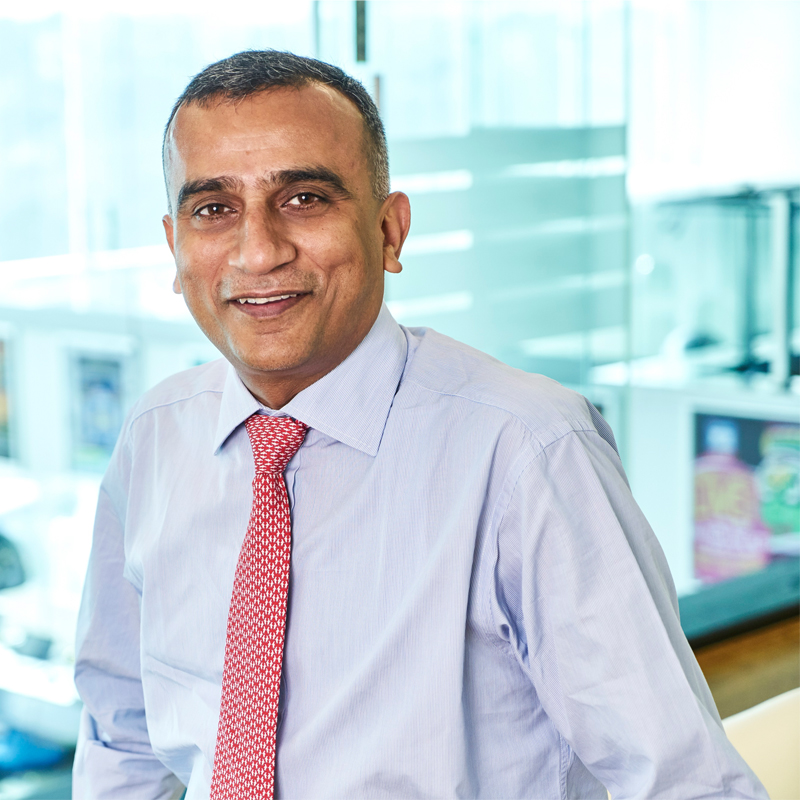
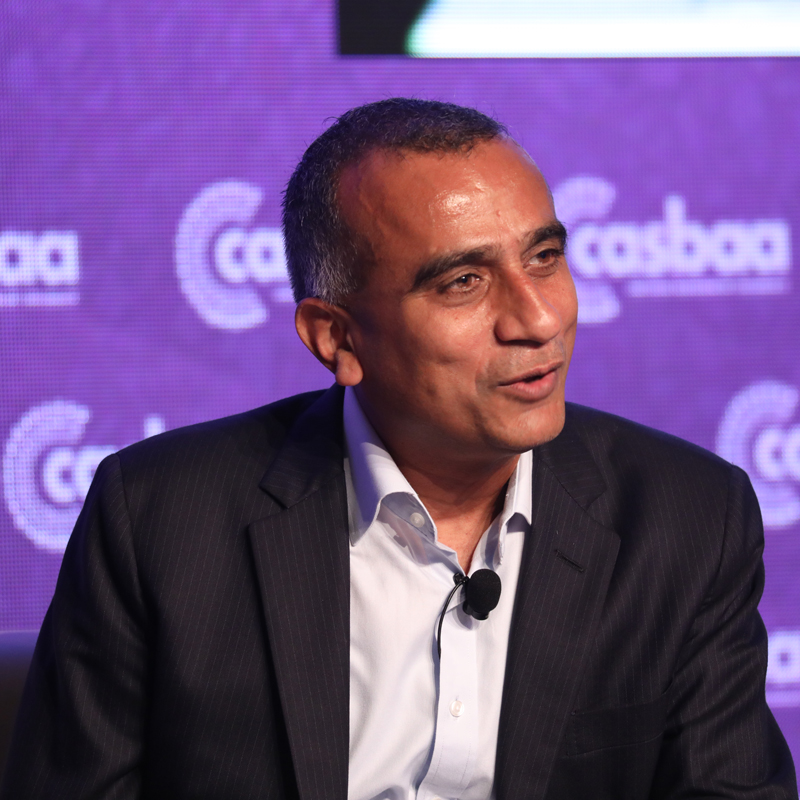
    He goes by many names. The Laundry Man and The Marathon Man being two of the more popular monikers. The second one is self-explanatory given his passion for running, especially marathons of many hues all over the globe. It’s the former one that makes people, sometimes, stop and give a quizzical look. Its origins, according to Unilever folklore, can be traced back to his days at the global FMCG company where he was at the helm of the laundry division in South Asia. But Sudhanshu Vats, group CEO of Viacom18, doesn’t mind the aliases; rather, he refers to them himself, at times—like he did in November at CASBAA Convention 2017 in Macau,where he was featured as a keynote speaker. At the time,Vats explained that running a marathon and running a company had lots in common as they taught one about the importance of planning and breaking down longer plans or goals into shorter milestones.

    Five and a half years into his new role in one of the top media companies of India that is an equal JV between US’ Viacom and Reliance Industries-controlled Network18, Vats is considered a thought-leader within the complex maze of the Indian media and entertainment industryand in government circles. His social media savviness makes him articulate on a range of subjects from media to women empowerment to an individual’s role in the Clean India campaignto the importance of health and fitness.

    In a free-wheeling chat with Indiantelevision.com’s consulting editor AnjanMitra and deputy managing editor Satyam Nagwekar, Vats speaks on a number of issues related to the M&E sector, including the necessity of regulation in India (he sometimes holds contrarian views to the general sectoral outlook of his peers) and why it’s important for a media company to be equally alive to data analytics to derivestrategies.

    Edited excerpts from an interview that took place when he was few days away from completing hisannual tenure as the chairman of BARC India, a joint industry body entrusted with collating audience data in a highly fragmented and, at times, quirky Indian broadcast sector, wherein competition is cut-throat:

    Q: What would be the three major changes in the industry that you have witnessed over the years in the complex M&E industry of India after your switch to the media sector from FMCG?

    A: The first significant development is the entire digitisation of the cable. While digitisation of the signal has happened, allowing (the pipe) to carry more content, addressability needs to improve. Overall cable digitisation has enabled the pipe to carry more content and to improve the viewer experience. The second development is the rise of OTT services; delivering content on demand in addition to the existing linear delivery of content. The third development would be the increasing importance of live and experiential entertainment. The advent of quality multiplexes has certainly made a difference in viewing experience in cinemas. Similarly, in the sphere of live entertainment, experimentation with modern technology has dialed up consumer experience. We have also experimented with theatricals. What happens is that as kids develop a relationship with characters, it allows you to bring those characters alive in different forms outside of television. One can take them outside of television into theatricals, into experiential zones and merchandising.

    I would add a fourth important development and that is the evolution of BARC India. I think the joint industry body that we formed to measure ‘what India watches’ is a significant development. It’s a unique feature that industry bodies have come together for audience measurement in India.

    Q:Are Hindi general entertainment channels (GECs) the largest contributors to the Viacom18 revenue pie?

    A: Yes, they are.

    “About 59-60 per cent of India communicates in regional languages, about 39-40 percent in Hindi, and the balance one per cent in English. This 59 per cent is still under-indexed in viewership. As the viewership catches up with actual consumption, so would monetisation opportunities.

    Q: Keeping in mind what you said, how do you see the market for Viacom18 going forward over the next couple of years?

    A: The GECs will remain an important block (from the point of view of revenues), but I am very bullish on the regional piece, too. I personally feel that regional businesses are gaining traction and will continue to get dialed up significantly in the future. The reason for that is that in television, and arguably in all mediums of television, digital and films, the regional languages have been under-indexed from the point of viewership and monetisation.

    In my opinion,the genesis of this lies in the fact that the erstwhile measurement system was a bit skewed towards the Hindi-speaking urban audiences; perhaps as it too developed along with the cable movement in India in the 1990s, which started with the Hindi-speaking regions. However, in the last decade, language programming in other parts of India, especially South India, has developed considerably. With BARC’s arrival, these markets are being better represented. As we go deeper into India, the regional language play will keep getting dialed up. About 59-60 per cent of India communicates in regional languages, about 39-40 percent in Hindi, and the balance one per cent in English. This 59 per cent is still under-indexed in viewership. As the viewership catches up with actual consumption, so would monetisation opportunities.

    Why do I say this? There is an intuitive understanding — not entirely always incorrect — that the English consuming audience has a higher propensity to spend and that amongst the other language markets, Hindi-speaking markets (HSM), perhaps, have the highest propensity to spend. Equally importantly, regional markets like Tamil Nadu, Karnataka, Andhra Pradesh/ Telengana, Kerala, Maharashtra and Gujarat have higher per capita income (compared to India average) and would therefore have a higher propensity to consume advertising and brands. My hypothesis is that the affinity to one’s mother tongue will remain and India will continue to remain a multi lingual country (most Indians speak at least two languages and in some cases three or more). All three clusters of English, Hindi and regional will grow with regional leading the rate of growth for viewership and monetisation.

    At Viacom18, we will continue to build our portfolio of services in all the three language-clusters mentioned above, while significantly dialing up our regional language clusters. To illustrate this, let me share how our dependence on our flagship Hindi channel Colors is systematically coming down. When I joined Viacom18, we used to get 80 per cent of our ad sales from Colors standard definition channel. That number now is 50 per cent or may be a little lower.

    About 59-60 per cent of India communicates in regional languages, about 39-40 percent in Hindi, and the balance one per cent in English. This 59 per cent is still under-indexed in viewership. As the viewership catches up with actual consumption, so would monetisation opportunities.

    Q: As Colors is the biggest revenue earner, a lot of strategising must be done forprogramming. How do you slice and dice programming for appointment viewing for different parts of India and the HSM?

    A: Not just Colors, but for all our content engines we marry insight to gut in the way we strategise and develop content. At Viacom18, we started an ambitious data science project called Project Pi with the objective to provide information and insights to the users and establish one single version of truth in the company.

    The second leg to this is a free-flowing discussion that we have recently started`Content PeCharcha’ (discussion over content), inspired by PM Modi’s now famous `Chai PeCharcha’ (discussion over tea), primarily with Raj (Nayak, COO, Viacom18), Manisha (Sharma, content head, Colors) and some more team members. These are open sessions where we have a qualitative and free-flowing discussion on both macro content trends and specific current and future programme story arcs.

    Let me give you a couple of examples of how this works. When I joined people said mythologicals/historical dramas don’t work on Colors. But our research suggested that competitors were successfully running them and it was a white space that hadn’t been explored properly at our end. We came up with Ashoka and proved the naysayers wrong. In one of our early meetings, we figured comedy was a white space for us and we should actively explore it. While our first attempt didn’t work, the next one (Comedy Nights with Kapil) created history as it was based on our learning. We then experimented with the crime genre with shows like Code Red and Dev. A Hindi GEC is like a `thali’ (an Indian plate with a variety of food offerings): it needs to have a spread of flavor and taste. Balance, however, is the key to how your audiences perceive the spread to be.

    Q: Has the rise of mythological and historical shows on Viacom18 channels, as well as on other TV channels, increased after 2014 or are we reading too much into it?

    A: I am a firm believer—and I am keep saying it often—that the richness of the Indian culture is reflected a lot in some of our mythological and historical stories. Brilliant evergreen tales like `Ramayan’ and `Mahabharat’ can be told over and over again but there are so many other stories that need to be taken to the audiences. If you look at some of our mythological stories, India has long been telling superhero stories—both of superwomen and supermen. But to answer your question, yes there has been a definite rise in these stories (on TV channels) post 2014.

    “My assumption is that over the next five years, India will follow China’s example and 10 per cent of all internet video consumers will move behind a pay wall. Once this happens, it will create both advertising and subscription economies at scale.

    Q: Hanuman probably was the first super hero and remains till day one. Agree?

    A: Precisely. I personally feel that these are stories that lend themselves well to a variety of interpretations. Moving forward, production quality can make our stories richer and give the consumers a better experience.

    Q. Is the digital venture VOOT making money?

    A: If you are asking if we are monetising VOOT, then yes we do have a fair number of advertising brands on VOOT. But having said that, I’d say we, like most consumer digital businesses, have substantial distance to cover in our monetisation journey. 

    The digital VoD space is one that requires an extended gestation period for investment. Today there are300 million Indians consuming video on the internet. That number is poised to touch 600-700 million in the next three to five years time.Further, my assumption is that over the next five years, India will follow China’s example and 10 per cent of all internet video consumers will move behind a pay wall. Once this happens, it will create both advertising and subscription economies at scale.

    Q: So, is VOOT targeting 10 per cent of subs behind a pay wall in, say, three years’ time?

    A: Absolutely. Maybe, even more. We are planning to launch the subscription service of VOOT early next fiscal.

    India is a price sensitive market and, unlike the West, we do not have the price arbitrage advantage between cable and VoD. In the US, Netflix disrupted the market with its offering at USD8-10 versus a monthly cable bill of USD80-100. In India, we still get 300 channels at Rs 200-250 making linear television the economical entertainment option. But having said that, I believe the right pricing for data and content will continue to drive VoD in India. I think, it is fair to assume that the range of pricing for subscription VoDin India lies between USD 1-3 to begin with.

    Q: So you are working on a price model that is between USD 1-3/sub/month in India?

    A: Yes. If you want to look at large numbers, you need to keep prices competitive in India.USD 3 is approximately Rs 200, but it will also depend on how many people you want at what price and that will be determined on the price volume elasticity study underway.

    public://Sudhanshu V1.jpg

    Q: Does it help for a content owner and producer like Viacom18 to also have a group company like Reliance Jio, which is a platform that is practically giving data free to consumers?

    A: There are clear synergies and we complement each other.

    Q: Have you ruled out sports altogether?

    A: The business of sports,particularly cricket,is a high-investment and long-gestation game. In our current scheme of things,such an investment can be better utilised in a host of other opportunities and, hence, we are not looking at sports as of now.

    Q: What are your views on the evolution of BARC India and that some of the audience data and methodology has been questioned by some industry players?

    A: BARC has made a promising start. The measurement is clearly more robust, transparent and objective. The sample size has already been dialed up to 32k (almost four times the size of the erstwhile measurement system). We plan to further grow the sample size to 40k by next year and even further in the years to come.

    The sample has also become broader,holistic and reflects more accurately what India watches. Even rural consumption and regional languages are getting represented in a better way. The fidelity of data has improved considerably and tent-pole events on television — from a big TV channel launch to a new program introduction and all the way to an important news break event in an hour — are captured and show up with a very prominent spike. The areas where more work needs to be done by all stakeholders are the measurement of niche channels by BARC and management of volatility as high fidelity brings high volatility.

    The initiatives like return path data and premium panel will help improve the measurement of niche channels.

    Q: When is BARC likely to rollout digital measurement?

    A: BARC is in the process of getting all stakeholders aligned for rollout of digital measurement. There are debates around all digital players being a part of the measurement, equitable methods/process used for data capturing from all players and the more holistic India stack/dmp for representation and publishing of the data. All the stakeholders at BARC are debating these issues and the timeframe of publishing digital data will depend on the speed of alignment and approach taken by the stakeholders. Until these issues are resolved, it would be premature to commit to a timeline.

    Q: What is your take on net neutrality?

    A: It is quite a nuanced subject. My broad take is that NN is essential and net should be as neutral as possible because that’s in the best interest of a functional democracy. Essential services, depending upon the evolution of our society, will need to be looked at differently. In years to come, the internet would be a basic requirement for day to day life and therefore net neutrality is an imperative to offer equal opportunity to everybody.

    Q: What about legal and illegal content as the latter results in revenue losses for content owners like Viacom18?

    A: The issue of piracy is entirely different, and another elaborate subject on its own. Illegal content is a big challenge for any content owner. Piracy is a complex topic where different stakeholders need to play a part. My view is clear: illegal content should not be made available, but then enforcement is not always that easy. Having said that, consumers too are not clear on legal and illegal content when it comes to the digital world, at times. In my view piracy should be tackled through a three-pronged approach of legislation, enforcement and consumer awareness. In addition, if content is made available to consumers at competitive price points, it would be a big deterrent to piracy and, business models permitting, arguably the most effective way to tackle this menace.

    “Technology is causing disruptions almost daily and resultantly the very definition of a media company is changing. For any regulator anywhere in the world or any government, it is a challenge to keep abreast or even keep pace with such changes. As we move forward, we will need to evolve a mechanism where there is greater participation from all stakeholders.

    Q. Do you think powerful lobbies like global video-streaming services can have a bearing on legislations relating to NN? How do you see that playing out?

    A: I would not like to specifically comment on this. But there are two fundamental considerations here. The first is that every player will have its point of view and arguments on the subject. Second is that considering the width and complexity of these arguments, the government is best placed to examine in detail and take an overarching view after wide-ranging discussions with every stakeholder.

    Q: You are head of the CII entertainment committee, part of the IBF board, associated with BARC and also head one of the largest media networks in the country. What are your views on the regulatory regime in India as it’s considered a challenging market?

    A: I think the tricky piece, or rather the interesting piece, is that media and entertainment as an industry, both in India and globally, is evolving at a rapid pace. Technology is causing disruptions almost daily and resultantly the very definition of a media company is changing. For any regulator anywhere in the world or any government, it is a challenge to keep abreast or even keep pace with such changes. As we move forward, we will need to evolve a mechanism where there is greater participation from all stakeholders. As one cannot operate in isolation, there is a need for some regulatory framework that is akin to the ground rules of a game, if one wishes the industry to flourish. So, yes, in my opinion, light touch regulation always works well.

    What are your views on FTA vs pay TV considering many popular TV channels are on DD’s free-to-air DTH service FreeDish, taking advantage of DD’s reach and making money on advertising?

    A: I am a firm believer that India is an ‘and’ market. So, I don’t think it’s an `and’ ‘or’ equation between FTA and pay TV. Both will continue to flourish as there is significant headroom for growth for both. Now, coming to DD FreeDish, you’re right in identifying it as a platform as it is a means to carry content to the consumer and represents a very affordable option. Admittedly, it is a rapidly growing platform where many private channels are also present. However, all other platforms are cognizant of the opportunity that a low priced FTA channel bouquet provides. It is quite likely that alternate platform options will emerge if DD FreeDish decides to bar privately owned channels.

    ALSO READ:

    Viacom18 celebrations: Mukesh Ambani sets the roadmap for next 10 years

    Viacom18’s Sudhanshu Vats: Indian media’s growth will be similar to China

    Viacom18 showcases strong women characters content: Ajit Andhare, buys Mithali biopic rights

    Viacom18 & govt announce anti-piracy partnership

  • Viacom18’s Sudhanshu Vats: Indian media’s growth will be similar to China

    Viacom18’s Sudhanshu Vats: Indian media’s growth will be similar to China

    MACAU: Even as he said that the growth trajectory of the Indian media space will be similar to that of China, Mumbai-headquartered Viacom 18 Media group CEO Sudhanshu Vats made it clear that both television and digital spaces were complementary to each other having a great future in India.

    “Indian media market’s evolution will be very similar to that of China. Where we (India) are today in 2017 is where China was in 2011,” Vats said on Wednesday during the opening keynote on the third and last day of the CASBAA Convention 2017 here in a conversation with media industry veteran Marcel Fenez of Fenez Media.

    “In India, the future of television is television and also digital. If you are a content provider or a story teller, you have an advantage,” Vats said, adding that he expected a significant growth surge on the AVoD and SVoD sides of the media business.

    Vats went on to highlight the reasons for pushing the company’s digital venture VOOT, stating that not only has the app downloads run into double digit millions, but that about 15-18 per cent of the content on the platform was exclusive even as the Viacom18 team learns from the digital evolutionary processes in the US and China markets. Launched in early 2016, VOOT engages kids as well as adults with 17,000 hours of network content.

    “We do a lot of content around digital, which is called VOOT exclusive. India has a big appetite for reality shows and there is a huge amount of curiosity about what happens behind the scenes,” Vats explained. Viacom18 hosts some of India’s biggest reality shows – ‘Fear Factor’ and `Bigg Boss’. He also thinks that India will skip credit cards to e-payment, which can help aim for VOOT SVoD with a paywall.

    According to Vats, a Unilever India veteran marketer-turned-media professional (he jokingly mentioned that in his previous company he was famously referred to as the `Laundry Man’ for driving Unilever’s home washing products in India), “Essentially we are storytellers. The big business we are in is content and we need a robust pipeline of content and creative talent. But the challenge is getting talent, and retaining them.”

    In this context, he explained later, Viacom18 has started a start-up initiative, encouraging young talent to express themselves in a creative manner as new disruptive ideas in Indian media will not come from within an organisation, but from outside.

    (Another reality show running on MTV India is Dropout, a nationwide hunt to find hidden creative talent in ‘dropouts’ to be groomed by industry leaders into entrepreneurs, to solve real-world business problems in a short span of time.)

    Terming Viacom18’s 10-year eventful existence as “fantastic” when it had grown 40x, Vats, whose many passions include running marathons world over, said the company’s journey had “now just begun” in India’s media landscape that has been changing dramatically over the years pushed by content, delivery mechanism and technological evolutions. (Incidentally, he completed his daily quota of an hour’s running before getting ready for the morning keynote.)

    As part of innovations being undertaken by Viacom18, Vats pointed out that the company plans to set up an engineering hub in India’s Silicon Valley, Bangalore, to help various in-house products.

    “The big media companies are consolidating and coming together with telecom companies,” Vats said highlighting the disruptions and convergence happening in the Indian media landscape, “If you had asked me before, I wouldn’t have thought that would happen.”

    Batting on the front foot for a digital India, Vats said the country was an “exciting” market. “It’s at the cusp…ready to take off. If you have a five-year horizon, it (India) is where you should be,” he aptly summed.

    ALSO READ:


  • Reliance Industries buys Balaji Telefilms stake for Rs 4.13 bn

    MUMBAI: The Board of Directors of Balaji Telefilms Limited, in its meeting held on Thursday, considered and approved an investment by Reliance Industries Limited, one of India’s leading corporates, through a preferential issue of 25.2 million equity shares at Rs 164 each, aggregating to Rs 4.13 billion, subject to necessary shareholder and other approvals. Axis Capital Limited acted as the sole investment banker for this transaction.

    Balaji is India’s leading entertainment content producer operating across television, movie and digital platforms. The company recently launched ALTBalaji, a multi-device subscription video on demand platform, which offers original, premium and exclusive content for a global digital audience and in a short span, post its launch, has garnered over four million downloads across 80 countries.

    This transaction marks a landmark event for the Indian OTT industry and is expected to further accelerate the growing trend of media consumption ‘on-the-go’. The proceeds from the transaction would be utilized to further speed up content development initiatives, especially for ALT, thereby providing it with a strong ability to compete with other OTT service providers- both global and Indian.

    Balaji chairman Jeetendra Kapoor said, “We welcome Reliance as a partner in our growth journey towards becoming the preferred content producer for the Indian diaspora across all means of video consumption and across all geographies. This investment is a vote of confidence to the Company’s strategic move to own our IP and our viewers.”

    Earlier, Jio and Zee Entertainment reportedly denied reports of being offered to buy a stake in ALTBalaji. Balaji was planning to sell up to 26 per cent stake in its subsidiary ALTBalaji Digital and reportedly in talks with the media companies. Launched in mid-April ALTBalaji has 250 plus hours of programming.