Tag: Reliance Industries

  • Reliance had courted Zeel for media business transaction, says Invesco

    Reliance had courted Zeel for media business transaction, says Invesco

    Mumbai: Invesco Developing Markets Fund on Wednesday stated that Reliance Industries had made an offer to Zee Entertainment Enterprises Ltd (Zeel) to merge its media business, a deal which was struck down by Zeel’s managing director and chief executive officer Punit Goenka at the beginning of the year.

    According to a statement by the investor, “the potential transaction proposed by Reliance (the ‘Strategic Group’ referenced but not disclosed in the 12 October communication by Zeel) was negotiated by and between Reliance and Goenka and others associated with Zeel’s promoter family. The role of Invesco, as Zeel’s single largest shareholder, was to help facilitate that potential transaction and nothing more.”

    Invesco rejected Zeel’s assertion in the 12 October release that the former would seek out a transaction for Zeel that is dilutive to the long-term interests of ordinary shareholders, including Invesco itself, saying that it “simply defies logic.”

    A filing with the Bombay Stock Exchange on Tuesday showed that Goenka shared a note with Zeel’s board that detailed a proposed transaction under which the company’s current shareholders would have held 40 per cent while an unnamed (Strategic Group) Indian group, would have controlled 60 per cent after infusing Rs 14,000 crore cash in the merged entity.

    Goenka disclosed that as part of the Reliance deal, he would have continued as the managing director and chief executive officer of the merged entity and the promoter group of Zeel would be given 3.99 per cent shareholding of the merged entity. Goenka was also offered employee stock options (ESOPs) representing up to four per cent of the shareholding of the merged entity meaning that the promoter group would hold up to seven to eight per cent stake in the merged entity. 

  • Viacom18 appoints Jyoti Deshpande as CEO

    Viacom18 appoints Jyoti Deshpande as CEO

    Mumbai: Viacom18 on Thursday appointed Jyoti Deshpande as chief executive officer with immediate effect. She serves on the boards of Network18 and investee companies Balaji Telefilms and Saavn Media.

    In her new assignment, Deshpande will help bring synergies across all of Reliance’s media interests and investments and further equip the company to drive significant growth opportunities as the industry embraces digital transformation, said the statement.

    “Viacom18 is poised to grow as a truly integrated media company across broadcast, OTT and content studio business spanning general entertainment, movies and sports across languages,” said Network18 chairman Adil Zainulbhai. “Given Jyoti’s rich experience in the media sector around content, distribution and monetisation across traditional and emerging platforms, we believe she is best placed to lead the company and its operations.” 

    Deshpande brings over 27 years of experience in the media and entertainment business. Prior to this, she joined Reliance Industries in 2018 as president – media platform and content, after having successfully built a leading media company and pioneered its early disruptive entry into the OTT space. As a business leader in Reliance, Deshpande in the last three years, has leveraged her industry relationships to establish Jio Studios as a key player in the media value chain.

  • Pride without Prejudice? Where do Indian brands stand on LGBTQ+ representation

    Mumbai: Consumers today are less tolerant of brands that don’t take positions on emerging social issues. In the changing world scenario, consumers lean more towards brands that are open and transparent with their views. With more outlets for voicing their opinions about brand experiences than ever before, Gen-Z and millennials, in particular, want to know where a brand stands vis-a-vis causes they care about- like inclusion, diversity, and equity. 

    We are in the midst of the global Pride month, and IndianTelevision spoke to industry experts and brands to find out if brands believe in going the distance when it comes to LGBTQ+ representation and inclusion. Or are they treating it as a mere rainbow-hued label to be flaunted during such special occasions?

    According to Dentsu Webchutney D&I and AVP – strategy lead, Freya D’Souza, consumers today sense and call out superficiality and ambivalence in terms of brand authenticity from a mile away. And while brands often have lofty mission and vision statements, in practice, most communication efforts sidestep potentially controversial issues. “In an age where there is an increasing sense of the personal becoming political, and our social and physical lives merging, a brand cannot afford to silo its values and communications anymore. A brand that takes a stand either way gets both bouquets and brickbats. But what also comes with that is incredible brand loyalty and a tangible sense of the consumer becoming a brand champion. For the LGBT+ community, this has cut both ways,” she says.

    “There is still a long way to go,” says Modi Naturals chief marketing officer Shardul Bist, highlighting that India is a country where people have for long adapted to traditional mindsets and ideologies. While some great campaigns in the recent past have helped break the shackles, including the 2017 Vicks ad featuring transgender rights activist Gauri Sawant that depicts her struggles to adopt a child, Bist says that it must be an ongoing endeavour till our mindsets completely change. “The change is inevitable and it will alter and empower one mindset at a time”, he adds.

    The Jewellery market in India has always been considered a niche area, predominantly promoted through campaigns featuring a big, fat Indian family wedding, revolving around a cis female protagonist. It took a fairly conservative regional brand, Bhima jewellers to pull down that barrier with its recent creative featuring a transwoman, Meera Singhania. The ad won critical acclaim for its authentic portrayal of the community along with oodles of love on social media.

    And now taking it a step further is another jewellery brand with a legacy of over five decades. Senco Gold & Diamonds recently signed internationally acclaimed sprinter, Dutee Chand- who broke ground as India’s first openly homosexual athlete- as the company’s new brand ambassador. As a part of its Pride month celebrations, it has rolled out a new campaign and unveiled its new jewellery collection, named ‘Love is love Collection’ for the LGBTQ+ community.

    However, this is not a first for the brand. Senco Gold and Diamonds CEO Suvankar Sen shared that the brand has always taken “a very progressive approach towards its jewellery as well as life in general”. In 2019 the brand had launched its ‘PRIDE Collection’ through a unique fashion show by a group of transgender men and women led by LGBTQ+ activist Dr.Manabi Bandyopadhyay.

    According to DViO Digtal, founder and CEO Sowmya Iyer brands are becoming more aware and trying to keep up with consumer expectations to gain their trust. “As a marketer, I have seen campaign messaging and tonality highly evolve. From conservative to stereotypical to inclusive campaigns, we have come a long way. The beauty and fashion industries have been the torchbearers when it comes to being inclusive and slowly yet steadily every other industry is coming on board,” says Iyer.

    Known for its range of men’s grooming products, Whiskers founder Aakash Goswami says the grooming brand, on its part, is trying to focus more on gender neutrality. “The first change we made was to change our brand name from Whiskers for men to Whiskers India. This is our very first initiative to support and be more inclusive towards society,” he adds.

    Youth-centric e-commerce Fashion startup Beyoung aims to inspire all to “Be You” and believes that fashion is for all. “This is why we pay more emphasis on Unisex range and flaunt a collection for one and all”, says CEO & founder Shivam Soni. For this, the brand ensures that they do away with ‘idealistic’ body standards for models, irrespective of gender – be it “masculine bodies for men” or “slim” body types for women- thus getting rid of the pressure to conform to certain body types perceived as ideal.

    Grapes Digital National Business head Rajeesh Rajagopalan, however, is sceptical about brand efforts. “Indian brands do a lot of work around LGBTQ but during the pride month only. We are still in a very conservative and nascent stage where brands are not that bold enough to take the call and feature them in regular campaigns. To a large extent, it is a mere label to be flaunted during the pride month, because marketers want to create a perception of inclusiveness. If you want to be an inclusive brand then you have to walk the talk in every move be it in the communication, brand representation, or models you choose,” he says.

    Creative Director of 360-degree communication company Hotstuff, that specializes in BFSI space, Terence Dsouza feels that the industry can take the lead in not just using Pride month as a social media opportunity but going the distance with its offerings as well. “In India, ad campaigns and communication regarding financial planning has stereotypically targeted cis-heterosexual, married families. But what needs to be understood is that financial planning is important to every person, irrespective of sexual orientation or gender identity”, says D’souza.

    According to Open Strategy & Design’s strategy head & managing partner Puneet Pandey, when brands choose to mirror these emerging sentiments and causes especially around gender, identity and sexuality, they would do well to consider that, “Your audience will be able to smell out tokenism – so go for empathy and authenticity. Instead of creating for the gaze of the outsider, speak to their inner song.” A subtle nod, a knowing acknowledgement, sometimes works more powerfully than dramatic spotlighting, he adds.

    Last week, furniture brand Saraf Furniture announced its decision to hire upto 250 professionals from the LGBTQ+ community in the current financial year. “Organisations can profess to be inclusive only when everybody, from business pioneers to the cafeteria staff is sensitised,” says Saraf Furniture founder & CEO Raghunandan Saraf. “I was a little apprehensive at the beginning about the adaptability factor in the workplace but took a leap of faith. You have to get past those raised eyebrows, hushed whispers and initial resentment.”

    On the brighter side, Indian companies are, slowly but surely, adopting a no-discriminative inclusion policy, as highlighted by a 2019 global analysis on how companies are treating members of the LGBT+ community. The study shows India Inc, including some of the marquee names like Reliance Industries, Mahindra & Mahindra, Godrej and Tata Steel, open to incorporating such policies. 

    In June last year, Mahindra Logistics launched its first policy for hiring and retaining lesbian, gay, bisexual, transgender, and other queer people. Another major, Tata Steel aims to have 25 per cent of its Tata Steelworkers from diverse groups, of which, 5 per cent will be from the LGBTQI+ community.

    This year, Chimp&z Inc too is celebrating the #PrideOfAdvertising – a content series that celebrates every queer-and-open/ out professional working in the advertising & marketing industry, says Chimp&z Inc associate VP Alin Choubey.

    Two years after the landmark Supreme court ruling decriminalising homosexuality, members of India’s LGBTQ+ community still lag behind their western counterparts in terms of corporate representation and other benefits. Hence brands walking the talk on championing LGBTQ+ rights need to be lauded so that the current norm of gender-based branding gives way to the blurring of gender lines, eventually leading to a gender-free outlook in our society. It’s time brands stand up for “Pride without Prejudice”.

  • Viacom18 and Zeel eyeing a merger?

    New Delhi: It’s the season for mergers. Following in the footsteps of  big media mergers globally, two entertainment giants back home- Viacom18 Media Pvt Ltd and Zee Entertainment Enterprises Ltd (Zeel) are now reportedly looking to join hands to create a large firm, according to an unconfirmed news item in Mint on Monday.

    If  the reports are to be believed, the owner of the GEC Colors, Viacom18, and Subhash Chandra’s Zeel have initiated talks of a potential merger. It is too early to say, but, if the deal fructifies, the combined entity will end up owning and managing the largest number of TV channels in India, and probably globally. The combined media firm’s interest will span across broadcast, OTT, live entertainment, and movie production.

    However, it is not the first time that such talks of coagulating companies in the television business have floated. The buzz has been proven to be unfounded in the past.

    Last year,  similar talks of a  merger  between Viacom18 and Sony Pictures Network fell apart, after the Mukesh Ambani-led Reliance Industries Ltd pushed for a majority stake in the combined entity as well. RIL owns a majority stake in Viacom18, which is a joint venture between TV18 Broadcast Ltd and US-based ViacomCBS Inc. While Network18 owns a 51 per cent stake in Viacom 18, Viacom holds the remaining 49 per cent.

    Zee Entertainment Enterprises Ltd was founded by Essel Group’s Subhash Chandra and is majority-owned by foreign institutional investors – Investco Oppenheimer Developing Markets Fund and Ofi Global Fund China LLC. The company is run by Chandra’s son and CEO & managing director Punit Goenka.

    A Zeel spokesperson refused to confirm or deny the speculative news item. Said a Zeel corporate official:  “The company does not comment on speculation and rumours.” 

  • E-commerce may become a major growth driver for FMCG in 2021

    E-commerce may become a major growth driver for FMCG in 2021

    NEW DELHI: If there is one business which has distinctly gained during the unprecedented Covid2019 pandemic, it is e-commerce. And this gain has occurred across product categories and sectors. Building on this advantage, there would be only more traction for e-commerce in the coming year. What will particularly be more noticeable is the entry of a whole lot of new players, both big and small, democratising the e-retail marketplace. However, this expanded and democratised e-commerce marketplace would co-exist with the physical brick-and-mortar retail spaces. These kirana stores significantly enough would forge partnerships with online delivery services while also digitally upgrading themselves with the help of the latter. Therefore, apart from the regular retail formats, there would be more tie-ups with different brands on e-comm platforms.

    The extraordinary growth of e-commerce

    In a report, the Indian e-commerce industry has been projected to grow by 40 per cent in 2020 as compared to 23 per cent in 2019. In fact, it has even been reported elsewhere how during the Covid2019 months, a decade of growth has been registered within just a few months this year. And in terms of cross border growth, the country’s e-commerce sector has been ranked ninth globally. Around the festival season in the second half of the year, major players such as Amazon, Flipkart, Myntra, and Snapdeal made sales worth $3.1 billion in the first four to five days of the festive season sale. And this growth has not remained confined to metros and big cities. An online player reported that 70 per cent of its orders were received from tier-2 and tier-3 towns during Diwali. Once we have seen the last of Covid2019 which is expected in 2021, these figures would grow to become even more impressive. In fact, the e-commerce penetration in the country is expected to cross 10 per cent in the coming five years from the current four to five percent.

    Emerging new players are intensifying competition

    While Covid2019 did pose a stupendous challenge to many small players in the early phases, several of those same affected players soon enough turned this adversity into an opportunity by upgrading themselves digitally and even recasting their product portfolios. While staying at home, a new generation of entrepreneurs called ‘homepreneurs’ has emerged, offering competition to existing players. This will only get bigger and a more competitive retail marketplace including both online and offline will emerge in the coming year.

    Kirana stores taking the digital leap

    At the same time, demonstrating massive momentum on the b2b front, several new players as well as existing players reinvented their business processes by forging links with other players and bigger and stable e-commerce businesses. Many new e-commerce start-ups have come up helping kirana stores or mom-and-pop stores digitize and expand their operational footprints. A cash and carry store had offered digitisation services to kirana stores promising complete digitisation in a span of 24 hours. So a vigorous drive for development of e-commerce platforms for local retailers and grocery stores underpinned by digital payment mechanisms has been underway. This trend is expected to continue in the present year democratising the marketplace further.

    Contactless delivery of ready-to-eat and packaged food to acquire permanence

    During Covid months, the trend towards partnerships between online delivery behemoths and FMCG companies including food brands has been a notable phenomenon. Also, the tie-ups between local food businesses and local e-commerce startups for final delivery of products have been equally noteworthy. In light of Covid-dictated explosion of cloud kitchens and food delivery apps, the near-institutionalization of highly-sanitised kitchen environment, double-layer packaging of food products, deployment of all-round safety gear equipped-delivery personnel, and contact-less delivery services would acquire a more permanent feature. The ripple effect of this new delivery culture would be seen even for the delivery of packaged food for final consumers.

    Trends in shopping spend across categories

    According to market research, in terms of average spend by online shoppers, electronics and accessories (39 per cent) had emerged as the largest product category followed by mobile and accessories (12 per cent); fashion, including apparel, footwear, and accessories (10 per cent); and appliances such as TV, washing machines, refrigerators (nine per cent) in the aftermath of Covid2019 outbreak. However, a management consultancy white paper has revealed that food, grocery, consumer electronics and apparel will be the top e-commerce product categories contributing to sales in the coming five years. Then based on a report by Goldman Sachs, online grocery and fashion/apparels are set to be the biggest drivers of incremental growth in e-commerce in the country.

    M&As and investments to impact domestic e-commerce space

    The last few months have seen considerable investment by foreign social media behemoths such as Facebook into domestic giants such as Reliance Industries which could allow the latter to play a bigger role in the e-commerce market. Then Reliance retail buying out Future Group has been another significant development.  

    Therefore, while 2020 was a year of crisis-driven instant improvisations and restructuring in a broadly subdued business environment, the coming year would see more stability and consolidation of the e-market space. Essentially, 2021 will see businesses adopting more of an omni-channel approach.

    (The author is director, Bikano. The views expressed here are his own and indiantelevision.com may not subscribe to them.)

  • Reliance to sell 11.61 per cent stake in Hathway

    Reliance to sell 11.61 per cent stake in Hathway

    NEW DELHI: Reliance Industries is preparing to sell 11.61 per cent of its stake in Hathway Cable & Datacom to comply with SEBI’s minimum public holding norms.

    Through offers for sale (OFS), Reliance plans to offload Hathway shares worth Rs 442 crore, bringing down its holding in the cable company to 75 per cent from 86.6 per cent earlier.

    According to exchange filings, Hathway promoters Jio Content Distribution Holdings, Jio Internet Distribution Holdings and Jio Cable and Broadband Holdings will sell 205.44 million shares with a floor price of Rs 21.50 aggregating to Rs 441.61 crore.

    This comes barely a month after the above mentioned Jio subsidiaries sold 338 million shares, or a 19.1 per cent stake in Hathway, aggregating to Rs 853.45 crore.

    The share sales by promoter firms are aimed at achieving minimum public holding in the companies in accordance with the guidelines set by market regulator SEBI.

    The OFS will open for non-retail investors on Monday and for retail buyers on Tuesday.

  • Scarecrow M&C Saatchi wins creative mandate of Reliance Jewels

    Scarecrow M&C Saatchi wins creative mandate of Reliance Jewels

    MUMBAI: After a multi-agency pitch, Scarecrow M&C Saatchi was awarded the creative mandate for Reliance Jewels, Reliance Industries’ flagship jewellery brand.

    The brand has a national presence with 110+ Standalone Stores and 120+ Shop In Shop Stores across India.

    Scarecrow M&C Saatchi founder director Manish Bhatt said, "With the Reliance Group strengthening and growing its retail presence significantly, playing the role of a creative partner for its jewellery vertical is a very nice opportunity for Scarecrow. 

    We are all geared up to create some path-breaking communication for the brand over the due course of time. We hope our work adds to the much-needed dazzle to the jewellery category.”

    A spokesperson from Reliance Jewels added, “We are excited to welcome Scarecrow M&C Saatchi as our creative partner and look forward to working closely with their enthusiastic and talented team to action our creative agenda going forward. The jewellery industry is set to bring in disruption just like other fashion and lifestyle categories and with that it becomes imperative for a brand like Reliance Jewels to bring in game-changing communication and creative strategy.”

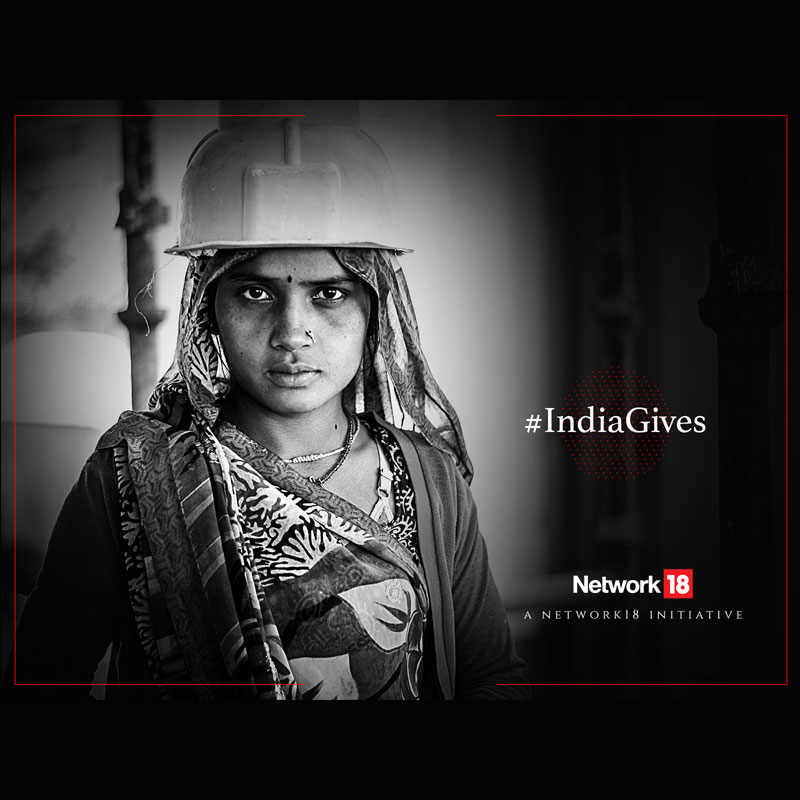
  • Network18 kicks off #IndiaGives campaign to contribute to PM’s national relief fund

    Network18 kicks off #IndiaGives campaign to contribute to PM’s national relief fund

    MUMBAI: Joining the group of news channels who have come up with various unique campaigns, Network18 has launched #IndiaGives, a campaign to financially support the country’s most vulnerable citizens during the coronavirus lockdown.

    According to an official statement of the network, “As a first step, over 6,000 employees of the group have contributed a day’s salary to the Prime Minister’s National Relief Fund, to be used to provide succour to daily-wage workers, whose livelihoods have been affected due to the shutdown.”

    Hundreds of millions of Indians have little or no financial security. As per Periodic Labour Force Survey report that was released in May 2019, over 77 per cent of Indian households, or nearly 200 million households, are either self-employed or are engaged in casual labour. And, a shock on the scale caused by the three-week national lockdown due to the novel virus could be devastating.

    “Considering these daily wagers, the group’s journalists and media brands such as News18 India, CNBC-TV18, CNN News18, News18 regional-language channels, CNBC Awaaz, CNBC Bazaar, Moneycontrol, Firstpost, News18.com and Forbes India will pay particular attention to the stories of those, whose livelihoods will be most badly impacted by the shutdown,” reads the statement.

    Due to the lockdown, daily-wage workers are going to bear the most brunt, it is equally true that when Indians come together to fight for the common good, we uplift ourselves, emerge victorious.

    The statement also reads, “The generosity of Indians is unmatched, and so are our empathy and resolve. Through the #IndiaGives campaign, the media brands of Network18 will channelise the generosity and empathy of Indians to the noble cause of protecting the Indian worker.”

    Prime Minister Narendra Modi has spoken about the urgent need to protect daily-wage workers and casual labourers. Contributions to the PMNRF for this purpose will be a great national service. The group also urges all large-hearted citizens to join #IndiaGives, and together we shall win.

  • Ambani’s Reliance merges media & distribution biz under Network18

    Ambani’s Reliance merges media & distribution biz under Network18

    MUMBAI: When you are Mukesh Ambani, you think size,  you think scale. Even as speculation is running rife whether a deal with Sony Pictures is on, the chairman & managing director of Reliance Industries yesterday announced that the megacorp is consolidating its media and distribution entities under one company Network18 Media & Investments. Under the scheme of arrangement, TV18 Broadcast , Hathway Cable and  Datacom and Den Networks  will merge into Network18 Media.


     The appointed date for the merger shall be 1 February, the company said in a statement. It also added that the broadcasting business will be housed in Network18 and the cable and ISP businesses in two separate wholly owned subsidiaries of Network18.


    In one of the the biggest takeovers of the Indian media industry, Ambani had announced in 2014 that it would spend big to take complete control of Network18. The acquisition kickstarted the billionaire Mukesh Ambani’s investment in the media and entertainment industry which ballooned over the years .


    After the consolidation, Network18 will be an integrated media and distribution company with a revenue of Rs 8,000 crore and net-debt free at a consolidated level. The company also said that the scheme shall also simplify the corporate structure of the group by reducing the number of listed entities.


    According to the share exchange ratio approved by the board, shareholders will get 92 shares of Network18 for every 100 shares of TV18; 78 shares of Network18 for every 100 shares of Hathway and 191 shares of Network18 for every 100 shares of Den. Reliance Industries’ holding in Network18 will reduce from 75 per cent to 64 per cent upon the scheme’s implementation.


    “The aggregation of a content powerhouse across news and entertainment (both linear and digital) and the country’s largest cable distribution network under the same umbrella shall boost efficiency and exploit synergies, creating value for all stakeholders,” the company stated.


    “The media industry is accelerating towards being a B2C play, led both by market factors and through regulation. An integrated media play shall further increase the breadth as well as depth of the group’s consumer touchpoints, and allow for retaining a larger share of the consumer’s spend on content,” it added.


    Back in 2018, Reliance Industries through its network of subsidiaries acquired major stakes in Den Networks and  Hathway Cable and Datacom Limited after few days of announcement of its fiber-to-the-home service.

    The company added that the consolidation of the cable businesses of Den and Hathway in one entity will leverage the combined strength of the 27,000 LCO partners who act as the touchpoints to 15 million households in India; delivering localised, people-friendly and ultra-fast customer services. The combined broadband entity will serve 1 million wired line broadband subscribers across the country.


  • Reliance Industries sets up subsidiary for digital initiatives

    Reliance Industries sets up subsidiary for digital initiatives

    Mumbai, 25 October 2019: Reliance Industries Limited (“RIL”), through its digital platform and connectivity initiatives including Reliance Jio Infocomm Limited (“RJIL”), has transformed the digital eco-system in the country, catapulting India from 155th rank in broadband penetration to the 1st rank in mobile data consumption within a span of less than three years.

    Reliance Jio has built world class digital infrastructure and ecosystem, comprising of:

    i) Best in class end-to-end all IP network ii) Tower and Fiber infrastructure iii) Content Delivery Network iv) Digital Applications and Platforms

    v) Cloud Infrastructure vi) Technology capabilities

    Digital Connectivity:

    RJIL has emerged as the platform of choice with industry leading operating metrics, that rank amongst the highest globally:

    • Second largest single-country operator globally, with 355 million subscribers

    • Strong customer engagement metrics

    • Wireless network carries more than 400 crore GBs of data per month, and nearly 1,000 crore of voice minutes per day

    • Per capita mobile data usage of 11.7 GB/user/month

    • Trending towards half a billion customers, with net additions of 8-10 million per month

    This strong operating performance and customer engagement is backed by an end-to-end all IP network offering converged wireless and wireline solutions.

    Digital Connectivity Platform and Passive infrastructure separation:

    With completion of majority of RJIL’s capital expenditure, for optimizing operational efficiencies and better monetization of the Core Digital Connectivity Platform, tower and fiber passive infrastructure assets of approximately Rs. 1,25,000 crore were demerged from RJIL in March 2019 to Infrastructure Investment Trusts (InvITs).

    Post this demerger, RJIL has become asset light having a balance sheet size of Rs. 2,37,000 crore.

    Digital Platforms:

    The Group has been developing and fostering a vibrant digital ecosystem through various digital applications, tools and platforms (Digital Platforms) spanning self-care, information, entertainment, chat, utility tools etc.

    Most of these Platforms are best in class with high customer engagement metrics and differentiated features in their respective categories:

    • MyJio: An omni and self-care through single login app, ranks amongst the largest self- care apps in the world;

    • JioTV: India’s #1 live TV app; with wide bouquet of channels spanning 16 languages, 11 genres, 630+ channels, 135+ HD channels;

    • JioCinema: Amongst the top video entertainment apps in the country; built on state-of- the-art tech platform;

    • JioNews: India’s leading news and magazines app with the best-in-class content bouquet covering 900+ magazines, 300+ newspaper editions; varied contents formats including Live TV, Short videos, News articles;

    • JioSaavn: #1 music app in the country; continues to be the fastest growing streaming platform, with 45+ million tracks under license across 16 languages with differentiation through Artist Originals Program.

    Emerging Platforms:

    The Group continues to focus on cutting edge, technology enabled Digital Platforms that enable and accelerate Digital society with, frictionless and seamless universal access and adoption:

    i) Healthcare ii) Education iii) Agriculture iv) Commerce

    v) Government-to-Citizen services vi) Gaming vii) Manufacturing

    and many others.

    These Platforms are also backed by investment in following emerging and next generation technologies:

    • Blockchain

    • Artificial Intelligence & Machine Learning

    • Virtual, Augmented/Mixed Realty

    • Computer Vision

    • High Performance and Edge Computing

    • Natural Language Processing and Voice enabled services

    Digital Platforms Holding Company:

    A world class New-age Digital Technology Platform entity is proposed for:

    • Holding all Digital Platforms including RJIL, the Digital Connectivity Platform

    • Further development initiatives of cutting-edge technologies

    • Fostering inclusive Digital Society through collaborations & partnerships

    • Capital and organization structure that is benchmarked to global digital technology players

    • Compelling Investment Thesis with unencumbered capital structure, and

    • Enabling early monetization opportunities

    The Board of Directors of RIL today approved the formation of a wholly-owned subsidiary (“WOS”) for Digital Platform initiatives and investment of Rs. 1,08,000 crore in the WOS through OCPS.

    The WOS will also acquire RIL’s equity investment of Rs. 65,000 crore in RJIL.

    Debt reduction in RJIL

    The Board of Directors of RJIL approved:

    • A scheme of arrangement between RJIL and certain classes of its creditors including debenture holders for transfer of identified liabilities of up to Rs. 1,08,000 crore to RIL;

    • Rights Issue of Optionally Convertible Preference Shares (‘OCPS’) aggregating up to Rs. 1,08,000 crore for the purpose of payment of consideration for transfer of identified liabilities – WOS to subscribe to this issue.

    Consequent to the above, RJIL will become virtually net debt free company by 31st March 2020, with exception of spectrum related liabilities.

    Like global technology peers, the Digital Platform Company with negligible leverage makes a compelling investment proposition for both strategic and financial investors, many of whom have evinced strong interest in partnering with us. It will have significant financial strength to address the Digital Services opportunity in India.

    The proposed consolidated structure will be compliant with all statutory requirements.

    Commenting on the formation of the Platform Company, Shri Mukesh D. Ambani, Chairman and Managing Director, Reliance Industries Limited said: “This new Company will be a truly transformational and disruptive digital services platform. It will bring together India’s No.1 connectivity platform, leading digital app ecosystem and world’s best tech capabilities globally, to create a truly Digital Society for each Indian. Jio has been heralding the digital services revolution in India and will continue to do so in the years to come.

    Given the reach and scale of our digital ecosystem, we have received strong interest from potential strategic partners. We will induct the right partners in our Platform Company, creating and unlocking meaningful value for RIL shareholders.”

    Summary of Impact

    • Ensures monetization opportunities accrue to shareholders efficiently;

    • There is no impact in the value pre and post reorganization for any shareholder;

    • There is no impact on the consolidated debt of RIL;

    • Consolidation of liabilities in RIL creates an efficient structure to manage debt and cash;

    • It does not impact RIL’s standalone credit profile given its robust cash flows and conservative leverage.

    About Reliance Industries Limited:

    • Reliance Industries Limited (RIL) is India’s largest private sector company, with a consolidated turnover of INR 622,809 crore ($90.1 billion), cash profit of INR 64,478 crore ($ 9.3 billion), and net profit of INR 39,588 crore ($5.7 billion) for the year ended March 31, 2019.

    • RIL’s activities span hydrocarbon exploration and production, petroleum refining and marketing, petrochemicals, retail and digital services.

    • RIL is the top most ranked company from India to feature in Fortune’s Global 500 list of ‘World’s Largest Corporations’ – currently ranking 106th in terms of both revenues and profits. The company stands 71st in the ‘Forbes Global 2000’ rankings for 2019 – top-most among Indian companies. It ranks 10th among LinkedIn’s ‘The Best Companies to Work For In India’ (2019).