Tag: Regulator

  • ‘No proposal with MEITY to appoint a regulator for social media

    ‘No proposal with MEITY to appoint a regulator for social media

    KOLKATA: Amid the babel over increased regulation of social media in the country, the government has revealed there is no proposal with the ministry of electronics and information technology (MEITY) to appoint a regulator for social media.

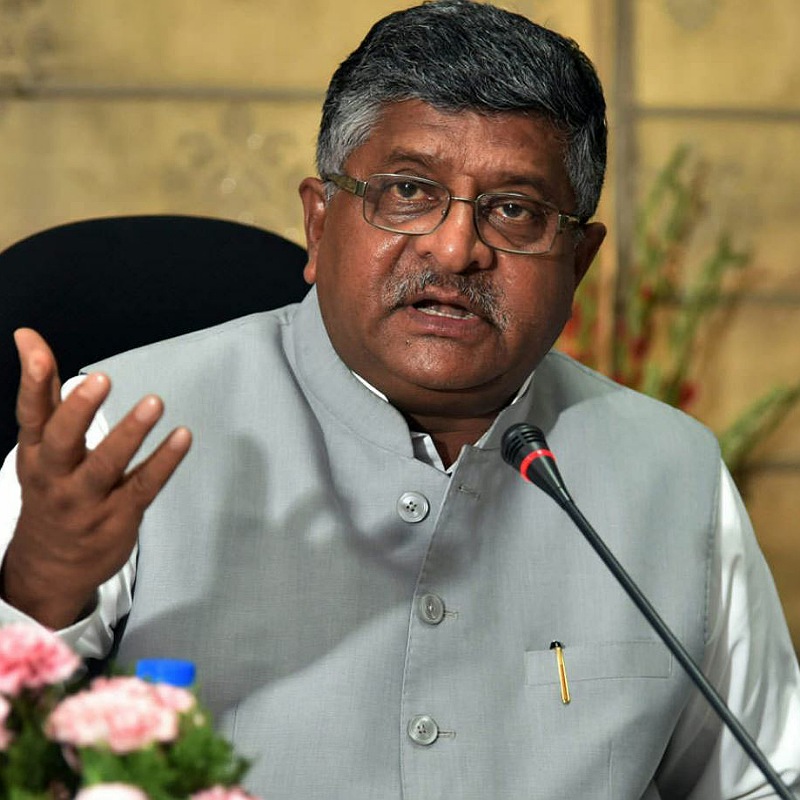
    “In order to provide enhanced user safety as also accountability of social media platforms, government has released the Information Technology (Intermediary Guidelines and Digital Media Ethics Code) Rules, 2021 under the Act (IT Act) that specifies the due diligence to be followed by all the intermediaries including the social media intermediaries. The social media platforms are enjoined to develop a robust grievance redressal system,” Union minister Ravi Shankar Prasad informed the Parliament today.

    When asked if the Centre has conducted any study regarding the impact of its control over social media, Prasad stated that no such study has been undertaken. However, he reiterated his oft-mentioned remark that the government welcomes criticism, dissent and also the rights of people to ask questions on social media.

    “This needs to be acknowledged that the fundamental right of speech and expression under article 19(1) is also subject to reasonable restrictions under article 19(2) of the Constitution which can be imposed in the interest of security, safety and sovereignty of India, public order, friendly relations with foreign countries etc,” he noted.

    Prasad mentioned that it is equally important that social media should not be abused or misused to defame, promote terrorism, rampant violence and compromise the dignity of women. It is for these challenges that the intermediaries are expected to remove or disable content as and when brought to the knowledge of  intermediaries either through a court order or through a notice by appropriate government or its agency or when directed under section 69A of the IT Act 2000, following due process of law, he detailed.

    On 25 February, the Centre notified new, stricter guidelines for social media intermediaries which enables setting up of grievance redressal mechanisms and makes these platforms more pliable in assisting government agencies in investigation as well as taking down unlawful or fake content. Experts, while lauding the new "well-intended" rules, noted that these guidelines could undermine the principles of open and accessible Internet and violate the right to privacy and free speech of users, particularly in the absence of robust data protection law.

    It's worth recalling that the new rules came close on the heels of a tussle between the government and Twitter over removal of certain content related to the ongoing farmers’ protests.

  • Madras High Court issues orders to Tamil Nadu, central government & brand endorsers in PIL against online gaming

    Madras High Court issues orders to Tamil Nadu, central government & brand endorsers in PIL against online gaming

    NEW DELHI: Acting on a PIL against the ill-effects of online gaming filed by an advocate Mohammed Rizvi, the Madras High Court has issued notices to Cricket team captain, Virat Kohli, President of Board of Control for Cricket in India (BCCI), Saurav Ganguly and the Central and Tamil Nadu governments. 

    The TN government, represented by AAG Sricharan Rangarajan, has asked for 10-days time to file a response. The case has thus been adjourned to 19 November.

    The court also voiced concern that lives have been lost due to online games and the lack of law governing such issues in Tamil Nadu.

    The PIL also names Telecom Regulatory Authority of India (TRAI) and celebrity endorsers such as actors Prakash Raj, Tamannah Bhatia, Rana Daggubati and Sudeep as respondents.

    In his petition, Razvi had risen serious concerns about gaming addiction and social stigma. He cited instances of children who have died by suicide on account of playing online games similar to the Blue What challenge and after losing in PUBG to state exposure to online gaming introduces the kids to a world of crime and negative thinking,

    Other instances where people have died because they have lost money while playing Online Rummy and online gambling were also highlighted by him. 

  • NTO 2.0: Ambiguity persists as arguments continue in Bombay, Kerala High Courts

    NTO 2.0: Ambiguity persists as arguments continue in Bombay, Kerala High Courts

    MUMBAI: Ambiguity continues in the ecosystem with just one day left for the implementation of new tariff order amendments (NTO 2.0).

    On Friday’s hearing in Bombay high Court, no conclusion was reached regarding interim relief. The Telecom Regulatory Authority of India (TRAI) will continue its argument on Monday.

    According to sources close to the development, TRAI has been directed not to take any coercive step. Although there is no any conclusion yet, a decision will mostly be taken on Monday.

    Earlier, broadcasters’ argument was that the entire regime is set to kick in from 1 March. Since it is around the corner, they have moved the court seeking a stay. If they implement it before hearing, the entire petition becomes infructuous.

    In response to the argument, TRAI counsel said on Thursday that it’s not the entire amended interim regime that is kicking off from 1 March. The TRAI counsel added that broadcasters’ obligation to declare new prices became effective from 15 January, but they did not make any progress on it without any stay order. If they declare prices, then only other stakeholders in the industry will be able to comply with the regime, as TRAI noted.

    The Bombay High Court also asked TRAI to take instructions on deferment of NTO 2.0 as they did for the 2017 regime before the Madras High Court on Wednesday. After TRAI expressed its unwillingness to defer NTO 2.0, the hearing on interim stay started on Thursday.

    In another case, the Kerala High Court has passed an interim order directing the TRAI not to take steps that are detrimental to the interest of the All India Digital Cable Federation (AIDCF) members. Although on Friday’s hearing no judgement was passed for interim relief, the decision of interim protection has been reserved.

    In another development, Discovery has moved its petition to Delhi High Court which was heard today. The next hearing for the petition has been scheduled for 19 March.

  • TRAI to be renamed to DCRAI

    TRAI to be renamed to DCRAI

    MUMBAI: The Telecom Regulatory Authority of India’s name has been rechristened. From now, it will be called as the Digital Communications Regulatory Authority of India (DCRAI). The announcement was made at the annual general meeting of the telecom infrastructure body (TAIPA) by the Telecom minister Manoj Sinha.
    The post of TRAI chairman has been changed to Digital Communications regulator, said Sinha speaking to RS Sharma. The time frame hasn’t been finalised but he expects it to be formalised soon.
    The Telecom Commission has also been renamed to Digital Communications Commission at the Department of Telecom.
    Sinha explained how telecom infrastructure has played a crucial and important role in the development of the telecom market in the country these past years by enabling rapid rollout of towers from a mere 1 lakh in 2006 to 4.71 lakh currently.
    TRAI chairman RS Sharma said, “NDCP talks about creating tower authority. The policy very clearly lays down to prepare India for digital tomorrow.” The new policy will be transformational as it lays down quantifiable objectives – $100 billion investment, 50 Mbps download speeds.
    Since 93 per cent of data transportation is happening on wireless networks, Sharma said telecom infrastructure is crucial. “Therefore it is appropriate that we put together all our efforts, if you want to be ready for 5G, you need to put massive infrastructure,” he said. Sharma also mentioned that TAIPA chairman Akhil Gupta had said that 5G infrastructure will require hundreds and thousands of more towers. Many of them will be small cells. He has requested the minister to summon a high-level conference of ministers and IT secretaries of state.

  • TRAI releases paper on National Telecom Policy 2018

    TRAI releases paper on National Telecom Policy 2018

    MUMBAI: Seeking views from stakeholders on the new telecom policy, the Telecom Regulatory Authority of India (TRAI) today released a consultation paper on inputs for formulation of the National Telecom Policy 2018.

    The Department of Telecommunications, through its letter dated 21 August 2017, requested the TRAI to suggest its policy inputs for formulation of the policy. Based on preliminary discussions with various stakeholders, including telecom service providers, telecom equipment manufacturers, industry associations, consulting firms, and cloud service providers, the regulator has prepared inputs for formulating the National Telecom Policy 2018 in line with the technological advancements in the sector and customer aspirations  for  digital services.

    The regulator is seeking views of stakeholders for formulating the policy by 19 January 2018.

    “National Telecom Policy-2018 can have twin goals viz. facilitate development of communication infrastructure and services to achieve inclusive socio-economic growth in the country,” the paper stated.

    “This policy would set the mission and objectives to be accomplished by the end of calendar year 2022, when India will be celebrating its 75 years of independence,” the paper added while underlining that the policy would also specify the strategies to accomplish such objectives as well as capacity building in general.

    The paper has set out the mission and objectives for the policy besides outlining common strategies to help India leapfrog to amongst the top-50 nations in international rankings in terms of network readiness, communications systems and services, and to attract an investment of USD 100 billion in telecommunications.

    Also Read:

    Trai to make recommendations on net neutrality today 

    TRAI tightens landing-page norms

    TRAI seeks better accessibility for persons with disabilities

  • TRAI seeks ideas on spectrum trading, services via satellite, M&A etc. by 11 April

    MUMBAI: Indian telecom regulator TRAI has sought inputs from stakeholders on “Ease of Doing Telecom Business in India”.

    Promoting “ease of doing business” is amongst the priority work items for unhindered growth of the telecom sector. A number of steps have already been taken for ease of doing business. Steps like adoption of market based spectrum management such as assignment of spectrum through auction, permitting spectrum trading, spectrum sharing and liberalisation of administratively assigned spectrum, Unified Licensing regime, Merger and Acquisition guidelines, Virtual Network Operation etc. have been guided by the principles of “ease of doing business”.

    The stakeholders have been requested to provide inputs with detailed explanation and justification by 11 April 2017. On receipt of the inputs, TRAI will analyse them and if required, take further necessary action for simplification of processes.

    Further, the Authority is of the opinion that various processes that  a telecom licensee is required to go through, should be simplified and combined to the extent possible to economise on efforts on part of the Telecom Service Providers (TSPs) as well as the Government. Therefore, it is important to identify the bottlenecks, obstacles or hindrances that are making it difficult to do telecom business in India and thus, require regulatory intervention. 

    Some of these processes could be:

    Related to Unified Licence

    * Acquiring Unified Licence, Compliance of various general / commercial /
    technical / financial / operating / commercial conditions.

    * Adding new authorisations in the UL

    * Surrendering any authorisation within the scope of UL or surrender of UL.

    * Compliance of roll-out obligations

    * Payment of Licence Fee, FBG/PBG and the release of bank guarantee, whenever due.

    * Any other issue

    Spectrum Allotment and use

    * Assignment of spectrum to the successful bidder by WPC

    * SACFA Clearance Process

    * Spectrum Trading approval process settlement of dues etc.

    * Spectrum Sharing process 

    * Liberalisation of spectrum process

    * Any other issue

    Provision of telecom services using Satellite media 

    * Clearances from INSAT Network Operations Control
    Center (NOCC)

    * Obtaining SACFA clearance and clearance from other
    authorities

    * Any other issue

    Merger and Acquisition Policy

    In addition, there can be processes in other areas which may be requiring simplification. In view of the above, the stakeholders are requested to identify such areas of concern and review the existing processes and suggest mechanisms that ease the business activity.

  • The TRAI broadcasting & cable tariff order simplified

    The TRAI broadcasting & cable tariff order simplified

    MUMBAI: The industry could not have asked for a better Dusshera gift. On the eve of 11 October 2016, India’s telecom and TV distribution regulator  The Telecom Regulatory Authority of India (TRAI) announced two draft legislations  – The Telecommunication (Broadcasting and Cable Services) (Eighth) (Addressable Systems) Tariff Order, 2016 and Standards of Quality of Service and Consumer Protection (Digital Addressable Systems) Regulations, 2016 – that definitely look like progressing the stuck-in-quicksand-of-uncertainty broadcast TV and cable TV sector. More than that, they could possibly inject a modicum of organization, professionalism and structure to an otherwise disorganized-free-for-all TV distribution business.

    The first of the draft legislation attempts to put in place a pricing framework for the heavily conflicted cable TV distribution sector. The second seeks to upgrade the quality of services that MSOs, cable TV operators provide to the consumers. Both have been much-awaited pieces of legislation.

    The third which seeks to iron out the much-maligned and disputed subscription revenue stream that flows between broadcasters, MSOs, cable TV operators and consumers is expected to be announced soon.

    Let’s look at the pricing draft whose purpose TRAI says is to ensure:

    –       transparency, non-discrimination, non-exclusivity for all stakeholders in value chain
    –       affordable TV services for customers
    –       adequate choice to consumers
    –       balance the commercial interests of broadcasters and distributors of television  channels to enable the distributors of television channels to recover their network cost and the broadcasters to recover their content cost.

    The TRAI wants the new Tariff Order or the MRP pricing regime to become effective from 1 April 2017.In the new scheme, the authority has in detail defined the role of  broadcasters, LCOs and MSOs or HITS operators. This is an attempt to simplify the order for everyone to be able to understand it.

    The role of the broadcaster

    Under this, broadcasters will have to first declare their channels as a pay channel or a free to air channel, on an a  la carte basis, and in one of the following seven genres: devotional, general entertainment, infotainment, kids, movies, news and current affairs and sports. The TRAI has defined a ceiling on the maximum retail price (MRP) for each of the genres: devotional (Rs 3), general entertainment (Rs 12), infotainment (Rs 9), kids (Rs 7), movies (Rs 10), news and current affairs (Rs 5) and sports (Rs 19).

    Each pay channel has to have a MRP  that can vary depending on the region, but which cannot be changed before the expiry of six months of it being declared. These rates will be platform agnostic – that is, uniform across the platforms (cable TV, DTH, HITS and IPTV) across a relevant geographical market, and will have to be declared on each broadcaster’s website and be transparently available to the TRAI, TV distributors and consumers.

    The pay channels of a network or its subsidiary or holding company or subsidiary of the holding company can be packaged into a bouquet. This can be done while taking the precaution that the bouquet’s MRP is not less than 85 per cent of the sum of the MRPs of the a la carte pay channels forming a part of the bouquet. Similar conditions of holding prices for six months and in geographical areas also apply to bouquets.

    The TRAI has introduced a category called a premium channel. Broadcasters are free to notify any channel as premium channel in their reference interconnect order (RIO). There shall be no price cap on maximum retail price notified by broadcasters for customers. For HD channels, the regulatory authority has, however, stated the price cannot be more than three times the MRP of the corresponding channel transmitted in SD. For those HD channels that do not have a corresponding SD channel, the benchmark will be the ceiling on the MRP of the genre it is in. These independent HD channels will have a price ceiling of three times the ceiling of the MRP of the genre.

    As far as pay per view or VOD goes, the TRAI says it will bring it under its purview at a later date as these services are in their infancy in India and have minimal adoption.

    The television distributor’s role

    On the television distributor side, the TRAI has made them responsible to provide all channels on a la carte basis and it has also  proposed to formalize  a minimum subscription fee of Rs 130 per month per set top box from a subscriber for 100 SD channels.  Now if an HD channel is included in this, it will be equal to 2 SD channels.

    The TRAI has stated that TV distributors cannot change the bouquets formed by broadcasters or its price, but they can form bouquets themselves of pay channels of different broadcasters provided that their price is not less than 85 per cent of the sum of the MRPs of the pay channels forming part of the bouquet. Free to air, HD and SD variants of the same channel and premium channels are not permitted to be included in these bouquets.

    The authority says that the composition of the 100 channel basic tier should be left to the subscriber’s volition. It can consist of FTA, pay, premium channels, broadcast bouquets or even television distributor package bouquets. But it has to have the government mandated channels and at least five channels of each of the seven genres. If the subscriber opts for pay TV or premium or HD channels or broadcast or TV distributor bouquets, he will have to pay the retail price for these separately.

    Subscribers wanting channels beyond the basic tier can opt for other channels by paying the TV distributor Rs 20 – excluding taxes-  for each slab of 25 channels and the broadcaster the MRP of each channel.

    The TV distributors also have another responsibility. The electronic programming guide on the network must display the details of all channels and their MRP genre wise for easy navigation. Broadcasters who are relying on TV distributors to collect and remit the pay channel revenues will provide a 20 per cent distribution fee to them, which the latter can share with the LCOs who are actually doing the collection. Additionally, TV channels can also offer a maximum 15 per cent MRP discount to TV distributors to encourage them. Parameters for discounts will be disclosed by broadcasters in the RIOs that will be transparent and uniform for all distributors of television channels.


  • The TRAI broadcasting & cable tariff order simplified

    The TRAI broadcasting & cable tariff order simplified

    MUMBAI: The industry could not have asked for a better Dusshera gift. On the eve of 11 October 2016, India’s telecom and TV distribution regulator  The Telecom Regulatory Authority of India (TRAI) announced two draft legislations  – The Telecommunication (Broadcasting and Cable Services) (Eighth) (Addressable Systems) Tariff Order, 2016 and Standards of Quality of Service and Consumer Protection (Digital Addressable Systems) Regulations, 2016 – that definitely look like progressing the stuck-in-quicksand-of-uncertainty broadcast TV and cable TV sector. More than that, they could possibly inject a modicum of organization, professionalism and structure to an otherwise disorganized-free-for-all TV distribution business.

    The first of the draft legislation attempts to put in place a pricing framework for the heavily conflicted cable TV distribution sector. The second seeks to upgrade the quality of services that MSOs, cable TV operators provide to the consumers. Both have been much-awaited pieces of legislation.

    The third which seeks to iron out the much-maligned and disputed subscription revenue stream that flows between broadcasters, MSOs, cable TV operators and consumers is expected to be announced soon.

    Let’s look at the pricing draft whose purpose TRAI says is to ensure:

    –       transparency, non-discrimination, non-exclusivity for all stakeholders in value chain
    –       affordable TV services for customers
    –       adequate choice to consumers
    –       balance the commercial interests of broadcasters and distributors of television  channels to enable the distributors of television channels to recover their network cost and the broadcasters to recover their content cost.

    The TRAI wants the new Tariff Order or the MRP pricing regime to become effective from 1 April 2017.In the new scheme, the authority has in detail defined the role of  broadcasters, LCOs and MSOs or HITS operators. This is an attempt to simplify the order for everyone to be able to understand it.

    The role of the broadcaster

    Under this, broadcasters will have to first declare their channels as a pay channel or a free to air channel, on an a  la carte basis, and in one of the following seven genres: devotional, general entertainment, infotainment, kids, movies, news and current affairs and sports. The TRAI has defined a ceiling on the maximum retail price (MRP) for each of the genres: devotional (Rs 3), general entertainment (Rs 12), infotainment (Rs 9), kids (Rs 7), movies (Rs 10), news and current affairs (Rs 5) and sports (Rs 19).

    Each pay channel has to have a MRP  that can vary depending on the region, but which cannot be changed before the expiry of six months of it being declared. These rates will be platform agnostic – that is, uniform across the platforms (cable TV, DTH, HITS and IPTV) across a relevant geographical market, and will have to be declared on each broadcaster’s website and be transparently available to the TRAI, TV distributors and consumers.

    The pay channels of a network or its subsidiary or holding company or subsidiary of the holding company can be packaged into a bouquet. This can be done while taking the precaution that the bouquet’s MRP is not less than 85 per cent of the sum of the MRPs of the a la carte pay channels forming a part of the bouquet. Similar conditions of holding prices for six months and in geographical areas also apply to bouquets.

    The TRAI has introduced a category called a premium channel. Broadcasters are free to notify any channel as premium channel in their reference interconnect order (RIO). There shall be no price cap on maximum retail price notified by broadcasters for customers. For HD channels, the regulatory authority has, however, stated the price cannot be more than three times the MRP of the corresponding channel transmitted in SD. For those HD channels that do not have a corresponding SD channel, the benchmark will be the ceiling on the MRP of the genre it is in. These independent HD channels will have a price ceiling of three times the ceiling of the MRP of the genre.

    As far as pay per view or VOD goes, the TRAI says it will bring it under its purview at a later date as these services are in their infancy in India and have minimal adoption.

    The television distributor’s role

    On the television distributor side, the TRAI has made them responsible to provide all channels on a la carte basis and it has also  proposed to formalize  a minimum subscription fee of Rs 130 per month per set top box from a subscriber for 100 SD channels.  Now if an HD channel is included in this, it will be equal to 2 SD channels.

    The TRAI has stated that TV distributors cannot change the bouquets formed by broadcasters or its price, but they can form bouquets themselves of pay channels of different broadcasters provided that their price is not less than 85 per cent of the sum of the MRPs of the pay channels forming part of the bouquet. Free to air, HD and SD variants of the same channel and premium channels are not permitted to be included in these bouquets.

    The authority says that the composition of the 100 channel basic tier should be left to the subscriber’s volition. It can consist of FTA, pay, premium channels, broadcast bouquets or even television distributor package bouquets. But it has to have the government mandated channels and at least five channels of each of the seven genres. If the subscriber opts for pay TV or premium or HD channels or broadcast or TV distributor bouquets, he will have to pay the retail price for these separately.

    Subscribers wanting channels beyond the basic tier can opt for other channels by paying the TV distributor Rs 20 – excluding taxes-  for each slab of 25 channels and the broadcaster the MRP of each channel.

    The TV distributors also have another responsibility. The electronic programming guide on the network must display the details of all channels and their MRP genre wise for easy navigation. Broadcasters who are relying on TV distributors to collect and remit the pay channel revenues will provide a 20 per cent distribution fee to them, which the latter can share with the LCOs who are actually doing the collection. Additionally, TV channels can also offer a maximum 15 per cent MRP discount to TV distributors to encourage them. Parameters for discounts will be disclosed by broadcasters in the RIOs that will be transparent and uniform for all distributors of television channels.


  • TRAI makes interconnect agreements mandatory between broadcasters & MSOs

    TRAI makes interconnect agreements mandatory between broadcasters & MSOs

    NEW DELHI: In view of several multi-system and local cable operators supplying signals even in the absence of an agreement, the Government today said that it was mandatory for the broadcaster of pay channels to enter into written interconnection agreement (ICA) for retransmission of its pay channels irrespective of whether subscription fee is paid by the MSO to the broadcaster.
     
    The Telecom Regulatory Authority of India (TRAI) today released the Telecommunication (Broadcasting and Cable Services) Interconnection (DigitalAddressable Cable Television Systems)(Sixth Amendment) Regulations 2016 in this regard.  
     
    The amendment provides for sufficient time (minimum sixty days) for entering into new interconnection agreement before the expiry of existing ICA between the service providers for retransmission of TV signals.
     
    It was made clear that after this amendment, no scope will be available in the name of mutual negotiations for continuing the provisioning of TV signal after expiry of the existing ICA. 
     
    MSOs have been mandated to inform the consumers in the event of failure to execute new ICA, about date of expiry of its existing ICA and disconnection of TV channels, fifteen days prior to the expiry of existing ICA to enable the consumers to take informed decision in respect of their choice. 
     
    At the outset, TRAI said it was observed from the interconnection details submitted by the service providers that signals of TV channels are being provided by several broadcasters to MSOs and MSOs to LCOs even in the absence of valid ICA in writing. 
     
    It was also observed that continuation of retransmission of signal without valid ICA, on the pretext of continued mutual negotiations, often results in disputes and sometimes abrupt disconnection, which affects the quality of service to the consumers. 
     
    In this regard, the draft sixth amendment was released for consultation on 3 November last and an Open House Discussion (OHD) was held on 11 December. 
     
    The amendment was issued after considering the stakeholder’s comments and in-house analysis.
     
    TRAI noted that a few stakeholders expressed their concern, stating that the timeline of 60 days for starting of negotiation will bring practical difficulties and inconvenience at the ground level in view of the large number of service providers across the country. 
     
    This concern has been addressed by adding the word “at least” before 60 days in the amendment thereby they can start negotiations any time prior to 60 days. Moreover, several broadcasters and MSOs do their mutual agreements for all its operating areas or pan-India basis simultaneously. 
     
    A few stakeholders had suggested that similar provision may be made in the regulations for non-DAS areas and also in other platforms such as DTH. In this context it was mentioned that the delay in renewal of ICA is predominantly observed between broadcasters and MSOs in areas where Digital Addressable Cable System has been implemented. 
     
    However, TRAI noted that the stakeholders’ request may be taken up while reviewing interconnection regulations as a whole, in future, when such need arise.
     
    TRAI is already in the process of finalising a model ICA to ensure smooth transition to DAS.
  • TRAI’s one month deadline for resolving 30 questions on spectrum auctions

    TRAI’s one month deadline for resolving 30 questions on spectrum auctions

    New Delhi, 27 November:  The Telecom Regulatory Authority of India wants to know whether the entire spectrum available with Department of Telecom in the 800 MHz band should be put for auction and how can the spectrum in the 800 MHz band, which is not proposed to be auctioned due to non-availability of inter-operator guard band, be utilized.


    In a consultation paper on “Valuation and Reserve Price of Spectrum in 700, 800, 900, 1800, 2100, 2300 and 2500MHz Bands”, it wants to know what should be the block size in the 700 MHz band.


    TRAI has sought comments to almost thirty questions in the paper by 21 December and counter-comments by 28 December and said no extra time would be given in view of the urgency of the issue.


    It also seeks to know if there is any requirement to change the provisions of the latest NIA with respect to block size and minimum quantum of spectrum that a new entrant/existing licenses/expiry licensee is required to bid for in 800, 900, 1800 and 2100 MHz bands.


    What should the block size in the 2300 MHz and 2500 bands be, the Regulator wants to know.


    Considering the fact that one more sub-1 GHz band (i.e. 700 MHz band) is being put to auction, is there a need to modify the provisions of spectrum cap within a band and is there any need to specify a separate spectrum cap exclusively for the spectrum in 700 MHz band?, TRAI has asked.


    Should a cap on the spectrum holding within all bands in sub-1 GHz frequencies be specified and should the existing provision of band specific cap (50 percent of total spectrum assigned in a band) be done away with, it has asked.


    TRAI wants to know whether the 2300 MHz and 2500 MHz bands be treated as same band for the purpose of imposing intra-band Spectrum Cap.


    In the auction held in March 2015, specific roll-out obligations were mandated for the successful bidders in 800 MHz, 900 MHz, 1800 MHz and 2100 MHz spectrum bands.


    Stakeholders are requested to suggest how the roll-out obligations be modified to enhance mobile coverage in the villages and whether there should be any roll out obligation for the existing service providers who are already operating their services in these bands.  


    In the auction held in 2010, specific roll-out obligations were mandated for the successful bidders in 2300 MHz spectrum band. Same were made applicable to the licensee having spectrum in 2500 MHz band. Stakeholders are requested to suggest whether the same roll-out obligations which were specified during the 2010 auctions for BWA spectrum be retained for the upcoming auctions in the 2300 MHz and 2500 MHz bands and should both these bands be treated as same band for the purpose of roll-out obligations.


    TRAI has also asked if the ISP category ‘A’ licensee should be permitted to acquire the spectrum in 2300 and 2500 MHz bands or the same eligibility criteria that has been made applicable for other bands viz. 800 MHz, 900 MHz, 1800 MHz and 2100 MHz band should be made applicable for 2300 MHz and 2500 MHz bands as well.


    Stakeholders are requested to comment on whether the guidelines for liberalisation of administratively allotted spectrum in 900 MHz band should be similar to what has been spelt out by the DoT for 800 and 1800 MHz band.


    Can the prices revealed in the March 2015 auction for 800/900/1800/2100 MHz spectrum be taken as the value of spectrum in the respective band for the forthcoming auction in the individual LSA, it wants to know.


    Should the value of the 2300 MHz spectrum be derived on the basis of the value of any other spectrum band using the technical efficiency factor and should the valuation of the 2500 MHz spectrum be equal to the valuation arrived at for the 2300 MHz spectrum, the Regulator has asked.


    What should be the ratio adopted between the reserve price for the auction and the valuation of the spectrum in different spectrum bands and why.  Should the realized prices in the recent March 2015 auction for 800/900/1800/2100 MHz spectrum bands be taken as the reserve price in respective spectrum bands for the forthcoming auction.