Tag: Regulation

  • BIF bats for OTT regulations & level-playing field for all in Net Neutrality debate

    BIF bats for OTT regulations & level-playing field for all in Net Neutrality debate

    NEW DELHI: Broadband India Forum (BIF) has put its weight behind proposals to regulate OTT services, saying they too should be guided by same principles as ISPs and telecom service providers (TSP).

    “There  should be level playing field between the ISP/TSPs  and the OTT players. OTT players need to be brought under the same regulatory regime as the ISP/TSPs,” BIF has said in a submission on a pre-consultation paper on Net Neutrality to telecoms and broadcast regulator TRAI. 

    TRAI has been seeking comments since March 2015 from stakeholders on the issue of Net Neutrality and related matters like OTT, zero-rating plans and possible regulations.

    Since last year, several such papers have been issued by the regulator in an effort to finalise recommendations that could possibly go on to become industry regulations. BIF briefly alluded to this “piecemeal approach and not addressing the larger subject in one go” as this was fuelling ambiguities.

    Batting for plans like zero-rating offered by some Indian telcos earlier and Facebook’s FreeBasic — since then outlawed by TRAI — the Forum says, “At our stage of development, our highest need is internet adoption and increased data usage and whatever facilitates that, needs to be heartily supported”.

    Free Data should be permitted and it should be left to the service providers (ISP/TSPs) to decide whether they want to enter into such arrangement with the content providers or not basis their business case and requirement of technical development, BIF says.

    In India, OTT services are flowering every day, keeping in step with Asian trends.

    Some OTT services, available in India, include Star’s Hotstar, Zee’s dittotv, Viacom18’s Voot, Sony’s SonyLiv, Arre, Times group’s Box TV, Asian companies-owned Hooq and Viu and global giants like Netflix, apart from the likes of WhatsApp, Skype, YouTube and Hike. 

    No ex-ante regulation is required since there is enough competition and the market is vibrant enough, says the Forum, adding in case of violations, on ex-post basis, TRAI can examine tariff plans on a case by case basis after giving a reasonable opportunity to the operators of being heard.

    Dwelling on the economics of  broadband infrastructure, BIF highlights  efficient services would require investments up to Rs 500,000 crore over the next 3-5 years. Moreover, as per Government commitments, the Digital India initiative itself will require investments to the tune of  Rs. 113,000 crore.

    “It was the flexibility of service pricing that was permitted to the TSPs that led to mass adoption of voice services. A similar approach is warranted for ensuring adoption of data services. However, entrepreneurs are reluctant to start a new Internet based businesses when online customers are limited due to low adoption of data services,” BIF has said, adding that consumers are unwilling to invest in “expensive data plans” in the absence of adequate local content.

    Interestingly, BIF’s stand that telecoms is a capital–intensive sector where government mandates may hamper private investments, in some way, is also echoed by Hong Kong-based Asian organisation CASBAA.

    “We do not believe TRAI or the government should adopt policies that result in reducing or rationing of funds for (telecom) network investment. Advocates of `networks for all, open to all’ sometimes tend to forget that capable networks are costly, and they will not build themselves,” CASBAA had said in its submission to TRAI on Net Neutrality last year.

    Cautioning against replicating some existing regulation that may impede innovation, CASBAA had said TRAI and the government must avoid seeing the online content industry as another facet of the mature television content supply industry, ripe for extension of the same regulatory approaches governing the “traditional” TV industry. 

    “This would be a colossal mistake, especially at this new stage of development of online content supply in India. Overregulation will constrain development of newer business models which could be of great benefit to consumers and to India’s overall economic development,” the Asian industry organisation had said, hinting that a holistic view needs to be taken by regulators.

    Similarly, BIF in its recent submission has said the question of modernization of communications regulation…should be reviewed holistically and periodically to ensure same services are treated in a technologically neutral way, while protecting consumer rights and achieving the objectives of Digital India.

    The Forum has taken the initiative to define Net Neutrality in the Indian context and some key characteristics of Net Neutrality, amongst others, as:

    – No Blocking
    – No Throttling
    – Open Internet
    – No improper  prioritization (paid or otherwise)
    – Open, easy and non-discriminatory access
    – Recognition of at least four categories  of traffic and different traffic management techniques for different categories but having the same within each category
    – Equitable regulatory treatment of similar or near-similar services
    – Permission of zero rating systems.  

    (1 USD = 67.4874 INR)
  • TRAI is working on amending QoS regulation: N Parameswaran

    TRAI is working on amending QoS regulation: N Parameswaran

    MUMBAI: It has been nearly three months since the Telecom Regulatory Authority of India (TRAI) came up with its consultation paper on levying financial disincentives on multi system operators (MSOs) and local cable operators (LCOs) who are delaying the process of billing in the digital addressable system (DAS) areas of the country.

    Although it has been long since the deadlines for commencement of billing in DAS areas got over, there is no clue on how the whip will be cracked on those who haven’t gone beyond installing set top boxes in phase I and II.

    TRAI principal advisor N Parameswaran says, “We are in the process of working on the amendment to the Quality of Service (QoS) regulation. The comments have come and we are yet to take a final decision on the same.”

    Meanwhile, the MSOs that indiantelevision.com spoke to have said that billing has happened only in few areas of New Delhi and Kolkata while the remaining cities in DAS phase III and IV don’t even have proper consumer application forms (CAFs).

    TRAI earlier had said that it is seeking to implement financial penalties on those MSOs and LCOs who defy the law. Comments had been asked from stakeholders on the same. The regulator had also said that for non-compliance of issuing bills, a disincentive of not exceeding Rs 20 per subscriber will be levied on the MSO and/or its linked cable operator and for the second time, penalty would be Rs 50. “For non-compliance of regulations, Rs 100 will be levied on each MSO for each contravention. If the MSO and LCO have entered into an agreement, both of them will be penalised for faults while in the case of no deal being signed, only the MSO is liable to pay,” TRAI had said.

    As per the consultation paper, the amendment, when approved, will come into effect 30 days from the date of publication.


  • Broadcasters want tariff to be left to market forces

    Broadcasters want tariff to be left to market forces

    MUMBAI: The Telecom Regulatory Authority of India’s (TRAI) latest tariff order that will come into effect from 1 January 2015 has already got a few stakeholders’ views on it. To be called the Telecommunication (Broadcasting and cable) services (seventh) (non-addressable systems) Tariff Order, 2014 (draft), it will be applicable to broadcasting and cable services provided to cable subscribers throughout India through non addressable systems.


    Tariff


    The main point that the stakeholders who have given their comments agree on is not having any regulation on wholesale tariff and there should be complete forbearance from the Authority. “The presence of a  plethora  of players in the market  clearly  indicates  that there exists enough competition  in  the  market  and  no  monopolistic  practices  or  unfair  trade practices can be practiced in such a scenario,” is the view of agent The One Alliance (A MSM and Discovery JV, which has now parted ways).


    NDTV and Star India also have similar views on tariff. “Given TRAI’s own finding that TV channels fulfill only ‘esteem needs’ of consumers and are as such non-essential, there is all the more no reason whatsoever for regulating channel prices,” is Star’s opinion. The same is shared by The One Alliance.


    If in case TRAI decides that complete forbearance cannot be allowed, then Star India says that it can consider regulating prices at retail level only. The One Alliance on the other hand feels that TRAI needs to keep its nose out of even retail tariff since it will affect the consumer and the entire distribution chain. “The MSOs under the guise of regulated retail pricing would either further renegotiate with the broadcasters or fill their bandwidth with lesser priced channels,” it says.


    According to The One Alliance, in case the TRAI feels that it should control wholesale rate then only it has to consider inflation rate while if it leaves to market forces, it won’t have to do the same.


    The agent also feels that pricing on the basis of genre is illogical since the Ministry of Information and Broadcasting (MIB) recognises only two categories: News and Current Affairs and Non News and Current Affairs while TRAI seeks to differentiate the non-news category into many genres. “Movie channels like Max and Star Gold also show live sports which is another genre with a different price cap,” it states.


    On the issue of HD and 3D channels, The One Alliance feels that since these are niche channels and require high technology, it should not be subjected to any tariff restrictions whereas Star India feels that they should be kept out since they anyway cannot be transmitted in an analogue regime.


    While TRAI says that broadcasters must give all channels in bouquets as well as a-la-carte, Star India says that there shouldn’t be any mandate that channels have to compulsorily be given on a-la-carte. At the same time, the obligation that old bouquets must be offered as per 2007, needs to go away specially after the coming into force of the deaggregation paper.


    Carriage


    Carriage fee is the biggest burden on broadcasters which everyone has askedthe regulator to include in its order. The News Broadcasters Association (NBA) and Times Television Network have just asked for carriage fees to be included as a crucial element.


    The One Alliance on the other hand states that the authority has ‘blatantly ignored’ the issue of carriage fee even after its own view in a 21 July 2010 report which states, “The Authority is of the view that all carriage and placement fee transactions should be a part of inter connection agreements between the broadcasters and MSO/LCOs in the case of pay channels, or separately formalised as carriage and placement fee agreements in the case of FTA channels, and these should be filed with the TRAI. Such filings of carriage and placement fees will enable the authority to monitor carriage and placement fee transactions regularly and regulate the same through interventions where considered necessary.”


    NDTV says that if there is a price control on how much broadcasters can charge MSOs for content, MSOs should also be told how much they can charge broadcasters for carriage and placement. “The charges paid by MCCS have increased by 300 per cent over the years. It is estimated that the carriage and placement fee paid by broadcasters is between Rs 1200 crore to Rs 1500 crore,” reads NDTV’s reply.


    Declaration and reporting


    The fact that MSOs and LCOs have not been asked to provide any reporting requirement is a question raised by them. Broadcasters urge TRAI to ensure that MSOs and LCOs do not under-declare their subscribers.


    “We strongly believe and submit that the inter-connect regulations must allow for Broadcasters to conduct surprise audits and surveys with their respective technical teams to prevent under-reporting of subscriber base,” states The One Alliance.


    Star India opines that strict financial disincentives should be prescribed for illegal transmission, area transgression, under declaration, piracy or any other illegality or non compliance. “Operators who have been found to be violating rules should not be given the protection of the Must Provide or regulated Tariffs.”


    Both The One Alliance and Star India feel that details on advertising need not be declared as they don’t have any relation to tariff or other issues.


    While TRAI says that a new channel launch needs 30 day prior intimation, The One Alliance feels that a seven day notice is sufficient.

  • TRAI blames MSOs and LCOs for delay in DAS implementation

    TRAI blames MSOs and LCOs for delay in DAS implementation

    MUMBAI: The Telecom Regulatory Authority of India (TRAI) has come up with certain amendments to the Standards of Quality of Service (digital addressable cable TV systems) (amendment) regulation 2012 (12 of 2012). The regulation has laid down norms for billing of subscribers in digital addressable system (DAS) areas.


    It says that even after coming up with the QoS regulation, it kept receiving several complaints from subscribers about not getting proper bill and receipt. Subsequently, the regulator issued a direction in December 2013 directing MSOs to offer prepaid and postpaid payment options, generate bills and issue receipts.


    It also made a team consisting of representatives from TRAI and the Broadcast Engineers Consultant India Limited (BECIL) to inspect the head-end and subscriber management system (SMS) of MSOs in Delhi. During the inspection it noticed non-compliance by cable operators. Some cable ops are not offering prepaid option of payment while those who did offer, didn’t give an option of electronic payment.


    It again issued a direction on 27 May 2014 to ensure bill delivery either by hand, post or e-mail, within 45 days of the direction to provide online payment option in its SMS, electronic acknowledgement to subscribers on payment. MSOs and LCOs are still delaying implementation of the same.


    Since no details are being inserted in the SMS, it is hampering the transparency of financial transactions between MSOs and LCOs thereby affecting smooth implementation of DAS.


    TRAI states that ‘in the absence of proper billing and accounting of receipts, there is a distinct possibility of loss of revenue accruable to government’.


    Due to all these reasons, the regulator feels that financial disincentives should be levied on non-compliant MSOs and LCOS, similar to how it happens in the telecom field where this action has yielded result.


    For non-compliance of issuing bills, a disincentive of not exceeding Rs 20 per subscriber will be levied on the MSO and/or its linked cable operator and for the second time, penalty would be Rs 50. For non-compliance of regulations, Rs 100 will be penalised on each MSO for each contravention. If the MSO and LCO have entered into an agreement, both of them will be penalised for faults while in the case of no deal being signed, only the MSO is liable to pay.


    The regulator says that the MSO may offer multiple denomination schemes for recharging, with an expectation that monthly recharge schemes would be one of the options.


    Another amendment that has been suggested is to ensure that bills have service tax registration number and entertainment tax registration number of either the MSO or the linked cable operator.


    However, before imposing penalties, TRAI will give opportunities to the concerned MSO or LCO to represent its case.


    The amendment, when approved, will come into effect 30 days from the date of publication and will be called Standards of Quality of Service  (digital addressable cable TV systems) (amendment) Regulations 2014.


    Stakeholders can provide comments before 8 September.


    Click here for the press release


    Click here for the amendment

  • TRAI seeks views on penalties for non-compliant MSOs and LCOs in DAS areas

    TRAI seeks views on penalties for non-compliant MSOs and LCOs in DAS areas

    MUMBAI: Days after the news of new deadlines being set for phase III and IV of digital addressable system (DAS) was known, the Telecom Regulatory Authority of India (TRAI) has decided to straighten up the multi system operators (MSO) and local cable operators (LCOs) who are turning up their noses regarding billing in the first two phases.


    TRAI has come out with a notice inviting stakeholders to give their inputs regarding penalties to be imposed on non-compliant MSOs and LCOs. It says that it has received several complaints from DAS subscribers that they weren’t getting either the bill or the receipt of payment for their TV subscription services.


    Therefore, in order to protect the interest of consumers, ensure transparent business practices and promote efficiency, it is proposing to amend the regulation to incorporate provisions of levying financial disincentives on such MSOs and LCOs. TRAI is also seeking to amend the Standards of Quality and Service (digital addressable cable TV systems) Regulations 2012 (12 of  2012) dated 14 May 2012.


    The regulation lays down quality of service norms to be adhered to by the service providers, providing cable TV services through DAS.


    TRAI seeks comments from stakeholders on the draft regulation by 8 September to sksinghal@trai.gov.in.

  • Pay for content and not channel say broadcaster legal counsels

    Pay for content and not channel say broadcaster legal counsels

    MUMBAI: Regulation in India, unlike the US, is very static. Not only this, any regulation that comes out, does not address the future, but the past. New technology is proving to be a remarkable challenge, not only for the industry, but for the regulators as well.


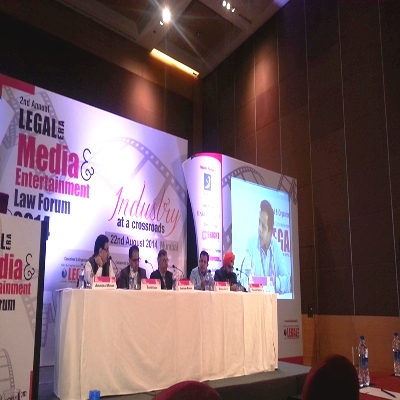
    These were the major points of discussion at the 2nd Legal Era Media & Entertainment Law Forum, where legal counsels for various broadcasters, emphasised on how the regulatory regime in India is very backward. A normal broadcaster today has to go through the tedious task of applying to the Ministry of Information and Technology (MIB), Department of Space (DoS) and WPC approvals. As per statistics, at present approximately 800 files for channel licence is pending with the MIB and some 600 with the DoS.


    Stressing on the rise of technology, Zee Entertainment Enterprises Limited (Zeel) director corporate Amitabh Kumar said that by the year 2020 linear transmission of channels will be replaced by video on demand (VoD). Kumar also stressed on the need for change in the way licences are given to broadcasters. “The broadcasters’ licence should have provision for VoD, VOIP etc. There should also be a provision, as per which the licence services should be allowed to expand, with no entry fee. The regulatory body must have scope for widening the ambit of services for lifetime,” opined Kumar.


    For Kumar, the regulators need to be pro-active rather than reactive to the new technology advancements.


    Content consumption is undergoing change. “Content cannot be controlled, it can be self regulated, which is working beautifully,” informed Viacom 18 Media group general counsel Sujeet Jain. He also brought to the fore how the functioning of Broadcast Content Complaints Council (BCCC) had forced even the I&B to retract from interfering in the content. “Government should completely take its hands off content,” he added.


    Agreeing with Jain was Singh and Singh Law Firm LLP partner Tejveer Bhatia who said that tariff of the VoD content should not be regulated. “If consumer is demanding a particular kind of content, the media industry should have the freedom to decide the tariff. There cannot be a benchmark on the demanded content,” informed Bhatia.


    According to Star India president and general counsel, legal and regulatory affairs Deepak Jacob the quality of content is directly proportional to the money spent on it. “If we want to produce high quality content for linear TV, there is cost that is attached to it. While in the past 15 years, the ARPUs have remained flat at Rs 150 to Rs 200 and the broadcasters’ fair share of this has also remained the same, the content cost has increased 20 times. So Rs 1 lakh per episode expense, 15 years ago, has today gone up to Rs 15 lakh to Rs 20 lakh per episode,” informed Jacob.


    Jacob also questioned the whole ‘must provide’ clause that was introduced by the Telecom Regulatory Authority of India (TRAI). “All this will kill broadcasters. What is the incentive that a broadcaster is getting for creating content for mobile devices or other platforms?” questions Jacob.


    Another important point raised during the panel discussion was that unlike in the US and UK, where channels are sold as events, in India, this arrangement doesn’t exist. “We should be moving towards a regime, where consumers can subscribe to events and not channels. And the subscription should allow one to view the content not only on TV but mobile, tablet or computer also. Content, not channel should be highlighted and consumers should be able to pay for content,” said Kumar.


    According to Jain, while with change in technology, the format and consumption pattern of the content will change, but the content will remain the same.  “The regulation has to incorporate this aspect and there should be a level playing field,” he opined.


    The panelists also suggested that a lot of licencing should go away and what the government should really look at, while moving towards convergence is providing ease of access. “The Prime Minister is talking about making broadband available across the country, but for this access will be needed,” said Jain.  He also highlighted the need for strict laws against piracy. “Taxation needs to be rationalised in order to give fillip to the sector. That apart, ministries will have to merge so that entire ecosystem can merge,” opined Jain.


    The session also touched upon the issue of carriage fees and if there was any end to it. According to Jacob, while carriage fee, which is an artificially created monster needs to vanish, placement fee is something which will not cease to exist. “Placement is an individual choice that broadcasters make. It will be unfair of broadcasters to expect a certain number of LCN, without incentivising the MSO,” he concluded. 

  • TRAI ends aggregation of content from different broadcaster groups

    TRAI ends aggregation of content from different broadcaster groups

    Updated – 08:05pm

    MUMBAI:  Aggregation of television content from various broadcasters will soon be history and content aggregators will be able to act only as agents of broadcasters.

    These are the provisions in the amended regulations notified by the Telecom Regulatory Authority of India (TRAI) today.

    The TRAI has barred content aggregators from signing Reference Interconnect Offers (RIOs) with Distribution Platform Operators and said broadcasters themselves will now need to publish the Reference Interconnect Offers (RIOs) and also enter into interconnection agreements with Distribution Platform Operators (DPOs).

    TRAI has now clearly defined the roles of the broadcaster, the channel aggregator and the DPOs which include the multi-system operators.

    Broadcasters have six months to sign RIOs with DPOs themselves and current content aggregators like Media Pro, IndiaCast UTV Media Distribution and One Alliance will only be able to function as agents of broadcasters.

    TRAI has allowed a broadcaster to appoint an agent for signing the RIOs, but clearly stating that the agent can only act in the name of and on behalf of the broadcaster.

    The regulator in the notification clearly mentions that the appointed agent cannot alter the bouquets as offered in the RIO of the broadcaster and if one agent acts as an authorised agent of multiple broadcasters, individual broadcasters need to ensure that such agents do not bundle channels or bouquets with other broadcasters, TRAI said.

    TRAI has, however, provided relief to broadcaster groups by allowing more than one company belonging to the same group to bundle their channels into packages.

    Broadcasters will have to file amended RIOs and interconnection agreements with the regulator.

    According to TRAI, currently around 239 pay channels (including HD and advertisement-free channels) are offered by 55 pay broadcasters. These channels are distributed by 30 broadcasters/aggregators/ agents of broadcasters.

    “The distribution business of 58.6 per cent of the total pay TV market available today is controlled by the top three aggregators,” the TRAI said, referring to Media Pro, IndiaCast and One Alliance.

    TRAI feels that the bouquets offered by aggregators comprise popular channels of multiple broadcasters they represent. Thus, leaving DPOs with no option, but to subscribe to these bouquets and then push these channels to the consumers to recover costs.

    Analysis of bouquets offered by Aggregators

    “This shows that aggregators are offering bouquets comprising as many as 20 channels of six broadcasters. Another bouquet, comprising 13 channels, has channels drawn from 9 broadcasters,” says TRAI through its published report.

    Explaining further the TRAI paper says, “Media Pro has mostly entered into agreements with MSOs for around 65 channels out of the 76 pay channels it distributes. These MSOs include both smaller independent MSOs as well as MSOs operating at national level. Similarly, IndiaCast and MSM Discovery have mostly entered into agreements for around 30 (out of 36 channels being distributed by it) and 20 channels (out of 28 channels being distributed by it) respectively. This substantiates the allegation of the DPOs that the large aggregators are virtually compelling them to enter into agreements to subscribe to almost all of their channels.”  

    The regulator has also found that majority of the channels distributed by the aggregators belong to broadcaster groups who own or control the aggregator. “90.7 per cent- Media Pro, 58 per cent IndiaCast and 57 per cent- MSMD.” 

    According to the regulator, the rates being charged from non-vertically integrated DPOs are, in some cases, higher by 62 per cent as compared to the vertically integrated DPOs.

    “The situation becomes even worse in the case of relatively smaller non- vertically integrated DPOs in which case the rates charged are higher by about 85 per cent as compared to the vertically integrated DPOs.”

    TRAI feels that the amendment will not only ensure a better spread of popular channels in different bouquets available to the DPOs but would also reduce the number of less popular channels pushed on to such bouquets.

    “Even in case a DPO fails to arrive at an agreement with a particular broadcaster the opportunity of finalising agreements with other popular broadcasters is not lost. Thus, DPOs would be placed in a much better position to carry out their businesses,” TRAI said.

    “The interconnect regulations aim at making available the content to DPOs in a transparent and non-discriminatory manner. For this, it is important that the offerings of the broadcasters are available in the public domain. This is why broadcasters have been mandated to publish an RIO prescribing the technical and commercial terms for making available their TV channels to the DPOs,” it says.

  • The year of the great tossing

    The year of the great tossing

    The year Indian news television channels got a sneak peek at what Pi Patel must have experienced while battling the raging storm in mid-seas in Ang Lee’s Life award winning Life Of Pi. Like Pi, news channels were tossed around, heaved up and down, had spear sharp rain and high waves buffeting them, got scalded by the hot sun, went through bouts of starvation and dying thirst – and they lived – at least most of them did – to tell the tale. It was a tough, tough year for them no doubt.

    Rising inflation, a tough economic environment which saw advertising spends being slashed, rising costs for carriage on cable TV and DTH, further fragmentation and evaporation of viewership – all led to their top lines and even bottomlines being beaten black and blue. Net result: layoffs, restructuring, reorganisation, was the name of the game. To top it all, the regulators – the Information & Broadcast (I&B) ministry and Telecom Regulatory Authority of India (TRAI) – too got into the act. The I&B pushed ahead with its digitisation drive even as it cracked down on them for paid content, and the TRAI ordered a reduction in advertising time permitted on air on channels.

    The news television industry has always had problems of plenty. More than 100 TV channels battle for a piffling Rs 2000 crore in ad spends. And more jumped onto the bandwagon during 2013 -an estimate is that around 25 new news channels made their debut. As though there wasn’t enough competition for the small morsels of advertising available in the various states and languages all over the country. But what kept the whole industry gloomy was the heartbeat aka advertising revenue which stayed flat for the whole year; and for some it even dipped. The big players were the ones who got to taste a little blood while the others struggled to make money out of inventory.

    The alarm bells started ringing out earlier in the year when TAM Media the viewership ratings agency did a rejig with its panels and started reporting on LC1 towns and also a new set of data reflecting the digitisation that was spreading across phase 1 towns. As an outcome, some of the channels ended up showing near zero viewership. TAM said this was because real viewership patterns were cropping up with deeper penetration of people meters.

    NDTV India, one of the older news broadcast networks, tried in vain to prosecute TAM’s parent AC Nielsen in the US on charges of fraud, but the NY court shooed it away, saying it should fight the legal battle on Indian turf. Allegations of TAM being rigged started rising to a cacophony and unanimously several channels decided to unsubscribe from TAM including NDTV, Times, CNN and Zee. A fierce battle issued between channels, advertisers and TAM that also saw support grow for the Broadcast Audience Research Council (BARC).Angry advertisers threatened to pull out advertisements from channels that had unsubscribed from TAM- including the seven big networks. After weeks of an impasse, resolution finally came about with rolling ratings of four weeks and silver, gold and platinum packs for clients. The major change coming about was the conversion of TRPs to TVTs. Satisfied channels finally went back to TAM but are still clinging on to the new lifeline-BARC.

    It was in the second quarter of the year that a bunch of channels in Kolkata under the Saradha group went belly up with the financial and real estate group going bust. Questions were raised about the MIB’s laxity in issuing broadcasting licences. In a bid to tighten its procedures, it wrote to all channels, asking them to provide them with details about their operations and to see if they were still complying with the licence terms. Some 67 channels did not; and had their licences revoked. The MIB also became stricter about norms relating to directorial appointments on news channels’ boards.

    But the big big fight of the year was the one that blew up when the TRAI introduced a quality of service regulation that restricted advertising air time to just 12 minutes per hour. Broadcasters who were accustomed to showing 20 to 25 minutes of ads experienced a jolt when this came out. They all collectively revolted, specially the news channels claiming that their revenue would be affected in an industry that is already suffering much losses. The News Broadcasters Association (NBA) also met the I&B ministry to ask TRAI to go easy on this regulation.The industry seems to have pacified the ministry on the content front at least, with the NBA, the Broadcast Editors Association, and the Indian Broadcasting Foundation (IBF)’s Broadcast Complaints Content Council (BCCC) in place. This despite, 2013 saw paid news being discussed very aggressively. Suggestions to set up a body to monitor broadcast – just like how the Press Council of India (PCI) does for the print media – were made. But the NBA opposed this strongly, saying that the self-regulatory mechanisms that are in place are enough to ensure that the news channels stay in line.

    The news channels yelped that they feared a shut down if the ad cap were to be implemented right away. They suggested that the ad cap, if necessary to be implemented, should be concurrent with the completion of digitisation in the country as then there would be more revenue flowing in. I&B minister Manish Tewari seemed to concur and even came out in their support on this approach.

    The interim order got smiles on some of their phases. The year 2013 was choppy to say the least for most of the news industry. High carriage fees, a slowdown in advertising growth, and extremely thin subscription revenues had forced even the older and long established news networks to look for solutions to keep their businesses viable. Almost all of them reorganized, consolidated their news operations which led to lopping off of bloated employee payrolls. The big buzzword during the year was the integrated newsroom – wherein a centralized bureau of journos and news crew helps service web, TV, and other online properties for a news network having several news channels.Finally the regulator decided to give the news channels some more time. A new advertising limit per hour was set. 20 minutes of ad time for news channels and 16 minutes for GECs till 30 September and after that everyone would have to together switch to 12 minutes and would have to submit compliance reports. But this formula did not go down well with the NBA even as the TRAI announced that it would rap violators on their knuckles. Some NBA members– along with some other niche channels – decided to take steps to protect themselves. They challenged TRAI’s mandate in the Telecom Disputes Settlement Appellate Tribunal (TDSAT) which heard arguments from all the affected parties for nearly 20 days. The NBA’s appeal to the tribunal got them an interim order preventing the regulator from taking any action against erring channels, allowing them to heave a collective sigh of relief. Even as the TDSAT was about to deliver its judgment, a coincidental verdict was given by the Supreme Court which stated that the tribunal had no power to hear or adjudicate on challenges to TRAI regulations. Swiftly, the TDSAT dismissed the case and the NBA immediately moved the Delhi Court to hear its plea. The Delhi High Court after listening to the initial appeal decided to get into its details later, giving the next hearing date as 13 March 2014. It however gave an interim order disallowing the TRAI from taking any coercive actions against channels not following the 12 minute ad cap.

    At the time of writing, Zee Media Corp was slated to take the same route following the announcement of the merger of DMCL – the company that produces the Times of India-challenger newspaper DNA – with it. It had prepared for the merger by donning a new moniker, dropping Zee News and naming itself as Zee Media Corp. The year saw it running a skeleton Telugu news channel, even as it launched Zee Rajasthan Plus.Network18, NDTV, UTV Bloomberg, BAG Network, among many others shed staff. Network 18 bid adieu to nearly 350 people, NDTV shut down its Mumbai bureau itself and Bloomberg handed over the much dreaded pink slip to 30 staffers. Roles of those retained were redefined and they were given additional responsibilities.

    Several other new offerings are lined up for 2014 including an English news channel, English business channel and two regional channels for Odisha and Bihar-Jharkhand . The company also repackaged itself and came up with a new positioning which seeks to attract India’s youth to watch its news channels.

    The year 2014 looks set to be an exciting one with national elections on the anvil. Even international channels have taken note of this with Al Jazeera, France 24 and BBC World News sprucing up their presence in the country. But there are challenges that the broadcast news sector will have to face: the ad cap situation needs resolution, carriage fees need further reduction, and the struggle to make money continues. But what’s keeping the sector hopeful is the scheduled completion of digitisation by end 2014. The hope is that the dark clouds will part to reveal a silver lining. And then clear skies.With controversy surrounding the Sahara group and its consistent clashes with the Securities Exchange Board of India, it decided to drop the Sahara name from all the channels, retaining the Samay as a brand. India TV too changed its complete look while it has also brought on board several news professionals including veteran Q W Naqvi. Bag Films hired former Star group president Ravina Raj Kohli on its advisory board while IBN7 CEO Dilip Venkatraman left the organisation after giving it a new look. The ABP group announced that it would launch new services but was stalled on account of the MIB’s tough stance on licensing norms and procedures. Even then a rumour that persisted through the year was the rumour that its former partner Star India would re-enter the news channel business.

    The year 2014 looks set to be an exciting one with national elections on the anvil. Even international channels have taken note of this with Al Jazeera, France 24 and BBC World News sprucing up their presence in the country. But there are challenges that the broadcast news sector will have to face: the ad cap situation needs resolution, carriage fees need further reduction, and the struggle to make money continues. But what’s keeping the sector hopeful is the scheduled completion of digitisation by end 2014. The hope is that the dark clouds will part to reveal a silver lining. And then clear skies.

  • Government lifts ban on AXN after apology

    Government lifts ban on AXN after apology

    MUMBAI: The government has cleared the decks for the return tomorrow of Sony’s action channel AXN, which had been banned on 17 January charged with showing “obscene programmes”.

    The information and broadcasting ministry declared today that effective 1 March, it was lifting the ban order it had issued against AXN. The decision follows an apology tendered by the channel as well as a commitment to put in place a significantly improved and more effective system of self-regulation in order to ensure that programmes and advertisements telecast on it “do not create further problems in the future.”

    It was on 17 january that the government slapped a two-month ban on the channel for telecasting programmes such as ‘World’s Sexiest Advertisements’ that according to the ministry “were against good taste or decency and were likely to adversely affect public morality.”

  • Content regulation draft to be redone

    Content regulation draft to be redone

    NEW DELHI: Unhappy with the draft that has been prepared on content regulation, information and broadcasting secretary SK Arora has asked the panel responsible to rework it.

    Though no specific reasons were cited, the ministry is apparently unhappy with the way some of the issues have been dealt with as also the length of the 65-page draft, which is seen as being too unwieldy.

    Earlier in the week, Arora, who heads a 30-member committee comprising representatives from industry, trade and consumer bodies, conveyed his observations to a sub-panel handling the content regulation draft.

    However, no time frame has been set for the work to be redone, which is an indicator that the government might bring in such a regulation through an existing piece of legislation instead of waiting for the proposed Broadcast Bill 2006 to be enacted into law.

    The draft aims at regulating and setting parameters for content to be aired on TV and radio networks, including broadcast of adult fare and sting ops done by news channels.

    A peek into a section of this draft also highlights that the proposed legislation could not only hamper functioning of news channels, but is also intrusive.

    If okayed by lawmakers in its present state, it could well be the end of sting operations and coverage of issues where high profile politicians and personalities are involved.

    Sample this part: TV channels must not use material relating to persons personal or private affairs or which invades an individual’s privacy unless there is an identifiable public interest reason for the material to be broadcast.

    Who decides what constitutes an individual’s privacy? The government or the regulator, of course.

    Examples of public interest would include, according to the draft, revealing or detecting crime, protecting public health or safety, exposing misleading claims made by individuals or organizations or disclosing incompetence that affects the public.

    Nowhere does the proposed regulation dwell on misuse of official power by a public personality — an issue that’s increasingly becoming rampant in India.

    The draft then goes on to state that news should not jeopardize any ongoing criminal investigations and (TV channels) should avoid a trial by media since “a man is innocent till proven guilty by law”.

    Now this could also mean that if a politician’s son is being tried by law for using drugs in the official residence, TV news should not do extensive coverage of the incident. However, the draft regulation is silent what should be done in case such accused themselves go on air and ‘use’ the media to influence opinion making.

    “Channels mounting sting operations with use of hidden cameras and recording devices are required to strictly adhere to the rules prescribed,” the draft states, going on to put the onus on TV news channels of proving such a programme is in public interest.