Tag: Regulation

  • TRAI’s new regulation instructs broadcasters & distributors to file RIO

    TRAI’s new regulation instructs broadcasters & distributors to file RIO

    MUMBAI: According to the new regulation by Telecom Regulatory Authority of India (TRAI), broadcasters and distributors of television channels are required to file all the Reference Interconnect Offer (RIO). TRAI has recently issued the Telecommunication (Broadcasting and Cable) Services Register of Interconnection Agreements and all such other matters Regulations, 2019 with an aim to promote transparency and non-discrimination in the Broadcasting sector

    “The primary objective of register of Interconnect regulations is to formulate the contours of a reporting system for the service providers so that they can report details of interconnection agreements including commercial details to the authority. It would enable the authority to maintain register of interconnect as per provisions of TRAI Act. Presently the Register of Interconnect Agreement (Broadcasting and Cable Services) Regulation, 2004 is in force,” said TRAI.

    To simplify the process, avoid duplication of reports, and formulate its view on various issues such as accessibility of information of register, the authority had issued a consultation paper on 'The Register of Interconnection Agreements (Broadcasting and Cable Services) Regulations, 2016' on 23 March 2016.

    Based on the comments received in the consultation process and analysis of the developments in the market pursuant to implementation of the new regulatory framework, draft Telecommunication (Broadcasting and Cable) Services Register of Interconnection Agreements Regulations, 2019 was issued by TRAI on 22 April 2019. Comments received on this draft regulation were posted on TRAI's website. Subsequently, an Open House Discussion (OHD) was also held on 10 June 2019 in Delhi. Based on the comments received and analysis of the developments in the market pursuant to implementation of the new regulatory framework these regulations have been prepared.

    The objective of this regulation is to promote transparency and non-discrimination in the broadcasting sector. As per the new regulation, all the Reference Interconnect Offer (RIO) are required to be filed by every broadcaster and the distributor of television channels. Initially the distributor having average active subscriber base below one lakh have been exempted from the obligation of reporting details of interconnection agreements to promote ease of business and reducing regulatory burden on such MSOs with limited resources. The new regulation envisages online filing in electronic mode. The authority has specified that the new regulations will come in force in 120 days, except as regards submission of information related to compliance officer. The intervening period will enable the service provider to prepare for easy compliance.

    If any broadcaster or distributor fails to furnish the information or certificate or fails to verify the reported information, as required under regulation 3, by the due date, it shall, without prejudice to the terms and conditions of its license/permission/registration, or the act or rules or regulations or order made or direction issued thereunder, be liable to pay, by way of financial disincentive, an amount of rupees one thousand per day for default up to thirty days beyond the due date and an additional amount of rupees two thousand per day in case the default continues beyond thirty days from the due date, as the authority may, by order, direct.

    Provided that the financial disincentive levied by the authority under this sub regulation shall in no case exceed Rs 2 lakh.
  • Draft e-commerce policy: ‘Originals’ uncertainty to persist till efficient implementation course is charted

    Draft e-commerce policy: ‘Originals’ uncertainty to persist till efficient implementation course is charted

    India is emerging as a strong market for the over-the-top (OTT) service providers. Increased access to affordable internet, consumer preference for ‘Original’ content, and the ability to carry exciting entertainment in one’s pocket devices have given the perfect boost to this setup. While the consumers are happy about the service offerings, and the edgy content that is coming their way, social activists, government agencies, and moral vigilantes find this unsettling. The concerns around regulation, potential use and abuse of the platforms and welfare of the presumably gullible consumers have ensued, resulting in legislative speculation.

    Although several public interest litigations seeking stricter legislative regime have been filed in the past, the concerned agencies have chosen to defer to the extant framework. Interestingly, Telecom Service Providers (TSPs) also will for the licence regime to be applicable to the OTT players. Recently, a draft National E-Commerce Policy was released by the Department for Promotion of Industry and Internal Trade, bringing in a greater degree of uncertainty around the operation of OTT platforms in the country.

    The draft policy defines e-commerce as “buying, selling, marketing or distribution of (i) goods, including digital products and (ii) services through electronic network.” Further, the draft policy also uses the terms ‘e-commerce’, ’electronic-commerce’, and, ’digital economy’ interchangeably. It is not far-fetched to presume that OTT platforms will be part of this wider scope. With this definition holding true, the OTT service providers will also be subjected to Press Note 2 (2018 Series) with respect to Foreign Direct Investment (FDI) in e-commerce.

    To clarify, Press Note 2 does not permit FDI in inventory-based model of e-commerce. This is concerning, because Netflix Originals, Amazon Prime Originals, and Hotstar Specials, all focus on the creation and ownership of the content that they stream. Netflix became the first OTT player to foray into the space of providing original content streaming services when it acquired House of Cards in 2011 (show first aired in 2013). Since then, Netflix has been building on the Originals segment and has created a sizeable repository. This ownership of the content that they stream qualifies the OTT players as inventory-based entities, and so the draft policy delineates them from the marketplace-model which stands to benefit relatively.

    All these platforms have made notable investments in creating original content and preserving exclusivity. Needless to say, a lot of the investment money comes from the parent companies, which are not domestic entities. This might no longer be the case, when the draft policy becomes the law of the land.

    All these OTT players have introduced their Indian consumers to a lot of international content and have also invested heavily in sourcing locally created content to connect to their consumer base better. Several OTT players have also engaged with local artists for multiple projects, allowing them to appeal to a global market with relative ease. An embargo on the inflow of capital might result in considerable changes in content creation and delivery.

    It can be expected that the players might have to move to a marketplace model, to ensure that they can avoid being covered under the scope of Press Note 2 and continue to benefit from FDI. A walkaround solution could be streaming of Original content across competing platforms, a tad bit too much to ask of OTT players for this nascent Indian digital economy. If the draft policy is effected as-is, the OTT players will find it difficult to stream the in-house productions/ Original content on their own platforms.

    Along with the issues discussed herein, the implications around collection and processing of data will also add to the cost of compliance for the OTT players. Bringing in heavy-handed regulations will not be the best solution in the present case. Allowing the OTT players to innovate and compete freely will empower consumers with greater choices. As the current trade demonstrates, even home-grown OTT players are making efforts to bring home richer customer experience with original content.

    Under the extant framework, where the OTT platforms are regulated under the Information Technology Act, 2000, and the rules thereof, amongst other claims, subjecting the sector to the proposed regulatory and governance mechanism will not bode well with the players. The harrowing uncertainty will continue to plague the concept of ‘Originals’ till an efficient course of implementation is charted for the draft Policy.

    (Bagmisikha Puhan is senior associate and Abhishek Malhotra is managing partner at TMT Law Practice. The views expressed here are their own and Indiantelevision.com may not subscribe to them)

  • TRAI recommendations on OTT communication regulation likely by February end

    TRAI recommendations on OTT communication regulation likely by February end

    MUMBAI: Towards the end of 2018, Telecom Regulatory Authority of India(TRAI) published a recommendation paper on OTT communication services, requesting feedback from all stakeholders. On Monday, the regulator confirmed that its recommendations on the issue would be made public by the end of next month.

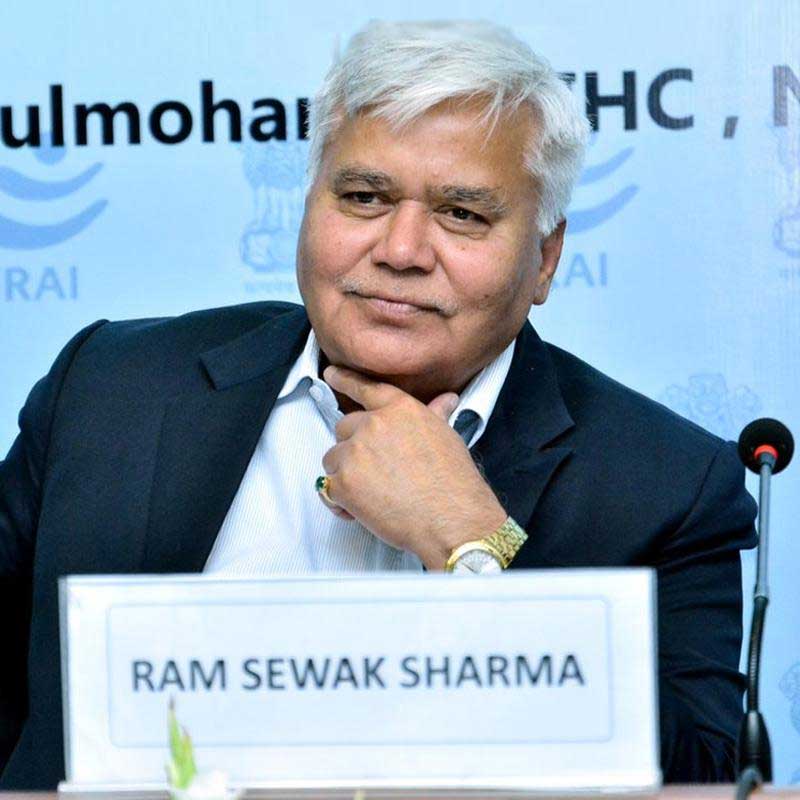
    "We will be organising open house discussions soon. And hopefully, by the end of the next month, we should be able to come up with recommendations," TRAI Chairman R S Sharma was quoted as saying by news agency PTI.

    In November last year, the TRAI released a consultation paper focusing on apps such as Whatsapp, Facebook, Google Duo among others, offering calling and messaging services similar to telecom service providers along with their basic functions. TRAI also sought public opinion on whether OTT applications should fall under the same regulatory ambit as telecom operators.

    The Cellular Operators’ Association of India (COAI) is of the opinion that OTT players should be licensed by introducing ‘OTT Communication Authorization’ under the unified licence. 

    According to COAI, players in the telecom industry invest in licence fee, spectrum, telecom equipment and security apparatus. Hence, similar voice, video and data services without regulatory cost make for a non-level playing field.

    However, the Internet and Mobile Association of India (IAMAI) and the Broadband India Forum (BIF) have stood against the position by telecom operators. According to IAMAI, telecommunication regulations should not be automatically extended to online applications because of the fundamental “technical and business differences” between traditional services and apps.

    “OTT providers offer an array of different services that are accessed by users through the data services provided by TSPs (telecom service providers). Thus, the services provided by TSPs, while they enable access to OTT services, are fundamentally different,” BIF said in its written response to TRAI

  • Broadcasters to TRAI: No further regulation of OTT communication services

    Broadcasters to TRAI: No further regulation of OTT communication services

    MUMBAI: Major broadcasters including Star India, Sony Pictures Networks India (SPN) and Times Network are clear they do not favour any further regulatory intervention on over-the-top (OTT) communication services. All three players have argued that OTTs should not be seen as a substitute for TSPs. While submitting their feedback comments on the TRAI consultation paper, the broadcasters have highlighted that although some of the services provided by OTTs may seem similar to TSPs, they have highly dissimilar nature especially when it comes to technology and revenue model. The major focus area of the TRAI paper is the issue regarding the relationship between OTTs and TSPs.

    Star India point of view

    Apart from suggesting TRAI to not regulate OTT communication services, Star India has also highlighted that OTTs are licensed under Section 4 of the Indian Telegraph Act, 1885 and hence the regulator does not have the authority to regulate them.

    The broadcaster feels that TRAI’s concerns around “Privacy, Security and Interception” are valid but the provisions under Information Technology Act, 2000 are already in place to address those. Moreover, the Justice BN Srikrishna committee is also working towards reinforcing the provisions under Draft Personal Data Protection Bill, 2018.

    “The consultation paper assumes certain applications of OTTs (‘OTT Communication Services’) as substitutes to TSP services. This assumption appears unfounded and there is no discernible rationale in keeping with any existing legal criteria or technical parameters, such as those outlined in basic competition law on substitutability, for TRAI to have concluded so in the consultation paper,” the broadcaster points out with respect to “Substitutability” as the basis for regulating OTT ecosystem.

    SPN’s take on the issue

    SPN has strongly advocated for the forbearance of OTTs as it will ensure the growth of the sector. According to the broadcaster, any additional regulation could have an adverse impact on the growth of internet applications and platforms.

    SPN has pointed out that the consultation paper mentions OTT players do not have licensing and regulatory obligations while TSPs incur license fees and have to meet regulatory obligations. The broadcaster, in its submission, has argued that the operation of OTT platforms is not dependent on TSPs but on the internet. In addition to that, the services being provided by the OTT platforms are free of cost, although consumers do bear the cost of data charges/internet which are accrued by TSPs and the revenues are not passed on to the streamers.

    “We believe that no regulatory intervention is required since it could stifle innovation and straitjacket technological innovation and the development of this sunrise sector. A policy of forbearance on regulation [as has been the case so far] should be continued in order to avoid hampering growth in the sector,” SPN said in the submission.

    At the same time, the broadcaster has also added that telcos should be given opportunities to avail fair market pricing as well as sufficient policy-backed impetus to enable them to invest in infrastructure and upgradation of technology.

    Times Network bats for forbearance

    On a similar note, the Times Network has also highlighted the differences between OTTs and TSPs. While voice calling and text messaging are the primary services of TSPs, the same are secondary services for OTTs. Moreover, there is an inherent difference in the technology used by OTTs and TSPs for calls and messaging. Hence, Times Network thinks the services cannot be classed as “similar services” from a licensing perspective.

    “Further, TSPs as ISPs are access providers who control the underlying broadband access infrastructure, with few market players due to high barriers to market entry. By contrast, OTTs do not control the underlying broadband access point, have significantly lower barriers to market entry and are faced with many competing services, unlike TSPs. Consumers can add or stop using OTTs at will whereas switching between TSPs involves incurring the cost for the consumer and generally involves a longer relationship,” the broadcaster added in the submission.

    Due to the palpable differences between TSPs and OTTs, Times Network believes OTT platforms should not be regulated on the lines of TSP. The broadcaster is also of the view that inter-operability of the OTT services with the services provided by the TSPs may promote competition and benefit the end users.

    “We also recommend non-introduction/ non-imposition of any unwarranted regulations which may impede the growth of this buzzing as well as budding industry which has given a huge push to the start-up entrepreneurial spirit in the country. Also, interoperability of OTT apps with traditional network-based services may lead to a loss of innovative features and functions available on OTT services,” the submission also read.

    As per Times Network’s outlook, any licensing norm for OTT would affect consumer welfare, individuals, companies and entire industries. It could also create entry barriers in the industry, especially for startups.

    ZEEL also against the regulatory framework

    ZEEL submitted its response to TRAI on behalf of its digital arm ZEE5. The growing online video player has also advocated complete forbearance on any kind of regulatory framework by the authority. It has also been added that OTT service providers are intrinsically distinct from network providers like TSPs and ISPs. Like other players, ZEE5 also thinks substitutability should not be treated as the primary criterion for comparison of regulatory or licensing norms applicable to TSPs and OTT service providers. It has also added that there is no issue of a non-level playing field between OTT service providers and TSPs providing same or similar services as both OTT providers and TSPs complement each other.

    “The future of digital product offerings and growth of OTT services will depend on a robust environment which does not stifle technology-based innovation and provide a competitive market environment. Low entry barriers for new entrants, minimal regulatory barriers and technological advancement will be the cornerstone of such growth of the sector for investments, innovation, and consumer interest. Therefore, we urge the Authority that a policy of forbearance is best suited,” ZEE5 stated.

    Most of the above-mentioned players agree that OTTs have helped in the growth of TSPs. As all the OTTs require high-speed internet, data usage increases among users which in turn help TSPs’ revenue. The decline in voice calls and messaging is being complemented by high data use helping telcos to recover the loss.

  • OTT platforms discuss need for regulation

    OTT platforms discuss need for regulation

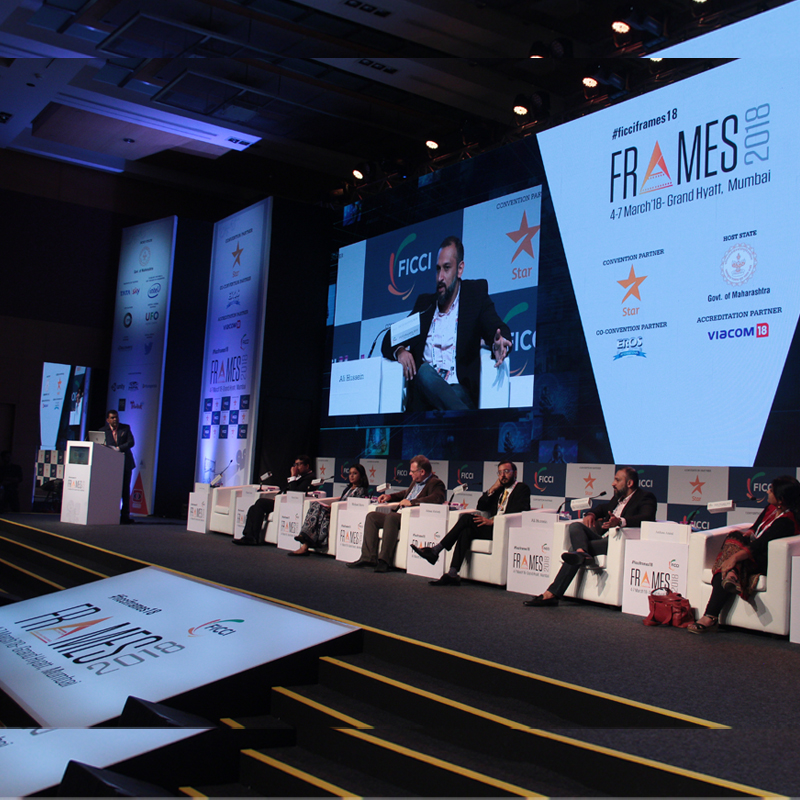
    MUMBAI: At FICCI Frames 2018, stakeholders once again debated the need to bring over-the-top (OTT) platforms under a regulatory system. In a session on digital revolution, panellists discussed how India stood a genuine chance of becoming the digital content hub of the world but the threat of regulation from the content, data and economic perspectives loomed large.

    The session ‘Rise in Platforms: Digital Revolution in India and Impact M&E Industry’ was discussed with panellists Media Partners Asia ED Vivek Couto, Frost and Sullivan director Vidya S Nath, Verizon Digital Media VP – strategic alliances & channel management Michael Sturm, PLR Law Partner Suhaan Mukherji, Eros Now COO Ali Hussein and Z5 business EVP & head of digital – India Archana Anand. The panel was moderated by Castle Media ED Vynsley Fernandes.

    According to Mukherji, the concern is that which authority will regulate OTT as it comes under the ambit of the IT Act. “OTT was defined by the Telecom Regulatory Authority of India and it brought out the information papers on net neutrality,” he said.

    Anand said that OTT needs more freedom than traditional media that can differentiate it as being a little more edgy, cheesy and brave. Nath pointed out that the word ‘regulation’ is often interchanged with ‘censorship.’ “In the broadcasting industry, there are regulations like not showing the ads in the day time or show few ads after 10 pm. But the industry does practice self-regulation too,” she said.

    Agreeing with her, Anand said that Z5 also practices self-regulation and that every platform follows certain fundamentals wherein everyone steers clear of things such as porn. She favoured having a debate between platforms and regulators to come up with a regulation after mutual consensus.

    However, Mukherji cautioned saying, “We should be very careful that we just don’t treat OTT or kids movies or IP networks the same way we treated everything else.”

    Describing the nature of digital platforms, Anand said, “We are always on OTT while traveling or even while waiting. It’s really about us consuming way more than we ever did before.”

    Nath opined that looking at the current business model, India was primarily an AVoD market. She said that by 2020, Indian OTT market has the potential to grow to 500 million. It was 180 million in 2017. She further added, “OTT is not competing with pay TV or FTA channels, it is competing with other digital platforms.”

    The fight is essential for viewer time. Since people don’t pay up easily for content, most platforms adopt a freemium model.

    According to Couto, countries like Australia and Japan are largely based on subscription video on demand. In Australia, TV industry has been demolished and the entertainment is largely driven by Netflix. But India is a country with huge potential market. He said, “India is still slow and the most interesting thing about India is that it has a strong online market and online is the subset.”

    Japan and China are liberating the OTT space. “They are creating their digital ecosystems with games, videos, e-commerce and many things in it,” added Couto. He also said that the average watch time for any OTT platform including Netflix in Indonesia is 15 minutes but in India, it comes to 3 hours a day.

    Sturm believes that Indian markets produce the most content across the globe but looking at the scale, everything falls to AVoD, SVoD and TVoD models. He said, “When you need to reach the mass, then you need to opt for AVoD model. In one or two years, we will be able to run profitable AVoD models.”

    While praising the diversity of India and its content creation Sturm said, “India is not just about English and Hindi speaking consumers, it has consumers consuming content in many more languages.” Anand also added that there is a big regional market in India that is waiting to be captured.

    Whether global or local, whatever the niche or genre, OTT services have become the centre of attention in the entertainment space and they must become sustainable businesses at some point. OTT players are certain that TV won’t die so soon and their fight is on a different level altogether.

    Also Read:

    Localised content the way forward for Netflix in India

    2017: The year OTTs went regional in India

    Regional OTT content more than just catch-up TV    

    Indians among top commute streamers for Netflix

  • Parliamentary panel pushes for TRAI’s empowerment

    Parliamentary panel pushes for TRAI’s empowerment

    MUMBAI: Parliament’s Standing Committee on Information Technology and Communications (SCIT) wants more regulations for the broadcast industry. Finding the current powers given to the Telecom Regulatory Authority of India (TRAI) inadequate, it has recommended that either the scope of its authority be increased or the broadcast industry be given its own regulator.

    In the committee’s report on ‘Status of Cable TV Digitisation and Interoperability of Set-top Boxes’, it noted that since 2004, when the TRAI was entrusted with the responsibility to oversee the broadcast sector, the industry has seen enormous growth in the number of satellite TV channels, DTH services, digitisation of cable TV networks, and TV ratings agencies. With its limited ability, TRAI has efficiently handled issues to bring about transparency and non-discrimination, improve the quality of service and allow the sector to grow.

    It noted that TRAI recommendations were the basis for the government to form several policy decisions. “The committee is, however, constrained to note that TRAI at present has got very limited powers due to which enforcement of its regulations, directions and tariff orders becomes difficult,” the panel mentioned.

    Several services providers have freely violated TRAI orders and cases against them were filed in pertinent courts. The committee doesn’t find this an effective way to get the broadcast industry to fall in line with rules. The TRAI’s recommendations of modifications to its Act are under consideration by the government.

    The committee has suggested the government to evaluate the need for a separate regulator for the broadcast industry and, until such a time, the TRAI be empowered for effective enforcement of its regulations.

    It appreciated the efforts taken by TRAI to regulate pricing of set top boxes, but strongly recommends for unbundling of hardware and associated services and making provision for itemised billing for hardware as well as associated services such as installation, activation and maintenance and providing more option to the customer to procure similar compatible hardware from the open market.

    The TRAI’s effort on addressing carriage fee details was also lauded by the committee. It stated that “despite extreme reluctance on the part of broadcasters to share the details of the carriage fee”, it has now addressed the issue in its new regulatory framework capping it at 20 paise per subscriber per channel and which is expected to further decrease till zero when 20 per cent of subscribers will be available on the platform who choose the channel. Though this decision is being scrutinised at the High Courts of Delhi and Chennai, the committee hoped the TRAI’s efforts will go a long way in addressing the issue to the satisfaction of all stakeholders.

    Also read:

    TRAI on carriage fee, other issues in draft interconnect guidelines

    TRAI tariff order’s impact on the industry

  • ‘Sanskari’ India wants condom ads off primetime

    ‘Sanskari’ India wants condom ads off primetime

    MUMBAI: India is a country that takes offence at the slightest suggestion of titillation. The Advertising Standards Council of India (ASCI) has approached the ministry of Information and Broadcasting (MIB ) for withdrawing condom ads that are telecasted during prime time or ‘family viewing time’. The council received several complaints on the kind of content condom brands show in ads, which may not be suitable for kids and teenagers. The ASCI, in its letter to the ministry, has specifically stated that ads that are explicit and vulgar in nature should be aired only between 10 pm to 6 am.

    The most recent instance wherein our sanskari-ness was awakened was when Mankind put up banners across Gujarat that had Sunny Leone advertising condoms with a tagline to ‘Play Navratri but with love’ that did not impress people one bit. Twitter and Facebook were bombarded with hate posts, forcing Manforce to eventually pull down the banner.

    ASCI’s consumer council looks into the content of advertisements and decides whether the ad is a s per its self-regulation code or not. Speaking to Indiantelevision.com, ASCI secretary general Shweta Purandare said, “Given the nature of the category (condoms), some sort of intimacy shown in the ad is inevitable but viewers are upset about them being shows during family viewing time. We replied to a few complaints that were forwarded to us by the MIB , by stating that those ads were not considered objectionable as per ASCI’s code but they (I&B) could consider the timing.”

    Vouching for brands, Vizeum Media Services associate vice president Saumya Agarwal adds, “One cannot penalise the product for the incorrect/unacceptable treatment in their communication. The guidelines must be placed towards how should the creatives be designed, without demeaning any gender in any way, etc., but to put an embargo on their exposure time is not justified.”

    Calling it an extremely myopic and ad hoc approach to solving a much larger issue, Agarwal notes that given the plethora of freely available information across multiple media, this would hardly make any difference. In fact, it is an irony that a country that is promulgating sex education is also fighting to ban condom advertising to the same audience.

    Doordarshan during the 1980s had declared that sanitary pads are ‘unmentionable’ and were not allowed to be advertised before 10 pm. That created a vicious circle for the product since young girls were the primary target. Brand-Building.com brand strategist and founder Ambi MG  Parameswaran is of the opinion that there is nothing wrong with pushing what is known as ‘unmentionable’ products into a more ‘adult’ time slot. “We should remember that condoms are in fact health products, they are for family planning and for prevention of sexually transmitted disease and that needs to be kept in mind when pushing condom ads to midnight slot.”

    On a different note, Harish Bijoor Consults brand strategy expert and founder Harish Bijoor said that laws such as these will help protect the innocence of young audiences that are besotted with television. “If implemented, I do believe that the meaning of explicit should be common to all categories and not condoms alone. If showing skin above the knee is explicit, it should be common to every category for sure. If a skin cream can get away with it, why not condom brands,” he adds.

    Pointing out that brands need to self-regulated before they put out ads, Purandare added, “We are not against advertising of products but the execution is very important. Some ads are quite bold in nature and may not be appropriate for kids and we can’t allow them to show pornography at prime time. Advertisers have to be more conscious about what they put out.”

    One might want to consider the fact that even if the I&B accepts the proposal, kids and teenagers are fairly active on digital as well. They can view the content on digital platforms making it a moot point. Havas India CCO Nima Namchu believes that the content can be delivered to the target audience with a relatively higher degree of accuracy on digital media. But if the idea is to regulate content so that explicit content is not viewed by our children, then this step with ads on television will perhaps be followed by similar requests with digital content as well.

    Doesn’t the nature of the product need ads to be creative with raunchiness and ‘explicit’ communication? Our media experts tend to think otherwise. While Namchu thinks that is not the case, Agarwal adds that categories like alco-bev (Alcohol and Beverages), condoms, feminine hygiene need to be portrayed sensitively without falling into the obvious traps and there must be some sure shot ‘socially responsible’ guidelines in order to prevent marketers crossing the line of objectification of women which is indeed objectionable!

    If and when the move happens, it will impact brand communication and marketing spends for these brands on television as the viewership between 11 pm to 5 pm is negligible. Advertisers would be forced to find alternative routes, use surrogate advertising and move to digital platforms. Harish Bijoor added, “The loss is more for the medium of television rather than for the brand player. The brand player will find other means to advertise. Water will find its own level.”

    Purandare also points out that whether prime time ban would only be applicable for certain products or the entire category would be I&B’s call.

    A head of a big TV network, who did not wished to be named, says it is “hypocritical “ on the part of any government or regulator to say condom ads pollute Indian culture or corrupt young minds, especially when government  itself runs awareness campaigns for HIV/AIDS.

    “At a time when bursting population is becoming a problem for a government and the country, saying young people should not be taught or made aware of sexual activities of humans, especially as it has a big health angle (prevention against AIDS, etc.), any effort to push ads of condoms to unearthly hours past midnight defeats the whole purpose of sex-health education of young people,” the TV exec adds. 

    However, sources in Ministry of Information and Broadcasting (MIB) said no decision has been taken on the issue yet, though, prima face, some content and it’s depiction in such ads are a bit explicit .

    KamaSutra and Durex declined to comment on the issue.

  • TRAI may check broadcasters & distributors’ monopolistic behaviour

    TRAI may check broadcasters & distributors’ monopolistic behaviour

    NEW DELHI: The Telecom Regulatory Authority of India may intervene in case any monopolistic behaviour of significant market power (SMP) is observed or brought to its notice in future although it has decided not to regulate the market power at present.

    It said in its draft tariff orders that it will keep a watch on the developments after implementation of the new framework. It has noted that the monopolistic behaviour is well demonstrated by both, broadcasters as well as distributors of television channels. However, it says that it is prescribing a new framework for television broadcasting sector.

    In the consultation paper that has led to this draft, stakeholders had been asked to suggest whether there was a need to identify significant market powers. The stakeholders were also asked to suggest the criteria for classifying an entity as the a significant power.

    A majority of broadcasters felt that the issue of identifying SMPs was in the purview of the Competition Commission of India (CCI) and there was no need for TRAI to do so. They also said the CCI provides adequate safeguards for preventing anti-competitive behaviour. A few broadcasters however favoured the idea of SMP identification and have given suggestions on identifying SMPs.

    A few distributors of television channels submitted that there was no need to identify SMPs while the others believed that such a distinction be made. Some distributors suggested that vertically integrated entities in the distribution sector be subjected to additional regulations.

    Also read

    I&B ministry to take up cable TV monopoly recommendations

  • TRAI may check broadcasters & distributors’ monopolistic behaviour

    TRAI may check broadcasters & distributors’ monopolistic behaviour

    NEW DELHI: The Telecom Regulatory Authority of India may intervene in case any monopolistic behaviour of significant market power (SMP) is observed or brought to its notice in future although it has decided not to regulate the market power at present.

    It said in its draft tariff orders that it will keep a watch on the developments after implementation of the new framework. It has noted that the monopolistic behaviour is well demonstrated by both, broadcasters as well as distributors of television channels. However, it says that it is prescribing a new framework for television broadcasting sector.

    In the consultation paper that has led to this draft, stakeholders had been asked to suggest whether there was a need to identify significant market powers. The stakeholders were also asked to suggest the criteria for classifying an entity as the a significant power.

    A majority of broadcasters felt that the issue of identifying SMPs was in the purview of the Competition Commission of India (CCI) and there was no need for TRAI to do so. They also said the CCI provides adequate safeguards for preventing anti-competitive behaviour. A few broadcasters however favoured the idea of SMP identification and have given suggestions on identifying SMPs.

    A few distributors of television channels submitted that there was no need to identify SMPs while the others believed that such a distinction be made. Some distributors suggested that vertically integrated entities in the distribution sector be subjected to additional regulations.

    Also read

    I&B ministry to take up cable TV monopoly recommendations

  • BIF bats for OTT regulations & level-playing field for all in Net Neutrality debate

    BIF bats for OTT regulations & level-playing field for all in Net Neutrality debate

    NEW DELHI: Broadband India Forum (BIF) has put its weight behind proposals to regulate OTT services, saying they too should be guided by same principles as ISPs and telecom service providers (TSP).

    “There  should be level playing field between the ISP/TSPs  and the OTT players. OTT players need to be brought under the same regulatory regime as the ISP/TSPs,” BIF has said in a submission on a pre-consultation paper on Net Neutrality to telecoms and broadcast regulator TRAI. 

    TRAI has been seeking comments since March 2015 from stakeholders on the issue of Net Neutrality and related matters like OTT, zero-rating plans and possible regulations.

    Since last year, several such papers have been issued by the regulator in an effort to finalise recommendations that could possibly go on to become industry regulations. BIF briefly alluded to this “piecemeal approach and not addressing the larger subject in one go” as this was fuelling ambiguities.

    Batting for plans like zero-rating offered by some Indian telcos earlier and Facebook’s FreeBasic — since then outlawed by TRAI — the Forum says, “At our stage of development, our highest need is internet adoption and increased data usage and whatever facilitates that, needs to be heartily supported”.

    Free Data should be permitted and it should be left to the service providers (ISP/TSPs) to decide whether they want to enter into such arrangement with the content providers or not basis their business case and requirement of technical development, BIF says.

    In India, OTT services are flowering every day, keeping in step with Asian trends.

    Some OTT services, available in India, include Star’s Hotstar, Zee’s dittotv, Viacom18’s Voot, Sony’s SonyLiv, Arre, Times group’s Box TV, Asian companies-owned Hooq and Viu and global giants like Netflix, apart from the likes of WhatsApp, Skype, YouTube and Hike. 

    No ex-ante regulation is required since there is enough competition and the market is vibrant enough, says the Forum, adding in case of violations, on ex-post basis, TRAI can examine tariff plans on a case by case basis after giving a reasonable opportunity to the operators of being heard.

    Dwelling on the economics of  broadband infrastructure, BIF highlights  efficient services would require investments up to Rs 500,000 crore over the next 3-5 years. Moreover, as per Government commitments, the Digital India initiative itself will require investments to the tune of  Rs. 113,000 crore.

    “It was the flexibility of service pricing that was permitted to the TSPs that led to mass adoption of voice services. A similar approach is warranted for ensuring adoption of data services. However, entrepreneurs are reluctant to start a new Internet based businesses when online customers are limited due to low adoption of data services,” BIF has said, adding that consumers are unwilling to invest in “expensive data plans” in the absence of adequate local content.

    Interestingly, BIF’s stand that telecoms is a capital–intensive sector where government mandates may hamper private investments, in some way, is also echoed by Hong Kong-based Asian organisation CASBAA.

    “We do not believe TRAI or the government should adopt policies that result in reducing or rationing of funds for (telecom) network investment. Advocates of `networks for all, open to all’ sometimes tend to forget that capable networks are costly, and they will not build themselves,” CASBAA had said in its submission to TRAI on Net Neutrality last year.

    Cautioning against replicating some existing regulation that may impede innovation, CASBAA had said TRAI and the government must avoid seeing the online content industry as another facet of the mature television content supply industry, ripe for extension of the same regulatory approaches governing the “traditional” TV industry. 

    “This would be a colossal mistake, especially at this new stage of development of online content supply in India. Overregulation will constrain development of newer business models which could be of great benefit to consumers and to India’s overall economic development,” the Asian industry organisation had said, hinting that a holistic view needs to be taken by regulators.

    Similarly, BIF in its recent submission has said the question of modernization of communications regulation…should be reviewed holistically and periodically to ensure same services are treated in a technologically neutral way, while protecting consumer rights and achieving the objectives of Digital India.

    The Forum has taken the initiative to define Net Neutrality in the Indian context and some key characteristics of Net Neutrality, amongst others, as:

    – No Blocking
    – No Throttling
    – Open Internet
    – No improper  prioritization (paid or otherwise)
    – Open, easy and non-discriminatory access
    – Recognition of at least four categories  of traffic and different traffic management techniques for different categories but having the same within each category
    – Equitable regulatory treatment of similar or near-similar services
    – Permission of zero rating systems.  

    (1 USD = 67.4874 INR)