Tag: Regulation

  • Around 45% of our investors come from smaller cities: CoinSwitch Kuber’s Ashish Singhal

    With an investment of one billion $ from over ten million Indians, the cryptocurrency sector in the country can no longer be termed a niche. As awareness about this emerging asset class increases, it’s catching the fancy of an increasing number of traditional-minded investors looking to diversify their investments, despite the industry lacking a clear regulatory framework. India has generally held a cautious approach towards use and transactions involving digital currencies, but it recently assured crypto stakeholders that there will not be any blanket ban on it. There are even indications that a new bill spelling out a regulatory framework for digital currency is on the cards.

    Emerging cryptocurrency platform CoinSwitch Kuber that calls itself “Your friendly crypto app to buy, sell & store cryptos” is out to familiarise Indians with this new dimension of fintech. Founded by a team of techies from Amazon, Microsoft, and Zynga, the Bangalore-based startup claims to be the fastest-growing crypto exchange in India hitting “seven million users on the platform, within a year of its launch”. It was also the first brand in the Indian crypto space to launch an extensive campaign to bring the conversation around cryptos to the centrestage, with its ‘Trade Kar Befikar’ campaign.

    IndianTelevision.com’s Anupama Sajeet spoke to CoinSwitch Kuber CEO & co-founder Ashish Singhal to understand the Indian crypto industry and the platform’s USP. Singhal shared insights on the demographic profile of the average crypto investor and how the brand plans to connect with potential users. He also discloses how their main challenge remains to educate and arm users with the right information about cryptocurrencies.

    Edited excerpts:

    On reaching out to potential investors

    As leaders in this space, we are committed to providing investors/ potential investors with the right information about cryptocurrencies, clarifying their most common doubts, and explaining how they can safely invest in this new asset class. We recently launched a host of initiatives including video campaigns, ads on Disney+Hotstar, partnerships with OTT platforms like TVF. Along with this, we are also revamping the content on our blog KuberVerse and YouTube channel to educate our users about crypto, investing, and blockchain. We have increased the usage of infographics in our communication for easy understanding and have tried to incorporate vernacular content as well. To educate and update them, we regularly create relevant content in the form of blog posts in English and vernacular languages, visual content in the form of graphs and charts as well as videos that can help them understand the crypto world better.

    On the demographic profile of the typical Indian crypto trader/ investor

    To give you a sense of the user demographics, the majority of the users on CoinSwitch Kuber are between 18 and 35 years of age. But it is interesting to note that we have been witnessing a lot of traction from senior citizens and users above 45 years of age. Even people from Tier-2 and 3 towns have hitched onto the bandwagon with crypto. As much as 45 per cent of our users come from small cities.

    On CoinSwitch Kuber’s USP

    The primary thought behind launching CoinSwitch Kuber was to simplify crypto investments for Indian retail investors. We want to make crypto investing as easy as ordering food on Swiggy. There are many crypto exchanges in India designed to cater to traders with pro features. However, over 90 per cent of crypto buyers in India are retail investors. They just need a simple way to buy, sell and hold cryptocurrencies at the best rate and that is what we offer. That’s where we make a difference.

    On the aim behind the ‘Trade Kar Befikar’ campaign

    With ‘Trade Kar Befikar’, the aim was to showcase how it is a smart move to invest early in cryptocurrencies. Crypto has been the fastest-growing asset class of the last decade and the momentum is only growing stronger now. Through the ad campaign, we hoped to amplify this message to millions of young and upwardly mobile Indians. The response to it was great. The ad campaign, coupled with the simplicity of the platform, resulted in our user registrations going up by four times.

    On the marketing plans for the current fiscal

    We are exploring multiple avenues to attract user attention and educate them about crypto.

    We would primarily focus on:

    Ø Understanding users, about their needs and how their needs are evolving.

    Ø Unique campaigns that would get mainstream attention, as mutual funds or stocks do.

    Ø Engaging with thought leaders in the finance space.

    Social media-led influencer marketing will be important for us.

    On offsetting investor fears around the recent crash of Bitcoin prices

    Like we always say, user education and awareness is the key. Investing in cryptocurrencies is similar to investing in any other asset class and one should invest basis their risk appetite. Volatility is natural in any emerging asset class, it is a part of market-making. Look at gold for example, and how it started.

    On the uncertainty around the government policy on cryptocurrencies & the regulation

    When regulated, crypto has the potential to immensely contribute to the Indian economy and we are hopeful that the regulators are taking cognizance of this fact. The need of the hour is to regulate the industry and unlock entrepreneurship and innovation in this field. We cannot afford to be left behind in a domain that will foster major innovation in the internet space in the times to come. Investors across the globe trust the Indian government and regulators to make the right decision and are therefore funding the best teams in the space.

    On being future-ready & on the challenges he foresees in the Indian crypto-space

    User awareness and education have been & will remain the foremost challenge for the crypto industry in India. We are working to solve this in various ways, as mentioned before. We are also looking to build on top of our current product stack by introducing several new features soon.

  • Making all efforts to comply with new IT media guidelines, says Twitter

     New Delhi : US tech giant Twitter on Monday said that it has assured the government that it is making every effort to comply with the new IT media guidelines. The microblogging site said it has already shared an overview of the progress with the government.

    A Twitter spokesperson said that the company has been and remains deeply committed to India and serving the vital public conversation taking place on the service and will continue its constructive dialogue with the Indian government, reported ANI.

    “We will continue our constructive dialogue with the Indian government,” the spokesperson added. According to media reports, Twitter has sought more time in wake of the pandemic situation in the country.

    Union ministry of electronics and information technology (MeitY) had on Saturday issued ‘one last notice’ to Twitter Inc asking it to immediately comply with the new IT rules, failing which it could face stern action and lose exemption from liability under section 79 of the IT Act, 2000.

    According to the ministry, the US company has not informed about the details of the chief compliance officer. The resident grievance officer and nodal contact person nominated was not an employee of Twitter Inc in India, as required by rules. Furthermore, the office address of Twitter Inc shared by the company was that of a law firm in India, which was also not as per rules.

    The new IT (Guidelines for Intermediaries and Digital Media Ethics Code) rules, 2021 came into effect on 26 May, but Twitter has refused to comply with the provisions of these Rules, the government said.

    The rules recommend a three-tier mechanism for regulation of all online media. As per the rules, each significant social media intermediary is required to appoint a chief compliance officer, a nodal contact person for 24×7 coordination with law enforcement agencies and a resident grievance officer. All three should be resident Indians.

    Meanwhile, Facebook on Monday named Spoorthi Priya as its chief grievance officer on it’s website and shared her email ID. Google and WhatsApp have already shared the details of their chief grievance officers as per the rules.

    India is a major market for global digital platforms. As per data shared by the government, India has 53 crore WhatsApp users, 41 crore Facebook subscribers, 21 crore Instagram clients, while 1.75 crore account holders are on Twitter.

  • Govt serves ‘one last notice’ to Twitter to ‘immediately’ comply with IT rules

    New Delhi: The government on Saturday issued ‘one last notice’ to Twitter Inc asking it to immediately comply with the new IT rules, failing which it could face stern action and lose exemption from liability under section 79 of the IT Act, 2000. This essentially means that the platform could be held responsible for content posted by the users.

    “The provisions for significant social media intermediaries under the Rules have already come into force on 26 May and it has been more than a week but Twitter has refused to comply with the provisions of these rules,” the ministry of electronics and information technology (MeitY) wrote to Twitter’s deputy general counsel, Jim Baker on Saturday.

    According to the ministry, the US company has not informed about the details of the chief compliance officer. The resident grievance officer and nodal contact person nominated is not an employee of Twitter Inc in India, as required by rules. Furthermore, the office address of Twitter Inc shared by the company is that of a law firm in India, which is also not as per rules.

    Twitter’s refusal to comply with the rules demonstrated its “lack of commitment and efforts towards providing a safe experience for the people of India on its platform,” it said. The ministry highlighted that the US tech giant has been operational in India for over a decade and “it is beyond belief that it has still doggedly refused to create mechanism that will enable the people of India to resolve their issues on the platform in a timely and transparent manner and through fair processes, by India based, clearly identified resources.”

    Though with effect from 26 May, “consequences follow” given Twitter’s non-compliance with rules, however, the ministry wrote, as a “gesture of goodwill”, it is giving Twitter Inc one last notice to immediately comply with the rules, failing which it will be liable for consequences as per the IT Act and other penal laws of India.

    The new IT (Guidelines for Intermediaries and Digital Media Ethics Code) rules, 2021, recommend a three-tier mechanism for regulation of all online media. As per the rules, each significant social media intermediary is required to appoint a chief compliance officer, a nodal contact person for 24×7 coordination with law enforcement agencies and a resident grievance officer. All three should be resident Indians.

    The intermediaries are also required to prominently publish on their website, app or both, the name of the grievance officer and his/her contact details as well as the mechanism by which a user or a victim may make a complaint. The grievance officer would be required to acknowledge the complaint within 24 hours and resolve it within 15 days from its receipt. The government has also asked the significant social media intermediaries providing services primarily in the nature of messaging “to enable identification of the first originator of the information.”

  • HC notice to Karnataka govt, MIB over obscene content in media

    HC notice to Karnataka govt, MIB over obscene content in media

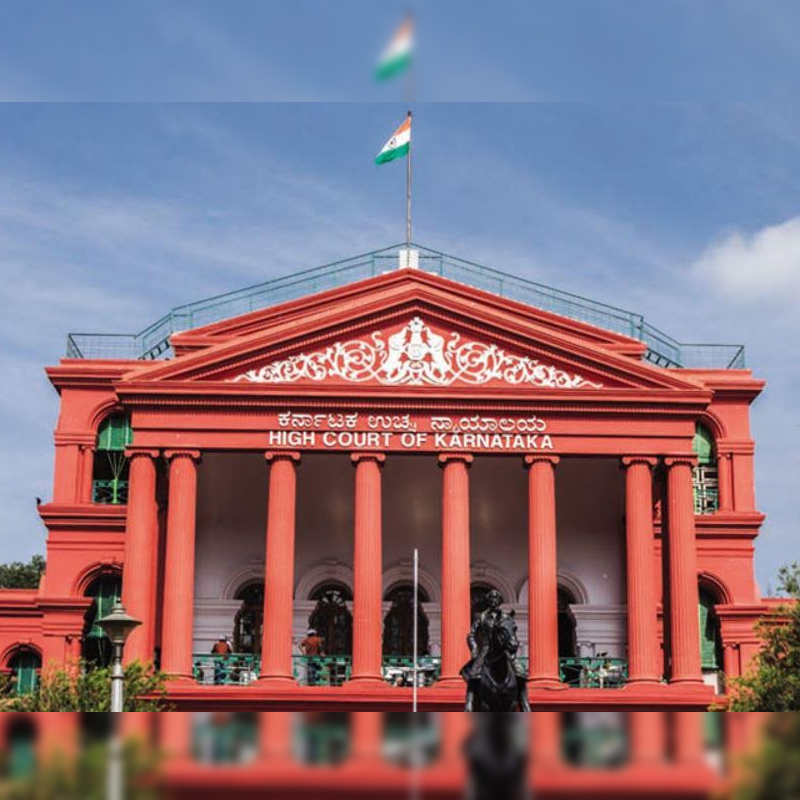
    New Delhi: The Karnataka high court has sought the state government’s response in a public interest litigation (PIL) to issue directions to frame statutory rules to prevent publication of indecent and obscene content as part of the news programme in electronic and print media.

    The court also issued notice to the ministry of Information and broadcasting (MIB) and state police in this regard.

    According to the petitioner, various media houses publish obscene videos and partially blurred nude photographs and videos of several incidents as part of news programmes. Some TV anchors also repeat the vulgar language used in the video clips to make it loud and clear so that the public can understand the language that is used by the compromised individuals, he stated in his plea, as reported by Bar and Bench.

    Though Section 5 of Cable TV (Regulation) Act-1995 provides that no person shall transmit or re-transmit through a cable service or any programme unless such programme is in conformity with the prescribed programme code, there is no definition for programme code, he submitted before the court.

    The petitioner prayed that publication of such content should be made a cognisable offence, which will have a reasonably deterrent punishment. Apart from framing guidelines, he also sought directions to prevent the electronic media from analysing the sub-judice matters before the court and direct the state police not to leak information collected during the course of investigation regarding any case to the press, public or media.

    The matter will be next heard on 7 June.

  • Lens of regulation is more important: Uday Shankar on OTT platforms

    Lens of regulation is more important: Uday Shankar on OTT platforms

    KOLKATA: ‘Will OTT platforms be put on leash?’ is the question being discussed and debated lately, especially after being brought under the ambit of the ministry of information and broadcasting (MIB). It is very much evident that the industry will have some regulatory framework sooner or later but what matters is the regulatory lens, as Star & Disney India president Uday Shankar said at the HT Leadership Summit 2020.

    “More than anything else, it is an official decision. I don’t really think it matters. What is important is what will be the lens of regulation. Do we really want to be over-prescriptive or do we want creativity and imagination to have a role in this?" Shankar commented on the matter of government monitoring OTT content.

    According to him, the country and consumers have always been way ahead of where the government and regulators believe they are. They are far more open and mature but regulators assume that a huge filter needs to be applied before they consume content.

    However, he cautioned that global streaming services must not be insensitive to India’s diversity and culture by offering content simply tailored to grab eyeballs. “I’m not a fan of censorship, I don’t believe in it…the kind of gratuitous content, the amount of sex, abusive language or violence, even though it is part of all our lives…a lot of the times it is just done to pander to attention," he said.

    In light of the recent controversies and calls for boycott of certain OTT platforms over shows that purportedly wounded religious sentiments, Shankar averred that foreign players need to take some responsibility for the content they put out, because in the end, India is a sensitive country.

    “We should not take the freedom for granted. I think this is what happens when the global services come into the country and disregard everything. They believe that what works in one country can work in every country. This is the backlash,” he noted.

  • Regulation has become totally opaque: Uday Shankar

    Regulation has become totally opaque: Uday Shankar

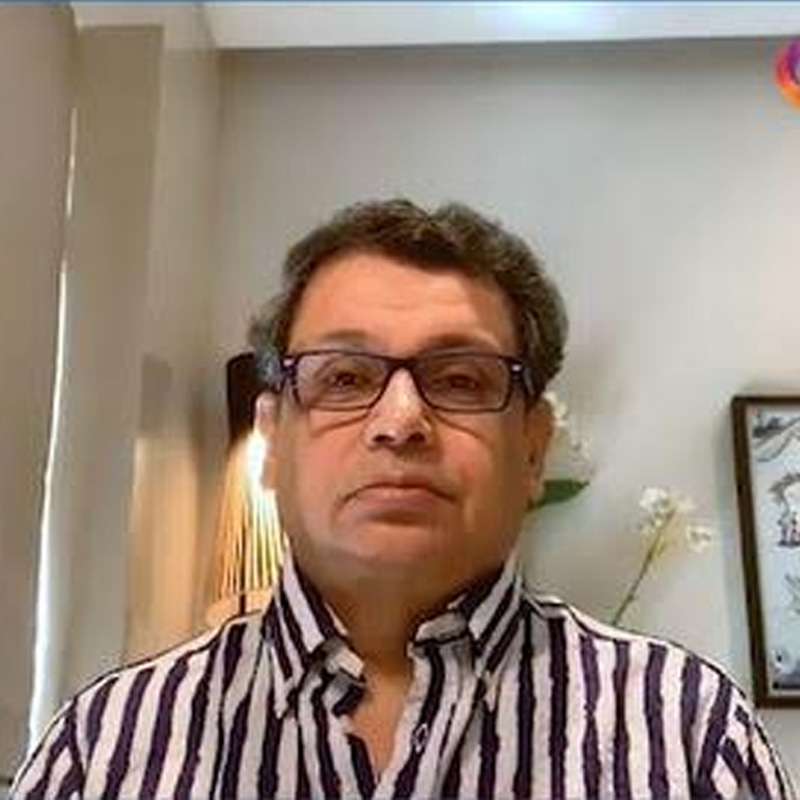
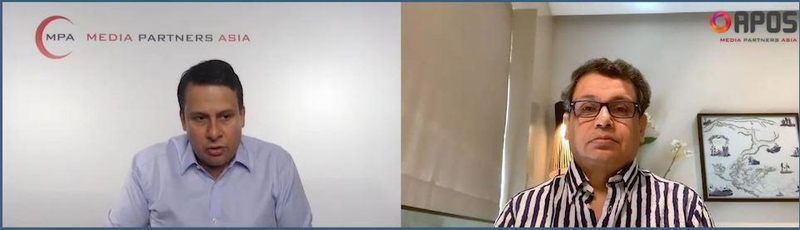
    KOLKATA: One of the major issues which have been daunting the media and entertainment industry, especially the broadcast sector, is the regulatory burden. Although senior officials from the government have argued that there is no such burden, many stakeholders have expressed concern against the same from time to time. Media maven, The Walt Disney Company APAC chairman and Star and Disney India president Uday Shankar said his biggest disappointment with regulation is that it has become totally opaque.

    Participating in APOS 2020, Shankar, in a conversation with Media Partners Asia executive director and co-founder Vivek Couto stated that there is a lack of clarity on why the regulator is regulating something. Moreover, there is no consistency in the regulations. He also opined that the regulators need to have clarity and share that clarity publicly with both the media community and the public at large that what are they regulating, what’s the agenda and the vision. He reminded that regulation should not be for the sake of regulating something but to create a level playing field, promote growth and benefit consumers. He stated that sometimes it feels that in markets like India, regulation is only for creating hurdles in the growth of the business.

    “Unless you have clarity on that and everybody understands exactly the boundary condition within which regulation will operate, it creates all kinds of confusions and setbacks to the industry. Media is such a sector that if the industry does not do well, the first victims are consumers. If you don’t have enough money to invest in content, at a business level, you can employ fewer people but create less value,” he added. 

    Shankar added that the industry also cannot completely disregard or operate in a vacuum. “It has to be aware of its social responsibilities and sensitivities in each market. I am a big believer in media and with freedom comes great responsibility as well,” he said.

    Shankar also spoke on the streaming service Disney+ Hotstar which is off to a great start. “We decided to take advantage of the early days of this crisis. We launched Disney+ Hotstar right in the middle of the crisis, in the month of April, when the whole country was in lockdown. Advertising was interrupted, we could not make our critical marketing plan, the live sports we planned to leverage for Disney+ Hotstar was not available and yet we launched and we are the biggest streaming service in India by far,” he said.

    For Disney+ Hotstar, the only benchmark is that the platform can compete with TV channels in terms of its reach, delivery and consumption. According to him, if streaming has to become mainstream eventually, it has to serve the local population at scale and has to be sustainable. That’s the only metric everybody has to follow. While its ambitions are to compete with TV, Shankar noted that Disney+ Hotstar has to relentlessly work on cutting-edge technology. 

    Shankar mentioned that while 150-160 million homes are connected to TV in India, smartphones and video-enabled devices can reach the number of 700-750 million in a few years. Hence the screen universe is much bigger than TV. According to him, streaming, if done right, has the potential to be bigger than TV purely in terms of the number of consumers and the amount of time they spend. However, he also stated that TV, too, has a fair road ahead but it needs to fix the business model going through a correction.

    “We (Disney+ Hotstar) should be able to rapidly get to a number similar to frontline mass-market entertainment channels in the country through reach and access,” he concluded.

  • TRAI reiterates need for converged regulatory regime for telecom & broadcasting services

    TRAI reiterates need for converged regulatory regime for telecom & broadcasting services

    MUMBAI: The Telecom Regulatory Authority of India (TRAI) again highlighted the need for a converged regulatory regime for telecom and broadcasting services in India following the model of the Federal Communications Commission (FCC) in US and Office of Communications (OfCom) in the UK. 

    As large scale changes in these two sectors are taking place due to convergence, the regulatory body opines that there is an urgent need for having a comprehensive regulatory framework to deal with various issues arising out of the convergence of technologies and services.

    In reply to a letter by Rajyasabha MP Subhash Chandra regarding the need to have an independent regulator, TRAI has mentioned that there is no need for a separate regulator for broadcasting and cable sector addressing the ministry of communication.

    “Large scale changes in the telecom and broadcasting sector are taking place due to convergence and without a converged regulatory framework any attempts to regulate the telecom and broadcasting sectors in coming times may result in bottlenecks, imperfect competition, disputes and opportunities for arbitrage. Thus, if one service can be provided by two different routes and the license fees of one is much lower, then the tendency would be to use this alternative. The regulatory regime has to be such that the consumers and service providers should benefit from the technological advances,” it added.

    “The regime should not create any hindrance in the deployment of any technology for offering any type of telecom services including broadcasting services. At the same time due to technological developments, no service providers should be able to disturb the level playing field by taking advantage of regulatory policies. To achieve these objectives, it is necessary that licensing should be service neutral and the converged regulatory regime for telecom and broadcasting services should be in place. The organisational restructuring in view of technological developments is a must, otherwise, it may be difficult to exploit the full benefits of these technological developments,” the regulator highlighted. 

    Notably, the government brought the broadcasting and cable television services within the ambit of telecommunication services for the first time in 2004. TRAI, in addition to the telecoms sector, had also been set up as the regulator for the media and broadcasting industry. TRAI mentioned in the letter that since then it has brought various reforms in the industry including digitisation, the new tariff order which has helped it to grow. “Looking at the role so far played by TRAI, it is obvious that there is no need for a separate regulator for broadcasting and cable sector,” it states. However, those reforms were most of the time challenged in various judicial forums by the stakeholders and the regulatory body has been blamed for “micro-managing” the sector.

    Earlier in 2018, TRAI proposed a converged regulator for information and communications technology (ICT) and broadcast sectors but television broadcasters and broadcasting associations had opposed the proposal. 

  • Prasar Bharati increases MPEG-2 slot capacity on DD Free Dish

    Prasar Bharati increases MPEG-2 slot capacity on DD Free Dish

    MUMBAI: Prasar Bharati has invited applications from satellite TV channels to fill MPEG-2 slots of DD Free Dish DTH platform on prorata basis for the period from 1 December 2019 to 29 February 2020 through the 42nd on-line e-auction process. This time the pubcaster is not filling up the vacant slot but calling broadcasters to fill-up new or additional space on MPEG 2. Prasar Bharati has increased the capacity of equipment which allows to add few more channels in MPEG 2.  

    A senior official who is aware of the development said, "The slot is not vacant. There is an addition in the capacity, we have increased the capacity of the spectrum efficient equipment, so that we can have more channels." 

    The public broadcaster will allot the slots as per the recently amended guidelines for allotment of DD Free Dish slots. International Public Broadcasters licensed/registered by the Ministry of I&B can also participate in e-auction. Broadcasters can submit their application by November 13, 2019.

    The Policy guidelines for allotment of slots of DD Free Dish Direct-to-Home Platform to satellite TV channels (Second amendments), 2019 has substituted some of the sub-clauses. Sub-item iii under item A of Clause 3 has been substituted as “Prasar Bharati Management is authorized to take decision on reservation for the genre, and on the number of slots to be reserved deemed to be in public interest.”

    As per the new amendment pubcaster can reserve some slots in the MPEG-4 stream for placement of foreign Public Service Broadcasting Channels either on reciprocal basis/barter basis or on invitation basis for strategic collaborations, subject to availability of slots and if the broadcaster's willingness to match the last highest bid for MPEG-4 slot.

    It can also reserve some slots for placement of co-branded channels on a case to case basis; expansion into HD; & placement of DD Regional Channels. “The Prasar Bharati Management will be authorized to take a decision on such reservation. However the placement of co-branded channels on a case to case basis will be with the approval of Prasar Bharati Board,” the notification said.

    In the policy Guidelines, for sub-item ii of item r of Annexure -2, the following sub-item is substituted as, “In case, five or more vacant slots are available, then one slot will be reserved for each Bucket in the first round. In case no application is received for a particular Bucket, then there will be no reserved slot in that Bucket.”

    It further said, “After the completion of first round auction of one slot so reserved in Buckets, the remaining slots will be auctioned Bucket-wise starting from A+ and will progressively go down from Bucket A+ to Bucket D till such time there are no bidders in a given bucket or there are no vacant slot left. If the number of vacant slots is less than five, the auction will proceed from Bucket A+ downwards, without observing any reservation of slots in any Bucket, and will progressively go from Bucket A+ to Bucket D till such time there are no bidders in a given bucket or there is no vacant slot left. The slot fee will be determined on a pro-rata basis using the previous highest bid price for that bucket.”

  • DPOs suggest changes to draft interconnection addressable regulations by TRAI

    DPOs suggest changes to draft interconnection addressable regulations by TRAI

    MUMBAI: Distribution platform operators (DPOs) have shared their comments to modify Telecom Regulatory Authority of India (TRAI)’s draft on The Telecommunication (Broadcasting And Cable) Services Interconnection (Addressable Systems) (Amendment) Regulations, 2019.  The industry has welcomed TRAI’s move to amend Schedule III of the regulation and believes that provisions related to watermarking, fingerprinting and digital rights management along with CAS and SMS is in right direction.

    AIDCF said, “It is submitted that the provisions relating to watermarking, fingerprinting and digital rights management along with CAS and SMS, is a step in the right direction and AIDCF wholeheartedly supports the same. With respect to amendments proposed to be introduced by TRAI in the schedule III of the Interconnection Amendment Regulations 2019, AIDCF stands in agreement with the same and supports TRAI in bringing about the amendments in the regulations.”

    However, Bharti Telemedia (Airtel), Tata Sky and GTPL recommended a few changes in the draft of interconnection addressable regulations.

    Airtel, with regard to Section C Clause 8 of the regulation, recommended that the capacity of the CAS and SMS should be linked to the volume of transactions rather than the subscriber base. The rationale for the same is that each subscriber can generate multiple volumes of transactions and hence, to handle these transactions of a single customer, the system is equally consumed and therefore, the correct assessment of the system capacity should be linked to the transaction count instead of subscriber base.

    It further commented “The subscriber base may not be the appropriate criteria to assess the capacity of CAS and SMS, more so, in the current framework when a single customer can generate more than one transaction in terms of activation/deactivation of channel, recharge etc. We, therefore, suggest that the criteria of 5 per cent should be measured in context to total volume of transactions.”

    The company in its comments to TRAI also raised concern over generating customised bills. It said, “We submit that the requirement of generation of bills is applicable for the post-paid services and we, therefore, suggest that clause must specify the same to avoid any confusion.”

    Similarly, Tata Sky also expressed that bill generation is a postpaid concept. DTH operators do not have a postpaid platform and are completely prepaid. “Therefore, it is suggested that a suitable clarification be inserted in the regulations as well as the audit manual to avoid any understanding gap between the DTH operators and the auditors,” said Tata Sky.

    Tata Sky also suggested, “The STBs and VCs are issued against a CAF to a subscriber and the subscriber's address is captured in our systems. Consequently, the auditor can check our systems on a random sample basis, however, we will not hand-over our entire database along with addresses to the auditor in compliance with this requirement. We would, therefore, suggest that a suitable clarification be inserted in the regulations as well as the audit manual to avoid any understanding gap between the DPO and the auditors.”

    The draft’s Clause 12(a) & 12(c) states that it is mandated that amongst other things SMS should also be capable of viewing and printing of historical data in terms of the activations and the deactivations of STBs and generating historical data of changes in the subscriptions for each subscriber and the corresponding source of requests made by the subscriber.

    GTPL on the same commented, “It has been observed in the past audits that the auditors have demanded generation of such historical data for all subscribers and from inception which has put undue stress on the systems of the distributors and the resultant inconvenience to the customers. It is suggested that the Authority limit the generation of historical data to reasonable percentage of the total as a sample size. We suggest a sample size of 5 per cent of the active sub base for platforms which have more than 5,00,000 average active subscribers while for platforms which have a lesser active subscriber base the sample size can be 25 per cent.”

  • TRAI extends deadline for comments on draft Telecommunication Services Interconnection Regulations

    TRAI extends deadline for comments on draft Telecommunication Services Interconnection Regulations

    MUMBAI: Telecom Regulatory Authority of India has extended the last for receipt of written comment on its draft Telecommunication (Broadcasting and Cable) Services Interconnection (Addressable Systems) (Amendment) Regulations, 2019 from 9 September to 16 September.

    The authority released the draft regulation on 27 August. TRAI has amended Schedule –III of its 2017 version. “During the consultation undertaken to prepare the audit manual certain comments and observations reflected some issues in the Schedule III of the Interconnection Regulations 2017,” said TRAI in its release.

    It further said, “Accordingly, a draft regulation related to amendment to schedule-III of the Telecommunication (Broadcasting and Cable) Services Interconnection (Addressable Systems) Regulations, 2017, has been issued on the issues related to digital rights management systems, transactional capacity of CAS and SMS system, fingerprinting – support for overt and covert fingerprinting in STBs and watermarking network logo for all pay channels.”

    A consultation paper on “Interconnection framework for Broadcasting TV Services distributed through Addressable Systems” was issued by TRAI on 4 May 2016. This consultation process resulted in notification of the Telecommunication (Broadcasting and Cable) Services Interconnection (Addressable Systems) Regulations, 2017 (1 of 2017) dated 3 March 2017.