Tag: Regulation

  • L. Murugan joins I&B as minister of state

    L. Murugan joins I&B as minister of state

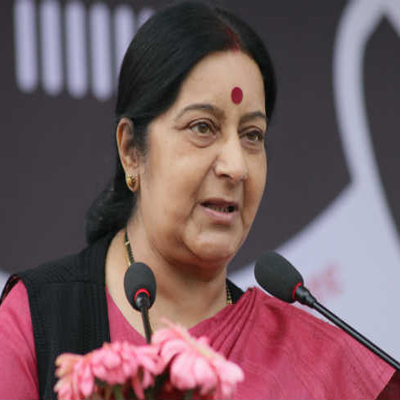
    MUMBI: Even as all attention has been  focused on MeITy and railways minister Ashwini Vasihnaw getting additional oversight of the ministry of information & broadcasting (MIB),  what has been under-reported is the   handing over  of the minister of state  position to L. Murugan in the same ministry. Murugan was earlier appointed as minister of state in 2021, prior to which he was the state president of the BJP IN Tamil Nadu.

    The 47 year old is a law graduate and a doctorate holder from the University of Madras who has been practising law for more than 15 years. He has been associated with the RSS since 1997, having served as the standing counsel to the Indian government at the Madras high court

    Murugan’s appointment should work well in favour of both the industry and Vaishnaw as a whole lot of regulations and decisions are pending with the ministry. 

  • MIB orders central ministries, state governments to exit broadcast business

    MIB orders central ministries, state governments to exit broadcast business

    Mumbai: The ministry of information and broadcasting (MIB) has issued an advisory which asks any ministry/department of the central and state/UT governments and entities related to them to exit the broadcasting business by 31 December 2023.

    If the ministries of the central government, state/UT governments, and entities related to them are already broadcasting their content, it must be done through Prasar Bharati, through appropriate agreements between Prasar Bharati and the concerned central, state, and union governments. The advisory will affect the Tamil Nadu and Andhra Pradesh state governments, which operate in the content distribution space.

    The advisory will mean the withdrawal of Tamil Nadu and Andhra Pradesh state governments from the content distribution space. The Tamil Nadu government owns and operates a cable distribution company called Arasu Cable TV  while the Andhra Pradesh government runs the AP Fibernet service, which has a triple-play offering of IPTV, internet, and telephony. The Tamil Nadu government also operates an educational channel ‘Kalvi Tholaikkatchi’.

    The Telecom Regulatory Authority of India (Trai) had made recommendations on “issues relating to the entry of certain entities into broadcasting and distribution activities” dated 12 November 2008, 28 December 2012, and 22 January 2015. Its recommendations dated 28 December 2012 have been accepted by the MIB and the ministry of law and justice.

  • FIFS welcomes MIB’s advisories against illegal offshore betting platforms ads

    FIFS welcomes MIB’s advisories against illegal offshore betting platforms ads

    Mumbai: The Federation of Indian Fantasy Sports (FIFS), the industry’s self-regulatory body, has welcomed the ministry of information and broadcasting (MIB) decision not to allow private television channels, digital news publishers, and OTT platforms to broadcast/show advertisements for online betting sites and surrogate ads. The federation lauds the ministry for the move that reiterates FIFS’ stand against this menace. FIFS said that it has previously emphasised the need for identification and prohibition of offshore business activities to ensure consumer interest safeguards.

    FIFS DG Joy Bhattacharjya said, “We thank the ministry of information and broadcasting for this important step. As FIFS, we have been creating awareness about the need for demarcation between the legitimate and illegitimate players in the online gaming ecosystem to ensure unwarranted elements like offshore betting and gambling don’t see a rise and adversely impact consumer interests. This move from the ministry will ensure that Indian citizens are educated about the risks on these platforms and do not get lured or trapped by the same. We are hopeful that this initiative will lead to further stringent action on these players by other arms of the government as well.”

    As a big and positive step towards consumer interest protection, on 3 October 2022, MIB issued an advisory to private television channels, digital news publishers, and OTT platforms to refrain from showing advertisements for online betting sites and surrogate advertisements for such sites.

    In the advisories issued by the government, a clear stand has been taken by MIB against direct and surrogate advertisements of offshore betting platforms, saying that it may also invite penal action for the broadcasters. The advisories also stated that since betting and gambling are illegal in most parts of the country, advertisements for these betting platforms as well as their surrogates are also illegal and should not be shown to Indian consumers.

    The ministry, in its advisory, clearly highlighted that such offshore betting websites use news as a surrogate product to advertise their betting platforms, especially in the digital medium. The advisories mentioned that in these cases, there is a striking resemblance between the logo of the news platform and the betting website. The advisories also clarified that since betting and gambling are illegal in most parts of India, so are their advertisements, direct or surrogate. MIB mentioned the Consumer Protection Act 2019, Cable TV Network Regulation Act 1995 and the IT Rules 2021 to issue the advisories.

    FIFS added that it takes consumer interest protection very seriously and recently revised and strengthened its charter in order to promote innovation with responsible growth for the fantasy sports industry. The new charter emphasises the role of the Fantasy Sports Regulatory Authority (FSRA), an independent self-regulatory body committed to promoting standardised best practises in fantasy sports.

  • Trai extends date for stakeholder’s comments on proposed amendments to the telecommunication services interconnection regulations, 2022

    Trai extends date for stakeholder’s comments on proposed amendments to the telecommunication services interconnection regulations, 2022

    Mumbai: The Telecom Regulatory Authority of India (Trai) has extended the date for stakeholders’ comments and counter comments on the Draft Telecommunication (Broadcasting and Cable) Services Interconnection (Addressable Systems) (Fourth Amendment) Regulations 2022, released on 9 September.

    Last month Trai released a consultation paper on proposed changes to the interconnection regulation 2017. The regulator has amended the regulation to include digital rights management (DRM) system requirements

    Also read : TRAI invites stakeholder’s comments on proposed amendments to the interconnection regulation 2017

    The last date for receiving written comments from the stakeholders was fixed as 7 October 2022, and counter comments, if any, by 21 October 2022.

    In view of this, it has been decided to extend the last date for submission of written comments up to 4 November 2022. Counter comments, if any, may also be submitted by 18 November, 2022. No further requests for extensions will be considered.

    The consultation paper (CP) was prepared in response to the report submitted by the Trai committee formed to investigate DRM system issues. The Trai formed a committee in response to numerous comments and suggestions from stakeholders on DRM System issues.

    Trai has proposed that IPTV service providers use a closed network to retransmit linear channels to subscriber-owned set-top boxes (STBs). It was expressly stated that IPTV would not include any electronic delivery for receipt and viewing via the internet/OTT. It also stated that IPTV linear services should not be made available over the Internet or public networks.

    The regulator also stated that IPTV transmission must be done in multicast mode only, just like cable TV transmission, and that unicast mode is not permitted. STBs with recording capabilities must have a copy protection system in place, and recorded content cannot be transferred to another device.


  • Trai has to play a balancing role: advisor of broadcasting & TCSR DG Anil Bhardwaj

    Trai has to play a balancing role: advisor of broadcasting & TCSR DG Anil Bhardwaj

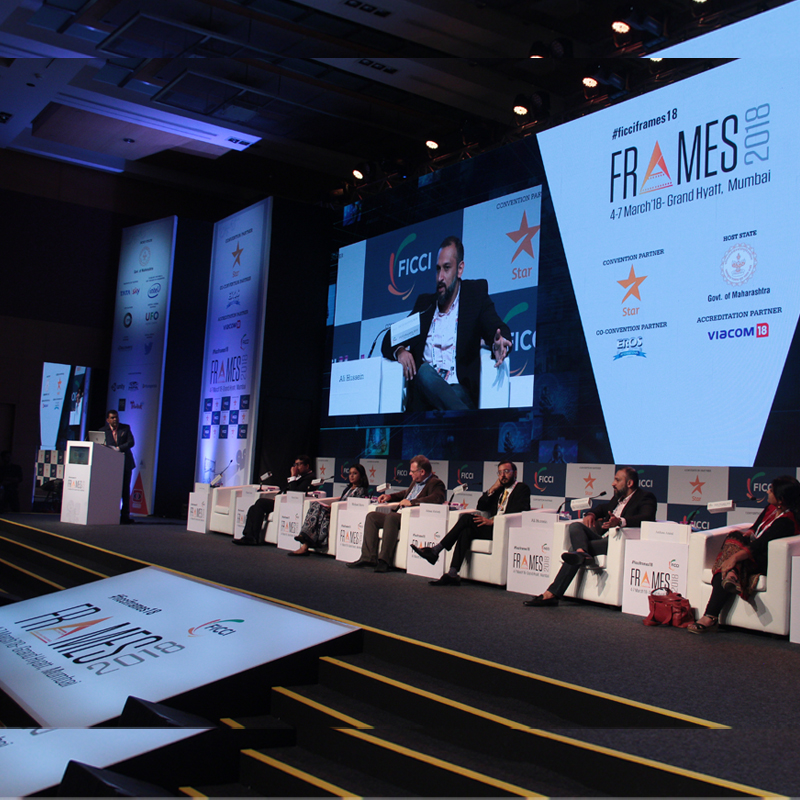
    Mumbai: In an interaction with independent consultant Anuj Gandhi at Ficci Frames Fasttrack 2022, Trai advisor (broadcasting) and TCSR DG Anil Bhardwaj said that the regulator has to play a balancing role. He compared it to making a decision about what to do with a screw. One either loosens or tightens it, he said.

    In addition, he also mentions that a consultation process is going on regarding NTO 2.0. One side wants everything controlled, while the other does not want the regulator to control anything at all. The industry, he said, needs a regulator because they cannot sort out their issues. The aim is to have as light a touch of regulation as possible. That is Trai’s ethos.

    While saying that Trai has done some good things, he admitted that some bad things may have been done. But Trai is willing to review, consult, and come back. He also noted that while content is king, distribution remains extremely important. For the linear TV ecosystem to sustain, the stakeholders have to nurture and support each other. There are 1,00,000 LCOs in the country. Each has two to three people on the ground. That is the kind of distribution power available. “Ignore them at your own peril. Everybody is at a crossroads with everybody else. A linear TV channel needs a content creator, an aggregator, or a broadcaster. You need an integrator and then the last mile operators. If someone is dying and someone else is making money as a result, ultimately, who will suffer? Linear will be dead if one arm starts killing the other. Linear TV will grow if people are willing to nurture and sustain each other,” he noted.

    He said that regulation does not put a cap on pricing. One can charge Rs 100 for a channel. What he is against is the mirage of pricing that happens with bundling. That results in consumers being misled, which is what Trai is completely against. Certain channels, he said, are sold at Rs 6 through reverse deals and have fixed the MRP (maximum retail price) at Rs 19. Privately, he has asked them why this is being done. As a regulator, data is obtained and almost everything comes to Trai. The reason given is that the channel level will go down if it is not priced at that rate. “This is the mentality of the distribution head of one of the largest broadcasters in our country. In that situation, you need a regulator. We have not asked a niche English channel not to price themselves at Rs 50 or Rs 100. They have shut down because they could not sustain their model. They were showing ads and they also wanted to charge a certain fee. Previously, this was being driven through deals done with the distributor, which today is not possible because there is transparency in the system. For bundling, we said a mirage of price was created. So we will have some semblance. We tried Rs 19. We thought of Rs 12. The purpose is not to tell the industry what to fix. It is to avoid misleading the consumer. We are again reviewing that in the consultation. We have kept postponing the implementation of NTO 2.0 till we are through with this consultation process. We want to know if the price of Rs 12 is okay or not.”

    He further said, “We have done certain good things. Maybe we have done some bad things. That is why nothing is cast in stone. We are willing to come back and consult. We are willing to forego regulation provided the market matures. If we reduce or remove regulation, we will find that the market is not functioning as it should.” He noted that in the current consultation, one side says control everything and the other side says do not control anything. One side desires a minimum level of assurance regarding distribution effort. So a balancing role has to be played by Trai. The market is not mature. There are issues, he noted, with broadcasting, with channels shutting down. He also noted that channels are sometimes shut down by distribution as a certain show or content might cause a problem for some people. “This is the kind of country that we live in.”

    He said that as a regulator, Trai has to act strongly, but it cannot be done tomorrow or people will complain of high-handedness. The market has to mature to a level where certain things are known and numbers and facts are known. He gave the example of hundreds of MSOs getting audits done themselves by one of the 52 auditors chosen by Trai. That is, until you reach a certain place. “Without distribution, no ecosystem can survive.” On the content front, he said that Arpu is Rs 273. The ecosystem decides this, not the regulator. “If the industry is dying, please raise prices. Content is king, which is why digital media is paying five times more for content production compared to linear broadcast. So, if broadcasters need more revenue for content investment, then please review your models. Trai has never said not to invest in content. Broadcasters should make models in such a way that the money invested comes back. We will not stop you. Please make good content.”

    He added that numbers for the broadcasting industry are coming down, which could be due to a combination of factors, including OTT, DD Freedish, and Covid. Today, there are 900 or so TV channels. There are 1,000 odd MSOs. DTH is 70 million homes, and cable is not at 70 million. The balance is DD Freedish, which is growing. “Linear TV is finding its own new paradigm, new place. The punch is with OTT. It is important to understand why. Content is king, but distribution remains extremely important,” he said.

    He stated that some consumers believe that content is better on digital or OTT apps. That is why some have cut the cord. A broadcaster should allow a user to have five screens at the same cost or at a much lower cost than what is charged for linear TV. Then users will not go elsewhere. There are millions of smart connected TVs today.

    He also noted that India is unique in many ways. He gave the example of the mandatory content sharing bill for events of national importance. That applies to some sports events, even if the acquisition price is high. The aim is to have the events seen by the masses, and it goes beyond the ambit of commercial deals done. This is something that the Supreme Court has agreed with. “We are a very different country. It is an evolution. I am not saying that we are 100 per cent correct or that the US is correct,” he concluded.

  • SC to hear Centre’s plea on new IT Rules on 16 July

    SC to hear Centre’s plea on new IT Rules on 16 July

    New Delhi: The Supreme Court on Friday refused to stay the proceedings in connection with petitions challenging the constitutional validity of the Centre’s new IT rules before various high courts.

    The Centre had approached the apex court on Tuesday seeking transfer of all pending pleas challenging its new IT rules to itself, and had also sought a stay on the proceedings in various courts. However, the bench said that it will not pass any order as of now, except tagging the transfer petition with the said special leave petition (SLPs).

    The Court will now hear the Centre’s plea on 16 July along with a pending matter related to the regulation of over-the-top (OTT) platforms. 

    Numerous petitions challenging the Information Technology (Intermediary Guidelines and Digital Media Ethics Code) Rules, 2021, are currently pending in various high courts across the country.

    The new rules notified on 25 February, came into effect on 26 May recommend a three-tier mechanism for the regulation of all online media. According to the new IT Rules, social media and streaming companies will be required to take down contentious content quicker, appoint grievance redressal officers and assist in investigations. The rules also seek to regulate the functioning of online media portals and publishers, over-the-top (OTT) platforms and social media intermediaries.

    Some of the pleas pending before the Delhi high court have sought striking down of specific part of the IT Rules on the ground that it allegedly violates Article 19(1)(a) and 19(1)(g) of the Constitution, Article 14 of the Constitution by creating an unreasonable classification and by setting up a parallel adjudicatory mechanism to be overseen by the officials of the executive and is ultra vires the IT Act.

  • NTO 2.0 verdict: Who wins what?

    KOLKATA: One of the major issues that has dominated the pay TV ecosystem in India is in constant conflict between stakeholders and the sector regulator, the Telecom Regulatory Authority of India (Trai).  With the Bombay high court pronouncing its verdict on the amended new tariff order matter, one of the long-fought battles between the two may have come to an end. It upheld the constitutional validity of Trai’s NTO 2.0 but set aside the second clause of twin pricing conditions. The court’s decision is receiving mixed reviews from senior industry executives.

    On Wednesday, the division bench of Justices Amjad Sayyed and Anuja Prabhudessai passed judgement on several petitions filed by broadcasters and industry bodies like the Indian Broadcasting Foundation (IBF). The bench stated that the challenge to the constitutional validity of the 2020 rules and regulations of Trai does not hold any water. At the same time, it termed one of the twin conditions arbitrary according to which the maximum retail price of an a-la-carte channel could not be more than one third of the maximum rate of a channel in the bouquet.

    “We welcome this verdict of the honourable Bombay high court on amendment in tariff regulation. The full implementation of the amendment will bring more transparency in industry and give more choices and power to the customer. We are hopeful that this will get implemented soon. It is good for all stakeholders in the industry value chain,” GTPL Hathway cable TV head & chief strategy officer Piyush Pankaj said.

    Others in the business are not so sure because they believe it will definitely lead to a decline in subscription revenues. Considerably, major broadcasters have not already witnessed a fall in subscription revenue after partial implementation of NTO 2.0.  But they fear that after this verdict, there will be a faster movement towards a-la-carte from bouquets thus leading to lower ARPUs.

    One of the senior executives with a leading broadcaster said squashing the second twin condition can be looked at as a big win for broadcasters. This clause had the potential to effectively hamper broadcasters from packaging their channels as they had to bundle similarly priced offerings together as part of the bouquet. 

    However, the grounds that it has been struck down on are not very solid, another senior executive added. This battle was unnecessary and a fight for power, he noted, especially given the cost. Moreover, very few broadcasters were looking at pushing high pricing for channels anyway. Even these broadcasters also cannot go for high pricing now due to changed market dynamics in the last one year due to pandemic. As Trai still has substantive grounds to reclaim whatever has been lost, they might look at rechallenging it, the executive noted.

    “We believe there is a high likelihood of this being contested in the supreme court by Trai as the entire reasoning of getting the NTO 2.0 was to cap discount and move to selective viewing which the NTO 1.0 did not fulfil,” Elara Capital VP research analyst (media) Karan Taurani said in a note.

    “We continue to believe that the negative impact of NTO 2.0 is highest for Star whose bouquet prices have a higher discount factor and lowest for Sun TV whose discounting of bouquet vs ala carte is already at very low levels, which will lead to continued outperformance for Sun TV on subs revenue front despite NTO 2.0. On the other hand, this order is low to moderately negative for Zee,” stated Taurani.

    Back in 2018, Madras high court had also set aside the capping of discounts to 15 per cent mentioned in the Tariff Order and Interconnection Regulations of 2017. However, the battle reached the supreme court where the regulator won the case. Within a year of implementation of the regulation, the authority brought changes which irked broadcasters starting the second battle. Now are we in for the third?

  • HC issues notice to Centre over media firms’ plea against IT rules

    New Delhi: The Madras high court has issued a notice to Centre over a plea filed by the Digital News Publishers Association (DNPA) against the Information Technology (Intermediary Guidelines and Digital Media Ethics Code) Rules 2021.

    This petition challenged the constitutionality of the Rules and alleged that it violates the fundamental right of equality (Article 14), freedom of speech and expression (Article 19(1)(a), and the right to practice any profession or to carry on any occupation, trade or business (Article 19 (1) (g)). The association sought a stay on Rules 12, 14, and 16 of the IT Rules 2021.

    Formed in 2018, DNPA is an organisation comprising of the digital arms of leading media companies of the country, including the ABP Network, Amar Ujala, Dainik Bhaskar Corp, Express Network, HT Digital Streams, IE Online Media Services, NDTV Convergence, Lokmat Media, Jagran Prakashan, TV Today Network, The Malayala Manorama, Times Internet Limited, and Ushodaya Enterprises. 

    According to DNPA, the online news portals of traditional media houses, which run newspapers and TV channels, do not come within the purview of IT Rules.  “While ‘newspaper’ is not governed by the IT Rules 2021, ‘publisher of news and current affairs content’ is governed by Part three of the IT Rules 2021. This implies that some of the members of DNPA association which are primarily newspaper publishers would not be governed by the IT Rules 2021 if they only published newspapers. But by making available, inter alia, the same content on a digital platform, they ought to be governed by the IT Rules 2021. Therefore, the IT Rules 2021 have created a distinction that is vague and arbitrary…” stated the plea, Live Law reported.

    The plea also contended that there are several regulations in place already for traditional and legacy media outlets in print and broadcasting, which have been operating before the advent of the internet and digital media. The petition filed by DNPA and journalist Mukund Padmanabhan was tagged along with the petition filed by Carnatic singer TM Krishna, which also claimed that the IT Rules 2021 were in violation of the Right to Privacy.  

    The Information Technology (Intermediary Guidelines and Digital Media Ethics Code) Rules 2021 that into effect on 26 May recommend a three-tier mechanism for the regulation of all online media. Under the rules, the digital publishers are required to take urgent steps for appointing a grievance officer, if not done, and place all relevant details in the public domain. “They also need to constitute self-regulatory bodies through mutual consultation so that the grievances are addressed at the level of publishers or the self-regulating bodies themselves,” according to the ministry.

  • No exemption for mainstream media from new IT rules, says MIB

    New Delhi: The ministry of information and broadcasting has refused to grant an exemption to the digital news content of mainstream television channels and print media from the ambit of the new IT Rules, 2021 and asked all the digital news publishers and the OTT platforms to comply with the new rules without any misapprehensions.

    Asserting that the rationale for bringing the websites of the organisations under the ambit of the law is well-reasoned, the ministry said, making an exception of the nature proposed “will be discriminatory to the digital news publishers who do not have a traditional TV/print platform.”

    The order dated 10 June provides clarification to digital news publishers, publishers of online curated content or OTT platforms, and associations of digital media publishers who had requested the government for an exemption under the new rules, highlighting that they are already “sufficiently regulated.”

    “Since the code of ethics requires such digital platforms to follow the existing norms/content regulations, which are in vogue for the traditional print and TV media, there is no additional regulatory burden for such entities,” the ministry stated, “Accordingly, the request for exempting the digital news content of such organisations from the ambit of digital media rules 2021 cannot be acceded to.”

    The ministry also took note of the fact that traditional TV and print media are already registered with the government either under the Press and Registration Books Act or the Uplinking and Downlinking Guidelines of 2011, and added, that they can request the same self-regulatory bodies to serve as the Level II of the self-regulatory mechanism. But, before that, they need to ensure consistency with the Digital Media Rules, 2021, it added.

    The Information Technology (Intermediary Guidelines and Digital Media Ethics Code) Rules 2021 that into effect on 26 May recommend a three-tier mechanism for the regulation of all online media. Under the rules, the digital publishers are required to take urgent steps for appointing a grievance officer, if not done, and place all relevant details in the public domain. “They also need to constitute self-regulatory bodies through mutual consultation so that the grievances are addressed at the level of publishers or the self-regulating bodies themselves,” the ministry said. More than 500 publishers have already submitted their details in the requisite format, it added. 

    The News Broadcasters Association (NBA) which had earlier sought exemption from the new IT rules, issued a statement on Friday stating that all current and prospective members have fully complied with the requirements of new rules.
     

  • TRAI introduces new regulations for technical compliance of CAS & SMS

    KOLKATA: In a bid to put an end to content piracy in the pay TV ecosystem, the Telecom Regulatory Authority of India (TRAI) on Friday amended the interconnection regulations 2017, incorporating a framework for technical compliance of CAS & SMS.

    The authority has been receiving several complaints about the unauthorized distribution of signals and under-declaration of subscribers by distribution platforms, despite the implementation of the new regulatory digitization of the cable TV industry.

    “Sub-standard CAS and SMS also render the distribution network vulnerable to hacking and content piracy,” it said in a statement.

    According to TRAI, the framework is the first step to define an indigenous set of specifications in the line of international standards. A tightly synchronised working of CAS and SMS, as specified by the framework, will enable factual reporting of subscriber base etc. Eventually, this will reduce the revenue loss to stakeholders on account of erroneous subscription reporting.  

    “Better assurance of due revenue, in turn, may encourage the stakeholders to invest for further improvement in quality of content and service thereby benefiting the end consumer,” TRAI noted. Moreover, it will also usher-in better content security in the distribution value chain.

    The authority came out with a consultation paper seeking views on standardization of these systems last April. It also held an open house discussion later. The comments of the stakeholders received by TRAI during the consultation process were analysed. In view of the technical nature of the matter, the Authority decided to form a committee of members across the industry, related institutions.

    The committee, after extensive deliberations, recommended introducing a testing and certification regime for CAS and SMS to ensure better conformity to the standards and to improve the customer experience.

    Distribution platform operators will now need to obtain certification for their CAS and SMS systems from the certification and testing agency. The framework will be implemented through a testing and certification agency.