Tag: Regional

  • BARC week 29: B4U Bhojpuri leads in Bihar/Jharkhand (U+R) HSM

    BARC week 29: B4U Bhojpuri leads in Bihar/Jharkhand (U+R) HSM

    MUMBAI: In regional GECs, B4U Bhojpuri jumped to the leading position in week 29 of BARC India ratings. The channel has jumped from third position last week to first position in week 29. Last week Bhojpuri cinema was at first position, this week the channel has moved to second position. 

    Bhojpuri

    Rank Channel Name Weekly Impressions (000s) sum
        Week 29
    1 B4U Bhojpuri 65061
    2 Bhojpuri Cinema 62589
    3 Big Ganga 59600
    4 Dabangg 16429
    5 Bhojpuri Dhamaka DISHUM 15485
    Bihar/Jharkhand (U+R) : NCCS All : 2+ Individuals,


    In Tamil segment, Star Vijay Super was the new entrant in the list of Tamil (U+R) segment. The channel replaced Star Sports 1 Tamil at fifth position.


    Tamil

    Rank Channel Name Weekly Impressions (000s) sum
        Week 29
    1 Sun TV 800111
    2 STAR Vijay 506334
    3 Zee Tamil 386563
    4 KTV 254132
    5 STAR Vijay Super 94683
    Tamil Nadu/ Puducherry (U+R) : NCCS All : 2+ Individuals, 

    Zee Telugu and ETV Telugu have exchanged their positions and are at second and third positions. Star Maa Movies has replaced Gemini Movies in week 29. 

    Telugu

    Rank Channel Name Weekly Impressions (000s) sum
        Week 29
    1 STAR Maa 645802
    2 Zee Telugu 441470
    3 ETV Telugu 438562
    4 Gemini TV 411539
    5 Star Maa Movies 196550
    AP/ Telangana (U+R) : NCCS All : 2+ Individuals, 

    There were no changes in the Marathi segment. The genre was led by Zee Marathi and was followed by Fakt Marathi, Colors Marathi, Zee Talkies and Star Pravah. 

    Marathi

    Rank Channel Name Weekly Impressions (000s) sum
        Week 29
    1 Zee Marathi 383723
    2 Fakt Marathi 226194
    3 Colors Marathi 177330
    4 Zee Talkies 136492
    5 STAR Pravah 109059
    Mah/ Goa (U+R) : NCCS All : 2+ Individuals, 

    Colors Gujarati Cinema was in the leading position in week 29. The channel was followed by Colors Gujarati, TV9 Gujarati, ABP Asmita and Sandesh News.

    Gujarati 

    Rank Channel Name Weekly Impressions (000s) sum
        Week 29
    1 Colors Gujarati Cinema 30314
    2 Colors Gujarati 22085
    3 TV9 Gujarati 13730
    4 ABP Asmita 12747
    5 Sandesh News 10162
    Guj / D&D / DNH (U+R): NCCS All: 2+ Individuals

    Sony Aath and Zee Bangla Cinema exchanged their place at fourth and fifth positions.

    Bangla

    Rank Channel Name Weekly Impressions (000s) sum
        Week 29
    1 Zee Bangla 305114
    2 STAR Jalsha 241085
    3 Jalsha Movies 86279
    4 Sony Aath 60207
    5 Zee Bangla Cinema 55278
    WB (U+R): NCCS All : 2+ Individuals, 

    There were no changes observed in the Kannada genre. 

    Kannada

    Rank Channel Name Weekly Impressions (000s) sum
        Week 29
    1 Zee Kannada 427263
    2 Colors Kannada 297329
    3 Udaya TV 209446
    4 Star Suvarna 156309
    5 Udaya Movies 140624
    Karnataka (U+R) : NCCS All : 2+ Individuals, 

    Surya TV and Asianet Movies have exchanged their places at fourth and fifth positions. 

    Malayalam

    Rank Channel Name Weekly Impressions (000s) sum
        Week 29
    1 Asianet 276397
    2 Flowers TV 111479
    3 Mazhavil Manorama 96391
    4 Surya TV 57650
    5 Asianet Movies 50346
    Kerala (U+R) : NCCS All : 2+ Individuals, 

    Tarang and Prarthana have exchanged their places at fourth and fifth positions in Oriya segment.

    Oriya

    Rank Channel Name Weekly Impressions (000s) sum
        Week 29
    1 Tarang 158029
    2 Zee Sarthak 130706
    3 Alankar 48263
    4 Tarang Music 25843
    5 Prarthana 25114
    Odisha (U+R) : NCCS All : 2+ Individuals, 

    In Punjabi genre, Manorajan Movies and T TV have exchanged their places at fourth and fifth positions.

    Punjabi

    Rank Channel Name Weekly Impressions (000s) sum
        Week 29
    1 PTC Punjabi 52076
    2 Pitaara TV 27215
    3 DD Punjabi 23063
    4 Manoranjan Movies 16792
    5 T TV 14713
    Pun / Cha (U+R): NCCS All: 2+ Individuals,


  • Discovery World HD adds Hindi, Tamil, Telugu feeds

    Discovery World HD adds Hindi, Tamil, Telugu feeds

    MUMBAI: Discovery World HD is leaving no stone unturned to tap into India’s growing regional phenomenon. It has started Hindi, Tamil and Telugu language feeds for specific markets. Discovery seems to be targeting the mass audience with the three largely spoken languages in the country.

    Discovery Communications India vice-president and head premium and digital networks Zulfia Waris told Indiantelevision.com, “We are delighted to add three new feeds. The introduction of local languages is an attempt to further solidify our leadership position in key markets across the country.”

    The service has started on Intelsat20 @68.5 degree East satellite. The language feed will be available on all the cable and DTH platforms that have Discovery HD World in their bouquet of channels. The user the language feeds through the audio option button.

    At present, Discovery operates several factual entertainment channels in India, including Discovery HD World, Discovery Channel, TLC, Animal Planet, Discovery Science, Discovery Turbo, Discovery Kids and Dsport. The network’s recently launched GEC, Discovery Jeet, has feeds in Hindi, Tamil and Telugu as well.

    There are over 270 regional channels out of 500 channels overall in BARC. The regional viewership is higher than the Hindi viewership and has a market share of 47 per cent.

    Also Read :

    Dsport not in the running for BCCI’s media rights

    Discovery Communications completes Scripps acquisition

    Discovery Communications gets US govt nod for Scripps Networks merger

  • Hotstar Trends 2017: Women, small town, cross-language consumption rises

    Hotstar Trends 2017: Women, small town, cross-language consumption rises

    MUMBAI: Want to get a handle on what kind of traction that India’s answer to Amazon and Netflix –  Hotstar from Star India – is getting? Well, the OTT service has come out with an India Watch Report 2018 (IWR 2018) – just as the IPL is around the corner in a bid to pique brands’ and ad agencies’ curiosity and jiggle their memories.

    Says Novi Digital Entertainment (Hotstar)  CEO Ajit Mohan in a preface to the report: “The biggest change (between 2017 and 2016) has been how consumers are responding to the explosion in access to affordable data. Three years ago, most new data users would start with messaging, do text search, move on to social platforms and a few brave ones would watch video on the mobile network. This pyramid has been completely inverted. In a world that does not fear data charges, video is very often the first port of call for new data users. Familiar stories, whether TV shows, movies or sports, unconstrained by any language limitation, are acting as powerful triggers to light up their smartphones and their data connections.”

    The study says that Hotstar was the most downloaded video app for 2017 with a total of 325 downloads per minute totting up to an incredible 170 million downloads cumulatively. Hotstar users gobbled 3 GB data per month as compared to the average user who consumes 1.6 GB a month. Almost 90 per cent users logged on to the Hotstar app on their handsets even as there was a 6X growth in those consuming it on their connected TVs. What were they watching? 96 per cent of them gulped down videos longer than 20 minutes, thus rubbishing the long held notion that OTT users snack on short form content.

    According to IWR 2018, ViVO IPL 2017 saw a jump of 6.6 times in watch time as compared to 2016. And 70 per cent of men who consume video online were on Hotstar watching the T20 journey during its 2017 edition.

    The good news is that women are also coming online in a big way, says Hotstar. Consumption by women from smaller towns (between one and 10 lakh population) grew by three times in 2017, even as that by women in one million plus population towns and in metros doubled. The consumption growth is pretty rapid when it comes to women from places like New Barrackpore (5X), Siliguri (6.5X), Kanchipuram (5X) and Ranchi (4.7X).

    Overall watchtime is growing at an astounding clip, says the IWR in the non-metros.  In cities like Moradabad the growth was 22 times, Allahabad (13X), Hubli (12X) and Sonipat (12X).

    Hotstar notched up some other records, says  IWR 2018 – it crossed a billion minutes of watch time in a single day several times in 2017.

    Viewers cannot seem to be getting enough of the content IWR 2018 says: In 2017, cities like Delhi, Mumbai, and Pune switched off their phones at 2:37 am, 2 am and 2:35 am respectively. In Gurugram, Amritsar and Kolkata, the curfew time came out as 2:08 am, 2:15 am and 2:05 am respectively while for Bengaluru, Chennai and Hyderbad, the cutoff time was 1:59 am, 1:38 am and 1:54 am respectively. Not unexpectedly, the largest share of watchtime came from Mumbai.

    What were Hostar subs watching?

    Unsurprisingly, the nation’s most-watched genre is drama, and while West Bengal and Maharashtra can’t get enough of romance, Tamil Nadu and Delhi revel in comedy! And doing away with set notions that only women watch drama, IWR 2018 says that 50 per cent of watch time for shows such as Yeh Rishta kya Kehlata Hai was accounted for by men. Youngsters too are turning into drama with their tribe accounting for 63 per cent of watchtime of Ishqbaaaz. To add to that, Indian women accounted  for 18 per cent of watchtime of  Bahubaali 2: The Conclusion.

    The report points out that 70 per cent of premium users who watched English shows and movies also viewed other programming genres and languages. 26 per cent of Modern Family watchers tuned into cricket; 26 per cent of Game of Thrones viewers watched Hindi TV shows, and 14 per cent of premier league watchers popped up the app’s Bengali TV shows.

    The Champions Trophy final between India and Pakistan 2017 resulted in it – at 113 million views – emerging as one of the most globally watched online videos in the shortest span, that is eight hours.  That same nail-biting final saw 4.8 million simultaneous viewers making it the event with the highest concurrency seen in APAC.

    And the viewing of one day internationals saw a spurt of five times in 2017 vs 2016.

    Which sports are gaining popularity in India?

    The IWR 2018 says football is India’s second most loved sport and grew massively with watch time for the ISL rising 3.5 times and for the Premier League by 10 times. The Vivo Pro Kabaddi League saw its watch time skyrocketing nine times over 2016.

    The crown of the most watched show in 2017, according to IWR 2018, goes to the Rajan Shahi produced Yeh Rishta Kya Kehalata Hai. No surprises in the English show category with Game of Thrones emerging on top, and Big Boss Tamil and Telugu reigning in their respective languages.

    Also Read :

    Video Lighting up Data and Smartphones, Says Hotstar

    Hotstar announces partnership with awesomeness

    Leaving a Job is never easy, Hotstar gives you the best ways to #QuitInStyle

  • Viacom18 rolls up its sleeves for Tamil market share

    Viacom18 rolls up its sleeves for Tamil market share

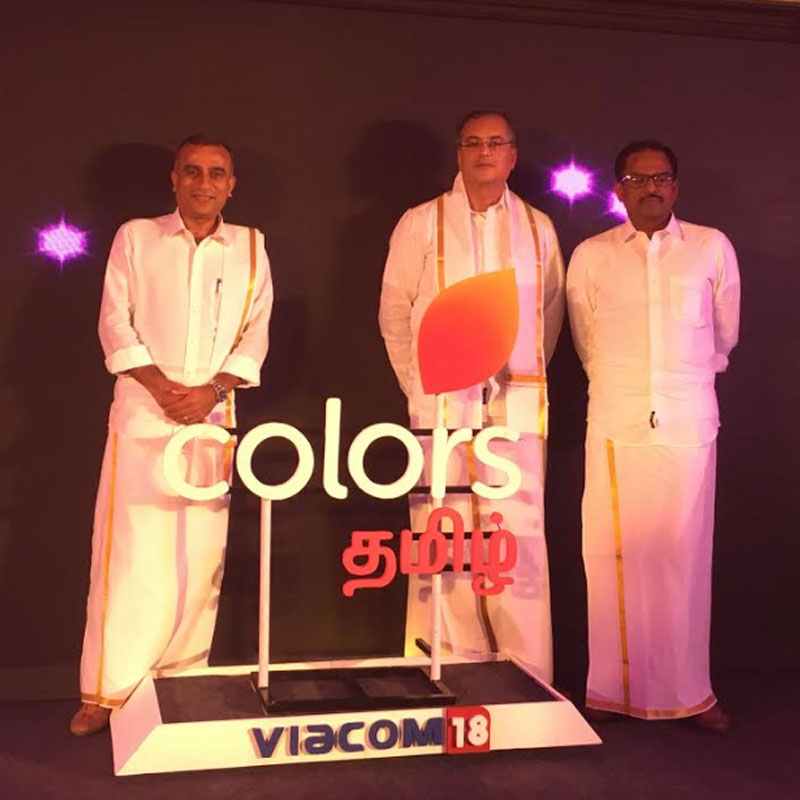
    MUMBAI: Viacom18 has set for itself the task of taking a big bite out of the Tamil general entertainment channel (GEC) market, a stronghold of long-reigning Sun Network. The network is all set to launch its channel Colors Tamil into a large and important entertainment market of India. 

    Scheduled to go on air on 19 February 2018 in Tamil Nadu, the channel will be the conglomerate’s first foray into the state. Viacom18 already operates general entertainment channels in five regional languages, under the brand name Colors Kannada, Marathi, Gujarati, Bengali and Odia.

    Despite big players emptying their coffers in the Southern Indian market, the region has been strongly captivated by the Sun Network.

    Speaking at the launch, Viacom18 Group CEO Sudhanshu Vats says, “After spreading our wings across seven languages, India’s flagship general entertainment brand – Colors is entering the lucrative, fast growing and discerning Tamil entertainment market in line with our stated strategy to drive regional growth aggressively. Our proven ability to break the clutter and disrupt the status quo will help us tell endearing stories to over 20 million TV households in the state and a large global audience in the coming months and years.”

    Tamil Nadu is the country’s sixth most populous state as per census 2011 and is among the bigger television content consuming markets, with a per capita daily viewership of 3 hours which is more than that of the Hindi speaking markets which is 2.5 hours. With an estimated base of 1150 advertisers, Tamil Nadu is among the more lucrative broadcast entertainment markets in India. 

    In order to cater to the market, Viacom18 head of regional entertainment Ravish Kumar reveals the company’s biggest drive is to deliver new and never before seen content to the Tamil audience. “We have invested big in conceptualising programs that are inspiring, innovative, experimental and technically sound. With 22 hours of original content at launch, we are more than confident of Colors Tamil becoming a blockbuster hit here,” he says. 

    With a robust content strategy developed after thoroughly studying the consumer patterns of the region, Colors Tamil offers several original shows in both the fiction and the non-fiction categories. Foraying into a market with existing predominant players, the channel aims at bringing together a range of shows spanning a diverse variety of entertainment genres catering to all demographics.

    Colors Tamil business head Anup Chandrasekharan adds,“Idhu Namma Oru Coloru… the Colors of our land. Our tagline encapsulates our vision of Colors Tamil. It is a platform that aims to entertain, enrich and engage individuals across the length and breadth of the state. Our study of the existing broadcast entertainment market suggests that there is a need gap between what the audience wants to watch and the kind of content that is available to them. Therefore, our focus is on content that is differentiated, thought provoking and socially conscious. Colors Tamil is a promise of optimism, celebration and hope.”

    The channel will offer a range of fiction and non-fiction programs spanning from family drama, reality TV, comedy to fantasy to name a few. The four original shows of the channel will set new standards in the industry with its distinct content and sound technology. The network will also remake the famous show Naaagin from the Hindi GEC Colors for the new Colors Tamil. Naagin has been a huge hit property of the network.

    At launch, Colors Tamil will be available in all leading cable networks catering to an estimated 3.5 million homes in Greater Chennai through SCV, TCCL among others and 11 million homes in the rest of Tamil Nadu through Tamil Nadu Arasu Corporation. 

    Furthermore, the channel will be available on all DTH platforms including Sun Direct, Tata Sky, Airtel, Dish TV & Videocon d2h reaching out to 5.5 million households. Additionally, the entire content library of Colors Tamil will also be available digitally on the network’s OTT platform – Voot.

    As part of its fiction lineup, the channel has curated three striking shows that portray strong women protagonists breaking the shackles of the society. Shot in native locations of Tamil Nadu with top-notch equipment, the shows are set to offer a movie-like experience to the viewers. 

    Offering a refreshing break from the common soap operas, Velunachi is an inspirational story of young girl who transforms herself into a strong woman carrying her father’s lineage in Silambattam. 

    Sivagami show is a transforming tale of courage of a young woman tackling conflicts in society to bring up her daughter as a successful IPS officer. The story is set in rural Tamil Nadu with nativity and rustic aims to create a positive change in mindset among people. 

    Another show, Perazhagi, is an uplifting drama that breaks the stereotype around skin colour featuring a small girl who fights against all odds to become a celebrity.

    Created as the flagship show of Colors Tamil, the reality show Enge Veetu Maapilai will feature the hunt for the ideal match for brand ambassador & Kollywood superstar Arya. Spanning over 40 episodes, the show will telecast the search for the heartthrob’s perfect match. 

    Catering to the young ones, Colors Super Kids is a one of a kind talent show for children, offering them an equal and well-deserved platform to showcase their talents without the concept of competing against each other.

    public://TAMIL.jpg


    Also Read:

    Viacom18 widens regional reach, to launch Colors Tamil in Q4

    TV18 to increase Viacom18 stake to 51%

    Viacom reports lower revenue for Q1 2018

  • MIB categorises all non-Hindi and non-Eng TV channels as regional

    MIB categorises all non-Hindi and non-Eng TV channels as regional

    MUMBAI: In its latest order, the Ministry of Information and Broadcasting (MIB) has sought to clear some of the confusion around its recent order on processing fees that broadcasters will have to bear in the event of a change in satellite or channel name, among other things.

    In an order released today, the ministry has sought to define what a regional channel is. According to it, any channel which is not in Hindi or English will be considered as being regional in nature. Moreover, spiritual and yoga channels will fall under the purview of this definition when it comes to calculating fees that they have to pay the MIB.

    On 13th December, the MIB had issued an order that sharply increased the processing fee for TV channels in supersession of an order dated 1 January 2009. Under the revision, national channels will now have to cough up Rs 100,000 while regional ones will shell out Rs 50,000 as processing fee for any change, including change of satellite, channel name/logo, language of channel, category of channel, mode of transmission, teleport, teleport location, and category of channel from general entertainment channel to news channel for temporary uplinking of a live event.

    The order had introduced two new categories for channels—regional and national—which had caused confusion in broadcasters’ minds. According to the television uplinking and downlinking guidelines, there are only two categories of channels—news and current affairs and non-news and current affairs channels.

    While the order has clarified what a regional channel is, the definition of a national channel remains to be seen. Until today, there was no clarification on which channels will be treated as regional.

    Also Read: Trai paper seeks to streamline uplinking, downlinking norms

    MIB bumps up TV channel processing fee

  • Guest Column: What keeps broadcasters from cracking factual entertainment

    MUMBAI: Worldwide, the business of broadcast is typically categorized into three verticals: the entertainment piece (GECs, English, Hindi, Regional, Music and other entertainment), the News & Sports piece (mostly events driven and current affairs driven) and the Factual Entertainment piece.   

    Factual entertainment refers to ‘lifestyle’ entertainment and ‘Information & Knowledge’ category. Worldwide it is monopolized by the four majors: Discovery, History, National Geographic and Scripps.

    The business of factual entertainment worldwide commands 11.5% of the audience share while contributing nearly 20% of the advertising sales revenue pie.  This business is seen to be an attractive segment therefore. No major TV broadcaster from India or the Eastern part of the world has yet cracked it. Why?

    In India, the ratios for both the above parameters is approximately 1.5% and 2% respectively.  In terms of audience numbers, even as it is bigger than most of the English News Channels and other English entertainment, the ad revenue contribution remains highly under-performed.

    The way to crack this business requires one to reimagine the business of factual entertainment aben issue.

    Business Insights

    Two insights are important for this business to be understood:
    1.    Brand –Unlike GECs where individual programs pull their own weight, in the business of factual entertainment, the Channel is the brand. Channel = Brand. The shows are incidental. The audience is loyal to the channel and not necessarily to an individual program. The genre provides high engagement value and the audience profile can be decoded from channel personality and hence the advertising brand fits. The brand is expected to deliver certain standards and hence no daily valuations and audience ratings do not matter much.
    2.    Imagery – Not only are the content costs high but the marketing investments are also higher as imagery – leading to perception – is everything. You do not have viewers in this category…you need to create fans.

    Reimagining the Business Model

    The business model needs to be looked at absolutely differently as compared to other segments. The revenue streams need to come from five different sources:
    1.    Pre-Sales
    2.    Co-Production
    3.    Broadcast
    4.    Formats, and
    5.    Syndication

    public://Untitled-3_16.jpg

    In this model, while individual contribution shares may vary, broadcast is seen to contribute no more than 25-30%. The shelf life of content is far longer and investments in quality content need to pay off through several channels as above. Example – Co-production can help set-off high initial content costs. No wonder then that Discovery’s annual content budgets are in excess of a few billion dollars.

    The broadcast players therefore need to decide to invest in Brand and Content as above. Most of all they will need to understand that this business has a long gestation period as getting the three unique factors – Audience communities as Fans, impeccable Brand integrity and cutting-edge Content – right makes the business thrive. Over and above this, the business model needs to follow the Five-Point Strategic approach rather than being looked at as a pure-play broadcast business.

    public://Untitled-4_3.jpg

    (Piyush Sharma, a global tech, media and entrepreneurial leader, created the successful foray of Zee Entertainment in India and globally under the ‘Living’ brand. The views expressed here are of the writer’s and Indiantelevision.com may not subscribe to them.)


  • Regional viewers ‘catch-up’ Sun TV’s new VoD

    MUMBAI: Sun TV Network, which marked its silver jubilee this year, has received a phenomenal response to its digital content platform “Sun NXT”.

    The new platform enables customers to watch their popular TV programmes in Tamil, Telugu, Malayalam and Kannada. Sun NXT claims to have crossed more than 1.1 million downloads in four days. It is compatible with every screen format, viz: smartphone, tablet, desktop and TV. Also, it is available globally via Android and Apple AppStore. Sun NXT also claims to be among the top trending apps.

    With a film library of over 4000 titles, over 40 channels streaming live, movies, kids shows, news, comedy clips, video on demand (VOD), originals, music and catch-up TV, Sun NXT is shaping up to be the global destination of choice for content in south Indian languages.

  • ‘Regional VOD, cashless subs among 2017 trends’

    ‘Regional VOD, cashless subs among 2017 trends’

    MUMBAI: The video on demand streaming industry in India is only blooming, with a host of developments in this year. The digital eco-system has seen production houses like Balaji Telefilms, Indian broadcasting networks such as Star India, Sony Pictures Networks, Viacom18, Zee, etc and few international players like Netflix, Hooq, Amazon Prime, Spuul, etc entering this space which caters to the varied tastes of a very heterogeneous Indian audience. The demand for customized viewing of digital content in India is only increasing. Various factors such as smartphone penetration, launch of 4G, data cost coming down, better infrastructure, diverse library of content offerings not only in Hindi and English but also in several regional languages, etc are the key factors that have driven the rise  of video content this year.  

    In the year 2017, according to the Akamai & NASSCOM report on the future of internet in India, the mobile video content to grow at an 83 per cent CAGR in next 5 years. OTT has not only arrived, it is here to stay, and the advent of 4G and improved bandwidth speeds have only re-enforced this. With increased competition between the video on demand apps, regional content that appeals to particular states will be the key to capture user share.

    Online video subscription numbers fluctuate dramatically every month. The number of unique online video viewers will grow from 66 million in 2015 to 355 million in 2020. E-payments and mobile wallets are getting more popular among the millennials in the country. Digitization of cash will accelerate over the next few years.

    Spuul India’s Rajiv Vaidya opined:

    Cord Cutting

    Today’s viewers have a choice of a host of viewing platforms to choose from, including digital television, internet, tablets and smartphones. Revolutionary app-powered devices like Roku, Apple TV, Chromecast and other streaming devices lets viewers watch their favourite shows across a variety of screens. According to the Akamai & NASSCOM report on the future of internet in India, the mobile video content to grow at an 83 per cent CAGR in five years. Every major television manufacturer now offers “smart” television sets, with integrated internet features that provide access to a host of on-demand streaming media directly. OTT has not only arrived, it is here to stay, and the advent of 4G and improved bandwidth speeds have only re-enforced this. This surging popularity of OTT platforms has challenged the exclusivity that linear television enjoyed till quite recently. Broadcasters have begun witnessing the market trend of “cord cutting”, with a sizeable segment of viewers tuning out from cable subscription and completely switching over to OTT platforms. In fact the millennials have grown up watching shows online, and will possibly never subscribe to paid television services due to multiple streaming options now available and multiple generations that are accustomed to on-demand services. Looking at trends in the US, 2010 was the first year that regular pay television saw a quarterly decline in subscription numbers (this was reported by WSJ, back in 2012). We’re still a while away from that but a small pocket of users in India (usually in the larger cities) are exploring their options when it comes to cord cutting.

    Let’s go regional

    With increased competition between the video on demand apps, regional content that appeals to particular states will be the key to capture user share. According to the Akamai & NASSCOM report on the future of internet in India, about 75% of the new internet users consume content in local language. The real trick in winning the market is to capture the Tier III towns and the rural areas. According to the Frost & Sullivan report a large percentage of video-on-demand viewership in India is fragmented across states and languages. We have seen a lot of growth in regional content on the video on demand apps, fuelled by demand from both local viewers and the international diaspora. According to Internet and Mobile Association in India (IMAI), the Internet user base will cross 500 million by 2018, with rural Internet users alone being almost 210 million.

    Micro transactions and cashless transactions

    According to the Frost & Sullivan report there are 66 million unique connected video viewers in India, of which 1.3 million are paid video subscribers. Online video subscription numbers fluctuate dramatically every month. The number of unique online video viewers will grow from 66 million in 2015 to 355 million in 2020. The country is heading for a cashless economy with a colossal change in the way netizens make their day to day transactions. E-payments and mobile wallets are getting more popular among the millennials in the country. Digitization of cash will accelerate over the next few years. Non-cash payment transactions, which today constitute 22 per cent of all consumer payments, will overtake cash transactions by 2023. Digital payments instruments will drive the growth in non-cash payments, according to Google BCG Report. Micro-transactions will form a substantial portion of the industry, with over 50 per cent of person-to-merchant transactions expected to be under INR 100 the study said. The report predicts that the value of remittances and money transfer that will pass through alternate digital payment instruments will double to 30 per cent by 2020.

  • ‘Regional VOD, cashless subs among 2017 trends’

    ‘Regional VOD, cashless subs among 2017 trends’

    MUMBAI: The video on demand streaming industry in India is only blooming, with a host of developments in this year. The digital eco-system has seen production houses like Balaji Telefilms, Indian broadcasting networks such as Star India, Sony Pictures Networks, Viacom18, Zee, etc and few international players like Netflix, Hooq, Amazon Prime, Spuul, etc entering this space which caters to the varied tastes of a very heterogeneous Indian audience. The demand for customized viewing of digital content in India is only increasing. Various factors such as smartphone penetration, launch of 4G, data cost coming down, better infrastructure, diverse library of content offerings not only in Hindi and English but also in several regional languages, etc are the key factors that have driven the rise  of video content this year.  

    In the year 2017, according to the Akamai & NASSCOM report on the future of internet in India, the mobile video content to grow at an 83 per cent CAGR in next 5 years. OTT has not only arrived, it is here to stay, and the advent of 4G and improved bandwidth speeds have only re-enforced this. With increased competition between the video on demand apps, regional content that appeals to particular states will be the key to capture user share.

    Online video subscription numbers fluctuate dramatically every month. The number of unique online video viewers will grow from 66 million in 2015 to 355 million in 2020. E-payments and mobile wallets are getting more popular among the millennials in the country. Digitization of cash will accelerate over the next few years.

    Spuul India’s Rajiv Vaidya opined:

    Cord Cutting

    Today’s viewers have a choice of a host of viewing platforms to choose from, including digital television, internet, tablets and smartphones. Revolutionary app-powered devices like Roku, Apple TV, Chromecast and other streaming devices lets viewers watch their favourite shows across a variety of screens. According to the Akamai & NASSCOM report on the future of internet in India, the mobile video content to grow at an 83 per cent CAGR in five years. Every major television manufacturer now offers “smart” television sets, with integrated internet features that provide access to a host of on-demand streaming media directly. OTT has not only arrived, it is here to stay, and the advent of 4G and improved bandwidth speeds have only re-enforced this. This surging popularity of OTT platforms has challenged the exclusivity that linear television enjoyed till quite recently. Broadcasters have begun witnessing the market trend of “cord cutting”, with a sizeable segment of viewers tuning out from cable subscription and completely switching over to OTT platforms. In fact the millennials have grown up watching shows online, and will possibly never subscribe to paid television services due to multiple streaming options now available and multiple generations that are accustomed to on-demand services. Looking at trends in the US, 2010 was the first year that regular pay television saw a quarterly decline in subscription numbers (this was reported by WSJ, back in 2012). We’re still a while away from that but a small pocket of users in India (usually in the larger cities) are exploring their options when it comes to cord cutting.

    Let’s go regional

    With increased competition between the video on demand apps, regional content that appeals to particular states will be the key to capture user share. According to the Akamai & NASSCOM report on the future of internet in India, about 75% of the new internet users consume content in local language. The real trick in winning the market is to capture the Tier III towns and the rural areas. According to the Frost & Sullivan report a large percentage of video-on-demand viewership in India is fragmented across states and languages. We have seen a lot of growth in regional content on the video on demand apps, fuelled by demand from both local viewers and the international diaspora. According to Internet and Mobile Association in India (IMAI), the Internet user base will cross 500 million by 2018, with rural Internet users alone being almost 210 million.

    Micro transactions and cashless transactions

    According to the Frost & Sullivan report there are 66 million unique connected video viewers in India, of which 1.3 million are paid video subscribers. Online video subscription numbers fluctuate dramatically every month. The number of unique online video viewers will grow from 66 million in 2015 to 355 million in 2020. The country is heading for a cashless economy with a colossal change in the way netizens make their day to day transactions. E-payments and mobile wallets are getting more popular among the millennials in the country. Digitization of cash will accelerate over the next few years. Non-cash payment transactions, which today constitute 22 per cent of all consumer payments, will overtake cash transactions by 2023. Digital payments instruments will drive the growth in non-cash payments, according to Google BCG Report. Micro-transactions will form a substantial portion of the industry, with over 50 per cent of person-to-merchant transactions expected to be under INR 100 the study said. The report predicts that the value of remittances and money transfer that will pass through alternate digital payment instruments will double to 30 per cent by 2020.

  • DD Free Dish woos regional channels with special reserve price of Rs 2 crore in 26th e-auction

    DD Free Dish woos regional channels with special reserve price of Rs 2 crore in 26th e-auction

    MUMBAI: With Doordarshan’s free to air (FTA) direct to home (DTH) service DD Free Dish expected to acquire the capacity to carry more channels, the pubcaster has made a conscious effort to attract regional television channels.

    For the very first time, DD has reserved regional language DTH slot to attract regional channels to its bouquet and has fixed a lower reserve of Rs 2 crore even as the price for the other channels remains Rs 4.3 crore in its 26th e-auction, which is scheduled to take place on 15 February.

    The Online e-auction will be held for filling up of slot reserved for regional language channels and the general slots for DD Free Dish. This has been done considering the tremendous reach of DD Free Dish in semi-urban and rural areas all over the country.

    The reserved slot for regional language channel includes only non-Hindi channels (news or non-news). Bhojpuri channels and Hindi regional channels have been kept as part of the general slots.

    The participation amount (EMD) of reserved slot for regional language channel is Rs 50 lakh. Incremental amount will be Rs 5 lakh for reserved slot and every e-auction will be of 15 minutes duration as in previous auctions.

    The participation amount (EMD) of general DTH slot is Rs 1.5 crore and incremental amount of general DTH slot will be Rs 10 lakh.

    The non-refundable processing fee will be Rs 10,000 for reserved regional language DTH slot and general DTH slot.

    Currently, DD Free Dish has 64 channels including its own channels, and Lok Sabha and Rajya Sabha TV. But with acquisition of its new technology by the end of next month, it hopes to have a capacity of carrying 112 TV channels.

    The successful regional language channels are required to deposit Rs 50 lakh (first instalment) of reserve price within one month from the placement of the TV channel on DD Free Dish along with service tax at 14.5 per cent on the total bid amount. The second instalment amounting to Rs 50 lakh has to be deposited by the successful channel in the second month from the placement of the channel. 

    The successful general DTH channel is required to deposit Rs 1.10 crore within one month from the placement of the channel on DD Free Dish along with service tax at 14.5 per cent on the total bid amount. The second instalment of Rs. 1.10 crore has to be deposited by the successful channel in the second month from the placement of the channel.

    The balance bid amount for both the regional language and general DTH channels should be deposited on or before six months from the placement of the channel on Free Dish platform failing which the deposited amount will be forfeited and channel will be discontinued from the platform after serving 21 days discontinuation notice.