Tag: Regional TV

  • Zee Telugu to premiere Mahasangamam episodes on TV screens

    Zee Telugu to premiere Mahasangamam episodes on TV screens

    Mumbai: Zee Telugu is all set to present two dramatic and enthralling mahasangamam episodes of ‘Oohalu Gusa Gusa Lade’ and ‘Gundamma Katha’ on 13 and 14 July from 1 p.m to 2 p.m, which will keep everyone hooked to their TV screens.

    Oohalu Gusa Gusa Lade and Gundamma Katha have distinct storylines, however, both the shows aim to break societal stereotypes. Their plots are so engaging that they have gone on to build a cult following for themselves. With enthralling and exhilarating mahasangamam episodes of both the shows coming up, the audience is surely in for a treat.

    During the mahasangamam episodes, viewers will witness Manikyam (from Gundamma Katha), Jayanthi (from Oohalu Gusa Gusa Lade) and a few others preparing to perform some rituals since their village is organising a religious ceremony after the village goddess sheds tears of blood. As a part of the ceremony, the entire village will be obligated to sacrifice all their ornaments to the goddess and all the villagers agree to do so. However, the antagonists make an attempt to play spoilsport and bring shame to Manikyam and her family in front of the villagers. How the lead jodis of both the shows avert this humiliation through a series of twists and turns forms the crux of mahasangamam and these high-octane episodes will keep everyone at the edge of their seats. 

  • Shriram BR joins TV9 Kannada as senior brand marketing manager

    Shriram BR joins TV9 Kannada as senior brand marketing manager

    Mumbai: Shriram BR has joined regional news channel TV9 Kannada as senior brand marketing manager, according to his LinkedIn profile.

    Shriram was earlier associated with Zee Entertainment as senior brand manager for Zee Kannada. He left Zee Kannada in July 2021 after a six-year stint with the organisation.

    He is a marketing professional with over 11 years of experience in events, radio, hospitality, and media. Shriram’s previous stints also include Radio Mirchi and Brigade Hospitals.

  • Zee Keralam celebrates second anniversary, thanks viewers for the exciting two years

    Zee Keralam celebrates second anniversary, thanks viewers for the exciting two years

    MUMBAI: Zee Keralam, the hit entrant in the Malayalam entertainment TV arena, has completed two years of thriving existence. On the day of their second anniversary, Zee Keralam has brought out a brand film with the tag ‘Avesham Randiriatti’ featuring everyone from the Zee Keralam family including most of the fiction leads and non-fiction hosts. The film is about these stars preparing for a grand second-year celebration of Zee Keralam.

    Zee Keralam also thanked the viewers for their kind support along with media and advertisement partners in helping them position the channel at the top of the heart of every Malayalee.

    It was on 26 November  2018, when Malayalees wholeheartedly welcomed Zee Keralam. Within a short span of two years, the channel has become a favourite of Malayalam telly audience with a phenomenal growth securing 13 percent of the market share and climbed to the number two spot in prime time for 25 weeks in a row. A feat that is quite envious in the history of Malayalam television.

    Resonating the brand position, ‘Let’s Weave Wonders in Life’; the channel has been at the forefront of bringing a wide variety of programmes into their bandwagon for the last two years.

    The channel has started a slew of fiction and non-fiction programmes this year. Zee Keralam fictions are known to showcase progressive content that are rooted in the values of every Malayali home. The nonfiction shows are known to transform the lives of the participants as well as feature extraordinary entertainment on a large scale.

    With many blockbuster movies in their library, Zee Keralam has a strong entertaining line up that has grown in leaps and bounds over the last two years. As the channel steps into their forthcoming year, the brand is certain that they will stay true to their tagline – Neithedukkaam Jeevitha Vismayangal.

    Link to the Brand film: https://www.facebook.com/2013890732265019/posts/2837129069941177/?vh=e&d=n  

  • Tamil TV faces the challenge of attracting younger audiences

    Tamil TV faces the challenge of attracting younger audiences

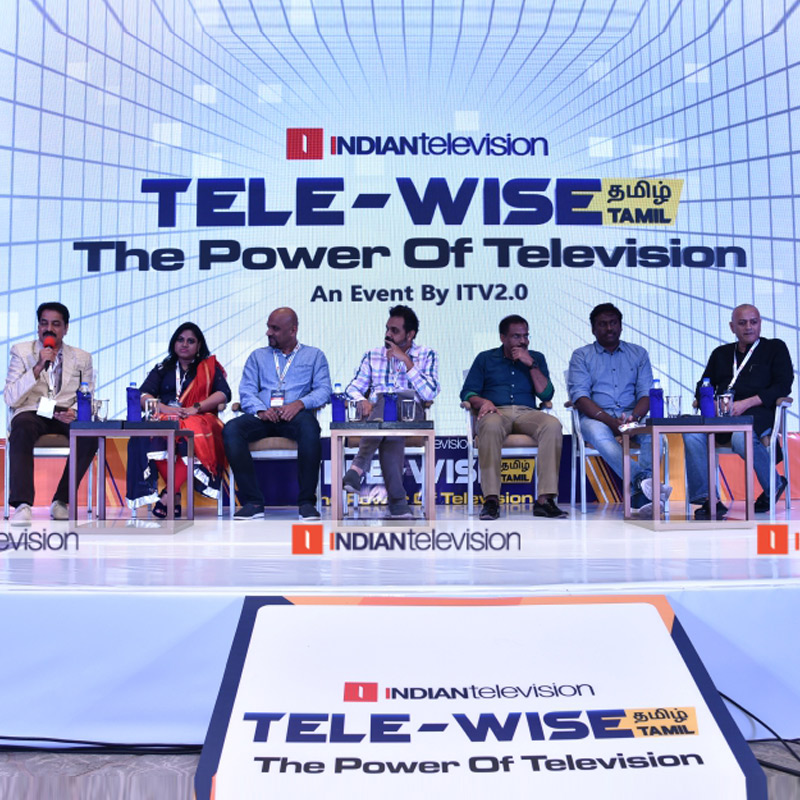
    MUMBAI: TV viewership is growing in the regional market and TV broadcasters do not fear the OTT threat. Instead, regional players are looking at attracting younger audiences to television. Tele-Wise Tamil 2019, which was organised by Indiatelevision.com on 6 August 2019, gave the industry a platform to discuss the issues faced in the regional market.

    The event witnessed a panel discussion on ‘Changing face of TV’ moderated by Horse Pictures partner and YuppTV former head Vijay Adhiraj with the panel as Colors Tamil business head Anup Chandrasekharan, Sun Life content acquisition and Sun TV Network Ltd Kids Entertainment Kavitha Jaubin, Trend Loud CEO Chidambaram Natesan, Star Network deputy business head for Vijay TV Balachandran Ratnavel, Bodhitree Multimedia Pvt Ltd co-founder and director Mautik Tolia, and Polimer TV strategic advisor and consultant Suresh Iyer were the panelists.

    The panelists discussed evolving content trends and challenges faced by the industry in attracting younger audiences in the regional space and the importance of weekly ratings in creating content.

    Adhiraj began the discussion by understanding how content creators decide what kind of content will work. To which Natesan replied, “Content has always being a priority to us. What makes us decide what kind of content work well for us is basically to understand what the need of the hour is. We go by the data and data makes us change our decision every day. We decide content based on the power of engagement.”

    On understanding the audience's need, Tolia commented, “Over the last one and a half years, especially with my company, we have broken our company into three verticals, one with Hindi GEC content, another with digital web content and one with regional content. That’s what makes the job of a content creator more complex. The digital market itself has very different kind of audiences; there is Netlfix audience, catch-up TV audience. There is a different scale of digital model which has started operating. We need to be very clear about who is our audience.”

    Ratnavel believes that TV and OTT share same universe so there is no need to come up with separate kind of content for both the platform. He said, “BARC data gives very different picture on television. TV is growing and in Tamil Nadu TV viewership has grown 10 to 15 per cent Y-o-Y. The time spent has substantially grown, it is beyond the national average which means there is a huge appetite for TV in Tamil Nadu. There is no need to change the kind of content for digital and television because the people on both the platforms are same.”

    “I would say 80 per cent of the content has succeeded by default not by design. For a content to succeed, there are three key stakeholders- content creator, marketer and advertiser. They are all inter-linked with each other,” Iyer opined.

    Sharing his view on whether metric defines the content, Chandrasekharan said, “In our business we are not governed by the metrics that keep popping-up every week. We focus on trying to create a clutter breaker, how do we make it relatable and how do we ensure that every day people come and consumer our content.”

    He further said, “There is a great amount of experimentation that happens with content in Tamil Nadu and content keeps evolving. There are three stages in which the content is designed i.e. to get a content that will attract the audiences; second is liking the content and third is addiction which makes one to follow the content.”

    Speaking about Sun Life, Jaubin said, “I strongly believe that today the viewers are no more massive viewers instead they are the co-creators through their feedback. They want to be active and social media is highly interactive because of the fact that they have been given the space to be active 24/7. So we thought of creating something for a younger demographic but it is not out of the box, it includes family audiences as well.”

    “We need to be continuously in touch with them. When we know to meet our consumer then we understand better about the exact filter that we need to apply to our content. Staying in constant touch with our audiences, speaking to them and understand their life and daily routine actually helps us to create most of the contents especially on TV,” said Ratnavel.

    Chandrasekharan said, “If we specifically take Tamil Nadu into consideration, if we decode the kind of content Sun TV was offering was largely family drama, Vijay TV was largely into romantic kind of content, Zee Tamil brought in romance and family. The content offering in Tamil Nadu has evolved from within the family to the outer circle of the family. In the next two years, the kind of content offering would be not just around the mother and daughter but around the outer world of the family like neighbours and society. The average consumer is also getting exposed to different kinds of content, so their expectations are also pretty high.”

    Jaubin also expressed the need to take technology like AI and augmented reality into account so that the broadcasters start producing some of the best formats on TV.

    Speaking on the challenges, Tolia said, “Nowadays Facebook and Hotstar have become our competitors as the women are spending more time on social media platforms. That is the major challenge for Hindi GEC and regional market has still not faced it because we are growing but the challenge is going to be on how to attract the younger audiences to TV who are engaging themselves in very different kinds of entertainment. That is something we really need to look into.”

  • Hooq to stream Hollywood, Bollywood, regional TV shows and movies on Vodafone Play

    Hooq to stream Hollywood, Bollywood, regional TV shows and movies on Vodafone Play

    MUMBAI: It’s another entertainment feature one would love to Hooq on to — on a mobile device.

    Trends indicate that Indians are fast adopting mobile phones as their first screen for entertainment. Time-spent on smartphones jumped by 16 per cent in the period Jan-March 2017 over the previous quarter largely driven by a strong demand for social media platforms, and entertainment apps.

    Ever responsive to the needs of a super-connected customer base, Vodafone India has partnered with Hooq, a video-on-demand service, to offer unlimited streaming of over thousands of hours of entertainment from Hollywood, Bollywood and local movies along with exclusive series, to customers. This basket of entertainment will be available on Vodafone Play, Vodafone’s one-stop entertainment destination to enjoy streaming of content; be it Live TV, popular shows, latest movies or trending music videos.

    Vodafone Play subscribers can now binge-watch popular American shows like The Big Bang Theory, Arrow, The Vampire Diaries, Gotham, Supergirl, Friends, The Flash and many more. Enhancing the video streaming experience on Vodafone Play is a rich list of the best of local and Hollywood hits at no extra charges.

    Vodafone India national head – VAS and content Dipankar Ghoshal said, “With mobiles becoming the preferred screen for entertainment, the average time spent on smartphones daily is significantly higher than TV, demonstrating that the engagement levels provided by smartphones remain unparalleled. We find our customers are increasingly seeking enriching and diverse content options. Through our partnership with Hooq, Vodafone has further strengthened the base of quality content on Vodafone Play.”

    Hooq India managing director Salil Kapoor said, “This collaboration further solidifies our position as the country’s biggest premium video-on-demand service. India is one of the key markets for Hooq and this strategic partnership will ensure a wider reach for us giving Vodafone customers a window to experience the best of Hollywood movies and TV Shows across genres.”

  • FY-16: Sun TV revenue up 7.3 percent, PAT up 16.8 percent

    FY-16: Sun TV revenue up 7.3 percent, PAT up 16.8 percent

    BENGALURU: Sun TV Network Limited (Sun TV) reported 7.3 per cent growth in consolidated Total Income from Operations (TIO) and 16.8 percent growth in profit after tax (PAT) for the period ended 31 March 2016 (FY-16, current year) as compared to fiscal FY-15. TIO in FY-16 was Rs 2,569.79 crore as compared to Rs 2,395.38 crore in FY-15. The company’s PAT in the current year was Rs 913.38 crore (35.5 percent PAT margin) in FY-16 and was Rs 782.04 crore (32.6 percent PAT margin) in the previous year.

    Note: The unit of currency in this report is the Indian rupee – Rs (also conventionally represented by INR).The Indian numbering system or the Vedic numbering system has been used to denote money values. The basic conversion to the international norm would be:
    (a) 100,00,000 = 100 lakh = 10,000,000 = 10 million = 1 crore.
    (b) 10,000 lakh = 100 crore = 1 arab = 1 billion.

    Sun TV consolidated EBIDTA in the current year was Rs 1,774.19 crore (69 percent EBIDTA margin) 5.8 percent higher as compared to Rs 1677.03 crore (70 percent EBIDTA margin) in FY-15.

    Consolidated Total Expenditure (TE) in the current year declined 2.5 percent to Rs 1,300.53 crore (50.6 percent of TIO) as compared to Rs 1,333.45 crore in the previous year.

    Employee Benefits Expense (EBE) in FY-16 increased 15.5 percent to Rs 271.63 crore (10.6 percent of TIO) as compared to Rs 235.08 crore (9.8 percent of TIO) in FY-15.

    Other expenses (OE) in the FY-16 was 13.6 percent higher in FY-16 at Rs 222.07 crore (8.6 percent of TIO) as compared to Rs 195.56 crore (8.2 percent of TIO) in the previous year.

    Standalone quarterly numbers

    For the quarter ended 31 March 2016 (Q4-16, current quarter) Sun TV standalone TIO increased 4 percent year-over-year (y-o-y) to Rs 570.68 crore from Rs 548.58 crore, but declined 0.6 percent quarter-over-quarter (q-o-q) from Rs 574.12 crore.

    Standalone PAT in Q4-16 increased 16.3 percent y-o-y to Rs 236 crore (41.4 percent PAT margin) as compared to Rs 548.48 crore (37 percent PAT margin) and increased 9.5 percent q-o-q from Rs 215.59 crore (37.6 percent PAT margin)

    Standalone EBIDTA in the current quarter increased 0.8 percent y-o-y to Rs 426.58 crore (74.7 percent EBIDTA margin) from Rs 423.26 crore (77.2 percent EBIDTA margin), but declined 3.1 percent q-o-q from Rs 440.44 crore.

    Standalone TE in Q4-16 declined 7.2 percent y-o-y to Rs 244.76 crore (42.9 percent of TIO) from Rs 263.74 crore (48.1 percent of TIO) and declined 8.8 percent q-o-q from Rs 268.43 crore (46.8 percent of TIO).

    Standalone EBE in the current quarter increased 20.8 percent y-o-y to Rs 63.02 crore (11 percent of TIO) from Rs 52.16 crore (9.5 percent of TIO) and increased 7.3 percent q-o-q from Rs 58.73 crore (10.2 percent of TIO)

    Standalone OE in Q4-16 increased 23 percent y-o-y to Rs 34.77 crore (6.1 percent of TIO) from Rs 28.26 crore (5.2 percent of TIO) but declined 1.1 percent q-o-q from Rs 35.16 crore (6.1 percent of TIO).

    Sun TV has paid franchisee fees for its IPL team SunRisers Hyderabad (SRH) of Rs 85.05 crore in FY-15 and FY-16.

  • FY-16: Sun TV revenue up 7.3 percent, PAT up 16.8 percent

    FY-16: Sun TV revenue up 7.3 percent, PAT up 16.8 percent

    BENGALURU: Sun TV Network Limited (Sun TV) reported 7.3 per cent growth in consolidated Total Income from Operations (TIO) and 16.8 percent growth in profit after tax (PAT) for the period ended 31 March 2016 (FY-16, current year) as compared to fiscal FY-15. TIO in FY-16 was Rs 2,569.79 crore as compared to Rs 2,395.38 crore in FY-15. The company’s PAT in the current year was Rs 913.38 crore (35.5 percent PAT margin) in FY-16 and was Rs 782.04 crore (32.6 percent PAT margin) in the previous year.

    Note: The unit of currency in this report is the Indian rupee – Rs (also conventionally represented by INR).The Indian numbering system or the Vedic numbering system has been used to denote money values. The basic conversion to the international norm would be:
    (a) 100,00,000 = 100 lakh = 10,000,000 = 10 million = 1 crore.
    (b) 10,000 lakh = 100 crore = 1 arab = 1 billion.

    Sun TV consolidated EBIDTA in the current year was Rs 1,774.19 crore (69 percent EBIDTA margin) 5.8 percent higher as compared to Rs 1677.03 crore (70 percent EBIDTA margin) in FY-15.

    Consolidated Total Expenditure (TE) in the current year declined 2.5 percent to Rs 1,300.53 crore (50.6 percent of TIO) as compared to Rs 1,333.45 crore in the previous year.

    Employee Benefits Expense (EBE) in FY-16 increased 15.5 percent to Rs 271.63 crore (10.6 percent of TIO) as compared to Rs 235.08 crore (9.8 percent of TIO) in FY-15.

    Other expenses (OE) in the FY-16 was 13.6 percent higher in FY-16 at Rs 222.07 crore (8.6 percent of TIO) as compared to Rs 195.56 crore (8.2 percent of TIO) in the previous year.

    Standalone quarterly numbers

    For the quarter ended 31 March 2016 (Q4-16, current quarter) Sun TV standalone TIO increased 4 percent year-over-year (y-o-y) to Rs 570.68 crore from Rs 548.58 crore, but declined 0.6 percent quarter-over-quarter (q-o-q) from Rs 574.12 crore.

    Standalone PAT in Q4-16 increased 16.3 percent y-o-y to Rs 236 crore (41.4 percent PAT margin) as compared to Rs 548.48 crore (37 percent PAT margin) and increased 9.5 percent q-o-q from Rs 215.59 crore (37.6 percent PAT margin)

    Standalone EBIDTA in the current quarter increased 0.8 percent y-o-y to Rs 426.58 crore (74.7 percent EBIDTA margin) from Rs 423.26 crore (77.2 percent EBIDTA margin), but declined 3.1 percent q-o-q from Rs 440.44 crore.

    Standalone TE in Q4-16 declined 7.2 percent y-o-y to Rs 244.76 crore (42.9 percent of TIO) from Rs 263.74 crore (48.1 percent of TIO) and declined 8.8 percent q-o-q from Rs 268.43 crore (46.8 percent of TIO).

    Standalone EBE in the current quarter increased 20.8 percent y-o-y to Rs 63.02 crore (11 percent of TIO) from Rs 52.16 crore (9.5 percent of TIO) and increased 7.3 percent q-o-q from Rs 58.73 crore (10.2 percent of TIO)

    Standalone OE in Q4-16 increased 23 percent y-o-y to Rs 34.77 crore (6.1 percent of TIO) from Rs 28.26 crore (5.2 percent of TIO) but declined 1.1 percent q-o-q from Rs 35.16 crore (6.1 percent of TIO).

    Sun TV has paid franchisee fees for its IPL team SunRisers Hyderabad (SRH) of Rs 85.05 crore in FY-15 and FY-16.

  • Regional TV: The land of opportunities and challenges

    Regional TV: The land of opportunities and challenges

    MUMBAI: For national broadcasters, having a regional footprint is becoming imperative as it is growing at a furious pace compared to its matured richer brother that is more than double its revenue size.

    Pegged at Rs 140 billion, regional TV media grew at a whopping 70 per cent in 2011 compared to the industry growth of around 12 per cent. Deeper penetration of cable & satellite (C&S) homes, rise in per capita income, emerging middle class and high consumption expenditure are fuelling this growth.

    Asianet managing director K Madhavan calls regional the new “National” as the language entertainment channels compare strongly with the Hindi GECs on critical parameters like viewership and reach.

    “Regional has become the new national. In 2011, the regional space grew at 70 per cent compared to the national growth of 11-12 per cent. Overall, the television industry is pegged at Rs 300 billion while the regional is Rs 120-140 billion. Regional channels have a strong captive audience. One of the reasons for this high growth rate is the emerging new middle class with increased purchasing power in the Tier I and Tier II cities; the positive impact of this could be huge and bigger. The per capital income of Southern states is almost 80 per cent higher than the Northern states.”

    In recent years, as national markets have slowed down, advertisers have shown renewed interest in regional television.

    Says Zee Entertainment Enterprises Ltd (Zeel) EVP regional channels Sharda Sunder, “Growth in the regional sector is largely due to a few factors like size of population. The top nine regional states form 50 per cent of the population and the per capita income in these states is higher than the national average. Consumption expenditure is, thus, higher than the national average.”

    Regional broadcasters, however, do have their own set of problems that need to be dealt with on a long-term and short-term basis. These range from lack of quality content coupled with rise in cost of content to monetisation. Carriage fee is also a huge concern.

    Says Sunder, “Subscription revenues need to drive in. New media is also a challenge.” She was speaking at Ficci Frames 2012.

    The regional market mainly consists of six states – Tamil Nadu, Andhra Pradesh, Karnataka, Kerala, West Bengal and to a lesser extent Maharashtra. “Tamil Nadu has the lion’s share with a revenue size of Rs 12 billion, followed by Telugu and Bengali which accounted for Rs 8.5-9 billion each. Kannada and Malayalam rake in revenues of Rs 6 billion while the Marathi genre is estimated at Rs 3.5-4 billion,” says Madhavan.

    He also pointed out that the penetration of cable as well as DTH is growing in the South; regional channels have also increased. The quality of local content has improved due to competition.

    “Of the total C&S penetration, we had one-third in the South, while DTH has conquered 30 million connections out of the total 42 million. Time spent in non-metros is growing and should catch up with the metros in two to three years. Currently, time spent in non-metros is two hours and three hours in metros. Due to competition with national channels, the quality of local content has increased considerably. The contribution of revenues from overseas market is 10-12 per cent,” he averred.

    Another challenge is the movie-driven GRP, with almost 35 per cent of regional GRPs coming from movies. “The problem is that the cost of movies has gone 200-300 per cent up in the last 2-3 years. There is difficulty of good content and the shortage of skilled talent specially to cater to 100 plus regional channels has become a big issue.”

    Since movies drive ratings for regional channels, both Madhavan and Sunder are of the opinion that financing film related content could be a preferred option. Channels, in fact, need to look at getting into movie production.

    Madhavan said the cost of producing a show has gone up considerably. While it used to cost Rs 100,000-150000 to produce a local show, it has increased considerably. A case in point is the Tamil version of Kaun Banega Crorepati (KBC).

    “KBC, which we are producing in the South, costs Rs 2.5-3 million per episode. The big question is whether regional media will be able to absorb this cost. Earlier, 90 per cent of the software was available locally. Now by default we are forced go to national producers like Endemol,” he pointed out.

    While Madhavan concurred with Sunder that digitisation is good for the industry, he was skeptical about its reception in the semi-urban and rural areas as set-top box costs were high. He also said that the carriage fee for regional channels has gone up.
    Madhavan also termed the recent decision of the Tamil Nadu government to impose heavy tax on DTH service as a dampener for the industry since it had emerged as a major source of pay revenue for the broadcasters.

    “Recently the Tamil Nadu government imposed a tax of 32 per cent on DTH services, so that is going to impact pay revenues. Advertisement rates are the lowest in the country because of the unhealthy competition in the regional markets. We are selling at 8-10 per cent of the national channel rates,” he stressed.